
Life style
How This Demon Dance Banishes Illnesses


in Sri Lanka’s Remote Jungles
by Zinara Ratnayake
The kankariya dance all started with a legendary demon queen named Kuweni. As dusk falls, the thumping sound of drums echoes through the jungles of central Sri Lanka. Elaborately dressed dancers spin and swirl as their ornate silver headpieces gleam and bright red ribbons trail behind them. Their chests rise and fall beneath silver-beaded breastplates and two large mango-shaped earrings adorn their ears. The dancers carry candle-lit, hollowed-out coconuts and chant verses inviting gods and demons to their ritual. Sweet-smelling smoke from jasmine incense fills the air, obscuring the view of a banana bark altar with pictures of various Buddhist deities. As hundreds gather, the dancers tell the sad tale of the mythic, magical queen Kuweni.
This is kohomba yak kankariya. Several times a year, often in April, Sri Lankans in the country’s mountainous, central region hold this ritual to cure illnesses, prevent diseases from spreading, and seek blessings from the supernatural world. While today the ceremony tells Kuweni’s story, whose name is sometimes spelled Kuveni or Sesapathi, in ancient times, the ritual was believed to have lifted the illness-causing curse Kuweni had placed on the province.
According to legend, Kuweni was born in the sixth century BC to a yakka king who ruled Sri Lanka. The Sinhala word yakka is derived from the Pali word yakkha (Pali is a liturgical language often used in Buddhist texts) and the Sanskrit term yaksha, which translates to “demon.” Dipavamsa, the oldest historical account of Sri Lanka, describes yakka as a disorderly tribe of demons who eat human flesh and fight with each other. Although her father was a demon, Kuweni may not have been one herself.
Then Prince Vijaya, a legendary Indian prince, and 700 of his followers invaded demon-controlled Sri Lanka. Kuweni appeared before the prince disguised as a hermit spinning cotton. Vijaya soon promised to marry Kuweni and make her his queen. Trusting him, she betrayed her father and demon brethren and helped the prince slaughter them. Only a few of the yakka escaped into the Sri Lankan jungles.

Queen Kuweni was said to stalk the nightmares of King Vijaya’s nephew, Panduwas, in the form of a powerful leopardess.
After Vijaya took power, he broke his promise to Kuweni and married a South Indian princess, establishing the Sinhalese people who today make up the majority of Sri Lanka’s population. Jilted and angry, Kuweni cursed Vijaya and his successors before the remaining yakka killed her out of revenge.
Later, when Vijaya’s nephew Panduwas arrived in Sri Lanka to take the throne as his uncle’s successor, Panduwas began to suffer from a mysterious illness. He couldn’t sleep. Night after night, Kuweni, in the form of a leopard, appeared in his dreams and tried to kill him. Sleep deprivation drove Panduwas insane. Kuweni finally had her revenge.
In his book Kohomba Kankariya: The Sociology of a Kandyan Ritual, social anthropologist Sarath Amunugama wrote that Kuweni’s leopard is “a symbolic representation of the fatal lie that was uttered by Vijaya to Kuweni to facilitate his conquest.” Panduwas suffered due to his uncle’s lie to the queen, wrote Amunugama.
When Lord Sakra, the ruler of heaven in Buddhist cosmology, sees Panduwas unjustly suffering for his uncle’s deceit, he tells an Indian king about a ritual that will cure the ailing Panduwas. The king performs the ritual, and Panduwas recovers. Later on, the king instructed a local prince named Kohomba to perform the ritual any time it was necessary to repel Kuweni’s illness-fueling ire. Since then, the ritual, called kohomba yak kankariya in honour of the prince, is performed any time a mysterious illness descends upon the community.
Today, folk priests—village priests who conduct ancient rites such as the kankariya—continue to perform the ritual dance whenever local communities are plagued with diseases, such as chickenpox. One such priest is 29-year-old Abheeth Shilpadhipathi, whose father and grandfather taught him the kankariya. Recently, when Shilpadhipathi drummed in a kankariya, it was to ward off the Covid-19 pandemic that plagued the country. Originally, the ceremony would’ve lasted for about seven days, but today it takes less than a day.
“Before [the kankariya] begins, the chief [folk] priest pledges to the gods their intention in conducting the ceremony,” Shilpadhipathi says. In the past, individual families performed a kankariya to cure diseases, but because it’s an elaborate, expensive event, families rarely host them anymore. Buddhist temples and large social groups now conduct them annually or seasonally both as a healing and fertility ritual and sometimes just to keep the tradition alive. “People do it to show their gratitude for a good harvest or good fortune,” says Shilpadhipathi.

A Hindu priest holds a lit coconut oil lamp in front of statues of Prince Vijaya (left) and Kuweni (right) at the Sri Subramaniam temple in the southern Sri Lankan town of Matara.
People also perform the kankariya ritual to bestow good health, wealth, and even good school grades, says Sanushki Athalage, choreographer at Thaala Asapuwa, a Sri Lankan Dance Academy in Victoria, Australia, where they teach the kankariya along with other traditional dances. “It is also about giving and being selfless in return for a prosperous life. It is a beautiful concept that brings larger communities together in a common goal,” Athalage says.
Buddhism in Sri Lanka is a complex system that incorporates “shrines, rituals, and priests” who negotiate with a vast pantheon of gods, deities, and demons, says Amunugama. Sri Lankan Buddhists believe that prayers and rituals, such as the kankariya, are a way to seek blessings and build good karma.
Religious ceremonies are also a way to prevent meddlesome demons from interfering in people’s lives. Kuweni isn’t the only entity that can cause illnesses. Local folklore is full of demons who hunt humans and make them ill. When someone becomes sick, local priests are called in to identify the specific demon causing the illness. Once identified, the priest summons and vanquishes the demon in a dance or ritual, similar to the kankariya.
One popular ritual performed in southern Sri Lanka is the Daha Ata Sanniya, which is sort of a catch-all ritual that can cure illnesses caused by 18 different demons.

Rituals like these are “performed to relieve anxieties around mysterious diseases,” says Athalage. “When families are anxious, they seek blessings and help from higher powers to cure something that they don’t understand.” For the villagers, this “excursion into the supernatural” will help them live a “relatively untroubled life,” wrote Amunugama in his book. These rituals are a way to understand the incomprehensible, like why a loved one falls ill.
Although Kuweni caused illnesses like other demons, Shashiprabha Thilakarathne, a folklore scholar at the University of Moratuwa in Sri Lanka who researches Kuweni, explains that the demon queen might’ve been human. “It’s difficult to say who she is. Folk literature tells us that she has supernatural powers. Sometimes she could even take the form of different animals,” Thilakarathne says, explaining that her “magic” made “Vijaya’s weapons fall on demons’ bodies.”
But in the last few decades, Kuweni has appeared as a character in pop culture, from television dramas to songs and plays. Kuweni has become relatable—her motives clearer. Today Vijaya is often recast as the villain and Kuweni as the maligned anti-hero. She has shifted from a female demon spawn who cursed Sinhalese people to an embodiment of the modern woman, Thilakarathne explains. She is a wife, daughter, and mother. While Kuweni shares many traits with traditional yakka, she also stands out from them. She’s demon-like, but not a demon herself.
“Kuweni, as I understand, is a model we can apply to our modern society. At one point, she’s a daughter, then a lover and parent. She goes through many different challenges in life,” Thilakarathne says, “she represents us.”(BBC)

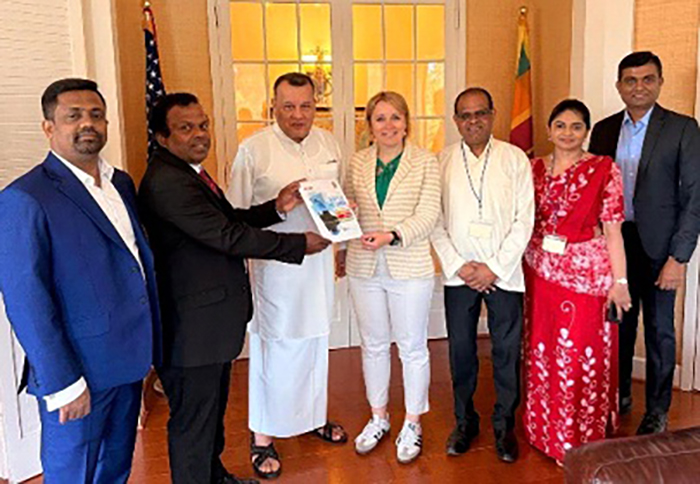
By Ifham Nizam
The sixth edition of the “Beauty of Sri Lanka” Photography Exhibition is set to unfold across North America this April, transforming the power of visual storytelling into a compelling platform for cultural diplomacy, environmental advocacy and nation branding.
Organised by the America Sri Lanka Photographic Art Society in collaboration with key diplomatic and institutional partners, including the Embassy of Sri Lanka in Washington, D.C., the Permanent Mission of Sri Lanka to the United Nations, the Consulate General of Sri Lanka in Los Angeles and Toronto, and the Sri Lanka Tourism Promotion Bureau, the exhibition will run from April 22 to May 4 across Los Angeles, Toronto, New York and Washington, D.C.
Held in conjunction with Earth Day, the exhibition continues to evolve as a globally recognised initiative that brings together art, conservation and international engagement. What began as a photography showcase has now matured into a dynamic soft-power platform that tells Sri Lanka’s story to the world—through its landscapes, biodiversity, and deeply rooted cultural heritage.

Photographers from Sri Lanka at Nigara State Park
The 2026 tour will feature prestigious venues that reflect its growing international stature. These include the iconic Church of Scientology Celebrity Centre International, Metro Hall in Toronto—marking the exhibition’s debut in Canada—the Permanent Mission in New York, and the Sri Lankan Embassy in Washington, D.C., as part of the widely celebrated Passport D.C. event. Each venue represents not only a geographic expansion but also a widening of the exhibition’s global audience and influence.
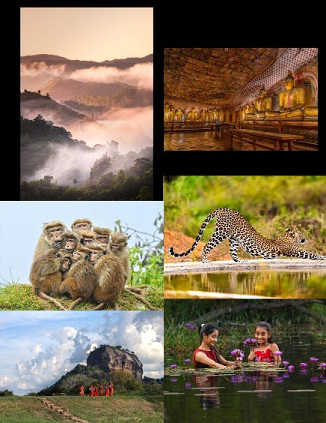
Exhibition
At its heart, “Beauty of Sri Lanka” is a vivid narrative of a nation’s natural and cultural wealth. From the mist-covered central highlands and pristine coastal belts to dense rainforests teeming with endemic wildlife, the exhibition captures Sri Lanka’s ecological richness through the lenses of talented photographers. These images serve as both an invitation to explore and a reminder of the urgent need to protect fragile ecosystems.
This year’s programme takes a significant step further by integrating real-world environmental action. The “ReTree Los Angeles” initiative, launched in line with Earth Day, focuses on tree planting, urban restoration and community engagement. It also includes a children’s painting competition aimed at fostering environmental awareness among the younger generation. Organisers believe that nurturing creativity at an early age can instil a lifelong commitment to conservation.
Adding a scientific dimension to the event, Dr. Sarath Gunapala will deliver the keynote address on “The Journey of Infrared Photography,” exploring how advanced imaging techniques can reveal unseen dimensions of the natural world. His participation highlights the exhibition’s interdisciplinary approach, where art meets science to deepen understanding and appreciation.
The exhibition will also feature a vibrant cultural segment designed to immerse international audiences in Sri Lanka’s living traditions. A carefully curated lineup of performances—including the sacred Wes Pooja, the dramatic Naga Raksha mask dance, the rhythmic Thelme ritual dance and the light-hearted Salu Paliya—will bring to life the island’s folklore, rituals and performing arts heritage. These performances are expected to add colour, rhythm and emotional depth to the visual experience offered by the photographic displays.
ASPAS President Suria Perera emphasised that the exhibition is more than a display of images. “It is a celebration of Sri Lanka’s identity—its natural beauty, its cultural vibrancy, and its responsibility to future generations,” she said. “Through photography and community engagement, we aim to inspire a deeper connection between people and the environment.”
Over the years, the exhibition has drawn a diverse audience, including diplomats, policymakers, conservationists, art collectors and members of the Sri Lankan diaspora. Its ability to connect these varied groups underscores its role as a bridge between cultures, fostering dialogue and mutual understanding while strengthening Sri Lanka’s global presence.
The continued support of diplomatic missions, cultural institutions and tourism authorities has been instrumental in elevating the exhibition’s profile. Their collaboration reinforces the role of art as a powerful tool in shaping perceptions, building partnerships and promoting sustainable tourism.
As the 2026 edition prepares to open its doors, “Beauty of Sri Lanka” stands as a testament to the island nation’s enduring appeal and its commitment to conservation. It is not merely an exhibition, but a movement—one that celebrates beauty, inspires responsibility and connects Sri Lanka to the world through the universal language of art.
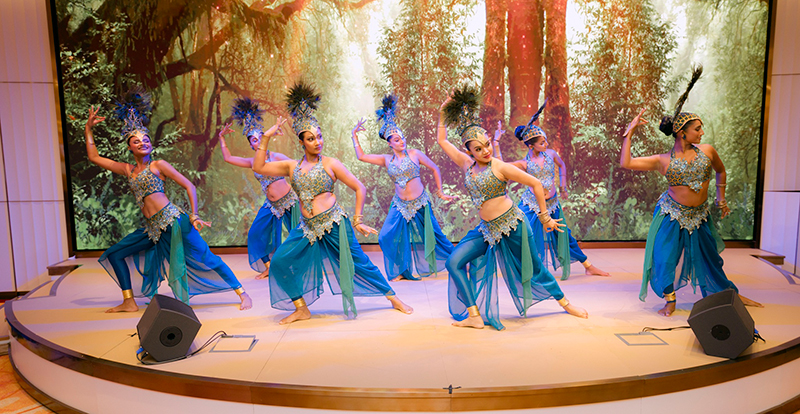
This holiday season, City of Dreams Sri Lanka invites guests to step into the heart of a truly Sri Lankan celebration with Signature Avurudu—a four-day cultural experience taking place.
Blending time-honoured traditions with contemporary flair, the festivities promise to capture the spirit of the Aluth Avurudda (Sinhala and Tamil New Year) in all its colour, rhythm, and warmth. From the moment guests arrive, they will be welcomed into a space transformed with festive décor, echoing the charm of a village celebrations brought to life in the city.
At the centre of the celebration is the Pahan Pujava, a symbolic lamp lighting ceremony led by the management, setting a tone of unity, prosperity, and new beginnings. This meaningful ritual reflects the essence of the New Year—a time to pause, reflect, and step into the new year with hope and positivity.
Throughout the four days, guests can experience the rich cultural heritage of Sri Lanka through a series of traditional performances. The rhythmic beats of raban and drums, alongside vibrant dance acts, will fill the air, creating an atmosphere that is both nostalgic and celebratory. Adding to the experience are elegantly dressed Sri Lankan hostesses, offering a warm, authentic welcome that embodies the island’s renowned hospitality.
No Avurudu celebration is complete without its flavours, and City of Dreams Sri Lanka delivers a feast to remember. Guests can indulge in an array of traditional sweets and savouries, alongside curated Avurudu-themed buffets and creative beverages inspired by local ingredients. Passing canapés and festive treats ensure there is something to enjoy at every turn—whether you’re reminiscing over childhood favourites or discovering new twists on beloved classics.
Designed as a celebration for all, Signature Avurudu brings together families, friends, and visitors from around the world to share in the joy of the season. It is a reminder that Avurudu is more than a festival—it is a feeling of togetherness, renewal, and shared happiness.
This April, celebrate the sights, sounds, and tastes of Avurudu at City of Dreams Sri Lanka—where tradition meets modern celebration, and every moment feels like home.

Students of S. Thomas’ College recently demonstrated commendable performance at two international sailing events held in India: the inaugural Indian Sailing Regatta and the 4th North-East Regatta. Both events featured participation from foreign teams, including Sri Lanka, Taiwan, Malaysia, Russia, Great Britain, South Korea, Singapore, and India.
The inaugural Indian Sailing League (ISL), held at Umiam Lake, Shillong, India, marked a significant milestone in the sport and was prominently featured in The Times of India. The ISL is a first-of-its-kind franchise-based sailing league, bringing together 14 teams, 182 sailors, and 58 international participants from eight countries.
The ISL follows a concept similar to the Cricket Indian Premier League, where top sailors are “bid” and selected into franchise teams representing different regions. The competition introduced an innovative team-based format in which the best sailor from each team in each category competed, combining multiple race formats such as fleet racing, team racing, marathon races, and rig-and-race challenges. This pioneering structure, widely regarded as a first in global sailing history, has significantly enhanced the spectator appeal and competitive depth of the sport, while promoting youth, women, and high-performance sailing on a single platform.
At the first Indian Sailing Regatta, in the Boys’ Optimist category, Haren Wickramatillake secured 3rd place and was also awarded a special medal for his courage during the rig and race event. Dhiren Perera achieved 3rd place in the rig and race event alongside his team member.
At the 4th North-East Regatta, performances continued to be noteworthy. In the Main Optimist Boys category, Haren Wickramatillake was placed 6th, while Shem Fernando secured 19th place out of 32 participants. In the Junior Green Fleet Optimist Boys category, Anuruth Tennakoon achieved 2nd place and Dhiren Perera was placed 4th out of 10 participants. In the ILCA 4 Boys category, Akaine Ubayasiri was placed 11th out of 22 participants.
These achievements highlight the high level of skill, determination, and sportsmanship demonstrated by the young sailors, while also reflecting Sri Lanka’s strong presence in an emerging and globally significant sailing platform.
Upcoming international sailing events, featuring students of S. Thomas’ College, include the Asian Beach Games 2026, to be held in China ,in April 2026, and the International Optimist Dinghy Association (IODA) competition, scheduled to take place at Port City, in Sri Lanka, in December 2026. These events will provide valuable international exposure and further opportunities for the young college sailors to compete at a high level.

“I extend my heartfelt wishes to all Sri Lankans for a peaceful and joyous Sinhala and Tamil New Year!” – President

US blockade of Iran would worsen global energy crisis, analysts say

Praful Hinge’s stunning debut ends Rajasthan Royal’s four-match winning streak

“Let us resolve, with renewed determination to overcome obstacles and build a better and more prosperous nation” -PM

Sun directly overhead Nawaladi, Paranthan, Murasumodai, Vellikkandal, Udapattukkandal, Puliyampokkanei about 12:10 noon today [14]

Heat Index at Caution Level in the Northern, North-central, North-western, Western and Southern provinces and in Trincomalee district.

‘Dates have the highest sugar content to fight Coronavirus’

Sunday Island 27 December – Headlines

#SundayIsland 17th December – Headlines

Sunday Island – 28th March

Sunday Island Headlines – 21 March

Sunday Island – 21st February – Headlines
-

 News2 days ago
CEB orders temporary shutdown of large rooftop solar systems
-

 News5 days ago
AG: Coal procurement full of irregularities
-

 Business4 days ago
Israeli attack on Lebanon triggers local stock market volatility
-

 Business5 days ago
Hayleys Mobility introduces Premium OMODA C9 PHEV
-
 Features2 days ago
From Royal College Platoon to National Cadet Corps: 145 years of discipline, leadership, and modern challenges
-

 Business4 days ago
HNB Assurance marks 25 years with strategic transformation to ‘HNB Life’
-

 Sports5 days ago
DS to face St. Anthony’s in ‘Bridges of Brotherhood’ cricket encounter
-

 News6 days ago
AKD admits import of substandard coal, blames technicalities and supplier