
Midweek Review
How public sector corruption withers national economy: RJ’s insight

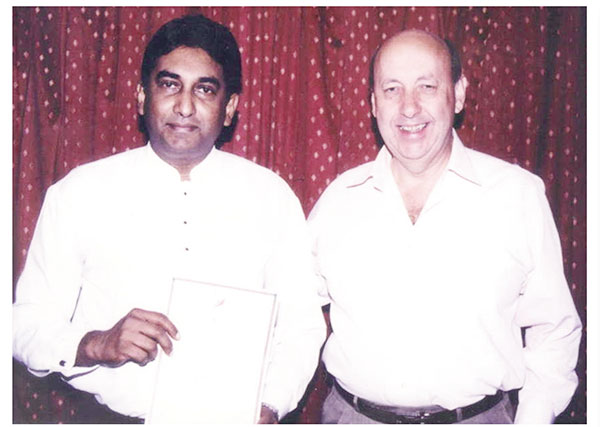
June 29, 2001: The late Rajeewa Jayaweera with the then CEO Peter Hill in Chennai where he was SriLankan Airlines Manager, Southern India. Pic was taken the night before Rajeewa left for France to take over as Manager, France (pic courtesy Sanjeewa Jayaweera)
By Shamindra Ferdinando
One-time SriLankan Airlines senior management employee, the late Rajeewa Jayaweera (RJ), in a series of articles, dealt mercilessly with the national carrier. The series of articles, published in The Island and The Sunday Island, reflected what can be easily described as the pathetic state of affairs in public finance.
The explosive reportage of the deterioration of SriLankan Airlines, between Feb 2015 and March 2020, underscored the overall failure on the part of the country’s supreme legislature, Parliament, to ensure financial discipline, not only at the national carrier, but the entire public sector, as well. The Colombo Telegraph, too, carried quite a number of RJ’s articles during this period.
Having perused the 143 page e-book, comprising 41 articles, recently, the writer asked COPE (Committee on Public Enterprises) Chairman Prof. Charitha Herath whether the national carrier came under the purview of his outfit, COPA (Committee on Public Accounts) or COPF (Committee on Public Finance). Lawmaker Herath responded: “Yes. Under the parliamentary watchdog COPE. We are going to summon them soon.”
Perhaps, RJ’s series of articles can be quite helpful to the parliamentary watchdog committees, if they are genuinely interested in taking remedial measures, in respect of the national carrier. RJ’s brother, Sanjeewa Jayaweera (SJ), himself a contributor to The Island, and other media outlets, as well, hadn’t been successful in publishing the series of articles on the national carrier, as a book, to coincide with the first death anniversary of his brother RJ.
SJ’s attributed his failure to secure consent of a leading publisher as he didn’t own the intellectual property rights. SJ’s efforts to publish RJ’s articles on foreign relations, too, has met with a similar fate.
RJ’s body was found at Independence Square, on the morning of June 12, last year. He was 64 years at the time of his death.
At the inquest into the death of RJ, before the Colombo Chief Magistrate, Lanka Jayaratne, on June 22, 2020, it transpired that it was a suicide. RJ committed suicide on the night of June 11. SJ assured court that he was certain RJ committed suicide. When the writer inquired about the circumstances leading to RJ’s suicide, SJ reiterated he never had any suspicions about quite the unexpected, but meticulously planned suicide.
In a country where the Central Bank has been ‘raided’ not once but twice and every public sector enterprise brazenly ‘raped’ by successive governments, a set of published articles cannot be launched, in book form, in the absence of intellectual property rights.
Focus on national carrier
Of over 300 articles, authored by RJ, only a section dealt with the national carrier. RJ’s relentless campaign against those who had been responsible for waste, corruption and irregularities at SriLankan must have angered many of those wrongdoers for being exposed after having got everything swept under the carpet, as happens so often in this country.
Having served SriLankan Airlines for over 15 years, RJ had been in a much better position, than many, to comment on the ruination of the national carrier.
However, thick-skinned politicians, and top officials, didn’t publicly react to RJ’s comments. If they really understood the implications of the continuing disclosures, RJ would have earned their wrath. In his first piece on the national carrier, titled ‘SriLankan Airlines: Parliament reveals UL loss is over Rs. 100 bn’ on Feb 6, 2015, RJ in one sentence explained what went wrong with the public enterprise. Referring to the launch of, what he called, the ‘Gulf Carrier of Dubai,’ with USD 10 mn investment made by the then Ruler there, in 1985, RJ declared; “The secret of their success was the Ruler never appointed relatives, his minions, civil servants, ex-army generals nor businessmen to run the airline.”
Having joined the national carrier, as a Marketing Executive, in June 1989, he received a promotion as Manager (Advertising and Promotions) and subsequently served as Manager Oman and Yemen, Manager Southern India, Manager France, Benelux, Scandinavia and Southern Europe before quitting in July 1995. Thereafter, RJ served Qatar Airlines (August 2005 to October 2009) as Regional Manager Sri Lanka, Bangladesh, Nepal, Maldives and Myanmar. RJ rejoined Sri Lankan Airlines and served as Manager Germany from October 2010 till May 2011 (during Mahinda Rajapaksa’s second term as President)
RJ had been in touch with the writer, though the national carrier was never the subject of discussions. The focus had always been on the conflict and post-war issues, particularly Sri Lanka’s failure to address accountability issues. RJ had been severely critical of the way the yahapalana lot responded to the growing Western threat and, essentially, there was consensus that the then administration deliberately discarded Lord Naseby’s strategy which could have been quite useful, if properly used. RJ took his life three months after the incumbent government withdrew from the 2015 Geneva Resolution. If RJ was alive today, he would have been quite disturbed over how the incumbent administration, too, handled the Geneva issue. RJ used to call the writer at the latter’s home. On many occasions, the writer’s wife, Dilhani, overheard our noisy exchanges and used to inquire as to what was wrong. We used to disagree on the response of the UNP-led government and Joint Opposition/SLPP as regards foreign policy and accountability issues.
Let me get back to the plight of the national carrier. In a follow-up piece, dated Feb 11, 2015, RJ stated that: “The general perception is that Air Lanka/SriLankan Airlines is an expensive toy of the rulers of the day, and a few of the elite – all at the expense of the taxpayer.” Having said so, RJ stated: “Even though there is some truth in it, it is indeed not the whole truth. Contrary to general perception, the national carrier has played a pivotal role, both in helping the nation’s economy and welfare of its people by bringing the world to Sri Lanka and taking Sri Lanka to the world.”
The writer is of the view that RJ made a futile attempt (Feb 11, 2015 piece) to restore the much tarnished image of the national carrier. One cannot find fault with RJ for being lenient in a way immediately after he initiated the onslaught on the national carrier. Subsequently, RJ meticulously addressed issues at hand, thereby exposed ‘white-collar crime.’
RJ exposed both the SLFP and UNP administrations. Catchy titles attracted, both print and online readers, including the writer, though going through all 41 articles at a stretch provided an entirely different insight. RJ didn’t mince his words when he zealously hammered those who undermined the national carrier, through waste, corruption, irregularities and outright mismanagement.
If RJ didn’t take his own life, perhaps he wouldn’t have ever thought of launching a book, at least on an e-form. Thanks to SJ, now the entire set of articles is available online and this writer believes, in addition to lawmakers, especially heads of the watchdogs (Prof. Charitha Herath/COPE, Prof. Tissa Vitharana/COPA and Anura Priyadarshana Yapa/COPF), leaders of the major political parties (the writer wants to consider the UNP a major political party though being reduced to one National List slot) and the media should access the material. Let me reproduce the catchy titles given to RJ’s articles (1) SriLankan Airlines: Parliament reveals loss is over Rs 100 bn (2) SriLankan Airlines: Parliament reveals loss is over Rs 100 bn: The unknown (3) What ails our national carrier (4) What ails our national carrier-continued (5) What ails our national carrier-iii (6) The passing of an aviation legend and lessons to be learnt (7) What ails out national carrier IV (8) National carrier’s Airbus story-going down the memory lane (9) All is not well @ SriLankan Airlines (10) SriLankan Airlines – a tale of state abuse and mismanagement, the ‘games’ Directors and VIPs played (11) SriLankan Airlines – exit strategy the need of the hour (12) Other side of the coin on Emirates deal – a comment (13) SriLankan Airlines – expensive toy of our politicians (14) A tale of two national carriers (15) Paris exit and Frankfurt exit by Airlines (16) Business Class divide at SriLankan Airlines (17) Independent Inquiry at SriLankan Airlines goes awry (18) Independent Inquiry at SriLankan Airlines goes awry-ii (19) What’s with 2015-16 annual report of SriLankan Airlines (20) Full time CEO to Part time CEO-pilot (21) No significant savings in procurement and fees paid to service providers (22) Brighter or darker skies over SriLankan Airlines (23) Total privatization only solution for SriLankan Airlines (24) SriLankan Airlines continues downward spiral (25) SriLankan Airlines total privatization or liquidation (26) More on SriLankan back on track (27) Saving the national carrier – a rejoinder (28) Minister Kabir Hashim’s hogwash (29) New brooms @ SriLankan Airlines (30) Who is managing SriLankan Airlines (31) Emirates remembers, the world remembers (32) More facts to remember on Emirates (33) India’s failed bid to disinvest Air India (34) Presidential air travel and the nut episode (35) Fleecing SriLankan Airlines (36) SriLankan violates Companies Act (37) Srilankan Airlines long overdue AGM (38) tale of woe continues @ SriLankan Airlines (39) SriLankan Airlines deal (40) USD 16.8 mn bribe at SriLankan Airlines and (41) Evidence given before Presidential Commission of Inquiry
Absence of accountability
 RJ’s series of articles highlighted a bleak picture not only at the national carrier but the entire public sector. In a way, the parliamentary committee system had pathetically failed in its responsibilities. The accumulated losses suffered by the national airline now stands at a staggering Rs. 326 Bn with the two-state banks – BOC and People’s Bank – continuing to bear the losses. A year after RJ’s suicide, the national economy is in tatters. The country would have been in a much stronger position, to weather the Covid-19 fallout, if not for waste, corruption, irregularities and negligence. Both former major political parties – the UNP and the SLFP – mercilessly abused the national carrier to their hearts’ content. Articles titled ‘SriLankan Airlines deal’ and USD 16.8 mn bribe at SriLankan Airlines discussed how the Rajapaksa and Sirisena-Wickremesinghe administration ruined the national carrier. The accountability on the part of President Maithripala Sirisena, as he was the head of the cabinet, cannot be ignored.
RJ alleged: “The Rajapaksas appointed relatives (This is not the reality). The Yahapalanites appointed friends from their alma mater and party hacks. The following are the Directors appointed by the Yahapalana government in February 2015 and their connections.
Chairman Ajith Dias (Prime Minister’s friend and ex-Royal College). Chanaka de Silva and Mahinda Haradasa, (PM’s friends, ex-Royal College, and members of UNP Working Committee), Rajan Brito (former President CBK’s friend), Hadindra Balapatabandi (former President Sirisena’s friend), Rakhitha Jayawardena (PM’s relative and old Thomian), Lt. Col. (Retd.) Sunil Peiris (Ravi Jayawardene’s friend and old Thomian), and N. De Silva Deva Aditya (PM’s friend and MP in European Parliament).
CEO Suren Ratwatte, a pilot by profession, was the younger brother of the PM’s financial advisor. Ratwatte’s ill-advised appointment had far-reaching consequences. At the end of six months, some directors wished to extend his probation period and assign Key Performance Indicators for evaluation in a few months. However, both the Prime Minister and Minister Kabir Hashim instructed the directors to confirm him in his post without delay (Board Minute 2.6 dated April 28, 2016)”.
RJ meticulously addressed contentious issues pertaining to the national carrier. Controversial SriLankan CEO Kapila Chandrasena received RJ’s attention. The expose of Chandrasena before the Presidential Commission of Inquiry should be re-examined against the backdrop of the arrest and the subsequent bail out of Kapila Chandrasena and his wife, Priyanka Niyomali Wijenayake over receiving USD 2 mn commission from Airbus Industrie in a deal that had been discussed in the official residence of the then Speaker Chamal Rajapaksa on March 1, 2013. RJ quite aptly compared Speaker Rajapaksa’s initial denial of any knowledge of the meeting with that of Finance Minister Ravi Karunanayke’s performance before CoI on Treasury Bond scams.
The government owed a public explanation as regards the status of the bankrupt national carrier. The ruination of the national carrier can be easily blamed on the top leaderships of the UNP and the SLFP. There cannot be any dispute over that or for anyone to be offended by the revelation of that fact. The then President’s brother-in-law Nishantha Wickremesinghe conduct/misconduct received wide media coverage after the change of government. The Presidential CoI exposed the sorry state of affairs at the national carrier and how those at the helm caused irrevocable losses.
The shock return of Chandrasena
RJ, however, missed a crucial development in the national carrier close on the heels of President Sirisena sacking Ranil Wickremesinghe’s government.
Only a section of the media, including The Island, reported the unbelievable development pertaining to the national carrier. The change of government paved the way for the return of Kapila Chandrasena, though the shocking revelations made in the Presidential CoI were still fresh in public minds. In fact, Chandrasena was one of the first appointments made by the 50-day government.
Civil society activist Gamani Viyangoda was one of the few people to publicly question the appointment. In a brief interview with the writer, Viyangoda alleged that Chandrasena’s appointment as Chairman of the debt-ridden SriLankan, in spite of an ongoing investigation, indicated that those who had exercised executive power previously were back in business (Civil society seeks explanation on top Sri Lanka appointment made amidst probe, The Island, Nov 14, 2018).
In the wake of the growing storm created by his shock reappointment, the government removed Chandrasena. The question is whether Chandrasena acted alone?
Subsequently, a high profile criminal investigation undertaken by the UK’s Serious Fraud Office (SFO), too, implicated top SriLankan management in the bribery scandal. In the wake of media revelations pertaining to Priyanka Niyomali Chandrasena, nee Wijenayake, being offered up to USD 16 mn in bribes to pave the way for a massive deal involving a dozen new Airbus planes, President
Gotabaya Rajapaksa called for an investigation. This was in the first week of Feb 2020.
“President Gotabaya Rajapaksa has ordered a comprehensive investigation into reports of allegations over financial irregularities said to have been committed during the deal between SriLankan Airlines and Airbus SE for the purchase of aircraft,” his office said.
Of the amount offered, at least USD 2 mn had been received by Chandrasena’s wife. Nothing has been heard of that investigation since then. In fact, examination of COPE, COPA and COPF proceedings reveal that greater the fraud/corruption/irregularity/negligence the chance in suppressing the wrongdoing is guaranteed.
SJ should ensure that even though the intellectual property rights law has deprived him of an opportunity to publish a book comprising an entire set of articles on the ruination caused to SriLankan Airlines, as many people as possible receive the 41 e-articles. If not for RJ, there wouldn’t have been such a collection of articles on the national carrier. It should be compulsory reading for lawmakers and the past and the incumbent presidents. Those who wielded political power should be ashamed of the way they allowed the deterioration of the once proud national carrier.
The top management, as well as a section of utterly corrupt employees, brought the national carrier to disrepute. Proper investigation would reveal how many SriLankan employees, past and present, lived well beyond their means.
RJ cleverly used his coverage of the SriLankan Airlines to expose the depth of corruption not only in the ‘land like no other’ but the public and private sectors as well. Such mega waste, corruption and irregularities cannot take place without the public and private sectors working together. Robber barons and their minions lived in luxury whereas the vast majority of people struggled to make ends meet. The Covid-19 virus has now made the situation even worse. Having sort of compared investigations into Treasury bond scams, perpetrated in 2015 and 2016, and SriLankan Airlines, at different levels, RJ quite rightly asserted that they were ‘AN UTTER WASTE OF PUBLIC FUNDS.’ If proper investigations are conducted into waste, corruption and irregularities in public and private sectors, political parties will have to be disbanded.
Let me end this piece by repeating what one-time Justice Minister and BASL President Dr. Wijeyadasa Rajapakse, PC, said, in June 2019, at a media briefing at the Sri Lanka Foundation. In response to a query raised by the writer, the lawmaker said: “Yes. Parliament is the most corrupt institution in the country.”
Having switched his allegiance to the SLPP, from the UNP, Dr. Rajapakse remains a member of the most corrupt institution in the country.

In September 1939, as Europe descended once more into catastrophe, E. H. Carr published The Twenty Years’ Crisis. Twenty years had separated the two great wars—twenty years to reflect, to reconstruct, to restrain. Yet reflection proved fragile. Carr wrote with unsentimental clarity: once the enemy is crushed, the “thereafter” rarely arrives. The illusion that power can come first and morality will follow is as dangerous as the belief that morality alone can command power. Between those illusions, nations lose themselves.
His warning hovers over the present war in Iran.
The “thereafter” has long haunted American interventions—after Afghanistan, after Iraq, after Libya. The enemy can be dismantled with precision; the aftermath resists precision. Iran is not a small theater. It is a civilization-state with a geography three times larger than Iraq. At its southern edge lies the Strait of Hormuz, narrow in width yet immense in consequence. Geography does not argue; it compels.
Long before Carr, in the quiet anxiety of the eighteenth century, James Madison, principal architect of the Constitution, warned that war was the “true nurse of executive aggrandizement.” War concentrates authority in the name of urgency. Madison insisted that the power to declare war must rest with Congress, not the president—so that deliberation might restrain impulse. Republics persuade themselves that emergency powers are temporary. History rarely agrees.
Then, at 2:30 a.m., the abstraction becomes decision.
Donald Trump declares war on Iran. The announcement crosses continents before markets open in Asia. Within twenty-four hours, Ali Khamenei, who ruled for thirty-seven years, is killed. The President calls him one of history’s most evil figures and presents his death as an opening for the Iranian people.
In exile, Reza Pahlavi hails the moment as liberation. In less than forty-eight hours, the Islamic Revolutionary Guard Corps collapses under overwhelming air power. A regime that endured decades falls swiftly. Military efficiency appears absolute. Yet efficiency does not resolve legitimacy.
The joint strike with Israel is framed as necessary and pre-emptive. Retaliation follows across the Gulf. The architecture of energy trade becomes fragile. Shipping routes are recalculated. Markets respond before diplomacy finds its language.
It is measured in the price of petrol in Colombo. In the bus fare in Karachi. In the rising cost of cooking gas in Dhaka. It is heard in the anxious voice of a migrant worker in Doha calling home to Kandy, asking whether contracts will be renewed, whether flights will continue, whether wages will be delayed. It is calculated in foreign reserves already strained, in currencies that tremble at rumor, in budgets forced to choose between subsidy and solvency.
Zaara was the breadwinner of her house in Sri Lanka. Her husband had been unemployed for years. At last, he secured an opportunity to travel to Israel as a foreign worker—like many Sri Lankans who depend on employment in the Middle East. It was to be their turning point: a small house repaired, debts reduced, dignity restored.
Now she lowers her eyes when she speaks. For Zaara, geopolitics is not theory. It is fear measured in distance—between a construction site abroad and a village waiting at home.
The war in Iran has shattered calculations that once felt practical. Nations like Sri Lanka now require strategic foresight to navigate unfolding realities. Reactive responses—whether to natural disasters or external shocks like this conflict—can cripple economies far faster than gradual pressures. Disruptions to energy imports, migrant remittances, and foreign reserves show how distant wars ripple into daily lives.
War among great powers is debated in think tanks. Its consequences are lived in markets—and in quiet kitchens where uncertainty sits heavier than hunger.
The conflict does not unfold in isolation. It enters the strategic calculus of China and Russia, both attentive to precedent. Power projected beyond the Western hemisphere reshapes perceptions in the Eastern theater. Iran’s transformation intersects directly with broader alignments. In 2021, Beijing and Tehran signed a twenty-five-year strategic agreement. By 2025, China was purchasing the majority of Iran’s exported oil at discounted rates. Energy underwrote strategy. That continuity has been disrupted. Yet strategic relationships do not vanish; they adjust.
In Winds of Change, my new book, I reproduce Nicholas Spykman’s 1944 two-theater confrontation map—Europe and the Pacific during the Second World War. Spykman distinguished maritime power from amphibian projection. Control of the Rimland determined balance. Then, the United States fought across two vast theaters. Today, Europe remains unsettled through Ukraine, the Pacific simmers over Taiwan and the South China Sea, Latin America remains sensitive, and the Middle East has been abruptly transformed. The architecture of multi-theater tension reappears.
At this juncture, the reflections of Marwan Bishara acquire weight. America’s ultimate power, he argues, resides in deterrence, not in the habitual use of force. Power, especially when shared, stabilizes. Force, when used with disregard for international law, breeds instability and humiliation. Arrogance creates enemies and narrows judgment. It is no surprise that many Americans themselves believe the United States should not act alone.
America’s strength does not rest solely in its military reach. Its economy constitutes roughly one-third of global output and generates close to 40 percent of the world’s research and development. Structural power—economic, technological, institutional—has historically underwritten deterrence. When force becomes the primary instrument, influence risks becoming coercion.
The United States now confronts simultaneous pressures across continents. The Second World War demonstrated the capacity to sustain multi-theater engagement; the post-9/11 wars revealed the exhaustion that follows prolonged intervention. Iran, larger and geopolitically deeper, presents a scale that cannot be resolved by air power alone.
Carr’s “thereafter” waits patiently. Military victory may be swift; political reconstruction is slow. Bishara reminds us that deterrence sustains stability, while force risks unraveling it.
At the edge of a potential world war, the decisive question is not who strikes first, but who restrains longest.
History watches. And in places far from the battlefield, mothers wait for phone calls that may not come.
Asanga Abeyagoonasekera is a Senior Research Fellow at the Millennium Project, Washington, D.C., and the author of Winds of Change: Geopolitics at the Crossroads of South and Southeast Asia, published by World Scientific

Live coals of decades-long hate,
Are bursting into all-consuming flames,
In lands where ‘Black Gold’ is abundant,
And it’s a matter to be thought about,
If humans anywhere would be safe now,
Unless these enmities dying hard,
With roots in imperialist exploits,
And identity-based, tribal violence,
Are set aside and laid finally to rest,
By an enthronement of the principle,
Of the Equal Dignity of Humans.
By Lynn Ockersz
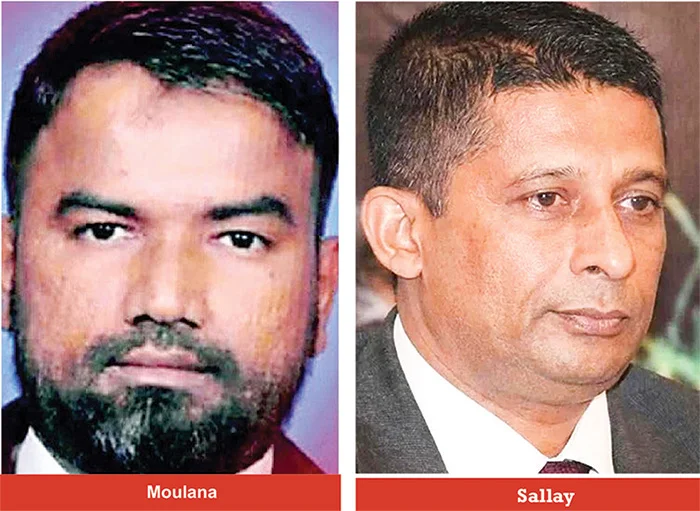
Retired Maj. Gen. Suresh Sallay’s recent arrest attracted internatiattention. His long-expected arrest took place ahead of the seventh anniversary of the bombings. Multiple blasts claimed the lives of nearly 280 people, including 45 foreigners. State-owned international news television network, based in Paris, France 24, declared that arrest was made on the basis of information provided by a whistleblower. The French channel was referring to Hanzeer Azad Moulana, who earlier sought political asylum in the West and one-time close associate of State Minister Sivanesathurai Chandrakanthan aka Pilleyan. May be the fiction he wove against Pilleyan and others may have been to strengthen his asylum claim there. Moulana is on record as having told the British Channel 4 that Sallay allowed the attack to proceed with the intention of influencing the 2019 presidential election. The French news agency quoted an investigating officer as having said: “He was arrested for conspiracy and aiding and abetting the Easter Sunday attacks. He has been in touch with people involved in the attacks, even recently.”
****
Suresh Sallay of the Directorate of Military Intelligence (DMI) received the wrath of Yahapalana Prime Minister Ranil Wickremesinghe, in 2016, over the reportage of what the media called the Chavakachcheri explosives detection made on March 30, 2016. Premier Wickremesinghe found fault with Sallay for the coverage, particularly in The Island. Police arrested ex-LTTE child combatant Edward Julian, alias Ramesh, after the detection of one suicide jacket, four claymore mines, three parcels containing about 12 kilos of explosives, to battery packs and several rounds of 9mm ammunition, from his house, situated at Vallakulam Pillaiyar Kovil Street. Chavakachcheri police made the detection, thanks to information provided by the second wife of Ramesh. Investigations revealed that the deadly cache had been brought by Ramesh from Mannar (Detection of LTTE suicide jacket, mines jolts government: Fleeing Tiger apprehended at checkpoint, The Island, March 31, 2016).
The then Jaffna Security Forces Commander, Maj. Gen. Mahesh Senanayake, told the writer that a thorough inquiry was required to ascertain the apprehended LTTE cadre’s intention. The Chavakachcheri detection received the DMI’s attention. The country’s premier intelligence organisation meticulously dealt with the issue against the backdrop of an alleged aborted bid to revive the LTTE in April 2014. Of those who had been involved in the fresh terror project, three were killed in the Nedunkerny jungles. There hadn’t been any other incidents since the Nedunkerny skirmish, until the Chavakachcheri detection.
Piqued by the media coverage of the Chavakachcheri detection, the Sirisena-Wickremesinghe administration tried to silence the genuine Opposition. As the SLFP had, contrary to the expectations of those who voted for the party at the August 2015 parliamentary elections, formed a treacherous coalition with the UNP, the Joint Opposition (JO) spearheaded the parliamentary opposition.
The Criminal Investigation Department (CID) questioned former External Affairs Minister and top JO spokesman, Prof. G.L. Peiris, over a statement made by him regarding the Chavakachcheri detection. The former law professor questioned the legality of the CID’s move against the backdrop of police declining to furnish him a certified copy of the then acting IGP S.M. Wickremesinghe’s directive that he be summoned to record a statement as regards the Chavakachcheri lethal detection.
One-time LTTE propagandist Velayutham Dayanidhi, a.k.a. Daya Master, raised with President Maithripala Sirisena the spate of arrests made by law enforcement authorities, in the wake of the Chavakachcheri detection. Daya Master took advantage of a meeting called by Sirisena, on 28 April, 2016, at the President’s House, with the proprietors of media organisations and journalists, to raise the issue. The writer having been among the journalists present on that occasion, inquired from the ex-LETTer whom he represented there. Daya Master had been there on behalf of DAN TV, Tamil language satellite TV, based in Jaffna. Among those who had been detained was Subramaniam Sivakaran, at that time Youth Wing leader of the Illankai Thamil Arasu Kadchi (ITAK), the main constituent of the now defunct Tamil National Alliance. In addition to Sivakaran, the police apprehended several hardcore ex-LTTE cadres (LTTE revival bid confirmed: TNA youth leader arrested, The Island April 20, 2016).
Ranil hits out at media
Subsequent inquiries revealed the role played by Sivakaran in some of those wanted in connection with the Chavakachcheri detection taking refuge in India. When the writer sought an explanation from the then TNA lawmaker, M.A. Sumanthiran, regarding Sivakaran’s arrest, the lawyer disowned the Youth Wing leader. Sumanthiran emphasised that the party suspended Sivakumaran and Northern Provincial Council member Ananthi Sasitharan for publicly condemning the TNA’s decision to endorse Maithripala Sirisena’s candidature at the 2015 presidential election (Chava explosives: Key suspects flee to India, The Island, May 2, 2016).
Premier Wickremesinghe went ballistic on May 30, 2016. Addressing the 20th anniversary event of the Sri Lanka Muslim Media Forum, at the Sports Ministry auditorium, the UNP leader castigated the DMI. Alleging that the DMI had been pursuing an agenda meant to undermine the Yahapalana administration, Wickremesinghe, in order to make his bogus claim look genuine, repeatedly named the writer as part of that plot. Only Wickremesinghe knows the identity of the idiot who influenced him to make such unsubstantiated allegations. The top UNPer went on to allege that The Island, and its sister paper Divaina, were working overtime to bring back Dutugemunu, a reference to war-winning President Mahinda Rajapaksa. A few days later, sleuths from the Colombo Crime Detection Bureau (CCD) visited The Island editorial to question the writer where lengthy statements were recorded. The police were acting on the instructions of the then Premier, who earlier publicly threatened to send police to question the writer.
In response to police queries about Sallay passing information to the media regarding the Chavakachcheri detection and subsequent related articles, the writer pointed out that the reportage was based on response of the then ASP Ruwan Gunasekera, AAL and Sumanthiran, as had been reported.
Wickremesinghe alleged, at the Muslim media event, that a section of the media manipulated coverage of certain incidents, ahead of the May Day celebrations.
In early May 2016 Wickremesinghe disclosed that he received assurances from the police, and the DMI, that as the LTTE had been wiped out the group couldn’t stage a comeback. The declaration was made at the Lakshman Kadirgamar Institute for International Relations and Strategic Studies (LKIIRIS) on 3 May 2016. Wickremesinghe said that he sought clarifications from the police and the DMI in the wake of the reportage of the Chavakachcheri detection and related developments (PM: LTTE threat no longer exists, The Island, May 5, 2016).
The LTTE couldn’t stage a comeback as a result of measures taken by the then government. It would be a grave mistake, on our part, to believe that the eradication of the LTTE’s conventional military capacity automatically influenced them to give up arms. The successful rehabilitation project, that had been undertaken by the Rajapaksa government and continued by successive governments, ensured that those who once took up arms weren’t interested in returning to the same deadly path.
In spite of the TNA and others shedding crocodile tears for the defeated Tigers, while making a desperate effort to mobilise public opinion against the government, the public never wanted the violence to return. Some interested parties propagated the lie that regardless of the crushing defeat suffered in the hands of the military, the LTTE could resume guerilla-type operations, paving the way for a new conflict. But by the end of 2014, and in the run-up to the presidential election in January following year, the situation seemed under control, especially with Western countries not wanting to upset things here with a pliant administration in the immediate horizon. Soon after the presidential election, the government targeted the armed forces. Remember Sumanthiran’s declaration that the ITAK Youth Wing leader Sivakaran had been opposed to the TNA backing Sirisena at the presidential poll.
The US-led accountability resolution had been co-sponsored by the Sirisena-Wickremesinghe duo to appease the TNA and Tamil Diaspora. The Oct. 01, 2016, resolution delivered a knockout blow to the war-winning armed forces. The UNP pursued an agenda severely inimical to national interests. It would be pertinent to mention that those who now represent the main Opposition, Samagi Jana Balawegaya (SJB), were part of the treacherous UNP.
Suresh moved to Malaysia
 The Yahapalana leadership resented Sallay’s work. They wanted him out of the country at a time a new threat was emerging. The government attacked the then Justice Minister Dr. Wijeyadasa Rajapakshe, PC, who warned of the emerging threat from foreign-manipulated local Islamic fanatics on 11 Nov. 2016, in Parliament. Rajapakshe didn’t mince his words when he underscored the threat posed by some Sri Lanka Muslim families taking refuge in Syria where ISIS was running the show. The then government, of which he was part o,f ridiculed their own Justice Minister. Both Sirisena and Wickremesinghe feared action against extremism may cause erosion of Muslim support. By then Sallay, who had been investigating the deadly plot, was out of the country. The Yahapalana government believed that the best way to deal with Sallay was to grant him a diplomatic posting. Sally ended up in Malaysia, a country where the DMI played a significant role in the repatriation of Kumaran Pathmanathan, alias KP, after his arrest there.
Having served the military for over three cadres, Sallay retired in 2024 in the rank of Major General. Against the backdrop of his recent arrest, in connection with the ongoing investigation into the 2019 Easter Sunday carnage, The Island felt the need to examine the circumstances Sallay ended up in Malaysia at the time. Now, remanded in terms of the Prevention of terrorism Act (PTA), he is being accused of directing the Easter Sunday operation from Malaysia.
Pivithuru Hela Urumaya leader and former Minister Udaya Gammanpila has alleged that Sallay was apprehended in a bid to divert attention away from the deepening coal scam. Having campaigned on an anti-corruption platformm in the run up to the previous presidential election, in September 2024, the Parliament election, in November of the same year, and local government polls last year, the incumbent dispensation is struggling to cope up with massive corruption issues, particularly the coal scam, which has not only implicated the Energy Minister but the entire Cabinet of Ministers as well.
The crux of the matter is whether Sallay actually met would-be suicide bombers, in February 2018, in an estate, in the Puttalam district, as alleged by the UK’s Channel 4 television, like the BBC is, quite famous for doing hatchet jobs for the West. This is the primary issue at hand. Did Sallay clandestinely leave Malaysia to meet suicide bombers in the presence of Hanzeer Azad Moulana, one-time close associate of State Minister Sivanesathurai Chandrakanthan, aka Pilleyan, former LTTE member?
The British channel raised this issue with Sallay, in 2023, at the time he served as Director, State Intelligence (SIS). Sallay is on record as having told Channel 4 Television that he was not in Sri Lanka the whole of 2018 as he was in Malaysia serving in the Sri Lankan Embassy there as Minister Counsellor.
Therefore, the accusation that he met several members of the National Thowheeth Jamaath (NTJ), including Mohamed Hashim Mohamed Zahran, in Karadipuval, Puttalam, in Feb. 2018, was baseless, he has said.
The intelligence officer has asked the British television station to verify his claim with the Malaysian authorities.
Responding to another query, Sallay had told Channel 4 that on April 21, 2019, the day of the Easter Sunday blasts, he was in India, where he was accommodated at the National Defence College (NDC). That could be verified with the Indian authorities, Sallay has said, strongly denying Channel 4’s claim that he contacted one of Pilleyan’s cadres, over, the phone and directed him to pick a person outside Hotel Taj Samudra.
According to Sallay, during his entire assignment in Malaysia, from Dec. 2016 to Dec. 2018, he had been to Colombo only once, for one week, in Dec. 2017, to assist in an official inquiry.
Having returned to Colombo, Sallay had left for NDC, in late Dec. 2018, and returned only after the conclusion of the course, in November 2019.
Sallay has said so in response to questions posed by Ben de Pear, founder, Basement Films, tasked with producing a film for Channel 4 on the Easter Sunday bombings.
The producer has offered Sallay an opportunity to address the issues in terms of Broadcasting Code while inquiring into fresh evidence regarding the officer’s alleged involvement in the Easter Sunday conspiracy.
The producer sought Sallay’s response, in August 2023, in the wake of political upheaval following the ouster of Gotabaya Rajapaksa, elected at the November 2019 presidential election.
At the time, the Yahapalana government granted a diplomatic appointment to Sallay, he had been head of the Directorate of Military Intelligence (DMI). After the 2019 presidential election, President Gotabaya Rajapaksa named him the Head of SIS.
The Basement Films has posed several questions to Sallay on the basis of accusations made by Hanzeer Azad Moulana.
In response to the film producer’s query regarding Sallay’s alleged secret meeting with six NTJ cadres who blasted themselves a year later, Sallay has questioned the very basis of the so called new evidence as he was not even in the country during the period the clandestine meeting is alleged to have taken place.
Contradictory stands
Following Sajith Premadasa’s anticipated defeat at the 2019 presidential election, Harin Fernando accused the Catholic Church of facilitating Gotabaya Rajapaksa’s victory. Fernando, who is also on record as having disclosed that his father knew of the impending Easter Sunday attacks, pointed finger at the Archbishop of Colombo, Rt. Rev Malcolm Cardinal Ranjith, for ensuring Gotabaya Rajapaksa’s victory.
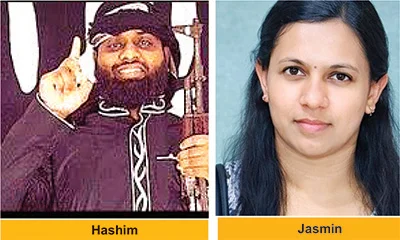
Former President Maithripala Sirisena, as well as JVP frontliner Dr. Nalinda Jayathissa, accused India of masterminding the Easter Sunday bombings. Then there were claims of Sara Jasmin, wife of Katuwapitiya suicide bomber Mohammed Hastun, being an Indian agent who was secretly removed after the Army assaulted extremists’ hideout at Sainthamaruthu in the East. What really had happened to Sara Jasmin who, some believe, is key to the Easter Sunday puzzle.
Then there was huge controversy over the arrest of Attorney-at-Law Hejaaz Hizbullah over his alleged links with the Easter Sunday bombers. Hizbullah, who had been arrested in April 2020, served as lawyer to the extremely wealthy spice trader Mohamed Yusuf Ibrahim’s family that had been deeply involved in the Easter Sunday plot. Mohamed Yusuf Ibrahim had been on the JVP’s National List at the 2015 parliamentary elections. The lawyer received bail after two years. Two of the spice trader’s sons launched suicide attacks, whereas his daughter-in-law triggered a suicide blast when police raided their Dematagoda mansion, several hours after the Easter Sunday blasts.
Investigations also revealed that the suicide vests had been assembled at a factory owned by the family and the project was funded by them. It would be pertinent to mention that President Gotabaya Rajapaksa’s government never really bothered to conduct a comprehensive investigation to identify the Easter Sunday terror project. Perhaps, their biggest failure had been to act on the Presidential Commission of Inquiry (PCoI) recommendations. Instead, President Rajapaksa appointed a six-member committee, headed by his elder brother, Chamal Rajapaksa, to examine the recommendations, probably in a foolish attempt to improve estranged relations with the influential Muslim community. That move caused irreparable damage and influenced the Church to initiate a campaign against the government. The Catholic Church played quite a significant role in the India- and US-backed 2022 Aragalaya that forced President Rajapaksa to flee the country.
Interested parties exploited the deterioration of the national economy, leading to unprecedented declaration of the bankruptcy of the country in April 2022, to mobilie public anger that was used to achieve political change.

Afternoon showers expected in the Uva and Sabaragamuwa provinces and in Hambantota, Nuwara-Eliya and Ampara districts

Trump administration launches US military operation in Ecuador

US sinks Iranian warship off Galle returning from Indian naval exercise

Justice Kumudini complains of male domination at senior levels, absence of a woman head of BASL

No qualified printer to head Government Printing Department

Wildlife Dept. fails on elephant fence management: Withanage

‘Dates have the highest sugar content to fight Coronavirus’

Sunday Island 27 December – Headlines

#SundayIsland 17th December – Headlines

Sunday Island – 28th March

Sunday Island Headlines – 21 March

Sunday Island – 21st February – Headlines
-

 Features3 days ago
Brilliant Navy officer no more
-

 Opinion6 days ago
Jamming and re-setting the world: What is the role of Donald Trump?
-
 Features6 days ago
An innocent bystander or a passive onlooker?
-

 Opinion3 days ago
Sri Lanka – world’s worst facilities for cricket fans
-

 Business6 days ago
An efficacious strategy to boost exports of Sri Lanka in medium term
-
 Features4 days ago
Overseas visits to drum up foreign assistance for Sri Lanka
-
 Features4 days ago
Sri Lanka to Host First-Ever World Congress on Snakes in Landmark Scientific Milestone
-

 Features3 days ago
A life in colour and song: Rajika Gamage’s new bird guide captures Sri Lanka’s avian soul