
Sports
Abdeen’s incredible journey in rugby spans a decade


By a Special Sports Correspondent
Sri Lanka’s legendary rugby player Hisham Abdeen has been actively involved with the sport played with the oval shaped ball for over five decades. That could be something to celebrate given all the gloom and the doom brought to us sportsmen and sports lovers via the pandemic.
In an interview with ‘The Island’ newspaper done at his second home-Havelocks Sports Club- the 61 year old recalled his heydays on the field and what he felt about the future of rugby union in Sri Lanka.
Abdeen said that it’s of prime importance to get the players mentally ready after the pandemic because the ‘break’ from the game was forced on the players and wasn’t voluntary. “They have missed so much and some couldn’t play for their schools in the final year of academic studies. It’s good if Sri Lanka Rugby can arrange an under 21 tournament for the benefit of all those players who missed the last year of school rugby,” said Abdeen who has again started running his academy called Hisham Abdeen Rugby Football Academy (HARFA). As many as 75 players from this academy have represented the First XV teams of their schools and around 10 players have represented the country.
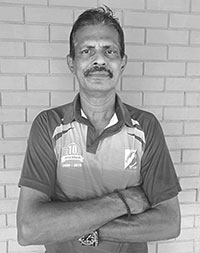 There was a time when the trend of bulking up using power training and loading on supplements made rugby a brutally contact game. But then despite the doors being opened up for spectators after the third wave of Covid patrons are not very keen on witnessing games; this is probably because of the predictable nature of matches. “There are too many hits and players lack individual skills. Very rarely do we see today a player being able to kick with both legs, punt the ball or kick a grubber,” said Abdeen. According him players of his era invested much time on personal training to lift their skills and the game.
Despite having so much credentials in the game Abdeen has stuck with schoolboy players and university undergraduates when choosing his assignments as a coach. This could be because he pays special attention and emphasis on making the players grasp the basics of the game. The other factor he focuses is on fitness. “Fit players rarely get injured,” underscored Abdeen.
We can remember how Abdeen shone for his schools-initially for Zahira and then for Isipathana College. He played for Havelocks SC as a schoolboy in 1979 and the following season (1980) he stamped his class in the school season by scoring 25 tries wearing the green jersey. This type of achievement where a schoolboy plays for a club while still being in school is rarely heard of. When Abdeen made it to the Havelocks SC side he had to play as a second row forward because the Park Club’s third row was occupied by dazzling players in the likes of Jeff de Jong, Anjelo Wickremaratne and Geoffrey Yu. There were days when he was a marked man. But on a day where he had everything coming right for him he scored eight fabulous tries. That performance came against Army SC at Longden Place. That performance was equaled by Army’s Sithara Fernando in an A Division club rugby game many years later.
Abdeen’s power came probably through the training he did and thanks to his favourite meal-rice and curry. He was a fitness fanatic and trained beyond the capacity of the average club rugby player. As for the rice he ate there are so many interesting stories associated with this aspect of his life. “Once at the Hong Kong Sevens in 1983 the BBC journalist, knowing that there were riots in my country, asked me what the problem was and I replied saying that the problem I have right now is that there is no place in Australia where I’m staying where I can have a decent rice and curry meal”. During Abdeen’s time the players were not remunerated for their availability. But he used to tell at least this much, “No rice, No game”.
Abdeen was a freak. He ate what he wanted and trained the way he wished. He never did weights for strength training purposes. He believed in natural fitness, solid technique and perfect timing when bringing down a player twice his size. Players feared Abdeen and when he tackled you just stayed ‘put’ for a while. Several players tried to imitate his walk and copy his playing style but all that proved to be a waste of time. The Abdeen we saw was ‘one and only’ and he could only be appreciated, not copied.
There were other reasons to say that he was a freak. He represented the country in three sports; rugby union (Last tour in 1993), Soccer (last tour in 1986) and sepak takraw (the last tour in the 1990s ). At present sportsmen and women cannot even think doing a second sport because of the demands in any one of the chosen disciplines are so high.
He also had his share of successes as a coach with the national side. He rates the island’s appearance at the Hong Kong Sevens in 2009 as memorable for him as a coach. “Radeeka Hettiarachchi scored twice in the match against Australia and we had a grand tournament that year. There were many new comers to the side during that tour and I was able to guide them to play at the top level,” he said. He was also a national selector for more than ten years. He is also a life member of Sri Lanka Rugby.
Abdeen now concentrates on his academy and serving the game which has given him a tremendous identity. That old saying which underscores the fact that there is a strong woman behind every successful man is fitting to Abdeen’s life story. According to him his wife ‘Jeni’ has been his source of strength and plays a major role in the academy when it comes to handling player registrations at HARFA and parents of players.
Abdeen had so much of successes, but no achievement could make him too big for his boots. Even today he remains humble and available for those who need him. He still enjoys sitting on the bench as a coach and contributing to the game he loves so much. Because individuals like Abdeen know that there is no set amount to give a signal to a player to indicate that he has given back enough to the game.

by Rex Clementine
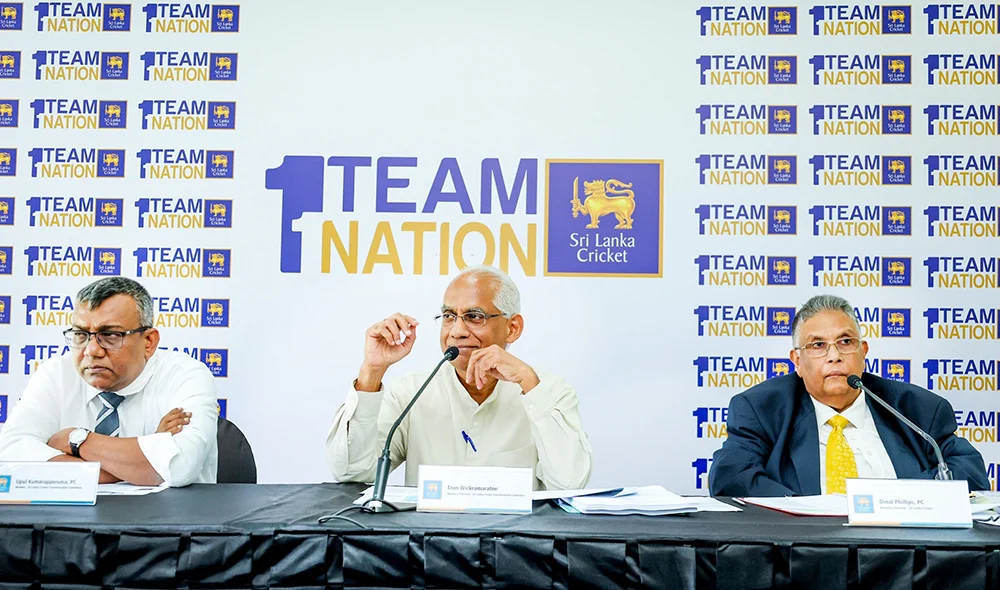
The proposed new constitution for Sri Lanka Cricket has gathered considerable momentum over the past fortnight, with the Bill presented to Parliament, debated by MPs and now facing judicial scrutiny. The courts are examining whether the proposed reforms are consistent with the laws of the land.
The Island learns that a lawyer has challenged certain provisions of the proposed constitution, while former cricket board chief Thilanga Sumathipala has also sought judicial intervention.
The learned judges will hear their submissions and determine whether the proposed legislation passes legal muster. It is possible that the courts may require the authorities to amend certain provisions should they be found incompatible with existing laws.
Among the concerns raised by stakeholders is the proposed exclusion of district associations from having a say in SLC elections. Others are uncomfortable with the prospect of appointed members, rather than elected representatives, heading the board.
These are legitimate concerns and deserve a fair hearing. But there is a larger issue that cannot be swept under the carpet. It is the very system that has governed Sri Lankan cricket for decades that has brought the game to its knees. Unless bold decisions are taken, we will continue to languish near the bottom of the rankings, wondering where it all went wrong.
Opening the door for appointed members offers the possibility of having a well educated, professionally accomplished individual at the helm, rather than leaving the administration of a multi billion rupee organisation in the hands of individuals whose qualifications have sometimes barely extended beyond the GCE Advanced Level.
Some of those who have occupied the hot seat in recent years have spent money like drunken sailors on shore leave. The figures emerging from SLC are enough to make your eyes water.
It has emerged that SLC’s catering bill alone over the past three years has amounted to a staggering Rs. 1.2 billion. During roughly the same period, SLC has reportedly spent more than Rs. 600 million on legal fees. That is an extraordinary amount of money for an organisation whose primary responsibility is to develop and promote cricket.
Giving independent directors a greater say in the affairs of the board would also help curb the tendency of club representatives to put their own interests ahead of the greater good.
Take, for instance, SLC’s recent decision to upgrade club grounds with floodlights. The first beneficiary happened to be the very club represented by the board President. Such decisions inevitably raise questions about priorities and conflicts of interest.
The parliamentary debate on cricket reforms also provided its share of entertainment.
One former Sports Minister was busy blowing his own trumpet, claiming that cricket had flourished during his tenure. The reality, however, tells a rather different story. Far from presiding over a golden era, his constant interference in the affairs of the board did little to advance the game and on occasions, stalled much needed progress.
MP Ravi Karunanayake’s assertion that politicians should have no place in sports administration also raised a few eyebrows.
The senior parliamentarian may well have made the observation with the best of intentions, but history suggests that painting every politician with the same brush would be a mistake. Some of the finest administrators Sri Lankan cricket has produced have come from the political establishment, including several stalwarts of his own party.
J.R. Jayewardene served as President of the cricket board, while Gamini Dissanayake remains one of the most outstanding administrators the game has known. It was under Dissanayake’s leadership that Sri Lanka secured the coveted Test status in 1981, opening the doors to cricket’s most exclusive club.
Tyrone Fernando was another influential figure in cricket administration, while Lalith Athulathmudali, a former President of NCC, was widely regarded as a future cricket board President before his life was tragically cut short.
Nor was the affection for cricket confined to the political right. The leftists had their own distinguished association with the gentleman’s game. Dr. N.M. Perera and Lakshman Jayakody both served as Presidents of the cricket board.
by Reemus Fernando
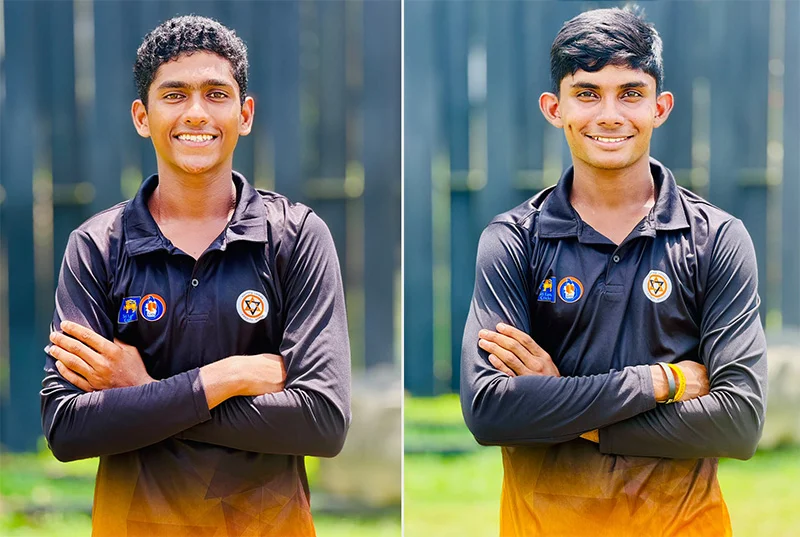
Sadew Nethmina spearheaded a devastating bowling attack to rattle Lumbini College for 40 runs as Mahinda College Galle registered emphatic ten wickets win to stay alive in the Under 19 Division I Tier A Limited Overs Cricket Tournament.
The victory at Dombagoda means Mahinda will have realistic hopes of advancing to the knockout stage.
Monday’s victory was Mahinda’s third and it has wide opened their Group where Royal College Colombo, St. Peter’s College, Bambalapitiya and St. Anthony’s College, Katugastota are the other teams. While St. Anthon’s have registered two wins, Royal and St. Peter’s have recorded one win each so far.
Lumbini’s batting collapsed against a disciplined Mahinda attack as Nethmina and Vishmitha Sathsara shared nine wickets between them.
Nethmina produced an outstanding five-wicket haul, conceding only 19 runs in nine overs, including one maiden. Sathsara was equally impressive, claiming four wickets for just three runs in six overs, including three maidens. Manitha Rajapaksha took the remaining wicket as Lumbini were bundled out for a meagre total.
Mahinda needed just 4.3 overs to complete the chase.
Sehas Ashinsa led the charge with a blistering unbeaten 30 off 17 balls, striking five fours and a six.
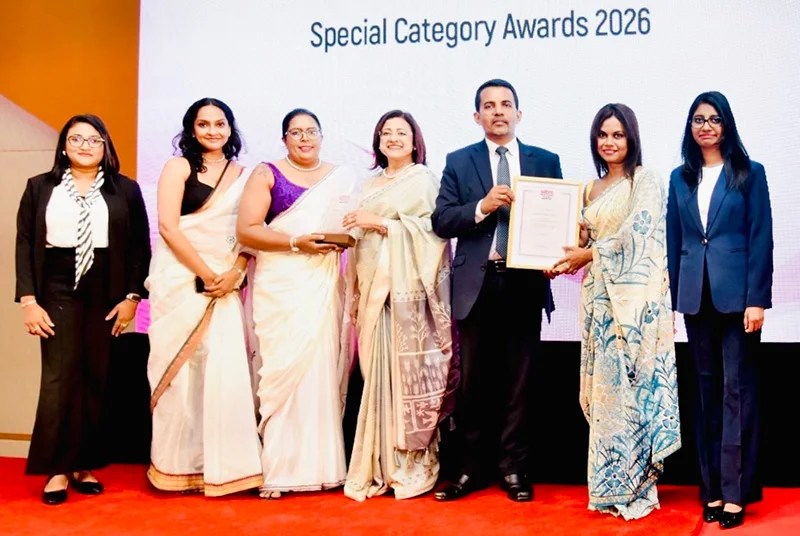
Hayleys Fentons Limited has received recognition at the Satynmag Women Friendly Workplace Awards 2026 for its approach to equal opportunities and career development within the engineering sector. The Company supports employees through merit-based progression and access to technical, leadership and professional development opportunities.
With operations spanning multiple technical disciplines, Hayleys Fentons seeks to ensure that gender does not limit access to technical or leadership careers. Employees are supported to progress based on their capabilities, experience and performance.
Career development is supported through merit-based progression and access to technical, leadership and professional development programmes.
Hayleys Fentons also recognises the importance of supporting female employees at different stages of their professional and personal lives. Flexible working arrangements, parental leave provisions and childcare support contribute towards creating a workplace where employees can balance their professional responsibilities with family commitments. The Company maintains an equal-pay approach, with remuneration and career opportunities determined by merit, experience and performance rather than gender.
“This recognition reflects the importance we place on creating an environment where people can build and progress in their careers based on their capabilities and performance. In engineering, expanding opportunities for women is particularly important to building a stronger talent pipeline, and we want our workplace to support that progression at every stage.” said Hasith Prematillake, Managing Director, Hayleys Fentons Limited.

Heavy showers (100-150) mm likely at some places in the Western, Sabaragamuwa, Central, Uva and Southern provinces showerss above 75 mm are likely in the other areas of the island.

Presidential pardons: Govt. studying Justice Thurairaja’s recommendations – Minister

Mahinda and Shiranthi hospitalised

Monks must be allowed to wear robes when produced in court: Mahanayake Theras

Jt. Opp. seeks presidential pardon for Ven. Gnanasara

Shiranthi’s anticipatory bail application rejected

‘Dates have the highest sugar content to fight Coronavirus’

Sunday Island 27 December – Headlines

#SundayIsland 17th December – Headlines

Sunday Island – 28th March

Sunday Island Headlines – 21 March

Sunday Island – 21st February – Headlines
-

 Features5 days ago
The Sri Lankan who made Scottish history
-

 Sports5 days ago
Nissanka absence opens door for Sri Lanka’s young guns
-

 News6 days ago
Gnansara Thera to be assigned to prison printing section: Officials
-

 News4 days ago
NDB fraud Rs 60mn more than reported
-

 News4 days ago
Removing monk’s robes matter for Sangha to decide: Mahanayake Theras
-

 Features5 days ago
Future of Sri Lanka’s state university system: Should it be shut down and reopened?
-
 News6 days ago
OIC of FCID summoned before Maligakanda Magistrate
-
 News5 days ago
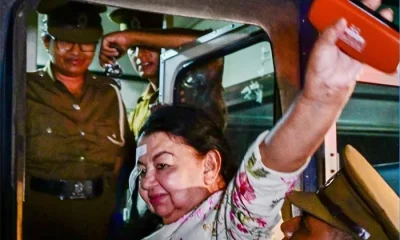
Shiranthi R remanded until 13 Oct.