
News
Have we got our economic and Covid-19 priorities right?

Sri Lanka has over 50% living below the poverty line, and the malnutrition rate is estimated to be 18%. It is obvious that first priority should be given to relief of hunger. Then to fighting the COVID 19 epidemic, a health care problem. It is after relieving these that money should be devoted to infrastructure like highways. But in Sri Lanka it appears to be the other way round.
Health care is a priority, but even on this aspect, are we acting sensibly? In the Daily News of 15.07.21, the Director of the Health Promotion Bureau is quoted as saying that the number of COVID 19 cases has dropped to 6.2% on the basis of random PCR tests, from an earlier figure of 10%.
The Epidemiology Unit has carried out about 7,000 random PCR tests daily covering all MOH divisions in the country. The best public health measure is the observance of the three health rules – wearing masks, observing social distancing and washing the hands with soap and water after touching anything touched by others. This has been going on from the outset and is being successful at little or no cost.
As nearly 80% of COVID-19 infections are asymptomatic or extremely mild, they develop immunity and do not need any vaccination. Vaccination is only indicated to the vulnerable group – elderly (over 60 years), those with serious underlying diseases e.g. respiratory, cardiac, diabetes mellitus, cancers etc. This group of about 20% of the population should be vaccinated, commencing with the oldest age group, as they are prone to develop and some of them can die. The occasional occurrence of a case in a child fits into the pattern associated with several virus diseases called Kawasaki syndrome. As such, there is no need to immunize children, taken as a group.
An intensive program is now underway to vaccinate all those above 30 years in every district in Sri Lanka. 36% of this target population has received the first dose already and 21% both doses. A large mass of expensive vaccines from different countries are being rushed into the country as if we are faced with a life or death struggle.
By the end of June, Sri Lanka had only 277,519 cases with 3,574 deaths (1.4%). A social scientist visited Kanatte cemetery a few days ago and inquired whether there had been an increase in deaths since the COVID outbreak began and she was able to confirm that no such spike had occurred. Why then this great hurry to vaccinate? Even in the USA, no doctors and other health care workers have died of COVID- 19.
The vaccine industry which is in decline has seen a golden opportunity to expand and profit. An intensive campaign was carried out in the USA to frighten the people and to compel them to take the vaccine, which had already been mass produced. It also provided a good opportunity to test new varieties of vaccines e.g. the mRNA vaccines (like the Pfizer and Moderna COVID 19 vaccines from the USA), which are really the introduction of genetic material to get our body cells to produce the spike protein alone of the virus, not the whole virus.
As we all know, the introduction of foreign genetic material is considered to be unsafe and future outcomes are uncertain. That is why the European Union refused to import genetically modified (GM) foods from South America. There were campaigns in the USA questioning the safety and efficacy of the COVID vaccines. Sales in the USA and West have not been great, as questions have been raised by scientists.
In North America and Europe, it was because of the big spike of cases, specially approaching winter that the COVID-19 phobia gained ground, and “emergency use” was resorted to. There is no such emergency situation in Sri Lanka. Further, Asian and African countries that have used BCG as a protection against TB have been shown to have benefited from it and have little COVID 19.
The vaccine is also expensive and many people in the USA refused to buy it, specially the poor blacks and browns. The vaccine industry had to find a market for this massive unsold surplus. What better than to look abroad for markets among those already mentally conditioned to accept the vaccine as a necessity? It is not difficult to buy over officials and decision- makers and get the local private sector to come in with suitable inducements. This is what we are seeing in many countries world-wide, and here in Sri Lanka too.
Governments tend to fall in line in the face of such intensive campaigning.. The COVID phobia is there among the people to be exploited and the environment and the partners are also in place, so why not exploit it?
The vaccine producers themselves admit that the optimal time for boosters is still being worked out to get full protection. The side effects are also being looked for and are not fully known. This particularly applies to the long term effects. The protection will be short term and in all probability annual boosters will be required. This is going to be a considerable cost.
On the political side, the lockdown policy practiced in Sri Lanka has no real benefit from a medical point of view, and is only increasing poverty and disrupting the economy, leading to job losses. We need more informed debate on this whole issue and then come out with what really needs to be done. Protests against vaccination should be allowed, as much as for vaccination.
Prof. Tissa Vitarana

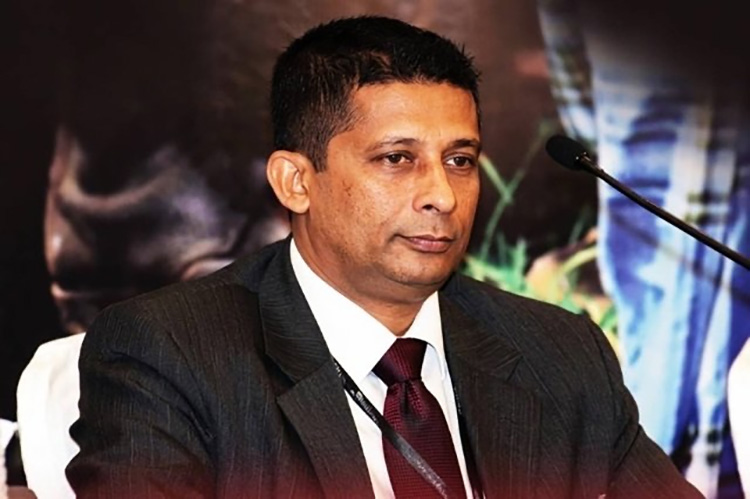
The government has chosen not to respond to questions raised by the United Nations Human Rights Council (UNHRC) regarding the detention of retired Maj. Gen. Suresh Sallay in connection with the ongoing investigations into the 2019 Easter Sunday attacks.
The Criminal Investigation Department (CID) arrested the ex-official in late February this year. The Special Rapporteur on the promotion and protection of human rights and fundamental freedoms while countering terrorism, the Working Group on Arbitrary Detention, the Special Rapporteur on the right of everyone to the enjoyment of the highest attainable standard of physical and mental health and the Special Rapporteur on the independence of judges and lawyers have jointly raised the issue on 20 July, 2026.
Drawing attention of President Anura Kumara Dissanayake to what they called alleged arbitrary detention of Sallay, former Director General of the State Intelligence Service (SIS) and former Director of Military Intelligence (DMI), under the Prevention of Terrorism Act (PTA), as well as allegations of torture and other cruel, inhuman or degrading treatment while in custody, resulting in the grave deterioration of his health, and imminent risks of retaliation through further torture and ill-treatment resulting in irreparable harm, should he be released from hospital and returned to custody, the UN sought the government explanation with a 60-day period.
The UN has stated: “This communication, and any response received from your Excellency’s Government, will be made public via the communications reporting website at the 60 days mark. Should your Excellency’s Government respond within 60 days, both the communication and the response, may be published before the 60 days mark. The communications and responses
will also be made available in the subsequent periodic report to be presented to the Human Rights Council.”
In the absence of the government’s response, the UN posted the letter, dated 20 July, 2026, addressed to President Dissanayake. The full letter can be accessed https://spcommreports.ohchr.org/TMResultsBase/DownLoadPublicCommunicationFile?gId=31125
News
Section of wartime KKS High Security Zone vacated to facilitate economic development in the area

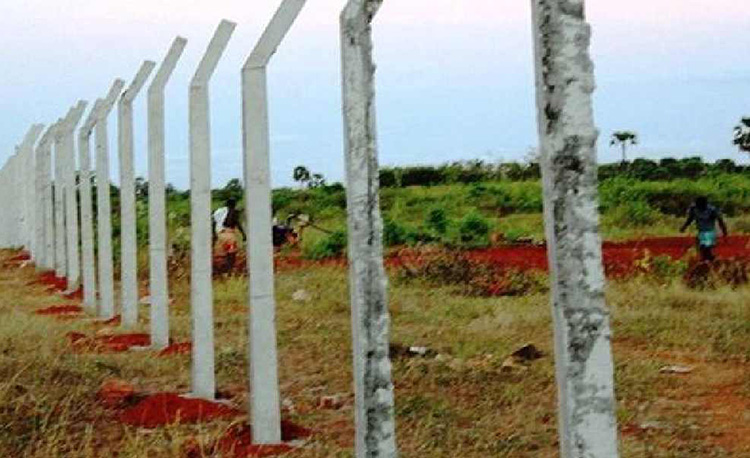
The Army, last week, vacated an area, within the wartime high security zone in the Jaffna peninsula. The Defence Ministry said that an extent of 187.56 acres of land, belonging to the Cement Corporation in Kankesanthurai, Jaffna, has been released by the military. The released land, located in Grama Niladhari Division J/233, Kankesanthurai West, within the Valikamam North (Tellippalai) Divisional Secretariat Division, had been utilised by the Sri Lanka Army since the middle of 1997.
The release of the 187.56-acre extent forms part of the initiative to make State land available for the proposed investment zone in Kankesanthurai, thereby facilitating future investment and economic development in the area.
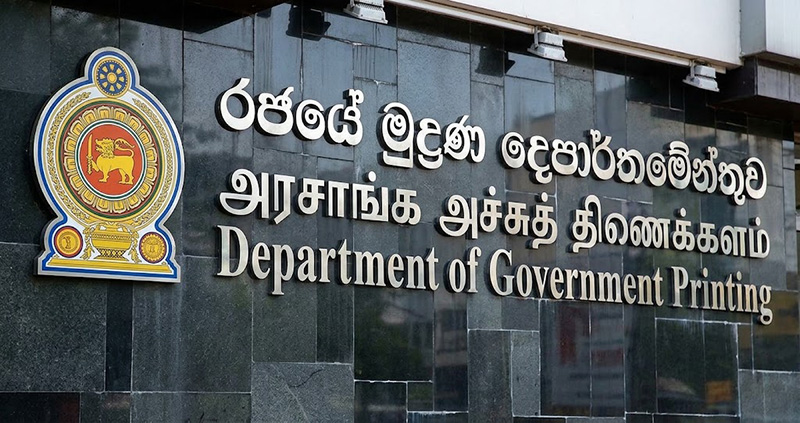
A complaint has been lodged with the Colombo Fraud Investigation Bureau against the Government Printer and the Secretary to the Ministry of Media regarding the online release of falsified documents bearing a forged Speaker’s certificate.
Attorney-at-Law Aruna Laksiri has lodged a complaint with the Colombo Fraud Investigation Bureau requesting legal action against the Government Printer of the Department of Government Printing (No. 118, Dr. Danister de Silva Mawatha, Colombo 08), Prasanna Jayaratne, and the Secretary to the Ministry of Mass Media (Asidisi Medura, 163, Kirulapone Mawatha, Polhengoda, Colombo 05), Dr. Anil Jasinghe.
The complaint alleges the commission of offences by forging and uploading falsified documents online using a forged Speaker’s certification, failure to perform statutory duties, and misappropriation of public property.
The complaint states that a copy of the English translation of the 22nd Amendment to the Constitution was downloaded and printed from the official website of the Government Printing Department (www.documents.gov.lk), which operates under the Ministry of Mass Media. On its outer cover and on page 1, the text “certified on 25th of September, 2026” is inscribed inside brackets.
The complaint pointed out that the Speaker has certified an English translation. Under Articles 23, 79, 83, and 80 of the Constitution, Parliament enacts laws and the Speaker certifies bills strictly in the Sinhala and Tamil languages; under the Constitution, therefore the Speaker cannot apply such certification to an English translation.

Showers or thundershowers will occur at several places in the most part of the island after 1.00 p.m

Geneva takes up Sallay’s case and govt. ignores opportunity to answer accusations

Section of wartime KKS High Security Zone vacated to facilitate economic development in the area

Lawyer lodges complaint against Govt. Printer, Media Ministry Secy.

Sri Lankan troops in joint anti-terrorist exercise in Russia

Nine Indian poachers brought to KKS with their boat

‘Dates have the highest sugar content to fight Coronavirus’

Sunday Island 27 December – Headlines

#SundayIsland 17th December – Headlines

Sunday Island – 28th March

Sunday Island Headlines – 21 March

Sunday Island – 21st February – Headlines
-

 Latest News5 days ago
Gold winner Tharanga gets brand-new Honda Vezel from SLAAJ
-

 Features5 days ago
Why Sri Lanka needs an Inclusive Civic Nationalism – urgently
-

 News4 days ago
US-assisted ‘Ice’ detection: NPC to examine IGP’s move to transfer drug-busting team
-

 Features6 days ago
Thailand’s biggest new global star …
-

 News6 days ago
First cases taken up by SC after enactment of 22A dismissed
-

 News5 days ago
Civil society activist accuses govt. of favouring Ven. Gnanasara
-

 Editorial3 days ago
Colombo Port drug bust: The plot thickens
-

 Editorial6 days ago
Aftershocks of 22A