
Business
GPPAC multistakeholder forum at RCSS highlights climate-disaster vulnerability and need for community-centred solutions in Sri Lanka

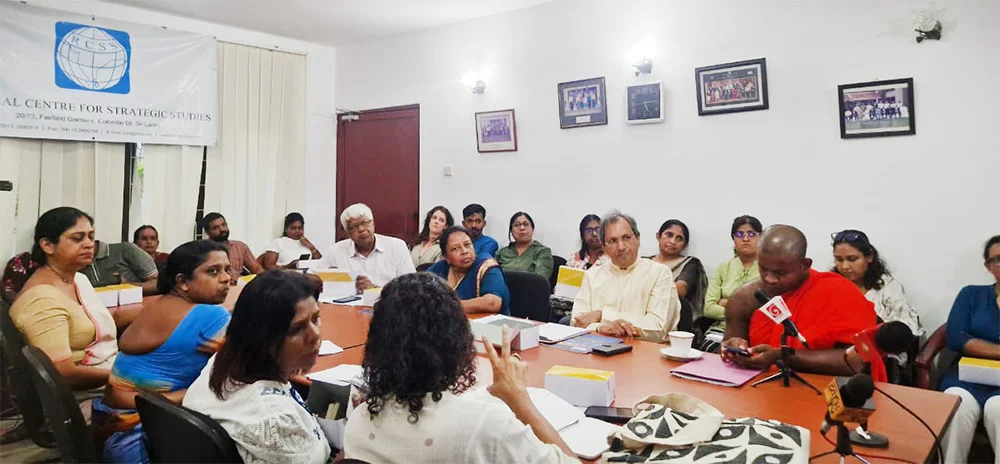
A multistakeholder forum on ‘Empowering Estate and Rural Communities for Climate and Disaster Resilience and Social Equity’ convened at the Regional Centre for Strategic Studies (RCSS) in Colombo on 5 June 2026. The discussion revealed the inadequate infrastructure especially related to early warning, amplified community vulnerability far beyond the immediate disaster impact of cyclone ‘Ditwah’, and advocated for community-centred solutions.
This forum, initiated under the GPPAC Climate, Peace, and Security (CLIMPSE) project, was held in collaboration with GPPAC-Sri Lanka counterpart organizations; the National Peace Council (NPC), the Centre for Policy Alternatives (CPA), Women & Media Collective (WMC), Viluthu, and the Association of War Affected Women (AWAW). It brought together policymakers, academics, civil society representatives, journalists, disaster risk management experts, and community members, which included a representation of women and youth from cyclone ‘Ditwah’ affected communities.
RCSS Executive Director Ambassador (Retd.) Ravinatha Aryasinha, who opened the forum, situated the deliberation within the broader CLIMPSE project, which lay at the intersections of climate change, disaster risk, social equity, and peacebuilding. He said Sri Lanka’s contribution to this project had particular value, as it featured two recent case studies carried out by researchers from the RCSS and the NPC, which examined the aftermath of Cyclone ‘Ditwah’, which was identified as the second-deadliest disaster in Sri Lanka after the 2004 tsunami, affecting 2.3 million people and killing 639.
Professor Mallika Joseph, Regional Coordinator for GPPAC (South Asia), joining the discussion virtually from India, introduced GPPAC as a civil society network headquartered in The Hague with 15 regional networks, of which South Asia is one of the strongest, particularly in terms of gender focal points. The CLIMPSE project builds on previous civil society work to foreground peacebuilders’ perspectives on climate change, moving beyond purely ecological or environmental framings.
The first case study by Ms. Chamika Wijesuriya, Research/Programme Officer RCSS, focused on the Malaiyaha Tamil community in the Upcot region in the Nuwera Eliya district observed that as climate change intensifies, estate and rural communities face compounding vulnerabilities. While the field work revealed that only 45% of displaced persons found camp conditions they were residing in post-Ditwah marginally satisfactory, problems continue including acute water insecurity, landslide risk, infrastructural deficits, exploitative labour conditions, and systemic exclusion from policy processes. She emphasized that while “Cyclone Ditwah did not create the vulnerability of the Malaiyaha Tamil community, it revealed the consequences of unresolved land and labour rights and administrative marginalization within the plantation regions, primarily driven by structural and institutional factors rather than by disaster events alone”. Bridging grassroots traditional knowledge with high-level policy frameworks was essential for achieving durable and equitable outcomes. Community members from the estates who attended the meeting in person, shared testimonies about the ongoing displacement, damaged homes, lack of support, and uncertainty about where to go, and what to do with their children.
In the second case study, Sampath Randunna, Senior Project Officer NPC, focused on the post-cyclone impacts and recovery challenges in Hasalaka in the Kandy District, where loss of family members and long-term disruptions caused profound social and psychological impacts. 52% of the community participants had no official disaster warning prior to cyclone. 56% of affected community members were not consulted at all about relocation decisions. He further noted that traditional and local knowledge of climate trends (rainfall, erosion, water shifts) is disappearing with older generations. Early warning systems were noted as critically important; with community-based systems and trusted local actors essential for last-mile communication. A community member who also participated, highlighted the loss of members of 13 families in Nelummala Gama, when the whole village went under the rubble from the landslide. Another community member, a monk, shared the traumatic details of losing 7 members of his own family, and the difficulty faced by the next of kin in receiving compensation, particularly on account of being members of religious orders.
Subsequently a 3 member Panel of Experts amplified both the causes of the problems and the efforts being made to overcome them, including the practical difficulties faced in this regard. Anoja Senevirathna, Disaster Risk Management Expert, commented on the lack of awareness of the public about disaster risk reduction. She impressed the need for a rights-based approach where the community and people are aware of disaster and climate change impacts and take informed and responsible steps to build their own resilience, such as digitizing their important documents. She noted that the establishment of a well-structured national loss and damage recording system is essential for Sri Lanka to systematically document the impacts of climate change. Reliable and evidence-based data will strengthen the country’s ability to advocate for international support, mobilize climate finance, and access adaptation and compensation mechanisms to address climate-induced losses and damages effectively.
Professor Udayangani Kulatunga, Former Director, Centre for Disaster Risk Reduction, University of Moratuwa, highlighted the need for a clear hazard warning from one single authority and the need to increase basic awareness about evacuation among the public, including evacuation packs and pre-mapped routes. She noted that evacuation centers must also be sensitive to socio-cultural dimensions of communities.
Dilrukshi Handunnetti, Co-Founder/Director, Center for Investigative Reporting (CIR) and Co-Convenor, South Asia Journalism Collective (SAJC), commented on the critical role of investigative journalism in holding institutions accountable, amplifying community voices, and ensuring that the lived realities of climate-affected populations inform public discourse and policymaking. She also noted that heat stress is an emerging climate risk with no current advisory system or national vulnerability profile in Sri Lanka. The failure of early warning systems to reach the most marginalized communities due to language barriers, digital inequality, and lack of community-level communication infrastructure, was also highlighted.
Ms. Kumudini Samuel, Director (Programs and Research), Women & Media Collective (WMC) problematised the prolonged implementation of the State of Public Emergency and the Essential Public Services Act, enacted post-Cyclone Ditwah. Ms. Visaka Dharmadasa, Founder and Chair of Association of War Affected Women (AWAW) expressed that there should be investigation of environmental impacts of development projects in the Central Province.
An open discussion followed which highlighted a number of failures in Sri Lanka’s climate and disaster resilience, including the lack of initiative regarding accountability and disaster risk mitigation, lack of accountability for development projects that were conducted without proper Environmental Impact Assessment (EIA), the failure of early warning systems to reach marginalized communities, lack of community consultation in relocation decisions, digital inequality, accountability gaps in disaster governance, and the need for people-centered climate resilience. The need for integrated reform combining land tenure, infrastructure investment, community participation, and institutional accountability. The participants agreed to advocate for the policy recommendations arising from both case studies and push for the institutionalization of participatory decision-making in relocation and recovery planning at local and national levels. Furthermore, the need to explore mechanisms for public expenditure tracking in disaster recovery funding was also expressed as important. The forum concluded with remarks underscoring the significance of fundamental commitment to inclusion, equity, and community agency.

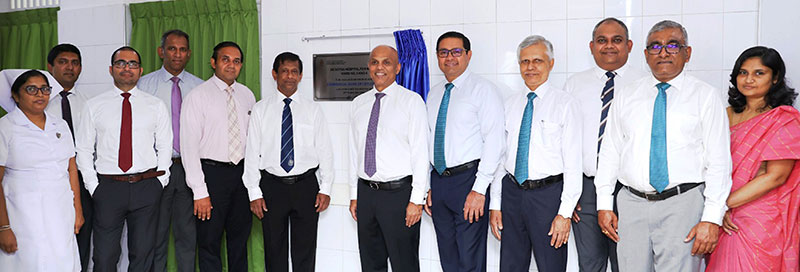
The Commercial Bank of Ceylon recently handed over Wards No. 03 and 04 of the De Soysa Hospital for Women, after the completion of a comprehensive renovation project launched in March this year to mark International Women’s Day.
Wards 03 and 04 handle a substantial share of the hospital’s patient load, and account for approximately 2,500 to 3,000 deliveries and 4,000 to 5,000 admissions annually. Their refurbishment was designed to significantly enhance patient care, safety and comfort, and directly benefit thousands of mothers and newborns.
Five Trustees of the Commercial Bank’s Corporate Social Responsibility Trust participated in the formal handing over of the refurbished wards to the hospital authorities. They were Sharhan Muhseen, the Bank’s Chairman, Raja Senanayake, Deputy Chairman, Sanath Manatunge, Managing Director/CEO, Hasrath Munasinghe, Chief Operating Officer, and Prasanna Indrajith, Chief Financial Officer.
Established in 1879, the De Soysa Hospital for Women is the first maternity hospital in Sri Lanka and the second oldest in Asia and is credited with, among others, performing the country’s first caesarean section in 1905 and establishing one of its earliest organised operating theatres in 1907.
The Commercial Bank’s Corporate Social Responsibility Trust, through which this project was implemented, has via its healthcare-related interventions supported more than 100 government hospitals with essential equipment and infrastructure, contributed to emergency medical services through the ‘Adopt an Ambulance’ initiative, and implemented targeted community health interventions such as water storage solutions for families affected by kidney disease.
The International Institute of Health Sciences (IIHS) Multiversity is expanding its international education programmes with the aim of creating overseas employment opportunities for Sri Lankan nurses and allied health professionals while contributing to foreign exchange earnings.
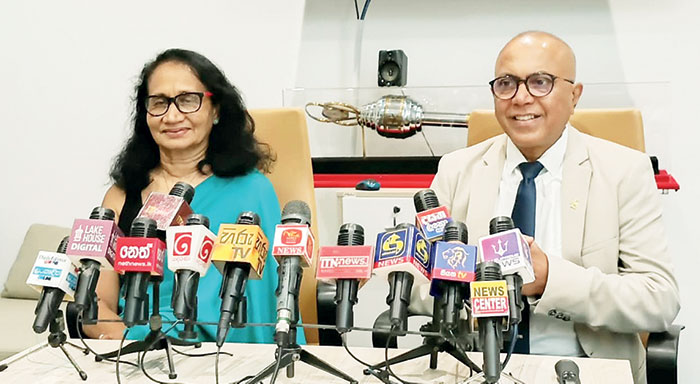
Speaking to the media during a conference at IIHS Multiversity in Kerawalapitiya, Dr. Kithsiri Edirisinghe, CEO, Co-Founder and Dean of IIHS aid that the institute has established academic partnerships with overseas universities and higher education institutions, including the University of Surrey in the UK, Deakin University in Australia, Metropolia University of Applied Sciences in Finland, Asia e University in Malaysia and SUNY Canton in the United States.
Under its ‘Study in Sri Lanka, Graduate to the World’ model, students can complete foundational and diploma-level qualifications locally before progressing to international top-up degrees or overseas employment.
Dr Edirisinghe said the model could substantially reduce the cost of obtaining internationally recognised qualifications. It estimates that completing a four-year bachelor’s degree at the University of Surrey in the UK would cost about USD 145,700, including tuition and living expenses, compared with about USD 27,750 through the IIHS pathway in Sri Lanka.
Dr Edirisinghe said the institute’s focus on overseas deployment addressed both Sri Lanka’s economic needs and the growing global demand for healthcare workers.
“Our winning model is producing job-ready, registration-ready healthcare professionals who can seamlessly enter foreign healthcare systems,” he said.
IIHS, which began operations in 2002 as the American College of Health Sciences, established its institutional base in Welisara in 2008 and launched its purpose-built greenfield multiversity campus in 2023.
The institute said it has upgraded the qualifications of more than 5,000 government nurses, supported over 2,500 youth on international employment pathways and trained more than 1,000 allied health professionals. It has also carried out over 250 community health projects.
The institute has identified Germany and Japan among its target markets, with pathways planned for 2,000 nurses for Germany and a one-year preparation programme linked to around 4,000 healthcare positions in Japan.
Dr. Renuka Jayatissa, Vice-Chancellor and a specialist medical doctor, said demographic changes and the growing burden of non-communicable diseases were changing healthcare requirements in Sri Lanka.
Business
Sampath Bank launches Sri Lanka’s first community-powered book discovery platform at Colombo International Book Fair

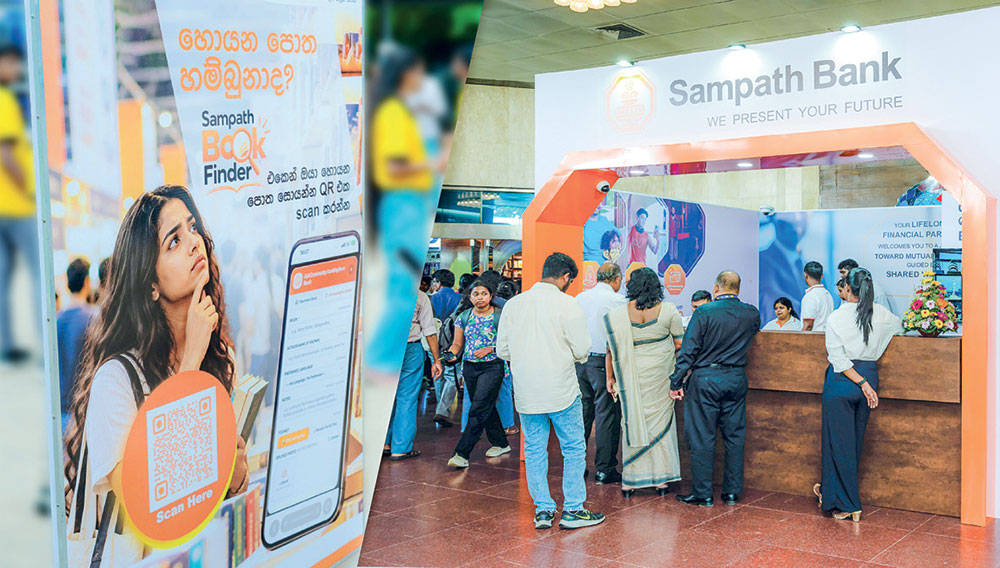
Sampath GPay customers can enjoy 25% cash back on Book Fair purchases
Sampath Bank PLC has launched Sampath Book Finder, Sri Lanka’s first community-powered book discovery platform, giving visitors to the Colombo International Book Fair a faster and more seamless way to find the books they are looking for across the fair’s 150+ stalls, while also opening up new opportunities to discover titles recommended by fellow readers.
Introduced on the opening day of the Colombo International Book Fair on 25 September, Sampath Book Finder brings together digital innovation and the collective knowledge of readers to address a familiar challenge at one of Sri Lanka’s largest literary gatherings, where the scale of the fair can make locating a particular title a time-consuming exercise. When a book proves difficult to locate, visitors can access bookfairtracker.com or scan the designated QR code and submit a request to the community, allowing readers who have already spotted the title to share its location and help others find it without having to search stall after stall.
Commenting on the initiative, Milinda Weerasinghe, Chief Marketing Officer, Sampath Bank PLC, said, “At Sampath Bank, we believe meaningful innovation begins by identifying everyday challenges and creating solutions that make a real difference. Sampath Book Finder brings this thinking to the Colombo International Book Fair by turning the collective knowledge of readers into a real-time digital solution, empowering them to find what they are looking for, discover something new and help others do the same, while making the overall experience more convenient and connected.”
The platform also turns book discovery into a shared experience, allowing visitors to recommend books they encounter by sharing the title, publisher, hall and stall number, which enables fellow readers to discover sought-after titles and recommendations while making it easier to locate them within the fair.
Sampath Bank’s longstanding association with the Colombo International Book Fair also continues in 2026, marking more than 20 years of partnership, with the Bank serving as the Official Banking Partner for this year’s fair. As part of its presence at the event, SampathCards offer 25% cashback for Sampath GPay customers on their purchases and 3 months 0% instalment plans for book purchases via Sampath credit cards, while visitors can also access banking services through the Bank’s physical presence at the fair. Customers registering to open selected Fixed Deposits at the premises will receive an additional 0.25%, adding further value and convenience for visitors.

Landslide Early Warnings issued to the Districts of Kandy, Kegalle, Matale and Ratnapura

No handshakes and a delayed ceremony as India beat Pakistan at Asian Games

Showers or thundershowers will occur in most parts of the island after 1.00 p.m

Lanka enters new phase of prosecutions as hurdles clear

Police warn: Court evaders face property seizure

Nearly 20 Iranian tankers stranded off Lanka amid US sanctions

‘Dates have the highest sugar content to fight Coronavirus’

Sunday Island 27 December – Headlines

#SundayIsland 17th December – Headlines

Sunday Island – 28th March

Sunday Island Headlines – 21 March

Sunday Island – 21st February – Headlines
-

 News6 days ago
Police remove Thileepan statue in Jaffna
-

 Features6 days ago
The 22nd Amendment, constitutional recovery and illiberal slippage
-

 Features6 days ago
Of foreigners as CEOs of Lankan ventures
-

 Latest News4 days ago
Gold winner Tharanga gets brand-new Honda Vezel from SLAAJ
-

 News6 days ago
Sajith rejects Jt. Opp. protest sabotage claim; SJB TU chief demands remedial action
-

 Features4 days ago
Why Sri Lanka needs an Inclusive Civic Nationalism – urgently
-

 Features5 days ago
Thailand’s biggest new global star …
-

 News3 days ago
US-assisted ‘Ice’ detection: NPC to examine IGP’s move to transfer drug-busting team