
Business
GPPAC multistakeholder forum at RCSS highlights climate-disaster vulnerability and need for community-centred solutions in Sri Lanka

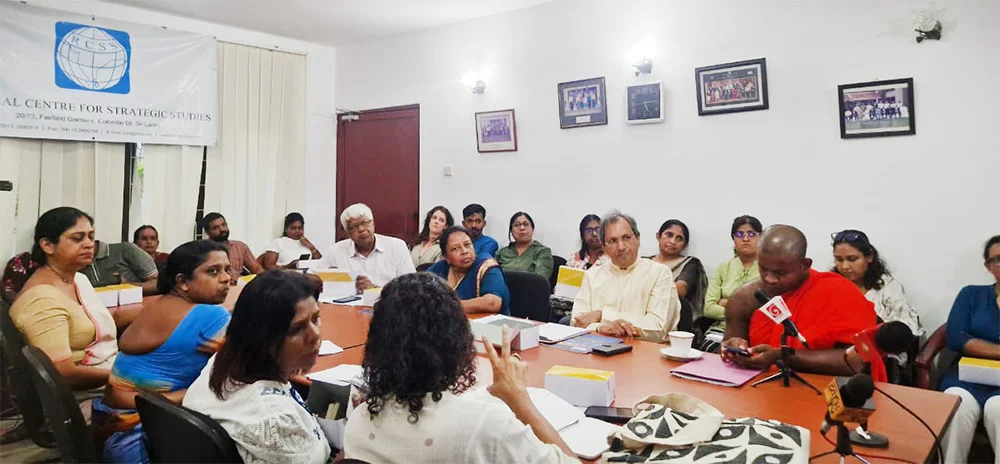
A multistakeholder forum on ‘Empowering Estate and Rural Communities for Climate and Disaster Resilience and Social Equity’ convened at the Regional Centre for Strategic Studies (RCSS) in Colombo on 5 June 2026. The discussion revealed the inadequate infrastructure especially related to early warning, amplified community vulnerability far beyond the immediate disaster impact of cyclone ‘Ditwah’, and advocated for community-centred solutions.
This forum, initiated under the GPPAC Climate, Peace, and Security (CLIMPSE) project, was held in collaboration with GPPAC-Sri Lanka counterpart organizations; the National Peace Council (NPC), the Centre for Policy Alternatives (CPA), Women & Media Collective (WMC), Viluthu, and the Association of War Affected Women (AWAW). It brought together policymakers, academics, civil society representatives, journalists, disaster risk management experts, and community members, which included a representation of women and youth from cyclone ‘Ditwah’ affected communities.
RCSS Executive Director Ambassador (Retd.) Ravinatha Aryasinha, who opened the forum, situated the deliberation within the broader CLIMPSE project, which lay at the intersections of climate change, disaster risk, social equity, and peacebuilding. He said Sri Lanka’s contribution to this project had particular value, as it featured two recent case studies carried out by researchers from the RCSS and the NPC, which examined the aftermath of Cyclone ‘Ditwah’, which was identified as the second-deadliest disaster in Sri Lanka after the 2004 tsunami, affecting 2.3 million people and killing 639.
Professor Mallika Joseph, Regional Coordinator for GPPAC (South Asia), joining the discussion virtually from India, introduced GPPAC as a civil society network headquartered in The Hague with 15 regional networks, of which South Asia is one of the strongest, particularly in terms of gender focal points. The CLIMPSE project builds on previous civil society work to foreground peacebuilders’ perspectives on climate change, moving beyond purely ecological or environmental framings.
The first case study by Ms. Chamika Wijesuriya, Research/Programme Officer RCSS, focused on the Malaiyaha Tamil community in the Upcot region in the Nuwera Eliya district observed that as climate change intensifies, estate and rural communities face compounding vulnerabilities. While the field work revealed that only 45% of displaced persons found camp conditions they were residing in post-Ditwah marginally satisfactory, problems continue including acute water insecurity, landslide risk, infrastructural deficits, exploitative labour conditions, and systemic exclusion from policy processes. She emphasized that while “Cyclone Ditwah did not create the vulnerability of the Malaiyaha Tamil community, it revealed the consequences of unresolved land and labour rights and administrative marginalization within the plantation regions, primarily driven by structural and institutional factors rather than by disaster events alone”. Bridging grassroots traditional knowledge with high-level policy frameworks was essential for achieving durable and equitable outcomes. Community members from the estates who attended the meeting in person, shared testimonies about the ongoing displacement, damaged homes, lack of support, and uncertainty about where to go, and what to do with their children.
In the second case study, Sampath Randunna, Senior Project Officer NPC, focused on the post-cyclone impacts and recovery challenges in Hasalaka in the Kandy District, where loss of family members and long-term disruptions caused profound social and psychological impacts. 52% of the community participants had no official disaster warning prior to cyclone. 56% of affected community members were not consulted at all about relocation decisions. He further noted that traditional and local knowledge of climate trends (rainfall, erosion, water shifts) is disappearing with older generations. Early warning systems were noted as critically important; with community-based systems and trusted local actors essential for last-mile communication. A community member who also participated, highlighted the loss of members of 13 families in Nelummala Gama, when the whole village went under the rubble from the landslide. Another community member, a monk, shared the traumatic details of losing 7 members of his own family, and the difficulty faced by the next of kin in receiving compensation, particularly on account of being members of religious orders.
Subsequently a 3 member Panel of Experts amplified both the causes of the problems and the efforts being made to overcome them, including the practical difficulties faced in this regard. Anoja Senevirathna, Disaster Risk Management Expert, commented on the lack of awareness of the public about disaster risk reduction. She impressed the need for a rights-based approach where the community and people are aware of disaster and climate change impacts and take informed and responsible steps to build their own resilience, such as digitizing their important documents. She noted that the establishment of a well-structured national loss and damage recording system is essential for Sri Lanka to systematically document the impacts of climate change. Reliable and evidence-based data will strengthen the country’s ability to advocate for international support, mobilize climate finance, and access adaptation and compensation mechanisms to address climate-induced losses and damages effectively.
Professor Udayangani Kulatunga, Former Director, Centre for Disaster Risk Reduction, University of Moratuwa, highlighted the need for a clear hazard warning from one single authority and the need to increase basic awareness about evacuation among the public, including evacuation packs and pre-mapped routes. She noted that evacuation centers must also be sensitive to socio-cultural dimensions of communities.
Dilrukshi Handunnetti, Co-Founder/Director, Center for Investigative Reporting (CIR) and Co-Convenor, South Asia Journalism Collective (SAJC), commented on the critical role of investigative journalism in holding institutions accountable, amplifying community voices, and ensuring that the lived realities of climate-affected populations inform public discourse and policymaking. She also noted that heat stress is an emerging climate risk with no current advisory system or national vulnerability profile in Sri Lanka. The failure of early warning systems to reach the most marginalized communities due to language barriers, digital inequality, and lack of community-level communication infrastructure, was also highlighted.
Ms. Kumudini Samuel, Director (Programs and Research), Women & Media Collective (WMC) problematised the prolonged implementation of the State of Public Emergency and the Essential Public Services Act, enacted post-Cyclone Ditwah. Ms. Visaka Dharmadasa, Founder and Chair of Association of War Affected Women (AWAW) expressed that there should be investigation of environmental impacts of development projects in the Central Province.
An open discussion followed which highlighted a number of failures in Sri Lanka’s climate and disaster resilience, including the lack of initiative regarding accountability and disaster risk mitigation, lack of accountability for development projects that were conducted without proper Environmental Impact Assessment (EIA), the failure of early warning systems to reach marginalized communities, lack of community consultation in relocation decisions, digital inequality, accountability gaps in disaster governance, and the need for people-centered climate resilience. The need for integrated reform combining land tenure, infrastructure investment, community participation, and institutional accountability. The participants agreed to advocate for the policy recommendations arising from both case studies and push for the institutionalization of participatory decision-making in relocation and recovery planning at local and national levels. Furthermore, the need to explore mechanisms for public expenditure tracking in disaster recovery funding was also expressed as important. The forum concluded with remarks underscoring the significance of fundamental commitment to inclusion, equity, and community agency.


The Commercial Documents Registration Division (CDRD) of The Ceylon Chamber of Commerce has expanded its export support services with the introduction of the Free Sale Letter for Pharmaceuticals, providing Sri Lankan pharmaceutical manufacturers and exporters with an additional document certification service to support their export processes and compliance requirements in international markets.
The new service expands CDRD’s portfolio of trade documentation solutions, which includes Certificates of Origin and the certification of key commercial documents required by overseas buyers, customs authorities, and regulatory bodies. These services assist exporters across sectors by helping ensure their documentation meets applicable requirements for international trade.
Established in 1925 as one of the authorised institutions to issue Certificates of Origin in Sri Lanka, CDRD has supported the country’s international trade for nearly a century. Today, the Division provides certification and verification services to exporters, manufacturers, freight forwarders, logistics providers, and other trade stakeholders, supporting businesses in meeting documentation requirements for global markets.
In addition to pharmaceutical certification, CDRD facilitates the certification of Commercial Invoices, Packing Lists, Price Lists, Health Certificates, Phytosanitary Certificates, Certificates of Analysis, Bills of Lading, Survey Reports, Beneficiary Certificates, and other export-related documents. The Division also issues Free Sale Letters and Surveyor Appointment Letters, while supporting exporters through the Ministry of Foreign Affairs’ Electronic Document Attestation System (e-DAS), enabling secure and efficient document authentication.
Through established processes, digital solutions, and its e-service platform, CDRD continues to enhance the efficiency and accessibility of trade documentation services. Available 24/7 and 365 days of the year, the platform enables exporters to submit and manage documentation requirements conveniently while ensuring that certified documents meet internationally accepted requirements. By providing reliable documentation support and adapting its services to changing trade needs, the Division assists Sri Lankan businesses in managing export requirements and accessing international markets.
For more information on obtaining commercial document registration services, contact Achala via achala@chamber.lk / 0115588886
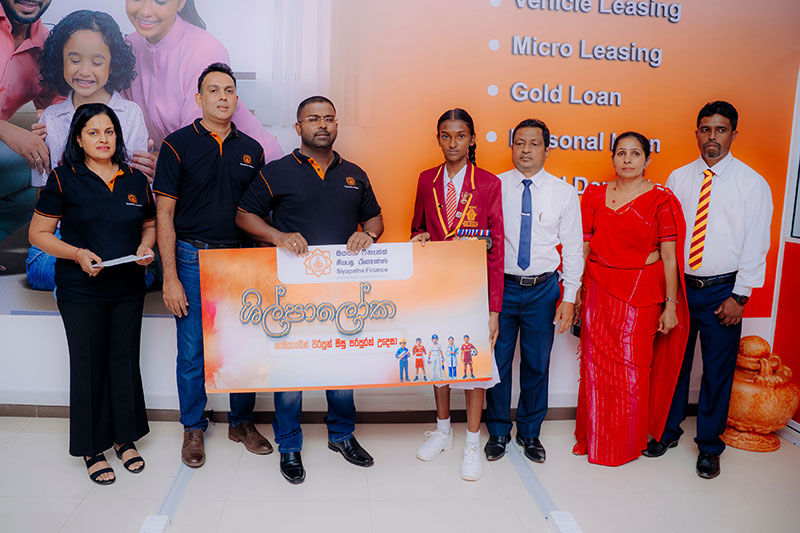
Siyapatha Finance PLC recently expanded its island-wide footprint with the successful inauguration of its 64th branch in Bandarawela. Strategically located in scenic hill town in the Badulla District, the latest branch offers convenient and wider access to tailored, customer-centric financial solutions.
The branch was ceremoniously declared open by Siyapatha Finance PLC Chief Executive Officer (CEO) Mathisha Hewavitharana, joined by Chief Operating Officer (COO)Rajeev De Silva, Ms.D.M. Dewmi Tharindi, a student of Bandarawela Dharmapala Vidyalaya who won the Under-18 Girls’ 3,000m event at the Junior National Athletics Championship, the Senior Management and staff members as well as Traffic OIC Kandasami, Trade Association Secretary Sunanda Rathnayaka, representatives of the government and private banks and insurance companies and well-wishers.
Sharing his thoughts, Siyapatha Finance PLC CEO Mathisha Hewavitharana remarked: “We are deeply honoured to be of service to the people of Bandarawela. Opening this branch is a pivotal step in our 2026 expansion strategy and a reflection of our commitment to strengthen our presence in Sri Lanka. It is a region that showcases potential for greater economic development primarily through the country’s traditional agricultural practices. We look forward to reaching as many different communities as possible in the coming years.”
The Bandarawela branch offers a comprehensive product portfolio including leasing, fixed deposits, gold financing, business loans, personal loans, fast draft, and factoring to Smart Pay, the Company’s bill payment facility. With a thorough understanding about the current socio-economic dynamics of the region, the well-trained team at the newest branch is dedicated to providing flexible financial solutions to aspiring individuals as well as small and medium-scale enterprises (SMEs).
Business
Dialog recognised as Sri Lanka’s Most Loved Service and Telecommunications Brand for third consecutive year


Dialog Axiata PLC, Sri Lanka’s #1 connectivity provider, has once again been recognised as Sri Lanka’s Most Loved Brand in the Service and Telecommunications sectors, while also ranking among the top Corporate Brands in the LMD Brands Annual. Marking its third consecutive year at the top of both categories, the recognition reflects the company’s commitment to enriching Sri Lankan lives and enterprises through technology, while creating value for customers, communities and the nation.
The accolades were awarded through the LMD Brands Annual survey, conducted independently by PepperCube Consultants on behalf of Media Services. Based on responses from 400 readers across Sri Lanka, representing a broad demographic and geographic mix, the survey identified the brands that resonated most strongly with consumers in terms of trust, loyalty and brand affinity.
Lasantha Theverapperuma, Group Chief Marketing Officer of Dialog Axiata PLC said, “Being recognised as Sri Lanka’s Most Loved Brand across both the Service and Telecommunications sectors is a meaningful endorsement of the trust and confidence that Sri Lankans continue to place in Dialog. This recognition reflects our commitment to understanding and serving the evolving needs of our customers while expanding access to digital connectivity, services and opportunities. As we continue to innovate and grow, we remain focused on creating value for communities and supporting Sri Lanka’s digital and socioeconomic progress.”
The recognition also reflects Dialog’s continued focus on innovation, customer-centricity and investments that support Sri Lanka’s digital future, including expanded 5G connectivity, AI-powered digital experiences and broader access to digital services.
Beyond connectivity, Dialog continues to support communities, livelihoods and the environment through initiatives such as Govi Mithuru, which provides AI-driven agricultural advisory services to over one million farmers, and Shishyadhara, which has enabled subsidy distribution to more than 450,000 underprivileged students. The company also continues to advance its Net Zero 2050 ambition through energy optimisation, renewable energy adoption and the expansion of solar-powered network infrastructure.
Further underscoring the brand’s standing among Sri Lankan consumers, Dialog was also recognised as the ‘Service Brand of the Year’ for the fifth time and the ‘Telecommunication Brand of the Year’ for the 15th consecutive year at the SLIM-KANTAR People’s Awards 2026.

US$ 2.5 mn cyber heist exposes system failures

Opposition signs no-confidence motion against Justice Minister for dereliction of duty over Negombo Prison deaths

AG informs SC of e-visa agreement review

Navy, Coast Guard seize smuggled pharmaceuticals and cosmetics in Puttalam

BASL urges President to fill superior courts’ vacancies

Mariazelle passes away

‘Dates have the highest sugar content to fight Coronavirus’

Sunday Island 27 December – Headlines

#SundayIsland 17th December – Headlines

Sunday Island – 28th March

Sunday Island Headlines – 21 March

Sunday Island – 21st February – Headlines
-

 News6 days ago
Singapore-based Buddhist monk marks nearly four decades of humanitarian service
-
 News1 day ago
Herath warns prospective migrant workers not to get fleeced by racketeers
-

 News5 days ago
AI concerned over proposed SL military deployment in Haiti
-

 Midweek Review3 days ago
Unexpected focus on ‘pieces of tin’ worn by military men
-

 Latest News4 days ago
Nyamhuri and Ngarava stun Bangladesh by defending 141
-

 Features6 days ago
The NPP’s New Challenge: Balancing Easter Lawfare and Economic Welfare
-

 News2 days ago
Negombo Prison riot: Ensuring protection of prisoners fundamental responsibility of the state – UN
-

 Editorial3 days ago
Prison riots and political battles