
News
Govt. to launch Indian funded national digital ID system by April 2026


In a major push towards digital transformation, the Government of Sri Lanka yesterday announced that it will launch its national Digital ID system by April 2026, a move that it promises will revolutionise access to public services while ensuring strong data privacy and citizen protection.
The project, implemented under the Ministry of Digital Economy, is funded by a grant of approximately LKR 10.4 billion from the Government of India.
“This will minimise the financial burden on the Sri Lankan government,” the Ministry said.
The Digital Economy Initiative envisions building an inclusive and robust digital economy by 2030, positioning Sri Lanka as a regional digital hub. A key step toward achieving this goal is the implementation of a secure and reliable digital identity system, the statement said.
For decades, Sri Lanka’s physical National Identity Card (NIC) has served as the foundation for identification and public service access. However, the global pivot toward secure and scalable digital identity solutions has prompted Sri Lanka to adopt a modern digital alternative.
The selected platform is the Modular Open-Source Identity Platform (MOSIP), a globally recognised, open-source digital ID framework already in use in countries such as the Philippines, Morocco, Ethiopia, and Togo. Over 130 million people globally have received MOSIP-based IDs, the Ministry said.
It said it considered three options: a locally developed system, proprietary commercial solutions, and international open-source platforms. MOSIP emerged as the most cost-effective, secure, and sovereign-friendly option, it added.
“Building an in-house solution would be time-consuming, will be limited to the knowledge available locally, at a time when digital ID expertise and experience are readily available to be extracted from other countries and products, requiring continuous investment of public money in software development, maintenance, and long-term sustainability.”
Proprietary platforms, while mature, came with high costs, limited flexibility, and the risk of vendor lock-in, the Ministry said, adding that MOSIP gives Sri Lanka flexibility, avoids vendor lock-in, and ensures the government retains full control of citizen data.
Unlike commercial alternatives, MOSIP’s open-source nature means it can be customised, maintained, and audited independently, making it ideal for long-term national use, it said.
The Ministry clarified that a certified Indian system integrator will customise MOSIP for Sri Lanka, while local IT professionals will be trained for full operation, maintenance, and future development of the system.
Key controls include:
* All data capture will be handled solely by the Department for Registration of Persons
* Biometric or personal data will be collected once the system is fully under local management.
* A full security audit will be conducted by Sri Lanka CERT before the system’s activation.
* The system will be deployed in infrastructure that is owned and operated by the Sri Lankan Government.
The Ministry of Digital Economy emphasised that the Digital ID system is designed with privacy and data security at its core.
Biometric data, such as face, fingerprints, and iris scan data, will be stored encrypted using multi-layer encryption both in transit and at rest. This approach ensures that citizen data remains private, secure, and fully inaccessible to unauthorised parties, reinforcing public confidence in the system’s integrity, it said.
The Ministry noted that contrary to public misconceptions, MOSIP is not India’s “Aadhaar” system.
While inspired by Aadhaar’s model, MOSIP is an international, open-source platform developed by a consortium of global experts in digital identity and cybersecurity, the statement pointed out.
“There have been no reported data breaches in any MOSIP-based system,” the Ministry said.
Officials emphasise that the Digital ID is more than just a technical tool; it is a cornerstone for inclusive governance and public trust.
The new system aims to simplify access to public and private sector services, enhance transparency and efficiency in government service delivery, and protect citizen privacy through modern encryption and data protocols. Enable the digital economy through secure digital authentication.
The Ministry of Digital Economy called on all stakeholders to approach the initiative with facts, not fear, and to support a project that will serve as the digital foundation for generations to come.


Reagent scandal:
Deputy Director of the National Hospital, Dr. Rukshan Bellana, has been interdicted by Health Service Committee (HSC) of the Public Service Commission (PSC) following a preliminary inquiry into several complaints received against him, government sources said.
They said certain matters referred by the Secretary to the Prime Minister Dr. Harini Amarasuriya and Inspector General of Police (IGP) Priyantha Weerasooriya, too, had been taken into consideration.
A Health Ministry official said there was no truth in Dr. Bellana’s claim, as reported in the 30th December edition of The Island, that the Health Ministry had sacked him on the approval of the HSC of the PSC over him taking up the massive Rs 900 mn fraud involving the supply of chemical reagents to the laboratory of the National Hospital of Sri Lanka (NHSL) in Colombo, which is the premier hospital in the country.
Sources said that there was absolutely no basis for this allegation. The official said that Dr. Bellana had been interdicted for issuing statements that caused controversy and turmoil among the public. That’s the most serious offence that had been taken into consideration when the decision to interdict him was taken, sources said. “There will be a spate of charges in the charge sheet to be issued soon.”
The interdiction of medical officers could not be carried out by the Ministry of Health and Mass Media, as the Ministry was not vested with disciplinary authority, sources added.
Dr. Bellana said he stood by what he revealed and had evidence to support his claim.
Health Ministry sources acknowledged that the National Audit Office (NAO) on June 6, 2025, had called for information in respect of chemical reagents procured by the National Hospital Colombo NHSL laboratory from 2022 to 2024.
Responding to another query, sources said that a separate investigation by the Internal Audit of the Ministry of Health was on into issues raised by the Audit query pertaining to the lab of the NHSL.
Having pointed out that the government paid Rs. 894,186,168 (2022), Rs. 713,652,615 (2023) and Rs. 936,152,767, totalling Rs 2,543,991,550 for chemical reagents during that period, NAO sought an explanation from the Health Ministry as to how Rs 12,894,697 worth of chemical reagents past expiry dates were found in six laboratories at NHSL during examination carried out on April 7,8,10,21 and 22 in 2025.
The NAO also raised the failure on the part of the relevant authorities to secure the approval of the Medical Supplies Division (MSD) before placing orders with local suppliers for chemical reagents.
The Health Ministry was questioned over the absence of proper stock keeping regarding Rs 2544 mn worth chemical reagents issued to NHSL laboratories. The NAO ascertained that Financial Regulations 751 had been violated. As a result of the absence of credible stock keeping, the NAO hadn’t been able to ascertain whether shelf-life expired chemical reagents were misused, the government authority stated.
The NAO asked for an explanation regarding the payment of Rs 912,838 over the required amount to a local private supplier (NAO named the supplier) for chemical reagents obtained.
In one of the most serious observations, NAO pointed out that shelf-life expired chemical reagents had been used for tests. The NAO raised this while pointing out the Health Ministry violated a key prerequisite in the procurement of chemical reagents that their shelf life should be at least 85% at the time of receiving consignments. Instead, all stocks procured had less than six months shelf life, NAO stated.
NAO declared that some suppliers refrained from mentioning the date of manufacture and the time of expiry.
The above mentioned were some of the issues that had been raised by Audit Superintendent Y.M. Sugathadasa on behalf of the Auditor General who is the head of the NAO. The post of AG remains vacant since December 8, 2025. Earlier incumbent W.P.C. Wickremeratne retired on April 8, 2025 after having served as AG for several years. President Anura Kumara Dissanayake and the Constitutional Council haven’t been able to reach consensus on a permanent appointment yet.
By Shamindra Ferdinando ✍️
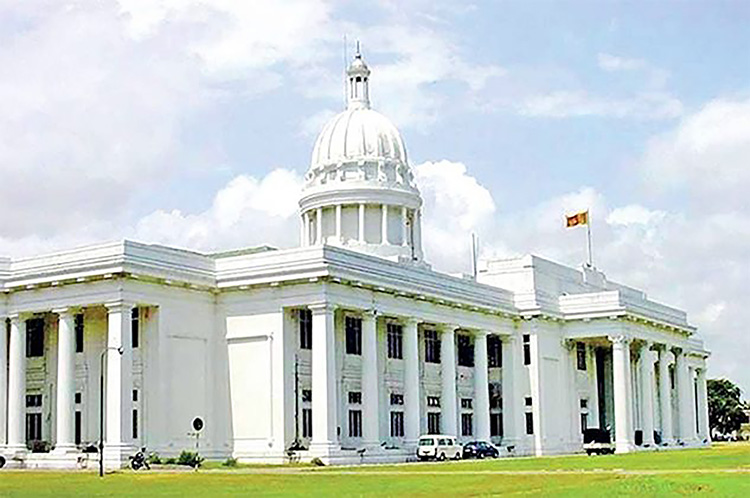
The Opposition has claimed that the government forced three of its Colombo Municipal Council members to to skip yesterday’s vote on the annual budget of the Council. The three councillors who voted with the SJB-led Opposition on 22 Dec., to defeat the NPP, skipped yesterday’s vote.
Two of them didn’t turn up yesterday while the other one left the Council early, claiming his wife was not well. One of the four SLMC councillors switched his allegiance to the NPP. having voted with the Opposition on 22 Dec.
As a result, the CMC’s annual budget was passed with a majority of two votes.
The budget proposal received 58 votes in favour, while 56 councillors voted against it. Last week, the Opposition obtained 60 votes to defeat it, while the NPP managed to secure only 57.
When the 2026 budget of CMC was first presented to the council on 22 December, 60 councilors voted against it while 57 members voted for the budget.
In the last Local Government Elections, the NPP secured power in the CMC and its mayoral candidate Vraie Cally Balthazar was elected as the Mayor of Colombo by securing 61 votes. (SF)
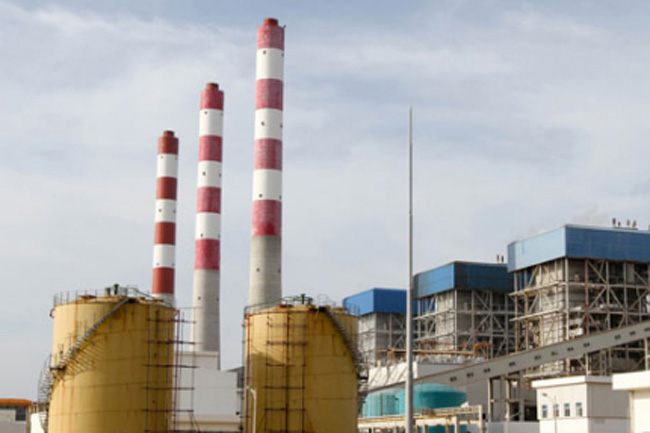
Sri Lanka’s power system has suffered a major setback with two of the three generators at the coal-fired power plant at Norochcholai going out of service, cutting around 600 megawatts from the national grid, even as Energy Ministry officials stressed yesterday that the issue is minor and fully under control.
One unit has been offline since November for scheduled major maintenance carried out once every three years, while another was shut down following a technical fault in its boiler. As a result, only one generator, at the country’s largest and only coal-fired power station, is currently supplying electricity to the grid.
Despite the sharp reduction in coal-based generation, a senior spokesperson for the Norochcholai Power Plant assured that there would be no disruption to electricity supply, as hydroelectric power generation is being increased to compensate for the temporary shortfall from Norochcholai.
Ministry of Power and Energy officials also confirmed that the situation is not serious and does not pose a risk to the stability of the national grid. “This is a minor technical issue and routine maintenance activity. There is no cause for public concern,” a senior Ministry official said.
Meanwhile, a top official of the Ceylon Electricity Board (CEB) said all three units of the Norochcholai Power Plant are expected to be restored by the first week of January, delivering the full 900MW capacity back to the national grid.
“Current reservoir levels are favourable, allowing us to rely more on hydropower during this period,” the CEB official said, adding that system operations are being closely monitored.
A senior electrical engineer told The Island that one unit had been shut down in November for routine maintenance, while another unit suffered an unexpected breakdown earlier this week. “Such incidents are not unusual in large thermal power stations. Corrective work is already under way and the units will be brought back online as scheduled,” he said.
Norochcholai remains the backbone of Sri Lanka’s base-load electricity generation, and while prolonged outages could place strain on the system during dry periods, officials reiterated that current conditions and contingency measures are adequate to ensure uninterrupted power supply until full operations resume.
By Ifham Nizam ✍️

Fairly heavy showers about 75 mm are likely at some places in the Central and Uva provinces and in Batticaloa and Ampara districts

National Audit Office reveals NHSL lapses

NPP’s CMC budget passed after four Opp. members switch allegiance

600MW hit to national grid as two Norochcholai units go offline

Health Secy. alleges death threats, seeks police protection

India doubles financial commitment to housing projects in Sri Lanka

‘Dates have the highest sugar content to fight Coronavirus’

Sunday Island 27 December – Headlines

#SundayIsland 17th December – Headlines

Sunday Island – 28th March

Sunday Island Headlines – 21 March

Sunday Island – 21st February – Headlines
-
 News6 days ago
Street vendors banned from Kandy City
-

 Sports3 days ago
Gurusinha’s Boxing Day hundred celebrated in Melbourne
-

 News6 days ago
Lankan aircrew fly daring UN Medevac in hostile conditions in Africa
-
 News1 day ago
Leading the Nation’s Connectivity Recovery Amid Unprecedented Challenges
-

 Sports4 days ago
Time to close the Dickwella chapter
-

 Features6 days ago
Rethinking post-disaster urban planning: Lessons from Peradeniya
-

 Opinion6 days ago
Are we reading the sky wrong?
-

 Features2 days ago
It’s all over for Maxi Rozairo