
Editorial
Govt. taking suicidal risk

Friday 10th February, 2023
The spectre of a protracted labour struggle looms over the country. By staging a joint protest, on Wednesday, warring professionals sent a strong message to the government. They have said in no uncertain terms that they will not give up their struggle until income tax is brought down to an affordable level. The government remains intransigent, having effected some minor changes to the new tax regime. Trade unions have rejected them out of hand, and threatened to resume their protests soon.
The government has, in its wisdom, opted for a game of chicken instead of offering to negotiate with the professionals on the warpath. It seems to think it will be able to railroad the protesters into coughing up unconscionably high taxes if it holds its ground. It is making a big mistake.
The beleaguered government will have absolutely no defence against a continuous general strike, which the country needs like a hole in the head at this juncture. The police and the military are no match for workers engaged in a strike in vital sectors such as health, banking, ports, power and energy. In 1980, the then President J. R. Jayewardene succeeded in crushing a general strike by sacking more than 40,000 workers in one fell swoop. He had a five-sixths majority in Parliament, and the Opposition was extremely weak at the time. The JVP, which was playing political footsie with the Jayewardene government, pulled out of that strike at the eleventh hour, dealing a crippling blow to the strikers’ morale. The situation is different today; the UNP-SLPP government is struggling for survival and fears the public, who will kick it out of power, given half a chance.
The government had better come to terms with reality and stop labouring under the delusion that it will be able to break strikes and quell uprisings simply because it has managed to crush the Galle Face protest and is using police and the armed forces to disperse protests.
If protests erupt across the country simultaneously, the police and the military will spread themselves too thin; they will not be able to disperse protests. The country seems to be moving in that direction with the government bulldozing its way through with no heed for people’s suffering. If the local government polls are postponed, the situation will take a turn for the worse.
Even President Gotabaya Rajapaksa, a former battle-hardened, frontline combat officer, who functioned as the country’s wartime defence secretary, decided to run away instead of ordering a military crackdown on protesters. It was about the only wise decision he made as the President! His exit kindled people’s hopes, which have given way to despair over the past few months.
At this rate, the day may not be far off when we witness another wave of agitations similar to the Gota-Go-Home campaign. If worse comes to worst, the SLPP leaders will not hesitate to throw anyone to the wolves. Even Mahinda Rajapaksa had to step down as the Prime Minister to safeguard their interests. This is something President Ranil Wickremesinghe, who has chosen to go on the offensive, ought to bear in mind.
The government is left with no alternative but to get the protesting trade unions around the table and negotiate a settlement to the tax dispute and defuse tensions, which are likely to ignite a storm of protests. Strongarm tactics are bound to prove counterproductive and plunge the country into chaos, derailing the ongoing economic recovery process.
SJB MP Dr. Harsha de Silva has proposed an alternative to the newly-crafted tax regime that trade unions are all out to scuttle. He says the government can rake in the projected revenue without squeezing professionals dry. The government should bite the bullet and listen to him and other economists who are willing to help find a solution; their proposals are worth a shot. Coercion, we repeat, will not work.


War and politics are full of uncertainties and surprises. When one heard US President Donald Trump bragging that the US and Israel had won the war against Iran at the end of the third day of bombing itself, one was reminded of US President Dwight D. Eisenhower, a former Supreme Commander of the Allied Expeditionary Force in Europe during World War II, and his realistic assessment of war. Eisenhower famously said, “… every war is going to astonish you in the way it occurred, and in the way it is carried out.” Fielding a question at a press conference about how the US would respond to a potential conflict involving China and Taiwan, he said the war was inherently unpredictable and responsible leaders could not forecast exactly how it would unfold.
Trump and Israeli Prime Minister Benjamin Netanyahu may have thought they would be able to bomb Iran into submission and engineer a regime change in Tehran in a matter of few days after killing Iranian Supreme Leader Ayatollah Ali Khamenei. But the war is dragging on with no end in sight, and Iran has opened a new front in the economic sphere. It has effectively turned the world’s most important oil chokepoint, the Strait of Hormuz, into a strategic lever, countering US-Israeli bombs with barrels of oil, so to speak.
Trump recently reassured the world that the war would be over soon, and G7 countries released part of their strategic oil reserves when oil prices began to climb, but Iranian attacks on six ships in the Hormuz Strait have caused oil prices to soar again despite the release of as many as 400 million barrels of oil by the International Energy Agency, with the US alone pledging to contribute 172 million barrels. Iran has warned that it will not allow “one litre of oil” to be exported from the region while US and Israeli attacks continue. Many economies are already groaning under high oil prices, and some of them have adopted energy-saving strategies that hurt their industries and citizens. There is no way the US can absolve itself of responsibility for this situation, with fears being expressed of a possible global recession, which will lead to job losses, drastic welfare cuts and many other untold hardships for countless people across the world. The IMF has warned of an increase in global inflation if the Middle East conflict continues.
President Trump initially gave flippant answers to serious questions about escalating oil prices, claiming that the US would gain from oil price increases, and he prioritised defeating Iran over bringing oil prices down, but the sobering economic reality made him swallow his pride and waive US sanctions on Russian oil as a desperate measure to stabilise the global energy market. The waiver is said to be effective only for one month, but unless oil prices come down, it will have to be extended. This move has gladdened the heart of Russian President Vladimir Putin beyond measure. The reason the US gave for imposing sanctions on Russian oil was that Russia used oil money to fund its war against Ukraine.
US Treasury Secretary Scott Bessent has described the waiver of sanctions on Russian oil as a ‘narrowly tailored, short-term measure’ that applies only to oil already in transit and will not provide significant financial benefit to the Russian government, which derives the majority of its energy revenue from taxes assessed at the point of extraction. But Russia’s economic envoy Kirill Dmitriev wrote on Telegram that the US was “effectively acknowledging the obvious: without Russian oil, the global energy market cannot remain stable”. President Putin has expressed a similar view.
The western allies of the US have not taken kindly to the lifting of sanctions on Russian oil. The closure of the Strait of Hormuz in no way justifies lifting sanctions on Russia, French President Emmanuel Macron has said after a discussion with other G7 leaders on the economic fallout from the Iran war. Countries like Ukraine ought to realise that their interests do not figure in the Big Powers’ scheme of things. No sooner had Trump asked Ukraine for help to counter Iranian drones on its allies in the Middle East than he lifted sanctions on Russian oil.
The US and Israel have said it is they who will decide when to end the ongoing war. But Iran has said although they started the conflict it will decide how and when to finish it. The UN, which has outlived its raison d’etre for all intents and purposes, has called for an immediate ceasefire in the Middle East. It is doubtful whether the parties to the war will heed the UN call, but it will be in their interest to do so, and pave the way for the de-escalation of the bomb-barrel conflict, as it were, which has adversely impacted the entire world. More than 4.2 million people have already been displaced in the Middle East region, mostly in Iran, according to the UN. Trump ought to heed Eisenhower’s view of war.

Saturday 14th March, 2026
Some prominent astrologers are up in arms, claiming that the JVP-NPP government has not officially recognised the list of traditional New Year auspicious times or the nekath seettuwa they have submitted. They have been holding press conferences and raking the government leaders over the coals (pun intended) for what they describe as a sinister move to devalue the cultural significance of the Sinhala and Tamil New Year. All previous governments officially endorsed the nekath seettu, according to which New Year activities are usually conducted.
The Department of Cultural Affairs has responded, saying that two groups of astrologers have submitted two different nekath seettu, and it will make a final decision after allowing public and expert views to be expressed thereon. It has also said that it, together with the Ministry of Buddhist and Religious Affairs, will continue to take necessary steps to safeguard and promote the country’s cultural values, including longstanding New Year traditions.
Sri Lankan governments want the public to do as they say, and they do as astrologers say. In the final analysis, the whole country does as astrologers say. There was a time when even military operations in the North and the East were conducted according to auspicious times. Many of them ended in disaster, and ones that were not launched according to auspicious times yielded the desired results in 2009. Interestingly, the President who provided political leadership for the country’s successful war on terror, suffered an ignominious defeat by advancing a presidential election on astrological advice. No astrologer could predict that another President would have to flee the country and resign.
Some critics of the incumbent government have claimed that it is not keen to recognise the New Year auspicious times officially as it is led by a bunch of Marxists who place no value on cultural practices. They have pointed out that Marxists generally treat astrology as superstition or a cultural phenomenon rather than a legitimate system within Marxist theory. However, Karl Marx has not made any specific reference to astrology though some Marxist scholars have taken a critical view thereof. In the 1950s, German philosopher, Theodor W. Adorno, a major Marxist influenced social theorist, wrote about astrology and horoscope columns in newspapers and magazines as part of his critique of mass culture under capitalism. He viewed astrology as a symptom of irrationalism and conformity in capitalist societies, where people are distracted from systemic social problems and instead turn to vague supernatural explanations. This view has gained currency among not only Marxists but many non-Marxist scholars and thinkers. One may recall that Voltaire also famously said, “Superstition is to religion what astrology to astronomy—the mad daughter of a wise mother. These daughters have too long dominated the earth.” This is particularly true of Sri Lanka and some other countries in this region.
If auspicious times are based on mathematically determined planetary positions, how come there are two lists of nekath. How is the government going to decide which list is correct? One can only hope that the government will not favour the group of astrologers backed by NPP politicians. There is hardly anything that Sri Lankan politicians do not politicise. Unless the government handles the nekath issue carefully and resolves it to the satisfaction of both sides, there may be what can be described as an astrologers’ war, and the people who rely on the official nekath seettuwa to conduct the New Year rituals will be confused and the political opponents of the JVP/NPP will surely weaponise the issue.

Friday 13th March, 2026
US President Donald Trump and Israeli Prime Minister Benjamin Netanyahu have not been able to stabilise the global oil market with their rhetoric and assurances. Their airstrikes on Iran’s naval ships, and mine-laying vessels, etc., have not helped make the Strait of Hormuz safe for international navigation. Iran has attacked six ships so far in that vital choke point. Oil prices began to climb again yesterday despite the release of 400 million barrels of oil, as part of a coordinated International Energy Agency action involving several countries. The US announced that it alone would release as many as 172 million barrels of oil to stabilise the market.
Having carried out successful attacks on vessels passing through the Hormuz Strait and sent the global oil market into panic mode, Iran now says it will stop attacks only on several conditions—end of US-Israeli military attacks, a binding guarantee that there will be no future strikes, recognition of Iran’s sovereign rights, and compensation for war damage. The US and Israel have ignored these conditions.
Prudence demands that Sri Lanka brace itself for an energy crisis. But the JVP-NPP government is all at sea, and its response to the crisis appears to be all over the place. It is apparently labouring under the misconception that it will be able to reduce fuel consumption and manage the crisis simply by jacking up prices. There’s no shame in rationing fuel during a global crisis, as we argued in a previous editorial comment. The previous government introduced a QR based fuel rationing system, which helped it not only overcome a crippling fuel crisis but also retain its hold on power. In fact, some economic advisors reportedly pushed for fuel rationing to prevent a crisis in early 2022, but the Rajapaksas ignored their counsel only to head for the hills with angry protesters in close pursuit a couple of months later.
Minister Wasantha Samarasinghe has claimed that recent panic buying and hoarding of fuel led to a depletion of the country’s petroleum reserves. His claim should be taken with a pinch of salt, for he is trying to justify the huge fuel price increases, but the government could have controlled that situation by resorting to QR-based fuel sales. The same method can be used to prevent many people from using extra gas cylinders to stock up on LPG at the expense of others. Some Litro agents themselves are known to hoard gas and sell it at a black market premium.
Thailand has said its energy reserves are sufficient for about 95 days, but it has already adopted emergency measures to curtail energy consumption. Many other countries have done the same. Pakistan has set an example worthy of emulation. The emergency fuel crisis management measures adopted by Pakistan include a four-day work week for state institutions, work from home for about half of employees in public and private sectors, except essential services, temporary closure of schools and universities, the introduction of online learning, 50% cut in fuel allocations for state vehicles besides the removal of around 60 percent of official vehicles off the road, restrictions on official travel and encouragement of virtual meetings in government institutions. Sri Lanka should learn from Pakistan’s fuel-saving approach.
In this country, no opening ceremony is considered complete without the presence of either the President or the Prime Minister or a Cabinet Minister. We have had Presidents, Prime Ministers and ministers travelling all over the country, attending various ceremonies and meetings all these years; the incumbent rulers are no exception. The President, the Prime Minister and ministers can inaugurate projects and attend meetings remotely, and help save a lot of fuel and millions of rupees spent on security arrangements, etc. Why should the President travel all the way from Colombo to faraway places to attend District Coordination Committee meetings when he can address them online? Government politicians and officials ought to stop running around like headless chickens and help save fuel and state funds.
It is high time the government stopped dilly-dallying and introduced QR-based fuel rationing.

‘Gruesome’ war bets fuel calls for crackdown on prediction markets

Three more Iran football team members change minds over asylum

Trump urges UK and other nations to send warships to Strait of Hormuz

Addressing the drug issue in the country must be treated as a national priority – PM

QR code system will be implemented for fuel with effect from 06.00 a.m. today (15th)

Showers will occur at several places in the Western, Sabaragamuwa, Central, North-western and Uva provinces and in Galle, Matara, Mannar and Anuradhapura districts after 2.00 pm.

‘Dates have the highest sugar content to fight Coronavirus’

Sunday Island 27 December – Headlines

#SundayIsland 17th December – Headlines

Sunday Island – 28th March

Sunday Island Headlines – 21 March

Sunday Island – 21st February – Headlines
-

 News7 days ago
Repatriation of Iranian naval personnel Sri Lanka’s call: Washington
-
 Features7 days ago
Winds of Change:Geopolitics at the crossroads of South and Southeast Asia
-

 News6 days ago
Prof. Dunusinghe warns Lanka at serious risk due to ME war
-

 Sports5 days ago
Royal start favourites in historic Battle of the Blues
-
 News4 days ago
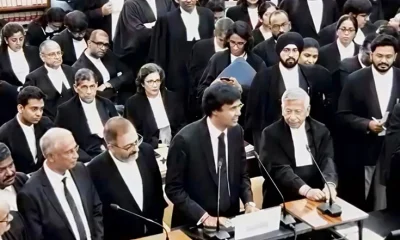
Historic address by BASL President at the Supreme Court of India
-

 Sports4 days ago
The 147th Royal–Thomian and 175 Years of the School by the Sea
-

 Business5 days ago
BOI launches ‘Invest in Sri Lanka’ forum
-

 News5 days ago
CEBEU warns of operational disruptions amid uncertainty over CEB restructuring