
News
Govt. denies prorogation of Parliament aimed at dissolving watchdog committees

SJB says move indicates further deterioration of SLPP
By Shamindra Ferdinando
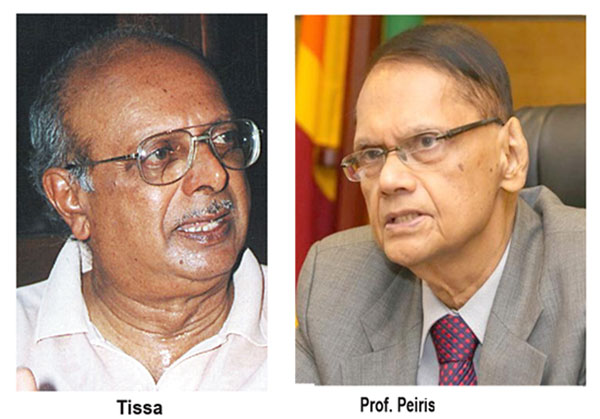
Foreign Minister Prof. G.L. Peiris has denied accusations that the sudden prorogation of Parliament was meant to terminate investigations undertaken by parliamentary watchdog committees, the Committee on Public Enterprises (COPE), the Committee on Public Accounts (COPA) and the Committee on Public Finance (COPF).
The media raised the issue at the regular weekly cabinet briefing at the SLPP office at Battaramulla.
The media asked whether President Gotabaya Rajapaksa’s decision to prorogue Parliament had been influenced by high profile inquiries conducted particularly by COPE chaired by SLPP National List MP Prof. Charitha Herath.
Asked whether Prof. Herath would be dropped from the COPE when the new session commenced on January 18, 2022, Prof. Peiris, who is also the Chairman of the ruling SLPP said that the composition of the outfit could be changed. Prof. Peiris said that the Parliament would decide the Chairperson of the watchdog committee.
In addition to the COPE, the COPA and COPF were headed by SLPP National List member Prof. Tissa Vitharana and Kurunegala District SLPP lawmaker Anura Priyadarshana Yapa.
Following the damning COPE disclosure of the fraudulent handing over of the Sri Lanka Institute of Information Technology (SLIIT) situated at Malabe to a group of individuals, SLPP lawmaker Dr. Wijeyadasa Rajapaksa, PC, moved the Supreme Court for the government to regain the institution. The COPE tackled a spate of high profile cases, including the Board of Investment, ICTA, Sri Lanka Cricket as well as Litro Gas and Litro Terminal. The COPE pulled up top Litro management over them blocking government audits for a period of two years.
Pressed for an explanation regarding the abolition of the three committees, Prof. Peiris emphasised that the decision hadn’t been taken in a hurry. Dismissing the notion that the prorogation was a unique situation, the former distinguished Law Professor explained all previous presidents exercised the power bestowed on them by the Constitution to prorogue Parliament.
Pointing out that the President acted in terms of Article 70 (Sub Section 01) of the Constitution, Prof. Peiris said that move was subjected to Article 70 (Sub Section 03) that the Parliament should be summoned within two months.
President Gotabaya Rajapaksa has set January 18 for the next sittings, thereby delaying the proceedings by just one week, Prof. Peiris said. The SLPP Chairman pointed out that at the conclusion of the vote on the 2022 Budget, the Parliament announced the House would meet on January 11.
Prof. Peiris stressed that there was no rule that the three committees should function without any changes during the entire five-year parliamentary term.
Former COPE Chief Prof. Herath declined to comment on the ongoing controversy at the moment. The Island sought his response Monday night and yesterday.
Asked whether the government decision had been influenced by JVP leader Anura Kumara Dissanayake tabling the agreement between the government and New Fortress Energy Sri Lanka Power Holding LLC for the ‘sale and purchase agreement for the purchase of 40 % of the issued share capital of West Coast Power (Private) Limited, Prof. Peiris said that the issue at hand could be raised again in Parliament. The new session wouldn’t deprive those interested in the transaction from raising it again after January 18, Minister Peiris said.
Asked whether the Parliament had been prorogued especially to do away with the three watchdog committees as speculated by the Opposition and other interested parties, ex-COPF Chairman lawmaker Anura Priyadarshana Yapa said he too was aware of such speculation but couldn’t comment on the issue at hand at the moment.
Former COPA Chairman Prof. Tissa Vitharana said that his outfit made a genuine effort to enhance the government revenue by streamlining the Customs, the Inland Revenue and the Excise. Instead of taking tangible measures to rectify serious irregularities in the revenue collection setup, Parliament had been prorogued, thereby terminating quite important work undertaken not only by COPA but two other committees as well. The former minister said that he really didn’t know why the President prorogued Parliament.
Responding to another query, National List MP Prof. Vitharana said that watchdog committees could only point out waste, corruption and irregularities and it would be the responsibility of the relevant ministers to take remedial measures.
Prof. Vitharana said that they were quite surprised by the sudden prorogation.
SJB lawmaker Rohini Kaviratne said that the SLPP government was in such a bad situation it couldn’t be saved by proroguing Parliament for two months. The national economy had deteriorated to such an extent, they wouldn’t even be able to comprehend the situation when the new session opened, the Matale District MP said, urging the government to admit that all its efforts had failed. The truth couldn’t be suppressed by proroguing Parliament and silencing watchdog committees headed by their members, the former UNPer said.
She said that the government owed an explanation as to why Parliament was prorogued amidst deepening turmoil over ruination of the Maha season, continuing gas cylinder explosions, debt crisis and disruption of much required fertiliser and other essentials.





Latest News
The Sun is directly overhead Warakapola, Aranayaka, Gampola, Bibile, Inginiyagala, and Akkaraipattu at about 12:12 noon today (08)


On the apparent northward relative motion of the sun, it is going to be directly over the latitudes of Sri Lanka from the 05th to 15th of April this year.
The nearest areas of Sri Lanka over which the sun is overhead today (08th) are Warakapola, Aranayaka, Gampola, Bibile, Inginiyagala, and Akkaraipattu at about 12:12 noon.
… announces temporary relief package
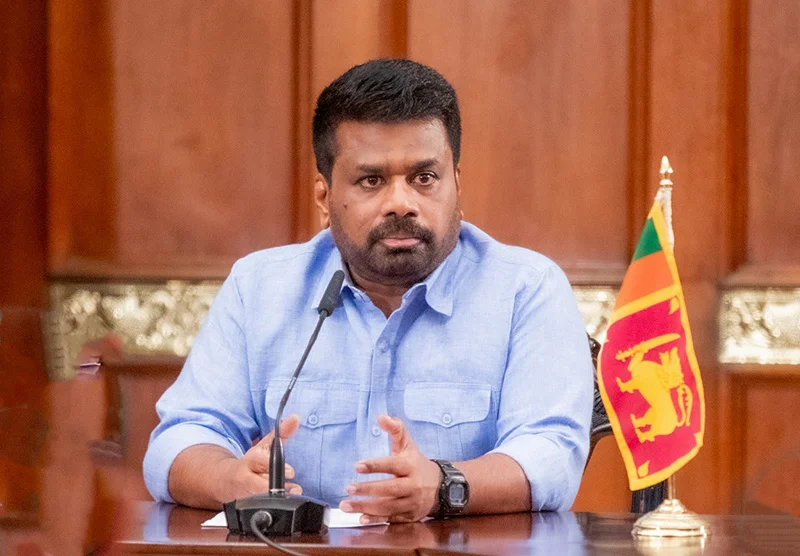
President Anura Kumara Dissanayake yesterday acknowledged in Parliament that the import of substandard coal had adversely impacted electricity generation.
“There’s an issue with the coal. That’s true,” the President said, addressing the House.
President Dissanayake maintained that the problem had not arisen from the tender process but from the failure of the supplier to deliver coal that met the required standards. “The issue did not arise from the tender process. It resulted from the supplier’s failure to deliver coal that met the required standards. I would also like to point out that coal is not tested by individuals through simple inspection or personal judgment; it is examined in certified laboratories,” he said.
The President went on to say that coal shipments are tested through certified laboratories before dispatch, and an initial payment of 80 percent was made after receiving laboratory certification confirming that the coal meets stipulated specifications.
The President said the balance 20 percent was released only after a second verification carried out by an Indian laboratory selected for the purpose in 2023. Tests had revealed that three shipments failed to meet the required specifications.
The President added that although some shipments had passed laboratory tests, operational assessments at the power plant indicated that the coal was not performing to the expected standard. As a result, the government had withheld the remaining payments for certain consignments, imposed penalties on some suppliers, and in a few instances suspended even the initial 80 percent payment.
He said the use of substandard coal would increase electricity generation costs as the shortfall would have to be compensated by alternative sources, such as diesel. However, he assured Parliament that the additional costs would be recovered from the coal suppliers and would not be passed on to consumers.
The President also said the government expected to receive the fourth and fifth tranches of financial assistance from the International Monetary Fund by the end of May. He told Parliament that Sri Lanka hoped to reach a staff-level agreement with the IMF by Thursday, which would enable the country to secure about USD 700 million in funding.
Meanwhile, the President announced a temporary increase in cash assistance under the Aswesuma welfare programme to provide relief to low-income households during the April festive season.
He said the government continued to face challenges in accurately identifying eligible beneficiaries but noted that Aswesuma remained the only available framework to determine eligibility. Under the scheme, current benefit categories include payments of Rs. 17,500, Rs. 10,000 and Rs. 5,000.
For April, the Rs. 17,500 allowance will be increased by Rs. 7,500 to Rs. 25,000, while the Rs. 10,000 payment will rise by Rs. 5,000 to Rs. 15,000. Beneficiaries in the transitional category will receive an additional Rs. 2,500. The temporary increases are expected to cost the Treasury about Rs. 8.5 billion and will apply only for the month of April.
Addressing electricity tariffs, the President said the adjustment that came into effect on April 1 had been determined earlier and was not linked to the present crisis. According to him, the increase for households consuming less than 30 units amounts to about Rs. 15 per month, while other tier increases translate to approximately Rs. 1 to Rs. 1.50 per day.
He said the government had considered three options to manage rising electricity costs: requiring the Ceylon Electricity Board to absorb the losses, transferring the burden entirely to the Treasury, or passing the cost on to consumers. Instead, the government opted for a shared approach involving the State, the public and the national power system operator.
Under this arrangement, consumers using less than 90 units of electricity will receive a subsidy during the next tariff revision. The government has allocated Rs. 5 billion per month for the programme, amounting to Rs. 15 billion over three months. The President said losses in the electricity sector during the same period were estimated at about Rs. 32 billion.
Turning to agriculture, the President outlined measures to stabilise fertiliser supply amid rising global prices. He said the Department of Agriculture currently held about 14,000 metric tonnes of urea imported at the previous price, while private companies also possessed stocks.
Following discussions with fertiliser suppliers, companies had agreed to release all remaining stocks purchased at the old price to Agrarian Service Centres. These quantities, together with government stocks, are expected to be sufficient for two paddy cultivation seasons.
However, fertiliser required for the third season would have to be imported at higher prices. The President said recent offers for urea ranged from USD 680 to USD 850 per metric tonne.
To cushion farmers from price increases, the government has decided to sell fertiliser for the third season at a fixed price of Rs. 10,200 per bag despite the estimated market price ranging between Rs. 13,500 and Rs. 14,000. The Treasury will absorb the difference, amounting to roughly Rs. 3,000 per bag, at a total estimated cost of about Rs. 1.7 billion.
The President also announced increases in fertiliser subsidies. Farmers cultivating paddy will receive Rs. 30,000 per hectare, up from Rs. 25,000, while subsidies for subsidiary crops during the Yala season will increase from Rs. 15,000 to Rs. 18,000. Small tea holders will receive a one-time additional payment of Rs. 5,000 per fertiliser bag in addition to the existing Rs. 4,000 subsidy.
He said the expanded fertiliser support programme would cost the government about Rs. 6.5 billion, with an additional Rs. 600 million allocated specifically for fertiliser subsidies.
The President also outlined plans to manage rising energy costs, particularly in the fuel sector. He said the government had considered allowing fuel prices to fully reflect market costs or introducing a subsidy mechanism.
According to current estimates, he said, diesel would exceed Rs. 600 per litre if sold strictly at cost. Instead, the government has decided to maintain the existing tax structure and provide Treasury-funded subsidies.
Under the proposed scheme, diesel will receive a subsidy of up to Rs. 100 per litre, while petrol will receive up to Rs. 20 per litre. Fuel prices will continue to be adjusted based on monthly cost calculations, with the next revision scheduled for May 1.
The subsidy programme is expected to cost around Rs. 20 billion per month and will operate for three months at an estimated total cost of Rs. 60 billion.
In addition, fishermen will receive targeted assistance. Small fishing boats will qualify for an extra Rs. 50 per litre fuel subsidy for up to 625 litres per month, credited directly to bank accounts. This will provide a monthly benefit of Rs. 31,250 per boat.
Multi-day fishing vessels will receive a fuel allowance of Rs. 150,000 per vessel during the three-month subsidy period, the President said.
By Saman Indrajith
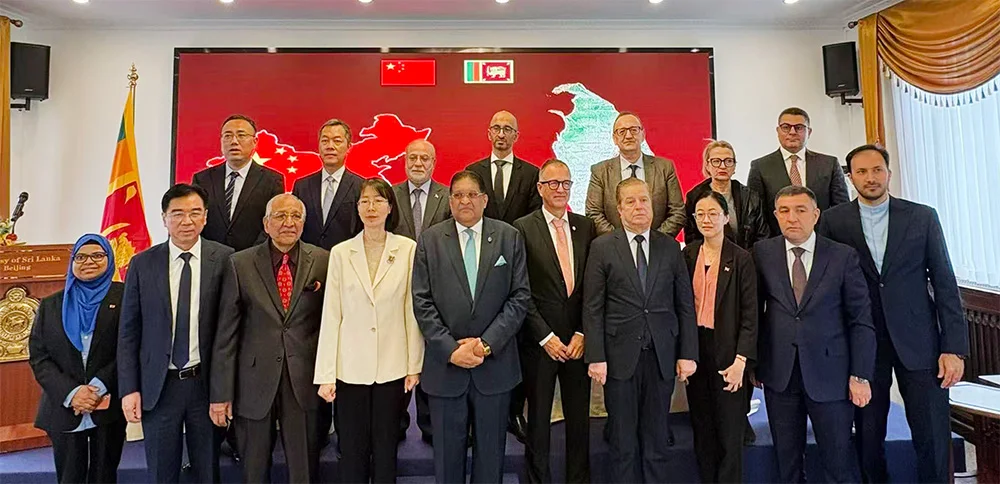
The Chinese Embassy in Colombo launched the commemorative publication in connection with the 70 years of Sri Lanka Diplomatic Relations with China titled, “Sri Lanka – China Relations: Community with a Shared Future” on 03 April 2026 in the presence of a large distinguished audience.
Cao Jing, Deputy Director General of the Asian Department of the Ministry of Foreign Affairs, Officials of the Chinese Foreign Ministry, Diplomatic Corps, Xu Yan of the Chinese People’s Association for Friendship with Foreign Countries, officials of Ministry’s line agencies and state-owned enterprises and several other guests having interests in Sri Lanka participated at the event.
The commemorative publication captures the essence of Sri Lanka’s resilience as a nation by tracing its rich history, civilization and culture. It offers insights into salient features of Sri Lanka that has been recognized for ages as “a land like no other”.
The publication was authored by the distinguished career Ambassador Dr. Ananda Kumarasiri.
In delivering the opening remarks Ambassador Majintha Jayesinghe, expressed his appreciation to the author Dr. Ananda Kumarasiri. Recalling the establishment of Diplomatic Relations in 1957, Sri Lankan Ambassador stated that the impressive tapestry of genuine friendship that exists between our two countries since ancient times have grown exponentially.
Ambassador Majintha Jayesinghe expressed the aspiration that this book will present an insightful account of the rich heritage of Sri Lanka’s relations with China. He hoped that the commemorative publications would encourage future generations to look at the shared history and relations with pride and motivate them to further enhance this unique friendship and goodwill to higher vistas of achievements.
In his address, Ambassador, Dr. Ananda Kumarasiri among other important observations, pointed out that there is much scope for Sri Lanka and China to collaborate in a number of fields. In particular, he highlighted that China’s tremendous technological and industrial progress can be harnessed for Sri Lanka to embark into-the development of alternative sources of energy, backward integration of Sri Lanka’s primary resources that would ensure value added exports and also in recycling wastes from various primary resources.

Trump announces two-week ceasefire as Iran agrees to reopen Hormuz Strait

Yashasvi Jaiswal powers Royals past Mumbai Indians in 11-over thrash

Showers will occur at several places in the Western, Sabaragamuwa, Southern and North-western provinces and in Kandy, Nuwara-Eliya and Monaragala districts after 1.00 p.m.

The Sun is directly overhead Warakapola, Aranayaka, Gampola, Bibile, Inginiyagala, and Akkaraipattu at about 12:12 noon today (08)

AKD admits import of substandard coal, blames technicalities and supplier

‘Sri Lanka – China relations: Community with a Shared Future’ launched

‘Dates have the highest sugar content to fight Coronavirus’

Sunday Island 27 December – Headlines

#SundayIsland 17th December – Headlines

Sunday Island – 28th March

Sunday Island Headlines – 21 March

Sunday Island – 21st February – Headlines
-

 Features4 days ago
Ranjith Siyambalapitiya turns custodian of a rare living collection
-

 News7 days ago
2025 GCE AL: 62% qualify for Uni entrance; results of 111 suspended
-

 News4 days ago
Global ‘Walk for Peace’ to be held in Lanka
-

 Editorial7 days ago
Search for Easter Sunday terror mastermind
-

 News2 days ago
Lankan-origin actress Subashini found dead in India
-
 Opinion6 days ago
Hidden truth of Sri Lanka’s debt story: The untold narrative behind the report
-

 Opinion7 days ago
Is there hope for Palestine?
-

 Features4 days ago
Beyond the Blue Skies: A Tribute to Captain Elmo Jayawardena