
News
Govt. denies prorogation of Parliament aimed at dissolving watchdog committees

SJB says move indicates further deterioration of SLPP
By Shamindra Ferdinando
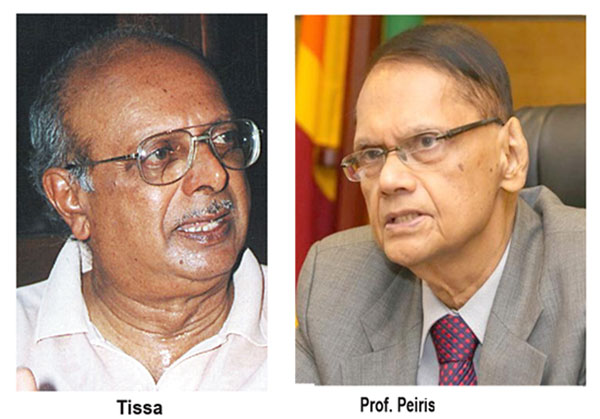
Foreign Minister Prof. G.L. Peiris has denied accusations that the sudden prorogation of Parliament was meant to terminate investigations undertaken by parliamentary watchdog committees, the Committee on Public Enterprises (COPE), the Committee on Public Accounts (COPA) and the Committee on Public Finance (COPF).
The media raised the issue at the regular weekly cabinet briefing at the SLPP office at Battaramulla.
The media asked whether President Gotabaya Rajapaksa’s decision to prorogue Parliament had been influenced by high profile inquiries conducted particularly by COPE chaired by SLPP National List MP Prof. Charitha Herath.
Asked whether Prof. Herath would be dropped from the COPE when the new session commenced on January 18, 2022, Prof. Peiris, who is also the Chairman of the ruling SLPP said that the composition of the outfit could be changed. Prof. Peiris said that the Parliament would decide the Chairperson of the watchdog committee.
In addition to the COPE, the COPA and COPF were headed by SLPP National List member Prof. Tissa Vitharana and Kurunegala District SLPP lawmaker Anura Priyadarshana Yapa.
Following the damning COPE disclosure of the fraudulent handing over of the Sri Lanka Institute of Information Technology (SLIIT) situated at Malabe to a group of individuals, SLPP lawmaker Dr. Wijeyadasa Rajapaksa, PC, moved the Supreme Court for the government to regain the institution. The COPE tackled a spate of high profile cases, including the Board of Investment, ICTA, Sri Lanka Cricket as well as Litro Gas and Litro Terminal. The COPE pulled up top Litro management over them blocking government audits for a period of two years.
Pressed for an explanation regarding the abolition of the three committees, Prof. Peiris emphasised that the decision hadn’t been taken in a hurry. Dismissing the notion that the prorogation was a unique situation, the former distinguished Law Professor explained all previous presidents exercised the power bestowed on them by the Constitution to prorogue Parliament.
Pointing out that the President acted in terms of Article 70 (Sub Section 01) of the Constitution, Prof. Peiris said that move was subjected to Article 70 (Sub Section 03) that the Parliament should be summoned within two months.
President Gotabaya Rajapaksa has set January 18 for the next sittings, thereby delaying the proceedings by just one week, Prof. Peiris said. The SLPP Chairman pointed out that at the conclusion of the vote on the 2022 Budget, the Parliament announced the House would meet on January 11.
Prof. Peiris stressed that there was no rule that the three committees should function without any changes during the entire five-year parliamentary term.
Former COPE Chief Prof. Herath declined to comment on the ongoing controversy at the moment. The Island sought his response Monday night and yesterday.
Asked whether the government decision had been influenced by JVP leader Anura Kumara Dissanayake tabling the agreement between the government and New Fortress Energy Sri Lanka Power Holding LLC for the ‘sale and purchase agreement for the purchase of 40 % of the issued share capital of West Coast Power (Private) Limited, Prof. Peiris said that the issue at hand could be raised again in Parliament. The new session wouldn’t deprive those interested in the transaction from raising it again after January 18, Minister Peiris said.
Asked whether the Parliament had been prorogued especially to do away with the three watchdog committees as speculated by the Opposition and other interested parties, ex-COPF Chairman lawmaker Anura Priyadarshana Yapa said he too was aware of such speculation but couldn’t comment on the issue at hand at the moment.
Former COPA Chairman Prof. Tissa Vitharana said that his outfit made a genuine effort to enhance the government revenue by streamlining the Customs, the Inland Revenue and the Excise. Instead of taking tangible measures to rectify serious irregularities in the revenue collection setup, Parliament had been prorogued, thereby terminating quite important work undertaken not only by COPA but two other committees as well. The former minister said that he really didn’t know why the President prorogued Parliament.
Responding to another query, National List MP Prof. Vitharana said that watchdog committees could only point out waste, corruption and irregularities and it would be the responsibility of the relevant ministers to take remedial measures.
Prof. Vitharana said that they were quite surprised by the sudden prorogation.
SJB lawmaker Rohini Kaviratne said that the SLPP government was in such a bad situation it couldn’t be saved by proroguing Parliament for two months. The national economy had deteriorated to such an extent, they wouldn’t even be able to comprehend the situation when the new session opened, the Matale District MP said, urging the government to admit that all its efforts had failed. The truth couldn’t be suppressed by proroguing Parliament and silencing watchdog committees headed by their members, the former UNPer said.
She said that the government owed an explanation as to why Parliament was prorogued amidst deepening turmoil over ruination of the Maha season, continuing gas cylinder explosions, debt crisis and disruption of much required fertiliser and other essentials.







The Italian Naval Vessel ‘ITS Giuseppe Garibaldi’ departed the Port of Colombo today, 12 September 2026, after completing a replenishment stop for logistics and services.
During the ship’s stay, the Commanding Officer of ITS Giuseppe Garibaldi, Captain Marco GUERRIERO, called on the Commander Western Naval Area, Rear Admiral Harsha De Silva, at the Western Naval Command Headquarters.
Members of the visiting crew also toured several tourist attractions across the Colombo area during their port call.
News
Green Climate Fund (GCF) Regional Dialogue for East and South Asia will be held from 14 to 17 September 2026 at Cinnamon Life at City of Dreams Hotel, Colombo


The Green Climate Fund (GCF) Regional Dialogue for Eastern and Southern Asia is scheduled to be held from September 14 to 17, 2026, at Cinnamon Life at City of Dreams, Colombo.
The Dialogue is hosted by the Government of Sri Lanka. The Green Climate Fund is the world’s largest dedicated climate fund established under the United Nations Framework Convention on Climate Change to assist developing countries in responding to the challenges of climate change.
The Green Climate Fund aims to promote a paradigm shift towards low-emission and climate-resilient development
pathways by supporting developing countries in reducing their greenhouse gas emissions and adapting to the impacts of climate change.
The Ministry of Environment of Sri Lanka serves as the country’s National Designated Authority for the Green Climate Fund, playing a critical role in coordinating access to climate finance, nominating institutions for accreditation to the Green Climate Fund and approving funding proposals, and ensuring that activities supported by the Green Climate Fund are aligned with national development objectives.
More than 120 delegates from 10 countries are expected to participate. The participating countries are Bangladesh, Bhutan, China, India, the Maldives, Mongolia, Nepal, Pakistan, the Republic of Korea, and Sri Lanka.
Participants will include representatives of National Designated Authorities of the above countries, Direct Access Entities, Accredited Entities, civil society organizations, the private sector, development partners, and technical institutions across the region.
Sri Lanka’s delegation comprises Dr. Dammika Patabendi, Minister of Environment, Anton Jayakody, Deputy Minister of Environment, K.R. Uduwawala, Secretary, Ministry of Environment, and high-level government officials.
The Dialogue will provide a platform to:
Share challenges, experiences, and lessons learned from the implementation of climate change projects and programmes.
Strengthen regional cooperation and partnerships on climate finance.
Discuss the Green Climate Fund’s evolving strategies, policies, and approaches.
Identify opportunities to accelerate climate investments across East and South Asia.
Hosting the Regional Dialogue in Colombo will provide Sri Lanka with an important opportunity to engage with senior government officials, private-sector representatives, development partners, technical experts, and international climate finance institutions.
The event is expected to support Sri Lanka’s efforts to improve access to climate finance and international grants, showcase national climate action initiatives and achievements, and strengthen the country’s engagement with the global climate community.
The Dialogue will also offer a strategic platform for Sri Lankan institutions that have applied for direct accreditation to present their project concepts and engage directly with representatives of the Green Climate Fund. These engagements are expected to support the accreditation process and contribute to the expansion of Sri Lanka’s network of Direct Access Entities through stronger regional partnerships and increased cooperation on climate finance, the Regional Dialogue will
contribute to positioning Sri Lanka as a credible and reliable partner for climate investment.
Projects that Sri Lanka has received funding from this fund are:
• The main projects that Sri Lanka has received support from the Green Climate Fund at present include the Wevu Gam Pubuduwa Project (52.1 USD Million) and the GCF Knuckles Project (49 USD Million).
7.5 USD Million has been allocated from GCF for 5 National Designated Authority Readiness Projects (NDA Readiness Projects) and for the National Adaptation Plan Readiness Project (NAP Readiness Project).
Approval has also been obtained for 3 regional projects. (Cooling Facility Programme, Global Fund for Coral Reef Investment Window, PEEB COOL Programme)
Sri Lanka has also identified 5 project concepts as priority projects for the Green Climate Fund period 2024-2027 and has taken steps to submit those project concepts (Concept Notes) for
approval by the Green Climate Fund.
The “Climate-resilient Fisheries in Sri Lanka” project concept (USD 107.5 million) submitted by DFCC Bank has already received approval.


Former Minister and People’s Joint Opposition Convener Prof. G.L. Peiris has challenged the assertion that the Supreme Court’s determination on the 22nd Amendment to the Constitution would be based solely on law and not Buddhist teachings, arguing that such a position is inconsistent with Article 9 of the Constitution and established judicial precedent.
In a special statement, titled “Buddhist Doctrine as a Source of Law in Sri Lanka”, Prof. Peiris has said the issue had arisen during the 22nd Amendment determination proceedings when Ven. Balangoda Kassapa referred to the Buddha Dhamma in his submissions.
According to Prof. Peiris, the Chief Justice responded that the determination would be made on the basis of the law and not Buddhist teachings.
Describing this as a “cavalier dismissal” of the Buddha Dhamma. Prof. Peiris has said it is contrary to Article 9, which gives Buddhism the foremost place and requires the State to protect and foster the Buddha Sasana.
Full text of the statement: In the 22nd Amendment determination proceedings, Venerable Balangoda Kassapa, in his submissions, made reference to the Buddha Dhamma. His Lordship the Chief Justice, in reply, made the strong assertion that the determination would be made on the basis of the law and not Buddhist teachings. This cavalier dismissal of the Buddha Dhamma is totally inconsistent with Article 9 of the Constitution and its authoritative interpretation in judicial decisions.
I. Authoritative Sri Lankan Judicial Authority A few examples may be cited.
In the Antiquities Amendment Bill, the Supreme Court, in its determination, observed: “The expression Buddha Sasana is wider than Buddhism and includes the entire establishment, together with objects and places of religious practices and worship of Buddhists”.
In Re the Thirteenth Amendment to the Constitution and the Provincial Councils Bill, 1987 2 Sri Lanka LR 312, Wanasundera J, referring to the term Buddha Sasana, said that it was “a compendious term encompassing all ancient, historic and sacred objects and places which have from ancient times been associated with the religious practices and worship of Sinhala Buddhists”.
It is clear that the Buddha Sasana is not confined to matters of ritual or practice, but includes the substance of Buddhist teachings. This is borne out clearly in other judgments of the Supreme Court.
An explicit example is the determination of the Supreme Court in the Ayurveda Amendment Bill, SCSD, numbers 22-35/2023, where the Court declared: “We hold that Buddha Sasana in Article 9 of the Constitution includes the dhamma, principles and teachings of Buddhism, including in particular recognized and undisputed codifications of the teachings of Lord Buddha”.
There are several other passages in the judgment which offer strong authority on the point.
The Court declared: “We determine that the word Buddha Sasana in Article 9 is a compendious term and includes the entire establishment of Buddhism as defined above. We conclude that the Tripitaka, consisting of the Vinaya Pitaka, the Sutta Pitaka and the Abhidhamma Pitaka, falls within the word Buddha Sasana. Hence the State has a duty inter alia to protect and foster the Tripitaka”.
The Court was uncompromising in its declaration that “While retaining the word Buddhism to denote the religion to which foremost place has been accorded in the Republic, the word Buddha Sasana was used to impose a duty on the State to protect and foster the entire establishment of Buddhism”.
The Court’s approach is very clear from the following passage: “We must proceed to interpret Article 9 of the Constitution on the basis that this change was intentional on the part of the legislature. It was meant to cover an area wider than Buddhism”.
II. International Judicial Authority
There is valuable material in the jurisprudence of the International Court of Justice at The Hague.
Judge C. G. Weeramantry, in his dissenting opinion in the ICJ’s 1996 advisory opinion on the legality of the threat or use of nuclear weapons, said that Buddhism could provide an important humanitarian perspective when considering the legality of nuclear weapons. The judge cited as his source the work by Walpola Rahula, entitled What the Buddha Taught, 1959.
Similarly, Judge Weeramantry, in his separate opinion in the maritime delimitation in the area between Greenland and Jan Mayen case, 1993, commented on the international legal concept of equity. In this connection, he referred to “the elaborately researched concept of fairness and justice in Buddhism”.

ITS Giuseppe Garibaldi’ departs Colombo

Green Climate Fund (GCF) Regional Dialogue for East and South Asia will be held from 14 to 17 September 2026 at Cinnamon Life at City of Dreams Hotel, Colombo

Showers will occur in the Western, North-western and Sabaragamuwa provinces and in Kandy, Nuwara-Eliya, Galle and Matara districts

Prof. Pieris says Buddha Dhamma recognised as source of law under Constitution

GR leaves FCID after making statement over MiG deal

Dengue cases top 97,000 in 2026

‘Dates have the highest sugar content to fight Coronavirus’

Sunday Island 27 December – Headlines

#SundayIsland 17th December – Headlines

Sunday Island – 28th March

Sunday Island Headlines – 21 March

Sunday Island – 21st February – Headlines
-

 Sports2 days ago
DDS set to lose Test captaincy
-

 Latest News7 days ago
Tharanga creates history with Diamond League crown in Brussels
-

 Features6 days ago
After the parade: What a traffic OIC’s walk-out tells us
-

 News7 days ago
Dispute which triggered listed company director being detained at BIA resolved
-

 Editorial6 days ago
Arrests as theatre
-
 News5 days ago
Thailand shuts door on undesirables from Sri Lanka
-

 Latest News6 days ago
Harshitha’s composed knock seals Sri Lanka’s semi-final berth
-

 News6 days ago
‘Choka Malli’ slips out of country before travel ban