
News
Gota leaves Singapore after fleeing protesters at home

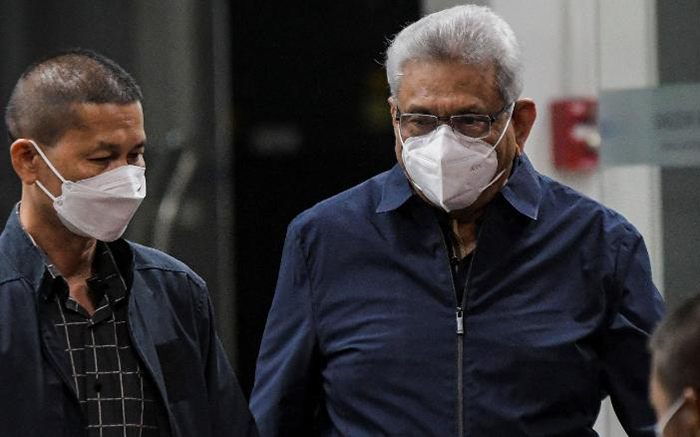
(AFP) Former Sri Lankan president Gotabaya Rajapaksa on Thursday left Singapore where he had taken refuge following his escape from protesters at home, after he was given a visa only for about a month in the city-state.Rajapaksa flew into Singapore from the Maldives on July 14 after fleeing a deepening economic crisis and widespread protests in Sri Lanka. He tendered his resignation shortly after his arrival.Sri Lankans arriving in Singapore normally receive a 30-day visa, but authorities said they had initially given Rajapaksa only two weeks and later extended the visa by another two weeks.
“The Immigration & Checkpoints Authority (ICA) confirms that Mr Gotabaya Rajapaksa left Singapore on 11 August,” Singapore’s immigration office said in reply to an AFP query.
It did not say where the former leader was headed but the Thai foreign ministry, as well as a source in Colombo, said Wednesday he was seeking a new safe haven in Thailand.Rajapaksa fled his nation after tens of thousands of protesters overran his official residence last month angry about acute shortages of food, fuel and medicine endured by Sri Lanka’s 22 million people since late last year.An international human rights group last month formally asked Singapore to indict Rajapaksa for crimes against humanity during his country’s decades-long civil war that ended in 2009.
The South Africa-based International Truth and Justice Project said it had urged Singapore to exercise universal jurisdiction to arrest the former president for grave breaches of international humanitarian law.Rajapaksa helmed Sri Lanka’s defence ministry while his brother Mahinda was president when the country’s brutal Tamil separatist conflict came to a bloody end.Singapore’s Attorney-General’s Chambers confirmed it had received a complaint from the rights group without giving details.
“His Singapore visa runs out on Thursday,” a close associate of Rajapaksa told AFP in Colombo on Wednesday.
“He had applied for an extension, but it had not come through as of Wednesday morning.”
The source said Rajapaksa now planned to go to Thailand for a short stay but return to Singapore.The Thai foreign ministry confirmed it had received a request from Colombo for the 73-year-old deposed leader to visit and an assurance that he would not seek political asylum.
“The Thai side received a request for the former president to enter Thailand from the current government of Sri Lanka,” ministry spokesman Tanee Sangrat said in a statement.
“The stay is temporary in nature with the aim of onward travel. No political asylum has been sought.”
The Rajapaksa confidant told AFP that the former leader was keen to return home as protests against his administration had fizzled out, but his successor Ranil Wickremesinghe had advised him against an early return.Singapore officials had said he was on a private visit to the city-state and the foreign minister stressed that he was not given any special privileges.
“In general, the Singapore government does not accord privileges, immunity and hospitality to former heads of state or heads of government,” Singapore Foreign Minister Vivian Balakrishnan said in a written reply to a question in parliament last week.
“Consequently, former president Gotabaya Rajapaksa was not accorded any privileges, immunity or hospitality.”

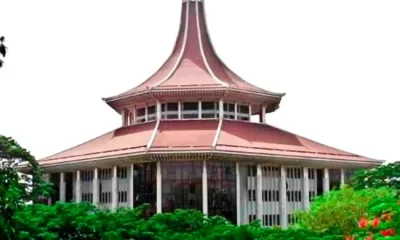

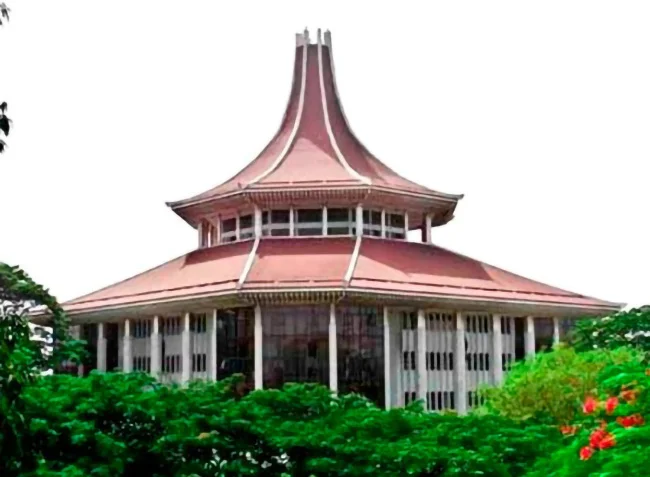
The Supreme Court has been petitioned seeking an explanation as to how eight petitions filed against the 22nd Amendment to the Constitution were not listed for hearing . Two of the petitioners, namely Dias Bandaralage Ajith Shantha Kumara Jayathilaka and Gunathilakage Dakum Dulara Gunathilaka, have requested an opportunity to examine the official Registry and parliamentary records so that all material facts may be objectively established. They said that their petitions that had been registered by the Supreme Court should have been heard along with other petitions.
The Registrar of the Supreme Court, Secretary General of Parliament, Speaker and the Attorney General have been named as the respondents.
The five-member bench that heard the petitions consisted of Chief Justice P. Padman Surasena, Achala Wengappuli, J, Arjuna Obeyesekere, J, Sampath B. Abayakoon, J and K.M.G.H. Kulatunga, J.
The petitioners sought the explanation in the absence of any judicial order dismissing, rejecting, striking out, terminating or otherwise disposing the said petitions. They have requested the disclosure of the complete procedural history of the unlisted cases.
The second petitioner Gunathilaka has referred to a speech by Jaffna District Independent MP Ramanathan Archuna in Parliament, on 21 August, 2026, regarding X-Press Pearl, a container carrier that sank off the port of Colombo, and related matters.
They have sought leave to proceed under Articles 17 and 126 of the Constitution and asked for a full Bench of the Supreme Court, or the widest Bench, constitutionally permissible.
They also requested that the Chief Justice and Achala Wengappuli refrain from participating in the hearing and determination of their application, having regard to the objective-appearance issue arising from their prior constitutional and judicial participation in matters forming part of the factual subject matter now requiring examination.
Meanwhile, General Secretary of Vinivida Foundation, Nagananda Kodituwakku, has requested the Supreme Court Registrar not to proceed with the determination of 22nd Amendment process, pending the hearing of fundamental rights petition filed by Chairman of the Vinivida Foundation lawyer, Sugandhika Fernando, seeking a full bench, excluding Chief Justice Preethi Padman Surasena, to hear the petitions challenging the 22nd Amendment Bill. She also requested that the hearing be suspended immediately until the matter was fully heard and determined.
Among the respondents are Chief Justice Surasena, the first respondent, and Attorney General Parinda Ranasinghe. Justices Yasantha Kodagoda, Shiran Gooneratne, Achala Wengappuli and Priyantha Fernando.
(SF)
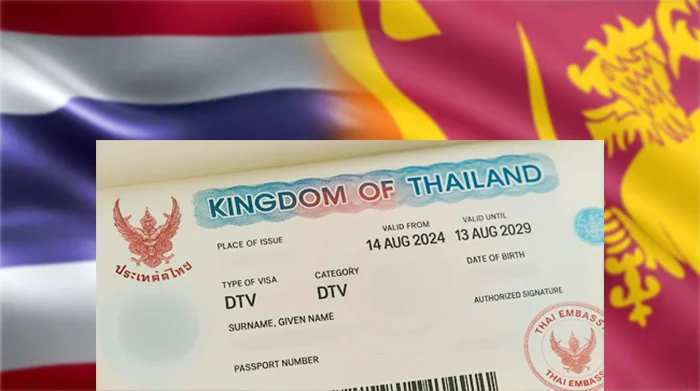
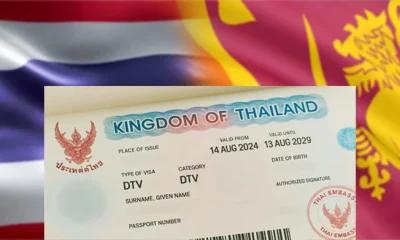
Sri Lankan passport holders travelling to Thailand wouldn’t be eligible for visa-free entry from 15 September, 2026, according to a new visa notice issued by the Royal Thai Embassy in Colombo.
Under the new measures, all Sri Lankan travellers will be required to obtain a Thai visa before departing for Thailand. Visa applications must be submitted online through Thailand’s official e-Visa system.
The Royal Thai Embassy in Colombo has also clarified that it will not accept visa applications submitted in person or in physical form.
According to the Embassy, tourist visa applications submitted by Sri Lankan passport holders are expected to take approximately 3–7 working days, calculated from the date on which all required documents have been duly completed and submitted.
Processing times for Non-Immigrant Visa and DTV (Destination Thailand Visa) applications may take longer.
Foreign nationals residing in Sri Lanka or the Maldives who hold valid work or residence permits may also require additional processing time.
The Embassy has cautioned applicants that it reserves the right to request additional documents or information when necessary. Applicants may also be asked to attend a visa interview on a case-by-case basis.
The new requirement represents a significant change for Sri Lankan travellers, who will need to complete the visa process before travelling to Thailand from September 15 onward.
The Embassy has urged applicants to rely only on its official communication channels for the latest visa requirements, procedures and updates.
News
Expertise France and the EU launch media project to strengthen environmental journalism in Sri Lanka

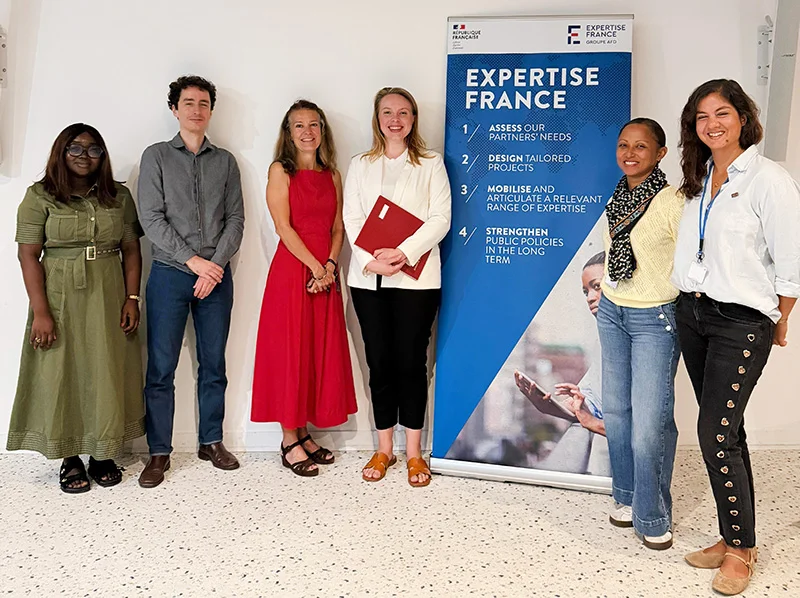
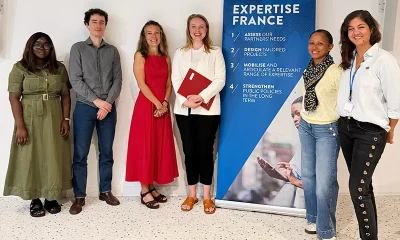
A comprehensive new media initiative is officially underway in Sri Lanka following the official signing of agreements with the French media development agency, Canal France International (CFI), and the Sri Lanka Press Institute (SLPI) yesterday. Backed by the European Union-funded Green Recovery Facility programme, the “Media Capacity Building Programme for the Promotion of the Green Transition” aims to strengthen the reporting of environmental, climate, and economic stories across the country.
Environmental journalism in Sri Lanka has traditionally given significant attention to natural disasters and their impacts. This initiative provides an opportunity for journalists to broaden this coverage by exploring a wider range of environmental issues, including climate finance, green investment, sustainable development, biodiversity, and the policy and economic dimensions of the green transition.
The programme will support journalists in strengthening their technical and investigative skills to explore these issues in greater depth and produce sustained, evidence-based reporting. Participants will be equipped with tools to analyse complex climate finance issues, examine public policies, and follow the flow and impact of green investments.
For Sri Lanka, ‘green transition’ is not an abstract concept; it is a pathway to urgently needed macroeconomic stability and sustainable growth. However, for this transition to succeed, the public must be well-informed, and institutions must be held accountable.
By empowering reporters to translate highly technical financial and governance concepts into accessible public-interest narratives, this project ensures that everyday citizens understand how green policies impact their livelihoods, energy prices, and communities. Crucially, it aims to mainstream the lens of ‘just transition’ and gender equity by encouraging the voices and perspectives of women and vulnerable populations to be heard, considered, and taken into account in the national environmental discourse.
The programme is designed to deliver high-impact, nationwide action. Implemented by Expertise France (EF), in partnership with Canal France International (CFI), the Sri Lanka Press Institute (SLPI), and the Ministry of Mass Media as the primary institutional beneficiary, it moves beyond traditional classroom-based learning.
Key highlights of the initiative include:
Trilingual Foundation Training: Intensive capacity building for 60 journalists across Sinhala, Tamil, and English media to ensure nationwide reach and inclusivity.
Mentored “Story Labs”: The rollout of six intensive Story Labs where journalists will receive direct editorial mentoring to investigate, produce, and publish high-quality, data-driven green transition stories
Youth Outreach: Engaging journalism students and young media practitioners through university and youth activities to develop stories on green transition and public policy issues.
Learning and Sharing Networking Event: Bringing together journalists, experts, policymakers, and key stakeholders to share learning, showcase stories produced through the programme, reflect on knowledge gained, and develop future story ideas on green transition issues.

22A: Exclusion of 8 petitions questioned, action filed against SC Registrar, others

Thailand shuts door on undesirables from Sri Lanka

Expertise France and the EU launch media project to strengthen environmental journalism in Sri Lanka

CLA questions non-inclusion of senior judges on five-member SC bench hearing 22A petitions

Whatever on earth happened to meritocracy, pragmatism, and honesty in Sri Lanka?

Why should faith promote justice?

‘Dates have the highest sugar content to fight Coronavirus’

Sunday Island 27 December – Headlines

#SundayIsland 17th December – Headlines

Sunday Island – 28th March

Sunday Island Headlines – 21 March

Sunday Island – 21st February – Headlines
-

 News5 days ago
Denied of promotion to SC despite vacancies, justice Gurusinghe retires
-

 Latest News6 days ago
Grade 5 scholarship exam results released
-

 News5 days ago
22A: SC urged to suspend hearing, appoint full bench
-

 Midweek Review6 days ago
The local and global dynamics of Sri Lanka’s 22nd Amendment
-

 News3 days ago
Namal remanded until Sept. 18 over Airbus deal investigation
-

 Latest News2 days ago
Tharanga creates history with Diamond League crown in Brussels
-
 News5 days ago
Govt. seeks NATO assistance
-

 News6 days ago
40 professional organisations and TU oppose proposed 22A