
Editorial
Gota as scapegoat


Friday 15th September, 2023
Nobody dared trifle with Gotabaya Rajapaksa when he was the Defence Secretary. It was jokingly said then that he exercised 50% of President Mahinda Rjapaksa’s executive powers! Many a true word is said to be spoken in jest. Even senior Cabinet ministers used to bow and scrape before him. Never did any of them utter a word against him even behind his back. In 2019, everyone in the SLPP hitched his or her wagon to him, and came in from the cold to savour power again.
Today, the hero has become a villain, and the SLPP has sought to disown Gotabaya; everyone is heard badmouthing him. In fact, having laid all its sins on him, the SLPP is trying to banish him politically like the proverbial scapegoat in the hope that it will be able to hoodwink the public again, and make a comeback.
Former Minister S. M. Chandrasena, who used to touch his forelock to Gotabaya, has ridiculed the latter at a media briefing. In answer to a question from a journalist about media reports that the ousted President is planning to re-enter politics through a newly-formed political party, Chandrasena has said nothing will be more ludicrous than Gotabaya’s return to politics, given his pathetic failure as a President. The subtext of his claim is of interest.
The SLPP seems to think it can dupe the public into believing that only Gotabaya failed. But the general consensus is that the entire SLPP government was a failure. Hence the people’s call for the resignation of the SLPP administration, during last year’s popular uprising, which led to the ouster of Gotabaya. Neither the diehard Rajapaksa loyalists in the SLPP parliamentary group nor the SLPP dissidents can absolve themselves of the blame for the country’s multi-faceted crisis.
The SLPP finds itself in a dilemma. Unless it fields its own candidate at the next presidential election, it will end up being a mere ‘nameboard party’, and the Rajapaksas will lose their hold on it. Speculation is rife in political circles that the SLPP will be left with no alternative but to back incumbent President Ranil Wickremesinghe in the 2024 presidential race. But an influential faction of the SLPP wants a member of the Rajapaksa family to run for President, and is undermining President Wickremesinghe’s position in the government.
The SLPP has become a metaphor for corruption, and all its parliamentary group members, save a few, stand accused of various corrupt deals and abuse of power. Above all, all of them failed to carry out their legislative duties and functions properly. If they had kept a watchful eye on the economy and called for remedial action at the first signs of the current crisis, the country would not have faced bankruptcy.
Instead, they disregarded the early warnings of the impending economic crisis and expert advice, and waited until the depletion of the country’s foreign exchange reserves to voice their protest. They are now claiming that nobody informed them that the economy was nosediving! They also backed President Gotabaya Rajapaksa’s ill-conceived policies and programmes. Chandrasena, as the Minister of Land, defended Gotabaya’s disastrous organic farming experiment. None of them dared protest against the corrupt deals in almost all sectors.
The entire SLPP benefited from the slush funds of the racketeers responsible for the sugar tax scam, which caused huge losses amounting to billions of rupees to the state coffers. One of these racketeers bankrolled the events held by Viyathmaga, an organisation of self-proclaimed intellectuals, who promoted Gotabaya as a national leader and received various government positions after the 2019 regime change. Besides, almost all the crooks who brought about the collapse of the Mahinda Rajapaksa government in 2015 are currently in the SLPP.
It is only wishful thinking that the SLPP will be able to dupe the public again and recover lost ground by throwing Gotabaya to the wolves, as it were.


The Health Ministry and the Government Medical Officers’ Association (GMOA) are playing a game of chicken over doctors’ transfers. The GMOA is protesting against an alleged government move to gain control of doctors’ transfer scheme. It insists that doctors’ transfers must be handled professionally, free from political interference, for the benefit of doctors and the public. Accusing the government of trying to politicise doctors’ transfers for the benefit of the ruling party loyalists in the health service, the GMOA says that such a course of action will plunge the medical service into chaos and place the doctors serving in the ‘difficult areas’ at a disadvantage.
Health Minister Dr. Nalinda Jayatissa has told the GMOA in no uncertain terms that it is his way or the highway. No trade union action would deter him from implementing the new transfer scheme, he said, on Thursday, warning the post-intern doctors that unless they applied for postings by Saturday (04), they would not be allowed to join the state health service.
The GMOA is not entirely blameless for unresolved trade union issues in the health sector. It has been afflicted by what may be described as the Uncle Sam syndrome; it apparently believes that only doctors’ interests must be looked after in the health sector. It has alienated other health workers. However, one cannot but endorse its position on doctors’ transfers, which must be effected systematically, with the participation and concurrence of the trade union representatives of medical officers. Politicians are driven by partisan political interests and known to act according to their whims and fancies. It is thanks to them that the state service finds itself in an unholy mess. There is provision for appeals under the current doctors’ transfer scheme, and the government can intervene in case of complaints of irregularities and injustices.
The doctors’ transfer scheme has worked all these years, and there is no reason why the government should meddle with it. At the time of writing, the GMOA was discussing ways and means of intensifying their trade union to win their struggle. It is likely to resort to a continuous strike if the government leaders try to bulldoze their way through. Its calls for negotiations with the Health Minister have gone unheeded.
The JVP-NPP government’s intransigence, and threats and warnings to workers involved in trade union struggles evoke the dreadful memories of a bygone era when a government, intoxicated with power, rode roughshod over trade unions and resorted to mass sackings to crush strikes and intimidate workers into submission. The politicians of the incumbent government sound just like the ministers in President J. R. Jayewardene’s UNP government. One may recall that in July 1980s, when workers struck work, demanding a pay hike, acting on President Jayewardene’s orders, Prime Minister Ranasinghe Premadasa warned that the workers would be treated as having abandoned their jobs unless they returned to work immediately. More than 40,000 workers who defied the government order were terminated overnight, and the vacancies so created were filled with UNP supporters. Interestingly, the JVP, which had agreed to join that strike, pulled out at the eleventh hour on some flimsy pretext. It was honeymooning with the UNP at the time.
The JVP leaders who came to power, claiming to espouse Marxism and promising to safeguard the interests of workers and resolve all labour issues through negotiations, are emulating their capitalist predecessors, such as Jayewardene and Premadasa, whom they condemned as the worst enemies of the working class. It can also be argued that the current leaders have taken a leaf out of the late LSSP leader Dr. N. M. Perera’s book. In 1972, NM, as the Finance Minister of the SLFP-led United Front (UF) government, chose to wear down the bank employees who launched a strike, demanding better pay and improved service conditions. The UF government invoked emergency regulations and threatened to terminate the strikers who did not return to work. NM succeeded in breaking the strike, which lasted for 108 days. This is how all governments react, regardless of their political ideologies, when their interests are threatened.
The JVP-NPP government should negotiate with the protesting doctors and make a serious effort to resolve the transfer issue amicably. Its intransigence and threats will only prolong the ongoing trade union dispute, causing untold hardships to the public who cannot afford out-of-pocket healthcare expenses.

Saturday 4th April, 2026
Pivithuru Hela Urumaya leader and former minister Udaya Gammanpila is complaining that a fake copy of his book on the Easter Sunday terror attacks, Pasku praharaye mahamolakaru soya yema (“Searching for the mastermind behind the Easter Sunday attacks”), has been released on social media. He says the spurious book in Portable Document Format is based on an incomplete manuscript of his work, sent to former top military intelligence officer Maj. Gen. (Retd.) Suresh Sallay for fact-checking on a specific section. The Criminal Investigation Department (CID) took the incomplete manuscript into custody after Sallay’s arrest, Gammanpila has said, alleging that the fake book is based on that document. He has threatened legal action against the CID for misusing intellectual property and forgery.
The fake book under discussion will perhaps be the least of Gammanpila’s problems. The self-styled Hercule Poirots in the CID and their political masters must be drawing up plans for a witch-hunt against him, for he has ruffled the feathers of the powers that be by challenging the government’s narrative about the Easter Sunday carnage, and taking up the cudgels on behalf of those arrested by the CID, which is headed by a member of the JVP/NPP—retired SSP Shani Abeysekera, who is a member of the NPP’s Retired Police Collective.
The CID has been an appendage of the political party or coalition in power all these years. The JVP/NPP came to power promising a radical departure from the rotten political culture and swift action to depoliticise vital institutions, such as the police, but it is stuck in the same old rut as its predecessors; it keeps all state outfits under its thumb to advance its political agenda. The CID has been doing more political work than criminal investigations, under successive governments; no wonder unsolved crimes abound and the conviction rate remains extremely low (4% to 6%).
The release of the fake book at issue can be considered a propaganda misadventure. The controversy created by that ill-conceived move will help Gammanpila sell more copies of his book and bolster his claim that unable to counter his arguments, the government is trying to create confusion in the public mind about his narrative. Gammanpila’s real book offers fresh insights into the crucial issues surrounding the Easter Sunday carnage and related matters.
Meanwhile, Opposition Leader Sajith Premadasa has drawn criticism for attending Gammanpila’s book launch on 31 March. It is being claimed in some quarters that he should not have been there as the SJB does not subscribe to the contention that Zahran Hashim was the mastermind behind the Easter Sunday terror attacks. This argument is not tenable. One’s presence at a book launch is not tantamount to one’s endorsement of the views of the author concerned.
Interestingly, the JVP leaders, including Anura Kumara Dissanayake and Vijitha Herath, vigorously promoted Mahinda Rajapaksa’s presidential election manifesto, Mahinda Chinthanaya, in 2005, as a silver bullet capable of solving all the problems Sri Lanka was facing at that time. Videos of their fiery speeches promoting Mahinda Chinthanaya are available in the digital realm. A few years later, they turned against President Rajapaksa and even tried to topple his government. Today, they are vilifying Mahinda, who would not have been able to secure the executive presidency in 2005, much less become a prominent national leader, without their help. Sajith has not promoted Gammanpila’s book, has he?

Friday 3rd April, 2026
Sri Lankan governments are said to be like cattle-rustling trucks displaying various religious blessings above their windshields. A government once came to power promising to create a righteous society but did the very antithesis of its pledge. Its rule paved the way for a culture of political violence, election malpractices and corruption. One of the promises made by the JVP-NPP government during its election campaigns was to restore the rule of law. Those who voted for it may have expected it to ensure that everyone would be equal before the law. But it is doing the diametrical opposite of its promise. Ruling party politicians and backers violate the law with impunity.
The Gampaha Magistrate’s Court has recently ordered that an office forcibly taken over by a gang of JVP goons at Yakkala last year be handed back to the Frontline Socialist Party (FSP), which occupied it previously. In September 2025, a group of JVP cadres, led by a deputy minister, descended on the place, assaulted the FSP members staying there and seized the property, with the police siding with the ruling party mob. The JVPers produced what they described as a court order, claiming that the place rightfully belonged to them. The FSP protested, but in vain. The JVP asked the police to act according to the “court order”. The police put up a barricade near the disputed office for the safety of the JVP members. It is now clear that the JVP members not only misled the police but also caused an affront to the dignity of the judiciary by making a false claim. But no action has been taken against them.
Energy Minister Kumara Jayakody, facing a serious charge of corruption, was not arrested, unlike other suspects. He was indicted and bailed out on the same day. The Commission to Investigate Allegations of Bribery or Corruption arrests and hauls up before court Opposition politicians and state officials, whose offences pale into insignificance in comparison to the aforementioned corruption charge against Jayakody and the multi-billion-rupee coal procurement racket he has allegedly committed.
It has been reported that the Hambantota police recently warned and released a person taken into custody for clearing a section of a forest reserve under the Mahaweli Authority (MA) in Hambantota. A group of environmentalists and some concerned farmers protested when the suspect started clearing the protected area by using a backhoe, claiming that he was acting with the blessings of two JVP politicians in the area. The MA security personnel rushed to the scene and took the suspect and the backhoe into custody.
Ordinary people taken into custody for destroying forests are handed over to the police immediately afterwards and charges are pressed against them within 24 hours. But the MA took two days to make a complaint to the police against the above-mentioned suspect. In response to an RTI request, the police have said they released the suspect after warning him as the MA withdrew its complaint. Obviously, the MA and the police have succumbed to government pressure. There is sufficient ground for legal action against the MA officials and the police for releasing a suspect involved in illegal forest clearance.
If the JVP leaders and rank and file have any sense of gratitude, they ought to protect and conserve forests, which sheltered them during their first and second uprisings and helped save their lives. They should learn from the Buddha, who paid his gratitude to the Bo tree that had given him shade when he attained Enlightenment; he spent the second week after attaining Buddhahood, gazing steadily at that Bo tree without blinking. Sadly, two years into office, the JVP-led government has allowed its politicians and supporters to destroy forests with impunity. It looks as if the JVP politicians had waited for decades, looking at forests without blinking, until an opportunity presented itself for them to cut down trees and grab land.
Two policemen who went above and beyond the call of duty to arrest a drug dealer in another police area have been taken off their regular duties as a disciplinary measure because some government politicians have taken exception to their action, which, in our view, should be commended. This was revealed at a recent meeting, where Deputy Minister of Public Security Sunil Watagala ordered the police to ensure that their personnel confined their drug busting ops to their bailiwicks. Curiously, no action has been taken against the police officers who released an offender responsible for grabbing a section of a forest reserve and clearing it.

Sameer Rizvi aces another tricky chase as Delhi Capitals floor Mumbai Indians

Sun directly overhead Dodanduwa, Rathgama, Yakkalamulla, Akuressa, Mulgirigala, Ranna, Kalamatiya and Ussangoda at about 12:13 noon today (05th April)

Showers expected in the Western, Sabaragamuwa, Central, Southern, Uva, Eastern and Northcentral provinces after 2.00 p.m.

Heat Index at Caution Level in the Western, Sabaragamuwa, Southern, Eastern, North-western, Northern and North-central provinces and in Monaragala district

Global ‘Walk for Peace’ to be held in Lanka

World Bank launches new 5-year partnership framework with Lanka

‘Dates have the highest sugar content to fight Coronavirus’

Sunday Island 27 December – Headlines

#SundayIsland 17th December – Headlines

Sunday Island – 28th March

Sunday Island Headlines – 21 March

Sunday Island – 21st February – Headlines
-

 News4 days ago
2025 GCE AL: 62% qualify for Uni entrance; results of 111 suspended
-

 News6 days ago
Tariff shock from 01 April as power costs climb across the board
-
 News7 days ago
Inquiry into female employee’s complaint: Retired HC Judge’s recommendations ignored
-
 Business5 days ago
Hour of reckoning comes for SL’s power sector
-
 Features7 days ago
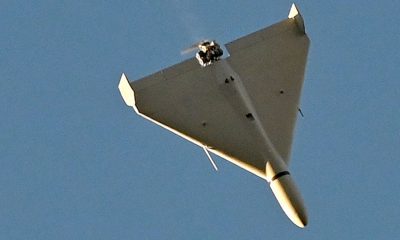
New arithmetic of conflict: How the drone revolution is inverting economics of war
-

 Editorial4 days ago
Search for Easter Sunday terror mastermind
-

 Sports7 days ago
Sri Lanka’s 1996 World Cup heroes to play exhibition match in Kuala Lumpur
-
 Features6 days ago
Seychelles … here we come