
Features
GOLDEN AGE OF THE SILUMINA

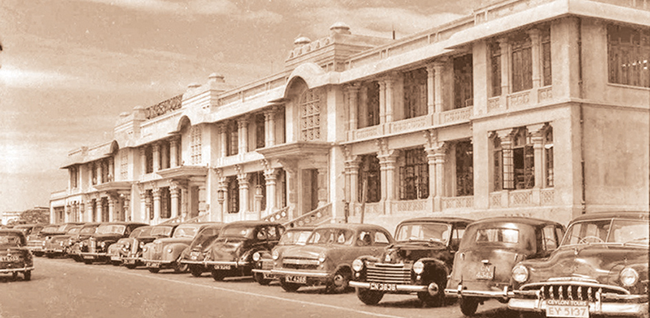
by ECB Wijeyesinghe
The Lake House Sinhala Weekly is 50 years today (Mar. 30, 1980).
All the blithe spirits that used to haunt Lake House are bound to return from their Elysian fields today to rejoice over a notable birthday anniversary. Fifty years ago, almost to the very day, was born one of the miracles of modern journalism, the Sinhalese newspaper that reaches the crest of its Golden Age today after five decades of glorious effort and endeavour.
In the process it has passed and surpassed all the high-watermarks in circulation touched by any publication in any language east of Suez. It is an achievement of which not only Lake House but Sri Lanka can be proud. To the average Sinhala newspaper reader, a Sunday without the Silumina is inconceivable. It is something he looks forward to for one whole week.
The secret is that it caters to the whole family and husbands, wives and children scramble for their own particular page when the paper appears on the doorstep, sometimes causing minor domestic discords. That is why its publication has strained the resources of the most efficient Rotary presses, and given endless headaches to the Circulation department, who have to obey the inexorable laws of supply and demand.
THE START
But it was not ever thus. D. R. Wijewardene, the Napoleon of the local newspaper world, invaded the Sinhala Sunday paper business with considerable trepidation. He started off at the height of the Great Depression. The year 1930 was perhaps this country’s gloomiest period for the commercial world, with coconuts selling at five cents each, and rubber and tea similarly scraping the barrel. Salaries were cut all round by ten per cent, and everything appeared to be wrong except the stars which had moved into the right places for a great adventure.
Wijewardene, people said, had the devil’s own luck. But he had more than that. He was a man of vision and was a believer in the old adage that anything that goes down must eventually come up. He also had tremendous faith in his staff whom he had chosen with meticulous care. For seven years the idea of a Sinhala Sunday newspaper was simmering in his head.
That is, ever since the phenomenal success of the Sunday Observer which enlivened the day of rest and gave people something better to do than spend their time either playing the card game known as “cutting the baby” or hugging the bottle. At this time the Dinamina was going great guns, with a splendid staff, some of whom were destined to win literary laurels abroad.
When the history of Lake House comes to be re-written, there are two Martins whose names will be remembered. They are Martin the personal peon of D. R. Wijewardene, and Martin Wickremasinghe, the eminent journalist, novelist and philosopher. Martin the peon was always immaculately clad in white and sported a tortoise-shell comb with gleaming points which gave him a Mephistophilean look. He also wore a black belt, like a Karate expert, but that meant nothing because he was a physically harmless man.
It was not his fault, however, that he was paid to be the harbinger of doom to most of the staff who were at the receiving end of the Boss’s wrath. Even Martin Wickremasinghe, the editor of the Dinamina at the time, dreaded the appearance of Martin the peon who stood at the half-open swing-door and with bulging eyes merely nodded his head and said “Katha karanawa”. That meant more than a friendly tete-a-tete with the boss. The demeanour of Martin, the peon was like the barometer that indicated the temperature in the Managing Director’s room.
When the Silumma was started Wijewardene entrusted the new weekly to Martin Wickremasinghe’s able assistant Piyasena Nissanka. The two men were a study in contrast. Martin Wickremasinghe was a mercurial character, an unorthodox Buddhist, a brilliant self taught philosopher and a student of comparative religions. He was born south of the border down Koggala way.
Nissanka was a stolid son of Siyane Korale, a truly rural and conservative product of his village, the gracious Gampaha gamarala whose ambition was to become a Vedamahatmaya. In fact, Nissanka pursued his Ayurvedic studies in Calcutta for some time, until they were cut short by his father’s death. But he had the instincts of a physician and the gift of “ath vasi”, which he applied successfully when he became a journalist, and began to feel the pulse of the nation.
As the first copies of the Silumina rolled off the presses and began to capture the imagination of the masses, Professor C. E. Cooray Bulathsinghala, who was then known as the Astrologer Royal, predicted a fantastic future for the new weekly. The Professor, who was then in and out of Lake House, used to watch the infant publication growing, as the advertisers would say, in vim, vigour and vitality and take most of the credit for its success.
PREDICTION
He seemed to suggest that he was responsible not only for giving the auspicious time for its start, but also for the lucky sound of its title. It appears that Bulathsinghala had said that any name beginning with “Sil” should hit the jackpot, but it was the Boss himself who completed the title in order to make it rhyme with Dinamina and thus make it bear a family resemblance to the daily paper that was already a power in the land.
Nissanka, the first Editor of the Silumina, was a sound thinker, though he did not have the flair of Martin Wickremasinghe. It was an amusing experience for other inhabitants of Lake House to hear Nissanka composing an editorial. He would write a paragraph or two and recite them in a loud voice in order to test their effect on the aural sensibilities of his listeners. Generally the audience consisted of a couple of junior journalists. From the reactions on their faces, Nissanka knew whether his shots had hit the target.
FICTION
Nissanka’s modus operandi reminded me very much of the methods of a trio of Vedamahatmayas, who treated me for typhoid long long ago. One of them would hum a Sanskrit verse and if the diagnosis was right and the going was good, the others would take up the refrain and continue chanting with zest until a junior acolyte took down the drugs and wrote the prescription. The result was a “kasaya” or decoction which, when distilled into one cup, seemed to put the Witch’s brew in “Macbeth” in the shade. It is a curious thing that a large number of journalists have made their name writing fiction. Cynics may say that it is nothing to crow over, because that is what they have been doing all their lives.
Martin Wickremasinghe and Piyasena Nissanka excelled in writing stories with a rural background. Some of Martin’s work has passed the linguistic borders into the international realm of literature and translations have appeared in English, Russian, Chinese, Rumanian and Czechoslovakian journals. Nissanka’s vignettes of village life such as the “Oya Badda Gedera” (The House by the Stream), are still sought after, especially the cameo of the sprightly damsel who has been described by the author as the “Magul Kadana Baba Noni”.
To the uninitiated, I must explain that it concerns the life-story of a woman oozing with sex-appeal whom that perspicacious reviewer, Edwin Ariyadasa, once referred to as a one-woman demolition squad who could be depended upon to break up not only made-marriages, but marriages in the making. There is supposed to be a Baba Noni in almost every village and the name of Nissanka’s fictitious character has passed into the language as a term of opprobrium.
Besides Martin Wickremasinghe and Nissanka there was one other unforgettable character who bore the slings and arrows of the Boss in order to keep the Silumina well ahead of its rivals. He was Srilal Liyanage. He succeeded the two giants in the editorial chair but managed to quit it just in time in order to enjoy his retirement.
On Saturday night, in my time, he used to be the sole occupant of the Silumina office. With his gaunt figure, his unkempt hair and dishevelled clothes one could easily mistake him for an apparition. His only redeeming features were an infectious smile and a razor-sharp mind which he utilized to give cutting double-edged headlines. Liyanage is still going strong and lives on his little estate in Nugegoda where his jak trees are thriving like the Biblical palms and producing enough kos to feed half of Colombo.
Today, while kavun, kokis and kiri bath flow out of the Silumina’s sanctum and the Golden Jubilee celebrations reach their climax there will be one thought uppermost in everybody’s mind. That will be how on earth Edmund Ranasinghe the present Editor, manages to do two things: –
Firstly, to maintain the momentum generated 50 years ago by its founder, the dynamic D. R. Wijewardene;
Secondly, to retain the goodwill of the cultured classes of the Sinhala people created by such stalwarts of the Press as Martin Wickremasinghe, Piyasena Nissanka, Srilal Liyanage, Meemana Prematilaka, Denzil Peiris, S. Subasinghe, D. D. Wettasinghe, Wimalasiri Perera, Ben Dodampegama, and several others who kept the Silumina circulation moving ever upward, regardless of the effect it had on their own blood pressure.
(Excerpted from The Good At Their Best first published in 1980)







The appointment of former minister Eran Wickremaratne to chair the Sri Lanka Cricket Transformation Committee is significant for more than the future of cricket. It signals a possible shift in the culture of governance even as it offers Sri Lankan cricket a fighting possibility to get out of the doldrums of failure. There have been glorious patches for the national cricket team since the epochal 1996 World Cup triumph. But these patches of brightness have been few and far between and virtually non-existent over the past decade. At the centre of this disaster has been the failures of governance within Sri Lanka Cricket which are not unlike the larger failures of governance within the country itself. The appointment of a new reform oriented committee therefore carries significance beyond cricket. It reflects the wider challenge facing the country which is to restore trust in public institutions for better management.
The appointment of Eran Wickremaratne brings a professional administrator with a proven track record into the cricket arena. He has several strengths that many of his immediate predecessors lacked. Before the ascent of the present government leadership to positions of power, Eran Wickremaratne was among the handful of government ministers who did not have allegations of corruption attached to their names. His reputation for financial professionalism and integrity has remained intact over many years in public life. With him in the Cricket Transformation Committee are also respected former cricketers Kumar Sangakkara, Roshan Mahanama and Sidath Wettimuny together with professionals from legal and business backgrounds. They have been tasked with introducing structural reforms and improving transparency and accountability within cricket administration.
A second reason for this appointment to be significant is that this is possibly the first occasion on which the NPP government has reached out to someone associated with the opposition to obtain assistance in an area of national importance. The commitment to bipartisanship has been a constant demand from politically non-partisan civic groups and political analysts. They have voiced the opinion that the government needs to be more inclusive in its choice of appointments to decision making authorities. The NPP government’s practice so far has largely been to limit appointments to those within the ruling party or those considered loyalists even at the cost of proven expertise. The government’s decision in this case therefore marks a potentially important departure.
National Interest
There are areas of public life where national interest should transcend party divisions and cricket, beloved of the people, is one of them. Sri Lanka cannot afford to continue treating every institution as an arena for political competition when institutions themselves are in crisis and public confidence has become fragile. It is therefore unfortunate that when the government has moved positively in the direction of drawing on expertise from outside its own ranks there should be a negative response from sections of the opposition. This is indicative of the absence of a culture of bipartisanship even on issues that concern the national interest. The SJB, of which the newly appointed cricket committee chairman was a member objected on the grounds that politicians should not hold positions in sports administration and asked him to resign from the party. There is a need to recognise the distinction between partisan political control and the temporary use of experienced administrators to carry out reform and institutional restructuring. In other countries those in politics often join academia and civil society on a temporary basis and vice versa.
More disturbing has been the insidious campaign carried out against the new cricket committee and its chairman on the grounds of religious affiliation. This is an unacceptable denial of the reality that Sri Lanka is a plural, multi ethnic and multi religious society. The interim committee reflects this diversity to a reasonable extent. The country’s long history of ethnic conflict should have taught all political actors the dangers of mobilising communal prejudice for short term political gain. Sri Lanka paid a very heavy price for decades of mistrust and division. It would be tragic if even cricket administration became another arena for communal suspicion and hostility. The present government represents an important departure from the sectarian rhetoric that was employed by previous governments. They have repeatedly pledged to protect the equal rights of all citizens and not permit discrimination or extremism in any form.
The recent international peace march in Sri Lanka led by the Venerable Bhikkhu Thich Paññākāra from Vietnam with its message of loving kindness and mindfulness to all resonated strongly with the masses of people as seen by the crowds who thronged the roadsides to obtain blessings and show respect. This message stands in contrast to the sectarian resentment manifested by those who seek to use the cricket appointments as a weapon to attack the government at the present time. The challenges before the Sri Lanka Cricket Transformation Committee parallel the larger challenges before the government in developing the national economy and respecting ethnic and religious diversity. Plugging the leaks and restoring systems will take time and effort. It cannot be done overnight and it cannot succeed without public patience and support.
New Recognition
There is also a need for realism. The appointment of Eran Wickremaratne and the new committee does not guarantee success. Reforming deeply flawed institutions is always difficult. Besides, Sri Lanka is a small country with a relatively small population compared to many other cricket playing nations. It is also a country still recovering from the economic breakdown of 2022 which pushed the majority of people into hardship and severely weakened public institutions. The country continues to face unprecedented challenges including the damage caused by Cyclone Ditwah and the wider global economic uncertainties linked to conflict in the Middle East. Under these difficult circumstances Sri Lanka has fewer resources than many larger countries to devote to both cricket and economic development.
When resources are scarce they cannot be wasted through corruption or incompetence. Drawing upon the strengths of all those who are competent for the tasks at hand regardless of party affiliation or ethnic or religious identity is necessary if improvement is to come sooner rather than later. The burden of rebuilding the country cannot rest only on the government. The crisis facing the country is too deep for any single party or government to solve alone. National recovery requires capable individuals from across society and from different sectors such as business and civil society to work together in areas where the national interest transcends party politics. There is also a responsibility on opposition political parties to support initiatives that are politically neutral and genuinely in the national interest. Not every issue needs to become a partisan battle.
Sri Lanka cricket occupies a special place in the national consciousness. At its best it once united the country and gave Sri Lankans a sense of pride and international recognition. Restoring integrity and professionalism to cricket administration can therefore become part of the larger task of national renewal. The appointment of Eran Wickremaratne and the new committee, while it does not guarantee success, is a sign that the political leadership and people of the country may be beginning to mature in their approach to governance. In recognising the need for competence, integrity and bipartisan cooperation and extending it beyond cricket into other areas of national life, Sri Lanka may find the way towards more stable and successful governance..
by Jehan Perera

Court vacation this year came with an unexpected lesson, not from a courtroom but from the streets of Dhaka — a city that moves, quite literally, on three wheels.
Above the traffic, a modern metro line glides past concrete pillars and crowded rooftops. It is efficient, clean and frequently cited as a symbol of progress in Bangladesh. For a visitor from Sri Lanka, it inevitably brings to mind our own abandoned light rail plans — a project debated, politicised and ultimately set aside.
But Dhaka’s real story is not in the air. It is on the ground.
Beneath the elevated tracks, the streets belong to three-wheelers. Known locally as CNGs, they cluster at junctions, line the edges of markets and pour into narrow roads that larger vehicles avoid. Even with a functioning rail system, these three-wheelers remain the city’s most dependable form of everyday transport.
Within hours of arriving, their importance becomes obvious. The train may take you across the city, but the journey does not end there. The last mile — often the most complicated part — belongs entirely to the three-wheeler. It is the vehicle that gets you home, to a meeting or simply through streets that no bus route properly serves.
There is a rhythm to using them. A destination is mentioned, a price is suggested and a brief negotiation follows. Then the ride begins, edging into traffic that feels permanently compressed. Drivers move with instinct, adjusting routes and squeezing through gaps with a confidence built over years.
It is not polished. But it works.
And that is where the comparison with Sri Lanka becomes less about what we lack and more about what we already have.
Back home, the three-wheeler has long been part of daily life — so familiar that it is often discussed only in terms of its problems. There are frequent complaints about fares, refusals or the absence of meters. More recently, the industry itself has become entangled in politics — from fuel subsidies to regulatory debates, from election-time promises to periodic crackdowns.
In that process, the conversation has shifted. The three-wheeler is often treated as a problem to be managed, rather than a service to be strengthened.
Yet, seen through the experience of Dhaka, Sri Lanka’s system begins to look far more settled — and, in many ways, ahead.
There is a growing structure in place. Meters, while not perfect, are widely recognised. Ride-hailing apps have added transparency and reduced uncertainty for passengers. There are clearer expectations on both sides — driver and commuter alike. Even small details, such as designated parking areas in parts of Colombo or the increasing standard of vehicles, point to an industry slowly moving towards professionalism.
Just as importantly, there is a human element that remains intact.
In Sri Lanka, a three-wheeler ride is rarely just a transaction. Drivers talk. They offer directions, comment on the day’s news, or share local knowledge. The ride becomes part of the social fabric, not just a means of getting from one point to another.
In Dhaka, the scale of the city leaves less room for that. The interaction is quicker, more direct, shaped by urgency. The service is essential, but it is under constant pressure.
What stands out, across both countries, is that the three-wheeler is not a temporary or outdated mode of transport. It is a necessity in dense, fast-growing Asian cities — one that fills gaps no rail or bus system can fully address.
Large infrastructure projects, like light rail, are important. They bring efficiency and long-term capacity. But they cannot replace the flexibility of a three-wheeler. They cannot reach into narrow streets, respond instantly to demand or provide that crucial last-mile connection.
That is why, even in a city that has invested heavily in modern rail, Dhaka still runs on three wheels.
For Sri Lanka, the lesson is not simply about what could have been built, but about what should be better managed and valued.
The three-wheeler industry does not need to be politicised at every turn. It needs steady regulation — clear fare systems, proper licensing, safety standards — alongside encouragement and recognition. It needs to be seen as part of the solution to urban transport, not as a side issue.
Because for thousands of drivers, it is a livelihood. And for millions of passengers, it is the most immediate and reliable form of mobility.
The tuk-tuk may not feature in grand policy speeches or infrastructure blueprints. It does not run on elevated tracks or attract international attention. But on the ground, where daily life unfolds, it continues to do what larger systems often struggle to do — show up, adapt and keep moving.
And after watching Dhaka’s streets — crowded, relentless, yet functioning — that small, three-wheeled vehicle feels less like something to argue over and more like something to get right.
(The writer is an Attorney-at-Law with over a decade of experience specialising in civil law, a former Board Member of the Office of Missing Persons and a former Legal Director of the Central Cultural Fund. He holds an LLM in International Business Law)
by Sampath Perera recently in Dhaka, Bangladesh

 According to reports coming my way, the entertainment scene, in Dubai, is very much opening up, and buzzing again!
After a quieter few months, May is packed with entertainment and the whole scene, they say, is shifting back into full swing.
The Seven Notes band, made up of Sri Lankans, based in Dubai, are back in the spotlight, after a short hiatus, due to the ongoing Middle East problems.
On 18th April they did Legends Night at Mercure Hotel Dubai Barsha Heights; on Thursday, 9th May, they will be at the Sports Bar of the Mercure Hotel for 70s/80s Retro Night; on 6th June, they will be at Al Jadaf Dubai to provide the music for Sandun Perera live in concert … and with more dates to follow.
These events are expected to showcase the band’s evolving sound, tighter stage coordination, and stronger audience engagement.
With each performance, the band aims to refine its identity and build a loyal following within Dubai’s vibrant nightlife and event scene.

Pasindu Umayanga: The group’s new vocalist
What makes Seven Notes standout is their versatility which has made the band a dynamic and promising act.
With a growing performance calendar, new talent integration, and international ambitions, the band is definitely entering a defining phase of its journey.
Dubai’s music industry, I’m told, thrives on diversity, energy, and audience connection, with live bands playing a crucial role in elevating events—from corporate shows to private concerts. Against this backdrop, Seven Notes is positioning itself not just as another band, but as a performance-driven musical unit focused on consistency and growth.
Adding fresh momentum to the group is Pasindu Umayanga who joins Seven Notes as their new vocalist. This move signals a strategic upgrade—not just filling a role, but strengthening the band’s front-line presence.
Looking beyond local stages, Seven Notes is preparing for an international tour, to Korea, in July.

Bassist Niluk Uswaththa: Spokesperson for Seven Notes
According to bassist Niluk Uswaththa, taking a band abroad means: Your sound must hold up against unfamiliar audiences, your performance must translate beyond language, and your discipline must be at a professional level.
“If executed well, this tour could redefine Seven Notes from a local band into an emerging international act,” added Niluk.
He went on to say that Dubai is not an easy market. It’s saturated with highly experienced, multi-genre bands that can adapt instantly to any crowd.
“To stand out consistently you need to have tight rehearsal discipline, unique sound identity (not just covers), strong stage chemistry, audience retention – not just applause.”
No doubt, Seven Notes is entering a critical growth phase—new member, multiple shows, and an international tour on the horizon. The opportunity is real, but so is the pressure.
However, there is talk that Seven Notes will soon be a recognised name in the regional music scene.

INS Sindhukesari arrives in Colombo

Minister of Health of the Russian Federation attends the Sri Lanka–Russia Medical Forum

Members of Sri Lanka Cricket Transformation Committee Officially Appointed

Three prison guards arrested following the death of an inmate

Showers or thundershowers will occur at most places of the island after 1.00 pm.

CJ urged to inquire into AKD’s remarks on May 25 court verdict

‘Dates have the highest sugar content to fight Coronavirus’

Sunday Island 27 December – Headlines

#SundayIsland 17th December – Headlines

Sunday Island – 28th March

Sunday Island Headlines – 21 March

Sunday Island – 21st February – Headlines
-
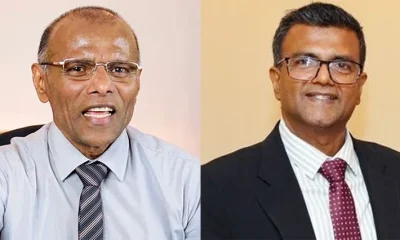
 News7 days ago
Treasury chief’s citizenship details sought from Australia
-

 News6 days ago
Rooftop Solar at Crossroads as Sri Lanka Shifts to Distributed Energy Future
-
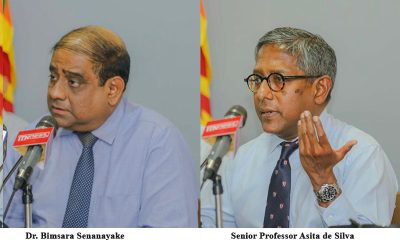
 News5 days ago
“Three-in-one blood pressure pill can significantly reduce risk of recurrent strokes”
-

 News7 days ago
Central Province one before last in AL results
-

 Sports7 days ago
Well done AKD!
-

 News2 days ago
USD 3.7 bn H’tota refinery: China won’t launch project without bigger local market share
-

 News5 days ago
Alarm raised over plan to share Lanka’s biometric data with blacklisted Indian firm
-
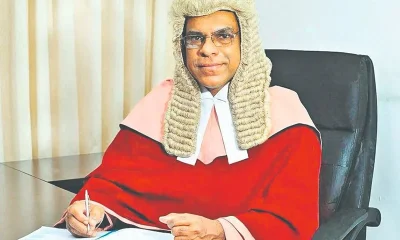 News15 hours ago
CJ urged to inquire into AKD’s remarks on May 25 court verdict