
Features
Going back to pre-2015 Geneva: Part II


By Austin Fernando
(Continued from yesterday)
22/1 Proposal (2013-3-21)
A great responsibility was placed on the State officers to implement the proposals in the Resolutions. Unfortunately, the international community did not see this happen. Hence, it decided to submit the 22/1 Resolution on 21 March 2013 by way of registering its protest with Sri Lanka. What it, however, did not understand was that the government was planning to advance a presidential election, and, therefore, committing to implementing the UNHRC would be politically disastrous.
The 22/1 proposal acknowledged the constructive efforts such as the decision to hold the Provincial Council election in the North, infrastructural development, demining and facilitating resettlement of IDPs. However, the National Plan of Action proposed by the LLRC was considered inadequate to address all the findings and constructive recommendations of the Commission. It was also noted that States facing post-conflict situations should abide by international human rights and humanitarian laws. Nationalists did not oppose the earlier actions but resisted the latter which had to do with the military.
The 22/1 Resolution focused on the following salient points:
1 Encouraged the GOSL to implement the recommendations made in the UNHRC Report and to conduct an independent and credible investigation into allegations of violations of international human rights law and international humanitarian law, as applicable.
2 Called upon the GOSL to implement the constructive recommendations of the LLRC Report, and to take all additional steps to fulfill relevant legal obligations and commitment to initiate credible and independent actions to ensure justice, equity, accountability, and reconciliation for all Sri Lankans.
3 Encouraged the GOSL to cooperate with special procedures mandate holders and to respond formally to all outstanding requests.
4 Encouraged the Office of the High Commissioner and relevant special procedures mandate holders to provide, in consultation with and with the concurrence of the GOSL, advice and technical assistance on implementing the above-mentioned steps.
5 Requested the Office of the High Commissioner, with input from relevant special procedure mandate holders, as appropriate, to present an oral update to the Human Rights Council at its twenty-fourth session, and a comprehensive report followed by a discussion on the implementation of the present resolution at its twenty-fifth session.
The implementation of Human Rights and International Humanitarian Laws is the responsibility of any government. But those who duped themselves into believing that ‘internationals can be fooled’ did not want to protect Human Rights or uphold Humanitarian Laws. Although some IDPs were resettled, new military bases sprang up. From the perspective of the Tamils, their legal rights to private lands were denied.
The international community collected data from diplomatic and external sources. It was no secret that they were biased towards the needs and demands of the Tamil community. However, it had a clear understanding of the implementation of the proposals and was concerned about the tardy pace at which it was executed. They understood that the implementation of the proposals could not be expedited. Hence, they went before the UNHRC again.
25/1 Proposal (27.03.2014)
By 2014, the international community sadly believed Sri Lanka was an irresponsible, inert state. Hence the UNHCR, on 27 March 2014, passed the 25/1 Resolution titled ‘Promoting reconciliation, accountability and human rights in Sri Lanka’. The main points therein are as follows:
1. Welcomed the oral update by the UN High Commissioner for Human Rights to the UNHRC 24th Session and the subsequent report by the Office of the UN High Commissioner for Human Rights (OHCR) on promoting reconciliation and accountability in Sri Lanka and the recommendations and conclusions, including on the establishment of a truth-seeking mechanism and national reparations policy as an integral part of a more comprehensive and inclusive approach to transitional justice.
2. Called upon the GOSL to conduct an independent and credible investigation into allegations of violations of international human rights and humanitarian laws, as applicable; to hold accountable those responsible for such violations; to end continuing incidents of human rights violations and abuses in Sri Lanka, and to implement the recommendations made in the reports of the OHCR.
3. Reiterated the earlier call upon the GOSL to implement effectively the constructive recommendations made in the LLRC Report, and to take all additional steps to fulfill its relevant legal obligations and commitments to initiate credible and independent actions to ensure justice, equity, accountability, and reconciliation for all Sri Lankans.
4. Urged the GOSL to investigate all alleged attacks by individuals and groups on journalists, human rights defenders, members of religious minority groups and other members of civil society, and all places of worship and urged the GOSL to hold perpetrators of such attacks to account and to take steps to prevent such attacks in the future.
5. Called upon the GOSL to release publicly the results of its investigations into alleged violations by security forces, including the Weliweriya attack, and the report of the Army Court of Inquiry.
6. Encouraged the GOSL to ensure that all Provincial Councils can operate effectively, in accordance with the 13th Amendment to the Constitution.
7. Welcomed the visit by the Special Rapporteur on the Human Rights of IDPs in December 2013 and called upon the GOSL to facilitate the effective implementation of durable solutions for all IDPs.
8. Welcomed the invitation to the Special Rapporteur on the Human Rights of Migrants and the Special Rapporteur on the Right to Education.
9. Encouraged the GOSL to cooperate with other special procedures mandate holders and to respond formally to all their outstanding requests.
10. Noted the recommendations and conclusions of the High Commissioner regarding ongoing human rights violations and the need for an international inquiry mechanism in the absence of a credible national process with tangible results, and requested the UNHRC:
(a) To monitor the human rights situation in Sri Lanka and to continue to assess progress on relevant national processes.
(b) To undertake a comprehensive investigation into alleged serious violations and abuses of human rights and related crimes by both parties in Sri Lanka during the period covered by the LLRC, and to establish the facts and circumstances of such alleged violations and of the crimes perpetrated to avoid impunity and ensure accountability, with assistance from relevant experts and special procedures mandate holders.
(c) To present an oral update to the Human Rights Council at its 27th session, and a comprehensive report followed by a discussion on the implementation of the present resolution at its 28th Session.
11. Encouraged the UNHRC and relevant special procedure mandate holders to provide, in consultation and the concurrence of the GOSL, to provide advice and technical assistance on implementing the above-mentioned steps.
12. Called upon the GOSL to cooperate with the Office of the High Commissioner in the implementation of the present resolution.
The government did not proceed to implement these recommendations. It chose to ignore Section 10 in particular. The international community, therefore, opted for a strong response at the March 2015 UNHCR meeting. Moves were even afoot to impose economic sanctions.
‘Yahapalana ‘Government and the UNHRC
On 9 January 2018, the ‘Yahapalana’ President was sworn in and Foreign Minister Mangala Samaraweera asked for more time to implement the UNHRC recommendations. Most of us avoid discussing this background of the UNHCR proposals of 01 October 2015. Even today they discuss, misinterpret, and misrepresent facts.
These proposals did not fall from the sky. They were the result of the unilateral proposals first made on 27 May 2009 by the Rajapaksa government, its failure to implement them, and its lethargic, cavalier attitude and negligence. This led to the ratification of a new set of proposals recommended jointly by a core group of members of the UNHCR and the ‘Yahapalana government, to address the failures of the Rajapaksa government (2009), which was responsible for the 2009 UNHRC resolution.
The international community complied with the Yahapalana government’s request for more time. Had the Rajapaksa government responsible for Resolution 11/1 implemented the recommendations therein in an acceptable manner and responded to the feedback proposals, the country would not have faced the prospect of economic sanctions.
International pressure mounted from 2011-2014 as regards the 11/1 Resolution, and the Yahapalana government had to cooperate as regards the new proposals with the countries that supported Sri Lanka at the UNHCR. It should also be mentioned that such give-and-take policies don’t come without some disadvantages, the accountability mechanism in the 30/1 Resolution being a case in point.
The conceptual basis of the 2015 UNHCR Proposal
The 2015 proposals were based on the internationally accepted principles of reconciliation. As a first step towards initiating the truth and reconciliation process, it was proposed to establish a “Truth and Reconciliation Commission’ and an “Office on Missing Persons.” Secondly, the importance of demonstrating accountability towards the crimes endured by the affected communities was highlighted. Thirdly, it was required to establish a mechanism for reparation for the victims. Fourthly, it was proposed that constitutional guarantees by Parliament would ensure that such cruelty would not be repeated. Those were the ‘four pillars of reconciliation’.
These proposals were handed over to Prince Al Hussein, UNHCR High Commissioner by GOSL before Resolution 30/1 was tabled.
Withdrawal from UNHRC Resolution 30/1
In a way, it is unfair to blame the Yahapalana government for co-sponsoring Resolution 30/1 at the UNHCR in October 2015 although some people have taken exception to that course of action.
The current SLPP government has withdrawn from the 30/1 proposal and UNHRC’s 34/1 and 40/1 Resolutions—both more of technical nature and adopted without voting. We cannot withdraw from the resolutions or decisions taken between 2011-2014 because they are derived from the 11/1 Resolution. I believe (subject to correction since I am not a lawyer) that GOSL may argue the legality of other proposals if it wishes to withdraw from 11/1. It is the prerogative of the UNHRC to accept such a withdrawal. Even if we presume that such action is possible, the understandings reached in 2009 are still valid.
The question is whether the incumbent GOSL is still committed to implementing the 11/1 and the 27 May 2009 understandings. Since the 11/1 Resolution was unilaterally placed before the UNHRC by the GOSL after the war victory, it cannot argue that it was done under LTTE’s duress. If GOSL feels that 11/1 is now irrelevant, why doesn’t it say so? Did GOSL make the 11/1 proposal to hoodwink the UN Secretary-General? Or, was it another Medamulana ruse?
Two UNHRC resolutions call for the implementation of the LLRC’s constructive recommendations. The lack of commitment on the part of the Rajapaksa government to do so is unjustifiable.
Following the March 2021 Resolution in Geneva, the UNHRC has been empowered to “consolidate, analyze and preserve information and evidence” for “future accountability processes for gross violations of human rights or serious violations of international humanitarian law, to advocate for victims and survivors, and to support relevant judicial proceedings in the Member States with competent jurisdiction.”
However, some commentators opine that the Secretariat thus established will not be permitted to visit Sri Lanka like the Darusman Committee and that could hamper reporting. As stated earlier, information is freely available internationally. As a political columnist has aid recently, “it should not be forgotten that the Human Rights Commissioner’s office claims it already has trophy evidence which would be utilized.”
There are so many unanswered questions. But the demands made on behalf of the victims are still alive. Just a few days ago, didn’t MA Sumanthiran, MP, state so albeit in different words? It is these demands that drive the UNHCR and the European Union and even others to push GOSL against the wall.



Further to my earlier letter titled, “Psychology of Greed and Philosophy for a New World Order” (The Island 26.11.2025) it may not be far-fetched to say that the cause of the devastating cyclones that hit Sri Lanka and Indonesia last week could be traced back to human greed. Cyclones of this magnitude are said to be unusual in the equatorial region but, according to experts, the raised sea surface temperatures created the conditions for their occurrence. This is directly due to global warming which is caused by excessive emission of Greenhouse gases due to burning of fossil fuels and other activities. These activities cannot be brought under control as the rich, greedy Western powers do not want to abide by the terms and conditions agreed upon at the Paris Agreement of 2015, as was seen at the COP30 meeting in Brazil recently. Is there hope for third world countries? This is why the Global South must develop a New World Order. For this purpose, the proposed contentment/sufficiency philosophy based on morals like dhana, seela, bhavana, may provide the necessary foundation.
Further, such a philosophy need not be parochial and isolationist. It may not be necessary to adopt systems that existed in the past that suited the times but develop a system that would be practical and also pragmatic in the context of the modern world.
It must be reiterated that without controlling the force of collective greed the present destructive socioeconomic system cannot be changed. Hence the need for a philosophy that incorporates the means of controlling greed. Dhana, seela, bhavana may suit Sri Lanka and most of the East which, as mentioned in my earlier letter, share a similar philosophical heritage. The rest of the world also may have to adopt a contentment / sufficiency philosophy with strong and effective tenets that suit their culture, to bring under control the evil of greed. If not, there is no hope for the existence of the world. Global warming will destroy it with cyclones, forest fires, droughts, floods, crop failure and famine.
Leading economists had commented on the damaging effect of greed on the economy while philosophers, ancient as well as modern, had spoken about its degenerating influence on the inborn human morals. Ancient philosophers like Plato, Aristotle, and Epicurus all spoke about greed, viewing it as a destructive force that hindered a good life. They believed greed was rooted in personal immorality and prevented individuals from achieving true happiness by focusing on endless material accumulation rather than the limited wealth needed for natural needs.
Jeffry Sachs argues that greed is a destructive force that undermines social and environmental well-being, citing it as a major driver of climate change and economic inequality, referencing the ideas of Adam Smith, John Maynard Keynes, etc. Joseph Stiglitz, a Nobel Laureate economist, has criticised neoliberal ideology in similar terms.
In my earlier letter, I have discussed how contentment / sufficiency philosophy could effectively transform the socioeconomic system to one that prioritises collective well-being and sufficiency over rampant consumerism and greed, potentially leading to more sustainable economic models.
Obviously, these changes cannot be brought about without a change of attitude, morals and commitment of the rulers and the government. This cannot be achieved without a mass movement; people must realise the need for change. Such a movement would need leadership. In this regard a critical responsibility lies with the educated middle class. It is they who must give leadership to the movement that would have the goal of getting rid of the evil of excessive greed. It is they who must educate the entire nation about the need for these changes.
The middle class would be the vanguard of change. It is the middle class that has the capacity to bring about change. It is the middle class that perform as a vibrant component of the society for political stability. It is the group which supplies political philosophy, ideology, movements, guidance and leaders for the rest of the society. The poor, who are the majority, need the political wisdom and leadership of the middle class.
Further, the middle class is the font of culture, creativity, literature, art and music. Thinkers, writers, artistes, musicians are fostered by the middle class. Cultural activity of the middle class could pervade down to the poor groups and have an effect on their cultural development as well. Similarly, education of a country depends on how educated the middle class is. It is the responsibility of the middle class to provide education to the poor people.
Most importantly, the morals of a society are imbued in the middle class and it is they who foster them. As morals are crucial in the battle against greed, the middle class assume greater credentials to spearhead the movement against greed and bring in sustainable development and growth. Contentment sufficiency philosophy, based on morals, would form the strong foundation necessary for achieving the goal of a new world order. Thus, it is seen that the middle class is eminently suitable to be the vehicle that could adopt and disseminate a contentment/ sufficiency philosophy and lead the movement against the evil neo-liberal system that is destroying the world.
The Global South, which comprises the majority of the world’s poor, may have to realise, before it is too late, that it is they who are the most vulnerable to climate change though they may not be the greatest offenders who cause it. Yet, if they are to survive, they must get together and help each other to achieve self-sufficiency in the essential needs, like food, energy and medicine. Trade must not be via exploitative and weaponised currency but by means of a barter system, based on purchase power parity (PPP). The union of these countries could be an expansion of organisations,like BRICS, ASEAN, SCO, AU, etc., which already have the trade and financial arrangements though in a rudimentary state but with great potential, if only they could sort out their bilateral issues and work towards a Global South which is neither rich nor poor but sufficient, contented and safe, a lesson to the Global North. China, India and South Africa must play the lead role in this venture. They would need the support of a strong philosophy that has the capacity to fight the evil of greed, for they cannot achieve these goals if fettered by greed. The proposed contentment / sufficient philosophy would form a strong philosophical foundation for the Global South, to unite, fight greed and develop a new world order which, above all, will make it safe for life.
by Prof. N. A. de S. Amaratunga
PHD, DSc, DLITT

When Senior biodiversity scientist Vimukthi Weeratunga speaks of Sinharaja, his voice carries the weight of four decades spent beneath its dripping emerald canopy. To him, Sri Lanka’s last great rainforest is not merely a protected area—it is “a cathedral of life,” a sanctuary where evolution whispers through every leaf, stream and shadow.
“Sinharaja is the largest and most precious tropical rainforest we have,” Weeratunga said.
“Sixty to seventy percent of the plants and animals found here exist nowhere else on Earth. This forest is the heart of endemic biodiversity in Sri Lanka.”
A Magnet for the World’s Naturalists
Sinharaja’s allure lies not in charismatic megafauna but in the world of the small and extraordinary—tiny, jewel-toned frogs; iridescent butterflies; shy serpents; and canopy birds whose songs drift like threads of silver through the mist.
“You must walk slowly in Sinharaja,” Weeratunga smiled.
“Its beauty reveals itself only to those who are patient and observant.”
For global travellers fascinated by natural history, Sinharaja remains a top draw. Nearly 90% of nature-focused visitors to Sri Lanka place Sinharaja at the top of their itinerary, generating a deep economic pulse for surrounding communities.
A Forest Etched in History
Centuries before conservationists championed its cause, Sinharaja captured the imagination of explorers and scholars. British and Dutch botanists, venturing into the island’s interior from the 17th century onward, mapped streams, documented rare orchids, and penned some of the earliest scientific records of Sri Lanka’s natural heritage.

Smallest cat
These chronicles now form the backbone of our understanding of the island’s unique ecology.
The Great Forest War: Saving Sinharaja
But Sinharaja nearly vanished.
In the 1970s, the government—guided by a timber-driven development mindset—greenlit a Canadian-assisted logging project. Forests around Sinharaja fell first; then, the chainsaws approached the ancient core.
“There was very little scientific data to counter the felling,” Weeratunga recalled.
-
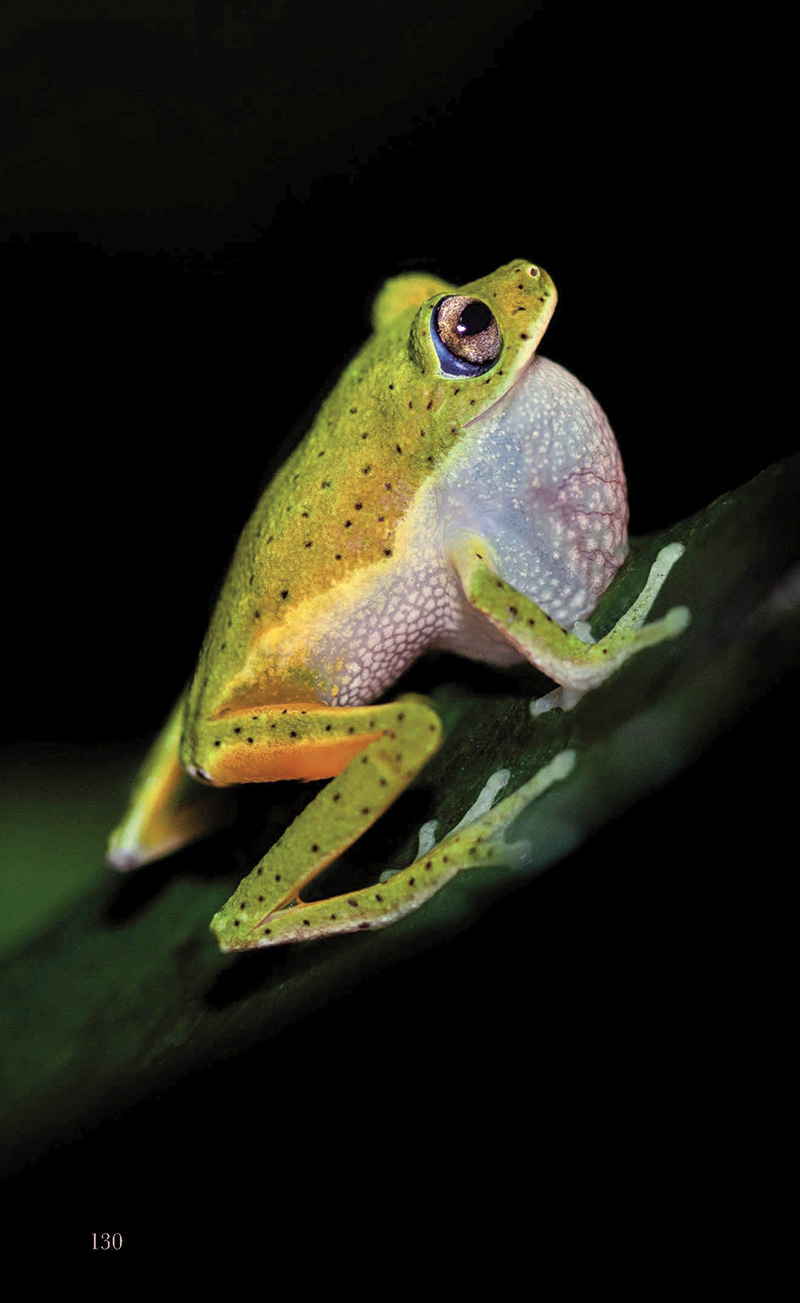
- Poppie’s shrub frog
-

- Endemic Scimitar babblers
-

- Blue Magpie
“But people knew instinctively this was a national treasure.”
The public responded with one of the greatest environmental uprisings in Sri Lankan history. Conservation icons Thilo Hoffmann and Neluwe Gunananda Thera led a national movement. After seven tense years, the new government of 1977 halted the project.
What followed was a scientific renaissance. Leading researchers—including Prof. Savithri Gunathilake and Prof. Nimal Gunathilaka, Prof. Sarath Kottagama, and others—descended into the depths of Sinharaja, documenting every possible facet of its biodiversity.

Thilak
“Those studies paved the way for Sinharaja to become Sri Lanka’s very first natural World Heritage Site,” Weeratunga noted proudly.
-

- Vimukthi
-

- Nadika
-

- Janaka
A Book Woven From 30 Years of Field Wisdom
For Weeratunga, Sinharaja is more than academic terrain—it is home. Since joining the Forest Department in 1985 as a young researcher, he has trekked, photographed, documented and celebrated its secrets.
Now, decades later, he joins Dr. Thilak Jayaratne, the late Dr. Janaka Gallangoda, and Nadika Hapuarachchi in producing, what he calls, the most comprehensive book ever written on Sinharaja.
“This will be the first major publication on Sinharaja since the early 1980s,” he said.
“It covers ecology, history, flora, fauna—and includes rare photographs taken over nearly 30 years.”
Some images were captured after weeks of waiting. Others after years—like the mysterious mass-flowering episodes where clusters of forest giants bloom in synchrony, or the delicate jewels of the understory: tiny jumping spiders, elusive amphibians, and canopy dwellers glimpsed only once in a lifetime.
The book even includes underwater photography from Sinharaja’s crystal-clear streams—worlds unseen by most visitors.
A Tribute to a Departed Friend
Halfway through the project, tragedy struck: co-author Dr. Janaka Gallangoda passed away.
“We stopped the project for a while,” Weeratunga said quietly.
“But Dr. Thilak Jayaratne reminded us that Janaka lived for this forest. So we completed the book in his memory. One of our authors now watches over Sinharaja from above.”

Jumping spide
An Invitation to the Public
A special exhibition, showcasing highlights from the book, will be held on 13–14 December, 2025, in Colombo.
“We cannot show Sinharaja in one gallery,” he laughed.
“But we can show a single drop of its beauty—enough to spark curiosity.”
A Forest That Must Endure
What makes the book special, he emphasises, is its accessibility.
“We wrote it in simple, clear language—no heavy jargon—so that everyone can understand why Sinharaja is irreplaceable,” Weeratunga said.
“If people know its value, they will protect it.”
To him, Sinharaja is more than a rainforest.
It is Sri Lanka’s living heritage.
A sanctuary of evolution.
A sacred, breathing cathedral that must endure for generations to come.
By Ifham Nizam

Leaked RTI Files Reveal Conflicting Approvals, Missing Assessments, and Silent Officials
“This Was Not Mismanagement — It Was a Structured Failure”— CEJ’s Dilena Pathragoda
An investigation, backed by newly released Right to Information (RTI) files, exposes a troubling sequence of events in which multiple state agencies appear to have enabled — or quietly tolerated — unauthorised road construction inside the Knuckles Conservation Forest, a UNESCO World Heritage site.
At the centre of the unfolding scandal is a trail of contradictory letters, unexplained delays, unsigned inspection reports, and sudden reversals by key government offices.
“What these documents show is not confusion or oversight. It is a structured failure,” said Dilena Pathragoda, Executive Director of the Centre for Environmental Justice (CEJ), who has been analysing the leaked records.
“Officials knew the legal requirements. They ignored them. They knew the ecological risks. They dismissed them. The evidence points to a deliberate weakening of safeguards meant to protect one of Sri Lanka’s most fragile ecosystems.”
A Paper Trail of Contradictions
RTI disclosures obtained by activists reveal:
Approvals issued before mandatory field inspections were carried out
Three departments claiming they “did not authorise” the same section of the road
A suspiciously backdated letter clearing a segment already under construction
Internal memos flagging “missing evaluation data” that were never addressed
“No-objection” notes do not hold any legal weight for work inside protected areas, experts say.
One senior officer’s signature appears on two letters with opposing conclusions, sent just three weeks apart — a discrepancy that has raised serious questions within the conservation community.
“This is the kind of documentation that usually surfaces only after damage is done,” Pathragoda said. “It shows a chain of administrative behaviour designed to delay scrutiny until the bulldozers moved in.”
The Silence of the Agencies
Perhaps, more alarming is the behaviour of the regulatory bodies.
Multiple departments — including those legally mandated to halt unauthorised work — acknowledged concerns in internal exchanges but issued no public warnings, took no enforcement action, and allowed machinery to continue operating.
“That silence is the real red flag,” Pathragoda noted.
“Silence is rarely accidental in cases like this. Silence protects someone.”
On the Ground: Damage Already Visible
Independent field teams report:
Fresh erosion scars on steep slopes
Sediment-laden water in downstream streams
Disturbed buffer zones
Workers claiming that they were instructed to “complete the section quickly”
Satellite images from the past two months show accelerated clearing around the contested route.
Environmental experts warn that once the hydrology of the Knuckles slopes is altered, the consequences could be irreversible.
CEJ: “Name Every Official Involved”
CEJ is preparing a formal complaint demanding a multi-agency investigation.
Pathragoda insists that responsibility must be traced along the entire chain — from field officers to approving authorities.
“Every signature, every omission, every backdated approval must be examined,” she said.
“If laws were violated, then prosecutions must follow. Not warnings. Not transfers. Prosecutions.”
A Scandal Still Unfolding
More RTI documents are expected to come out next week, including internal audits and communication logs that could deepen the crisis for several agencies.
As the paper trail widens, one thing is increasingly clear: what happened in Knuckles is not an isolated act — it is an institutional failure, executed quietly, and revealed only because citizens insisted on answers.
by Ifham Nizam

627 confirmed dead, 190 persons missing as at 6:00 a.m. today [08]

Showers expected in the Northern, North-Central, Eastern and Uva provinces and Batticaloa and Ampara districts

New landslide alerts as Ditwah aftermath worsens

Over 35,000 drug offenders nabbed in 36 days

Rising water level in Malwathu Oya triggers alert in Thanthirimale

US INDOPACOM deploys airlift and logistics support for Lanka’s Cyclone Ditwah response

‘Dates have the highest sugar content to fight Coronavirus’

Sunday Island 27 December – Headlines

#SundayIsland 17th December – Headlines

Sunday Island – 28th March

Sunday Island Headlines – 21 March

Sunday Island – 21st February – Headlines
-
News5 days ago
Lunuwila tragedy not caused by those videoing Bell 212: SLAF
-
 News4 days ago
Level III landslide early warning continue to be in force in the districts of Kandy, Kegalle, Kurunegala and Matale
-
 Latest News6 days ago
Level III landslide early warnings issued to the districts of Badulla, Kandy, Kegalle, Kurunegala, Matale and Nuwara-Eliya
-
 Features6 days ago
Ditwah: An unusual cyclone
-

 Latest News7 days ago
Updated Payment Instructions for Disaster Relief Contributions
-

 Business2 days ago
LOLC Finance Factoring powers business growth
-

 News2 days ago
CPC delegation meets JVP for talks on disaster response
-
 News2 days ago
A 6th Year Accolade: The Eternal Opulence of My Fair Lady