
News
Godahewa explains body blow country suffered , but says future is bright through innovation

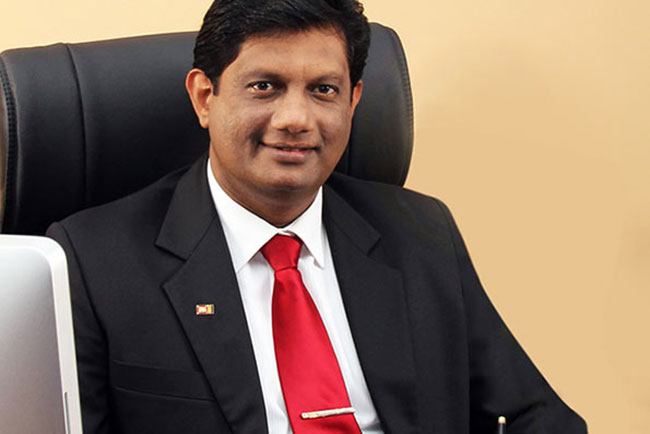
State Minister Dr. Nalaka Godahewa said yesterday that covid-19 caused a debilitating blow at a time the government was struggling to settle foreign loans amounting to a staggering USD 11 bn. Dr. Godahewa said that the GDP contracted by 3.6 % percent in 2020.
The State Minister explained that at a time they were struggling to bridge the huge trade deficit of about USD 10 bn, the country lost entire earnings from the tourism industry. The loss of about USD 4.5 bn had a significant negative impact on Sri Lanka’s foreign exchange earnings. To make matters worse, during 2020 and 2021, the government had to settle foreign loans of more than USD 11 bn, draining the country’s reserves down to USD 3 bn.
Dr. Godahewa said so delivering the keynote address at the Inaugural CSSL CEO Conclave@ NITC2021 organised by the Computer Society of Sri Lanka.
“I would like to draw your attention to a recent McKinzie report on the topic “Unlocking Sri Lanka’s digital opportunity” and invite you to think out of the box in order to capitalise on the post pandemic surge in economic rebound and the unique opportunities that come with 4.0 digital revolution”
The eminent panel consisted of Jayantha de Silva, Secretary Ministry of Technology, Rohan Fernando Chairman SLT, Kumar Parakala, President at GHD Digital USA and invited member of Forbes Business Council, Sujeewa Rajapaksa, Chairman People’s Bank and Damith Hettihewa President CSSL and Managing Director of Nimbus Cloud Lanka Ltd. The session was moderated by Arjuna Seneviratne, Leading development Strategist and Former Director of the Strategic Enterprise Management Agency (SEMA).
Delivering his keynote addres, Dr Godahewa said that the recent McKinzie report on the topic Unlocking Sri Lanka’s digital opportunity has highlighted five key areas that CEOs should focus on. They are as follows:
1) .You must set big, bold aspirations, and integrate them into the overall business. Constantly evaluate your unique competitive strengths, identify imminent threats, and reinvent your business models as necessary.
2). Build digital capabilities around customer experience. Use digitalisation to improve you customer-satisfaction by making operational enhancements, primarily by accelerating and simplifying your interactions with the customers.
3). Leverage data analytics to drive real-time decisions across the value chain. Use of data analytics may include targeted marketing and dynamic pricing.
4). Foster an innovative and agile corporate culture. Build a culture that encourages risk taking, experimentation, and accepting failure.
5). Invest in digital organisation and talent. Create a work environment that will enable you to attract and retain employees who can execute your digital agenda. Have organisational structures that encourage autonomy and flexibility.
A digital transformation requires a wholehearted commitment from a company’s leadership. So as CEOs you have an important role to play in driving the required changes in your own organisations. If you don’t see the future unfolding and remain inactive, your companies can get adversely affected by sudden market changes. On the other hand, moving quickly and becoming a leader in the digital transformation will dramatically increase your revenue potential and the returns to shareholders.
At the time we are having this discussion, the Covid-19 pandemic has reached almost every country in the world. We are passing through a very difficult period in human history. More than 4.8 million lives have already been lost, despite the vast advancements in medical sciences.
In addition to the enormous loss of human lives, the current pandemic has resulted in catastrophic economic losses across the globe. In 2020, except China, all other world economies reported negative growth. Even in China which reported a mere 2.2% growth, the growth rate had declined significantly compared to previous years. The global economy is expected to lose nearly 8.5 trillion US Dollars in terms of output, due to the COVID-19 pandemic. It is estimated that the world student population has lost more than 3 trillion learning hours. This too will have serious consequences for human development in the years to come.
Pandemics are not new to the world and we all know that the bad times will be over soon. Therefore, we must look to the future positively. The good news is that the global economy is expected to bounce back with about 5.4% growth rate next year. We must try and follow suit with the right strategies and efficient implementation. Currently we anticipate an economic growth of about 3.4% for 2021 and we should aim for a much higher GDP growth for 2022. However, the slow global recovery, coupled with continued trade restrictions and the high debt burden could continue to affect our growth targets.
We all know that a crisis always sparks innovation and entrepreneurship. That is why there is a famous saying “Necessity is the mother of invention”. If we look at statistics from various parts of the world, 2020 shows a surge of applications for new businesses. The COVID-19 crisis has created an imperative for companies to transform and reconfigure their operations. To the extent that they do so, greater productivity will follow. This is mainly propelled by the readiness of the ICT and the circumstances pushing for change.
We are aware that there has been a major pandemic every 100 years or so. Similarly a technological revolution too has occurred in almost every century. We are in the early stages of the 4th industrial revolution. It is a technology revolution, mainly a digital revolution.
For the ICT industry, the pandemic has been the silver lining in the dark cloud. Things have accelerated in the digital revolution. The ‘future of work’ has arrived ahead of schedule, as a result of the pandemic. The McKinsey Global Institute estimates that more than 20 percent of the global workforce now work away from the office and yet they are just as effective.

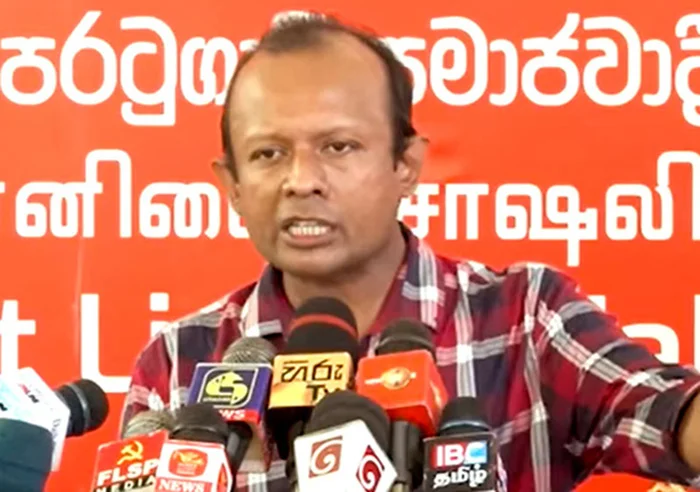
The Frontline Socialist Party (FSP) yesterday accused the government of seeking to use the proposed Protection of the State from Terrorism Act (PSTA) to suppress popular political activity, claiming that some of its provisions were more repressive than those of the Prevention of Terrorism Act (PTA).
FSP Education Secretary Pubudu Jayagoda told a media briefing, in Nugegoda, that the definition of terrorism in the Bill was so broad that it could be used to label almost any form of popular political activity as terrorism.
He said the Bill’s approach to defining terrorism was based largely on attempts to compel a government, or an international organisation, to do, or refrain from doing something, rather than on internationally recognised criteria, such as killings, causing serious bodily harm, kidnapping or acts intended to spread terror among the public.
Jayagoda also alleged that the Bill transferred substantial powers from the judiciary to the executive, while extending powers of arrest, investigation and detention to the armed forces, in addition to the police.
He claimed that the government had sought to portray the Bill as a replacement for the PTA while retaining or introducing provisions that could facilitate political victimisation and repression.
The FSP also questioned the government’s decision to proceed with the Bill, despite having previously sought public views on an earlier draft.
Jayagoda said a draft had been published earlier this year, with the period for public submissions ending on February 28, but the Bill subsequently gazetted was essentially the same draft with some provisions rearranged.
Jayagoda also referred to a letter reportedly sent by Attorney-at-Law Saliya Peiris, a member of a Committee, chaired by President’s Counsel Rienzie Arsecularatne, that had been appointed to draft the legislation. He said Peiris had stated, in the October 06 letter, that changes had been made to the draft prepared by the Committee.
“This means that even the Committee, appointed to prepare the Bill, was a deception,” Jayagoda alleged.
He said that the PSTA was fundamentally similar to the Anti-Terrorism Bill introduced by the previous government, in 2023, which the National People’s Power (NPP) opposed and challenged in court.
“If the NPP opposed that Bill then and is now bringing the same legislation before Parliament, the government must explain its position,” he said.
Jayagoda called on NPP MPs to oppose the PSTA in Parliament and urged trade unions and other groups to build a broad public movement against the legislation.
He challenged the government to an open debate on the Bill.
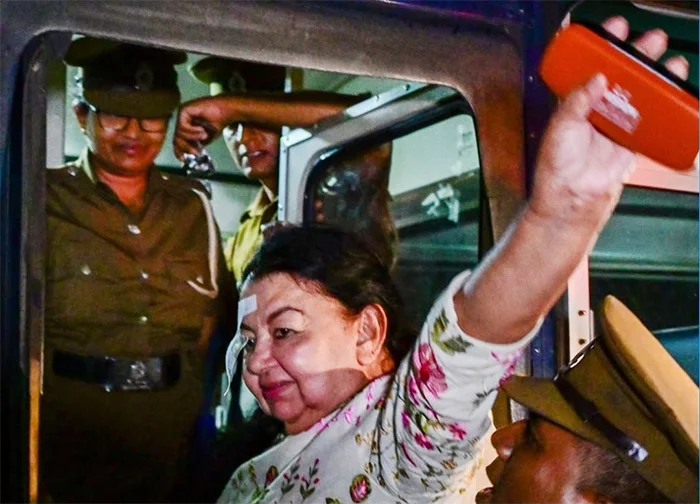
Former First Lady Shiranthi Rajapaksa was yesterday remanded until 13 October after being produced before the Colombo Magistrate’s Court following her arrest by the Commission to Investigate Allegations of Bribery or Corruption (CIABOC).
Shiranthi, wife of former President Mahinda Rajapaksa, was arrested at her residence on Poorwarama Road, Kirulapone, after CIABOC officers recorded a statement from her for nearly two hours.
According to the CIABOC, the arrest was made over allegations that Rs. 10 million obtained from the National Savings Bank through the Siriliya Saviya organisation was misappropriated.
The money was allegedly obtained to provide a Computed Tomography (CT) scanner to the children’s hospital. Investigators allege that the scanner was not provided and that the funds were instead unlawfully used.
CIABOC is investigating alleged offences under the Public Property Act and corruption-related provisions in connection with the transaction and other financial activities involving Siriliya Saviya, which was headed by Rajapaksa.
Rajapaksa returned to Sri Lanka on Monday night on a flight from Malaysia after travelling overseas for medical treatment. She left for Singapore on 16 September after being admitted to a private hospital in Colombo on 15 September following an illness.
She had been due to appear before the Financial Crimes Investigation Division (FCID) on 13 October in connection with its investigation into the financial affairs of Siriliya Saviya.
Meanwhile, her lawyers filed an anticipatory bail application before the Maligakanda Magistrate’s Court on Monday, seeking an order preventing her arrest in connection with the FCID investigation.
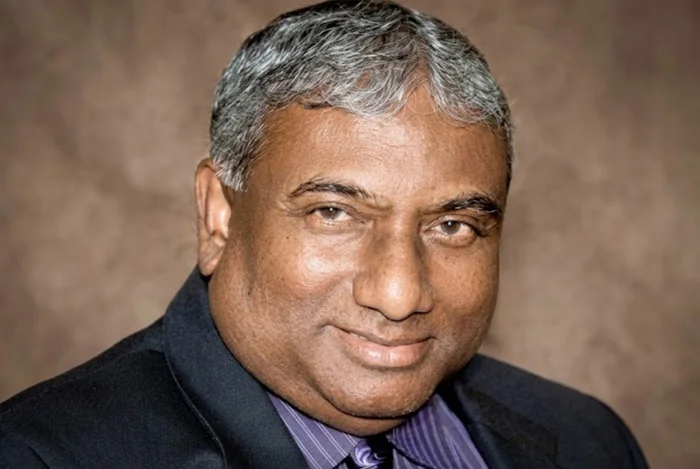
Former National Savings Bank (NSB) Chairman Pradeep Kariyawasam was yesterday granted bail by the Colombo Magistrate’s Court following his arrest by the Commission to Investigate Allegations of Bribery or Corruption (CIABOC).
Kariyawasam, husband of former Chief Justice Shirani Bandaranayake, was arrested in connection with the Bribery Commission’s investigation into the ‘Siriliya Saviya’ account linked to former First Lady Shiranthi Rajapaksa.
The investigation concerns financial activities involving the Siriliya Saviya initiative, which was headed by Rajapaksa, wife of former President Mahinda Rajapaksa.
CIABOC is continuing investigations into the alleged financial irregularities relating to the account.

Showers above 100 mm are likely at some places in the Western, Sabaragamuwa, Central, Uva and Southern provinces and in Anuradhapura district

PSTA worse than PTA: FSP

Shiranthi R remanded until 13 Oct.

Former NSB Chairman Kariyawasam granted bail

Katchatheevu row: India SC urges fishermen to avoid Sri Lankan waters

Remembering Juvenal, Coke, Acton and Machiavelli

‘Dates have the highest sugar content to fight Coronavirus’

Sunday Island 27 December – Headlines

#SundayIsland 17th December – Headlines

Sunday Island – 28th March

Sunday Island Headlines – 21 March

Sunday Island – 21st February – Headlines
-

 Editorial6 days ago
Colombo Port drug bust: The plot thickens
-

 Features4 days ago
The first woman in the foreign service or Ceylon Overseas Service it was then called
-

 Editorial5 days ago
Fuelling discontent and protest
-

 News3 days ago
Geneva takes up Sallay’s case and govt. ignores opportunity to answer accusations
-

 Latest News5 days ago
Tharindu Rathnayake, bowlers secure Asian Games Bronze for Sri Lanka
-

 Foreign News5 days ago
Ten injured after car crashes into rugby supporters in Australia
-

 Features3 days ago
Sri Lanka Cricket Bill: Governance reform is not yet a cricket strategy
-

 News4 days ago
Nearly 20 Iranian tankers stranded off Lanka amid US sanctions