
News
Gevindu underscores need for 20 A pending new Constitution

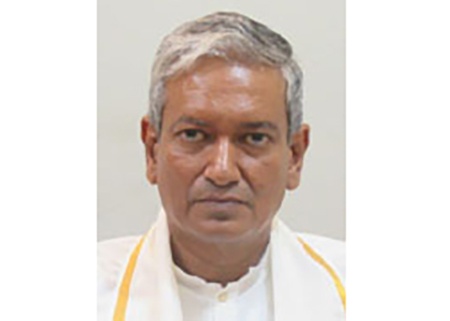
…discusses merits, demerits et al
By Shamindra Ferdinando
SLPP National List lawmaker Gevindu Cumaratunga says the 20th Amendment to the Constitution enacted last month is required to rectify weakening of the State by the 19th Amendment. Alleging that the 19th Amendment had been introduced in 2015 with an overwhelming majority primarily to achieve three objectives namely (I) remove the Rajapaksas from politics (II) provide executive powers to the then Prime Minister Ranil Wickremesinghe and (III) weaken the Sri Lankan State by depriving the executive of the previously enjoyed power.
In a brief interview with The Island, MP Cumaratunga, who is also the leader of the civil society organization Yuthukama, said that the despicable political project had been largely defeated. Those who had conspired to provide executive powers to the Premier at the expense of the President through the 19th Amendment were politically irrelevant today, the lawmaker pointed out.
Having reversed the UNP spearheaded strategy with the successful conclusion of 2019 presidential and 2020 parliamentary polls, the government had now done away with measures to weaken the State, the MP said.
Cumaratunga said that he discussed those issues on the second day of the debate on the 20th Amendment on Oct 22. The parliament provided the required 2/3 majority for the Amendment. Speaker Mahinda Yapa Abeywardena signed it into law on Oct 29.
Cumaratunga underscored the pivotal importance of correctly recognizing the objectives of the 19th Amendment and the challenges faced by the 20th Amendment.
“The 19th Amendment was brought into achieve sinister external objectives. The 20th Amendment was proposed to defeat that project jointly implemented by foreign powers and their local agents. If they succeeded in their high profile project to introduce a new constitution to their liking spearheaded by UNP leader Wickremesinghe, we would have ended up in total chaos with permanent foreign military presence and the country being a supply base for Western powers.”
The 19th Amendment was nothing but a dangerous constitutional tool that could have caused anarchy at every level, the newcomer to parliamentary politics alleged. In addition to NL member Cumaratunga, another key Yuthukama activist Anupa Pasquel was elected from the Kalutara district on the SLPP ticket at the August poll.
Cumaratunga explained how the conspirators included worthy sections to hide their real intentions. The MP alleged that their strategy had been quite efficient and useful from their point of view as the public were largely deceived. Cumaratunga said that nationalist groups, including Yuthukama wholeheartedly accepted many clauses which they sincerely believed were in the public interests.
Cumaratunga appreciated the restriction of the number of cabinet ministers and non-cabinet ministers to prevent political horse trading. This thwarted political parties from exploiting instability in parliament for their advantage, the MP said. “We also accepted the provision in the 19th Amendment to prevent the party in power to bring in emergency Bills, constitutional changes,” Cumaratunga said, recalling how the then President JRJ brought in the 13th Amendment to appease India and the 15 Amendment introduced by slain President Ranasinghe Premadasa to placate religious minorities. MP Cumaratunga alleged that the 19th Amendment included a clause prohibiting emergency amendments/Bills in a bid to hide their sinister intentions. The right of the public to challenge new laws in the Supreme Court should not be interfered with in any way, lawmaker Cumaratunga said.
Yuthukama
Chief alleged that additional measures were introduced by way of the 19th Amendment to strengthen the State auditing process in a cunning bid to divert the attention from selling vital state assets. While strengthening the hands of the Auditor General, the yahapalana administration perpetrated Treasury bond scams twice, the second in March 2016 far bigger than the first in late Feb 2015, MP Cumaratunga said. Responding to another query, Cumaratunga asserted that the handing over of Hambantota port on a 99-year-lease to China in 2017 exposed the previous government.
Cumaratunga appreciated President Gotabaya Rajapaksa and Premier Mahinda Rajapaksa effecting a spate of changes following representations made by the Maha Sangha and them once the 20 th Amendment was unveiled.
Cumaratunga said that the 20th Amendment faced the daunting challenge of reversing the 19th but the entire 78 Constitution as well as a series of amendments meant to protect the interests of political parties and their leaders.
Commenting on Manohara de Silva’s examination of strategies adopted by separatist elements, lawmaker Cumaratunga pointed out almost all amendments introduced after the 13th Amendment sought to pacify those promoting separatist ideology. The MP explained a campaign undertaken by Yuthukama soon after the enactment of the 19th Amendment in 2015 and the need to bring in 20th Amendment until consensus could be reached on a new Constitution.
A 9-member committee headed by Romesh de Silva, PC, is formulating a new Constitution.
Lawmaker Cumaratunga, in his speech delivered in parliament on Oct 22 pointed out the absurdity in following the Indian ‘system’ in introducing the 13th Amendment to the Constitution. Cumaratunga highlighted the introduction of a term (Railway Areas) in keeping with the Indian Constitution regardless of no such designated area in Sri Lanka.
Commending the government decision to expand the number of members of the Election Commission from present three to five, MP Cumaratunga said that their earnest wish is to bring in a new Constitution before President Gotabaya Rajapaksa begins his second year in Nov 2021. Cumaratunga said that Yuuthukama found seven sections in the original 20th Amendment wholly unacceptable. Among them was a bid to promote separatist ideology as well as to do away with the provision to subject the Office of the President and the Prime Minister to the State auditing process.
Yuthukama
leader acknowledged that all their proposals hadn’t been accepted including the one in respect of checks and balances among the President, the Prime Minister and the Parliament though the required was met to a certain extent by the President receiving the constitution right to dissolve parliament two and half years after the first sitting.
Appreciating the formulation of a Parliamentary Council in respect of the appointment of judges to higher courts, members of Commissions, including their chairmen, Attorney General and IGP instead of the previous Constitution Council that followed the NGO agenda, MP Cumaratunga said that the President’s prerogative regarding the appointment of the AG and the IGP was important. However, the MP acknowledged that the Parliamentary Council role in merely making observations needs to be resolved. Cumaratunga appealed to President Gotabaya Rajapaksa to make appointments taking into consideration recommendations/observations of the Parliamentary Council. The lawmaker also emphasized the importance of the Speaker’s role in the proposed mechanism for the President to receive recommendations/observations of the five-member Parliamentary Council. Cumaratunga said that the proposed mechanisms should be subjected to the Speaker’s approval; as such a decision should be made available to the parliament as it would ensure the intervention of the House in the matter.

Latest News
Sun directly overhead Chilaw, Bingiriya, Halmillawewa, Panduwasnuwara, Gokarella, Kawudupelella, Koppaveli and Kirankulam about 12:12 noon. today (09)


On the apparent northward relative motion of the sun, it is going to be directly over the latitudes of Sri Lanka from the 05th to 15th of April this year.
The nearest areas of Sri Lanka over which the sun is overhead today (09th) are Chilaw, Bingiriya, Halmillawewa, Panduwasnuwara, Gokarella, Kawudupelella, Koppaveli and Kirankulam about 12:12 noon.
Latest News
Heat Index at Caution Level in the Western, Sabaragamuwa, Southern, Eastern, North-western, Northern and North-central provinces and in Monaragala district

Warm Weather Advisory
Issued by the Natural Hazards Early Warning Centre
Issued at 4.30 p.m. on 08 April 2026, valid for 09 April 2026.
The Heat index, the temperature felt on human body is likely to increase up to ‘Caution level’ at some places in the Western, Sabaragamuwa, Southern, Eastern, North-western, Northern and North-central provinces and in Monaragala district.
The Heat Index Forecast is calculated by using relative humidity and maximum temperature and this is the condition that is felt on your body. This is not the forecast of maximum temperature. It is generated by the Department of Meteorology for the next day period and prepared by using global numerical weather prediction model data.

Effect of the heat index on human body is mentioned in the above table and it is prepared on the advice of the Ministry of Health and Indigenous Medical Services.
ACTION REQUIRED
Job sites: Stay hydrated and takes breaks in the shade as often as possible.
Indoors: Check up on the elderly and the sick.
Vehicles: Never leave children unattended.
Outdoors: Limit strenuous outdoor activities, find shade and stay hydrated.
Dress: Wear lightweight and white or light-colored clothing.
Note:
In addition, please refer to advisories issued by the Disaster Preparedness & Response Division, Ministry
of Health in this regard as well. For further clarifications please contact 011-7446491.

The Auditor General has warned that delays in coal procurement and continued reliance on suppliers of questionable standards could disrupt the supply of electricity.
The special audit report on coal imports was presented to Parliament on Tuesday (07) by Bimal Ratnayake, Leader of the House, at the commencement of proceedings.
However, Opposition MPs complained to Speaker Dr Jagath Wickramaratne that copies of the report had not been distributed to Members of Parliament. Responding to the complaint, the Speaker said it was the responsibility of the Parliamentary Secretariat to ensure the report was provided to MPs.
The special audit, requested by the Committee on Public Enterprises (COPE), examined the coal procurement process of the Lanka Coal Company for the Lakvijaya Power Plant and purchases planned for the 2025/2026 season.
The audit revealed several irregularities in the tender process. It found that the laboratory issuing quality reports at the loading port for the controversial supplier Trident Company had its licence cancelled. The report also disclosed that at the time advertisements were published calling for tenders,the company had not completed its registration but was awarded the tender. In addition, three other suppliers who had not confirmed their registration were allowed to submit bids.
Coal shipments for the Lakvijaya Power Plant are tested at both loading and unloading ports. According to the audit, Mitra SK South Africa had been appointed to conduct testing at the loading port, but due to the absence of accreditation the task was assigned to PT Mitra SK Analisa Testama Samarinda, an Indonesian firm whose licence had been cancelled on December 29, 2025. Auditor General S. Jayarathne has noted that the audit could not confirm whether the licence had been renewed by March 31, 2026, and that all 12 shipment reports issued at the loading port lacked accreditation.
The report has further pointed to discrepancies between loading port laboratory reports and data recorded at the plant’s main control unit. Despite the availability of alternative verification methods, the Lanka Coal Company failed to use them to confirm the accuracy of the reports.
The audit also highlighted that no coal shipments were brought to Sri Lanka between November 13 and December 30, 2025, despite the need to secure maximum stocks during that period.
As a result of the shortage, an emergency procurement was carried out on March 18 this year, selecting Taranjot Resource Pvt Ltd. as the supplier. However, the Auditor General revealed that this company had failed within the previous 36 months to supply coal with the required calorific value of 5,900 or above to the Lakvijaya Power Plant.
The report warns that delays in coal imports and dependence on suppliers with questionable standards could adversely affect the continuous supply of electricity from the plant.
The National Audit Office of Sri Lanka has further estimated that the use of substandard coal has caused losses amounting to nearly Rs. 2.24 billion.
According to the report, losses incurred from individual shipments included more than Rs. 160 million from the first vessel (consignment No. 456), over Rs. 90 million from the second vessel (No. 457), more than Rs. 310 million from the third vessel (No. 458), and over Rs. 150 million from the fourth vessel (No. 459). Additional losses included nearly Rs. 180 million from the fifth vessel (No. 460), about Rs. 30 million from the sixth vessel (No. 461), over Rs. 240 million from the seventh vessel (No. 462), more than Rs. 390 million from the eighth vessel (No. 463) and over Rs. 390 million from the tenth vessel (No. 464).
The report has also noted that because the available coal stocks cannot generate electricity at the plant’s full capacity of 300 megawatts, additional power may have to be obtained from alternative sources. The estimated additional energy requirement for this purpose is 76,354,087 kilowatt-hours, the report has pointed out.
By Saman Indrajith

BCCI curbs movement of benched IPL players in latest rules

Prasidh trumps Miller in last-ball finish as Gujarat Titans clinch thriller

Greece to ban social media for under-15s from next year

Showers will occur at a few places in the Western, Sabaragamuwa and North-western provinces and in Galle, Matara, Kandy, Nuwara-Eliya and Mannar districts after 2.00 p.m.

Sun directly overhead Chilaw, Bingiriya, Halmillawewa, Panduwasnuwara, Gokarella, Kawudupelella, Koppaveli and Kirankulam about 12:12 noon. today (09)

Heat Index at Caution Level in the Western, Sabaragamuwa, Southern, Eastern, North-western, Northern and North-central provinces and in Monaragala district

‘Dates have the highest sugar content to fight Coronavirus’

Sunday Island 27 December – Headlines

#SundayIsland 17th December – Headlines

Sunday Island – 28th March

Sunday Island Headlines – 21 March

Sunday Island – 21st February – Headlines
-

 Features4 days ago
Ranjith Siyambalapitiya turns custodian of a rare living collection
-

 News4 days ago
Global ‘Walk for Peace’ to be held in Lanka
-

 News2 days ago
Lankan-origin actress Subashini found dead in India
-
 Opinion6 days ago
Hidden truth of Sri Lanka’s debt story: The untold narrative behind the report
-

 Features4 days ago
Beyond the Blue Skies: A Tribute to Captain Elmo Jayawardena
-

 Features4 days ago
Aspects of Ceylon/Sri Lanka Foreign Relations – 1948 to 1976
-

 Features6 days ago
The Ramadan War
-

 Editorial5 days ago
Brouhaha over a book