
News
Gevindu opposes Karu’s move to promote Yahapalana federal proposals, points to NPP-US nexus

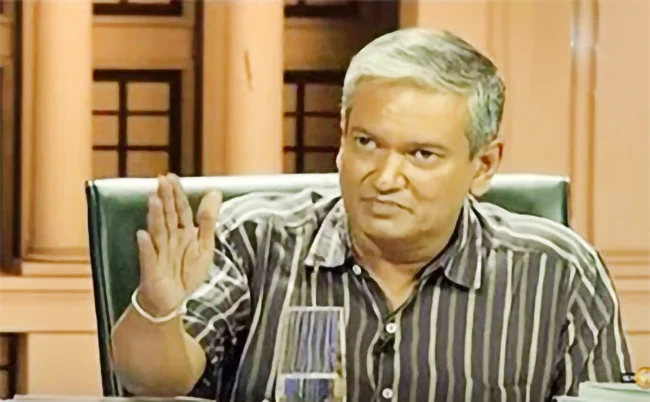
By Shamindra Ferdinando
Former SLPP National List MP and leader of Yuthukama civil society group Gevindu Cumaratunga yesterday (11) said that the public should oppose former Speaker Karu Jayasuriya’s call for the implementation of the Yahapalana government’s Orumithanadu federal proposals.
Cumaratunga said that he was quite surprised and disappointed by the former Speaker’s move made in his current capacity as Chairman of the National Movement for Social Justice (NMSJ).
The ex-parliamentarian pointed out that a National People’s Power (NPP) government wouldn’t have been a reality without the US-sponsored so-called Aragalaya and the new US administration of President Donald Trump had bared the machinations of the USAID to advance their despicable political agenda.
Karu Jayasuriya should have called for a thorough investigation into external interventions, Cumaratunga said. “Instead, the former Speaker wants the NPP government to advance the Yahapalana project that had been roundly rejected by the vast majority of people,” the civil society activist said.
Cumaratunga challenged NMSJ chief’s declaration that the Yahapalana proposals, prepared by Attorney-at-Law Lal Wijenayaka, had the backing of many parties in Parliament. The former Speaker should realize that treacherous constitutional proposals had been rejected by the people,not once but twice at the 2019 November presidential election and 2020 August parliamentary polls when the UNP was reduced to just one MP.
Referring to continuing controversy over the USAID’s sinister interventions in various parts of the world, including Asia, ex-lawmaker Cumaratunga said that actually Jayasuriya owed an explanation as to his role in finalizing an agreement with the US agency in Nov. 2016. Over the years, USAID increased its role in Parliament to such an extent it arranged foreign visits for MPs and workshops in Parliament.
Cumaratunga said that as a new MP he attended a workshop in Parliament, sponsored by the USAID, and raised a privilege issue on Aug. 30, 2020, over the US agency’s conduct. Although the then Speaker Mahinda Yapa Abeywardena assured that undue interventions wouldn’t be allowed, the whole world now knew the level of US interventions through USAID and other means, the former MP said.
There should be no holds barred investigation into US funding, the former MP said demanding that Jayasuriya’s role couldn’t be ignored.
According to him, the continuing controversy over US intervention in India underscored the gravity of the situation. The level of interventions there, as discussed in Lok Sabha, should help us to understand our vulnerability, he said, pointing out that those who ridiculed and accused them of propagating scare stories were silent today.



A group of Tamil Progressive Alliance (TPA) members, including its Leader Mano Ganesan, met President Anura Kumara Dissanayake on Thursday (02) morning at the Presidential Secretariat.
Extensive discussions were held on the issues faced by the Malayagam communities, particularly in relation to education, housing and land, as well as on the urgent measures required to address these concerns. The President paid special attention to all these matters.
Attention was also drawn to the recruitment of qualified Tamil-medium teachers to address the teacher shortage in estate sector schools and this too was discussed at length.
Members of Parliament P. Digambaram and V. Radhakrishnan, along with several other party members, were present at the meeting.

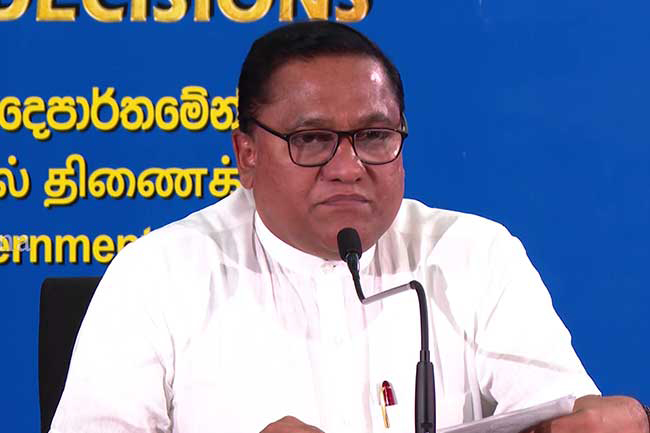
Minister of Foreign Affairs, Vijitha Herath, held talks with Deputy Foreign Minister of Russia Andrey Rudenko at the Foreign Ministry, in Colombo, on Thursday (02), with both sides reaffirming their commitment to strengthening bilateral relations.
The Sri Lanka Ministry of Foreign Affairs said the visiting Russian Deputy Minister noted that Russia regarded Sri Lanka as a long-standing friend.
Rudenko assured that Russia stood ready to support Sri Lanka when required, including in the swift supply of Russian oil to help address the current energy challenges, encouraging Russian investors to explore new opportunities in the country and promoting increased tourist arrivals.
He also expressed Russia’s readiness to provide compensation for Sri Lankan war veterans who had lost their lives in the ongoing conflict between Russia and Ukraine.
Minister Herath welcomed Russia’s willingness to assist, emphasising that Sri Lanka valued the support extended by its “old friend”, particularly at a time when the country was facing pressing energy needs.
He noted that the two countries shared nearly seven decades of diplomatic relations and said the present moment provided an opportunity to further strengthen ties, including through long-term trade agreements.
The discussions focused on enhancing cooperation in the fields of energy, investment, tourism and diplomacy, with both sides reiterating their commitment to further deepen the longstanding friendship between Sri Lanka and Russia.

Police yesterday arrested 157 foreign nationals in connection with an alleged organised online financial scam, conducted from a hotel in the Iranawila area in Chilaw.
The suspects were taken into custody during a raid carried out by the Police while they were staying at the hotel in Iranawila.
Police said the arrested group included 143 nationals from China, 13 from Bangladesh and one from Vietnam.
Investigators suspect the group had been involved in a coordinated online financial scam, targeting victims through digital platforms.
The suspects are being detained for further questioning while investigations are continuing to determine the full extent of the operation and whether additional individuals were involved.Police said further inquiries are underway.
By Norman Palihawadane

The Many Faces of Martin Wickremasinghe

Atlas makes learning the perfect New Year gift for young minds

Summa Rugby emerges as a powerhouse in Lankan schools rugby

Sharp Shooter 2026 raises the bar for sport shooting in Lanka

Jetwing Hotels publishes and launches ‘Ceylon in 1907’

Shark and Ray Karawala

‘Dates have the highest sugar content to fight Coronavirus’

Sunday Island 27 December – Headlines

#SundayIsland 17th December – Headlines

Sunday Island – 28th March

Sunday Island Headlines – 21 March

Sunday Island – 21st February – Headlines
-

 News3 days ago
2025 GCE AL: 62% qualify for Uni entrance; results of 111 suspended
-

 News5 days ago
Tariff shock from 01 April as power costs climb across the board
-
 News6 days ago
Inquiry into female employee’s complaint: Retired HC Judge’s recommendations ignored
-
 Features7 days ago
When seabed goes dark: The Persian Gulf, cable sabotage, and race for space-based monopoly
-
 Features6 days ago
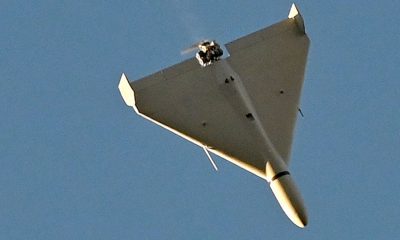
New arithmetic of conflict: How the drone revolution is inverting economics of war
-

 Editorial3 days ago
Search for Easter Sunday terror mastermind
-

 Business4 days ago
Hour of reckoning comes for SL’s power sector
-

 Sports6 days ago
Sri Lanka’s 1996 World Cup heroes to play exhibition match in Kuala Lumpur