
Latest News
Gaza peace plan talks to continue as Trump says chance of a deal is ‘really good’


Indirect talks aimed at reaching a final agreement on a US peace plan to end the war in Gaza are set to continue on today [Tuesday] in the Egyptian city of Sharm El-Sheikh.
Palestinian and Egyptian officials have told the BBC that the sessions are focused on “creating the field conditions” for a possible exchange that would see the release of all Israeli hostages in return for a number of Palestinian prisoners.
Israel’s prime minister said on Saturday that he hoped to announce the release of hostages “in the coming days”.
As the officials met on Monday, US President Donald Trump told reporters at the White House: “We have a really good chance of making a deal, and it’ll be a lasting deal.”
Hamas has said it agrees to the peace plan proposals in part, but has not responded to several key demands – including its disarmament and not having any future role in the governance of Gaza.
The second day of the talks, which will see Egyptian and Qatari officials holding shuttle meetings with delegations from both Israel and Hamas separately, will be taking place on the second anniversary of the Hamas-led attack on southern Israel on 7 October 2023, in which about 1,200 people were killed and 251 others were taken hostage.
The Israeli military launched a campaign in Gaza in response. Since then, 67,160 have been killed by Israeli military operations in Gaza, including 18,000 children, according to the territory’s Hamas-run health ministry.
In a statement commemorating the anniversary, United Nations Secretary-General Antonio Guterres said Trump’s plan “presents an opportunity that must be seized to bring this tragic conflict to an end”.
UK Prime Minister Sir Keir Starmer reiterated his support for the plan in his statement commemorating the anniversary, saying: “We welcome the US initiative towards peace in the Middle East, and this government will do everything in our power to bring about the day where every child of Israel can live peacefully, alongside their Palestinian neighbours, in safety and security.”
A senior Israeli security source said the talks initially would focus only on the release of hostages and give Hamas a few days to complete that phase.
These discussions are expected to be among the most consequential since the start of the war and could determine whether a path toward ending the conflict is finally within reach.
US special envoy Steve Witkoff, Trump’s son-in-law Jared Kushner and Qatari foreign minister Sheikh Mohammed bin Abdulrahman Al Thani are among those attending.
Trump, writing on social media, has urged everyone involved in efforts to end the Gaza war to “move fast” and says he has been told the first phase of the peace plan – which includes the hostage release – “should be completed this week”.
On Monday, he told reporters that “Hamas has been agreeing to things that are very important.”
“I really think we’re going to have a deal,” he said at the White House.
A Palestinian official close to the negotiations told the Reuters news agency that the first session ended late Monday evening, and more talks were due to take place on Tuesday.
State-affiliated Al-Qahera News also said talks would continue on Tuesday – and that the first day had ended “amid a positive atmosphere”.
The 20-point plan, which has been agreed upon by Trump and Israeli Prime Minister Benjamin Netanyahu, proposes an immediate end to fighting and the release of 48 hostages, only 20 of whom are thought to be alive, in exchange for hundreds of detained Gazans.
The plan stipulates that once both sides agree to the proposal “full aid will be immediately sent into the Gaza Strip”.
It also states that Hamas would have no role in governing Gaza, and it leaves the door open for an eventual Palestinian state.
However, after the plan was announced publicly a week ago, Netanyahu reinstated his longstanding opposition to a Palestinian state, saying in a video statement: “It’s not written in the agreement. We said we would strongly oppose a Palestinian state.”
On Friday, Hamas responded to the proposal in a statement, in which the group agreed “to release all Israeli prisoners, both living and dead, according to the exchange formula contained in Trump’s proposal” – if the proper conditions for the exchanges are met.
It did not specifically mention or accept Trump’s 20-point plan but said it “renews its agreement to hand over the administration of the Gaza Strip to a Palestinian body of independents (technocrats), based on Palestinian national consensus and Arab and Islamic support.”
The statement made no mention of one of the key demands of the plan – that Hamas agree to its disarmament and to playing no further role in the governance of Gaza.
It added that the part of the proposals dealing with the future of Gaza and the rights of Palestinian people was still being discussed “within a national framework”, of which it said Hamas will be a part.
Many Palestinians described Hamas’ response to the peace plan as unexpected, after days of indications that the group was preparing to reject or at least heavily condition its acceptance of Trump’s peace plan proposal.
Instead, Hamas refrained from including its traditional “red lines” in the official statement, a move many interpret as a sign of external pressure.
European and Middle Eastern leaders have welcomed the proposal. The Palestinian Authority (PA), which governs parts of the Israeli-occupied West Bank, has called the US president’s efforts “sincere and determined”.
Iran – which has been one of Hamas’s main sponsors for many years – has also now signalled its support for Trump’s Gaza peace plan.
Israeli bombardment continued in several parts of the Gaza Strip on Monday ahead of the talks beginning.
Israel is carrying out an offensive in the city, which it has said is aimed at securing the release of the remaining hostages.
Mahmoud Basal, spokesman for Gaza’s Hamas-run civil defence, told the BBC that “no aid trucks have been allowed into Gaza City since the offensive began four weeks ago”.
“There are still bodies we cannot retrieve from areas under Israeli control,” he said.
Hundreds of thousands of Gaza City residents have been forced to flee after the Israeli military ordered evacuations to a designated “humanitarian area” in the south, but hundreds of thousands more are believed to have remained.
Israel’s defence minister has warned that those who stay during the offensive would be “terrorists and supporters of terror”.
In the last 24 hours, 21 Palestinians have been killed in Gaza and a further 96 injured, the Hamas-run health ministry said in its latest update.
International journalists have been banned by Israel from entering the Gaza Strip independently since the start of the war, making verifying claims from both sides difficult.
[BBC]


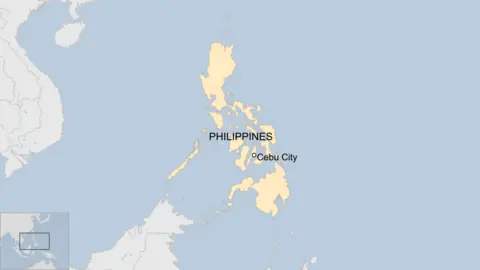
Rescue workers are racing to find dozens of people still missing following a landslide at a landfill site in the central Philippines that occurred earlier this week, an official has said.
Mayor Nestor Archival said on Saturday that signs of life had been detected at the site in Cebu City, two days after the incident.
Four people have been confirmed dead so far, Archival said, while 12 others have been taken to hospital.
Conditions for emergency services working at the site were challenging, the mayor added, with unstable debris posing a hazard and crew waiting for better equipment to arrive.
The privately-owned Binaliw landfill collapsed on Thursday while 110 workers were on site, officials said.
Archival said in a Facebook post on Saturday morning: “Authorities confirmed the presence of detected signs of life in specific areas, requiring continued careful excavation and the deployment of a more advanced 50-ton crane.”
Relatives of those missing have been waiting anxiously for any news of their whereabouts. More than 30 people, all workers at the landfill, are thought to be missing.
“We are just hoping that we can get someone alive… We are racing against time, that’s why our deployment is 24/7,” Cebu City councillor Dave Tumulak, chairman of the city’s disaster council, told news agency AFP.
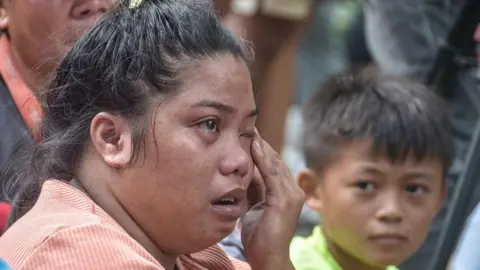
Jerahmey Espinoza, whose husband is missing, told news agency Reuters at the site on Saturday: “They haven’t seen him or located him ever since the disaster happened. We’re still hopeful that he’s alive.”
The cause of the collapse remains unclear, but Cebu City councillor Joel Garganera previously said it was likely the result of poor waste management practices.
Operators had been cutting into the mountain, digging the soil out and then piling garbage to form another mountain of waste, Garganera told local newspaper The Freeman on Friday.
The Binaliw landfill covers an area of about 15 hectares (37 acres).
Landfills are common in major Philippine cities like Cebu, which is the trading centre and transportation gateway of the Visayas, the archipelago nation’s central islands.
[BBC]

US President Donald Trump has asked for at least $100bn (£75bn) in oil industry spending for Venezuela, but received a lukewarm response at the White House as one executive warned the South American country was currently “uninvestable”.
Bosses of the biggest US oil firms who attended the meeting acknowledged that Venezuela, sitting on vast energy reserves, represented an enticing opportunity.
But they said significant changes would be needed to make the region an attractive investment. No major financial commitments were immediately forthcoming.
Trump has said he will unleash the South American nation’s oil after US forces seized its leader Nicolas Maduro in a 3 January raid on its capital.
“One of the things the United States gets out of this will be even lower energy prices,” Trump said in Friday’s meeting at the White House.
But the oil bosses present expressed caution.
Exxon’s chief executive Darren Woods said: “We have had our assets seized there twice and so you can imagine to re-enter a third time would require some pretty significant changes from what we’ve historically seen and what is currently the state.”
“Today it’s uninvestable.”
Venezuela has had a complicated relationship with international oil firms since oil was discovered in its territory more than 100 years ago.
Chevron is the last remaining major American oil firm still operating in the country.
A handful of companies from other countries, including Spain’s Repsol and Italy’s Eni, both of which were represented at the White House meeting, are also active.
Trump said his administration would decide which firms would be allowed to operate.
“You’re dealing with us directly. You’re not dealing with Venezuela at all. We don’t want you to deal with Venezuela,” he said.
The White House has said it is working to “selectively” roll back US sanctions that have restricted sales of Venezuelan oil.
Officials say they have been coordinating with interim authorities in the country, which is currently led by Maduro’s former second-in-command, Vice-President Delcy Rodríguez.
But they have also made clear they intend to exert control over the sales, as a way to maintain leverage over Rodríguez’s government.
The US this week has seized several oil tankers carrying sanctioned crude. American officials have said they are working to set up a sales process, which would deposit money raised into US-controlled accounts.
“We are open for business,” Trump said.
On Friday, Trump signed an executive order that seeks to prohibit US courts from seizing revenue that the US collects from Venezuelan oil and holds in American Treasury accounts.
Any court attempt to access those funds would interfere with US foreign relations and international goodwill, the executive order states.
“President Trump is preventing the seizure of Venezuelan oil revenue that could undermine critical US efforts to ensure economic and political stability in Venezuela,” the White House wrote in a fact sheet about the order.
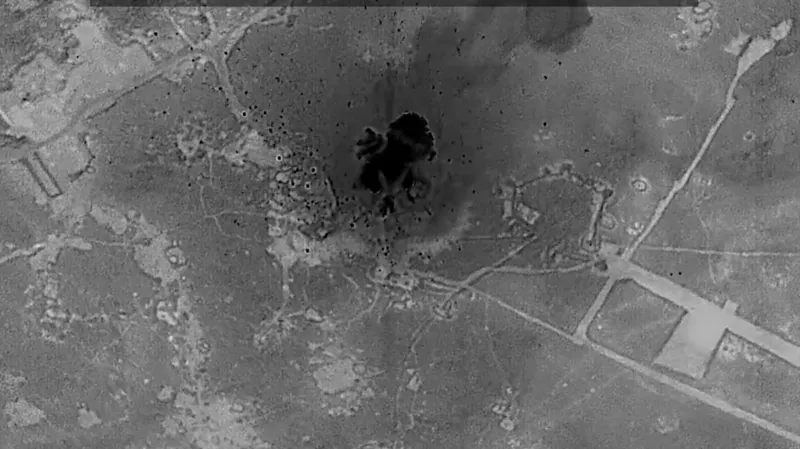
The US and its partner forces have carried out large-scale strikes against Islamic State (IS) group targets in Syria, the US Central Command (Centcom) has announced.
US President Donald Trump directed the strikes on Saturday, which are part of Operation Hawkeye Strike, in retaliation to the IS group’s deadly attack on US forces in Syria on 13 December, Centcom wrote on X.
The strikes were conducted in an effort to combat terrorism and protect US and partner forces in the region, according to Centcom.
“Our message remains strong: if you harm our warfighters, we will find you and kill you anywhere in the world, no matter how hard you try to evade justice,” Centcom said.
The US and its partner forces fired more than 90 precision munitions at more than 35 targets in an operation that involved more than 20 aircraft, an official told CBS News, the BBC’s US partner.
The official added that aircraft including F-15Es, A-10s, AC-130Js, MQ-9s and Jordanian F-16s had taken part in the strikes.
The location of the strikes and the extent of any casualties is not yet clear.
“We will never forget, and never relent,” Defence Secretary Pete Hegseth wrote on X on Saturday in reference to the military action.
The Trump administration first announced Operation Hawkeye Strike in December after an IS gunman killed two US soldiers and a US civilian interpreter in an ambush in Palmyra, located in the centre of Syria.
“This is not the beginning of a war – it is a declaration of vengeance,” Hegseth said when announcing the operation in December.
“The United States of America, under President Trump’s leadership, will never hesitate and never relent to defend our people.”
Prior to the latest strikes on Saturday, US forces killed or captured nearly 25 IS group members in 11 missions between 20 December and 29 December as part of Operation Hawkeye Strike, Centcom said.
In the operation’s first mission on 19 December, US and Jordanian forces carried out a “massive strike” against the IS group, deploying fighter jets, attack helicopters and artillery to strike “more than 70 targets at multiple locations across central Syria”, according to Centcom.
That operation, it said, “employed more than 100 precision munitions” targeting known IS infrastructure and weapons sites.
[BBC]

Rescuers race to find dozens missing in deadly Philippines landfill collapse

Trump seeks $100bn for Venezuela oil, but Exxon boss says country ‘uninvestable’

US military strikes Islamic State group targets in Syria, officials say

Gardner and Wareham lead Giants to opening-game victory

Experts: NPP education reforms unsuitable for SL

Sajith: Ashoka Chakra replaces Dharmachakra in Buddhism textbook

‘Dates have the highest sugar content to fight Coronavirus’

Sunday Island 27 December – Headlines

#SundayIsland 17th December – Headlines

Sunday Island – 28th March

Sunday Island Headlines – 21 March

Sunday Island – 21st February – Headlines
-

 News5 days ago
Interception of SL fishing craft by Seychelles: Trawler owners demand international investigation
-
 News5 days ago
Broad support emerges for Faiszer’s sweeping proposals on long- delayed divorce and personal law reforms
-

 Opinion2 days ago
The minstrel monk and Rafiki, the old mandrill in The Lion King – II
-

 Features2 days ago
The Venezuela Model:The new ugly and dangerous world order
-

 Latest News1 day ago
Rain washes out 2nd T20I in Dambulla
-

 Business1 day ago
Sevalanka Foundation and The Coca-Cola Foundation support flood-affected communities in Biyagama, Sri Lanka
-

 News4 days ago
Prez seeks Harsha’s help to address CC’s concerns over appointment of AG
-

 News6 days ago
Private airline crew member nabbed with contraband gold