
Features
Gamperaliya: The Greatest Masterpiece of Sinhala Cinema


PLACES, PEOPLE & PASSIONS (3Ps)
Dr. Chandana (Chandi) Jayawardena DPhil
President – Chandi J. Associates Inc. Consulting, Canada
chandij@sympatico.ca

Early Movies
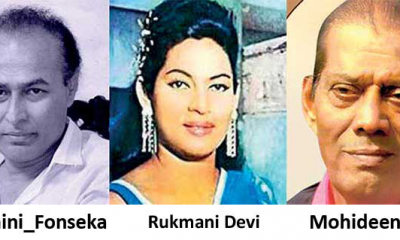
When I was very young, my parents started taking me to see popular, animated movies produced by Walt Disney. They took me to see my first Sinhala movie when I was three. I don’t remember too much about that movie – ‘Sooraya’ except that one of the main actors was Alfred Edirimanne, a good friend of my father. A couple of years later I remember watching another Sinhala movie – ‘Daivayogaya’ which was memorable mainly because of beautiful singing by Rukmani Devi, and the first-ever movie appearance by a handsome young supporting actor – Gamini Fonseka. When one of my uncles took my elder sister and me to see ‘Kavata Andare’ at the Ritz Cinema near our house at Borella in 1960, I thought that Eddie Jayamanne was hilarious acting as the famous court jester of a Sinhala king.
‘Ranmuthu Duwa’ and ‘Dr. No’
When I was a kid my favourite Sinhala movie was ‘Ranmuthu Duwa’ (Island of Treasures). In 1962, my parents took my two sisters and myself to the Sapphire Cinema in Colombo to see this first colour full-length Sinhala movie. With a budget of Rs. 400,000, it was the most expensive movie made in Ceylon, up to that point. It broke all box office records in Ceylon and its initial run in over 20 cinemas went beyond 100 days. It also made three young actors – Gamini Fonseka, Joe Abeywickrama and Jeevarani Kurukulasuriya, mega stars. Like all my eight-year-old friends, I became an ardent fan of Gamini Fonseka, who was only 26 then.
It was co-produced by Ceylonese Shesha Palihakkara and British-American Dr. Arthur C. Clarke and directed by Canadian Mike Wilson. It showed, for the first time, the underwater wonders of the seas around Ceylon, which had barely begun to be explored. In an era when Sinhala cinema was dominated by formulaic movies influenced by popular, melodrama Indian movies and music, ‘Ranmuthu Duwa’ was a breath of fresh air and set a trend. It had only three songs (compared to an average of eight songs per Sinhala movie made since 1947), all originals that made a new generation of musicians led by Amaradeva very popular over the next few decades.

Maha Kappina Walauwa in Balapitiya
Two months after that, my father told me one evening, “Chandana, let’s go for a walk by the beach.” Our walk ended at the Savoy Cinema and he surprised me by taking me to watch ‘Dr. No,’ the first 007 movie with Sean Connery as James Bond. My father had read a few books of Ian Flemming, and explained to me that the character of James Bond was loosely based on the author’s life. From then on, I became a ‘Picture Pissa’ or a movie buff. I commenced keeping a record of all movies I watched and rated them with my own star system, rating movies between one star and five stars.
Chosen to Act in ‘Gamperaliya’
One day at Bambalapitiya Flats I was playing cricket in the backyard of the house of one of my friends, Rohitha Wickremeratne. One of his elder brothers, who was much older than us, around his mid-twenties, was involved in stage plays and movie making. Dharmasiri Wickremeratne was watching me closely and Rohitha told me that his brother would like to have a quick chat with me. “Chandana, would you like to act in a movie?” was his question.
Two days later, we had three unexpected visitors arriving at our house in the evening. Film Director Lester James Peries, Film Editor Sumithra Gunawardena and Cinematographer Willie Blake, who was a neighbour of ours, came to see me and my parents. That evening I was chosen for the role of Tissa, in the movie ‘Gamperaliya.’ I was over the moon with excitement!
Shooting on Location
Lester decided that none of the scenes of ‘Gamperaliya’ would be shot in studios. One of my scenes was filmed in the Balapiitya railway station, where my screen mother dropped me off to take the train to school. Another scene was when I was transported in the family horse cart, but due to a problem with the old horse used for that scene, Lester decided to drop that scene.
Most of the other scenes were shot at a colonial manor house of a former village headman. This house – Maha Kappina Walauwa in Balapitiya was a beautiful, large and a historic building. The whole cast stayed there for weeks. This was a novel experience for me. My father travelled with me and stayed with me during shooting periods.

Lester and Sumithra in 1962.
Directed by the Greatest Movie Director of Ceylon
Lester was a very nice gentleman and had a smooth way of directing his actors and crew. In one scene my fellow actors were engaged in a family discussion. As I was not expected to appear in that scene, I was watching the process while leaning against a pillar in the meda midula (middle garden) of the house. The master movie director looked at me and softly said: “Baba, just remain in that pose and look at your screen mother and sisters, the same way you would look at your own mother and sisters.” He then gently signalled Willie Blake to move the camera from Punya Heendeniya, Trilicia Gunawardena, and Shanthi Lekha to do a close-up of me. I did not even feel that I was acting, but that scene was memorable and very natural.
I watched Lester directing the main actor – Henry Jayasena, and then newcomers – Tony Ranasinghe and Anula Karunatilake who debuted their long and successful movie careers with ‘Gamperaliya.’ I also noticed that the director took a dozen takes of a scene when he was not satisfied. He was a perfectionist.
Lester was a bachelor at that time, but I felt that he had a special connection with his movie editor – Sumithra Gunawardena. They both were graduates of the London School of Film Technique. In 1963, a filmmaking company called Cinelanka was established with the producer of ‘Gamperaliya’ – Anton Wickramasinghe, Lester, and Sumitra as major shareholders. Lester and Sumithra married in 1964 and were together for 54 years until the demise of Lester in 2018.
Hanging out with the Greatest Novelist of Ceylon
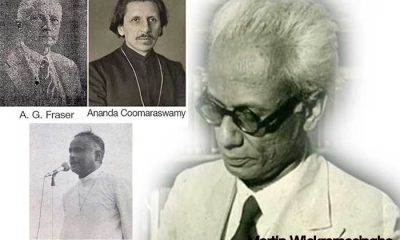
During my second visit to Maha Kappina Walauwa, to shoot a traditional New Year scene, I was pleased to meet then 72-year-old Martin Wickramasinghe who was often acclaimed as the father of modern Sinhala literature. His novels had been translated to languages such as English, Tamil, Mandarin, Russian, Japanese, French, Dutch, Bulgarian and Romanian. Martin Wickramasinghe was a legend, and I was fortunate to meet him.
Martin Wickremasinghe’s most famous work include a trilogy of great novels commencing with ‘Gamperaliya’ (). It was written and first published in 1944. The novel depict the breakup of traditional village life in colonial Ceylon due to the impact of modernisation between the early and mid-20th century. The gradual subversion of the traditional economic and social structure of the village by the commercial culture of the city is portrayed through the story of an aristocratic family in a southern village. The novel has been widely praised for its realism in depicting Sinhala rural life and is considered one of the most important work of Sinhala literature.

Martin Wickramasinghe gave me some tips when we were playing a traditional New Year indoor game played in villages – ‘Panchi’, for a scene. He knew my father well and was impressed that at age nine, I had read some of his books. Why he took special interest in my role, my father told me, was because the character I was playing – Tissa, was loosely based on the author’s childhood. Wickrama Bogoda acted as Tissa when the character became older.
My father had heard that Martin Wickramasinghe was not pleased with Lester James Peries’s choice of cinema idol, Gamini Fonseka, for the role of Jinadasa, who marries the main character of the story, Nanda (my screen sister). The character of Jinadasa was somewhat that of a weaker person and the author felt that Gamini Fonseka appeared to be too strong for the role. Perhaps that was the reason for his arrival on location the day Gamini Fonseka was expected on the sets.
Meeting the Greatest Movie Actor of Ceylon
I was looking forward to meeting Gamini Fonseka. I remember a few special things when I met my idol for the first time. He drove a sylish sports car; he spoke perfect English and smoked a lot. Well, at that time most men smoked. Then he did three things which were memorable to me. He chatted with me and became friendly, then he jokingly lifted me, perhaps to show off his strong muscles, and then he signed my autograph album which I still treasure.
Gamini was an amazing actor. I was watching him crying in a scene when Nanda and Jinadasa’s son died at birth. Without any help, he had tears pouring from his eyes. “Gamini uses a technique known as ‘method acting’ used by actors such as Marlon Brando” my father whispered into my ear, while comparing Gamini to the best Hollywood actor at that time.
In shooting that scene, Lester did something uncharacteristic of him. He was satisfied with only two takes. Lester said, “Cut!” with a big smile. He then turned to his friend and said, “Well done, Gamini. That was simply perfect!” There was a pin-drop silence among all of us who witnessed a piece of brilliant acting by the greatest actor Ceylon/Sri Lanka was blessed to have. Martin Wickramasinghe’s grin and nodding his head, confirmed in my mind that he finally agreed with Lester’s choice for the role of Jinadasa.

‘Gamperaliya’ becoming the Greatest Sinhala Movie
In 1963, when ‘Gamperaliya’ was released, it was the turning point in Sinhala cinema, as it did away with all the formulaic elements (songs, dance, comic relief and fights) present in popular cinema at that time. It proved the viability of artistic cinema in the country and gave Sinhala cinema a previously absent sense of prestige.
Prior to its public release on December 20, 1963, ‘Gamperaliya’ competed at the third Moscow International Film Festival and won a Merit Certificate. As an actor of one of the five movies nominated for the best film of the year award at the first-ever Sarasaviya Film Awards, I was invited with my parents to the awards ceremony held at the brand-new Asoka Cinema in Colombo 14, in 1964. ‘Gamperaliya’ was judged the Best Film of the year and won seven out of 11 categories of awards.
Then came the history-making big surprise, not only for the producers of ‘Gamperaliya’ and Sinhala Cinema, but for all citizens of Ceylon. In 1965, ‘Gamperaliya’ was awarded the Golden Peacock award for the Best Film at the prestigious Third International Film Festival held in India. The festival was graded ‘A’ category by the Paris-based Federation International de Producers de Films (on par with Cannes, Berlin, Venice, Karlovy Vary and Moscow International film festivals). The festival was chaired by the greatest Indian film-maker Satyajit Ray, who famously had said that “Lester is my closest cinema relative in Asia!”
‘Gamperaliya’ also won and the Golden Head of Palanque at the Eighth World Review of Film Festivals held in Mexico and won silver at the 1967 Cork Film festival in Ireland. No other Sinhala film before that had won any international awards.
The unprecedented achievements of a Sinhala movie recorded by ‘Gamperaliya’ were celebrated in a few major events held in Ceylon, including an official event organized by the Cultural Affairs Department and the Arts Council of Ceylon. I was proud to be invited to such events.
At that event, when Anton Wickremasinghe told my father, “Ask Chandana to meet Lester at his house to collect his acting fees”, my family was surprised. We never discussed payments as it was simply an honour to appear in such a great movie and work with such an amazing crew. Several months later I walked from Bambalapitiya Flats to nearby Dickman’s Road to Lester and Sumithra’s house and collected my fee. It was Rs. 500. While handing me the envelope, Lester joked: “You know Chandana, for ‘Gamperaliya’ you were paid more than the highest paid actor in Ceylon – Gamini Fonseka!” I was surprised, but then realised that Gamini had acted free in ‘Gamperaliya’!
… To be continued next Sunday in a follow up article titled:
‘My 60-year long Movie Madness”







 The abduction of Venezuelan President Nicolas Maduro by US special forces on January 3rd and his coercive conveying to the US to stand trial over a number of allegations leveled against him by the Trump administration marks a dangerous degeneration of prevailing ‘world disorder’. While some cardinal principles in International Law have been blatantly violated by the US in the course of the operation the fallout for the world from the exceptionally sensational VVIP abduction could be grave.
Although controversial US military interventions the world over are not ‘news’ any longer, the abduction and hustling away of a head of government, seen as an enemy of the US, to stand trial on the latter soil amounts to a heavy-handed and arrogant rejection of the foundational principles of international law and order. It would seem, for instance, that the concept of national sovereignty is no longer applicable to the way in which the world’s foremost powers relate to the rest of the international community. Might is indeed right for the likes of the US and the Trump administration in particular is adamant in driving this point home to the world.
Chief spokesmen for the Trump administration have been at pains to point out that the abduction is not at variance with national security related provisions of the US Constitution. These provisions apparently bestow on the US President wide powers to protect US security and stability through courses of action that are seen as essential to further these ends but the fact is that International Law has been brazenly violated in the process in the Venezuelan case.
To be sure, this is not the first occasion on which a head of government has been abducted by US special forces in post-World War Two times and made to stand trial in the US, since such a development occurred in Panama in 1989, but the consequences for the world could be doubly grave as a result of such actions, considering the mounting ‘disorder’ confronting the world community.
Those sections opposed to the Maduro abduction in the US would do well to from now on seek ways of reconciling national security-related provisions in the US Constitution with the country’s wider international commitment to uphold international peace and law and order. No ambiguities could be permitted on this score.
While the arbitrary military action undertaken by the US to further its narrow interests at whatever cost calls for criticism, it would be only fair to point out that the US is not the only big power which has thus dangerously eroded the authority of International Law in recent times. Russia, for example, did just that when it violated the sovereignty of Ukraine by invading it two or more years ago on some nebulous, unconvincing grounds. Consequently, the Ukraine crisis too poses a grave threat to international peace.
It is relevant to mention in this connection that authoritarian rulers who hope to rule their countries in perpetuity as it were, usually end up, sooner rather than later, being a blight on their people. This is on account of the fact that they prove a major obstacle to the implementation of the democratic process which alone holds out the promise of the progressive empowerment of the people, whereas authoritarian rulers prefer to rule with an iron fist with a fixation about self-empowerment.
Nevertheless, regime-change, wherever it may occur, is a matter for the public concerned. In a functional democracy, it is the people, and the people only, who ‘make or break’ governments. From this viewpoint, Russia and Venezuela are most lacking. But externally induced, militarily mediated change is a gross abnormality in the world of democracy, which deserves decrying.
By way of damage control, the US could take the initiative to ensure that the democratic process, read as the full empowerment of ordinary people, takes hold in Venezuela. In this manner the US could help in stemming some of the destructive fallout from its abduction operation. Any attempts by the US to take possession of the national wealth of Venezuela at this juncture are bound to earn for it the condemnation of democratic opinion the world over.
Likewise, the US needs to exert all its influence to ensure that the rights of ordinary Ukrainians are protected. It will need to ensure this while exploring ways of stopping further incursions into Ukrainian territory by Russia’s invading forces. It will need to do this in collaboration with the EU which is putting its best foot forward to end the Ukraine blood-letting.
Meanwhile, the repercussions that the Maduro abduction could have on the global South would need to be watched with some concern by the international community. Here too the EU could prove a positive influence since it is doubtful whether the UN would be enabled by the big powers to carry out the responsibilities that devolve on it with the required effectiveness.
What needs to be specifically watched is the ‘copycat effect’ that could manifest among those less democratically inclined Southern rulers who would be inspired by the Trump administration to take the law into their hands, so to speak, and act with callous disregard for the sovereign rights of their smaller and more vulnerable neighbours.
Democratic opinion the world over would need to think of systems of checks and balances that could contain such power abuse by Southern autocratic rulers in particular. The UN and democracy-supportive organizations, such as the EU, could prove suitable partners in these efforts.
All in all it is international lawlessness that needs managing effectively from now on. If President Trump carries out his threat to over-run other countries as well in the manner in which he ran rough-shod over Venezuela, there is unlikely to remain even a semblance of international order, considering that anarchy would be receiving a strong fillip from the US, ‘The World’s Mightiest Democracy’.
What is also of note is that identity politics in particularly the South would be unprecedentedly energized. The narrative that ‘the Great Satan’ is running amok would win considerable validity among the theocracies of the Middle East and set the stage for a resurgence of religious fanaticism and invigorated armed resistance to the US. The Trump administration needs to stop in its tracks and weigh the pros and cons of its current foreign policy initiatives.

 The British School in Colombo (BSC) hosted its Annual Christmas Carnival 2025, ‘Gingerbread Wonderland’, which was a huge success, with the students themseles in the spotlight, managing stalls and volunteering.
The event, organised by the Parent-Teacher Association (PTA), featured a variety of activities, including: Games and rides for all ages, Food stalls offering delicious treats, Drinks and refreshments, Trade booths showcasing local products, and Live music and entertainment.

The carnival was held at the school premises, providing a fun and festive atmosphere for students, parents, and the community to enjoy.
The halls of the BSC were filled with pure Christmas magic and joy with the students and the staff putting on a tremendous display.
Among the highlights was the dazzling fashion show with the students doing the needful, and they were very impressive.

The students themselves were eagerly looking forward to displaying their modelling technique and, I’m told, they enjoyed the moment they had to step on the ramp.
The event supported communities affected by the recent floods, with surplus proceeds going to flood-relief efforts.

 Hi! This week I’m giving you some beauty tips so that you could look forward to enjoying 2026 with a glowing younger looking skin.
Face wash for natural beauty
* Avocado:
Take the pulp, make a paste of it and apply on your face. Leave it on for five minutes and then wash it with normal water.
* Cucumber:
Just rub some cucumber slices on your face for 02-03 minutes to cleanse the oil naturally. Wash off with plain water.
* Buttermilk:
Apply all over your face and leave it to dry, then wash it with normal water (works for mixed to oily skin).
Face scrub for natural beauty
Take 01-02 strawberries, 02 pieces of kiwis or 02 cubes of watermelons. Mash any single fruit and apply on your face. Then massage or scrub it slowly for at least 3-5 minutes in circular motions. Then wash it thoroughly with normal or cold water. You can make use of different fruits during different seasons, and see what suits you best! Follow with a natural face mask.
Face Masks
* Papaya and Honey:
Take two pieces of papaya (peeled) and mash them to make a paste. Apply evenly on your face and leave it for 30 minutes and then wash it with cold water.
Papaya is just not a fruit but one of the best natural remedies for good health and glowing younger looking skin. It also helps in reducing pimples and scars. You can also add honey (optional) to the mixture which helps massage and makes your skin glow.
* Banana:
Put a few slices of banana, 01 teaspoon of honey (optional), in a bowl, and mash them nicely. Apply on your face, and massage it gently all over the face for at least 05 minutes. Then wash it off with normal water. For an instant glow on your face, this facemask is a great idea to try!
* Carrot:
Make a paste using 01 carrot (steamed) by mixing it with milk or honey and apply on your face and neck evenly. Let it dry for 15-20 minutes and then wash it with cold water. Carrots work really well for your skin as they have many vitamins and minerals, which give instant shine and younger-looking skin.

Warning for deep depression over South-east Bay of Bengal Sea area

It’s 4-1 to Australia after Carey and Green complete stuttering chase at SCG

US seizes two ‘shadow fleet’ tankers linked to Venezuelan oil

Showers above 100 mm are likely at some places in the Eastern and Uva provinces and showers about 50-75 mm in other areas

Easter Sunday attacks: Govt. says wife of Katuwapitiya Church bomber alive

Indian Army Chief here

‘Dates have the highest sugar content to fight Coronavirus’

Sunday Island 27 December – Headlines

#SundayIsland 17th December – Headlines

Sunday Island – 28th March

Sunday Island Headlines – 21 March

Sunday Island – 21st February – Headlines
-

 News2 days ago
Interception of SL fishing craft by Seychelles: Trawler owners demand international investigation
-
 News2 days ago
Broad support emerges for Faiszer’s sweeping proposals on long- delayed divorce and personal law reforms
-

 News3 days ago
Private airline crew member nabbed with contraband gold
-

 News1 day ago
Prez seeks Harsha’s help to address CC’s concerns over appointment of AG
-

 News1 day ago
Govt. exploring possibility of converting EPF benefits into private sector pensions
-

 News5 days ago
Health Minister sends letter of demand for one billion rupees in damages
-

 Features2 days ago
Educational reforms under the NPP government
-

 Features3 days ago
Pharmaceuticals, deaths, and work ethics