
Sports
Gamini – My friend


Today marks the 80th birth anniversary of visionary SLC President Gamini Dissanayake
by Nuski Mohamed
Gamini Dissanayae was my mentor and friend. My first interaction with him was in 1969 at the Institute of Chartered Accountants of Sri Lanka, when he was a lecturer in Company Law. Since then, we had been in close touch in terms of politics, cricket and corporate management.
In 1981 when Gamini was elected the President of the Board of Control for Cricket in Sri Lanka, I was the Treasurer. That was the year we famously became a Full Member of the International Cricket Council. Gamini’s leadership and the role he played towards Sri Lanka obtaining Full Membership is only too well known and need not be elaborated upon.
The following year, I was elected as Secretary of the Cricket Board and worked alongside Gamini until 1989 for a continuous period of seven years and was in constant contact with him. Gamini had a personality and a mind of his own, thought creatively and acted fearlessly. His leadership was unmatched. His decision making was precise in order to achieve timely and optimum results. One of those decisive moments was in 1982 when he took action with the blessings of the ExCo to ban the cricketers who went on the Rebel tour to South Africa for a period of 25 years without any hesitation whatsoever. It was an eye opener for younger generations.
Following the conclusion of the ICC meeting in 1985, over a coffee in the Long Room at the Lord’s Cricket Grounds, Gamini asked me whether I could take over the Chairmanship of the Sri Lanka Land Reclamation and Development Corporation almost overnight. It took me by surprise, since I knew that the responsibility of heading a State Corporation was demanding besides being a full time job. I was then with the Private Sector since the early 1970’s post qualified.
Although I was on a few Director Boards of State Corporations, the task of taking over a Corporation appeared to be a challenge. However, knowing Gamini’s thinking that he will not take ‘No” for an answer, I requested a few days’ time, to ponder over same.
But that was not to be and on our return to Sri Lanka two days later, he summoned me to the Ministry of Lands and issued me with the letter to take charge of the Corporation immediately. He had obviously made up his mind long before though it was not communicated to me. On hind sight it was a pleasure working with a personality of Gamini’s stature including the experience and knowledge I gained. We always had mutual respect for each other in our work ethics. I enjoyed every bit of our working relationship.
In the early to mid 1980s, the bid for the 1987 World Cup was a tussle between Australia/ New Zealand on the one hand and India/ Pakistan representing the Asian region. Australia had been very helpful to Sri Lanka in terms of exchange of tours which at that time was rare due to our not so strong cricket strength with the exit of key players on account of the rebel tour. Domestically too in coming tours were hampered as a result of the LTTE terrorist activity. Besides, the fact that Australia supported us positively during the crucial vote at ICC without exercising the veto following the visit of ACB Chairman Fred Bennet to Sri Lanka was foremost in Gamini’s mind.
In the midst of the ICC meeting Gamini mentioned to me that Sri Lanka should show some gratitude and thereby initiated a dialogue with the Aussie delegation which included David Richards, to explain to them the circumstances that will compel Sri Lanka to extend support to the bid from the Asian Region. This was well received and appreciated by the Australian delegates. Regional politics did eventually play a dominant role with the Prime Minister of India Rajiv Gandhi speaking to his Sri Lankan counterpart President J.R.Jayewardene and SLC had very little choice.
Gamini’s concluding speech on behalf of the Asian Region Countries on the concept that the World Cup should be rotated as a part of promoting the game globally received overwhelming applause and support from the ICC membership.
Lt. Gen Safdar Butt, President of the Pakistan Cricket Board was a great friend of Gamini. Lt.Gen Safdar was very commandeering and had a personality of his own. During the Pakistan tour of Sri Lanka in 1986 there was a fair amount of upheaval between the Sri Lankan umpires and the captain of the Pakistan team Imran Khan.
The current Prime Minister of Pakistan threatened to abandon the tour and take his team back home. That would have also jeopardized the Asia Cup in 1986 which was to immediately follow the Pakistan tour. Gamini using his personal friendship immediately phoned his counterpart Lt. General Safdar Butt who promptly took a flight and arrived in Sri Lanka at Gamini’s request to settle the dispute. Sanity prevailed and the tour continued with a change of Umpires for the final Test at the P. Sara Oval. A major catastrophe was thus averted.
Gamini never mixed cricket with politics. It was during our regime that the long felt need of a headquarters for the Cricket Board was identified and the project commenced at the SSC grounds. Gamini was able to negotiate terms with President J. R. Jayawardene who was also the President of SSC to construct the headquarters and the award was given to the State Engineering Corporation. We had no funds, but Gamini used his offices and found sponsors with the Sri Lanka Cricket Foundation, Gamini’s creation also chipping in.
During completion stage Turnor Wickremasinghe, Engineer in charge of the project at SSC told me that he would use light green and black paint to the front of the building and that he has consulted the Architects etc. They also opined it would blend well with the green grass in the background. As Secretary of the Board the State Engineering Corporation Consultants were in touch with me on a daily basis on all routine matters during construction and I gave the green light to go ahead.
A couple of weeks later, I happened to travel to the SLC with Gamini for a board meeting and he was fuming when he saw the external walls in a light green shade and questioned me as to whose bright idea it was to use green colour on the walls. I must say he was very polite and I admitted that I had given the go ahead since it came from the Architects. He requested me to get them to substitute the green colour immediately with white at whatever cost since the public perception would be that we used green as he was the President of the Board as it was his party colour. It remains white to date.
During the early 1980s, Gamini appointed me as the Treasurer of the Lanka Jathika Estate Workers Union with the blessings of HE the President when he took over the reigns of the Union as the President. He set out his program of work in such a manner always conscious of the fact that LJEWU being a Trade Union its paramount commitment should be towards the welfare of the members that is the plantation workers employed mostly in the tea, rubber and coconut plantations who were suffering untold hardships.
Gamini was particularly grieved to note that the worker’s relationship with the Estate Management left much to be desired. He realized a new dialogue was a pre requisite and it was time the Management recognised this new challenge. He succeeded in bringing about this change through persuasive powers which included seeking government intervention from time to strike deals for the estate workers beyond wage hikes. That was the hallmark of Gamini as a Trade Union leader.
Dame Betty Boothroyd, former Speaker of the House of Commons of the UK once said “From the numerous occasions that I have interacted with Gamini, it is clear that he has a huge vision for Sri Lanka and its people. While one could consider him an idealist, the very fact that he delivered in terms of the gigantic Mahaweli Project illustrates that he is also an extraordinary performer. It is a testimony to Gamini’s pragmatism and determination.
Finally, back to the Cricket Board Presidency, it is my view that he carried out his responsibilities with consummate ease and tact. He was well aware of the divide and the club rivalries in cricket, yet he always endeavored to make the Cricket Board a place that is accessible to all both players and administrators alike, so long as it was in the best interest of cricket. I am so proud and privileged to have been closely associated with Gamini, the personality who took Sri Lanka Cricket to such great heights during his regime.
Sports Editors’ note:
Mr. Nuski Mohamed was the right hand man of late Gamini Dissanayake having functioned as Secretary and Treasurer of the Board of Control for Cricket in 1980s. He served the cricket board up until 2015. He is still actively involved in cricket dedicating time to club cricket.


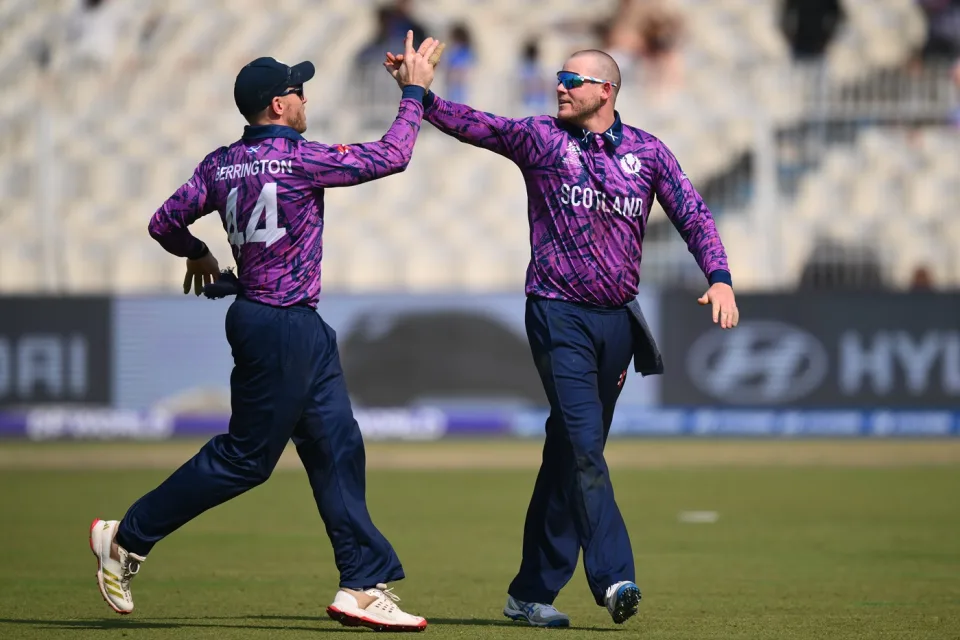
Scotland vs England. The sense of occasion isn’t lost on Scotland captain Richie Berrington. Earlier this week, Berrington dared to dream of the headlines should his side beat England in Kolkata a matter of hours before the Scotland rugby team face England in the Six Nations with the Calcutta Cup on the line.
Both Scotland teams are underdogs but, unlike their rugby counterparts who are licking their wounds after a poor showing against Italy last weekend, Berrington’s men are coming off the back of a resounding 73 run win over an Italian team making their debut at this tournament and ruffling some feathers along the way.
“That rivalry has always been there between Scotland and England, obviously a long history there between the two nations, it’s there in every sport,” Berrington said. “But yeah, next Saturday’s going to be exciting. We’ve also got the Scotland rugby team taking on England the same day, so it would make quite a nice headline if Scotland has two wins on the Saturday.”
As banana skins go, this should be one England back themselves to avoid. But it will be no easy stroll, especially with another unexpected obstacle down the road in Italy, surprise 10 wicket winners against Nepal, who had themselves pushed England to the max in their opening match of this T20 World Cup.
Both of England’s remaining group-stage opponents pose an element of the unknown, a point noted at the start of the tournament by Mark Watt, Scotland’s veteran left-arm spinner making his fifth World Cup appearance. “Quite funny thinking about the England analysis team trying to find club cricket games of some of our youngsters,” Watt said. “We’ve all had a laugh about that.” England have never played Italy and, in their only previous T20I meeting with Scotland – at the last World Cup in Barbados – George Munsey and Michael Jones staged an unbroken opening partnership worth 90 before the match was washed out.
Only Jofra Archer and Adil Rashid remain from the bowling line-up which took the field that day, the latter going at 13 runs an over from his two overs. And while those figures are reminiscent of Rashid’s three wicketless overs at 14.00 against Nepal, he turned that around against West Indies, where he was easily the pick of England’s bowlers in a losing cause on a turning Wankhede pitch.
If they trip up in their first outing in Kolkata, where Scotland have already played their first two matches of this World Cup, England’s last group encounter with Italy becomes crucial. So too does Scotland’s final clash with Nepal. On paper, England’s progression to the Super 8s should be assured, but they absolutely cannot take their Associate opponents lightly.
So far, this campaign has shown England need more consistency from their enviably deep batting line-up. Half-centuries to Jacob Bethell and Harry Brook still required the back-up of Will Jacks’ 18-ball 39 against Nepal and, even then, it took Sam Curran’s sublime death bowling to let them escape with victory. Against West Indies, it was Curran who ran out of partners and captain Brook believed his charges were too careful chasing. For Scotland, they need more than just the few plucky moments they produced in a 35-run loss to West Indies. They need everything to fire, as it did against Italy, and then some, to be in with a shot.
Three consecutive single-figure scores across this tournament and the Sri Lanka series that preceded it leave Tom Banton searching for runs, particularly amid calls for Harry Brook to leapfrog him into the No. 4 spot. An unbeaten 54 in a Player-of-the-Match performance against Sri Lanka in the second of their three games in the lead-up suggests the touch is there. Now he must rediscover it at a time when his side needs it most.
Having managed just one run against West Indies as Munsey too departed cheaply after a promising start, Michael Jones further highlighted the importance of Scotland’s opening duo with a 30-ball 37 in a 126-run stand – Munsey struck 84 off 54 – that set up victory over Italy. With the quality of the opposition now magnified, it is imperative that he supports his partner with an even bigger contribution to a union that could prove critical in getting enough runs on the board against England.
England confirmed an unchanged XI on the eve of the match, with Jamie Overton preferred to Luke Wood in the attack.
England: Phil Salt, Jos Buttler (wk), Jacob Bethell, Tom Banton, Harry Brook (capt), Sam Curran, Will Jacks, Liam Dawson, Jamie Overton, Jofra Archer, Adil Rashid
Brad Wheal, who replaced Safyaan Sharif for the win over Italy, said Scotland had not made any decisions on their side.
Scotland: (possible) George Munsey, Michael Jones, Brandon McMullen, Richie Berrington (capt), Tom Bruce, Michael Leask, Matthew Cross (wk), Mark Watt, Oliver Davidson, Brad Wheal, Brad Currie
[Cricinfo]

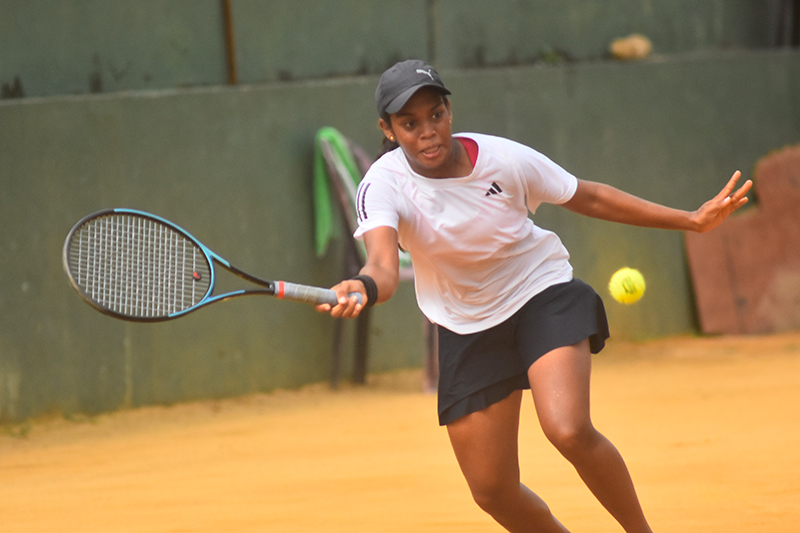
J30 ITF Junior Week 3 Tennis
Dinara de Silva is set to meet Shiwali Gurung of Nepal in the girls’ singles final of the J30 ITF Junior Week 3 Tennis tournament after emerging victorious in the semi-finals in Colombo on Friday.
Dinara beat Haritha Venkatesh of India 6-2, 6-2 in her semi final
Nepal’s Shiwali Gurung beat Kirika Fuku of Japan 7-5, 4-6, 6-2.
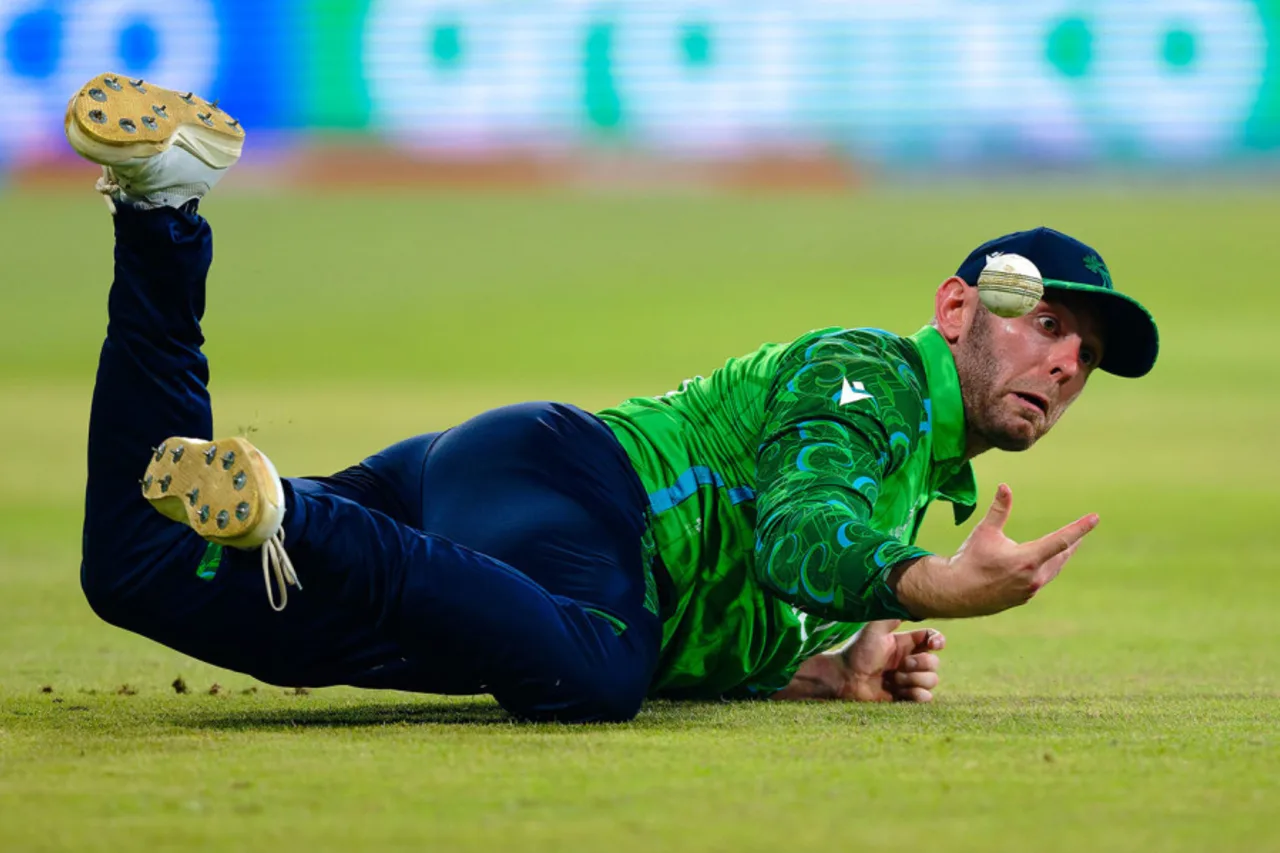
Two games, two defeats, virtually out of the tournament. A blanket sentence that covers both Ireland’s and Oman’s fortunes at this 2026 T20 World Cup, as their ambitions of Super Eight qualification give way to insistence that they have been better than their results.
“We should have won at least one match, because as I said, we are not as bad a team as we played,” Mohammad Nadeem said after Oman’s 105-run loss to Sri Lanka.
“The other day was so disappointing because actually for 65-70% of that game I thought we were the better side,” was Gary Wilson’s assessment of Ireland’s opening-game defeat to the same opponents.
Whatever the reason, neither Oman nor Ireland have put their best foot forward so far in this tournament. Their net run rates (NRR) tell the tale, with Ireland’s at -2.175, and Oman’s even worse at -4.306.
So, as they say, it’s mainly pride at stake at the SSC on today [Saturday]. Recent form skews in favour of the Irish, who boast a 4-2 win – loss record over Oman in T20Is, and have won each of their last three encounters. But Oman won the last World Cup meeting between the two sides in 2016.
Both teams come with severe problems to address. Oman’s bowlers have been ragged, particularly against Sri Lanka who scored 225 against them, and their batters have managed totals of 103 all out and 120 for 9.
Ireland have shown more promise in both departments but have been badly let down in the field, dropping nine catches across their two games. They will also be without their captain Paul Stirling, who has been ruled out of the rest of the tournament with a knee injury.
But while problems abound, Saturday will give these sides the chance to chase a significant target: points on the board.
Harry Tector is widely regarded as the cornerstone of Ireland’s middle order and a potential future captain. Against Oman, his importance will lie in his ability to navigate the conditions in Colombo – particularly against Oman’s spate of spin options. With Stirling out, even more will depend on Tector. He began the tournament promisingly with a 40 against Sri Lanka, and he will want to get back among the runs after falling for a duck against Australia.
Forty-three-year-old Mohammad Nadeem became the oldest half-centurion at a World Cup with his unbeaten 53 against Sri Lanka, which will no doubt have cemented his place in Oman’s middle order after missing out on their first game. With Oman’s top order showing fragility across their opening two games, his ability to anchor an innings could prove vital.
Sam Topping has been approved as Stirling’s replacement in Ireland’s squad, and could be in line for an international debut, though Tim Tector is also in consideration. Josh Little could potentially come back into the XI as well, in light of Oman’s struggles against pace.
Ireland (probable): Tim Tector, Ross Adair, Harry Tector, Lorcan Tucker (capt & wk), Curtis Campher, Ben Calitz, George Dockrell, Gareth Delany, Mark Adair, Barry McCarthy/Josh Little, Matthew Humphreys.
Offspinner Jay Odedra didn’t bowl against Zimbabwe, then bowled the second over against Sri Lanka, went for 14, and didn’t bowl again. Oman, though, don’t have an in-form bowler to pick in his place: left-arm spinner Shakeel Ahmed, who was left out against Sri Lanka, went for 27 in his two overs against Zimbabwe.
Oman (probable): Jatinder Singh (capt), Aamir Kaleem, Hammad Mirza, Wasim Ali, Mohammad Nadeem, Jiten Ramanandi, Vinayak Shukla (wk), Sufyan Mehmood, Nadeem Khan, Shah Faisal, Jay Odedra/Shakeel Ahmed.
[Cricinfo]

Low-pressure area is likely to form over the southeastern Bay of Bengal around 15th February

Kolkata the stage as England, Scotland resume auld rivalry

Showers will occur at times in the Central, Uva, Eastern, Northern and North-central provinces and in Hambantota district

Sajith points to irregularities in coal procurement deals

Lankan Embassy in Washington welcomes ‘Walk for Peace’ Buddhist monks

Committee on High Posts clears four diplomatic appointments

‘Dates have the highest sugar content to fight Coronavirus’

Sunday Island 27 December – Headlines

#SundayIsland 17th December – Headlines

Sunday Island – 28th March

Sunday Island Headlines – 21 March

Sunday Island – 21st February – Headlines
-
 Features6 days ago
My experience in turning around the Merchant Bank of Sri Lanka (MBSL) – Episode 3
-

 Business6 days ago
Remotely conducted Business Forum in Paris attracts reputed French companies
-
 Business6 days ago
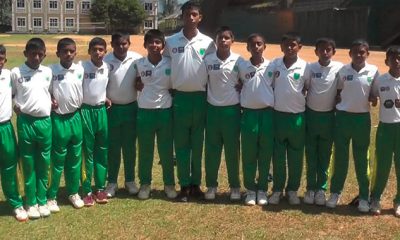
Four runs, a thousand dreams: How a small-town school bowled its way into the record books
-

 Business6 days ago
ComBank and Hayleys Mobility redefine sustainable mobility with flexible leasing solutions
-
 Business3 days ago
Autodoc 360 relocates to reinforce commitment to premium auto care
-
 Midweek Review3 days ago
A question of national pride
-
 Opinion2 days ago
Will computers ever be intelligent?
-
 Midweek Review3 days ago
Theatre and Anthropocentrism in the age of Climate Emergency