
Business
‘GALLE CONCERTO 2024’: 6 Vibrant Festivals In Art, Food, Literature, and Music

Call for Extended Stays on SL’s South Coast
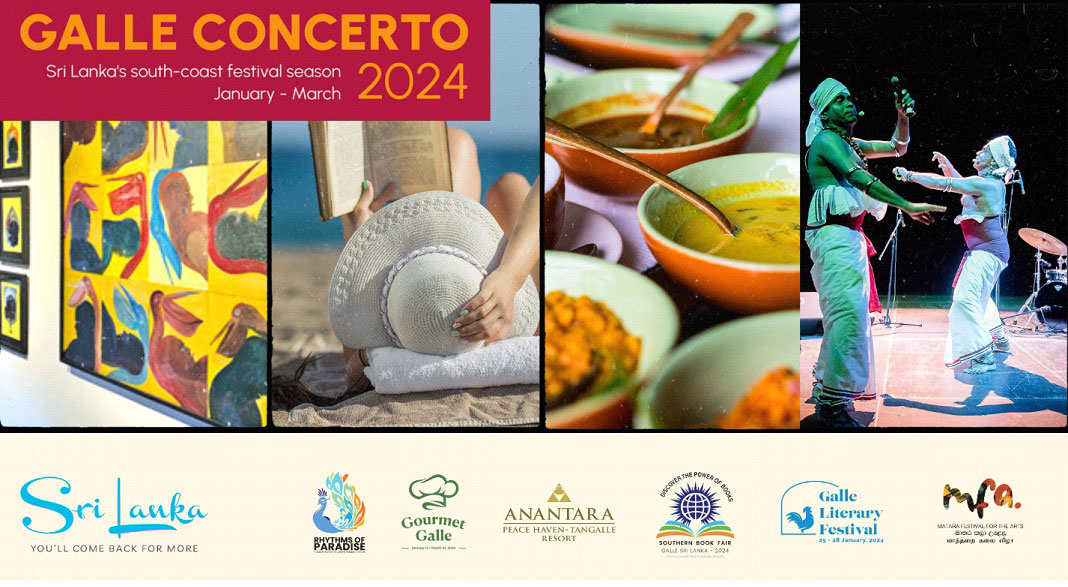
During the South Coast peak season of January through March of 2024, the ‘Galle Concerto’ series gives impetus to a symphony of heritage and contemporary festivals in art, food, literature, and music.
Leading Lankan and international culture makers will be headlining the events – speaking, presenting and creating on topics pertinent and inspiring to Sri Lanka & the global momentum in 2024.
The festivals are independently led, with the coming together of a ‘Concerto’ of events – organized to amplify the positive economic and touristic impact of cultural programming to host communities and the country – being conceived by President Wickremesinghe and supported by the Presidential Secretariat, SLTPB and SLTDA, and other ministries and local governmental bodies.
The full list of festivities, dates, and points for further information are listed below:
Rhythms of Paradise, 12 – 14 January ‘24, Koggala, @rhythmsofparadise & rhythmsofparadise.com
The concerto’s opening programme will highlight Sri Lanka’s rich cultural, maritime and natural heritage focusing on drums, dance, classical and contemporary Sri Lankan literature, and biodiversity programming.
The 3-day programme includes literary explorations, interactive interludes, cultural events, cinematic chronicles, workshops, excursions and exhibitions.The opening celebration and cultural events will be held at the Koggala Air Force Base and literary sessions will be held at the Martin Wickramasinghe Museum.
Gourmet Galle, 13 January – 30 March ‘24, Galle, @gourmetgalle & gourmetgalle.com
From January through March Gorumet Galle will curate exclusive dinners and masterclasses in exotic locations on Sri Lanka’s South Coast. Inspired by locally sourced ingredients, it is a celebration of Sri Lanka food and tourism. Star chefs from London, New York, Sydney, Singapore include: Darina Allen, O Tama Carey, Karan Gokani, Mark Hix, Peter Kuruwita, Jeremy Lee, James Lowe, Rishi Neleendra, Hari Nayak, Nisha Parmar, J Ryall, Cynthia Shanmugalingam, Mandy Yin.
Opera at the Anantara, 19 – 21 January ‘24, Tangalle, @anantaratangalle
Nestled amid the resplendent beauty of pristine beaches at Anantara Peace Haven, the forthcoming art and music weekend promises to curate an indelible ambience of refined creativity and immersive experiences.
This elevated occasion is poised to serve as a distinguished platform, harmonizing the expressions of local artists such as the Gustav Mahler orchestra and Chrisni Mendis, and international musicians such as Jorge Echeagaray, Barbara Segal, and Carlos Conde-González showcasing their artistry and virtuosity.
Southern Book Fair, 19 – 28 January ‘24, Galle, commonwealthpublishersnetwork.com
The inaugural Southern Book Fair marks a vibrant celebration of literature, expressing Sri Lanka’s cultural diversity, nurturing the spirit of creativity and collaboration, and promoting innovation and accessibility.
Located in the heart of iconic Galle, the Southern Book Fair will offer a platform for publishers, editors, aspiring authors, and avid readers to develop new partnerships, fostering opportunities to celebrate our own rich, literary heritage, and introducing contemporary works from diverse voices around the world.
Galle Literary Festival, 25 – 28 January ‘24, Galle, @gallelitfest & galleliteraryfestival.com
This January the centuries-old UNESCO World Heritage Site, Galle Fort will once again come alive with the buzz of literary chatter. Since its launch in 2007, the Galle Literary Festival has become one of South Asia’s most anticipated arts and culture events. A favourite among authors and attendees alike, the Festival hosts a wide variety of talks, workshops and exhibitions in an intimate, historic setting.
2024’s high profile line up, will see the likes of Booker Prize-winning authors, Shehan Karunatilake and DBC Pierre; decorated war correspondent, Christina Lamb, and novelists Alexander McCall Smith and Anthony Horowitz, alongside 65 participants, championing the work of writers and poets, as well as giving space to painters, photographers and cinematographers. Through associated culinary events, the Festival also highlights the excellence of local and international chefs.
Matara Festival for the Arts (MFA), 1 – 4 February ‘24, Matara, @MataraForArts
Matara Festival for the Arts is a coastal celebration of contemporary art & music from Sri Lanka and beyond, curated by leading contemporary artist Prof. Jagath Weerasinghe & music educator Dr. Sumudi Suraweera.
The Matara Fort, the University of Ruhuna, and the Matara River Park will host exhibitions, workshops & talks, a community market, and a film screening by leading artists, notable speakers in arts and culture, and over 30 local vendors & artisans. Evening parties & events extend from Hiriketiya, Madiha, to Mirissa.
Its Independence Day concert will feature 7 performers/bands – Amila Sanduruwan, Baliphonics, Orange Mango, Paloma, SDP ft. Paula, Rolex Rasathy, and The Soul,
The MFA’s programming partners include National Trust Sri Lanka, the George Keyt Foundation, and the Good Market.
Contact:
Public Relations Division
Sri Lanka Tourism Promotion Bureau
80, Galle Road, Colombo 03.
+94 112 426 900 sureshnie@srilanka.travel


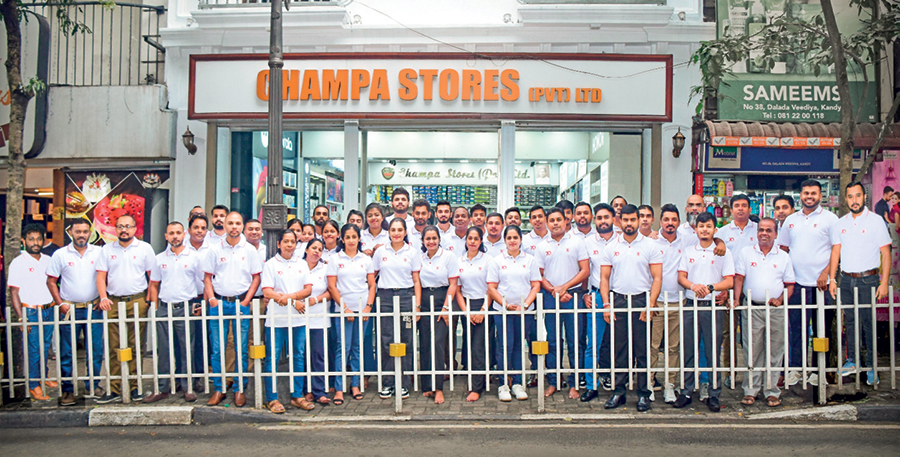
A longstanding fixture in Kandy’s commercial landscape, Champa Stores marks its 70th anniversary this year, underscoring a legacy built on trust, reliability and consistent quality across a diverse range of products and services.
Founded in 1956 by Wimaladasa Weeraratne, the business traces its origins to a modest beginning when three brothers from Matara relocated to Kandy in the 1950s in search of opportunity. Their entrepreneurial drive would go on to shape a lasting contribution to the city’s commercial life.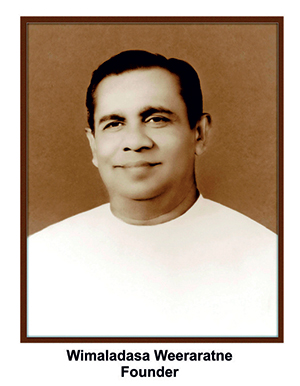
While Wimaladasa established Champa Stores, his brothers carved out their own successful ventures. Dharmadasa Weeraratne founded Devon, while Daya Weeraratne established Bakehouse. Both enterprises have since become well-known names in the city’s hospitality and bakery sectors, with Devon further expanding to include the The Grand Kandyan Hotel. Today, all three businesses continue to operate under the stewardship of the family’s next generation.
Over the decades, Champa Stores has evolved into a prominent retail and service hub, offering a wide selection of products ranging from mobile phones and laptops to audio equipment, accessories and sports goods. Its printing division, in particular, has earned a strong reputation for delivering high-quality services in Kandy.
Despite its growth, the business has retained the personal touch that has endeared it to generations of customers. Longtime patrons point to knowledgeable staff, dependable after-sales service and a customer-focused approach as key factors behind its enduring appeal.
Currently employing over 50 staff members, the business is managed by Chapa Weeraratne, representing the second generation of family leadership.
As it celebrates seven decades in operation, Champa Stores stands as one of Kandy’s enduring family-run enterprises—demonstrating that a reputation built on trust and service can successfully span generations.
By S.K Samaranayake
Business
Dialog Voted Service Brand and Telecommunication Brand of the Year at SLIM-KANTAR People’s Awards 2026
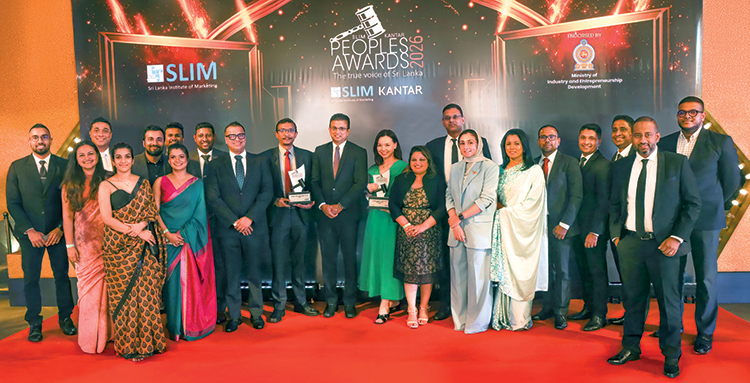
Dialog Axiata PLC, Sri Lanka’s #1 connectivity provider, announced that it has been recognised as the ‘Service Brand of the Year’ for the 5th time and the ‘Telecommunication Brand of the Year’ for the 15th consecutive year at the SLIM-KANTAR People’s Awards 2026, held on 18 March 2026. Voted by Sri Lankans through a nationwide consumer survey, the recognition reflects the continued preference for Dialog’s services and the trust placed in the brand across the country.
Since its inception in 2007, the SLIM-KANTAR People’s Awards have been based on consumer sentiment across multiple categories, recognising brands and individuals through public perception as an independent measure of brand affinity.
Supun Weerasinghe, Director / Group Chief Executive of Dialog Axiata PLC said, “We are grateful for this continued confidence, which reinforces the responsibility we carry in serving millions of customers across the country. As we continue to evolve our services and digital platforms, our focus remains on delivering consistent, high-quality experiences while staying true to our purpose of empowering and enriching Sri Lankan lives and enterprises.”
As a recognition shaped by the voice of consumers across the country, these accolades reflect Dialog’s continued relevance in a rapidly evolving digital landscape, underscoring its role in supporting the connectivity needs of individuals, homes and businesses across Sri Lanka.
When you think of sharks in Sri Lanka, your mind probably goes to the sleek blacktip reef sharks gliding through the reefs of Pigeon Island. But what most people don’t realise is that Sri Lanka is home to over 100 species of sharks and rays—ranging from reef dwellers and open-ocean giants to mysterious deep-sea, with some juvenile bull sharks being found even in freshwater!. They’re scattered across almost every part of the coastline, from coral reefs and estuaries to muddy lagoons and inland waterways. Yet despite their presence, these fascinating creatures remain deeply misunderstood and largely unprotected in national conservation efforts.
Chances are, if you’ve eaten karawala (dried fish) in Sri Lanka, you’ve possibly eaten shark—without even knowing it. Shark meat often ends up in local markets with no species names, and no questions asked. But here’s the catch: unlike fast-growing fish like sardines or mackerel, most sharks and rays grow slowly, mature late, and have very few offspring. Some only give birth once every couple of years. That means that their populations are usually precarious and they are sensitive even to small-scale fishing operations, which push their populations into serious decline. And in Sri Lanka, while vessel sizes are smaller in comparison to many developed countries, the number of vessels combined with their fishing techniques has resulted in the depletion, and in the case of sawfishes, a likely local extinction.
That’s where Important Shark and Ray Areas (ISRAs) come in. ISRAs are a global science-based tool designed to designate places that matter most for sharks, rays, and chimaeras. They aren’t marine protected areas and don’t come with legal restrictions—but they highlight critical habitats based on rigorous scientific criteria. These include areas used for breeding, feeding, migration, or home to rare, threatened, or range-restricted species.
In 2024, after a thorough review and vetting process, five (of the seven) proposed areas from Sri Lanka were formally designated as ISRAs
Bathalangunduwa Island, located on the fringes of the shallow coastal Puttalam Lagoon and off the coast of Wilpattu National Park in northwestern Sri Lanka, qualifies as an ISRA based on the presence of the threatened Winghead Shark (Eusphyra blochii). This area meets two ISRA criteria: it supports a vulnerable species and functions as a reproductive habitat.
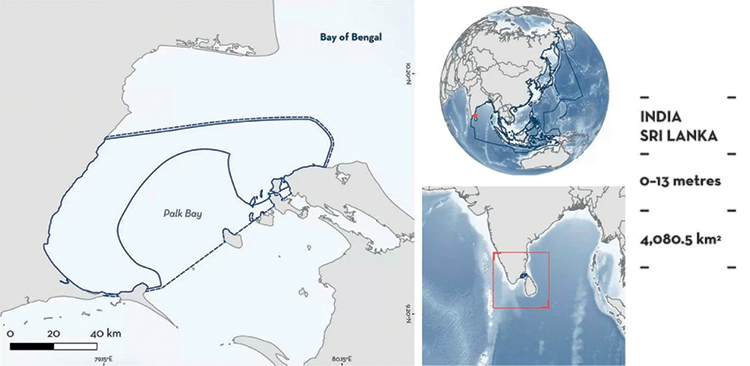
Palk Bay, a shallow, semi-enclosed water body shared between India and Sri Lanka, qualifies as an ISRA due to the presence of multiple important species. These include the threatened Shorttail Whipray (Maculabatis bineeshi), the range-restricted Sharpnose Guitarfish (Glaucostegus granulatus), and reproductive populations of the Grey Sharpnose Shark (Rhizoprionodon oligolinx). This was one of the few trans-boundary ISRAs covering both Indian, and Sri Lankan waters.
-
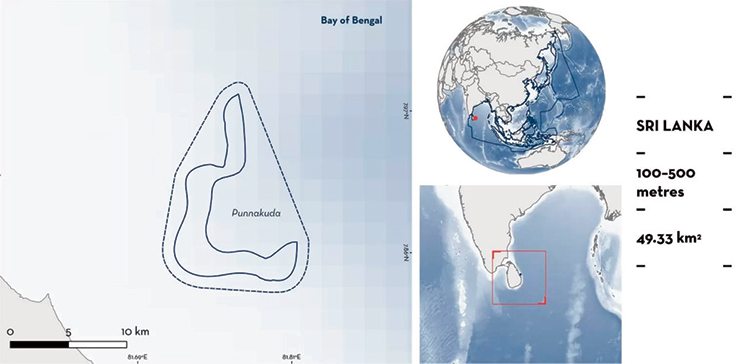
- Punnakuda ISRA
-

- Pigeon Island ISRA
-

- Pasikuda & Kalkudah ISRA
-
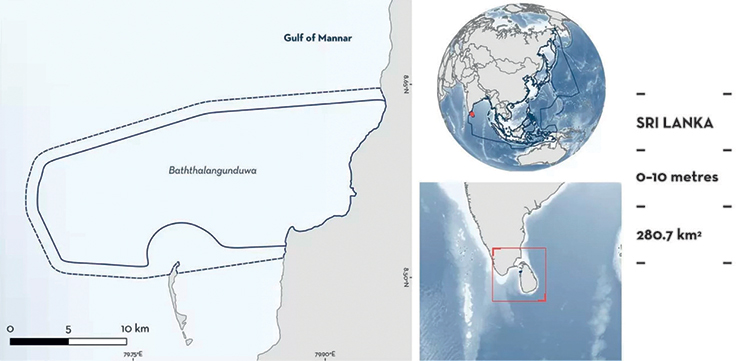
- Baththalangunduwa ISRA
Pasikudah & Kalkudah, a coastal stretch in Sri Lanka’s Batticaloa District, is known for its coral reefs and nearshore shark activity. This ISRA qualifies due to the presence of threatened and range-restricted species, such as the Stripenose Guitarfish (Acroteriobatus variegatus).
Punnakuda Canyon, a deep-sea canyon located just offshore from Pasikudah & Kalkudah and beyond the boundaries of the coastal ISRA, qualifies based on the presence of threatened and range-restricted deep-sea species, including the Indian Swellshark (Cephaloscyllium silasi).
Pigeon Island, the only ISRA in Sri Lanka that overlaps with a Marine Protected Area—the Pigeon Island Marine National Park—qualifies due to the presence of threatened species and undefined aggregations, notably the Blacktip Reef Shark (Carcharhinus melanopterus).
These areas are already designated ISRAs. In addition to this Sri Lanka also has two “Areas of Interest”; Koddiyar Bay and Hikkaduwa.
While these ISRAs don’t enforce protection on their own, except for Pigeon Island, which happens to overlap with an already established National Park, they’re a vital starting point. They help guide where marine protected areas might be placed, where fishing regulations could be refined, and where development should tread carefully. For Sri Lanka, ISRAs offer a powerful chance to align conservation and fisheries planning before it’s too late.
Most importantly, ISRAs are created using available scientific knowledge. Organisations like Blue Resources Trust (BRT) were able to contribute to the designation of ISRA’s due to long-term monitoring of shark and ray fisheries across the country. BRT has built the largest dataset on Sri Lankan sharks and rays, thanks to contributions from the Tokyo Cement Group, the Save Our Seas Foundation (SOSF), the Marine Conservation and Action Fund (MCAF) of the New England Aquarium, the Hong Kong Ocean Park Conservation Foundation (OPCFHK), the Prince Bernhard Nature Fund, amongst others.
By designating our ISRAs, Sri Lanka now has the recognition to make smarter, science-led decisions for the ocean’s most vulnerable species.
As shark and ray populations decline under pressure from overfishing, habitat loss, and climate change, knowing where they still have a chance to thrive is the first step toward saving them. Through ISRAs, Sri Lanka can take the lead in showing how conservation and coastal livelihoods can go hand in hand.
To explore ISRA maps and learn more, visit: https://sharkrayareas.org

Showers may occur at several places in the Western, Sabaragamuwa and Southern provinces and in Nuwara-Eliya district after 1.00 pm.

PM Harini leads panel to protect public services

Sajith slams President over war conduct and economic missteps

Johnston Fernando, sons held in Lanka Sathosa lorry misuse case

Gura: The unsung hero

The Iran War, Global Oil Crisis, and Local Options

‘Dates have the highest sugar content to fight Coronavirus’

Sunday Island 27 December – Headlines

#SundayIsland 17th December – Headlines

Sunday Island – 28th March

Sunday Island Headlines – 21 March

Sunday Island – 21st February – Headlines
-

 Business6 days ago
Browns EV launches fast-charging BAW E7 Pro at Rs. 5.8 million
-

 News4 days ago
CIABOC questions Ex-President GR on house for CJ’s maid
-

 News5 days ago
Sri Lankan marine scientist Asha de Vos honoured at UNGA opening
-

 Features6 days ago
Achievements of the Hunduwa!
-
 Latest News7 days ago
QR code system will be implemented for fuel with effect from 06.00 a.m. today (15th)
-

 News5 days ago
Australian HC debunks misleading travel risk claims for Sri Lanka
-

 Latest News5 days ago
Wednesdays declared a government holiday with effect from 18th March
-

 News3 days ago
Pay hike demand: CEB workers climb down from 40 % to 15–20%