
Sports
G. Brant Little – Advancement of University Sport


by Fl. Lt Walter. J. May
1948 holds a special place in the history of sport in Sri Lanka due to the outstanding performance of Duncan White at the London Olympics. Earlier that year, G. Brant Little arrived in Sri Lanka (then Ceylon), contracted by the Ceylon Amateur Athletics Association (AAA) to coach the Island’s first Olympic team.
Little’s own sporting background was primarily in athletics having represented Canada in the 800 meters at the 1928 Olympics in Amsterdam. He later won a scholarship to Notre Dame University in USA where he graduated with a Bachelor’s Degree in Physical Education.
After his Olympic mission was completed, Little was appointed as the inaugural Director of Physical Education at the University of Ceylon in 1948. This move hinted as a recognition by the University authorities, particularly the Vice-Chancellor at the time Sir Ivor Jennings, that academic excellence needed to be complemented by participation and success in the field of sport. Sir Ivor also was instrumental in affiliating the University of Ceylon to the All India Inter University Board. This initiative opened the way for sports teams from our University to participate in the annual Inter University competitions conducted by the sporting arm of the Board.
Little’s first major undertaking was the staging of the dual athletic meet between the Universities of Madras and Ceylon. Success in this and later championships was made possible by a very talented group of athletes. The group included athletes of the caliber of John de Saram, Oscar Wijesinghe, Upali Amerasinghe, M.A. Akbar, Lakshman Kadirgamar, T.L. Blaze, D.C. Ariyanayagam and Walter. J. May. In a sequence of years 1949 stands out as the peak year due to two excellent performances. The first was the lowering of all three All Ceylon Relay records on one day (15.10.49) by teams anchored by John de Saram and Oscar Wijesinghe. The other was a resounding win in the All India Inter University Athletic Championships held in Colombo on the 26th and 27th December 1949. The margin of victory was 58 points which in itself was a record. In addition, four new records were established by the Ceylon University athletes. The smooth functioning of the Championships was a testimony to Little’s organizational skills and the runway win a reflection of his coaching ability.
The opening of the Peradeniya Campus in 1952 provided Little with the opportunity and scope to make his most valuable contribution to the advancement of University sport. On his initiative multi-purpose sports complex was built incorporating a cinder track for athletics, tennis, a cricket bowl, rugger and soccer field and a Gymnasium. The Gymnasium was a magnificent building, constructed from the shell of an aircraft hangar – a legacy of World War II. Little used his connections with the Canadian High Commission to secure the hangar. With a floor area of 34m by 71 m it could anytime accommodate one or more court for tennis, basket ball, volleyball, netball, badminton, table tennis and an area for wrestling and weightlifting. It was completed in 1956 and was adjudged by sports professionals to be decades ahead of time.
These sports facilities were put into immediate use with the University staging (for the second time) the All India Inter University Athletic Meet and Boxing Meet in December 1953. Twenty Universities participated in these Games. In athletics, the University of Ceylon maintained its high reputation being runner-up to Punjab University by a mere four points. It won the Boxing Championships decisively.
During Little’s tenure, the groundwork was completed and the pattern was set for the University to participate in All India Inter University tournaments. Teams from most sports thereafter regularly competed in these contests with invariably, encouraging results.
Central to Little’s success on and off the field was his easygoing manner, ability to motivate and organizational skills. At the outset, his outgoing friendly approach to all and sundry required some adjustment on the part of those used to the more traditional reserved British attitude to personal contact. However, it did help to break down barriers by easing the lines of communication and open many doors as was evidence for instance in the special treatment the University received in the Inter University contests at Bangalore and Allahabad.
To many sportsmen and others motivation was his forte. His motivational techniques were many and varied and extended to other sports besides. He was a great supporter of the award of colours and colours nights. For a time, he produced a regular newsletter or column for the newspapers entitled “Varsity Spotlight” which reviewed the main sporting activities at the University for the period and highlighted both team and individual excellence. This not only served as an incentive for enhanced performances but also raised the profile of the University Sport. He also provided support for university sportsmen by attendance at games/events regardless of his familiarity with the sport. He is said to have attended cricket matches resplendent in the University blazer and tie despite his closest acquaintance with a similar ball game being baseball.
There is little need to elaborate on his organizing skills and initiative. The number of sporting activities that he initiated and successfully carried out attest to his capabilities in this regard. His master plan for Peradeniya also called for management and organizing ability of a very high order to bring it to fruition. He was no stranger to innovation and was the first to introduce the concept of the Relay Carnival to Sri Lanka. The first contest of this type was the Inter Hall Relay Carnival in Peradeniya in 1955. The Public Schools Athletic Association adopted this concept a decade later.
The foregoing confirms the invaluable contribution Little made to University sport. His vision and organizing ability was largely responsible for the excellent facilities provided for every sport. In addition, he raised the profile of sport at the University and made it an integral part of University life. There will be a general consensus that University sport made unprecedented and giant strides forward due to his endeavors.
The following observations by a fellow professional (though of later vintage) constitute the most appropriate summing up of Little. He designed a 50 year ahead of its time. A most genial person and a very good motivator. He was an organizer “par excellence.”
-Walter May was the Captain of Athletics of the University of Ceylon in 1971-72.


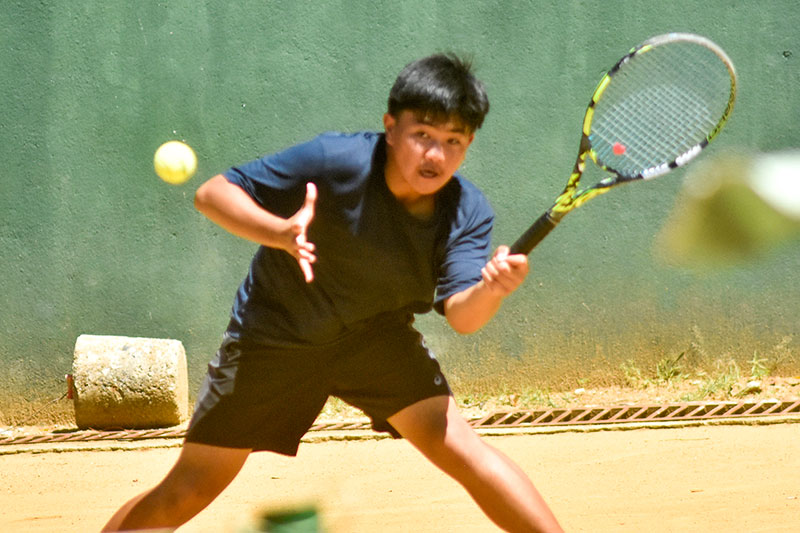
Risindi Hewawasam of Sri Lanka and Anthony Castigador of the Philippines won the girls’ and boys’ singles titles at the ATF 16 & Under Colombo 2026 – Week 1 tournament concluded at the Sri Lanka Tennis Association courts on Friday.
Castigador produced a dominant performance in the boys’ singles final, defeating India’s Gurshaan Chahal 6-2, 6-2 to secure the title. The Filipino maintained his advantage throughout the match, winning in straight sets to cap an impressive campaign.
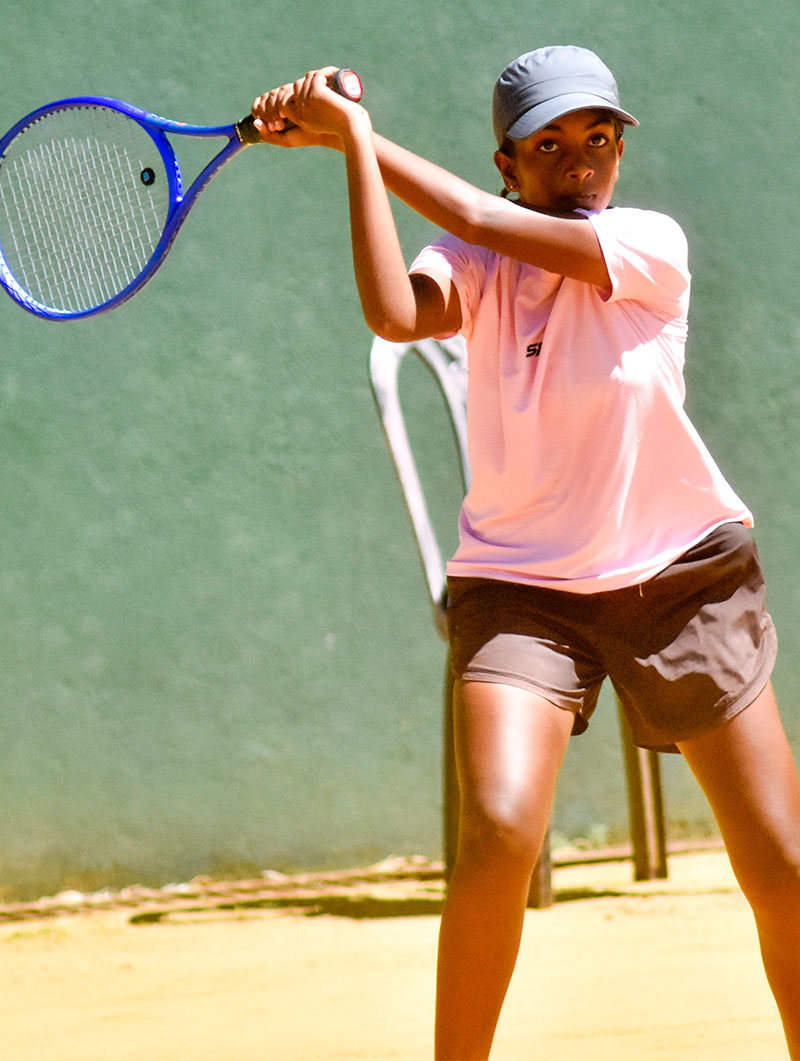
Risindi Hewawasam (Pix by Kamal Wanniarachchi)
In the girls’ singles final, Risindi delivered an equally dominant display to beat compatriot Kiara Jayamanne 6-1, 6-1. (RF)
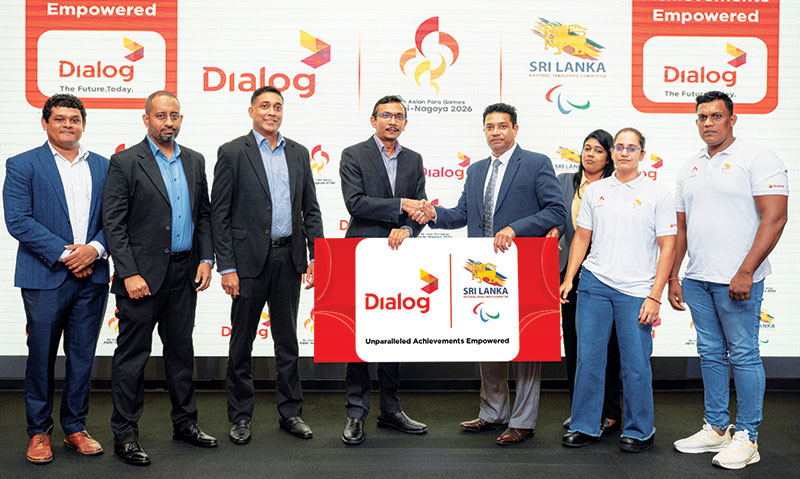
Dialog Axiata PLC is supporting Sri Lanka’s national contingent at the 2026 Asian Para Games in Achi Nagoya Japan, continuing its long standing commitment to supporting Sri Lankan athletes and helping them compete at the highest levels of international sport.
As the team sponsor, Dialog is backing a group of 21 athletes whose journeys have been shaped by determination, discipline and a strong desire to represent their country on the international stage. For Dialog, however, the value of this team goes well beyond the medal tally.
Each athlete has taken a different path into elite sport. Their physical abilities may differ, as do their individual stories, challenges, and ambitions. What they share is the commitment and determination required to train, compete, and continue pushing themselves to achieve their goals.
Dialog’s support reflects its wider commitment to creating opportunities for Sri Lankans to pursue their ambitions and represent the country with pride. For 26 years, Dialog has supported Paralympic sport in Sri Lanka, helping athletes compete at national and international level. Its continued support for the Asian Para Games contingent is part of that long-standing commitment to creating opportunities for athletes and recognizing sporting talent.
Among them is javelin thrower Samitha Dulan, a silver medalist at the 2022 Hangzhou Asian Para Games. Palitha Bandara, another experienced member of the athletics team, has also won medals at both the 2018 Jakarta and 2022 Hangzhou Games.
Nuwan Indika arrives with an impressive record after winning gold in the 100 meters and silver in the long jump at Hangzhou, while Pradeep Somasiri returns as an Asian Para Games champion after winning gold in the 1,500 metres.
Dhananjana Wickramasingha will also be looking to build on her silver medal winning performance in the women’s long jump at Hangzhou, while Madhuranga Subasinghe, who won bronze in the 400 metres, is also back in the squad.
Sri Lanka’s medal winning experience extends beyond athletics. Swimmer Naveed Rasheen won bronze in the 400 metre freestyle at Hangzhou, while Nadin Basnayake claimed silver in the women’s event.
The squad also includes Buddika Indrapala, who won bronze at the 2018 Asian Para Games.
Together, the contingent includes nine athletes who have previously won medals at the Asian Para Games, bringing valuable experience to the 2026 campaign.
by Rex Clementine
It is not often that a Test captain is replaced midway through a World Test Championship cycle. The fact that Dhananjaya de Silva has made way just days before the squad for the tour of Pakistan is announced is a clear indication that the cricket establishment was far from impressed with his leadership. He may now struggle to retain his place as a specialist batter, particularly if the selectors decide to relieve newly appointed Test captain Kusal Mendis of the wicketkeeping gloves.
Previous administrations of Sri Lanka Cricket would have taken the easy way out. They would have allowed the World Test Championship cycle to run its course before ringing in the changes. But when you have someone of Sidath Wettimuny’s calibre heading the Cricket Committee, tough calls are part of the package. Sidath has no favourites. He calls a spade a spade and has the best interests of the game at heart. It is no coincidence that Sri Lankan cricket flourished during his tenure as Chairman of Selectors from 1999 to 2001.
Kusal Mendis now suddenly finds himself captaining Sri Lanka across all three formats. Given his chequered past and bad boy image, there will inevitably be raised eyebrows over whether he deserves to wield so much influence over Sri Lankan cricket. But credit where it is due. Over the last five years, he has largely stayed out of trouble. More importantly, over the last three years, he has knuckled down, worked tirelessly on his game and earned the admiration of both the coaching staff and the cricket establishment.
The turning point came at Lord’s in 2024.
Every cricketer dreams of playing a Test match at the Home of Cricket. But the selectors pricked Kusal’s pride by dropping him for the showpiece occasion. The decision did not win them many admirers, with former captains Duleep Mendis and Aravinda de Silva among those who questioned the wisdom of the move.
But, as it turned out, the setback proved to be a blessing in disguise.
Kusal returned for the third Test at The Oval and produced an innings that was worth considerably more than the 39 runs against his name in the scorebook.
On a seaming surface, where England’s quicks were making life miserable for the Sri Lankan batters, Kusal showed admirable restraint without completely putting away his attacking instincts. His 39 came at less than a run a ball.
So what was so special about a knock that did not even reach fifty?
Plenty, as it turned out.
Kusal’s counterattack forced England to spread the field, taking the sting out of their bowling and allowing Pathum Nissanka to cash in. Pathum deservedly walked away with the plaudits for his magnificent hundred, but Kusal had done much of the groundwork.
It was not an innings that would find its way into cricket’s record books. But it was one that spoke volumes about Kusal’s changing attitude. Here was a player prepared to put the team’s cause ahead of personal milestones.
When Sri Lanka returned home for the Test series against New Zealand, the team management went a step further. They virtually created a position for Kusal, handing him the wicketkeeping gloves in Test cricket. He has remained a permanent fixture in the side ever since.
Since that Oval Test in 2024, Kusal has featured in nine Tests, scoring five half-centuries and a hundred. His work behind the stumps has been equally impressive, with hardly a blemish on his wicketkeeping record.
The maturity Kusal has displayed, both as white ball captain and as a senior member of the side, has impressed successive coaching teams. It is refreshing to see a cricketer learn from his mistakes, turn over a new leaf and allow his performances to do the talking.
Kusal has had his share of run ins with trouble over the years. Now comes the biggest challenge of his career. Leading Sri Lanka across all three formats is no small responsibility and the captaincy will test his temperament as much as his cricketing skills.
The selectors have placed their faith in a man who once struggled to keep himself out of the headlines for the wrong reasons. It is now up to Kusal to ensure that the headlines are about his leadership, his runs and, above all, Sri Lanka’s success.

Showers above 75 mm are likely at some places in the Western, Sabaragamuwa, Central, Uva and North-Western provinces and in Galle, Matara, Anuradhapura and Mannar districts.

Iranian ships stranded, Lanka fears US sanctions

Sri Lanka CERT warns of overseas university admission scams

Navi Pillay’s Lankan affairs in focus as she wins 2026 Nobel Peace Prize

Lanka welcomes Indian SC remarks on Katchatheevu dispute

UN at Crossroads, Trump nearing End of the Road

‘Dates have the highest sugar content to fight Coronavirus’

Sunday Island 27 December – Headlines

#SundayIsland 17th December – Headlines

Sunday Island – 28th March

Sunday Island Headlines – 21 March

Sunday Island – 21st February – Headlines
-

 News6 days ago
Geneva takes up Sallay’s case and govt. ignores opportunity to answer accusations
-

 Features5 days ago
Preventing grievances from becoming communal
-

 Features3 days ago
The Sri Lankan who made Scottish history
-

 Sports3 days ago
Nissanka absence opens door for Sri Lanka’s young guns
-

 News4 days ago
Gnansara Thera to be assigned to prison printing section: Officials
-

 Features6 days ago
Sri Lanka Cricket Bill: Governance reform is not yet a cricket strategy
-

 News2 days ago
NDB fraud Rs 60mn more than reported
-

 Features3 days ago
Future of Sri Lanka’s state university system: Should it be shut down and reopened?