
Sports
G. Brant Little – Advancement of University Sport


by Fl. Lt Walter. J. May
1948 holds a special place in the history of sport in Sri Lanka due to the outstanding performance of Duncan White at the London Olympics. Earlier that year, G. Brant Little arrived in Sri Lanka (then Ceylon), contracted by the Ceylon Amateur Athletics Association (AAA) to coach the Island’s first Olympic team.
Little’s own sporting background was primarily in athletics having represented Canada in the 800 meters at the 1928 Olympics in Amsterdam. He later won a scholarship to Notre Dame University in USA where he graduated with a Bachelor’s Degree in Physical Education.
After his Olympic mission was completed, Little was appointed as the inaugural Director of Physical Education at the University of Ceylon in 1948. This move hinted as a recognition by the University authorities, particularly the Vice-Chancellor at the time Sir Ivor Jennings, that academic excellence needed to be complemented by participation and success in the field of sport. Sir Ivor also was instrumental in affiliating the University of Ceylon to the All India Inter University Board. This initiative opened the way for sports teams from our University to participate in the annual Inter University competitions conducted by the sporting arm of the Board.
Little’s first major undertaking was the staging of the dual athletic meet between the Universities of Madras and Ceylon. Success in this and later championships was made possible by a very talented group of athletes. The group included athletes of the caliber of John de Saram, Oscar Wijesinghe, Upali Amerasinghe, M.A. Akbar, Lakshman Kadirgamar, T.L. Blaze, D.C. Ariyanayagam and Walter. J. May. In a sequence of years 1949 stands out as the peak year due to two excellent performances. The first was the lowering of all three All Ceylon Relay records on one day (15.10.49) by teams anchored by John de Saram and Oscar Wijesinghe. The other was a resounding win in the All India Inter University Athletic Championships held in Colombo on the 26th and 27th December 1949. The margin of victory was 58 points which in itself was a record. In addition, four new records were established by the Ceylon University athletes. The smooth functioning of the Championships was a testimony to Little’s organizational skills and the runway win a reflection of his coaching ability.
The opening of the Peradeniya Campus in 1952 provided Little with the opportunity and scope to make his most valuable contribution to the advancement of University sport. On his initiative multi-purpose sports complex was built incorporating a cinder track for athletics, tennis, a cricket bowl, rugger and soccer field and a Gymnasium. The Gymnasium was a magnificent building, constructed from the shell of an aircraft hangar – a legacy of World War II. Little used his connections with the Canadian High Commission to secure the hangar. With a floor area of 34m by 71 m it could anytime accommodate one or more court for tennis, basket ball, volleyball, netball, badminton, table tennis and an area for wrestling and weightlifting. It was completed in 1956 and was adjudged by sports professionals to be decades ahead of time.
These sports facilities were put into immediate use with the University staging (for the second time) the All India Inter University Athletic Meet and Boxing Meet in December 1953. Twenty Universities participated in these Games. In athletics, the University of Ceylon maintained its high reputation being runner-up to Punjab University by a mere four points. It won the Boxing Championships decisively.
During Little’s tenure, the groundwork was completed and the pattern was set for the University to participate in All India Inter University tournaments. Teams from most sports thereafter regularly competed in these contests with invariably, encouraging results.
Central to Little’s success on and off the field was his easygoing manner, ability to motivate and organizational skills. At the outset, his outgoing friendly approach to all and sundry required some adjustment on the part of those used to the more traditional reserved British attitude to personal contact. However, it did help to break down barriers by easing the lines of communication and open many doors as was evidence for instance in the special treatment the University received in the Inter University contests at Bangalore and Allahabad.
To many sportsmen and others motivation was his forte. His motivational techniques were many and varied and extended to other sports besides. He was a great supporter of the award of colours and colours nights. For a time, he produced a regular newsletter or column for the newspapers entitled “Varsity Spotlight” which reviewed the main sporting activities at the University for the period and highlighted both team and individual excellence. This not only served as an incentive for enhanced performances but also raised the profile of the University Sport. He also provided support for university sportsmen by attendance at games/events regardless of his familiarity with the sport. He is said to have attended cricket matches resplendent in the University blazer and tie despite his closest acquaintance with a similar ball game being baseball.
There is little need to elaborate on his organizing skills and initiative. The number of sporting activities that he initiated and successfully carried out attest to his capabilities in this regard. His master plan for Peradeniya also called for management and organizing ability of a very high order to bring it to fruition. He was no stranger to innovation and was the first to introduce the concept of the Relay Carnival to Sri Lanka. The first contest of this type was the Inter Hall Relay Carnival in Peradeniya in 1955. The Public Schools Athletic Association adopted this concept a decade later.
The foregoing confirms the invaluable contribution Little made to University sport. His vision and organizing ability was largely responsible for the excellent facilities provided for every sport. In addition, he raised the profile of sport at the University and made it an integral part of University life. There will be a general consensus that University sport made unprecedented and giant strides forward due to his endeavors.
The following observations by a fellow professional (though of later vintage) constitute the most appropriate summing up of Little. He designed a 50 year ahead of its time. A most genial person and a very good motivator. He was an organizer “par excellence.”
-Walter May was the Captain of Athletics of the University of Ceylon in 1971-72.


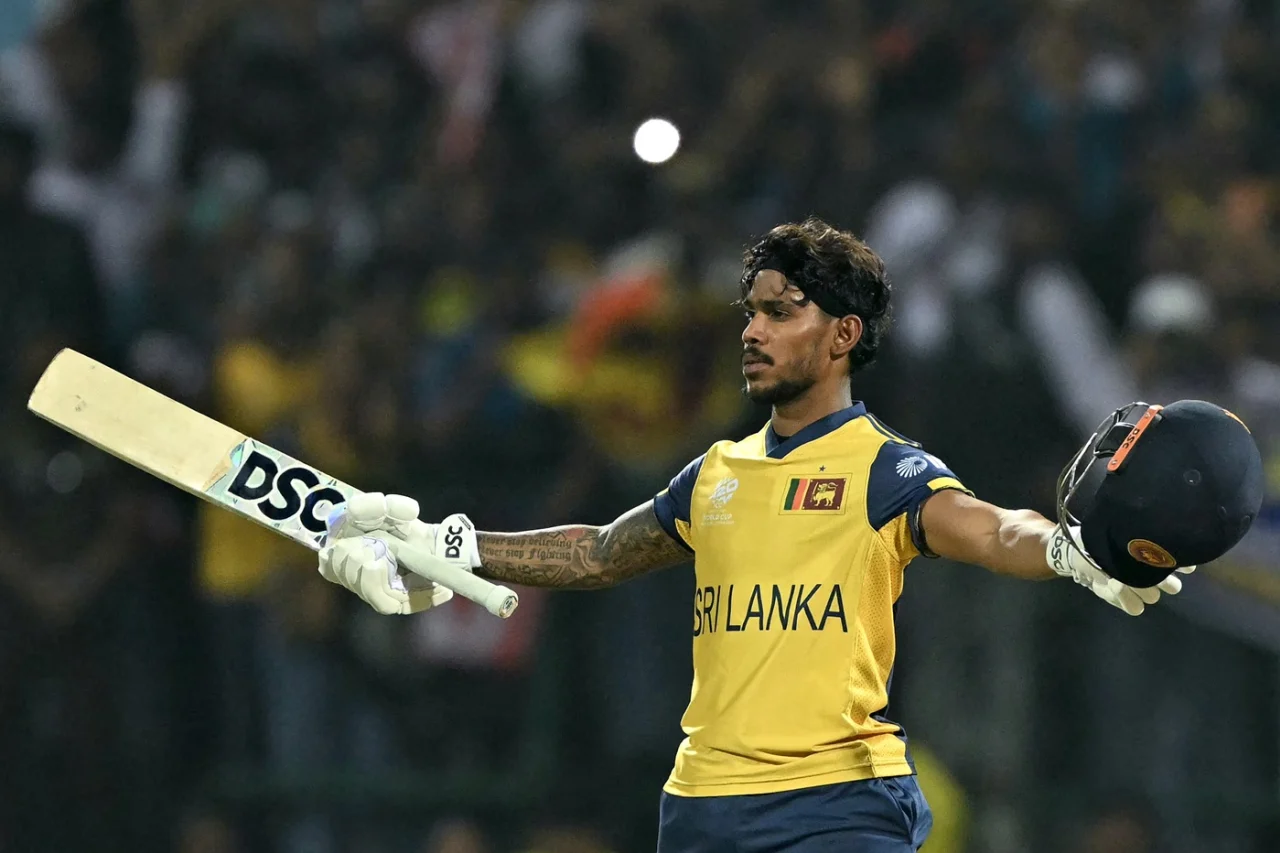
Sri Lanka survived an early onslaught to qualify for the 2026 T20 World Cup Super Eights, leaving Australia right at the exit door and hoping for a miracle.
The returning captain Mitchell Marsh and the returning-to-runs Travis Head were brutal in taking Australia to 104 in the first 50 legal deliveries, but some spectacular fielding and spin bowling helped Sri Lanka take 10 for 77 off the last 70 balls.
In front of a partying full house in Pallekele, Sri Lanka’s two most prolific batters, Pathum Nissanka and Kusal Mendis, brought out both the axe and paper cuts to slice through the chase. Nissanka, who had earlier dropped Glenn Maxwell and then dismissed him with a stunner, went on to score an unbeaten hundred and take Sri Lanka home with two overs to spare.
In the absence of Matheesha Pathirana, who walked off with a calf injury in his first over, their spinners contributed six wickets to go with excellent closing from Dushmantha Chameera. Australia’s lead spinner Adam Zampa, among the best T20 spinners of all time, took no wicket and was lucky to go for only 41 in his four overs.
Brief scores:
Sri Lanka 184/2 in 18 overs [Pathum Nissanka 100*, Kusal Mendis 51, Pavan Rathnayake 2*; Marcus Stoinis 2-41] beat Australia 181/10 in 20 overs [Mitchell Marsh 54, Travis Head 56, Josh Inglis 27, Glenn Maxwell 22; Dushmantha Chameera 2-56, Maheesh Theekshana 1-37, Dushan Hemantha 3-37, Dunith Wellalage 1-33, Kamindu Mendis 1-19] by eight wickets
[Cricinfo]
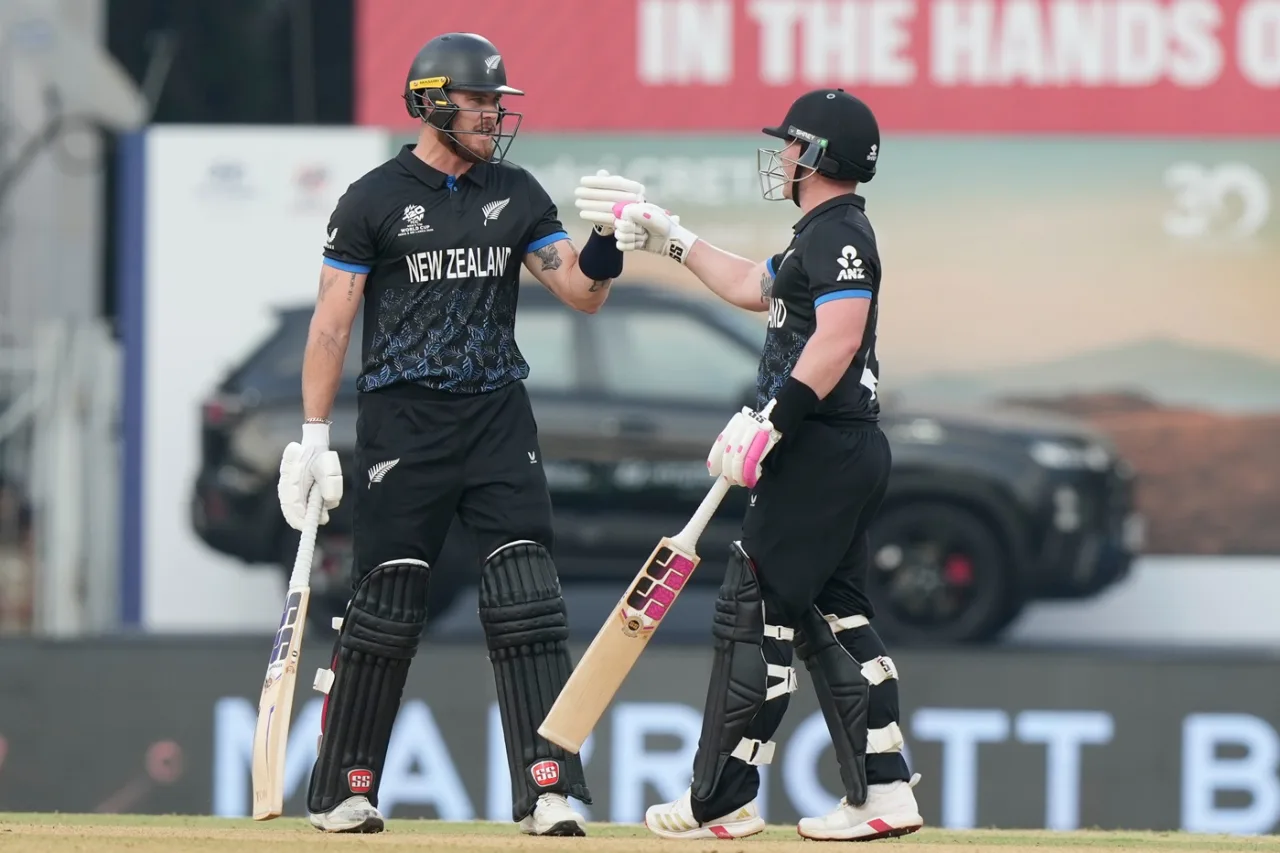
A win against Canada in their first T20I against them on Tuesday will firm up New Zealand’s spot in the Super Eight. This result will also knock out Canada; South Africa have already qualified for the next round from Group D with three wins in as many games.
New Zealand have faced Canada just three times in international cricket so far – each time in ODI World Cups. Their most recent meeting coming in the 2011 edition in Mumbai. They have won all three games and are poised to make it 4-0 against Canada in World Cups, despite the absence of Lockie Ferguson. The fast bowler has returned home for the birth of his first child and is expected to link up with the side ahead of the Super Eight. In Ferguson’s absence, Kyle Jamieson, who wasn’t even in the main squad in the first place, is set to make his T20 World Cup bow.
As for Canada, they had their moments against South Africa and UAE but they have failed to convert those into wins. On Friday in Delhi, they had UAE at 66 for 4 in the 13th over in a chase of 151, but they left the door ajar for Aryansh Sharma and Sohaib Khan to sneak home. Canada can’t afford such slip-ups against New Zealand – and then Afghanistan – if they are to notch up a win in this World Cup.
Kyle Jamieson doesn’t quite have Ferguson’s express pace, but can bang it away on a hard length and stifle the opposition batters. He also has some slower variations in his repertoire and his high-arm release could pose a big threat, especially to batters who are facing him for the first time.
Once known as “Vettori” in Canada’s club cricket circuit, Saad Bin Zafar will run into the team that was once captained by one of his heroes. The Canada left-arm spinner often attacks the stumps and keeps it tight, as his economy rate of 6.02 across 67 T20Is suggests. At 39, Saad knows he won’t be playing the game for long and will be eager to cause a few upsets on the big stage.
Jamieson is set to slot in for Ferguson unless New Zealand want to give veteran legspinner Ish Sodhi a game.
New Zealand (probable): Tim Seifert (wk), Finn Allen, Rachin Ravindra, Glenn Phillips, Daryl Mitchell, Mark Chapman, Mitchell Santner (capt), Jimmy Neesham, Kyle Jamieson, Matt Henry, Jacob Duffy
Canada are likely to play the same XI that lost to South Africa and UAE.
Canada (probable): Dilpreet Bajwa (capt), Yuvraj Samra, Navneet Dhaliwal, Nicholas Kirton, Shreyas Movva (wk), Harsh Thaker, Saad Bin Zafar, Jaskaran Singh, Dilon Heyliger, Kaleem Sana, Ansh Patel
[Cricinfo]
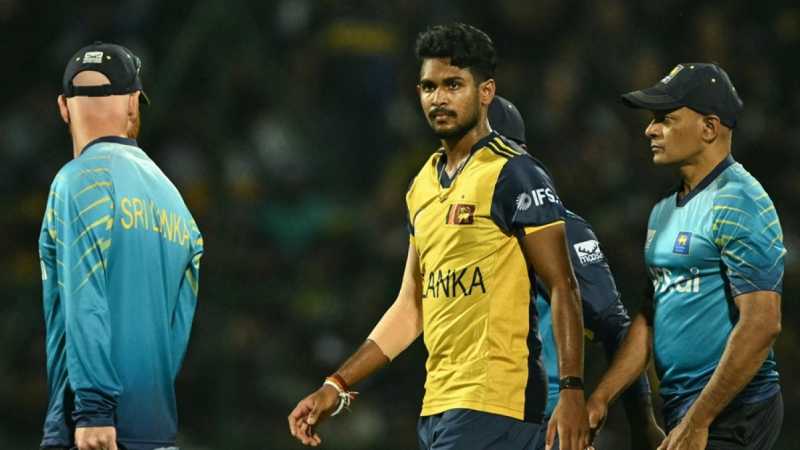
Sri Lanka fast bowler Matheesha Pathirana left the field four balls into his first over, after collapsing to the ground clutching his left calf, and did not return to the field during Sri Lanka’s bowling innings against Australia. Having briefly received treatment from the Sri Lanka physiotherapist immediately after sustaining the injury, Pathirana hobbled off the field with assistance from support staff.
He then spent the majority of the innings being treated in the dressing room. Sri Lanka will likely send him off for scans as soon as the match finishes.
“Matheesha Pathirana experienced discomfort in his left leg calf while bowling during the match and was unable to continue,” a statement read. “He will not bowl further in this game. A scan will be conducted tomorrow to determine the extent of the injury.”
Pathirana had begun well against Australia, bowling two dot balls and giving away three runs (including a wide) in those first four deliveries. The last two balls of the over were delivered by Dasun Shanaka, who gave away a four and bowled a dot.
Pathirana is the quickest bowler in Sri Lanka’s attack, and a key part of their death-bowling plans for the tournament in particular. He is also the second Sri Lanka bowler to come under an injury cloud, with Wanindu Hasaranga already having been ruled out of the World Cup with a hamstring injury of his own.
After this game against Australa, Sri Lanka have another group match to play, against Zimbabwe. They have not earned qualification for the Super Eights yet.
(Cricinfo)

Nissanka ton stuns Australia, puts Sri Lanka in Super Eights

New Zealand eye Super Eight spot against Canada

Pathirana under injury cloud as he leaves the field early

Raza: Win over Australia ‘will count for nothing if we slip up now’

Kusal Perera in as Sri Lanka bowl; Marsh returns for Australia

Jacks the star as England qualify for Super Eights with nervy win

‘Dates have the highest sugar content to fight Coronavirus’

Sunday Island 27 December – Headlines

#SundayIsland 17th December – Headlines

Sunday Island – 28th March

Sunday Island Headlines – 21 March

Sunday Island – 21st February – Headlines
-
 Life style2 days ago
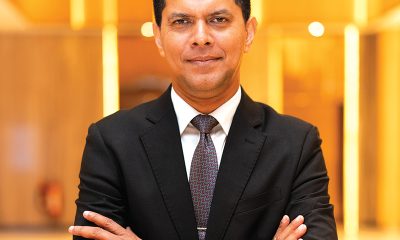
Marriot new GM Suranga
-

 Business1 day ago
Ministry of Brands to launch Sri Lanka’s first off-price retail destination
-
 Features2 days ago
Monks’ march, in America and Sri Lanka
-
 Midweek Review6 days ago
A question of national pride
-
 Business6 days ago
Autodoc 360 relocates to reinforce commitment to premium auto care
-
 Opinion5 days ago
Will computers ever be intelligent?
-
 Features2 days ago
The Rise of Takaichi
-

 Features2 days ago
Wetlands of Sri Lanka: