
Life style
Foods you should try in Sri Lanka – from sour fish curry to coconut relish

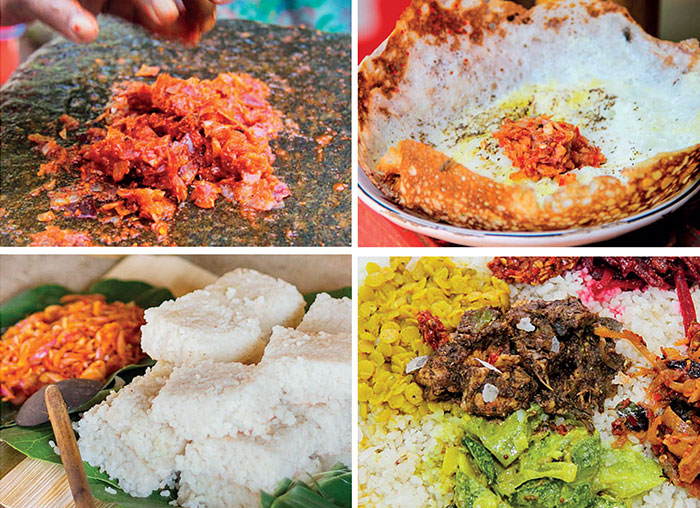
The Teardrop of India or Pearl of the Indian Ocean are among many nicknames for Sri Lanka. But a more accurate description of the gorgeous nation might be the Island of Rice and Curry.Making liberal use of local fruit, such as coconut and jackfruit, seafood and an arsenal of spices, Sri Lankan cooking delivers an abundance of incredible dishes.
Here are some you shouldn’t miss.
Fish ambul thiyal (sour fish curry)
As you’d expect from an island in the Indian Ocean, seafood plays an important role in Sri Lankan cuisine. Fish ambul thiyal (sour fish curry) is one of the most beloved varieties of the many different fish curries available.
The fish — usually something large and firm, such as tuna — is cut into cubes, then sauteed in a blend of spices including black pepper, cinnamon, turmeric, garlic, pandan leaves and curry leaves. Perhaps the most important ingredient is dried goraka, a small fruit responsible for giving the fish a sour flavor.
Ambul thiyal
is a dry curry dish, meaning all the ingredients are simmered with a small amount of water and cooked until the liquid reduces. This allows the spice mixture to coat each cube of fish.
Originating in southern Sri Lanka, it’s available throughout the country at restaurants that serve curry, and is best eaten with rice.
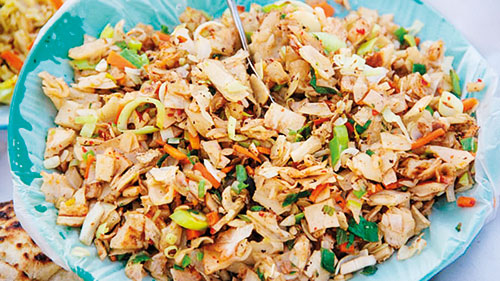
Kottu (also, kottu roti)
Over the traffic and noise at a Sri Lankan market, you’ll likely hear the clanking of metal on metal and know kottu isn’t far away. Kottu is Sri Lanka’s hamburger — everybody’s favorite go-to fast food when craving something tasty and greasy.It resembles fried rice, except instead of rice, it’s made with a type of roti known as godamba roti (a flat, crispy bread).
The roti is normally fried at the beginning of the day, piled into stacks and served as it’s ordered. When you place an order, the kottu chef will fry and chop the roti with a selection of ingredients you choose. The result is a tasty mixture of salty pieces of fried dough, lightly spiced and extremely comforting.
Kottu is served with spicy curry sauce, which you can either use as a dip or pour over your entire plate.
Some of the most skilled kottu chefs compose their own unique songs, singing while they rhythmically clank their spatula and knives against the metal frying surface, slicing the roti with each clank.
Kukul mas curry (chicken curry)
Simple to make, chicken curry is a common household dish in Sri Lanka. There are many variations depending on region and taste preferences.
Spices like fennel seeds, cardamom, cloves and cinnamon sticks are tempered in hot oil before being combined with chicken and spices like chili powder, curry powder, turmeric, pandan leaves, lemongrass and curry leaves.
Coconut milk contributes to the rich base of the curry gravy. Depending on the recipe, a puree of tomato is often included.The chicken is stewed for an hour or so until the essence of the spices is infused into the chicken. Most satisfying when served with hot rice and roti.
Parippu (dhal curry)
Parippu, or dhal curry, is the most common curry in all of Sri Lankan cuisine, a staple in any restaurant or household. Masoor dhal (split red lentils) are first rinsed and boiled until soft.In a separate pan, a number of fresh ingredients, such as onions, tomatoes and fresh green chilies, are sauteed and mixed with tempered spices like cumin seeds, turmeric, fenugreek, mustard seeds and curry leaves.
All the ingredients are combined and usually thickened with a splash of fresh coconut milk to give the dhal a rich flavor and creamy texture.It goes with everything, but is perfect as a dipping gravy for a fresh roti or paratha.
Ways to experience the best of Sri Lanka
Lamprais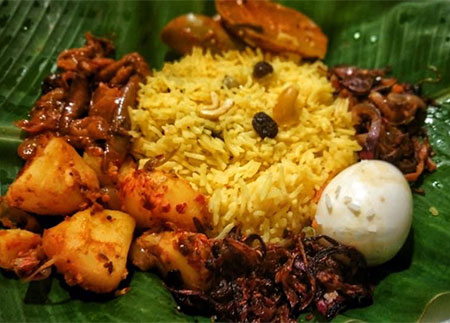
Sri Lanka has been influenced by a diversity of cultures and one of the most evident is the Dutch Burgher community.Lamprais, a word that combines the two Dutch words for “lump” and “rice,” is a combination of meat, rice and sambol chili sauce, wrapped into a banana leaf packet and steamed. The rice is cooked with meat stock — usually a combination of different meats like beef, pork or lamb — that’s infused with cardamom, clove and cinnamon.
A scoop of rice is placed in the centre of a banana leaf, along with the mixed meat curry, two frikkadels (Dutch-style beef balls), blachan (a shrimp paste) and a starch or vegetable, usually either ash plantain or brinjals.
The package is folded into a parcel and steamed. Since lamprais is a Burgher contribution to Sri Lankan cuisine, the meat is usually prepared with sweet spices like clove and cinnamon, recreating the flavor favored by the Dutch Burgher community.Original recipes called for beef, pork and lamb, but chicken and eggs are often included in a modern lamprais packet.
Hoppers (appa or appam)
Also, string hoppers (indi appa or idiyappam) Hoppers are the Sri Lankan answer to the pancake. The batter is made from a slightly fermented concoction of rice flour, coconut milk, sometimes coconut water and a hint of sugar.
A ladle of batter is fried in a small wok and swirled around to even it out. Hoppers can be sweet or savory, but one of the local favorites is egg hoppers. An egg is cracked into the bowl-shaped pancake, creating the Sri Lankan version of an “egg in the hole.”
Egg hoppers are garnished with lunu miris, a sambol of onions, chilies, lemon juice and salt.Unlike the runny batter used for hoppers, string hoppers are made from a much thicker dough. The dough is squeezed through a string hopper maker, like a pasta press, to create thin strands of noodles, which are steamed.
String hoppers are normally eaten for breakfast or dinner with curries.
Polos (green jackfruit curry)
Jackfruit is consumed in a number of different stages of ripeness, from very ripe and sweet to green and starchy. Polos is a Sri Lankan curry prepared with young green jackfruit.The fruit is sliced into bite-sized chunks and boiled until soft.
It’s then cooked with onions, garlic, ginger and spices like mustard seeds, turmeric, chili powder, roasted curry powder, pandan leaves and curry leaf sprigs. The final step is to add coconut milk and simmer to reduce most of the liquid, leaving all the beautiful flavors within the cubes of jackfruit.
Jackfruit has a starchy texture, somewhat similar to cassava or potato. Polos is a standard dish available at most Sri Lankan curry restaurants.
Sophisticated Sri Lanka hotels Wambatu moju (eggplant/brinjals pickle)
Served mostly with rice and curries, wambatu moju is an extremely flavorful candied eggplant (brinjals) pickle.The eggplant — usually the purple-skinned, long and slender variety — is cut into bite-sized wedges and deep fried, giving the eggplant a crispy texture with a soft and silky interior.It’s then caramelized with a spoon of sugar, vinegar, red onions, green chilies, mustard seeds, chili powder and a hint of turmeric powder until the color turns almost black.Take a bite and the soft and juicy texture of the eggplant should melt in your mouth — the slightly sweet, sour and salty contrast is absolutely sensational.
Gotu kola sambol (pennywort salad)
One of the most readily available green vegetable dishes in Sri Lanka is gotu kola sambol.Gotu kola (known in English as Asiatic pennywort) is a medicinal herb in Asia. It’s shredded into slivers, then combined with shallots, tomatoes, fresh grated coconut and chili and seasoned with a dressing of salt, pepper and lemon juice.
Sambol is a term used in Sri Lanka for ingredients that are combined and eaten raw, sometimes more of a chili sauce and sometimes more of a salad, like gotu kola sambol.Gotu kola has a powerful, herbaceous flavour similar to kale, making it an extremely fresh and crisp dish. It’s typically a side dish served with curry and rice.
Kiribath with lunu miris
Kiribath is a special type of rice, cooked with thick coconut milk and often served during special or auspicious occasions, such as Sinhalese New Year.There are a few versions of kiribath, but the basic procedure is to start by boiling a pot of rice.Before the rice finishes cooking, add coconut milk and a pinch of salt. The coconut milk makes the rice creamy and rich and helps it form a sticky consistency. Once the rice is finished cooking, it’s cut into wedges and served like slices of cake.
Kiribath can be eaten along with a number of different Sri Lankan dishes, often either sweetened with jaggery or consumed salty with chili sauce or curry. One of the most common ways to garnish kiribath is with lunu miris, a sambol chili sauce made from red chilies, onions, lemon juice, salt and sometimes dry Maldive fish, all ground into a paste using a stone mortar and pestle.
Pol Sambol (coconut relish)
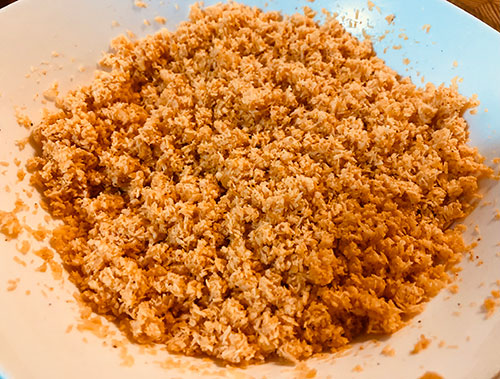
In a country in which the coconut is of supreme importance, there’s one Sri Lankan side dish that pays fitting tribute.Pol sambol, which might also be called fresh coconut relish, is a simple blend of finely grated coconut, red onions, dried whole chilies or chili powder, lime juice, salt and Maldive fish (if available). The ingredients are diced or ground, then combined in a bowl.In Sri Lanka, pol sambol is used as a garnish or side dish for everything and anything.
It goes well with rice and curry, pol roti (coconut roti), a hot paratha, string hoppers or even just scooped up with slices of bread. If you love coconut, there’s no better garnish in the world.
Sri Lanka’s top tea experiences: Sips of history
Wood apple
It wouldn’t be a Sri Lankan food discussion without wood apple.The wood apple is a Southeast Asian fruit about the size of a de-husked coconut. It also has just as hard of a shell, and a pungent, almost blue cheese aroma.
Walking through a market in Sri Lanka your nose will detect it long before your eyes do. Inside the shell is a dark brown paste that resembles something between tamarind pulp and fermented raisins.Wood apple can be eaten directly out of the shell, but one of the most popular ways to eat (or drink) it throughout Sri Lanka is in a thick smoothie, known as wood apple juice.- CNN
The fruit is blended with jaggery (or sugar) and water to smooth it out. It has a unique sour and sweet flavor. Mention that you love wood apple to any Sri Lankan you meet, and they probably won’t be able to hold back a knowing smile. – (CNN)










In a country where creative pursuits are often treated as indulgences rather than vocations, Saman Halloluwa’s journey stands apart — carved patiently through brushstrokes, framed through a camera lens, and articulated through the written word. Painter, wildlife and nature photographer, and independent environmental journalist, Halloluwa inhabits a rare space where art, ecology and social responsibility converge.
His relationship with art began not in galleries or exhibitions, but in a classroom. From his school days, drawing was not simply a subject but an instinct — a language through which he learned to observe, interpret and respond to the world around him. Under the guidance of two dedicated mentors, Ariyaratne Guru Mahathaya and Gunathilaka Guru Mahathaya, he honed both skill and discipline. Those early lessons laid the foundation for a lifelong engagement with visual storytelling.

“His work navigates between traditional Sinhala artistic sensibilities, abstract compositions and expansive landscapes.”
 That commitment eventually materialised in two solo art exhibitions. The first, held in 2012, marked his formal entry into Sri Lanka’s art scene. The second, staged in Colombo in 2024, was a more mature statement — both in content and confidence. Featuring nearly fifty paintings, the exhibition drew an encouraging public response and reaffirmed his place as an artist with a distinct visual voice.
His work navigates between traditional Sinhala artistic sensibilities, abstract compositions and expansive landscapes. There is restraint in his use of form and colour, and an underlying dialogue between memory and space. Yet, despite positive reception, Halloluwa speaks candidly about the structural challenges faced by artists in Sri Lanka. Recognition remains limited; fair valuation even rarer.
“This is not merely an artistic issue,” he observes. “It is a social and economic problem.”
In Sri Lanka, art is often viewed through the lens of affordability rather than artistic merit. Many approach a painting by first calculating the contents of their wallet, not the value of the idea or labour behind it. In contrast, he notes, art in Europe and many other regions is treated as cultural capital — an investment in identity, history and thought. Until this mindset shifts, local artists will continue to struggle for sustainability.
The decisive push toward wildlife photography came from Professor Pujitha Wickramasinghe, a close friend who recognised both Halloluwa’s observational skills and his affinity with nature. From there, the journey deepened under the mentorship of senior wildlife photographer Ravindra Siriwardena.
Both mentors, he insists, deserve acknowledgment not merely as teachers but as ethical compasses. In a field increasingly driven by competition and spectacle, such grounding is invaluable.
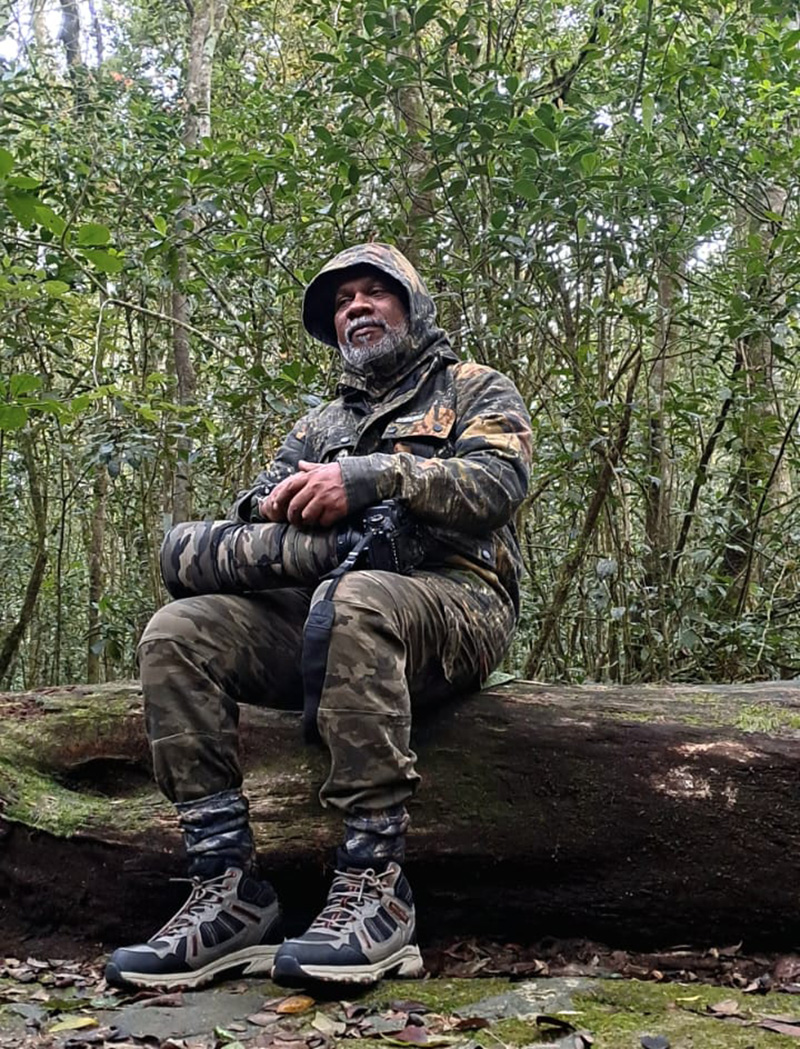
Saman Halloluwa
Wildlife photography, Halloluwa argues, is among the most demanding visual disciplines. It cannot be improvised or rushed. “This is an art that demands restraint,” he says.
Among all subjects, elephants hold a special place in his work. Photographing elephants is not merely about proximity or scale, but about understanding behaviour. Observing social patterns, movement, mood and interaction transforms elephant photography into a constantly evolving challenge. It is precisely this complexity that draws him repeatedly to them.
Halloluwa is cautiously optimistic about the current surge of interest in wildlife photography among Sri Lankan youth. Opportunities have expanded, with local and international competitions, exhibitions and platforms becoming more accessible. However, he issues a clear warning: passion alone is not enough
Sri Lanka, he believes, is uniquely positioned in the global nature photography landscape. Few countries offer such concentrated biodiversity within a compact geographical area. This privilege, however, carries responsibility. Nature photography should not merely aestheticise wildlife, but foster respect, aware ness and conservation.
Parallel to his visual work runs another equally significant pursuit — environmental journalism. For the past seven to eight years, Halloluwa has worked as an independent environmental journalist, giving voice to ecological issues often sidelined in mainstream discourse. His entry into the field was guided by Thusara Gunaratne, whose encouragement he acknowledges with gratitude.
An old boy of D.S. Senanayake College, Colombo, Halloluwa holds a Diploma in Writing and Journalism from the University of Sri Jayewardenepura and has completed journalism studies at the Sri Lanka Press Institute. He is currently pursuing an Advanced Certificate in Wildlife Management and Conservation at the Open University of Sri Lanka — a testament to his belief that learning must remain continuous, especially in a rapidly changing ecological landscape.
Outside his professional life, he enjoys cricket, rugby and badminton. Yet even leisure intersects with responsibility. He is a founding member and former president of the D.S. Senanayake College Old Boys’ Wildlife Forum, an active member of Wild Tuskers Sri Lanka, and a contributor to several independent environmental and wildlife volunteer organisations. In an era dominated by speed, spectacle and short attention spans, Saman Halloluwa’s journey unfolds differently. It is deliberate, reflective and rooted in values. Through art, he captures memory and form. Through photography, he frames life beyond human control. Through journalism, he asks uncomfortable but necessary questions.
“What I do, what I love” is not fashion here.
It is conviction — patiently lived, quietly asserted, and urgently needed in a country still learning how to value its artists, its environment and its truth.
By Ifham Nizam ✍️

Ramani Fernando Sunsilk Hair and Beauty Academy
Ramani Fernando Sunsilk Hair and Beauty Academy marked their graduation of their latest cohort of aspiring hair professionals in a ceremony held at Kingsbury Hotel.

Senaka de Silva, creative force behind Ramani’s shows
For over two decades, the Ramani Fernando Sunsilk Hair and Beauty Academy has stood as a beacon of excellence in beauty education in Sri Lanka. Founded by industry icon Ramani Fernando, the Academy has built a reputation for producing highly skilled professionals who go on to make their mark in salons, both locally and internationally. As the newly minted graduates step out into the world, they carry forward not just certificates, but also the promise of creative authority and personal empowerment.
The chief guest for the occasion was Rosy Senanayake, a long-standing supporter of the Academy’s mission. Addressing the graduates her message echoed her enduring belief that the beauty industry is not merely about aesthetic but about. confidence, self-worth and future leaders.
Over months of rigorous training, these young professionals honed their skills in cutting colouring, styling and contemporary artistry readying themselves to set trends rather than follow them.
Each graduate walked the stage with confidence, their dedication signalling a promising future for Sri Lanka’s beauty and fashion industry! With this new generation of stylists preparing to raise the standard of professional hairstyling.
Ramani Fernando, addressing the audience reflected on the academy’s mission to cultivate not only skills but vision and confidence in every student.
She urged the graduates to embrace continuous learning to take risks with creativity .The world of beauty is ever evolving, stay curious, stay bold and never underestimate the power of your talent, she added emphasising the importance of confidence, discipline and passion in carving a successful career in shaping the future of style.
These graduates are stepping into a world of endless possibilities. They are future of the country, who will carry a forward legacy of creativity. Behind every successful graduate at Sun silk Hair Academy stands a team dedicated to excellence. While Ramani Fernando serves as a visionary Principal and it is Lucky Lenagala, her trusted person who ensures that the academy runs seemingly.
From overseeing training sessions to guiding students, through hands on practice, Lucky plays a pivotal role in shaping the next generation of hairstylists.
Kumara de Silva, who has been the official compere Ramani’s, Hair graduation ceremony, from inception has brought energy, poise and professionalism. The Sunsilk Hair Academy is a celebration of talent and mentor ship for the graduates stepping confidentially into the next chapter of their careers, ready to make their mark on Sri Lanka beauty landscape

A moment of pride Ramani with chief guest Rosy Senanayake


Statement in style

Gliding in romance and sophistication
Pix by Thushara Attapathu
By Zanita Careem ✍️

During this season, Romesh Atapattu’s Capello Salon buzzes with a unique energy – a blend of festive excitement and elegance. Clients arrive with visions of holiday parties, office soirees, seeking looks that capture both glamour and individuality. The salon itself mirrors this celebrity mood. Warm lights, tasteful festive décor create an atmosphere where beauty and confidence flourish.
Romesh Atapattu himself curates the festive décor, infusing the space with his signature sense of style. His personal eye ensures that the décor complements the salon’s modern interiors.
As Colombo slips effortlessly into its most glamorous time of year, the Christmas season brings with it more than twinkling lights and celebrity soirees – it signals a transformation season at salons across the city. Capello salons are no exception.
At the heart of this festive beauty movement is Romesh Atapattu of Capello salons, a name synonymous with refined hair artistry, modern elegance and personalised style.
Christmas is about confidence and celebration. Romesh believes ‘People want to look their best without losing who they are”. Our role is to enhance, not overpower. This philosophy is evident in the salon’s seasonal approach.
Beyond trends, what sets Atapattu apart is the attention to individuality. Each consultation is treated as a creative collaboration – face shape, lifestyle, hair texture and personal style all play a role in creating the best for Romesh.
Stepping into Romesh’s salon during the Christmas season is an experience in itself. The space hums with festive energy while maintaining an atmosphere of calm sophistication.
The décor embraces the Christmas spirit with understated elegance. Tastefully adorned décor, beautiful Xmas tree, soft gold and ivory tones, and gentle hints of red are woven seamlessly into the salon’s contemporary design.
His staff, known for their warmth and professionalism also plays a key role in shaping the salon’s atmosphere—friendly, stylish and always welcoming. The Capello staff combine skill and creativity to deliver results that have a lasting impression.
Beyond trends, what sets Romesh Atapattu apart is the attention to individuality. Each consultation is treated as a creative collaboration – face shape, lifestyle, hair texture and personal style all play a role.
He is a professional who blends technical mastery with a deeply personal approach to style. His dedicated team of skilled professionals, operate with quiet confidence ensuring styles that create an atmosphere of trust, turning every appointment into a personalised and memorable experience.
(ZC) ✍️
Pic by Rohan Herath

Myanmar votes as military holds first election since 2021 coup

Interment of singer Latha Walpola at Borella on Wednesday [31st]

Western Naval Command conducts beach cleanup to mark Navy’s 75th anniversary

Ex-Malaysia PM Najib Razak given 15-year jail term over state funds scandal

Two dead in 50-vehicle pile up on Japan highway

New York blanketed in snow, sparking travel chaos

‘Dates have the highest sugar content to fight Coronavirus’

Sunday Island 27 December – Headlines

#SundayIsland 17th December – Headlines

Sunday Island – 28th March

Sunday Island Headlines – 21 March

Sunday Island – 21st February – Headlines
-

 News6 days ago
Members of Lankan Community in Washington D.C. donates to ‘Rebuilding Sri Lanka’ Flood Relief Fund
-

 News4 days ago
British MP calls on Foreign Secretary to expand sanction package against ‘Sri Lankan war criminals’
-

 News7 days ago
Air quality deteriorating in Sri Lanka
-

 News7 days ago
Cardinal urges govt. not to weaken key socio-cultural institutions
-

 Features6 days ago
General education reforms: What about language and ethnicity?
-

 Opinion7 days ago
Ranwala crash: Govt. lays bare its true face
-
 News6 days ago
Suspension of Indian drug part of cover-up by NMRA: Academy of Health Professionals
-

 News7 days ago
CID probes unauthorised access to PNB’s vessel monitoring system