
Editorial
‘Fodder’ for thought


Tuesday 20th September, 2022
Two Cabinet ministers have crossed swords over rice imports. Trade Minister Nalin Fernando has sought to rubbish Agriculture Minister Mahinda Amaraweera’s recent claim that imported rice should be fed to farm animals as it is unfit for human consumption. Why Fernando has seen red is understandable; the Agriculture Minister’s statement serves as a damning indictment of the Trade Ministry, which is responsible for importing rice. Amaraweera would have the public believe that he is trying to protect the interests of the local farming community by discouraging the public from consuming imported rice, and making it available to the livestock farmers who are facing a severe animal feed shortage. The question is why he did not raise objections, at Cabinet meetings, to the import of rice which, he says, is tainted with harmful agrochemicals? If imported rice contains toxins, then how can it be considered fit for animal consumption?
The practice of importing rice and selling it as animal feed is not of recent origin. It has been going on for decades. It is part of a strategy to further the interests of the Millers’ Mafia. Big-time millers curtail the release of their rice stocks to the market weeks before the commencement of paddy harvesting, thus causing prices to skyrocket, and prompting the government to import rice. Thereafter, they release enough rice to the market, bringing down prices so that they could buy paddy for a song. When locally-produced rice, which suits the palates of Sri Lankans more than foreign varieties, is freely available, imported rice stocks in the government warehouses end up as animal feed. Having exploited farmers and filled their silos with paddy, the big-time millers starve the market again, making the prices of rice rise steeply. Having sold its rice stocks as animal feed, the government finds itself in a situation where it cannot make effective market interventions to regulate prices. This is the name of the game. We have been writing about this for years but to no avail.
The state machinery is geared towards helping serve the interests of the wealthy rice millers who grease the palms of politicians and public officials. Small and medium-scale millers are dependent on bank loans to buy paddy, but banks do not release funds until the Millers’ Mafia has bought paddy on the cheap. By the time others start purchasing paddy, prices are high. The government does not allocate enough funds to the Paddy Marketing Board (PMB) so that the wealthy millers will be without competition. Thankfully, the Bank of Ceylon has taken some meaningful steps to sort out this problem, which however cannot be solved once and for all without state assistance; the government is doing precious little to help farmers; the Treasury is not providing security for the loans the PMB asks for, we are told.
The Agriculture Minister makes a lot of noise. The onus is on him to enable the PMB to secure enough funds ahead of the paddy harvesting time. He should also prevail on the Finance Minister to ensure that loans are granted to small and medium-scale millers expeditiously to compete with the Millers’ Mafia. If the government takes action to make funds available to the competitors of the powerful millers to purchase paddy, the interests of both the farmer and the consumer could be protected.
We are not short of politicians shedding copious tears for paddy farmers in dire financial straits. But all of them are responsible for the predicament of the farming community. Powerful millers openly defy the Consumer Affairs Authority, and flout laws with impunity thanks to their political connections. Siripala Gamlath, the owner of Nipuna Mills, blamed for hoarding paddy, and jacking up rice prices, is an SLPP MP. Dudley Sirisena, who owns Araliya Mills, also accused of hoarding and market manipulations, is a younger brother of former President Maithripala Sirisena, who is Minister Amaraweera’s party leader.
In 2012, Sirisena blamed the UNP for having destroyed the PMB and created a situation where the paddy farmers were exploited in every conceivable manner. He said the UNP had sold the Polonnaruwa PMB building worth more than Rs. 50 million for a mere Rs. 275,000 and used it as a party office. He accused the JVP of having torched as many as 240 Agrarian Service Centres with paddy storage facilities in the late 1980s. Three years later, he closed ranks with the UNP and the JVP to secure the presidency! Today, the SLPP and the UNP have joined forces to protect their mutual interests. This may explain why anti-politics is on the rise in this country, and the resentful people take to the streets, demanding the ouster of all 225 MPs.
Let Amaraweera and other government politicians bellowing rhetoric and promising to help the local farming community, while living high on the hog at the expense of the public, be urged to fish or cut bait.



Monday 5th October, 2026
The Federation of University Teachers’ Associations (FUTA) has held several media briefings during the past several months to highlight a host of unresolved issues affecting the university system, but the government seems to be unconcerned. Addressing the media, over the weekend, the FUTA raised those problems once again, pointing out that all state universities had been left with only about 5,000 teachers because a large number of academics had already left the country, mostly for economic reasons. The situation was taking a turn for the worse, it warned.
University teachers are among the professionals who played a pivotal role in enabling the JVP-led NPP’s meteoric rise to power, but today they are shouting themselves hoarse in a bid to draw the government’s attention to the problems besetting the university system, but in vain. The same holds true for the state-sector doctors, who have got short shrift from the government, which rides roughshod over the GMOA (Government Medical Officers’ Association) as well as the BASL (Bar Association of Sri Lanka), whose members also campaigned hard for the NPP.
The incumbent government, just like its predecessors, has apparently prioritised a plan to increase the number of universities in keeping with what looks like a politically determined agenda over resourcing and staffing the existing universities adequately. President Anura Kumara Dissanayake, in his wisdom, has promised to establish 50 new universities across the country while almost all state universities are experiencing severe resource constraints, with many academics voting with their feet.
A quality university system cannot be created simply by increasing the number of universities or admitting more students. The need is for a combination of capable academics, adequate resources, institutional autonomy, rigorous standards and a system of accountability. There are certain other conditions that need to be fulfilled for a country to create a vibrant university system that conforms to international standards. First of all, there should be a clear national higher education strategy to establish a diversified, future-oriented tertiary education system that is adequately resourced and staffed.
Universities cannot function properly, much less achieve academic excellence, without enough qualified teachers and appropriate student-to-staff ratios. Adequate and sustained funding, strong research capacity, academic freedom, institutional freedom and rigorous, independent quality assurance, industrial and international links are among the other factors that help ensure the robustness of a university system.
The World Bank’s recent assessment of Sri Lanka’s higher education sector has identified scarcity of qualified academic staff, inadequate research and innovation output and passive student learning among the challenges facing the sector.
FUTA members have told the media that foreign research grants have to be approved by the Cabinet of Ministers; the approval process is frustratingly slow, and therefore universities are without enough funds for research. There are arguments for and against government oversight on research grants, but the real issue is why the government cannot expedite the approval process. Teaching and research are traditionally regarded as inseparable functions of a university. Besides, universities need sufficient freedom to determine curricula, conduct research, appoint staff and make academic decisions without inappropriate political or bureaucratic interference. UNESCO regards academic freedom and institutional autonomy as important conditions for universities to fulfil their teaching and research functions.
It is doubtful whether Sri Lankan governments have learnt from history how other countries achieved their development goals. The OECD (Organisation for Economic Co-operation and Development) has revealed that universities played a central role in the development of the Global North by producing the educated workforce, scientists, engineers, doctors, teachers, administrators and other professionals needed to build modern economies and strong public institutions. They also became major centres of basic and applied research, generating knowledge that helped drive industrialisation, technological innovation and productivity. The OECD notes that universities in most developed economies remain major providers of research and important contributors to the development of new technologies. The rise of strong university systems was not merely a result of development in the Global North; universities themselves helped usher in progress. It is hoped that Sri Lankan policymakers, particularly politicians, will take cognisance of this simple fact.
The incumbent government has raised the retirement ages of judges. It even went to the extent of amending the Constitution amidst protests from national and international organisations, claiming that it had to do so to clear a backlog of cases. It has also launched a substantial programme to recruit and train thousands of police personnel. Why can’t it take similar action urgently to resolve the shortage of university teachers? It should heed the university teachers’ warning; students who qualify for university admission may have to wait for several years before the commencement of their academic programmes, and universities might end up being empty shells.

A private company has complained to the police, alleging that Kaduwela Mayor Ranjan Jayalal and NPP MP Asitha Niroshana forcibly took over a block of land belonging to it in Athurugiriya for a Metro bus stand. Lawyers representing the company have told the media that the police have not acted on their complaint due to political pressure. The NPP politicians remain defiant, insisting that the new bus stand will not be shifted under any circumstances.
Sri Lanka politicians take leave of their senses when power goes to their heads. During previous governments, there were widespread allegations that some politicians got their supporters to encroach on privately owned estates in the Colombo suburbs and then demanded money from hapless owners to remove the squatters, while others openly grabbed houses and land with impunity. These allegations have gone uninvestigated. The 2024 regime change was expected to bring such illegal practices to an end. But in 2025, a group of JVP activists, led by a deputy minister, stormed a party office belonging to their rival faction, the Frontline Socialist Party (FSP), in Yakkala, and forcibly occupied it after assaulting and driving away a group of FSP members. They even showed the police a document, claiming that it was a court order vesting the ownership of the building in the JVP, and the police promptly cordoned off the area and set up a checkpoint to ensure the safety of the JVPers. But in April 2026, the Gampaha District Court ordered the JVP to return the office to the FSP.
The alleged land grab in Athurugiriya is different from the previous ones in that it is not intended to benefit any political party or any private individual as such, but it cannot be countenanced on any grounds. There should certainly be a place for the Metro buses to be parked in Kaduwela, but the government must not bulldoze its way through to acquire private property. It should negotiate with the company concerned and explore the possibility of purchasing the land at the prevailing commercial rate or taking it on lease. If the owner is unwilling to sell or lease the property, the government will have to look for an alternative location. There is no other way out. That is the way such disputes should be settled in the civilised world. The police must be made to explain why they have not instituted legal action against the Kaduwela Mayor and the NPP MP.
The government’s efforts to develop the Metro service deserve praise, encouragement and public support. The state-owned bus service has to be revitalised. However, the development of the Metro bus service cannot be cited in extenuation of high-handed actions, such as the alleged land grab.
It is high time the JVP/NPP politicians and their supporters realised that a popular mandate is not tantamount to a carte blanche and they cannot act according to their whims and fancies. The alleged land grab is bound to have an unsettling effect on investors, particularly foreign investors, given the JVP’s original ideological programme, which bore the imprimatur of its founder-leader Rohana Wijeweera, and the continuing influence of the party’s old guard over the present government. The JVP’s early programme called for far-reaching socialist economic measures, including the abolition of private ownership in several sectors and revolutionary land reform. The forcible land takeover in Athurugiriya not only smacks of statism but also conjures up the failed communist spectres of the past.
The government should take cognisance of what the US says, in its 2026 Investment Climate Statements: Sri Lanka, about land tenure here. Noting that Sri Lanka has made important progress since the 2022 economic crisis, the report says the investment environment remains difficult and unpredictable. It is not simply a negative report: it acknowledges political stability under the NPP government, commitment to the IMF programme. However, it makes specific mention of “tenure insecurity” in the context of weaknesses in Sri Lanka’s land sector. The report lists it alongside land scarcity, fragmented land administration, land degradation, encroachment and land disputes. Tenure insecurity generally means that a person or business does not have sufficiently certain, legally enforceable and transferable rights over the land they occupy or use. But it also means vulnerability to illegal occupation, land grabbing, encroachment or other involuntary loss of land. The World Bank’s definition of ‘tenure insecurity’ is noteworthy. It says tenure security involves protection against the involuntary loss of land, and notes that insecurity can arise from disputes within families or communities, or from the actions of governments or private claimants.
The US investment report provides an important reference to the foreign investors assessing Sri Lanka’s investment climate. The JVP-NPP government therefore should not send the wrong message to investors. In this day and age, news travels almost at subatomic speed, reaching millions of people across the globe within seconds. The government would do well to be mindful of the repercussions of its actions.

Saturday 3rd October, 2026
Private fuel bowser owners were up in arms, yesterday, claiming that they were incurring huge losses because the Ceylon Petroleum Corporation (CPC) had not increased commissions for fuel distribution. Unless the CPC responded favourably to their demand for a substantial increase in commissions, they would be left with no alternative but to stop fuel distribution completely with immediate effect, they warned, noting that the CPC had promised to announce its final decision yesterday.
The Ceylon Petroleum Private Tanker Owners’ Association (CPPTOA), which is leading the fuel bowser owners’ struggle, said yesterday that it expected their commission to be raised at least to 20%, as the cost of fuel distribution had increased sharply. A meeting between the CPPTOA representatives and the CPC officials was going on at the time of writing.
It defies comprehension why the CPC lets the grass grow under its feet without addressing issues that have the potential to cripple fuel distribution. The CPPTOA had been protesting for weeks, but the CPC ignored fuel distributors’ demand. It may have expected the problem to go away with the passage of time. Everything possible must be done to prevent pumps from running dry at filling stations, causing hardships to the public and adversely impacting the economy.
The CPC should have taken immediate action at the first sign of trouble and invited the CPPTOA to talks instead of waiting until the eleventh hour. Prudence demands that a game of chicken be averted in a crucial sector like petroleum distribution.
Issues that could cripple the petroleum sector are best sorted out at the negotiating table, which is the ideal place for bargaining. We are not in a position to say whether it is fair for the CPPTOA to demand a 20% commission, but the fuel distributors’ grievances should be addressed and the CPC ought to hold talks with them and negotiate solutions as and when issues crop up. Flexibility is a prerequisite for resolving trade union problems. Intransigence and brinkmanship only aggravate such issues, much to the detriment of the country’s interests. If bowser operators stopped distributing fuel for a couple of days, perish the thought, it would take a considerable time to replenish supplies thereafter, and fuel queues would reappear. Disruptions to fuel distribution could have a domino effect on virtually every other sector of the economy.
The fragile economy, which is recovering from an unprecedented crisis, cannot take any more shocks, and the patience of the public is manifestly wearing thin. Petroleum sector trade unions have claimed that the CPC is selling fuel from older stocks at higher prices, while fuel distributors have called upon the government to scrap the loss-recovery levy immediately, arguing that the CPC’s legacy debt has now been fully repaid. These are the issues the Opposition should take up in Parliament instead of making loud noises that signify nothing.
One can only hope that the CPC and the CPPTOA will resolve the commission issue through negotiations, and the CPC will act more responsibly in the future without trying to wish away trade union issues that could cripple the petroleum sector.

Showers or thundershowers will occur at several places in the most part of the island after 1.00 p.m

GS1 Lanka drives Sri Lanka’s shift to 2D barcodes

Geneva takes up Sallay’s case and govt. ignores opportunity to answer accusations

Section of wartime KKS High Security Zone vacated to facilitate economic development in the area

Lawyer lodges complaint against Govt. Printer, Media Ministry Secy.

Sri Lankan troops in joint anti-terrorist exercise in Russia

‘Dates have the highest sugar content to fight Coronavirus’

Sunday Island 27 December – Headlines

#SundayIsland 17th December – Headlines

Sunday Island – 28th March

Sunday Island Headlines – 21 March

Sunday Island – 21st February – Headlines
-

 Latest News5 days ago
Gold winner Tharanga gets brand-new Honda Vezel from SLAAJ
-

 Features5 days ago
Why Sri Lanka needs an Inclusive Civic Nationalism – urgently
-

 News4 days ago
US-assisted ‘Ice’ detection: NPC to examine IGP’s move to transfer drug-busting team
-

 Features6 days ago
Thailand’s biggest new global star …
-
 News6 days ago
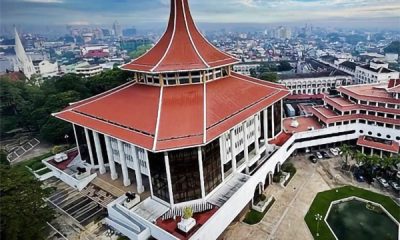
First cases taken up by SC after enactment of 22A dismissed
-

 News5 days ago
Civil society activist accuses govt. of favouring Ven. Gnanasara
-

 Editorial3 days ago
Colombo Port drug bust: The plot thickens
-

 Editorial6 days ago
Aftershocks of 22A