
News
FMM calls on govt. to stop using CID to suppress media


The Free Media Movement yesterday called on the government to immediately stop what it called the suppression of journalists using the CID.
In a statement issued to the media the FMM said: Tharindu Uduwaragedara, a journalist, media activist and human rights activist, has been summoned to appear before the CID on 28 June 2022. The Free Media Movement, considers this as an extension of the ongoing anti-democratic movement implemented through the CID to crack down on media activists and free-thinking activists, and vehemently opposes and strongly condemns these actions.
When conducting further inquiries regarding this summons, it was reported that the summons has been made in connection with a complaint lodged by the Air Force Intelligence regarding an investigation on a YouTube channel called ‘Satahana’ maintained by Tharindu. No specific news item was indicated on the complaint, while the majority of the videos posted on the channel were reported to be under investigation stating that there was a discrepancy between their content and the headlines used.
It is clear from the explanations provided that this is an arbitrary investigation carried out without any basic understanding of journalism. Special units such as the ‘Criminal Investigation Department’ are operated at the expense of public funds in a country, not for such ridiculous purposes but for serious criminal investigations that require specific expertise. Over the past 18 months, the Free Media Movement has continued to monitor activities against journalists, social activists and citizens who have exercised their right to freedom of expression of police units, including the Criminal Investigation Department and the Terrorism Investigation Unit (TID). It has been clear that most of these actions against journalists have been without any justifiable reason and a clear violation of media freedom and their fundamental right to freedom of expression. It needs to be stated specifically, that these divisions failed to provide clear evidence even in the few instances in which legal action was initiated. The case against the poet Ahnaf Jazeem is the closest example of an incident that has brought disrepute to Sri Lanka even internationally.
In the past two months, activists of the public agitation against the President and the current government, as well as several journalists and social media activists who have been active contributors, have been summoned to the CID for questioning, and even lawyers representing the rights of the protesters have been questioned. The Free Media Movement has repeatedly pointed out that this seriously threatens freedom of expression, including media freedom of journalists.
At a time when international assistance is essential to save Sri Lanka from its unfortunate situation, the violation of fundamental rights by the CID is a serious matter.
Therefore, we urge the Prime Minister, the Minister of Public Security, the Secretary to the Ministry of Defence, the Inspector General of Police and other authorities to immediately stop this arbitrary action of the CID of summoning and interrogating those who use their freedom of expression through the media or any other medium.


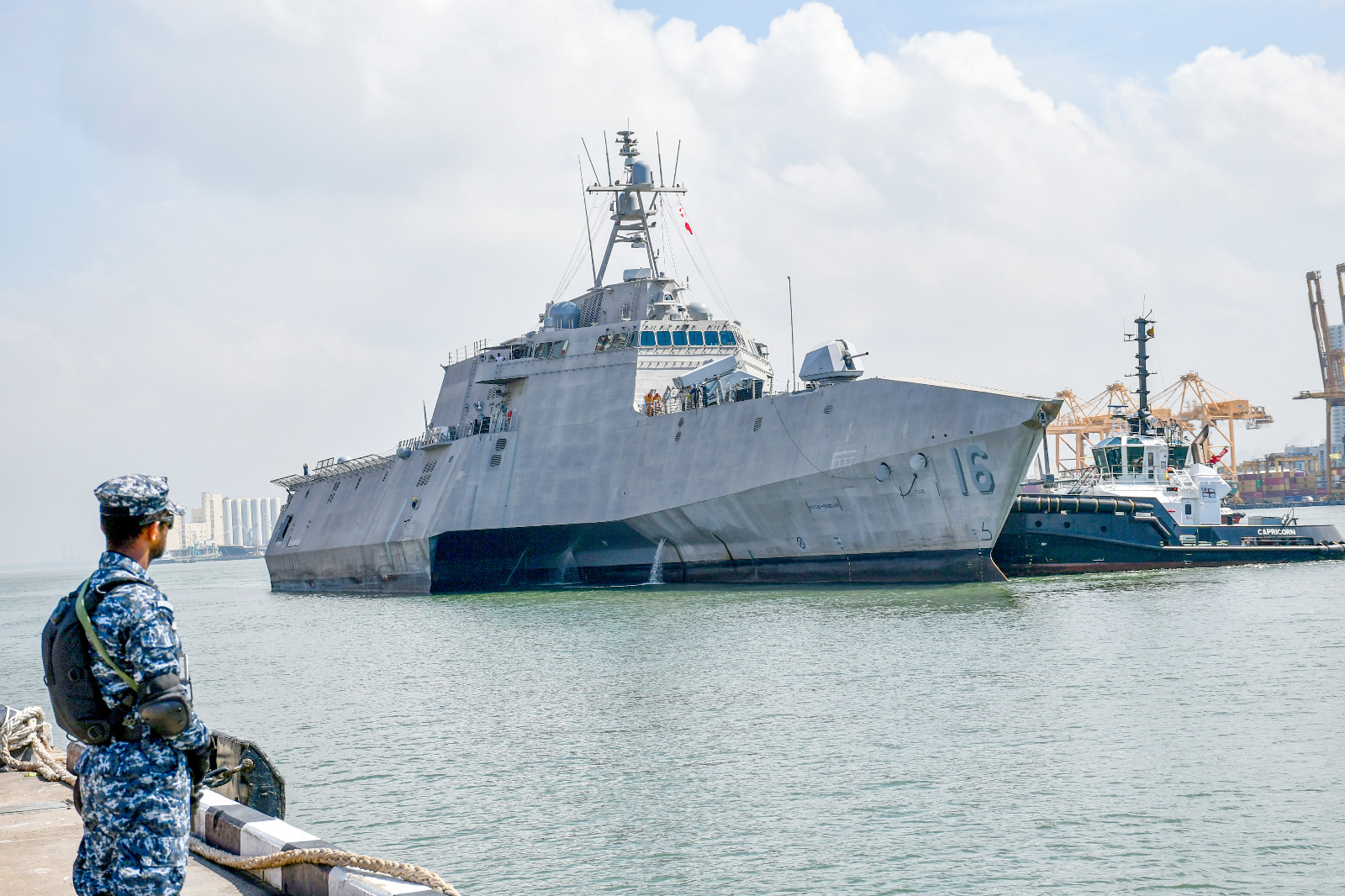
The U.S. Navy ship USS Tulsa (LCS 16) arrived at the Port of Colombo this morning, 7 October 2026 for replenishment purposes.
The visiting ship was welcomed by the Sri Lanka Navy in accordance with naval traditions.
The 127.7-metre-long platform is a Littoral Combat Ship commanded by Commander BM Wanier. Commissioned on 16 February 2019, USS Tulsa has since been in service with the US Navy.
The ship previously made a port call in Sri Lanka on 27 August 2025.
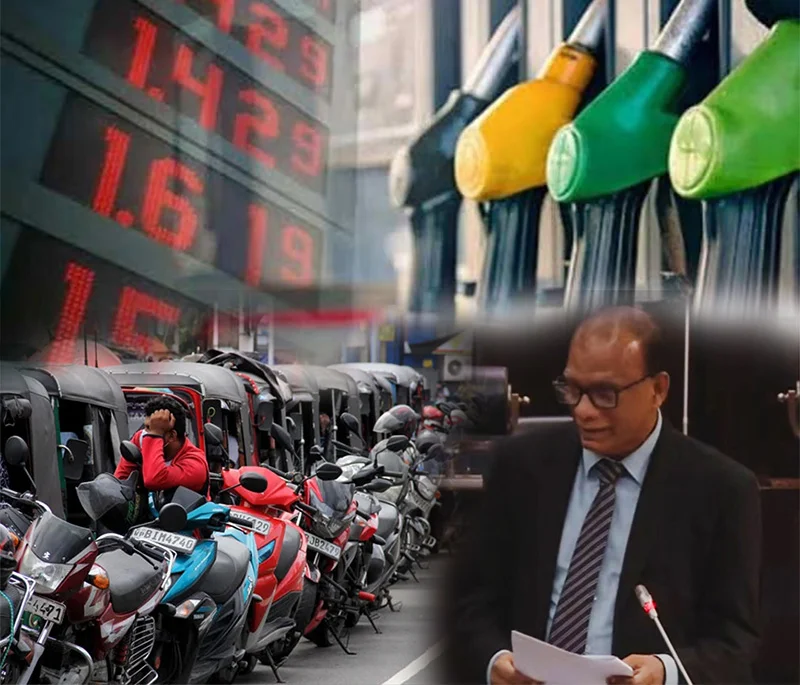
Govt. tells fuel distributors to maintain stocks to ensure uninterrupted supplies
by Saman Indrajith and Norman Palihawadane
The government had instructed private fuel distributors to maintain minimum stocks and ensure uninterrupted supplies to the market, Energy Minister Anura Karunathilaka told Parliament yesterday (06).
Karunathilaka said the Ministry of Energy Secretary had notified the relevant companies of the requirement, following a reduction in supplies by some private distributors, amid higher international fuel prices.
The Minister said private companies had informed the government that they were facing losses because international prices had risen while fuel was being sold, locally, at prevailing prices. As a result, some companies had reduced the volumes released to the market.
The reduced supplies had increased the burden on the Ceylon Petroleum Corporation (CPC), whose share of the diesel market had risen from about 54% to 82%, the Minister said.
“The CPC currently holds an 82% share of the market,” he said, adding that it had increased its supplies, compared with February, to compensate for the reduction by private distributors.
Karunathilaka said the government could not, under the existing agreements with private companies, specify the quantities they should supply to individual filling stations. However, it could require them to maintain minimum stocks in the country.
The Minister said the Energy Ministry had already instructed companies that had failed to maintain the required stocks to take steps to prevent supply disruptions.
The Minister attributed the queues reported at some filling stations to reduced supplies from private distributors, as well as normal variations in fuel distribution. He also said demand for CPC fuel had increased because private companies generally did not provide fuel to dealers on credit, while the CPC offered a three-day credit facility.
“We expect that, as the Ceylon Petroleum Corporation takes on this additional burden, the problem will ease to some extent by Wednesday or Thursday,” Karunathilaka said.
He said instructions had also been issued to increase supplies to CPC filling stations. A special discussion on the issue is scheduled for today (07), with officials of the Energy Ministry and CPC expected to participate,
along with President Anura Kumara Dissanayake.
Meanwhile, Petroleum Dealers’ Association officials have called for an early solution to the supply issue. Association Chairman D.V. Shantha Silva said queues had been reported at many filling stations, mainly those operated by private distributors.
He said the situation was not due to an overall shortage of fuel, but was linked to reduced orders by Lanka IOC, Sinopec and R.M. Parks amid concerns over losses incurred on fuel sales.
The Ceylon Petroleum Private Tanker Owners Association has urged motorists to refrain from panic buying, saying there was no nationwide disruption to fuel supplies.
The government earlier increased fuel prices and introduced a per-litre diesel subsidy following concerns raised by distributors over rising international prices.
by Norman Palihawadane
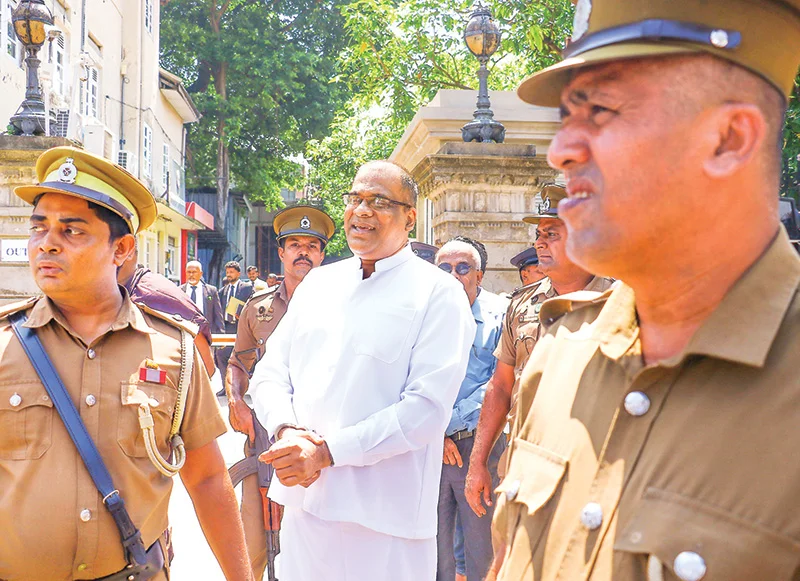
Bodu Bala Sena General Secretary Ven. Galagodaatte Gnanasara Thera, who has been ordered by the court to serve the remainder of his prison sentence, is to be assigned to the prison ‘printing work party’, prison officials said yesterday.
The monk was produced before the Colombo High Court yesterday by prison officials in connection with a warrant issued by the court.
He appeared before the court in civilian attire.
Prison sources said arrangements were being finalised for his detention and that he would subsequently be assigned to the printing work party.
The Thera initially objected when prison officials instructed him to change from his robes into the attire worn by convicted prisoners.
He later agreed to wear the prescribed prison clothes, sources said.
The Supreme Court, in September, annulled the presidential pardon granted to Gnanasara Thera in 2019. He had been serving a six-year prison sentence imposed following his conviction for contempt of court but had served only about nine months when then President Maithripala Sirisena granted him a presidential pardon in May 2019.
Following the Supreme Court ruling, the Thera was required to serve the remainder of his sentence. He was subsequently reported missing, prompting the Court of Appeal to issue an open warrant for his arrest.
The Court of Appeal on Monday ordered the authorities to enforce the remainder of his prison sentence.

U.S. Navy ship USS Tulsa arrives in Colombo for replenishment visit

Smriti Mandhana appointed India captain across formats

Ronaldo apologizes for Portugal walkout; says Jesus broke promise

Showers in the Western, Sabaragamuwa, Central, Uva, North-western and Southern provinces and in Anuradhapura and Mannar districts

Fuel crunch looms

Gnansara Thera to be assigned to prison printing section: Officials

‘Dates have the highest sugar content to fight Coronavirus’

Sunday Island 27 December – Headlines

#SundayIsland 17th December – Headlines

Sunday Island – 28th March

Sunday Island Headlines – 21 March

Sunday Island – 21st February – Headlines
-

 News6 days ago
US-assisted ‘Ice’ detection: NPC to examine IGP’s move to transfer drug-busting team
-

 Editorial5 days ago
Colombo Port drug bust: The plot thickens
-

 Editorial6 days ago
Drug busting, transfers and trust deficit
-

 Features3 days ago
The first woman in the foreign service or Ceylon Overseas Service it was then called
-

 Editorial4 days ago
Fuelling discontent and protest
-
 News6 days ago
Sri Lankan facing death penalty in Saudi Arabia: Mano G appeals to Crown Prince
-

 News2 days ago
Geneva takes up Sallay’s case and govt. ignores opportunity to answer accusations
-

 Latest News4 days ago
Tharindu Rathnayake, bowlers secure Asian Games Bronze for Sri Lanka