
News
First Linnean Medal Winner in SL wants to help his country


By Ifham Nizam
Sri Lankan engineer turned naturalist Dr. Rohan Pethiyagoda, who recently became the first Sri Lankan to be awarded the Linnean Medal for his outstanding contribution to science and the second Asian to be a recipient of the Medal, says he now wants to help address some of the problems caused by the present economic crisis.
Sri Lanka is looking at a decade or two of extreme stress and poverty he told The Island : “My main concern is the under-12 generation, who are at serious risk of being malnourished. Anything we can do to make sure every child gets sufficient food, especially protein, is worth doing. Malnutrition will result in stunting, lowered intelligence and poor education outcomes. This is the greatest challenge of this hour, and I want to engage with it. There are many others who are willing and able to address the biodiversity crisis.”
Pethiyagoda channelled proceeds from his book, Freshwater Fishes of Sri Lanka to a foundation he had created, the Wildlife Heritage Trust (WHT) dedicated to biodiversity research in Sri Lanka. Headquartered at Agrapatana, WHT became a national focal point for emerging scientists. “We built up a huge reference collection there”, explains Pethiyagoda, thanks to zealous fieldwork by Kelum Manamendra-Arachchi, Mohammed Bahir, Sudath Nanayakkara, Dinesh Gabadage and others. WHT went on to host large numbers of world-renowned scientists such as Robert F. Inger, Alain Dubois, Maurice Kottelat, Peter Ng, Fred Naggs, Franky Buossuyt, Chris Schneider and James Hanken. They in turn mentored young Sri Lankan students, most of whom went on to be outstandingly productive.
“Four of the students who worked closely with WHT in the early 2000s are now university professors”, says Pethiyagoda, “Madhava Meegaskumbura, Suyama Boyagoda, Anjana Silva and Kalana Maduwage. I think Anjana and Kalana were perhaps the youngest people to be appointed full professors in their respective universities”, says their former mentor with pride. “Kelum was perhaps the most productive. He was responsible for the discovery and description of dozens of new species of amphibians, while Bahir focused mainly on the crabs, going on to describe some 40 new species. Madhava became the first graduate in Sri Lanka to be first author of a paper in Science, which is among the world’s most pre-eminent scientific journals. In all, I think more than 150 new species have been described from WHT’s collections.”
As a result, the turn of the century saw immense activity in biodiversity research activity in Sri Lanka. WHT published increasingly more papers, among which Pethiyagoda was an author in more than 60. And WHT’s specimens came to be widely studied by other scientists across Sri Lanka. Not content with research, WHT went on to publish more than 30 natural-history books authored by others, including guides to the amphibians and snakes (also in Sinhala), along with biographies of such eminent naturalists as WWA Phillips and GM Henry. It also published a peer-reviewed scientific journal, “Journal of South Asian Natural History” and a popular magazine “Sri Lanka Nature”.
“The largest initiative I undertook was to establish a National Institute for Biodiversity Research,” says Pethiyagoda. “Both Chandrika Kumaratunga and Ranil Wickremesinghe, who were president and prime minister at the time, supported the project wholeheartedly. Donors pledged more than US$ 20 million to create the institute and, through an endowment, to fund it in perpetuity. It would be a government-owned research institution but funded privately, rather like SLINTEC. But it came before its time. All this was too much for some people, and a vicious campaign against the institute began. Sadly, several individuals associated with leading NGOs such as the Wildlife & Nature Protection Society, Ruk Rekaganno and EFL also took up cudgels against the institute. So vicious was the opposition that eventually, I gave up and the donors withdrew. Eventually, the millions of dollars went to India. Sri Lanka’s loss was India’s gain.
“By 2008 the atmosphere was so toxic that I decided to close down WHT as well. I donated WHT’s specimens to the National Museum, where it is now perhaps the biggest single component, certainly in terms of type specimens, of their collectionMuch of WHT’s library went to Peradeniya. And I myself decided to migrate to Australia and take up a fellowship at the Australian Museum.”
Pethiyagoda has continued his research work. “We have so much talent, and the dedication, passion and abilities of these youngsters is astonishing”, he says with pride. “They give me so much hope for the future.”
So, what makes the Linnean Medalist tick nowadays? “When I see a teenage birdwatcher carrying around a well-thumbed copy of Professor Sarath Kotagama’s ‘Siri Lanka Kurullo’, published by WHT in 1998,” he says, “my eyes well up. This was the first comprehensive birding guide published in Sinhala, and it transformed ornithology from a pursuit of the English-speaking urban elite to a pastime for the masses. If that was all I did in my life, it would have been enough.”
But it was not enough, and Pethiyagoda went on to found the Agra Arboretum. Here, in 1998, he set out to transform a 50-acre tea estate back into submontane forest. “Now, almost a quarter century later,” he explains, “we have learned valuable lessons on how this can be done at the landscape level. Even after I sold the property in 2008 to Raja Gnanam, he and his sons continue with the reforestation and conservation work and Sudath Nanayakkara, who has managed the property since the inception, continues to curate it. This project also benefited from recognition by the Rolex Awards for Enterprise in 2000. In some ways it complements Sam Poppham’s arboretum at Dambulla, though 1500 metres higher.”

The Cabinet of Ministers approved the resolution furnished by the Minister of Transport, Highways and Urban Development to accept 08 used low floorboard buses offered as a grant by the Government of Japan.
News
Payment of the financial subsidy for fertilizer to farmers cultivating paddy lands for the Yala season 2026.

While approval has been granted at the Cabinet meeting held on 18.08.2025 to pay the financial subsidy for fertilizer to farmers cultivating paddy lands for the Maha season 2025/26, the programme is planned to be continued for the Yala season 2026 as well.
Accordingly, the Cabinet of Ministers approved the resolution furnished by the Minister of Agriculture, Livestock, Lands and Irrigation to pay a financial subsidy of Rupees 25,000/- per hectare and for a maximum of 02 hectares per farmer for paddy cultivation and to pay Rupees 15,000/- per hectare for field crops cultivated in paddy lands[maximum of 02 hectares per farmer]
News
Ministerial Committee appointed to submit recommendations on proposed program to mitigate loss of crops to wild animals
The rural agricultural livelihood and food security have been severely impacted due to the damage caused by wild animals such as elephants, wild boars, monkeys, toque macaque, squirrels, and peacocks roaming around human habitats and cultivated lands.
Animal-human conflicts and property destruction have mostly been reported around these areas, and serious social and economic issues have also arisen.
Therefore, the Ministry of Agriculture, Livestock, Land, and Irrigation has prepared a comprehensive program based on the opinions of all stakeholders, including the public, university community, farmers’ organizations, environmentalists, non-governmental organizations which work for environmental issues, the Department of Agriculture, the Department of Agrarian Development, and other relevant organizations.
Taking into consideration the report submitted by the Minister of Agriculture, Livestock, Land, and Irrigation, the Cabinet of Ministers has decided to appoint a ministerial committee with the participation of other relevant ministers, chaired by the Minister of Agriculture, Livestock, Land, and Irrigation, to submit appropriate recommendations on how the aforementioned program should be implemented by further reviewing the proposals included in the said program and incorporating new proposals.

Cabinet nod to accept Japanese government grant of 08 used low floorboard buses

Payment of the financial subsidy for fertilizer to farmers cultivating paddy lands for the Yala season 2026.

Ministerial Committee appointed to submit recommendations on proposed program to mitigate loss of crops to wild animals

New Zealand elect to bowl first at Eden Gardens

Cabinet approves import of Maize to meet shortfall

Cabinet nod for the removal of Cess tax imposed on imported good

‘Dates have the highest sugar content to fight Coronavirus’

Sunday Island 27 December – Headlines

#SundayIsland 17th December – Headlines

Sunday Island – 28th March

Sunday Island Headlines – 21 March

Sunday Island – 21st February – Headlines
-
 Features3 days ago
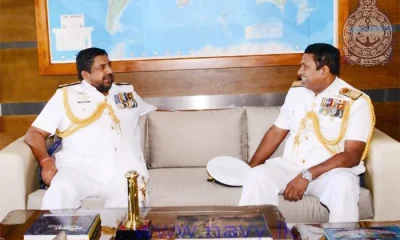
Brilliant Navy officer no more
-

 Opinion6 days ago
Jamming and re-setting the world: What is the role of Donald Trump?
-
 Features6 days ago
An innocent bystander or a passive onlooker?
-
 Features7 days ago
Ratmalana Airport: The Truth, The Whole Truth, And Nothing But The Truth
-

 Opinion3 days ago
Sri Lanka – world’s worst facilities for cricket fans
-
 Business7 days ago
IRCSL transforms Sri Lanka’s insurance industry with first-ever Centralized Insurance Data Repository
-

 Business6 days ago
An efficacious strategy to boost exports of Sri Lanka in medium term
-
 Features4 days ago
Overseas visits to drum up foreign assistance for Sri Lanka