
Midweek Review
Field Marshal won’t quit SJB

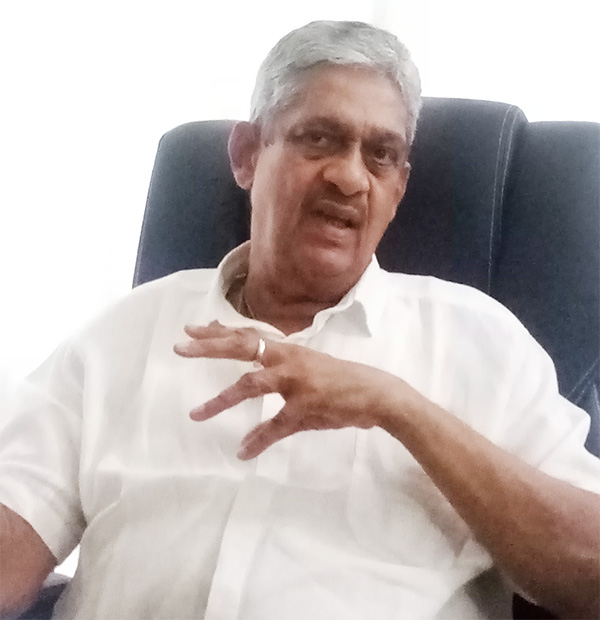
Field Marshal Fonseka’s meeting with President Wickremesinghe, in early Feb this year, in Parliament, during its reconvening, has fuelled speculation of a secret understanding between them. Denying such claims, Fonseka disclosed he met Wickremesinghe not as the President but the Minister in charge of the Finance portfolio regarding some of his funds held by the government. According to Fonseka, his Feb meeting, on the day the President delivered his latest policy speech, was the third. “There were two other previous meetings regarding the same matter,” Fonseka said, adding that the other officials who dealt with the issue at hand were the Governor, CBSL, Treasury Secretary and the Attorney General. Disclosing the Feb meeting lasted just 10 minutes, Fonseka appreciated the fact that the President didn’t discuss politics at all on all occasions. “Perhaps, regarding the same matter, I may have to meet the President again.” The funds held by the government are widely believed to be received by Fonseka in the run-up to 2010 presidential polls.
By Shamindra Ferdinando
Field Marshal Sarath Fonseka insists he’ll remain with the main Opposition Samagi Jana Balawegaya (SJB) regardless of the continuing dispute with an influential section of the party.
The bone of contention is SJB and Opposition Leader Sajith Premadasa’s decision to grant membership to General Daya Ratnayake who served as Commander of the Army (2013-2015) during Mahinda Rajapaksa’s turbulent second tenure as the President.
Tough talking war-winning Army Commander Gardihewa Sarath Chandralal Fonseka, in an exclusive interview with The Island last week, at his political office at Thalahena, Malabe, discussed the developing situation in the SJB, the unceremonious ouster of President Gotabaya Rajapaksa, forthcoming national elections, his contact with President Ranil Wickremesinghe, the challenge posed by a resurgent Janatha Vimukthi Peremuna (JVP), predicament of the ruling Sri Lanka Podujana Peramuna (SLPP) and the Gaza war where the US-backed Israel is engaged in a ruthless campaign, despite widespread allegations of committing genocide on hapless Palestinian civilians, by way of relentless bombardments and even by withholding food to them.
Declaring both Palestinians and Israelis have the right to live in their territories, Fonseka stressed that the Gaza war couldn’t be compared with the local brutal conflict that was successfully dealt through military means against the opinion of so many pundits both here and abroad, who openly declared that Lankan security forces were incapable of defeating the Tigers.
The Sinha Regiment veteran, as his family name Gardihewa denotes is from a fighting stock, didn’t mince his words when he questioned the rationale in appointing General Ratnayake, who had been with the Rajapaksas, as SJB advisor on public policy.
Acknowledging that there had been differences between him and the party on some matters of importance, the 73-year-old Gampaha District lawmaker alleged that the situation took a turn for the worse when the party leader brought in Ratnayake, who served the infantry with distinction.
A former military spokesman (2004-2006), Ratnayake served as the General Officer Commanding, 23 Division from Dec 2005 to August 2007 during the campaign in the East.
Fonseka stressed that the party couldn’t have accommodated Ratnayake under any circumstances as he was a beneficiary of successive Rajapaksa administrations.
Asked why he moved court against the party on the premise that the leadership wanted to sack him over his recent criticism of General Ratnayake’s move and what prompted him (Field Marshall) to do so if he felt the SJB didn’t want him, Fonseka said: “This situation was caused by my strong opposition to accommodating General Ratnayake in the SJB. I conveyed my disapproval to the party leader, General Secretary of the party, etc. They ignored my views on this matter. There were several reasons for me to oppose General Ratnayake. He served in different capacities, under the utterly corrupt Rajapaksa administrations, the FM claimed.
Ratnayake also played a significant role in two corrupt military courts which dealt with me. The government reciprocated by elevating him to the Army No. 02 slot over 166 other officers. That was wrong. Therefore, General Ratnayeke received benefits, unlawfully. Ratnayake was one of Gotabaya Rajapaksa’s Viyathmaga activists. He was a key Viyathmaga speaker. Then Ratnayake received appointment as Secretary to the then Industries Minister Wimal Weerawansa and then as Chairman of the Sri Lanka Ports Authority (SLPA).”
How could the party take in such a person even without asking me, the Field Marshal queried, pointing out that as the person who conducted the successful war against the LTTE, the Chairman of the SJB should have been consulted before taking retired military commanders. That was done in a clandestine way, the Field Marshal alleged.
The Field Marshal stressed that there was absolutely no basis for the party leader’s public declarations that he (Fonseka) acted against the powers bestowed on the party leader by the SJB’s Working Committee. Fonseka questioned the basis for the party leader’s declaration that those who opposed forming of an ex-military organization, within the party, should be dealt with firmly.
Field Marshal Fonseka denied the party leader’s accusations that he talked ill of the late President Ranasinghe Premadasa and former First Lady Hema. Field Marshal said that in the wake of a section of the print media reporting punitive disciplinary measures the party intended to take against him over previously mentioned unsubstantiated allegations, he was compelled to resort to legal action to protect his position in the party as well as his organizer’s post.
Fonseka declared: “I have never violated party discipline. My crime was talking against corrupt elements. I have never betrayed the party or its supporters. Those who took corrupt elements into the party were the ones who betrayed the party. Therefore, I will remain with the party. However, there were sorts of harassment.”
Field Marshal alleged that the party leader ordered the Mahara SJB organization not to give him an opportunity to address a recently organized rally. In spite of being present at the meeting on the invitation of the Mahara organizer, the Chairman of the party was prevented from addressing supporters, the Field Marshal alleged.
Quoting those who had been present there, Fonseka claimed that the party leader went to the extent of threatening the organizers that he wouldn’t attend the meeting if Fonseka turned up. Fonseka pointed out that the party leader acted in a way contrary to the court order obtained by him. Therefore, the party leader could be charged for contempt of court, Fonseka said, adding that he received a warm welcome from those present there though the party leader despised him for speaking the truth.
Future plans
Responding to a query on the Field Marshal’s short and long term plans against the backdrop of national elections scheduled for later this year (presidential) and next (parliamentary), the lawmaker said that his intention was for a clean administration thereby paving the way for Sri Lanka to stand alongside with the international community.
Fonseka said that having entered politics, 14 years ago, he was yet to see leaders and their followers working with a vision or a commitment to develop the country. Those who had served as the President since the successful conclusion of the war in May 2009 didn’t really work towards achieving the targets he, as the former Army Chief, expected them to do, Fonseka declared.
The Field Marshal admitted that he was in a dilemma as to what to do in the current circumstances as political parties, in the absence of tangible action plans to meet mounting challenges, simply struggled to cope with developing situations.
Asked whether he felt confident the presidential and parliamentary polls would be held as scheduled later this year and early next or whether there was a likelihood of President Wickremesinghe advancing the general election to this year, the Field Marshall said that regardless of the party they represented MPs liked presidential polls first though a few would take a different view.
Pointing out that President Wickremesinghe is most likely to contest the next presidential election with the backing of a significant section of the SLPP parliamentary group, regardless of the official position of the party, the writer asked Field Marshal whether he was confident of challenging the incumbent President.
Fonseka said that he hadn’t declared his intention so far to contest the forthcoming presidential poll. A section of the SLPP parliamentary group, including members of the Cabine, backed Wuckremesinghe’s candidature. In addition to that group, Wickremesinghe received the backing of some MPs, led by Nimal Lanza, Fonseka said, pointing out that in case the Rajapaksas fielded a candidate of their own their party would be divided. Fonseka explained: “…the President has yet to decide whether to contest the presidential poll. If the President is not sure of victory, he may not contest. The President hasn’t confirmed his intention to contest yet, though there are different views. We know in the past the UNP leader threw his weight behind common candidates on three occasions: me in 2010, Maithripala Sirisena in 2015 and Sajith Premadasa in 2019. Perhaps, Wickremesinghe did so because he wasn’t sure of the political terrain.”
Asked whether Fonseka would get an opportunity to contest the presidential poll for the second time, a smiling Field Marshal said that such an eventuality hadn’t been discussed at all. Fonseka said that he was still the number two of the SJB and that the Working Committee early last year declared party leader Sajith Premadasa as their candidate. That declaration had been made in a hurry at a time when the presidential election wasn’t even discussed, Fonseka said.
The SJB made the announcement on May 16, 2023. Fonseka said that in other countries political parties conducted surveys before making such announcements.
JVP’s unmistakable challenge
Commenting on the status of the JVP-led Jathika Jana Balawegaya campaign, Fonseka said that the Marxist party commanded the support of about 500,000 until recently. However, they appeared to have increased their support among the electorate and now could poll nearly two million votes. Of some 35% of floating vote and young voters, the JVP could secure a significant percentage, Fonseka asserted, declaring the Marxist party posed quite a challenge to major political parties now.
Fonseka asserted that the SLPP must have recorded a significant drop in support, whereas we (SJB) had a 2.7 mn voter base, and the NPP/JJB continued to expand, and all have to consider the developments taking place in post-Aragalaya politics.
Asked whether the JVP could win the next national election, Field Marshall explained: “That is an issue which needed careful examination. Whatever various interested parties say, there are three major political groups now. For the first time there is a genuine third force. The party that secured the largest block of seats at the next general election will have no option but to seek cooperation from other big players.”
Referring to the outcome at the recent Pakistan general election, Fonseka said that political parties here have to be mindful of that situation.
Fonseka declined to comment on the likelihood of JVP leader Anura Kumara Dissanayake winning the next presidential poll. The former Army Chief said that there would be fierce competition among candidates and the electorate would also examine the qualities of the candidates in addition to the performances of the parties they represented.
Responding to a query on the SJB accommodating ex-military officers as if it was engaged in a competition with the NPP/JJB that has attracted a significant number of ex-military officers from a wide array of ranks, Field Marshall emphasized that some definitely didn’t deserve party membership. The NPP/JJB has initiated a unique campaign to attract ex-military personnel and they seemed to be successful in their efforts, Fonseka said.
SF, GR meet and post-Aragalaya developments
The Field Marshal, during a nearly 70-minute interview, discussed his meeting at the height of a public protest campaign to force the then President Gotabaya Rajapaksa to step down. In the run-up to the July 09, 2022 explosion of public anger, primarily instigated by outside forces or otherwise, Fonseka said that he received a message from President Rajapaksa, who served with him in the Army during the war. The President’s call was not to discuss the post of premiership but to take stock of the situation in the wake of May 9/10, 2022, violence that caused serious destruction of property. The ministers and ordinary members of Parliament couldn’t come out on to the streets, therefore the President was very much anxious of the security situation, hence the discussion. “If the invitation was to discuss post-Aragalaya political arrangements, I wouldn’t have accepted the President’s invitation.”
After having dealt with the security situation/developments for about one hour at the President’s House, the President while referring to the invitations that had been extended previously, invited the Field Marshall to accept the premiership. The President wanted Fonseka’s help to overcome the crisis and consolidate the government. Fonseka declined to disclose who else attended that meeting though he said the President sent one person to pick him up.
Commenting on Indian and US interventions here and National Freedom Front (NFF) leader Wimal Weerawansa’s allegations pertaining to his alleged covert contacts with General Shavendra Silva (incumbent Chief of Defence Staff) during the unprecedented security crisis, Field Marshal Fonseka was of the opinion that Weerawansa talked irresponsibly.
Denying claims that he talked with General Silva on 13 occasions on the day crowds surrounded the Parliament, Fonseka disclosed they got in touch over the phone thrice. Fonseka alleged that Weerawansa was a habitual liar. By the time I contacted Gen. Silva, the crowds had overrun police barriers and were pressing the Army. Fonseka quoted Gen. Silva as having told him that the situation on the ground was not that good. About 30 minutes later Gen. Silva phoned Fonseka to report further deterioration of the situation and had been worried as his house, too, was within the area of continuing turmoil.
Fonseka said that he advised Gen. Silva to take measures to bring the situation under control but not order troops to open fire at surging crowds under the circumstances. Fonseka recalled how he advised the military, deployed near the President’s House on July 09, 2022, not to open fire.
For the third time Fonseka had called Gen, Silva later in the day but then the situation was out of control though the Army thwarted the attempt to march on Parliament. Fonseka explained that as the former Commander of the Army and an MP he was constantly in touch with the Army. Fonseka explained the facilities provided to him by the Army over the years.
Fonseka said that only a madman would say a former Army Commander talked to a serving General to conspire.
Fonseka mentioned that Sri Lanka was in such a desperate situation it couldn’t overcome the 2022 crisis without heavy international support. Appreciating the support extended by the international community, including India and the US, the Field Marshall emphasized he didn’t see any harm in receiving US and Indian support. Fonseka underscored the pivotal importance of substantial Indian financial and material support that helped the country to overcome the crisis and then make gradual progress.
“We should be grateful to them,” MP Fonseka said, urging the powers that be to secure whatever support the international community was ready to provide to the country.
Fonseka dismissed allegations of Western conspiracy pointing out that those who ruled the country should accept the responsibility for creating an environment for mass scale public rising due to the collapse of the economy.
Fonseka’s entry into politics
The ex-Army Chief said that it was the then Opposition Leader Wickremesinghe who personally invited him to be the common candidate at the 2010 presidential election. Without disclosing where the meeting took place within days after he relinquished command responsibilities in July 2009, Fonseka said the UNP leader was accompanied by the late Mangala Samaraweera.
Fonseka urged that his resignation and entry into politics be examined against the backdrop of the Rajapaksas’ decision to appoint an officer investigated by him, as his successor as well as post-war corruption and ‘deals.’
The meeting with Wickremesinghe was followed by a powwow with the JVP leadership. Fonseka declared that there was no likelihood of the formation of an alliance like the one that supported him at the 2010 presidential poll.
Pointing out that the 2010 alliance consisted of the UNP, JVP, TNA, SLMC and CWC, Fonseka stressed that unlike previous national polls now there were three political forces. The challenge posed by the JVP couldn’t be underestimated, Fonseka said.
Commenting on the possibility of the SLPP fielding a candidate of its own, Fonseka said that at a recent meeting in Matale the party announced Namal Rajapaksa as their candidate. An influential section of the SLPP remained with President Wickremesinghe though some obviously dreamt of Namal Rajapaksa’s candidature. Fonseka expressed serious doubts over such a political experiment.
Asked whether he would like to compare his strategy with that of Patali Champika, Fonseka stressed that though being elected on the SJB ticket the latter operated separately. Fonseka said that he hadn’t even considered leaving the party, while PCR already established his own party though it didn’t have recognition from the Election Commission. “I want to continue with the SJB. In case, the developments lead to the formation of an alliance and the need for a common candidate arises, I wouldn’t refuse that opportunity to be that candidate.”






Jayasekera
Sri Lanka recently sought Saudi assistance to introduce advance radar technology, capable of detecting approaching targets and drone capability to meet aerial threats. On behalf of the NPP government, that request was made by Deputy Defence Minister Maj. Gen. (retd) Aruna Jayasekera when he met Mohammed bin Abdulrahman Al-Ghribi, Commander of the Royal Saudi Naval Forces, on the sidelines of the World Defence Show 2026 in Saudi Arabia, in February, this year. They also discussed the possibility of Saudi ships visiting Colombo.

Jayasekera also sought training opportunities for SLAF in Saudi Arabia when he met Lt. Gen. Mazyad bin Sulaiman Al-Amro, Commander of the Royal Saudi Air Defence Forces. Jayasekera discussed with Vice Admiral Fahad Al Ghofaily, Deputy Chief of General Staff, the possibility of securing Saudi assistance to surveillance and deep sea operational capabilities of the Navy.
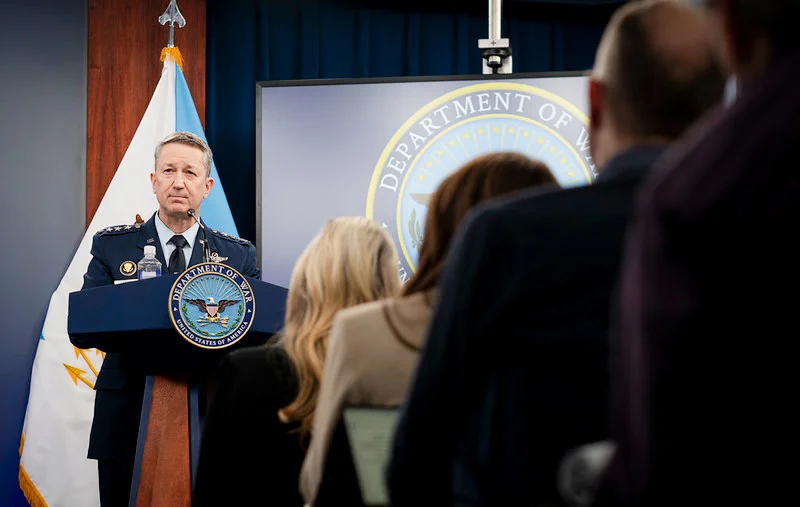
Saudi Arabia has been repeatedly hit by Iran during its counter offensive. In fact, Iran stepped up attacks in the wake of the US bombing of Kharg Island, a major Iranian oil facility. It would be pertinent to mention that Admiral Steve “Web” Koehler, Commander of the US Pacific Fleet, visited New Delhi and Colombo, less than 10 days before the outbreak of war, and here he met both Minister Jayasekera and Defence Secretary Air Vice Marshal (retd) Sampath Thuyakontha. It was Koehler’s second visit after the change of government in Sept. 2024. Don’t forget that it was Koehler’s command that alerted Sri Lanka, on the morning of 4 March, on the sinking of the unarmed Iranian frigate Dena.
The meticulously planned assassination of Iranian Supreme Leader Ayatollah Ali Khamenei on 28 February was meant to bring about a swift regime change and a victorious end to the war. The joint Israeli-US war machine assumed that such a high profile decapitation strike would pave the way for swift public uprising and capitulation of the Iranian government.
The aggressors, quite wrongly, assumed that those who launched the costly protest campaign in Iran, in late December last year, against the unbearable cost of living, would be able to exploit Khamenei’s assassination.
Unpredictable US President Donald Trump was so confident, on the first day of the offensive, that he urged the Iranian military to lay down their arms and its people to take over their government. International media quoted the Republican Chief as having said: “It will be yours to take”.
Trump disregarded his top military adviser, Chairman of the Joint Chiefs of Staff, Air Force General Dan Caine’s warning against attacking Iran. US media reported that Caine, who succeeded Air Force General C.Q. Brown, sacked by Trump in February 2021, warned that war could be risky, potentially drawing the US into a prolonged conflict.
Over two weeks into the war, the Israeli-US assumption seems utterly wrong with those, who genuinely believed in the sure collapse of the Iranian administration following the decapitating strike, are struggling to cope up with the spirited Iranian counter attacks. While enduring a much larger devastating bombing campaign, compared to the 12-day war in June last year, Iran overwhelmed Israel and Gulf countries where powerful US forces were stationed. Their costly missile defences seemed ineffective against Iranian missile and drone salvos that caused unprecedented chaos in the region.
But, what really astonished the Gulf states was Iran’s blockade of the Strait of Hormuz – the only maritime passage between the Gulf and the Gulf of Oman and the route for about a quarter of the global liquefied natural gas and seaborne trade from Gulf countries. This stunned the aggressors and those who blindly backed their despicable strategy.
Iran has categorically denied missile and drone attacks on Cyprus, Azerbaijan and Turkey. If Iran didn’t target them, who did? Whoever staged those attacks, their intention is clear. They want to involve NATO (North Atlantic Treaty Organisation) in the Israeli-US misadventure by hitting NATO members Cyprus and Turkey. Why would Iran attack Turkey against the backdrop of Ankara’s condemnation of Khamenei’s assassination, and also denied the use of its airspace, territory, and territorial waters to the US armed forces for the ongoing war?
The US announcement on March 12 that curbs on Russian oil would be lifted till April 11 underscored the gravity of the situation. Having failed to achieve a swift ‘regime change,’ their much touted primary objective in Operation ‘Epic Fury,’ the US has no option but to swallow its pride and seek Vladimir Putin’s intervention. The US ended with egg on face. It would be pertinent to mention the US sanctioned Russian oil immediately after the launch of Moscow’s Special Operation against Ukraine in February 2022. That ban had been based on the assumption that oil revenue enabled Russia to prolong the war in Ukraine.
Does the 11 April deadline mean that the Israel-US combine seriously believed that Iran could be defeated by that time? Intense media coverage of the conflict indicated that Israel and US objectives in Iran weren’t the same. Regardless of repeatedly vowing to achieve regime change in Iran, the aggressors ended up examining ways and means of exiting the conflict triggered by them. The way Iran has been responding to Israeli-US attacks, the West cannot fully restore Hormuz by the second week of April. Prolong war may force US to extend waiver on sanctioned Russian oil, thereby further strengtheing Putin.
The US-Israeli strategy has suffered in the absence of an anticipated large scale public uprising, in Iran, immediately after the decapitation strike. When that failed to materialise, as expected, the overall picture of the largest ever combined Israeli-US offensive changed.
Unilateral US decision to lift the ban on Russian oil, even temporarily, divided the western grouping backing Ukraine. In spite of the US being a critical member of that grouping, the Iranian action left Trump with no alternative but to ease pressure on global oil markets at Ukraine’s expense. The Europeans realise that the failure to effect regime change may compel Trump to extend waiver on oil sanctions on Russia.
What really went wrong? President Trump has been so confident of Iranian surrender he mocked British preparations for the deployment of aircraft carriers to the Middle East.
“The United Kingdom, our once Great Ally, maybe the Greatest of them all, is finally giving serious thought to sending two aircraft carriers to the Middle East,” President Trump declared on March 8. The humiliating Truth Social post appeared to be influenced by rash thinking.
“That’s OK, Prime Minister Starmer, we don’t need them any longer — But we will remember. We don’t need people that join Wars after we’ve already won!” President Trump ridiculed the British. Reference to the UK as a ‘once great ally,’ underscored the US-UK rift.
But several days later, Trump sought deployment of other navies, including that of the UK to break the Iranian blockade on Hormuz Strait.
Modi phones Pezeshkian
Had the Israeli-US project achieved its primary objective, namely regime change, Indian Prime Minister Narendra Modi wouldn’t have had to eat humble pie after declaring solidarity with Israel, just a few days before the unprovoked war. Prime Minister Modi, on March 12, nearly two weeks after the killing of Supreme Leader Khamenei, phoned Iranian President Masoud Pezeshkian.
Modi had no option but to get in touch with the post Khamenei Iranian leadership amidst growing turmoil in the country over disruption of vital gas and fuel supplies. India made its move as the US declared that New Delhi could turn to Russia for the time being. India desperately needed oil and required them as quickly as possible.
Having elevated India-Israel partnership to the highest level in the wake of Modi’s late February 2026 visit to Tel Aviv, on the eve of the unprovoked attack to decapitate the Iranian leadership, India found itself in an unenviable situation. The two-day visit led to what the two governments called “Special Strategic Partnership for Peace, Innovation and Prosperity.” In other words, the Israelis must have been working overtime on war preparations while Modi and Indian External Affairs Minister Dr. Jaishankar were visiting the Jewish State.
Modi’s call and a couple of calls from Dr. Jaishankar to his Iranian counterpart Abbas Araghchi facilitated the passage of fuel carriers. The US must have been deeply upset by the Indian move but that ensured the BJP, in power since 2014, brought the situation under control for the time being. The truth is India had been compelled to negotiate with Iran and the latter wouldn’t have given assurance regarding safe passage for vessels carrying fuel for India without being adequately compensated.
After rushing to Israel to show their servile loyalty on the eve of launching the unprovoked attack on Iranians, the Indian-Iran deal, in the aftermath of that folly, for safe passage for New Delhi’s vessels, proved that there were limits to the world’s solitary superpower. In the run-up to Modi’s call to President Pezeshkian, the Indian leader came under heavy Congress fire over India’s failure to promptly condemn the assassination of the Iranian Supreme Leader. Initially, the Indian government acted as if Congress criticism were irrelevant but it had to appeal to Iran in the wake of the closure of the Strait of Hormuz.
Iran appeared to have exploited India’s difficulties. Having overlooked India-Israel/US partnership and the sinking of the unarmed Iranian frigate ‘Dena’ on 4 March, Iran’s Ambassador to India, Mohammad Fathali, on 13 March declared their readiness to grant safe passage through the Strait of Hormuz for vessels on their way to India.
Responding to a question from an RT India correspondent, the envoy highlighted that Tehran considered New Delhi as a friend and that there were converging interests between the two countries.
Asked directly whether India would receive safe passage through the Strait, he replied: “Yes, because India is our friend. You will see it within two or three hours.” (RT India is a New Delhi-based, English-language television news channel officially launched in December 2025 by Russian President Vladimir Putin).
At the time Israel-US unleashed war on Iran, India wouldn’t have anticipated such a scenario-direct negotiation with Iran to secure energy supplies and the US having to waive the ban on Russian oil sales. How would India-Iran deal on safe passage for energy carriers impact on India-Israel/US relations?
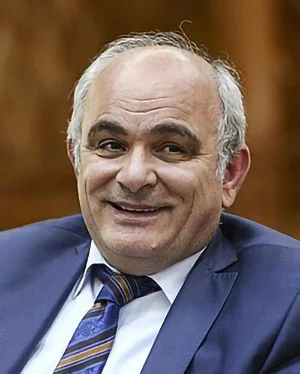
Sri Lanka, rattled by the developing situation, swiftly followed suit to explore the possibility of securing Russian oil. Russian Ambassador in Colombo Levan Dzhagaryan, on the invitation of the government, met Foreign Minister Vijitha Herath, at the Foreign Ministry, and assured the Minister Moscow would be informed. However, whether that meeting would produce results, as desired by Sri Lanka, is not yet known. But, Sri Lanka, trapped in the US Indo-Pacific strategy, seems utterly helpless as President Trump’s unprovoked gangster-type actions roiled the world. Ambassador Dzhagaryan, who had served as Russia’s top envoy in Iran, from 2011 to 2022, during a recent interview with the writer explained how the West sought to defeat Russia in Ukraine and the events leading to the Special Military operation in February 2022.
Gulf States in turmoil
Dzhagaryan
The stepped-up US naval build-up against Iran made it clear that a combined Israel-US offensive was inevitable. Against that background, the significance of an invitation received by the Colombo-based media to meet UAE Ambassador in Colombo, Khaled Nasser Al Ameri, in late February, this year, was realised only after the eruption of the war.
Ambassador Al Ameri, who had been here since February 2022, never called such a meeting before during 25 February dinner meeting at Cinnamon Life at City of Dreams discussed issues amidst rising tensions. The writer was among the invited along with Kesara Abeywardena, Editor, Daily News, and Nisthar Cassim, Editor, Daily FT. Perhaps the Ambassador felt the need to comprehend the pulse of the Colombo media due to the presence of a significant Sri Lankan community employed in his country.
The Gulf countries that accommodated US forces arrayed against Iran never expected Tehran to go the whole hog. Both the US and Gulf countries obviously miscalculated Iranian determination in the face of unprovoked aggression. They had to pay a very heavy price but none more so than the UAE. The Iranians shattered the myth of their invincibility due to the deployment of costly US armaments.
Paula Hancocks reported for CNN on 10 March that more than 1,700 missiles and drones had been fired towards the UAE since the war began. Quoting the UAE Defence Ministry, Hancocks said that more than 90% of them had been downed by interceptors, fighter jets and helicopters.
President Trump admitted in an interview with CNN’s Jake Tapper recently that Iran’s willingness to strike its Arab neighbours had been his biggest surprise of the war. But, faced with relentless Israeli-US offensive, Iran couldn’t have endured the pain without inflicting losses on all those arrayed against the country. The Iranian reaction must be examined taking into consideration the killing of the country’s Supreme Leader, some of his family as well as top military leaders.
The US-led coalition will eventually overwhelm Iran but the rapidity with which that country hit back even after losing the top leadership may embolden those opposed to US strategies. That is the undeniable truth. The latest Israeli and US claims of targets taken out in Iran cannot be discussed without taking into account their claims last June. During the 12-day war against Iran, Israel and US launched massive attacks but the retaliatory campaign launched by Iran after 28 February onslaught proved that debilitating losses couldn’t be inflicted by air campaigns alone.
UAE and others had learnt a bitter lesson by being part of Israeli-US strategy meant to overwhelm Iran. They had proved that Iran couldn’t be subdued the way the US succeeded in Venezuela in January this year. Venezuela appeared to have reached a consensus with the US following the abduction of its President Nicolas Maduro. The speed the new Venezuela leadership switched its allegiance to the US is not surprising though disappointing.
“I thank President Donald Trump for the kind willingness of his government to work together,” Rodríguez posted on X on 5 March, in perhaps her most shameless act of kneeling since Maduro’s abduction. But, in Iran, the attempted regime change operation in spite of it being overwhelming with superior firepower had been thwarted by that country. Their retaliation has exposed the weakness in the overall US-led defence of what can be termed Gulf Arab countries.
The recent relocation of a significant part of the US anti-missile system deployed in South Korea, particularly to meet the nuclear armed North Korean threat underscored the inadequacy of overall defence of the region at the time Israel-US attacked Iran. Foreign media reported South Korea protesting against the US move though it couldn’t interfere in the US action.
Status of Iranian proxies
The Lebanese armed group Hezbollah reached a ceasefire agreement with Israel in November 2024, following year-long clashes. In spite of the ceasefire, according to international media, Israel continued military presence in that country and there were numerous ceasefire violations. However, Hezbollah largely abided by the ceasefire until the assassination of the Iranian Supreme Leader.
Hezbollah resumed large scale attacks on Israel following the 28 February attacks. Combined Iran-Hezbollah attacks on Israel caused significant trouble. Israel launched retaliatory strikes and expanded ground operations in Lebanon where over a million people were displaced amidst massive destruction of infrastructure.
The French offer to arrange direct talks between Israel and Lebanon to find a lasting solution to the developing crisis seems irrelevant as long as Israel-US action continues against Iran. The issue at hand is the Israel’s desire to obliterate Iran with US support. US media, particularly CNN, reported how the American public resented the expanding US role in the conflict, with Trump issuing contradictory statements regarding US objectives.
Hamas, whose October 2023 raid on Israel resulted in the ongoing conflict, appeared to have surprised Iran with its recent plea to Tehran not to attack Gulf Arab countries in retaliation for Israeli-US aggression. Iran simply ignored Hamas appeal.
Iran should be held responsible for pursuing destructive strategy in the region by sponsoring Hamas in Gaza, Hezbollah in Lebanon and Houthis in Yemen. The Israeli military action that followed the unprecedented October 2023 Hamas raid that caused well over 1,000 Israeli deaths weakened all Iran backed groups. Iran, in a way, used these groups as a buffer against the Jewish State. Lebanon, too, is a victim of Iranian strategy that empowered Hezbollah to take on Israel. US backed Israeli actions cannot be discussed under any circumstances turning a blind eye to Iranian funding of Hamas, Hezbollah and Houthis fought back in whatever way possible. People have forgotten President Ranil Wickremesinghe’s ridiculous declaration in late December 2023 that he would deploy an Offshore Patrol Vessel (OPV) in the Red Sea in support of US-led efforts to counter Houthi attacks on the vital shipping lane.
In spite of reports and claims of the Sri Lanka Navy sending an OPV there, actual deployment never took place. Sri Lankan vessels are not equipped to face possible missile and drone threats and in case of deployment would have been vulnerable to Houthi such attacks.
By Shamindra Ferdinando
Midweek Review
Digital Transformation in the Global South: Understanding Sri Lanka through India AI Impact Summit 2026
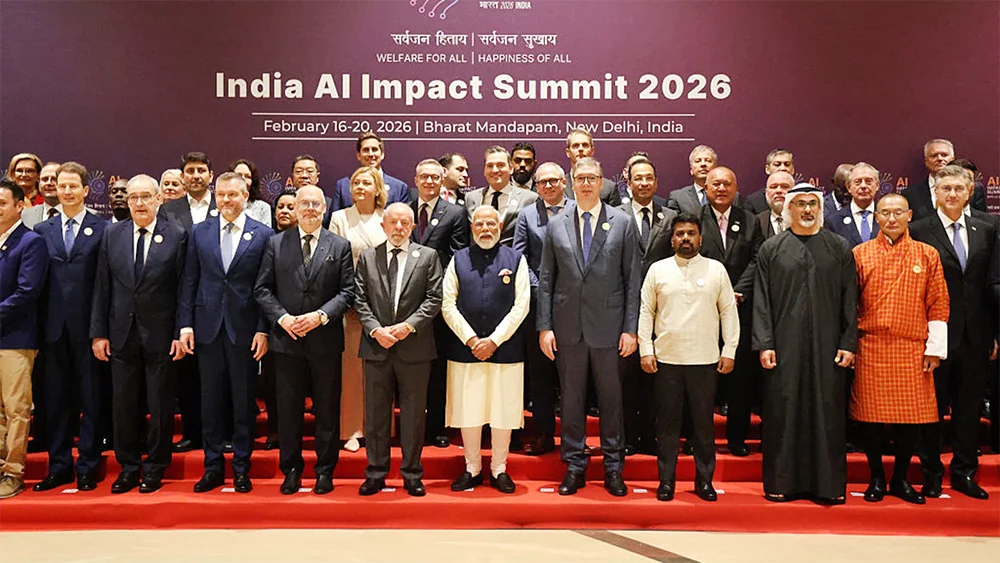
Artificial Intelligence has rapidly moved from being a specialised technological field into a major social force that shapes economies, cultures, governance, and everyday human life. The India AI Impact Summit 2026, held in New Delhi, symbolised a significant moment for the Global South, especially South Asia, because it demonstrated that artificial intelligence is no longer limited to advanced Western economies however can also become a development tool for emerging societies. The summit gathered governments, researchers, technology companies, and international organizations to discuss how AI can support social welfare, public services, and economic growth. Its central message was that artificial intelligence should be human centered and socially useful. Instead of focusing only on powerful computing systems, the summit emphasised affordable technologies, open collaboration, and ethical responsibility so that ordinary citizens can benefit from digital transformation. For South Asia, where large populations live in rural areas and resources are unevenly distributed, this idea is particularly important.
One of the most important concepts promoted at the summit was the idea of “people friendly AI.” This means that artificial intelligence should be accessible, understandable, and helpful in daily activities. In South Asia, language diversity and economic inequality often prevent people from using advanced technology. Therefore, systems designed for local languages and smartphones play a crucial role. When a farmer can speak to a digital assistant in Sinhala, Tamil, or Hindi and receive advice about weather patterns or crop diseases, technology becomes practical rather than distant. Similarly, voice based interfaces allow elderly people and individuals with limited literacy to use digital services. Affordable mobile based AI tools reduce the digital divide between urban and rural populations. As a result, artificial intelligence stops being an elite instrument and becomes a social assistant that supports ordinary life.
Transformation
The influence of this transformation is visible in education. AI based learning platforms can analyse student performance and provide personalized lessons. Instead of all students following the same pace, weaker learners receive additional practice while advanced learners explore deeper material. Teachers are able to focus on mentoring and explanation rather than repetitive instruction. In many South Asian societies, including Sri Lanka, education has long depended on memorisation and private tuition classes. AI tutoring systems could reduce educational inequality by giving rural students access to learning resources similar to those available in cities. A student who struggles with mathematics, for example, can practice step by step exercises automatically generated according to individual mistakes. This reduces pressure, improves confidence, and gradually changes the educational culture from rote learning toward understanding and problem solving.
Healthcare is another area where AI is becoming people friendly. Many rural communities face shortages of doctors and medical facilities. AI-assisted diagnostic tools can analyse symptoms or medical images and provide early warnings about diseases. Patients can receive preliminary advice through mobile applications, which helps them decide whether hospital visits are necessary. This reduces overcrowding in hospitals and saves travel costs. Public health authorities can also analyse large datasets to monitor disease outbreaks and allocate resources efficiently. In this way, artificial intelligence supports not only individual patients but also the entire health system.
Agriculture, which remains a primary livelihood for millions in South Asia, is also undergoing transformation. Farmers traditionally rely on seasonal experience, but climate change has made weather patterns unpredictable. AI systems that analyze rainfall data, soil conditions, and satellite images can predict crop performance and recommend irrigation schedules. Early detection of plant diseases prevents large-scale crop losses. For a small farmer, accurate information can mean the difference between profit and debt. Thus, AI directly influences economic stability at the household level.
Employment and communication
Artificial intelligence is also reshaping employment and communication. Routine clerical and repetitive tasks are increasingly automated, while demand grows for digital skills such as data management, programming, and online services. Many young people in South Asia are beginning to participate in remote work, freelancing, and digital entrepreneurship. AI translation tools allow communication across languages, enabling businesses to reach international customers. Knowledge becomes more accessible because information can be summarised, translated, and explained instantly. This leads to a broader sociological shift: authority moves from tradition and hierarchy toward information and analytical reasoning. Individuals rely more on data when making decisions about education, finance, and career planning.
Shared conditions
The impact on Sri Lanka is especially significant because the country shares many social and economic conditions with India and often adopts regional technological innovations. Sri Lanka has already begun integrating artificial intelligence into education, agriculture, and public administration. In schools and universities, AI learning tools may reduce the heavy dependence on private tuition and help students in rural districts receive equal academic support. In agriculture, predictive analytics can help farmers manage climate variability, improving productivity and food security. In public administration, digital systems can speed up document processing, licensing, and public service delivery. Smart transportation systems may reduce congestion in urban areas, saving time and fuel.
Economic opportunities are also expanding. Sri Lanka’s service based economy and IT outsourcing sector can benefit from increased global demand for digital skills. AI-assisted software development, data annotation, and online service platforms can create new employment pathways, especially for educated youth. Small and medium entrepreneurs can use AI tools to design products, manage finances, and market services internationally at low cost. In tourism, personalized digital assistants and recommendation systems can improve visitor experiences and help small businesses connect with travelers directly.
However, the integration of artificial intelligence also raises serious concerns. Digital inequality may widen if only educated urban populations gain access to technological skills. Some routine jobs may disappear, requiring workers to retrain. There are also risks of misinformation, surveillance, and misuse of personal data. Ethical regulation and transparency are therefore essential. Governments must develop policies that protect privacy, ensure accountability, and encourage responsible innovation. Public awareness and digital literacy programs are necessary so that citizens understand both the benefits and limitations of AI systems.
Beyond economics and services
Beyond economics and services, AI is gradually influencing social relationships and cultural patterns. South Asian societies have traditionally relied on hierarchy and personal authority, but data-driven decision making changes this structure. Agricultural planning may depend on predictive models rather than ancestral practice, and educational evaluation may rely on learning analytics instead of examination rankings alone. This does not eliminate human judgment, but it alters its basis. Societies increasingly value analytical thinking, creativity, and adaptability. Educational systems must therefore move beyond memorization toward critical thinking and interdisciplinary learning.
In Sri Lanka, these changes may contribute to national development if implemented carefully. AI-supported financial monitoring can improve transparency and reduce corruption. Smart infrastructure systems can help manage transportation and urban planning. Communication technologies can support interaction among Sinhala, Tamil, and English speakers, promoting social inclusion in a multilingual society. Assistive technologies can improve accessibility for persons with disabilities, enabling broader participation in education and employment. These developments show that artificial intelligence is not merely a technological innovation but a social instrument capable of strengthening equality when guided by ethical policy.
Ultimately, the India AI Impact Summit 2026 represents a symbolic shift in the global technological landscape. It indicates that developing nations are beginning to shape the future of artificial intelligence according to their own social needs rather than passively importing technology. For South Asia and Sri Lanka, the challenge is not whether AI will arrive but how it will be used. If education systems prepare citizens, if governments establish responsible regulations, and if access remains inclusive, AI can become a partner in development rather than a source of inequality. The future will likely involve close collaboration between humans and intelligent systems, where machines assist decision making while human values guide outcomes. In this sense, artificial intelligence does not replace human society however transforms it, offering Sri Lanka an opportunity to build a more knowledge based, efficient, and equitable social order in the decades ahead.
by Milinda Mayadunna

Enhancing Sensibility
In our contemporary culture, we have lost our age-old tradition of intergenerational transmission of stories through spoken word, and our children have lost their romance with the printed word. These were the observations made by several learned contributors to this journal in recent times. In this context, I was interested in reading the informative article titled, ‘The Art and Science of Communicating with Your Little Child’ [The Island, March 5, 2026] by senior Paediatrician Dr. B. J. C. Perera, in which he underscores the significance of meaningful communication of children, mostly with their parents, in designing the ‘architecture of their minds’, a task which cannot be served by apps, vocabulary flashcards, or educational television. Dr. Perera, has drawn a consilience between science and sensibility.
While acknowledging the developmental benefits of appropriate social interactions, stories listened to and read by children in their formative years, I wish to address the allied topic of conversational reading [also known as dialogic or interactive reading] which provides a wider area of growth and sensibility. Not pretending it to be a novel idea, I write with the hope of raising the awareness of parents, grandparents and teachers alike, of the wider scope of the topic, in view of recent research of its developmental benefits for children,
Nowadays, children spend countless hours immersed in electronic media [e. g. smart phones, social media, gaming etc.] without guidance from parents who are occupied with busy work schedules. Children have less time for reading outside the school curriculum and to have a meaningful dialogue. While not denying the immense benefits of technological advances, social media mainly provide sensation and impression, offering less depth and complexity of thought. They also provide an escape from a ruthlessly competitive education system with tuition outside school hours and burdensome homework. It is now becoming increasingly evident that overindulgence in social media use has the potential to cause pervasive detrimental effects on children relating to their emotional stability, impulse control, sleep pattern and interpersonal skill.
Before embarking on the subject of Conversational Reading and its developmental benefits, I wish to briefly address the topics of intergenerational storytelling and reading.
Intergenerational Story-telling
The tradition of intergenerational storytelling is a universal exercise, perhaps dating back to the development of language itself. Typically, stories are told for transferring information or education or for entertainment. Early humans such as the Aboriginal People of Australia, who lived before the development of the written word, story-telling by tribal elders [‘knowledge keepers’] was the primary mode of transmission of knowledge, values and life lessons. It was a powerful tool for education, intertwined with art, songs and dances, fostering beliefs about creation, ancestral spirits, and connection to the land. The stories helped to pass down generations, a sense of cultural identity and the need to live in harmony with each other and with the environment.
Story-telling through Printed Word
Following the development of the written word by Sumerians in Mesopotamia around 3500 – 3200 BCE and printing on paper by the Chinese in 868 CE, stories were delivered to some extent through the printed word. The first printed children’s story on paper, ‘Orbis Sensualium Pictus’ [The World of Things Obvious to the Senses drawn in Pictures’] published in 1658 by John Amos Comenius, the Czech educator, was an educational book with illustrations that inspired joyful learning in children. Since then illustrated story books were marketed for pleasure reading. Combining pictures with words became a delightful way to tell a story, as in the fairy tales by Hans Christian Andersen, Alice’s Adventures in Wonderland by Lewis Carroll and The Tale of Peter Rabbit by Beatrix Potter. Stories were presented in both prose and verse.
We Sri Lankans are endowed with a wealth of children’s literature pioneered by such literary figures as Kumaratunga Munidasa, Ananda Rajakaruna, Tibetan [Sikkimese] monk Rev. S. Mahinda, V. D. De Lanarolle, Piyadasa Sirisena, G.H. Perera and others. They transformed folk tales into prose and poetry for supplementary reading. Edwin Ranawaka translated children’s stories from English to Sinhala with modifications to suit the local readership. They were men of vision who inspired the young with their literary work aimed at enhancing their creativity, sensitivity and tranquillity to prepare them for the challenges of the future. Our literary icon, Martin Wickremasinghe, was ahead of his time in recognising the importance of children’s literature and its positive impact on their psychosocial and intellectual development. In his book ‘Apey Lama Sahithyaya’ [Our Children’s Literature] in the immediate post-independent era he made the astute observation that a nation without children’s literature rooted in its heritage may face intellectual and moral decline. Wickremasinge regretted that despite the above contributions, we have been slow in developing a children’s literature of our own, although such a literary genre has long been established in the west.
I apologise for not being able to add to the above any Tamil authors of children’s stories due to my lack of knowledge.
Regular exposure to reading books has a long list of benefits for children: reading expands exposure to language and new vocabulary, builds foundational skills such as prediction, sequencing, and summarising, and introduces characters and worlds far beyond a child’s family or neighbourhood. Reading is a powerful technique in broadening social, emotional and cognitive development of children.
Conversational Reading
Recent research in childhood education and psychology has shown that conversational reading with children in their early formative years [in the main the pre-primary and primary school years] can both broaden and deepen the already known developmental benefits of the reading experience.
Conversational reading is the art of reading to and reading with children of an age appropriate piece of prose or verse by an adult, in a two way interactive process, exploring their thoughts and feelings about what is read and helping them to articulate their views within their capacity. It is fundamentally different from simply reading the words in a book to a child. It promotes the use of open-ended questions to create conversations while reading. In this dynamic, the child and the adult [parent, grand-parent, or teacher] contribute to the conversation in equal parts. Conversational reading in the school setting with a group of children offers greater benefits as it encourages discussion amongst them.
Research findings on conversational reading shows a wide range of developmental benefits – cognitive, emotional, and social.
Significant improvements in language development, especially in the areas of expressive vocabulary, word acquisition and sentence structure through modelling and meaningful conversations.
Such meaningful conversations enhance reading comprehension by reflection on characters and events and encourage critical thinking by looking beyond the narrative. Their active participation increases their imagination and creativity and their motivation to read.
Children being active participants, rather than passive listeners, improve their communication skills and encourage respectful discourse and help raise their self-esteem.
It enhances social and emotional understanding through exploration of feelings and relationships, being insightful of others’ perspectives and the development of empathy.
It enables strengthening of emotional bonds with adults through meaningful dialogue.
It is a joyful exercise that facilitates learning.
Reading with children and talking with them about what matters is more important than ever before. Reading fluency, comprehension, and ability to relate the ideas in a story to yourself and the wider world are the building blocks of imagination, empathy, critical thinking, and creativity—all crucial qualities which give children the ability to better understand themselves and others and to find their place in the world.
by Dr Siri Galhenage,
MBBS, DPM, MRCPsych, FRANZCP
Psychiatrist [Retd]

Devine’s all-round masterclass hands New Zealand 2-1 series lead

Senegal and Morocco tied by religion and trade but divided by AFCON fallout

Showers expected in the Central, Sabaragamuwa and Uva provinces and in Galle, Matara, Mannar, Anuradhapura and Vavuniya districts after 2.00 pm.

CIABOC tells court Kapila gave Rs 60 mn to MR and Rs. 20 mn to Priyankara

Opposition moves no-faith motion against Energy Minister Kumara Jayakody

NJC takes up cudgels on behalf of Sallay, who played pivotal role in combating terrorism

‘Dates have the highest sugar content to fight Coronavirus’

Sunday Island 27 December – Headlines

#SundayIsland 17th December – Headlines

Sunday Island – 28th March

Sunday Island Headlines – 21 March

Sunday Island – 21st February – Headlines
-

 Business4 days ago
Browns EV launches fast-charging BAW E7 Pro at Rs. 5.8 million
-

 Life style5 days ago
From culture to empowerment: Indonesia’s vision for Sri Lanka
-

 News2 days ago
CIABOC questions Ex-President GR on house for CJ’s maid
-
 Business6 days ago
Sri Lanka Institute of Information Technology raises the bar for academic excellence
-

 Life style5 days ago
Ranjith Fernando celebrates cricketing journey with Hob Nails to Spikes
-

 Latest News5 days ago
QR code system will be implemented for fuel with effect from 06.00 a.m. today (15th)
-

 News3 days ago
Sri Lankan marine scientist Asha de Vos honoured at UNGA opening
-

 News3 days ago
Australian HC debunks misleading travel risk claims for Sri Lanka