
Features
Fear of one’s neighbour

By Kusum Wijetilleke
(kusumw@gmail.com) Twitter: @kusumw
Ahnaf Jazeem and Hejaaz Hizbullah find themselves thrust as symbols of Sri Lanka’s latest contentions with that most delicate of equations; between the rights of the citizenry as individuals and the safety and security of the country and community as a whole. Jazeem was arrested in May 2020 due to his book of poetry, called ‘Navarasm’, which was judged to have the potential to radicalize.
Mr. Hizbullah was arrested in April 2020 for aiding and abetting the Easter Bombers. No evidence has been presented in this regard. However Mr. Hizbullah was found to have represented the families of one of the attackers in a property case. Amnesty International has declared Hizbullah a ‘prisoner of conscience’ adding another layer of international pressure and media spotlight on Sri Lanka. Hizbullah was only charged some nine months following his arrest; for inciting communal disharmony and not the aforementioned “aiding and abetting”. (https://www.srilankacampaign.org/a-year-on-hejaaz-hizbullah-still-imprisoned/).
‘Navarasam’ was initially published in 2017 and as per reporting, the poetry was first discussed during a hearing for Hizbullah’s case, which then led to 26-year-old Ahnaf Jazeem’s arrest. The CID had seemingly not read the book prior to the arrest. Reports state that some poems were critical of ISIS as well as US imperialism, hardly radical positions. Further, the book was found at the premises where Mr. Jazeem had held tuition classes, giving the impression that it had been distributed to minors.
An expert panel of child psychiatrists from the Lady Ridgeway Hospital deemed the book harmful to minors. There have, however, been contentions that this panel read a translation of the poems without any understanding of the original language the book was written in. It must also be stated that there is no evidence that any minor had been radicalised by its contents, or even that Jazeem had distributed the book to minors. (https://groundviews.org/2021/05/14/the-case-of-the-poet-without-a-voice/)
Does the ‘potential to radicalize’ warrant the continued detention of Jazeem for over a year? What are the costs of his detention? From a personal perspective, Mr. Jazeem is surely suffering the sort of anguish most of us can barely imagine. Anyone familiar with the conditions in Sri Lanka’s detention system will attest to the countless hardships he is facing. What of his family, those connected to him, his loved ones and friends? Try to imagine their pain and suffering. It is also just as important to consider what effects this has on the psyche of a society, already ravaged by decades of war and the emergence of this new threat. What does this say about the freedom of Sri Lankans to express themselves; to read and write what they please?
The freedoms of speech and expression are considered keystone principles of modern civilisation. The Universal Declaration of Human Rights as well as Sri Lanka’s own constitution have enshrined these values. There are limits on free speech and contentions surrounding where the boundary lies and what defines it. Even a superficial reading of John Stewart Mill’s ‘On Liberty’ provides an excellent introduction to the modern underpinnings of the freedom of speech.
Simply put, the freedoms of speech, expression and inquiry are the very freedoms that allow us to enact and defend all other rights. It cannot be understated; these values are foundational to the story of human emancipation. Humankind fought for centuries for the freedom to blaspheme, to question the authority of the church and god, of kings and empires.
The Easter Attacks have drawn fresh critique surrounding the freedoms of expression and specifically, the freedom of religion. While the critique exists, the debate is stifled and an acceptance that some freedoms must be sacrificed for security is now commonplace.
There are of course legitimate and urgent concerns regarding the spread of violent Islamist ideology in the country. In the five or so days that followed the Easter Attacks, over 60 people were arrested and by the end of that year, as per some reports, the number of arrests exceeded 300. (https://www.indiatoday.in/world/story/easter-attacks-in-sri-lanka-terror-attack-church-attack-1595954-2019-09-05)
Investigators have been allowed to arrest and apprehend at will and while these arrests may have the effect of convincing the public that authorities are diligently bringing those responsible to justice, this assertion needs to be considered against the failures that led to the actual attack. In the weeks leading up to Easter Sunday 2019, information was available, warnings were provided and even letters dispatched to multiple levels of the security apparatus; should we give all this power back to the very authorities that failed the country in the first place? Consider also that we are no closer to uncovering the real organisers of the attack and that more questions have been raised regarding contact between police and intelligence officers with members of the National Thaweed Jama’ath and its alleged affiliates.
In the aftermath of the attacks, the public were uninterested in the intricacies of due process and legal rights, we wanted to know that those responsible would be brought to justice. It is that culture of fear that brings a society to a reckoning with itself. When we trade our ethical and moral standards, seemingly to protect the greater good, the results can be devastating.
“So long as the utility which dominates moral value-judgments is solely that which is useful to the herd, so long as the object is solely the preservation of the community and the immoral is sought precisely and exclusively in that which seems to imperil the existence of the community: so long as that is the case there can be no morality of love of one’s neighbour. Ultimately ‘love of one’s neighbour’ is always something secondary, in part conventional and arbitrarily illusory, when compared with fear of one’s neighbour. Once the structure of society seems to have been in general fixed and made safe from external dangers, it is this fear of one’s neighbor which again creates new perspectives of moral valuation.”
This passage is from Friedrich Nietzsche’s ‘Beyond Good and Evil’ in which he discusses the concept of universal morality i.e. of right and wrong. Nietzsche divides morality into ‘master morality’ and ‘slave morality’. The former defined as judging good and bad; virtues vs vices while the latter considers morality against a scale of good or evil intentions.
Nietzsche’s work has been discussed and dissected throughout history; his reflections on what constitutes right and wrong and where the source of this morality can be located is a definitive consideration within philosophy. Nietzsche considers whether the condition of morality can be separated from the culture which places value on that condition.
Sri Lanka’s social evolution has been marred by externalities and molded by the constant fear of an “enemy at the gates”. These include the colonial oppression, the JVP insurrection, the LTTE, even international organisations and our neighbours across the pond. The most recent enemy to emerge has been the threat of radical Islamism, bringing Samuel Huntington’s “Clash of Civilisations” to Sri Lankan shores.
The Easter attacks revealed to Sri Lankans an unexpected, new enemy. Sri Lanka had now caught up with the rest of the world with having to contend with Islamist ideology and its violent effects. In many ways, the west caught up with Sri Lanka on September 11th 2001 in understanding that terrorism cannot be contained, that it is international and that it can strike anywhere, at any time, not bound by the geographical restrictions of traditional theatres of war.
What followed in the US and other western democracies was an assault on all manner of freedoms, denigrating the very values that liberal societies had stood for and those which purportedly differentiated these societies from the terrorists. Mass surveillance, the rounding up of Arab Americans without due process, the social vilification of Muslim minorities and of course, the infamous Guantanamo Bay, are just some of the symptoms of the mass fear that gripped society.
The stain of Guantanamo Bay (Gitmo) will not easily wash off the US Government, nor should it. President Obama first campaigned on the pledge to close Gitmo in 2007, it must be said he reduced numbers from 245 to 40, yet this was another entry on the “yes, we tried” side of his scorecard.
There was certainly a popular movement for the closure of Gitmo, but nowhere near as powerful as the silent majority that perhaps took the view that Gitmo was a necessary part of the wider apparatus to ensure the safety and security of the homeland. It is not a wholly irrational reaction, though predictable and ill-considered.
Those aspects of the War on Terror such as “Gitmo”, the unconstitutional attacks on privacy and data, drone attacks, racial epithets and Islamophobia have served to reinforce the thesis of Islamist ideology and its critique of the West. In short, these policies only serve as tools for radicalization.
Against this context, Sri Lankans must contend with the source and the structure from which the Easter Attackers emerged, how their thinking was manipulated; it is vitally important to our understanding of just how pervasive the ideology might be within our shores.
As important, however, is that Sri Lankans understand the link between national security and preserving constitutional norms and societal values; that targeting members of the Muslim community with little basis, and even less accountability will have its own consequences.
Does the imprisonment and continued detention of Hizbullah and Jazeem make Sri Lanka safer from violent extremism? Does the moral cost of this behaviour justify the benefits to our country’s society, does it even improve racial harmony? It is left to the readers, to society at large to ask and answer these questions for themselves.
Ultimately, the Sri Lankan citizenry must realize that the violation of the civil liberties of Hejaaz Hizbullah and Ahnaf Jazeem threatens the civil liberties of every Sri Lankan. We cannot allow this fear of the neighbour to become the foundation upon which we try to shape the moral structure of our community. The Treasury can borrow money from the Exim Bank of China and build all the expressways and flyovers we want, but these will not mask our inability to build the kind of society that all Sri Lankans can be truly proud of.

 It would not be particularly revelatory to say that the US is plagued by ‘gun violence’. It is a deeply entrenched and widespread malaise that has come in tandem with the relative ease with which firearms could be acquired and owned by sections of the US public, besides other causes.
However, a third apparent attempt on the life of US President Donald Trump in around two and a half years is both thought-provoking and unsettling for the defenders of democracy. After all, whatever its short comings the US remains the world’s most vibrant democracy and in fact the ‘mightiest’ one. And the US must remain a foremost democracy for the purpose of balancing and offsetting the growing power of authoritarian states in the global power system, who are no friends of genuine representational governance.
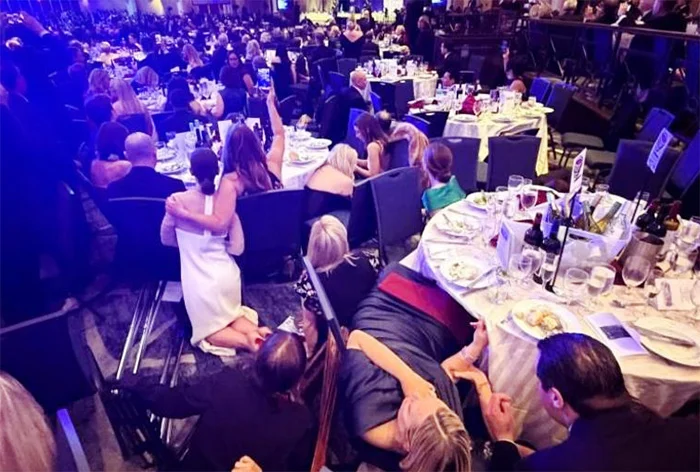
Therefore, the recent breaching of the security cordon surrounding the White House Correspondents’ Dinner in Washington at which President Trump and his inner Cabinet were present, by an apparently ‘Lone Wolf’ gunman, besides raising issues relating to the reliability of the security measures deployed for the President, indicates a notable spike in anti-VVIP political violence in particular in the US. It is a pointer to a strong and widespread emergence of anti-democratic forces which seem to be gaining in virulence and destructiveness.
The issues raised by the attack are in the main for the US’ political Right and its supporters. They have smugly and complacently stood by while the extremists in their midst have taken centre stage and begun to dictate the course of Right wing politics. It is the political culture bred by them that leads to ‘Lone Wolf’ gunmen, for instance, who see themselves as being repressed or victimized, taking the law into their own hands, so to speak, and perpetrating ‘revenge attacks’ on the state and society.
A disproportionate degree of attention has been paid particularly internationally to Donald Trump’s personality and his eccentricities but such political persons cannot be divorced from the political culture in which they originate and have their being. That is, “structural” questions matter. Put simply, Donald Trump is a ‘true son’ of the Far Right, his principal support base. The issues raised are therefore for the President as well as his supporters of the Right.
We are obliged to respect the choices of the voting public but in the case of Trump’s election to the highest public position in the US, this columnist is inclined to see in those sections that voted for Trump blind followers of the latter who cared not for their candidate’s suitability, in every relevant respect, and therefore acted irrationally. It would seem that the Right in the US wanted their candidate to win by ‘hook or by crook’ and exercise power on their behalf.
By making the above observations this columnist does not intend to imply that voting publics everywhere in the world of democracy cast their vote sensibly. In the case of Sri Lanka, for example, the question could be raised whether the voters of the country used their vote sensibly when voting into office the majority of Executive Presidents and other persons holding high public office. The obvious answer is ‘no’ and this should lead to a wider public discussion on the dire need for thoroughgoing voter education. The issue is a ‘huge’ one that needs to be addressed in the appropriate forums and is beyond the scope of this column.
Looking back it could be said that the actions of Trump and his die-hard support base led to the Rule of Law in the US being undermined as perhaps never before in modern times. A shaming moment in this connection was the protest march, virtually motivated by Trump, of his supporters to the US Capitol on January 6th, 2021, with the aim of scuttling the presidential poll result of that year. Much violence and unruly behaviour, as known, was let loose. This amounted to denigrating the democratic process and encouraging the violent take over of the state.
In a public address, prior to the unruly conduct of his supporters, Trump is on record as blaring forth the following: ‘We won this election and we won by a landslide’, ‘We will stop the steal’, ‘We will never give up. We will never concede. It doesn’t happen’, ‘If you don’t fight like hell, you’re not going to have a country anymore.’
It is plain to see that such inflammatory utterances could lead impressionable minds in particular to revolt violently. Besides, they should have led the more rationally inclined to wonder whether their candidate was the most suitable person to hold the office of President.
Unfortunately, the latter process was not to be and the question could be raised whether the US is in the ‘safest pair of hands’. Needless to say, as events have revealed, Donald Trump is proving to be one of the most erratic heads of state the US has ever had.
However, the latest attempt on the life of President Trump suggests that considerable damage has been done to the democratic integrity of the US and none other than the President himself has to take on himself a considerable proportion of the blame for such degeneration, besides the US’ Far Right. They could be said to be ‘reaping the whirlwind.’
It is a time for soul-searching by the US Right. The political Right has the right to exist, so the speak, in a functional democracy but it needs to take cognizance of how its political culture is affecting the democratic integrity or health of the US. Ironically, the repressive and chauvinistic politics advocated by it is having the effect of activating counter-violence of the most murderous kind, as was witnessed at the White House Correspondents’ Dinner. Continued repressive politics could only produce more such incidents that could be self-defeating for the US.
Some past US Presidents were assassinated but the present political violence in the country brings into focus as perhaps never before the role that an anti-democratic political culture could play in unraveling the gains that the US has made over the decades. A duty is cast on pro-democracy forces to work collectively towards protecting the democratic integrity and strength of the US.

 The Editor-in-Chief of The Sri Lankan Anchorman, a Toronto-based monthly, celebrating Sri Lankan community life in Canada, is none other than veteran Sri Lankan journalist Dirk Tissera, who moved to Canada in 1997. His wife, Michelle, whom he calls his “tower of strength”, is the Design Editor.
According to reports coming my way, the paper has turned out to be extremely popular in Toronto.
In fact, The Sri Lankan Anchorman won a press award in Toronto for excellence in editorial content and visual presentation.
However, the buzz in the air in Canada, right now, is The Sri Lankan Anchorman’s 22nd Anniversary Gala, to be held on Friday, 12 June, 2026, at the J&J Swagat Banquet Convention Centre, in Toronto.
An action-packed programme has been put together for the night, featuring some of the very best artistes in the Toronto scene.
The Skylines, who are classified as ‘the local musical band in Toronto’, will headline the event.
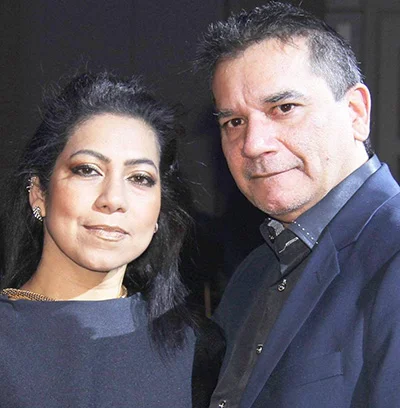
Dirk Tissera and wife Michelle: Supporting Sri Lanka-Canada community events, in Toronto, since launching The Anchorman
in 2002
They have performed and backed many legendary Sri Lanka singers.
According to Dirk, The Skylines can belt out a rhythm with gusto … be it Western, Sinhala or Tamil hits.
Also adding sparkle to the evening will be the legendary Fahmy Nazick, who, with his smooth and velvety vocals, will have the crowd on the floor.
Fahmy who was a household name, back in Sri Lanka, will be flying down from Virginia, USA.
He has captivated audiences in Sri Lanka, the Middle East and North America, and this will be his fourth visit to Toronto – back by popular demand,
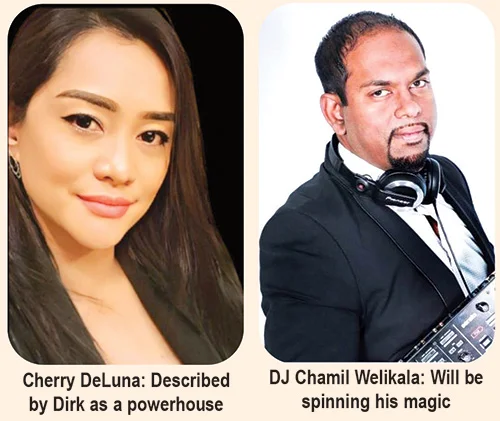
Cherry DeLuna, who is described by Dirk as a powerhouse, also makes her appearance on stage and is all set to stir up the tempo with her cool and easy delivery.
“She’s got a great voice and vocal range that has captivated audiences out here”, says Dirk.
Chamil Welikala, said to be one of the hottest DJs in town, will be spinning his magic … in English, Sinhala, Tamil and Latin.
Both Jive and Baila competitions are on the cards among many other surprises on the night of 12 June.
This is The Anchorman’s fifth annual dance in a row – starting from 2022, 2023, 2024 and 2025 – and both Dirk and Michelle, and The Anchorman, have always produced elegant social events in Toronto.
“We intend to knock this one out of the park,” the duo says, adding that Western music and Sinhala and Tamil songs is something they’ve always delivered and the crowd loves it.
“We have always supported Sri Lanka-Canada community events, in Toronto, since launching The Anchorman, in 2002, and we intend to keep it that way.”
No doubt, there will be a large crowd of Sri Lankans, from all communities, turning up, on 12 June, to support Dirk, Michelle and The Anchorman.
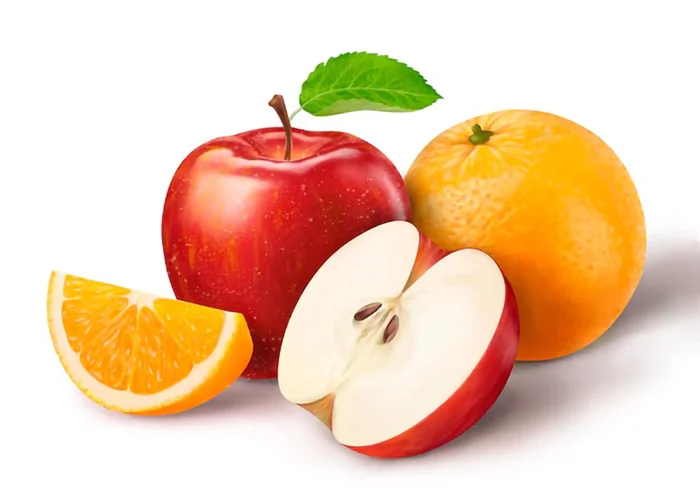
 * Apple and Orange:
Blend a few apple and orange pieces together. Add to it a pinch of turmeric and one tablespoon of honey. Apply it to the face and neck and rinse off after 30 minutes. This face pack is suitable for all skin types.
According to experts, apple is one of the best fruits for your skin health with Vitamin A, B complex and Vitamin C and minerals, while, with the orange peel, excessive oil secretion can be easily balanced.
* Mango and Curd:
Ripe mango pulp, mixed with curd, can be rubbed directly onto the skin to remove dirt and cleanse clogged pores. Rinse off after a few minutes.
Yes, of course, mango is a tasty and delicious fruit and this is the mango season in our part of the world, and it has extra-ordinary benefits to skin health. Vitamins C and E in mangoes protect the skin from the UV rays of the sun and promotes cell regeneration. It also promotes skin elasticity and fights skin dullness and acne, while curd, in combination, further adds to it.
* Grapes and Kiwi:
Take a handful of grapes and make a pulp of it. Simultaneously, take one kiwi fruit and mash it after peeling its skin. Now mix them and add some yoghurt to it. Apply it on your face for few minutes and wash it off.
Here again experts say that kiwi is the best nutrient-rich fruit with high vitamin C, minerals, Omega-3 fatty acids and vitamin E, while grapes contain flavonoids, which is an antioxidant that protects the skin from free radical damage. This homemade face pack acts as a natural cleanser and slows down the ageing process.

Food Security is vital to ensuring a Nation’s Sovereignty and National Security – Prime Minister

Showers or thundershowers will occur in the most parts of the island after 1.00 pm

Explanation sought from AKD on ‘Russian energy supplies’

US reiterates its commitment to enhancing relations with Northern Sri Lanka

Rooftop Solar at Crossroads as Sri Lanka Shifts to Distributed Energy Future

Indonesia-SL agreement on Visa Exemption for Diplomatic and Official passports soon

‘Dates have the highest sugar content to fight Coronavirus’

Sunday Island 27 December – Headlines

#SundayIsland 17th December – Headlines

Sunday Island – 28th March

Sunday Island Headlines – 21 March

Sunday Island – 21st February – Headlines
-
 News7 days ago
Whistleblowers ask Treasury Chief to resign over theft of USD 2.5 mn
-

 News7 days ago
No cyber hack: Fintech expert exposes shocking legacy flaws that led to $2.5 million theft
-

 News4 days ago
BIA drug bust: 25 monks including three masterminds arrested
-

 Business5 days ago
Nestlé Lanka Announces Change in Leadership
-
 News2 days ago
Treasury chief’s citizenship details sought from Australia
-

 News4 days ago
Banks alert customers to phishing attacks
-
 News5 days ago
Hackers steal $3.2 Mn from Finance Ministry
-
 Business7 days ago
Dialog Enterprise partners Star Garments: Pioneering 5G innovation in Sri Lanka’s apparel industry