
News
Farmers already brainwashed by agrochemical lobby – CEJ


By Rathindra Kuruwita
Over 70% of the artificial fertiliser used by Sri Lankan farmers ended up in water sources, Executive Director of the Centre for Environmental Justice (CEJ) Hemantha Withanage said yesterday.
“Sri Lankan farmers were given a considerable fertiliser subsidy and our farmers use four times the amount of fertiliser used by their regional counterparts. Successive governments have failed to establish a good extension service and farmers now depend on the advice of fertiliser and pesticide sellers. Sometimes they even use several pesticides at once,” Withanage said.
The farmers had been misled because Sri Lankan governments in the last 40 years had allowed the agrochemical industry to formulate our agricultural policies, Withanage said.
“Our farmers use excessive amounts of fertiliser for several reasons. Being exposed to propaganda is one, another serious issue is that tonnes of topsoil per acre, in certain agricultural lands in the central province, is washed away annually. This is because the farmers do not know about soil management,” he said.
Moreover, the hybrid seeds imported from countries, like Malaysia, needed chemical fertilis er. Export crops like tea also needed a lot of fertiliser.
“Making our agricultural organic is not easy or something that can be done overnight. Converting large scale tea plantations into organic farms is exceedingly difficult. In the last 45 years we have used so many toxins, soil in most agricultural zones are infertile. There are no natural bacteria or insects in these soils. It will take some time to restore the soil,” he said.
Withanage said Cuban farmers had told him that it took between three to five years to successfully introduce organic agricultural practices to a farm. The government must also look at restoring the diversity of our seed and plant varieties, the CEJ Executive Director said.
Sri Lanka, which once had 3,000 paddy varieties, 700 banana varieties and 60 kurakkan and gingelly varieties, now was left with only hybrid seeds in abundance, he said.
“We can’t import compost. Alien micro-organisms will enter the country and the impact of these new entrants will have devastating impacts. Importing urban waste is not a good idea because these contain a lot of toxins. We can’t win farmers over to organic agriculture by song and dance, the government has to send instructors who know about organic agricultural methods to farms,” he said.
CEJ Executive Director said that the yahapalana administration spent Rs. 250 million to promote organic agriculture. However, since there was no mechanism to educate and encourage the farmers, people became more skeptical about organic agriculture. The Gotabaya Rajapaksa government should be mindful of it and half-hearted and ill planned initiatives would only make people distance themselves further from organic agricultural practices, he said.

Latest News
Level III landslide early warnings issued to the Districts of Kandy, Kegalle, Kurunegala and Matale extended


The landslide early warning center of the National Building Research Organisation [NBRO] has extended the Level III RED landslide early warnings issued to the Districts of Kandy, Kegalle, Kurunegala and Matale until 1600hrs on 11th December 2025.
Accordingly,
The LEVEL III RED landslide warnings issued to the the Divisional Secretaries Divisions and surrounding areas of Kundasale, Pasbage Korale, Medadumbara, Ganga Ihala Korale, Hatharaliyadda, Pathadumbara, Doluwa, Panvila, Gangawata Korale, Ududumbara, Akurana, Yatinuwara, Harispattuwa, Deltota, Thumpane, Poojapitiya, Udapalatha, Udunuwara, Minipe and Pathahewaheta in the Kandy district, Aranayaka, Yatiyanthota, Rambukkana, Bulathkohupitiya and Mawanella in the Kegalle district, Mallawapitiya, Mawathagama and Rideegama in the Kurunegala district, and Rattota, Laggala Pallegama, Ukuwela, Matale, Wilgamuwa, Pallepola, Naula, Yatawatta and Ambanganga Korale in the Matale district have been extended.
LEVEL II AMBER landslide early warnings have been issued to the Divisional Secretaries Divisions and surrounding areas of Uva Paranagama, Hali_Ela, Meegahakivula, Badulla, Kandeketiya, Bandarawela, Soranathota, Ella, Haputhale, Lunugala, Welimada, Haldummulla and Passara in the Badulla district, Warakapola, Galigamuwa, Kegalle, Dehiowita, Ruwanwella and Deraniyagala in the Kegalle district, Polgahawela and Alawwa in the Kurunegala district, Kothmale East, Walapane, Thalawakele, Nuwara Eliya, Kothmale West, Nildandahinna, Mathurata, Ambagamuwa Korale, Hanguranketha and Norwood in the Nuwara Eliya district. and Kolonna, Godakawela and Kahawaththa in the Ratnapura district.
LEVEL I YELLOW landslide early warnings have been issued to the Divisional Secretaries Divisions and surrounding areas of Divulapitiya, Attanagalla and Mirigama in the Gampaha district, Narammala in the Kurunegala district, and Kiriella, Eheliyagoda, Balangoda, Kaltota, Openayake, Nivithigala, Imbulpe, Ayagama, Kuruwita, Kalawana, Elapatha, Pelmadulla and Ratnapura in the Ratnapura district.
News
“We cannot allow flooding to become a part of the daily lives of the people in the Colombo District” – PM

Prime Minister Dr. Harini Amarasuriya stated that unauthorized constructions within the Colombo District, nor any form of residential developments that endanger the public carried out under the guise of development agenda will not be allowed.
The Prime Minister made these remarks while addressing the media at the conclusion of the Colombo District Disaster Management Committee meeting held on Tuesday [December 09] at the Colombo District Secretariat.
Addressing further, the Prime Minister stated:
“The Colombo District has become vulnerable to this extent due to the constructions carried out without any proper planning or understanding of regulations, along with personal and politically motivated decisions that have placed both the district and its people at risk.
Compared to the districts that suffered severe loss of life and property due to the recent cyclone, the damage to the Colombo District has been relatively lower. However, special intervention is being carried out together with the relevant institutions to manage the potential future flood risks in the district.
This matter was also given special attention during today’s District Disaster Management Committee meeting. We cannot allow the flooding to become a regular part of the lives of the people in Colombo. All relevant institutions will come together to put forward a common plan for flood control in the district.”
The Prime Minister further stated that discussions are already underway to provide sustainable solutions for the people living in high-risk areas within the Colombo District.
The discussion was attended by the Deputy Minister of Urban Development Eranga Gunasekara, Deputy Minister of Mass Media Kaushalya Ariyaratne, and Colombo District Members of Parliament Aruna Panagoda and Chandana Suriyarachchi.
[Prime Minister’s Media Division]
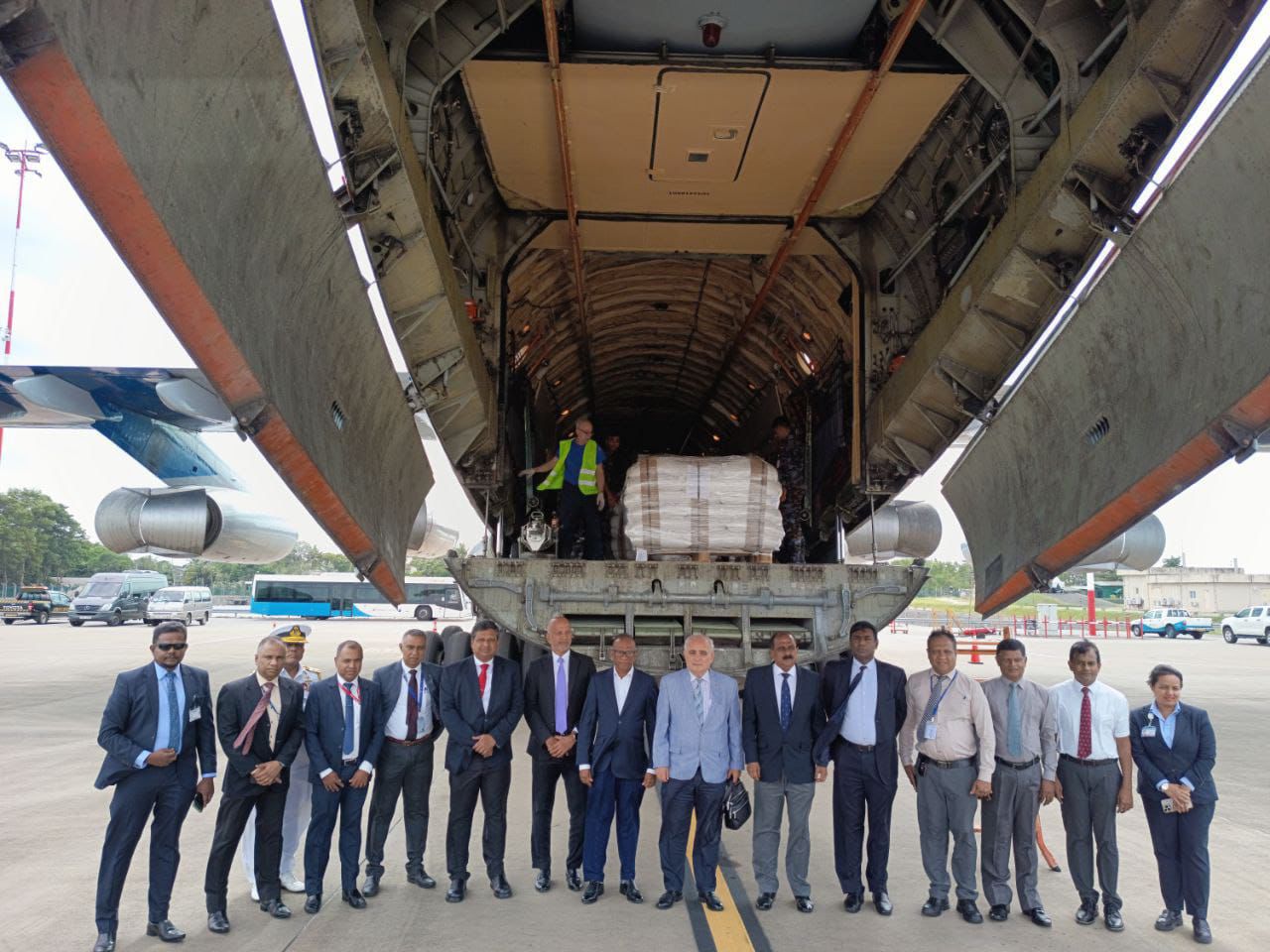
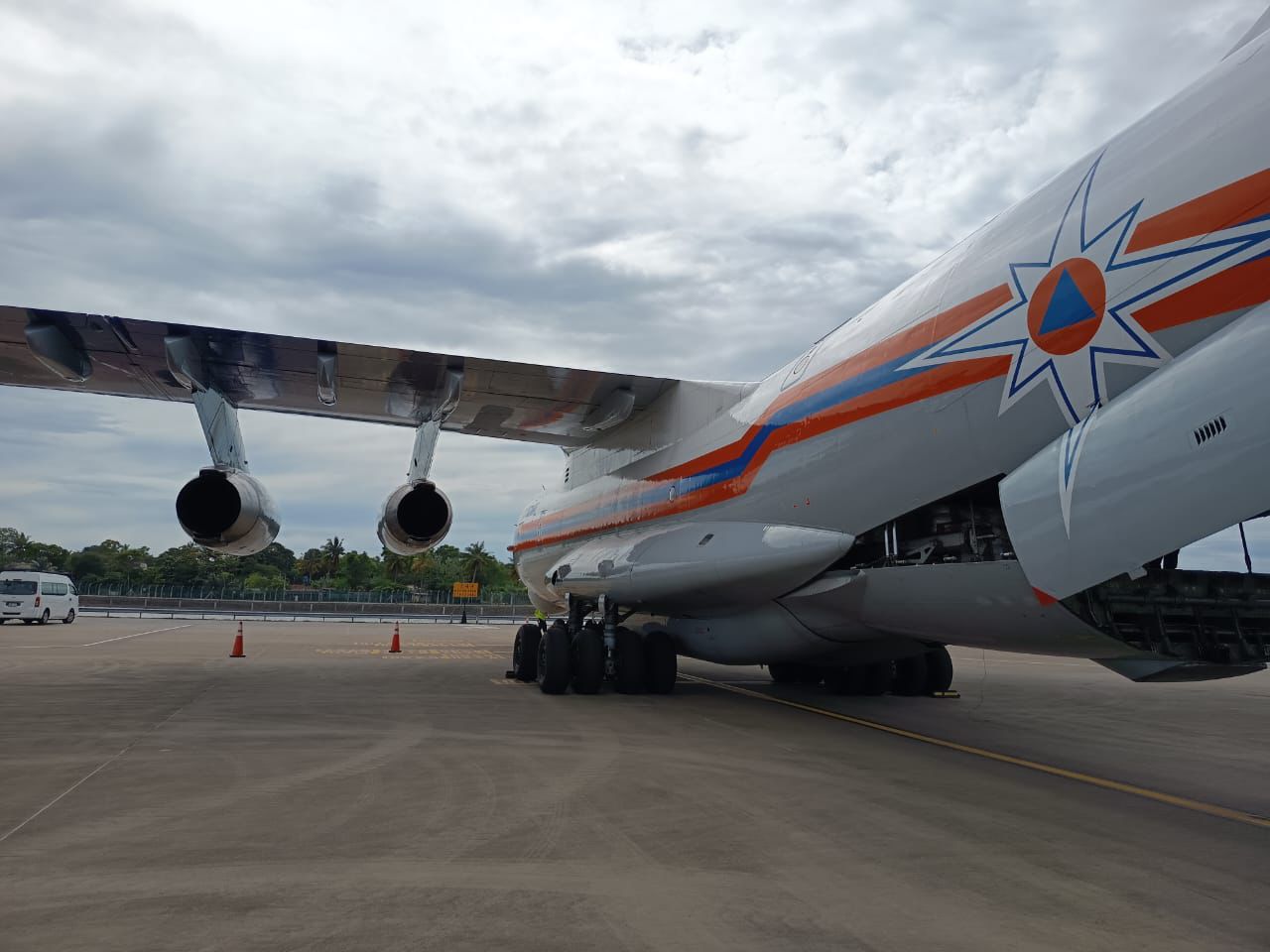
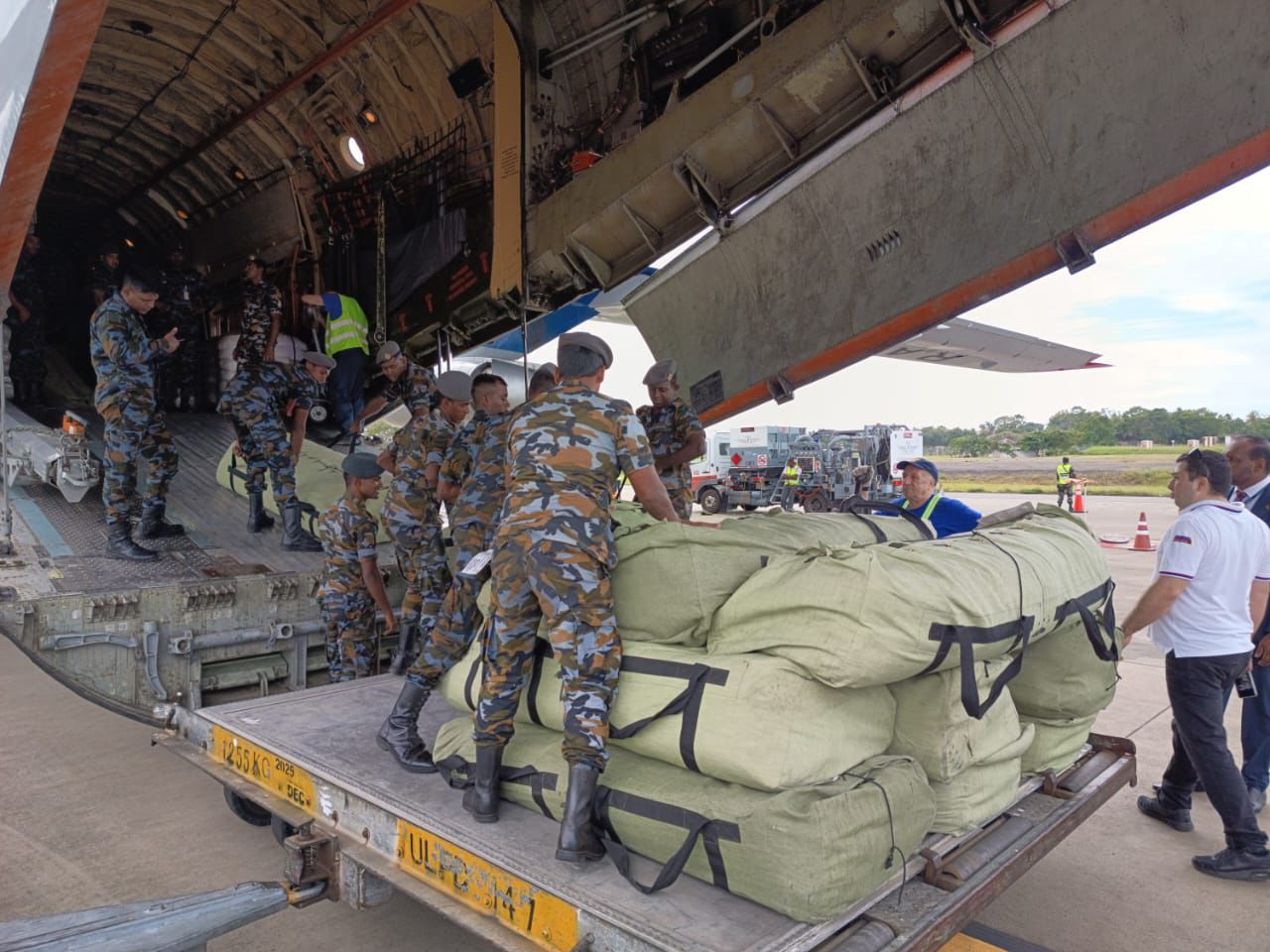
The handover of 35 tonnes of Russian Humanitarian Aid to Sri Lanka, recently affected by the cyclone «Ditwah», took place at Katunayake today (10th December)
The shipment was welcomed at the Katunayake airport by Ambassador of Russia Levan Dzhagaryan, Minister of Ports and Civil Aviation Anura Karunathilaka and Deputy Minister of Defence, Major General Aruna Jayasekara (Retd).
Ambassador Levan Dzhagaryan: said “This delivery is a reflection of long-term friendly relations between Russia and Sri Lanka and reaffirms Moscow’s commitment to support countries in a difficult humanitarian situation.”
The supplies brought by the EMERCOM (Russian Ministry of Emergency Situations) aircraft comprised a movable 60 kW electric power station, Pumping equipment for water drainage, Summer tents (10-person capacity) and Food supplies (sugar, vegetable oil, rice)
The total cargo weight is 35 metric tonnes. The aid will be distributed among the most affected regions.


Level III landslide early warnings issued to the Districts of Kandy, Kegalle, Kurunegala and Matale extended

“We cannot allow flooding to become a part of the daily lives of the people in the Colombo District” – PM

Russia gifts 35 tonnes of Humanitarian Aid to Sri Lanka

Sri Lanka squad named for ACC Men’s U19 Asia Cup

Hospital CCTV helps clear long jumper of doping

Tickner and Rae bowl West Indies out for 205 to give New Zealand the edge

‘Dates have the highest sugar content to fight Coronavirus’

Sunday Island 27 December – Headlines

#SundayIsland 17th December – Headlines

Sunday Island – 28th March

Sunday Island Headlines – 21 March

Sunday Island – 21st February – Headlines
-

 News3 days ago
Over 35,000 drug offenders nabbed in 36 days
-
 News6 days ago
Level III landslide early warning continue to be in force in the districts of Kandy, Kegalle, Kurunegala and Matale
-

 Business5 days ago
LOLC Finance Factoring powers business growth
-

 News5 days ago
CPC delegation meets JVP for talks on disaster response
-

 News5 days ago
A 6th Year Accolade: The Eternal Opulence of My Fair Lady
-
 News2 days ago
Cyclone Ditwah leaves Sri Lanka’s biodiversity in ruins: Top scientist warns of unseen ecological disaster
-

 News3 days ago
Rising water level in Malwathu Oya triggers alert in Thanthirimale
-
 Features4 days ago
The Catastrophic Impact of Tropical Cyclone Ditwah on Sri Lanka: