
News
Energy Secretary says LIOC free to adopt commercial pricing; CPC suffers further losses

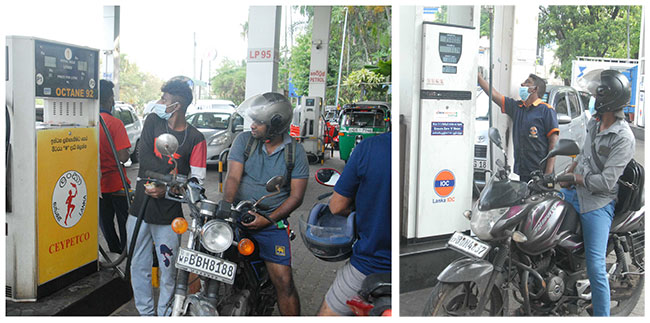
Conflicting claims regarding Act No 35 of 2002
By Shamindra Ferdinando
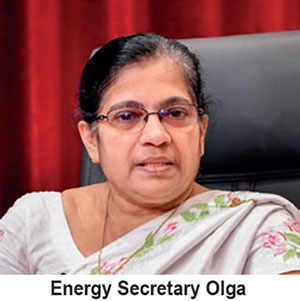
Energy Ministry Secretary K. D. R. Olga yesterday (28) said that in terms of the agreement between Sri Lanka and India, Lanka India Oil Company (LIOC) could adopt commercial pricing.
The Ministry Secretary said so when The Island sought her response to several price revisions effeced by the LIOC recently.
LIOC and CPC (Ceypetco) sell a litre of petrol at Rs 303 and Rs 254, respectively. A litre of diesel is sold at Rs 176 at both LIOC and CPC service stations. The Indian enterprise is believed to be considering revising the price of diesel, as well.
 SJB trade union spokesman and former CPC employee Ananda Palitha has repeatedly alleged that the LIOC has discouraged customers by maintaining a substantial price difference. Palitha insists that the absence of a pricing mechanism in terms of Act No 35 of 2002 has been to the disadvantage of the CPC. Ananda Palitha has challenged political parties represented in Parliament to explain why the proposed mechanism couldn’t be established over the past 20 years.
The Act, enacted during Ranil Wickremesinghe’s premiership, in 2002, provided for the establishment of the Public Utilities Commission of Sri Lanka to regulate certain public utilities, including petroleum, electricity and water.
However, Energy Secretary Olga emphasised that LIOC enjoyed the freedom to decide on a pricing formula on its own. According to her, the Energy Ministry couldn’t intervene in the LIOC decision-making process. The LIOC entered the local market during Wickremesinghe’s tenure as the Premier in 2003. At the onset of its operation here, the LIOC took over one third of the service stations, belonging to the CPC. Since then, the LIOC has expanded its operations here.
SJB lawmaker Mujibur Rahuman said that in spite of repeated assurances to restore an uninterrupted fuel supply, consumers had been severely inconvenienced. The Colombo District MP pointed out that people had blocked the Colombo-Negombo road at Kapuwatte yesterday (28), asking the government to make fuel freely available. Responding to another query, MP Rahuman said the Presidential Media Division (PMD) and the Energy Ministry had repeatedly promised to normalise the fuel supply, though long queues in Colombo and its suburbs as well as the provinces proved the crisis still prevailed.
Lawmaker Rahuman said that contrary to government claims, countrywide fuel shortages continued with many LIOC and CPC service stations remaining closed. Some issued only petrol.
Referring to a recent media statement issued by the Tourism Ministry regarding efforts made by the relevant authorities to normalise fuel distribution in the Gampaha district, MP Rahuman said those in authority seemed either clueless or utterly irresponsible.
MP Rahuman asked whether the fuel distribution and the power supply had improved after President Gotabaya Rajapaksa brought in Gamini Lokuge in place of Energy Minister Udaya Gammanpila in the first week of March. The situation has deteriorated to such an extent now the government would have to consider extending ongoing power cuts, MP Rahuman said. According to him, the recent declaration made by the Energy Ministry pertaining to a sharp drop in water levels, in all reservoirs, indicated that power cuts could be further extended soon.
MP Rahuman said that the CPC and Laugfs had no alternative but to match the LIOC’s petrol prices soon. The MP pointed out that the CPC always matched the LIOC prices.


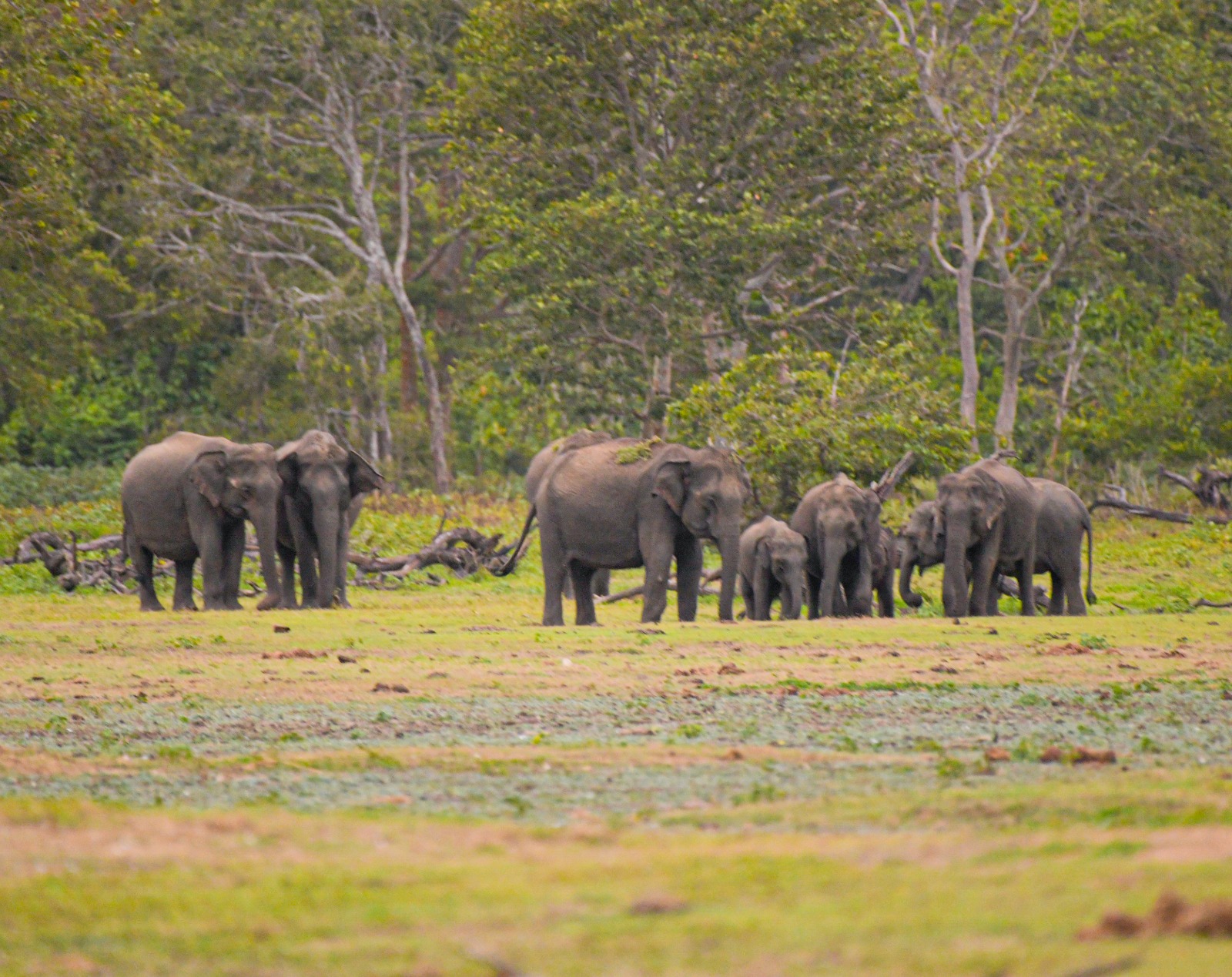
As part of the new government’s initiative to formulate scientifically grounded, long-term solutions to the human-elephant conflict, a programme aimed at sustainably fulfilling the natural food and water requirements of wild elephants within forest ecosystems is being successfully implemented.
Spearheaded by the Ministers of Environment, guided by the Secretary to the Ministry of Environment, and supported by all affiliated institutions, this initiative transforms tanks (reservoirs) and forest tracts in high-conflict areas into enriched zones for wild elephants.
To facilitate this forest enrichment drive, 113 forests have already been declared protected reserves under the Vanaspathi National Programme. The initial phase of establishing tank enrichment zones was launched around the Kala Wewa and Thabbowa reservoirs.
Accordingly, the Ministry of Environment and ‘Clean Sri Lanka’ jointly carried out an initiative to develop these reservoir
catchments into designated enrichment zones.
A year ago, an operation to eradicate invasive plant species that posed a severe environmental threat to the Thabbowa reservoir precinct was conducted with the comprehensive labour and
technical support of government officials, environmental scientists, the tri-forces, and residents.
Since the new government’s policy of “A Sustainable Biosphere, An Evergreen Life” is practically implemented at the ground level, officials from the Department of Wildlife Conservation and the Department of Forest Conservation have been continuously monitoring the ongoing progress and
field conditions of this collaborative project under ministerial directives.
During these field reviews, it was observed that following the removal of invasive flora, the tendency of wild elephants to wander into villages searching for sustenance has notably declined; instead, they increasingly frequent the naturally regenerated grasslands along the reservoir fringes.
Having proven this ecological model’s success through trials at Thabbowa and Kala Wewa, the Ministry of Environment has finalized all necessary blueprints to swiftly replicate it across other sensitive wetland systems and reserve zones where human-elephant conflict is prevalent.
By enriching wildlife habitats, this sustainable, eco-friendly, and scientific strategy protects human lives and cultivated farmlands while securing space for wild elephants in their native habitats, continuing to show promising results across high-conflict regions.

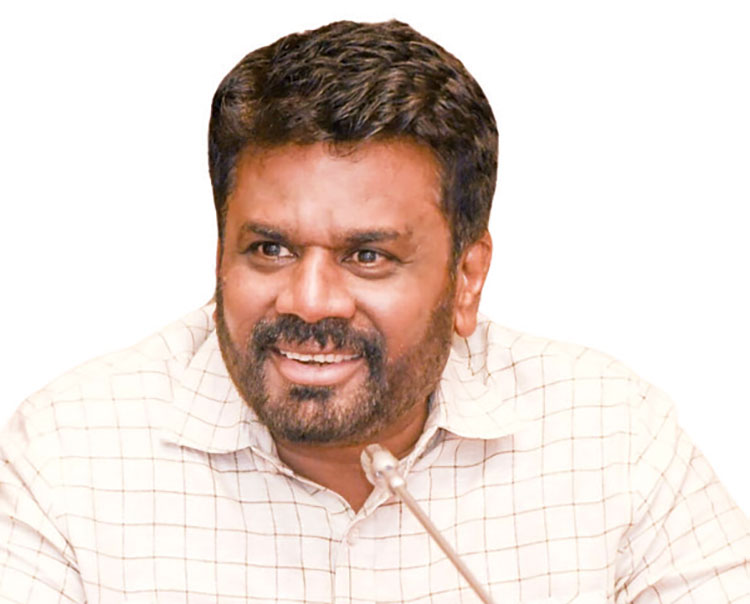
The Presidential Secretariat (PS) yesterday said that prison regulations concerning Buddhist monks serving prison sentences were expected to be adopted within the next two weeks.
The PS said: “Once they come into effect, arrangements will be made for Buddhist monks to be taken outside prison in their robes, based on the recommendation of the relevant Nikaya or chapter.”
The process to amend prison regulations was initiated on 08 October following discussions between President Anura Kumara Dissanayake and the Maha Sangha. The President called the meeting amidst controversy over producing General Secretary of Bodu Bala Sena (BBS) Ven. Galagodaaththe Gnanasara in civilian attire in court.
A special five-member Committee was in the process of studying the current regulations and standing orders under the Prisons Ordinance, the PS said.
The Committee is chaired by Prince Senadheera, Secretary to the Ministry of Buddhasasana, Religious and Cultural Affairs. Its other members are Piyumanthi Peiris, Additional Secretary to the Ministry of Justice, Wasantha Ariyaratne, Additional Secretary to the Ministry of Public Administration, R. M. G. Senaratne, Commissioner-General of Buddhist Affairs, and A.C. Gajanayake, Commissioner-General of Prisons.
The first meeting of the special Committee was held at the Presidential Secretariat on the 9th, chaired by Prince Senadheera. Attorney-at-Law Harshana Nanayakkara, Minister of Justice and National Integration, provided the necessary policy guidance for the Committee’s work.
The proposals concerning Buddhist monks would be presented to the Maha Sangha by the middle of next week to obtain their views and recommendations before their implementation, PS stated.

The Communist Party of Sri Lanka (CPSL) has alleged that the ruling UNP, in a ridiculous bid to whitewash illegal US sanctions on Iranian oil carriers stranded off Sri Lanka, has taken on itself the blame for refusing to supply humanitarian aid to the trapped crews of the oil tankers.
The text of the statement issued by Dr. G. Weerasinghe,
General Secretary, CPSL: “The Communist Party of Sri Lanka condemns the attempts by the USA to prevent essential supplies of food and water to the 19-20 Iranian oil tankers stranded off the coast, which are running short of food, fuel, and fresh water. It urges the Government of Sri Lanka to face up to the criminal actions of the US Government and do its duty under international humanitarian law.
On 30 September 2026, the Wall Street Journal reported that US officials had threatened Sri Lanka with sanctions if it continued supplying the tankers. These tankers (stranded about 24 km off Sri Lanka, within the Exclusive Economic Zone) which already discharged their cargoes, are empty and unable to return to Iran owing to the illegal war being waged against that country by the USA and Israel.
In response to this report, on 4 October, Foreign Minister Vijitha Herath denied that Washington put pressure on the Government of Sri Lanka which, he claimed, always abides by international maritime law. However, he clarified that the Government would enforce US sanctions.
A US Embassy spokesman had earlier stated that Washington is working with allies to cut off “illicit Iranian revenue,” warning that supplying fuel, food, or provisions to sanctioned vessels could expose companies and individuals to US sanctions, including civil or criminal penalties.
Furthermore, from 9-11 September, the US Embassy in Colombo carried out a three-day maritime sanctions compliance workshop. Officers of the Sri Lanka Navy and Coastguard, as well as officials of the Ministry of Defence, Central Bank, Ports Authority and Merchant Shipping Secretariat, participated in this workshop. The officials were warned that any services (including fuel, food, or water) rendered to US-sanctioned vessels, such as the Iranian-linked tankers stranded off Sri Lanka’s coast, could expose companies and individuals to secondary sanctions, civil penalties, or criminal liability.
In fact, it is actions of the USA which are illicit. The US-imposed unilateral and secondary sanctions violate international law, sovereign equality, and the principle of non-intervention. Furthermore, the unprovoked US-Israeli aggression against Iran itself, which had shown no belligerent intent, is illegal in international law. Participation of government officers in the workshop itself is controversial.
According to unofficial reports, Sri Lanka’s national security establishment objected to the demands made by US officials and urged the government to lodge a protest with Washington, pointing out that under UNCLOS Article 98, SOLAS 1974, and the SAR Convention 1979, Sri Lanka is obligated to assist the crews.
However, the response of the National People’s Power (NPP) regime has been to attempt to whitewash the illegal actions of the USA and to take on itself the blame for refusing to supply humanitarian aid to the trapped crews of the oil tankers.
The pusillanimous behaviour of the NPP regime rips aside any pretence that it is in any way progressive or patriotic. Together with its major constituent, the Janatha Vimukthi Peramuna (JVP), it stands exposed as the handmaiden of US President Donald Trump’s reckless, warlike and imperialist foreign policy establishment. It begs the question whether the Government has signed secret war-related deals with the USA and thereby ditched Sri Lanka’s 70-year history of non-alignment.
The Communist Party of Sri Lanka, therefore, condemns these illegal attempts by the USA to prevent Sri Lanka from carrying out its humanitarian duty. It calls upon the Government of Sri Lanka to abide by international humanitarian law, work-out suitable strategies and to supply the stranded crews with essential supplies, including food and water. It also calls upon the Government to reveal any secret deals it has entered with the USA.”

Elephant enrichment programme centred on the Thabbowa Reservoir proves successful

Showers above 75 mm are likely at some places in the Western, Sabaragamuwa, Central, Southern, Uva and North-Western provinces and in Anuradhapura and Mannar districts.

New prison regulations for monks serving jail terms soon: President’s Office

CP alleges NPP has taken the blame for illegal US sanctions on Iranian vessels

Ex-Tiger witness claims Ekneligoda proposed to fire missile at MR’s plane

Chandrasekaran welcomes Indian stand of Katchatheevu

‘Dates have the highest sugar content to fight Coronavirus’

Sunday Island 27 December – Headlines

#SundayIsland 17th December – Headlines

Sunday Island – 28th March

Sunday Island Headlines – 21 March

Sunday Island – 21st February – Headlines
-

 Features4 days ago
The Sri Lankan who made Scottish history
-

 Features6 days ago
Preventing grievances from becoming communal
-

 Sports4 days ago
Nissanka absence opens door for Sri Lanka’s young guns
-

 News5 days ago
Gnansara Thera to be assigned to prison printing section: Officials
-

 News3 days ago
NDB fraud Rs 60mn more than reported
-

 News3 days ago
Removing monk’s robes matter for Sangha to decide: Mahanayake Theras
-

 Features4 days ago
Future of Sri Lanka’s state university system: Should it be shut down and reopened?
-
 News5 days ago
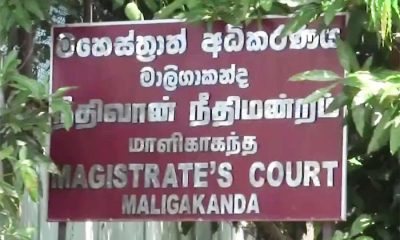
OIC of FCID summoned before Maligakanda Magistrate