
Editorial
Exercise in futility


Friday 7th July, 2023
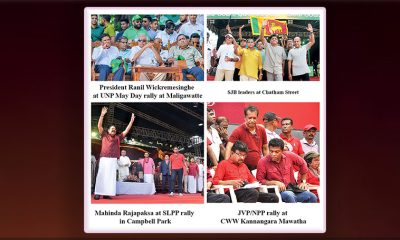
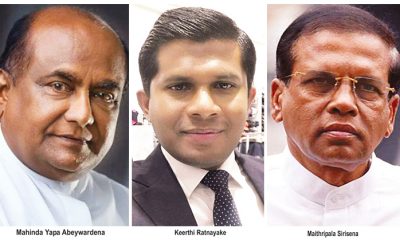
A Parliamentary Select Committee (PSC) has been set up to probe how the country became bankrupt. SLPP General Secretary and MP Sagara Kariyawasam, of all people, has been appointed its chairman! The Opposition yesterday let out a howl of protests, in Parliament, against Kariyawasam’s appointment, claiming that his party was responsible for bankrupting the economy, and therefore the PSC would not act impartially under his chairmanship, but Speaker Mahinda Yapa Abeywardena stood his ground, and his decision was final.
There has been a severe erosion of public faith in parliamentary probes, which are far from impartial, and the MPs tasked with conducting them are always divided along petty party lines and fight among themselves instead of making a concerted effort to get at the truth and ensure accountability. The PSC which probed Chief Justice Dr. Shirani Bandaranayake and caused her to be impeached was a kangaroo court of sorts; the government members of that PSC turned hostile and abusive towards her, compelling her to walk out. The Opposition members, too, voted with their feet, claiming that the probe was a political witch-hunt. But the Mahinda Rajapaksa government abused its two-thirds majority in Parliament and removed CJ Bandaranayake from office in 2013.
The Opposition’s argument that a PSC under MP Kariyawasam’s chairmanship will not be impartial is tenable, but the same cannot be said about its claim that if an Opposition MP is appointed as its chairman, it will conduct a proper probe and live up to the expectations of the public. One may recall that the COPE (Committee on Public Enterprises), which investigated the Treasury bond scams under the Yahapalana government was headed by an Opposition MP—Sunil Handunnetti.
But its probe was far from impartial or satisfactory, and the government MPs among its members unashamedly diluted its report by inserting a slew of footnotes thereinto. Some of the present-day Opposition MPs who have taken the moral high ground and are calling for an impartial probe into the country’s bankruptcy were members of what came to be dubbed the ‘footnote gang’! The COPE obviously safeguarded the interests of the then Prime Minister Ranil Wickremesinghe.
Public confidence could have been restored in parliamentary probes if the report previously issued by the COPE under the chairmanship of D. E. W. Gunasekara on the first Treasury bond scam had been taken up for debate in Parliament. The then President Maithripala Sirisena, who protected the interests of the UNP, which had helped him realise his presidential dream, dissolved Parliament, thus effectively foreclosing the tabling of that COPE report, which would perhaps have ruined the UNP’s chances of winning the 2015 general election.
It is against this backdrop that the PSC to probe the country’s bankruptcy should be viewed. MP Kariyawasam is a loyalist of Basil Rajapaksa, who, as the Finance Minister, ruined the national economy. So, there is nothing stupider than to expect Kariyawasam to allow the PSC to conduct a proper probe into how Basil, the other Rajapaksas, and their allies ruined the economy and enriched themselves.
There is no way the holier-than-thou Opposition MPs can absolve themselves of the blame for the country’s bankruptcy, which was the culmination of a process Gotabaya Rajapaksa government exacerbated and accelerated by slashing taxes, mismanaging foreign currency reserves, throwing around public money by way of pandemic relief for political reasons, and ruining the agricultural sector with an ill-conceived blanket ban on agrochemicals.
Foreign Minister Ali Sabry told Parliament yesterday that the Yahapalana government, of which the SJB leaders were members as UNF MPs from 2015 to 2019, had borrowed more than USD 14 billion, worsening the country’s debt burden. What have the SJB MPs got to say to this? Ironically, Sabry is now backing President Wickremesinghe, who was the Prime Minister in the Yahapalana administration!
Economic crimes that have led to the country’s bankruptcy and inflicted untold suffering on the public must not go uninvestigated. But appointing a PSC packed with the loyalists of the culprits is certainly not the way to set about it.








Friday 9th October, 2026
Some crucial problems have remained intractable in the public sector because a chronic lack of inter-institutional cooperation has stood in the way of tackling them. The Committee on Public Enterprises (COPE) has recently addressed one such issue. While examining the affairs of the Coconut Development Authority (CDA), the Coconut Research Institute, and the Coconut Cultivation Board, the COPE raised serious concerns over the food-safety risks posed by reprocessed and adulterated coconut oil entering the local food industry.
When COPE Chairman Dr. Nishantha Samaraweera pointed out that there had been about 150 instances of non-compliance with required standards in the coconut-oil manufacturing sector and asked what action had been taken against the errant companies, CDA Chairman Shantha Ranatunga said his institution could only trace such manufacturers and ensure corrective action. Dr. Samaraweera asked why the Health Ministry or the Consumer Affairs Authority had not been informed of those illegal practices, but he did not receive a clear answer. The officials only said they were not authorised to do so. Faulting most state institutions for working in silos with no cooperation among them, the COPE Chairman revealed the health risks posed by the waste cooking oil trade. He deserves praise for taking up this vital issue and calling for action to protect the public.
Sri Lanka’s edible oil problem has been a recurring food-safety concern for decades, with the evidence pointing to several forms of malpractice, from blending coconut oil with cheaper vegetable oils and reselling used oil to the distribution of products contaminated with aflatoxins. The repeated detection of such products also raises questions about the effectiveness of market surveillance, testing and enforcement.
In 2017, raids conducted by the Consumer Affairs Authority revealed that large quantities of used cooking oil had been placed alongside barrels of oil apparently processed with chemicals and colouring. Some samples were found to be adulterated. Officials said vendors had bought used cooking oil from food outlets and resold it after treating it with chemicals.
A 2021 study by a team of university researchers, has revealed an established chain in which hotels and restaurants sell used cooking oil to vendors, who filter it and remove sediments, before distributing it to small-scale restaurants for further use as cooking oil. Public health experts have pointed out that repeatedly heated, degraded or adulterated edible oils may increase the risk of cardiovascular disease and other chronic diseases. Volumes have been written about the waste cooking oil racket in the food industry, but it is doubtful whether any meaningful interventions have been made to eliminate it.
Media reports have shed light on another dimension of the waste edible oil racket. It has been reported that trade-data records indicate 67 shipments in the July 2024-June 2025 period under a category including “used cooking oil”, involving 31 Sri Lankan buyers and 38 suppliers. However, the database groups several oil categories together, and therefore this by itself does not prove that the imported used oil was intended for human consumption, but it is believed that at least a part of those imported waste cooking oil consignments entered the food industry. A thorough investigation is needed to prevent such illegal practices.
Non-communicable diseases (NCDs) reportedly account for about three-quarters of all deaths in Sri Lanka, making them the country’s dominant cause of mortality. Doctors have warned that the consumption of degraded, repeatedly heated or contaminated cooking oil may increase the risk of some NCDs, particularly certain cancers. Hence the pressing need for a comprehensive strategy to monitor and regulate the cooking oil trade and prosecute those who engage in illegal practices.
There are about 20 medical doctors in the current Parliament, including Health Minister Dr. Nalinda Jayatissa. They ought to use their collective voice to press for the proper enforcement of existing laws, or for new legislation, where necessary, to put an end to the waste cooking oil racket and other such illegal practices that endanger public health.

Thursday 8th Octobber, 2026
Hardly a day passes in this country without a torrent of news about politicians whose actions evoke memories of famous poets, thinkers, historians and jurists of yore, such as Juvenal, Edward Coke, Lord Acton and Niccolò Machiavelli. This has been particularly so during the past several weeks.
Speaker Dr Jagath Wickramaratne has dismissed a privilege issue raised by SJB MP Ajith P. Perera. He has ruled that as the Presiding Authority and guardian of Parliament’s powers, rights and privileges, the Speaker cannot be subjected to a privilege complaint or disciplinary inquiry by a committee subordinate to the Chair in respect of actions taken in his official capacity. MP Perera’s complaint was that his parliamentary privileges had been breached because no formal action had been taken or final decision made on a written request submitted on August 3 by 18 Opposition MPs seeking the appointment of a Special Select Committee to investigate delays in the judicial system and prison overcrowding. The Speaker ruled that there was no prima facie breach of parliamentary privilege.
Far be it from us to tell the Speaker how to exercise his discretionary powers. Yet we cannot help repeating a question from Juvenal’s Satires: Who guards the guards? (Quis custodiet ipsos custodes?) This famous question, which Juvenal deliberately left hanging, has since become modern shorthand for the broader problem of unchecked power without accountability. Are discretionary powers cartes blanches that place those who wield them above the law and the rules and regulations governing the vital institutions under their purview? Shouldn’t the exercise of such powers be firmly grounded in morality to guard against misuse and impunity?
Juvenal’s Satires are a caustic critique of social inequality, political corruption, decadence and the behaviour of the Roman elite. His work is of particular relevance to Sri Lanka, as it is also the source of the well-known phrase “bread and circuses” (panem et circenses). The only difference is that people here are treated to endless political circuses and theatre without reasonably priced bread or rice. Sri Lankans were waiting in long queues near filling stations, with the government struggling to restore uninterrupted fuel supplies, when news broke of another high-profile arrest.
Speaker Wickramaratne’s ruling has come less than two weeks after the enactment of the controversial 22 nd Amendment (22A) to the Constitution, introduced by the JVP-NPP government to raise the retirement age of the superior court judges allegedly with an ulterior motive. 22A became law in a manner that contravened the time-honoured principle nemo judex in causa sua (‘no one should act as a judge in a case in which they have a personal interest), rooted in Roman law and given its classic common-law formulation by Sir Edward Coke.
22A cleared its constitutional hurdle in the Supreme Court and was then steamrollered through Parliament. As one bad apple spoils the barrel, so one obnoxious law can undermine an entire legal system. Legendary jurists such as Coke would turn in their graves if they knew of the enactment of 22A.
Of all political thinkers, the only one whose counsel Sri Lankan politicians appear to have taken to heart is Machiavelli, particularly his advice on keeping and breaking promises, as evidenced by the sheer number of unfulfilled election pledges. Most of them have also taken a leaf out of the book of Joseph Goebbels, the Nazi regime’s master propagandist if the manner in which they repeat lies is anything to go by. They win elections, promising to usher in good governance, but once they realise their goal, their conduct becomes a textbook example of Lord Acton’s famous dictum about power.
Citizen Perera surely does not aspire to be in the same league as Juvenal, Acton, Coke et al., but his assessment of Sri Lankan politics and politicians is no less noteworthy: mole thiyanakota bale ne, bale thiyanakota mole ne, which can be roughly translated as, “When one has brains, one has no power, and when one has power, one has no brains.” Nothing exemplifies this truism more than the conduct of current Opposition politicians, who appear to be acting sensibly and that of their ruling-party counterparts, who appear to have taken leave of their senses.
Wednesday 7th October, 2026
Fuel queues have returned, with long lines of vehicles reported at filling stations in many parts of the country. Foreign companies engaged in fuel trade have reportedly curtailed supplies, claiming that they are incurring substantial losses as fuel prices determined by the Ceylon Petroleum Corporation (CPC) are not sufficient to cover their costs despite a 70-rupee diesel subsidy. The government appears to be watching helplessly while fuel queues are lengthening.
Energy Minister Anura Karunathilaka has told Parliament that the government expects fuel supplies to return to normal in a day or two. Instead of adopting such a fatalistic attitude, the government ought to do everything in its power to ensure an uninterrupted fuel supply.
Experts questioned the advisability of opening the petroleum sector to foreign companies, without adequate safeguards to protect the country’s energy security. Their warnings went unheeded. Today, the CPC’s market share is reported to have shrunk significantly, with many of its filling stations currently run by four foreign companies, which curtail fuel supplies if the CPC-determined prices do not meet their expectations.
The incumbent government cannot be held responsible for the petroleum-sector agreements which are allegedly favourable to foreign companies. Yet, while in opposition, the JVP/NPP leaders pledged to review all vital agreements, particularly the one with the IMF, claiming that they were detrimental to the country’s interests. Before the 2024 elections, they promised to abolish fuel taxes. Such pledges helped them muster enough popular support to win elections. They went so far as to amend the Constitution to raise the retirement ages of the superior court judges purportedly to tackle a huge case backlog. Why haven’t they resorted to such radical action to address fuel queues?
It is imperative that the government ensure transparency in fuel pricing, as we have argued previously. The public should be shown the complete cost reflective pricing formula together with the exact international benchmark, exchange rate, landed cost, taxes, levies, CPC costs, any loss-recovery component, etc., every time pump prices are revised. Consumers have a right to know how fuel prices are calculated. Taxes and levies account for a significant component of the prices motorists pay for fuel.
The JVP-NPP government is coming under increasing pressure to reduce taxes on fuel. There is no gainsaying that fuel needs to be taxed, but taxation should not become excessive. The government has to raise state revenue substantially and manage public funds prudently to prevent another rupee crisis, but it should be neither as miserly as Silas Marner or Ebenezer Scrooge nor as ruthless as Shylock.
While out of power, all leftist movements project themselves as Robin Hood and his Merry Men, promising to champion the rights of the poor, fight corruption, and redistribute wealth through progressive or “Robin Hood” taxes, but the JVP/NPP, ensconced in power, is behaving like Prince John and the Sheriff of Nottingham, squeezing taxpayers dry to raise government revenue. A single-minded pursuit of higher state revenue, by fair means or foul, can only aggravate the woes of the public and eventually fuel political discontent.
One may recall that there were protracted power cuts for weeks, if not months, during the SLPP-UNP government, but they came to an abrupt end following a massive electricity tariff hike. Is it possible that the current fuel shortage is also being allowed to create the conditions for another price increase? Shortages often precede price hikes in this country.
Market models that work in Western countries, where governments are strong enough to stand up to powerful corporations, cannot necessarily be replicated in the developing world, where private companies are guided by Rafferty’s rules, and the state has to intervene to prevent exploitation and safeguard the national interest. The current fuel crisis provides a compelling argument for the JVP-NPP government to reinvigorate the CPC by expanding its filling-station network, thereby ensuring a reliable fuel supply and strengthening the country’s energy security.

USS Tulsa departs Colombo

Appointments for 1,540 Grama Niladhari Officers

Trump says US will not strike Iran before midterm elections

2026 Nobel Peace Prize awarded to Navi Pillay

Showers or thundershowers will occur in most part of the island after 1.00 p.m.

Removing monk’s robes matter for Sangha to decide: Mahanayake Theras

‘Dates have the highest sugar content to fight Coronavirus’

Sunday Island 27 December – Headlines

#SundayIsland 17th December – Headlines

Sunday Island – 28th March

Sunday Island Headlines – 21 March

Sunday Island – 21st February – Headlines
-

 Features6 days ago
The first woman in the foreign service or Ceylon Overseas Service it was then called
-

 News5 days ago
Geneva takes up Sallay’s case and govt. ignores opportunity to answer accusations
-

 Editorial7 days ago
Fuelling discontent and protest
-
 Foreign News6 days ago
Ten injured after car crashes into rugby supporters in Australia
-

 Latest News6 days ago
Tharindu Rathnayake, bowlers secure Asian Games Bronze for Sri Lanka
-

 News6 days ago
Nearly 20 Iranian tankers stranded off Lanka amid US sanctions
-

 Features5 days ago
Sri Lanka Cricket Bill: Governance reform is not yet a cricket strategy
-

 Features4 days ago
Preventing grievances from becoming communal