
News
Ex-MP reveals how to spot bogus qualifications


Speaker Ranwala’s resignation:
Former MP Dr. Nalaka Godahewa said that the recent resignation of Speaker ‘Dr’ Asoka Ranwala, following public outcry over his academic qualifications, underscored the need to identify bogus claims.In recent years, a disturbing trend has emerged here with an increasing number of individuals claiming prestigious academic titles, such as ‘Doctor’ or ‘Professor’ without possessing the necessary qualifications to back them up.
The ex-Minister and State Minister said that just because someone introduced him or her as a ‘Doctor’ or ‘Professor’ that did not necessarily mean he or she had earned those titles through legitimate means.
Due to the absence of proper verification methods, many people had started using these titles overnight, with little to no understanding of the rigorous academic processes required to truly achieve them, Dr. Godahewa said, suggesting that the public should explore the proper processes behind earning a doctorate and a professorship so that you can easily verify whether someone is genuinely qualified or not.
THE PROCESS OF EARNING A DOCTORATE
The first step in understanding how to spot bogus qualifications is to recognize what it truly takes to earn a doctorate. While the title “Doctor” may seem simple, obtaining this level of education requires years of hard work, dedication, and a series of academic achievements. Here’s a breakdown of the steps involved:
1. Bachelor’s Degree: The journey to a doctorate typically begins with a bachelor’s degree in a related field. This usually takes 3–4 years of study and is the foundational step in academic education.
2. Master’s Degree (Optional): Some fields, such as engineering, science, or the humanities, may require candidates to complete a master’s degree before they can even apply for a doctoral programme. This adds another 1–2 years of study.
3. Doctoral Programme: Once you’ve completed your bachelor’s (and perhaps master’s) degree, you apply to a university offering a doctoral programme. Acceptance into such programs is highly competitive, and once admitted, students typically engage in advanced coursework and original research.
4. Research and Dissertation: The core of a doctoral programme is conducting original research in your field. This research must contribute new knowledge or insights. The culmination of this work is a dissertation or thesis, which must be rigorously written and submitted for review.
5. Dissertation on Defence: After completing the dissertation, candidates must defend their research in front of a panel of experts. This is a crucial step where candidates are questioned on the methodology, findings, and significance of their work.
6. Awarding the Doctorate: If the dissertation is accepted and successfully defended, the candidate is awarded a doctorate—typically a Ph.D., but there are other types, such as Doctor of Science, Doctor of Education, etc. This title is a recognition of the candidate’s expertise and contribution to their field.
THE PROCESS OF BECOMING A PROFESSOR:
While being a Doctor is an impressive achievement in itself, becoming a Professor involves a different set of qualifications and experience. The path to professorship goes beyond earning a doctorate—it requires a combination of teaching, research, and academic leadership. Here’s a look at what it typically takes:
1. Educational Requirements: Like a Doctorate, becoming a Professor usually requires a Ph.D. or its equivalent in a relevant field. In some cases, individuals may become professors without a Ph.D., but this is rare and often depends on the field and level of expertise.
2. Research and Publications: Professors are expected to contribute to the academic community not only by teaching but also by conducting research. This often involves publishing articles, books, or research papers in peer-reviewed journals or other academic platforms.
3. Post-doctoral Experience: After earning a Ph.D., many aspiring professors engage post-doctoral research positions, commonly known as “postdocs.” This allows them to gain deeper expertise and further contribute to their field while building their academic reputation.
4. Teaching Experience: Teaching experience is crucial for becoming a professor. This may begin with roles as a teaching assistant during a Ph.D. programme and evolve into adjunct positions before securing a full time faculty position.
5. Applying for Faculty Positions: Once candidates have gained sufficient qualifications and experience, they can apply for professorships at universities. This process is highly competitive and often involves a rigorous selection procedure, with candidates needing to demonstrate both teaching ability and research expertise.
6. Promotion to Professor: Once hired, professors usually start at the rank of Assistant Professor and can be promoted to Associate Professor and then Full Professor based on their contributions to teaching, research, and the academic community.
DIFFERENCE BETWEEN A DOCTOR AND A PROFESSOR:
It’s important to understand that being a Doctor and being a Professor are not the same thing. While both are highly respected academic titles, they represent different achievements and career paths.
A Doctor is someone who has completed a Ph.D. or similar doctoral degree, signifying deep expertise in a particular field. This title doesn’t necessarily mean the person is involved in teaching at a university. Many Doctors work in research, industry, healthcare, or other professional roles outside academia.
On the other hand, becoming a Professor requires more than just having a doctoral degree. It involves years of teaching, research, and often administrative contributions to the academic community. A Professor is not only an expert in their field but also a mentor and educator to the next generation of students.
HOW TO VERIFY A GENUINE DOCTOR OR PROFESSOR:
Given the rise of people falsely claiming academic titles, it is important to know how to verify someone’s credentials.
If someone claims to be a Doctor, you can ask:
* From which university did you receive your Ph.D.?
* Where is your Ph.D. officially recorded? (Check with the university or academic bodies.)
* What is the title of your thesis, and where can it be accessed for reference or verification?
Similarly, if someone claims to be a Professor, ask:
* Which academic institution have you taught at?
* For how many years have you taught there, and at what levels?
* What research papers or academic articles have you published? (Check academic databases like Google Scholar or Scopus.)
These simple questions can help public to verify whether someone truly holds these prestigious titles or if they are merely abusing them to gain undue credibility.



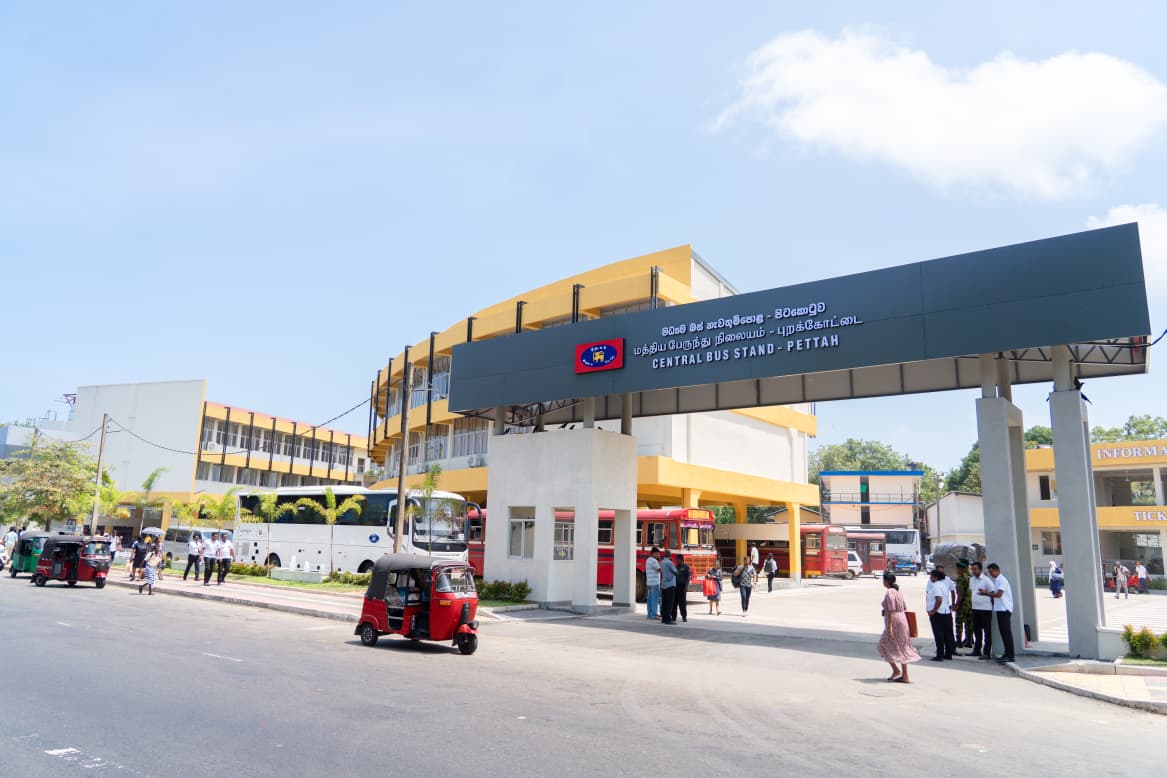
The Colombo Central Bus Stand, which has a history of over six decades and had remained without a proper maintenance for many years, has now been renovated under the current government’s development programme and vested to the public. Following that, the Prime Minister undertook an inspection tour of the newly renovated Colombo Central Bus Stand.
Originally constructed in 1964, the bus stand was refurbished with modern facilities to meet current needs and was officially reopened to the public on April 8. The primary objective of this initiative is to provide passengers with a higher-quality and more comfortable transportation service.
During the renovation process, special attention has been given to the comfort and safety of women, which was commended by the Prime Minister. In particular, a modern rest area designed to ensure privacy for nursing mothers travelling from distant areas received special praise.
The Prime Minister also reviewed the newly introduced passenger seat reservation system and information services established to assist commuters. In addition, the modern surveillance unit and other security measures installed within the premises to ensure passenger safety were also inspected.
During the visit, the Prime Minister engaged in conversations with passengers at the bus stand and inquired about their views on the newly renovated facilities and the quality of transport services.
It was emphasized that the government’s objective is to transform public transportation into a safe, technologically advanced service that can be used with convenience by all citizens.

(Prime Minister’s Media Division)
Latest News
Sun directly overhead Nagawilluwa, Galgamuwa, Sigiriya, Palugasdamana and Mankerni about 12:11 noon today (10)

On the apparent northward relative motion of the sun, it is going to be directly over the latitudes of Sri Lanka from the 05th to 15th of April in this year.
The nearest areas of Sri Lanka over which the sun is overhead today (10th) are Nagawilluwa, Galgamuwa, Sigiriya, Palugasdamana and Mankerni about 12:11 noon.
No-faith motion to be taken up today
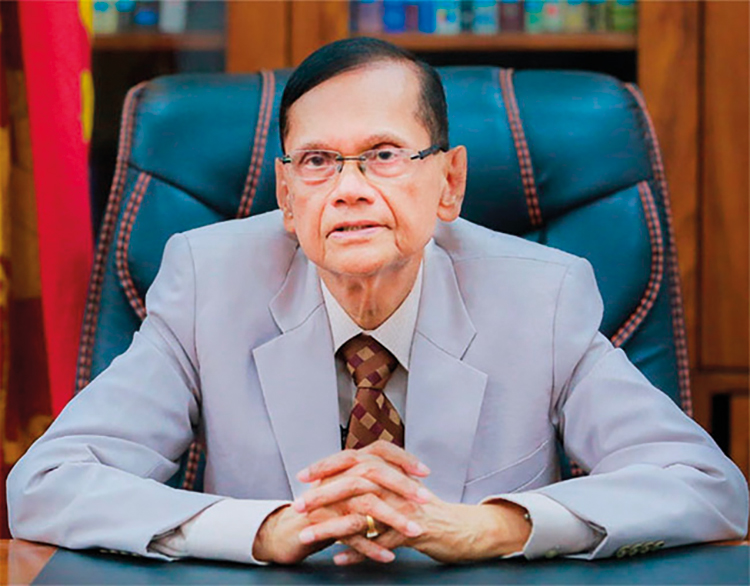
Former Foreign Minister Prof. G. L. Peiris yesterday (9) said that President Anura Kumara Dissanayake should remove Energy Minister Kumara Jayakody unless the minister stepped down on his own.Prof. Peiris, addressing a press conference called by the Opposition, said that Jayakody couldn’t under any circumstance continue to serve as a minister after the Commission to Investigate Allegations of Bribery or Corruption (CIABOC) moved the Colombo High Court against the government member over a previous financial scandal.
Pointing out that Minister Jayakody had been indicted of a corrupt deal struck during the yahapalana regime, Prof. Peiris said it was wrong for the NPP to retain him as a minister, claiming that the offence was not committed during his tenure as a Cabinet minister in the current government.
Prof. Peiris and several other Opposition members dealt with the No-Confidence Motion (NCM) against Jayakody that would be taken up today (10) with the academic calling the vote an acid test for the NPP. Having campaigned on an anti-corruption platform at presidential and parliamentary polls, the NPP couldn’t protect Jayakody though he was widely believed to be close to President Dissanayake.
As the Manager of the Procurement and Import Division of the Ceylon Fertilizer Company, Jayakody is alleged to have committed the offence of corruption, according to CIABOC.
Jayakody has been accused of causing a loss of Rs. 8,859,708 to the State by influencing and exploiting the procurement process.
Following the serving of indictments on 27 March, the judge ordered Jayakody’s release on two personal bail bonds of Rs. 1 million each. The court directed that the defendant’s fingerprints be obtained and a formal report be submitted. The case has been scheduled for a pre-trial conference on 6 May.
Prof. Peiris stressed that the CIABOC action against Jayakody is central to the NCM primarily moved over the irregularities ridden coal procurement process launched in 2025 that caused severe disruption to the power generation. Responding to The Island query after the media briefing, Prof Peiris expressed surprise that the JVP/NPP accommodated a person under investigation by the CIABOC. Having taken an utterly irresponsible decision, the JVP/NPP were now playing down the developing issue, prof. Peiris said.
The entire government parliamentary group faced the prospect of having its image tarnished by defending Jayakody, the former lawmaker said.
Prof. Peiris said that they intended to build a campaign around the issues involving the energy minister to expose the government. With yet another electricity tariff hike in the offing due to the growing demand for thermal generation as a result of coal-fired Lakvijaya power plant’s failure to meet the requirement[RA1] , the energy minister and ministry’s performances have to be examined, Prof. Peiris said.The timely release of the Auditor General’s report on controversial coal procurement should compel the government to decide on the energy minister’s fate or be prepared to face the fallout.
By Shamindra Ferdinando

Brazil bowler Laura Cardoso takes 9 Lesotho wickets in record-breaking T20 win

Zimbabwe Women set for maiden tour of Pakistan

Bangladesh advance match timings to save energy

PM on inspection tour of newly renovated Colombo Central Bus Stand

Israel to hold direct talks with Lebanon but no ceasefire, Netanyahu says

Sun directly overhead Nagawilluwa, Galgamuwa, Sigiriya, Palugasdamana and Mankerni about 12:11 noon today (10)

‘Dates have the highest sugar content to fight Coronavirus’

Sunday Island 27 December – Headlines

#SundayIsland 17th December – Headlines

Sunday Island – 28th March

Sunday Island Headlines – 21 March

Sunday Island – 21st February – Headlines
-

 Features5 days ago
Ranjith Siyambalapitiya turns custodian of a rare living collection
-

 News5 days ago
Global ‘Walk for Peace’ to be held in Lanka
-

 News3 days ago
Lankan-origin actress Subashini found dead in India
-

 Features5 days ago
Beyond the Blue Skies: A Tribute to Captain Elmo Jayawardena
-

 News1 day ago
AG: Coal procurement full of irregularities
-

 Features5 days ago
Aspects of Ceylon/Sri Lanka Foreign Relations – 1948 to 1976
-

 Business1 day ago
Hayleys Mobility introduces Premium OMODA C9 PHEV
-

 Sports1 day ago
DS to face St. Anthony’s in ‘Bridges of Brotherhood’ cricket encounter