
News
Ex-COPE Chairman alleges executive intervention in House committees

… warns of move to bring public finance under President’s thumb
By Shamindra Ferdinando
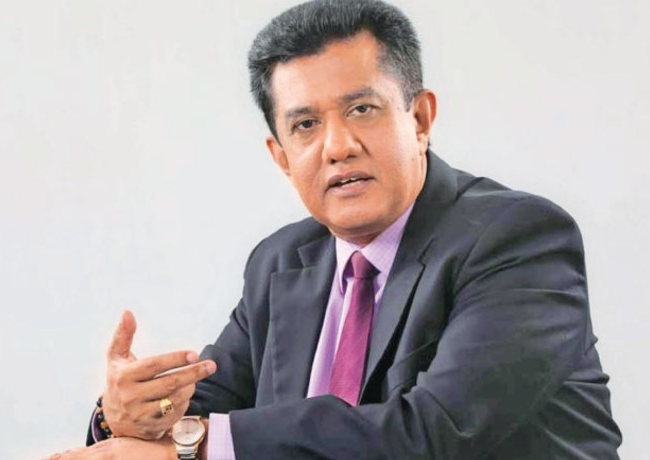
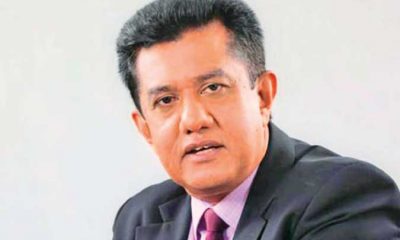
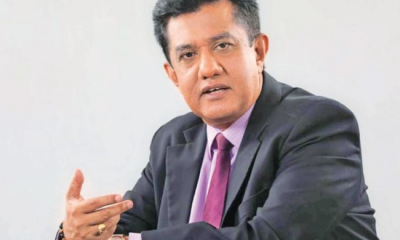
Dissident SLPP MP Prof. Charitha Herath says that President Ranil Wickremesinghe has interfered with the functioning of parliamentary committees in violation of Standing Order No 111.
The former Chairman of the Committee on Public Enterprises (COPE) warns of dire consequences of what he called the President’s high-handed action.
The unprecedented intervention made by the executive in the legislature should be examined against the backdrop of President Ranil Wickremesinghe continuing to hold the vital Finance portfolio, Prof. Herath said. “In other words, the most vital parliamentary responsibility is in the hands of a person who does not represent Parliament.”
Prof. Herath said so commenting on recent written instructions issued by Presidential Secretary, Saman Ekanayake, to Secretaries to the Ministries, who functioned as the Chief Accounting Officers. The action couldn’t be justified on the basis that Speaker Mahinda Yapa Abeywardena and Secretary General of Parliament, Kushani Rohanadeera, have been informed of the issuance of instructions to Ministry Secretaries. These instructions pertained to three watchdog committees, COPE, COPA (Committee of Public Accounts) and COPF (Committee of Public Finance) and all Sectoral Oversight Committees.
Prof. Herath emphasised that the executive should not be allowed to interfere in parliamentary committees, under any circumstances.
The controversial declaration that the participation of Ministry Secretaries would be subject to the approval of relevant ministers and prior consultations between the Chairman of committees and the ministers regarding the subject matter before the actual proceedings could simply make the entire process ineffective, Herath, who is a one-time Media Ministry Secretary, told The Island.
Pointing out that Cabinet ministers exercised executive powers in Parliament, the academic said that Speaker Abeywardena in consultation with leaders of political parties should address this issue or face the consequences.
The Parliament definitely owed an explanation to the public in this regard, Prof. Herath said, adding if Parliament meekly accepted the presidential intervention, the committee system could collapse.
Prof. Herath represents Nidahasa Janatha Sabhama, a constituent of Uthara Lanka Sabhagaya. Alleging that the move was transparently meant to bring parliamentary committees under President Wickremesinghe’s thumb, Prof. Herath urged the executive, legislature and judiciary to take advantage of the proceedings therein to restore public confidence in public finance.
Prof. Herath said that he was quite astonished that the executive ordered that participation of the Finance Ministry officials in committee proceedings should be subjected to the Finance Secretary’s approval. The lawmaker found fault with both print and electronic media for their reportage. In the absence of proper understanding of the latest development, the media focused on the Secretary to the President issuing instructions to Ministry Secretaries, the MP said. Instead, the media should have examined far reaching consequences of such a directive at a time the country was experiencing a deepening economic-political-social crisis.
Prof. Herath said that he had raised the issue of executive intervention when he participated in the debate on Carriage by Air (Amendment) Bill – Second Reading (Hon. Minister of Ports, Shipping and Aviation) last Friday (07) along with several other contentious issues such as the urgent need to restructure SriLankan Airlines and the despicable move to private profit-making public enterprises.
Prof. Herath dealt with the intervention made by the Secretary to the President and the appointment of a Parliamentary Select Committee (PSC) to investigate causes for financial bankruptcy. The executive intervention coincided with the setting up of a PSC, the ex-COPE head said. Declaring that he had absolutely no issue with any of the members picked for the PSC, Prof. Herath questioned the eligibility of some of the members.
The Speaker last Thursday (06) announced the following MPs to the PSC. SLPP General Secretary Sagara Kariyawasam, Pavitradevi Wanniarachchi SLPP), D.V. Chanaka (SLPP), Vijitha Herath (JVP), Mahindananda Aluthgamage (SLPP), Eran Wickremaratne (SJB), Ashok Abeyseinghe (SJB), Jayantha Kategoda (SLPP), Harshana Rajakaruna (SJB), Pradeep Udugoda (SLPP), Sanjeewa Edirimanna (SLPP), Nalaka Bandara Kottegoda (SLPP), Shanniyakan Rasamanikkam (TNA) and Prof. Ranjith Bnadara (SLL).
Prof. Herath questioned the failure on the part of the party leaders to choose him for the PSC. Underscoring the importance of establishing the circumstances leading to the declaration of bankruptcy in April 2022, the MP urged the PSC to take into consideration the Special Audit Report on financial management and public debt control in Sri Lanka 2018-2022.
Prof. Herath emphasized that about a week before the then President Gotabaya Rajapaksa quit office, the COPE under his chairmanship decided to have special committee meetings on the entire gamut of issues over a period of four days beginning July 19, 2022. But in the wake of President Gotabaya Rajapaksa’s ouster, the situation changed overnight and Ranil Wickremesinghe elected by the SLPP as President to complete the remainder of his predecessor’s five-year term prorogued Parliament to cause the automatic dissolution of all committees, MP Herath said.
When COPE was reconvened Prof. Herath was not at least accommodated in the watchdog committee.
Prof. Herath stressed that the COPE just over a year ago called for the establishment of a Special PSC to investigate the economic fallout. But the PSC set up by Speaker Abeywardena didn’t meet expectations of those who expected a genuine effort to identify shortcomings, blunders and negligence at every level, lawmaker Herath said.
During last Friday’s debate, MP Herath said that the proposed investigation should study the yahapalana period (2015-2019) and the period thereafter. The leasing of Hambantota port for a period of 99-years to China, disruption of Colombo Port City project, Treasury bond scams in 2015 and 2016 and procurement ISBs worth over USD 12 bn during the Yahapalana administration contributed and influenced the overall crisis, the MP said.
Prof. Herath said that those at the helm of political leadership still pursued neo-liberal policies though they failed to achieve success. The academic strongly advised the country should at least now adopt what he called social democratic economic policy.
Commenting on the deepening crisis at Sri Lankan Airlines, Prof. Herath said that the government and Opposition without further delay should sink their differences on this issue.
Asserting bankrupt Sri Lanka couldn’t afford to maintain an airline of its own, Prof. Herath said that they should explore ways and means of restructuring the airline. Profit making ground handling, catering and fuel supplies, too, should be part of that restructuring deal as prospective buyers wouldn’t consider Sri Lanka’s offers unless profit making elements were part of the agreement, he said.
However, the government seemed much more interested in restructuring cash cows such as Sri Lanka Insurance, national gas supplier Litro and Litro Gas Terminal Lanka Pvt Ltd. The MP said that Lanka Hospitals earmarked for restructuring was doing well.
Prof. Herath also appealed that the government maintained a social security network to protect the needy and also continue with free medical and education regardless of difficulties.








Latest News
Heat index likely to increase up to ‘Caution level’ at some places in the Northern, North-central, North-western, Western, Sabaragamuwa, Southern and Eastern provinces and Monaragala district


Warm Weather Advisory
Issued by the Natural Hazards Early Warning Centre at 3.30 p.m. on 11 April 2026, valid for 12 April 2026
The Heat index, the temperature felt on the human body is likely to increase up to ‘Caution level’ at some places in the Northern, North-central, North-western, Western, Sabaragamuwa, Southern and Eastern provinces and Monaragala district.
The Heat Index Forecast is calculated by using relative humidity and maximum temperature and this is the condition that is felt on your body. This is not the forecast of maximum temperature. It is generated by the Department of Meteorology for the next day period and prepared by using global numerical weather prediction model data.

Effect of the heat index on human body is mentioned in the above table and it is prepared on the advice of the Ministry of Health and Indigenous Medical Services.
ACTION REQUIRED
Job sites: Stay hydrated and takes breaks in the shade as often as possible.
Indoors: Check up on the elderly and the sick.
Vehicles: Never leave children unattended.
Outdoors: Limit strenuous outdoor activities, find shade and stay hydrated.
Dress: Wear lightweight and white or light-colored clothing.
Note: In addition, please refer to advisories issued by the Disaster Preparedness & Response Division, Ministry of Health in this regard as well. For further clarifications please contact 011-7446491.
Latest News
Sun directly overhead Cheddikulam, Kebithigollewa, Gomarankadawala and Nilaveli about 12:11 noon. today [12]

On the apparent northward relative motion of the sun, it is going to be directly over the latitudes of Sri Lanka from 05th to 15th of April in this year.
The nearest areas of Sri Lanka over which the sun is overhead today (12th) are Cheddikulam, Kebithigollewa, Gomarankadawala and Nilaveli about 12:11 noon.


The Ceylon Electricity Board (CEB) has directed owners of large-scale rooftop solar systems to temporarily disconnect their installations for a 10-day period beginning from Friday (April 10), citing growing concerns over grid stability amid low electricity demand and high solar generation.
The directive applies to rooftop solar systems exceeding 300 kW capacity, which are required to remain switched off until April 20. The move coincides with the extended holiday season, during which national electricity demand typically declines, alongside prevailing sunny weather conditions that significantly increase solar output.
Senior electrical engineers told The Island that the decision, though exceptional, was necessitated by operational risks posed to the national grid.
“We are seeing a pronounced imbalance between supply and demand,” a senior CEB system control engineer said. “With industries and commercial establishments operating at reduced levels during the holidays, demand drops. At the same time, solar generation remains high, creating excess power that the grid struggles to absorb.”
He explained that such imbalances could lead to fluctuations in system frequency, potentially threatening the stability of the grid. “If generation exceeds demand, frequency rises beyond acceptable limits.
This can trigger automatic protection mechanisms or, in extreme cases, lead to partial outages.”Another senior engineer attached to the transmission division noted that managing distributed solar generation remains a technical challenge.
“Unlike conventional power plants, rooftop solar systems are not centrally dispatchable. We cannot directly control their output in real time. This limits our ability to balance the system during periods of excess generation,” he said.
He added that the country’s grid infrastructure is still adapting to the rapid growth of renewable energy. “We lack sufficient large-scale battery storage and advanced grid management systems to effectively handle these fluctuations. Until such capabilities are enhanced, temporary curtailment becomes necessary.”
Engineers also pointed out that conventional thermal plants cannot be abruptly shut down or adjusted to compensate for sudden surges in solar generation.
“These plants require minimum stable operating levels. When solar floods the grid during low demand, it creates operational constraints that are not easy to manage,” one official said.
The CEB, in its statement, expressed appreciation for the cooperation of solar system owners affected by the measure, stressing that it is a short-term intervention aimed at ensuring uninterrupted and stable electricity supply across the country.
Energy experts say the development underscores the urgent need for grid modernization, including investment in battery energy storage systems, smart grid technologies, and improved demand-side management.
“This is part of the transition challenge,” an independent analyst noted. “As solar penetration increases, the grid must evolve to become more flexible. Otherwise, curtailment will remain a recurring necessity.”
Despite the temporary shutdown, CEB engineers reaffirmed their commitment to expanding renewable energy.
“Solar power is a key pillar of Sri Lanka’s future energy mix,” a senior engineer said. “But integration must be carefully managed. Grid stability cannot be compromised.”
The temporary disconnection order, which took effect yesterday, marks a critical moment in Sri Lanka’s energy transition—highlighting both the progress made in renewable energy adoption and the technical hurdles that remain.
By Ifham Nizam

Showers expected in the Western, Sabaragamuwa, Central, Southern, North-western and Uva provinces and in Ampara, Batticaloa and Polonnaruwa districts after 1.00 p.m.

Heat index likely to increase up to ‘Caution level’ at some places in the Northern, North-central, North-western, Western, Sabaragamuwa, Southern and Eastern provinces and Monaragala district

Sun directly overhead Cheddikulam, Kebithigollewa, Gomarankadawala and Nilaveli about 12:11 noon. today [12]

Peru holds presidential election amid decade of political tumult

CEB orders temporary shutdown of large rooftop solar systems

Cost of Sinhala-Tamil New Year ‘Kevili Table’ up 7% in 2026 – DCS Data

‘Dates have the highest sugar content to fight Coronavirus’

Sunday Island 27 December – Headlines

#SundayIsland 17th December – Headlines

Sunday Island – 28th March

Sunday Island Headlines – 21 March

Sunday Island – 21st February – Headlines
-

 News5 days ago
Lankan-origin actress Subashini found dead in India
-

 News3 days ago
AG: Coal procurement full of irregularities
-

 Business2 days ago
Israeli attack on Lebanon triggers local stock market volatility
-

 Business3 days ago
Hayleys Mobility introduces Premium OMODA C9 PHEV
-

 Business2 days ago
HNB Assurance marks 25 years with strategic transformation to ‘HNB Life’
-

 Sports3 days ago
DS to face St. Anthony’s in ‘Bridges of Brotherhood’ cricket encounter
-
 News4 days ago
AKD admits import of substandard coal, blames technicalities and supplier
-

 News5 days ago
UN Regional Director launches SL’s first Country Gender Equality Profile during official visit