
News
Ex-Aussie PM stresses need to help smaller nations withstand coercion

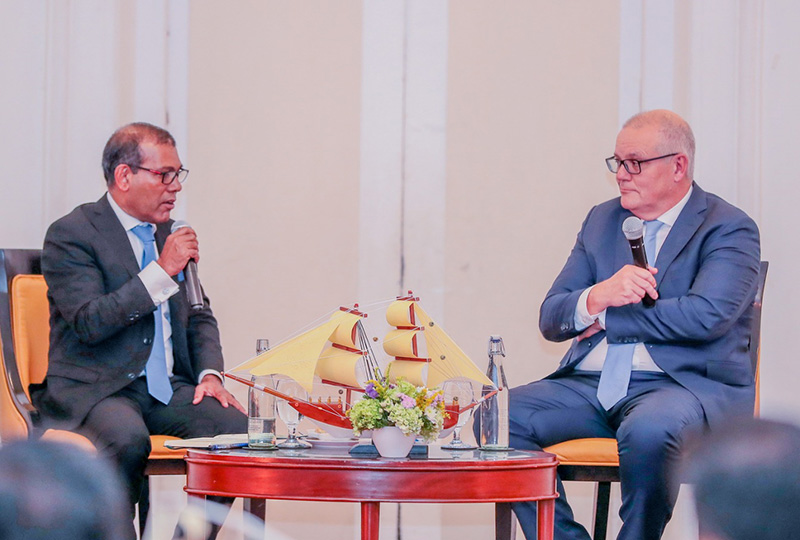
Former Australian Prime Minister Scott Morrison yesterday underscored the strategic importance of the Indian Ocean and Australia’s role in supporting smaller and developing countries in navigating geopolitical pressures, the President’s Media Division said.
Addressing the Indian Ocean Sovereignty and Cooperation at the Colombo Summit, Morrison emphasized the need for nations to resist coercion and maintain sovereignty, especially in the face of increasing influence from major powers. Morrison highlighted that the current global political landscape is influenced more by economic conditions rather than shifts in ideology. Reflecting on the aftermath of the COVID-19 pandemic, Morrison noted its significant economic disruption and the resultant inflation due to necessary fiscal measures taken during the crisis.
He pointed out that these measures, while essential, have led to increased interest rates and exacerbated cost-of-living issues globally, the PMD said.
He also discussed the increasing defence budgets worldwide, driven by the need for heightened global security, which also contributes to inflation. This new economic environment, marked by expansionary fiscal policies and higher interest rates, presents challenges that governments must navigate.
Morrison stressed the importance for governments and businesses to understand and factor in geopolitical risks when making economic decisions.
The event, followed by a discussion and moderated question-and-answer session led by Geopolitical Cartographer Co-Patron Mohamed Nasheed, former President of the Maldives, drew a distinguished audience.
Executive Director of the Geopolitical Cartographer, Rishan de Silva, opened the event by highlighting the historical significance of the Crystal Building, once the grandstand for the Race Course after 1821 and later the clubhouse of the Colombo Club, noting its transformation into one of the finest ballrooms in the country.
During the discussion moderated by Mohamed Nasheed, Morrison addressed various geopolitical issues. He acknowledged the challenges faced by smaller nations and highlighted Australia’s commitment to supporting these nations in maintaining their sovereignty and resisting external pressures. Morrison discussed the importance of regional cooperation, particularly within the framework of the Quad, and the need for greater humanitarian, economic, and strategic collaboration in the Indian Ocean.
Among the attendees were former Speaker Karu Jayasuriya, Foreign Secretary, Aruni Wijewardane, Australia’s High Commission Chargé d’Affaires, Lalita Kapur, Semih Lütfü Turgut from Turkey, Miyon Lee from South Korea, Katsuki Kotaro from Japan, Douglas Sonnek from the United States, Lars Bredal from the European Union, and René Everson-Varney from South Africa. Deputies from New Zealand and Italy, alongside representatives from India, Canada, China, and senior government officials including the Chief of Defence Staff, General Shavendra Silva. Civil society members, think tanks, and business leaders, including those from the Sri Lanka-Australia Business Council, also attended, the PMD said.





Latest News
Flood warning issued to the Divisional Secretariat Divisions of Ganga Ihala Korale, Udapalatha, Doluwa, Udunuwara, Yatinuwara, Gangawata Korale, Harispattuwa, and Pathadumbara


Due to heavy rainfall received in the upper catchment areas of the Mahaweli River over the past few hours, there is a risk of minor flooding in the low-lying areas surrounding the Mahaweli River within the Divisional Secretariat Divisions of Ganga Ihala Korale, Udapalatha, Doluwa, Udunuwara, Yatinuwara, Gangawata Korale, Harispattuwa, and Pathadumbara.Residents living in the above mentioned areas and motorists using roads passing through these areas are urged to exercise extreme caution and remain highly vigilant regarding the prevailing situation.
Furthermore, residents living in close proximity to the Mahaweli River in these areas are advised to remain highly alert to the situation and take all necessary precautions to protect themselves from any potential flooding.The relevant disaster management authorities are requested to take all necessary measures in response to this situation.

The National Building Research Organisation [NBRO] has issued landslide Red Alerts to the districts of Kandy, Kegalle and Nuwara Eliya effective from 14:00 hrs on 20.09.2026 To 14:00 hrs on 21.09.2026
Accordingly,
LEVEL III [RED] Land Slide early warnings have been issued to the Divisional Secretaries Divisions and surrounding areas of Pasbage Korale in the Kandy district, Dehiowita, Aranayake, Deraniyagala, Mawanella and Yatiyanthota in the Kegalle district and Kothmale West, Kotmale East, Ambagamuwa and Norwood in the Nuwara Eliya district
LEVEL II [AMBER] Land Slide early warnings have been issued to the Divisional Secretaries Divisions and surrounding areas of Padukka in the Colombo district, Nagoda, Thawalama and Neluwa in the Galle district, Bulathsinhala, Palindanuwara, Walallawita and Agalawatta in the Kalutara district, Ganga Ihala Korale in the Kandy district, Bulathkohupitiya and Kegalle in the Kegalle district, Akuressa and Pitabeddara in the Matara district, Thalawakele in the Nuwara Eliya district and Pelmadulla, Ratnapura, Ayagama, Kuruwita and Ratnapura in the Ratnapura district.
LEVEL I [YELLOW] Land Slide early warnings have been issued to the Divisional Secretaries Divisions and surrounding areas of Seethawaka in the Colombo district, Niyagama and Baddegama in the Galle district, Mirigama in the Gampaha district, Ingiriya in the Kalutara district, Udapalatha and Yatinuwara in the Kandy district, Galigamuwa, Warakapola and Ruwanwella in the Kegalle district, Kotapola, Pasgoda and Athuraliya in the Matara district, and Eheliyagoda, Kalawana and Elapatha in the Ratnapura district.
News
Development projects can deliver results to the people more quickly when the political authority and the public service work together towards a common goal – PM
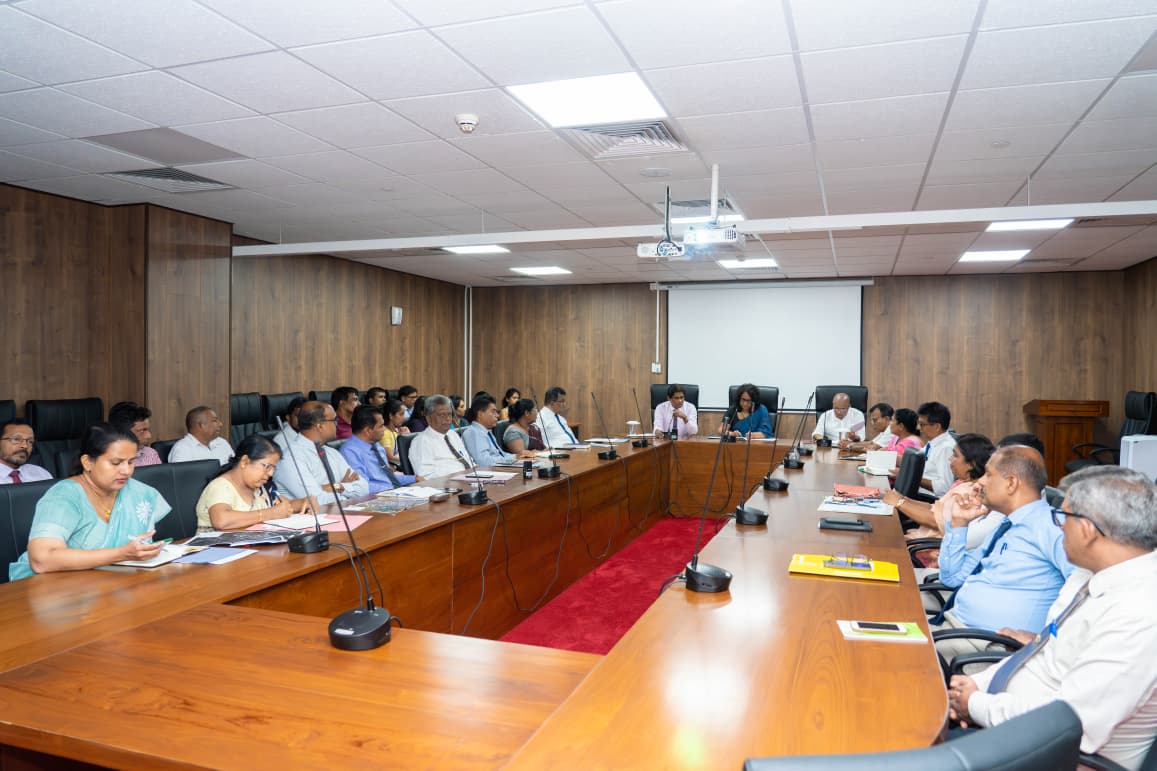
Prime Minister Dr. Harini Amarasuriya stated that development projects can deliver results to the people more quickly when the political authority and the public service work together towards a common, people-oriented objective.
The Prime Minister made these remarks while participating in a discussion held on Friday [September 18] at the Western Province Council Auditorium to review the progress of the development project to rehabilitate Rathmalana Kandawala Road and the drainage system on either side of the road, within the Dehiwala–Mount Lavinia Municipal Council limits in the Colombo District.
The project, which commenced on September 10, 2026, is scheduled to be completed before June 30, 2027. Implemented by the Provincial Road Development Authority (PRDA), the project includes the construction of a bridge at a cost of Rs. 64 million, the rehabilitation of the drainage system at a cost of Rs. 930 million, and the rehabilitation of the road at a cost of Rs. 115 million.
The Prime Minister also paid special attention to the progress of the responsibilities assigned to the Western Province Council, the Irrigation Department and the Ratmalana Divisional Secretariat in accordance with decisions taken at the previous committee meeting. Attention was also given to the current status of the plans being carried out by the Sri Lanka Land Development Corporation (SLLRDC), as well as the construction and maintenance activities being undertaken by the Provincial Road Development Authority (PRDA).
Commending the expedite and commendable progress of the project, the Prime Minister particularly appreciated the commitment demonstrated by officials of the relevant government institutions to work in close coordination with one another and in collaboration with the political authority.
The Prime Minister also emphasised the importance of taking measures well in advance to control flooding and minimise its impact on Colombo and several other districts in view of the rainy weather that may affect the Western Province during the latter part of this year.
The meeting was attended by the Chairman of the Colombo District Coordinating Committee and Member of Parliament Lakshman Nipuna Arachchi, Chairperson of the Ratmalana Divisional Coordinating Committee and Member of Parliament Samanmalee Gunasinghe, Chairman of the Roads Sub-Committee of the Colombo District Coordinating Committee Dewananda Suraweera, Mayor of the Dehiwala–Mount Lavinia Municipal Council Parakum Shantha, Chief Secretary of the Western Province K.G. Pradeep Pushpakumara, along with a number of government officials.
[Prime Minister’s Media Division]

Flood warning issued to the Divisional Secretariat Divisions of Ganga Ihala Korale, Udapalatha, Doluwa, Udunuwara, Yatinuwara, Gangawata Korale, Harispattuwa, and Pathadumbara

Landslide Red Alerts issued to the districts of Kandy, Kegalle and Nuwara Eliya

Shafali dazzles with 49-ball unbeaten 100 and India march into Asian Games final

Development projects can deliver results to the people more quickly when the political authority and the public service work together towards a common goal – PM

Landslide Early Warnings issued to the Districts of Colombo, Galle, Kalutara, Kandy, Kegalle, Matara, Nuwara Eliya and Ratnapura

Chamari Athapaththu’s unbeaten 83 leads Sri Lanka into final

‘Dates have the highest sugar content to fight Coronavirus’

Sunday Island 27 December – Headlines

#SundayIsland 17th December – Headlines

Sunday Island – 28th March

Sunday Island Headlines – 21 March

Sunday Island – 21st February – Headlines
-

 Opinion7 days ago
From Galkissa (Mount Lavinia) to Tambuttegama
-

 News4 days ago
US embassy won’t comment on IGP’s probe into joint drug raid
-

 Features6 days ago
The emptying university: why are academics leaving?
-

 Features7 days ago
Sri Lanka’s university crisis: Brain drain and union action demand urgent reform
-

 News3 days ago
Bid for Basil’s extradition nears final stage: Police
-

 Business4 days ago
All-new Bolero MaXX unveiled in Sri Lanka
-

 Opinion7 days ago
Ashraff: From the SLMC towards the National Unity Alliance
-

 Editorial7 days ago
Muscle flexing, astroturfing and dog-and-pony shows