
Features
Equality Before the Law

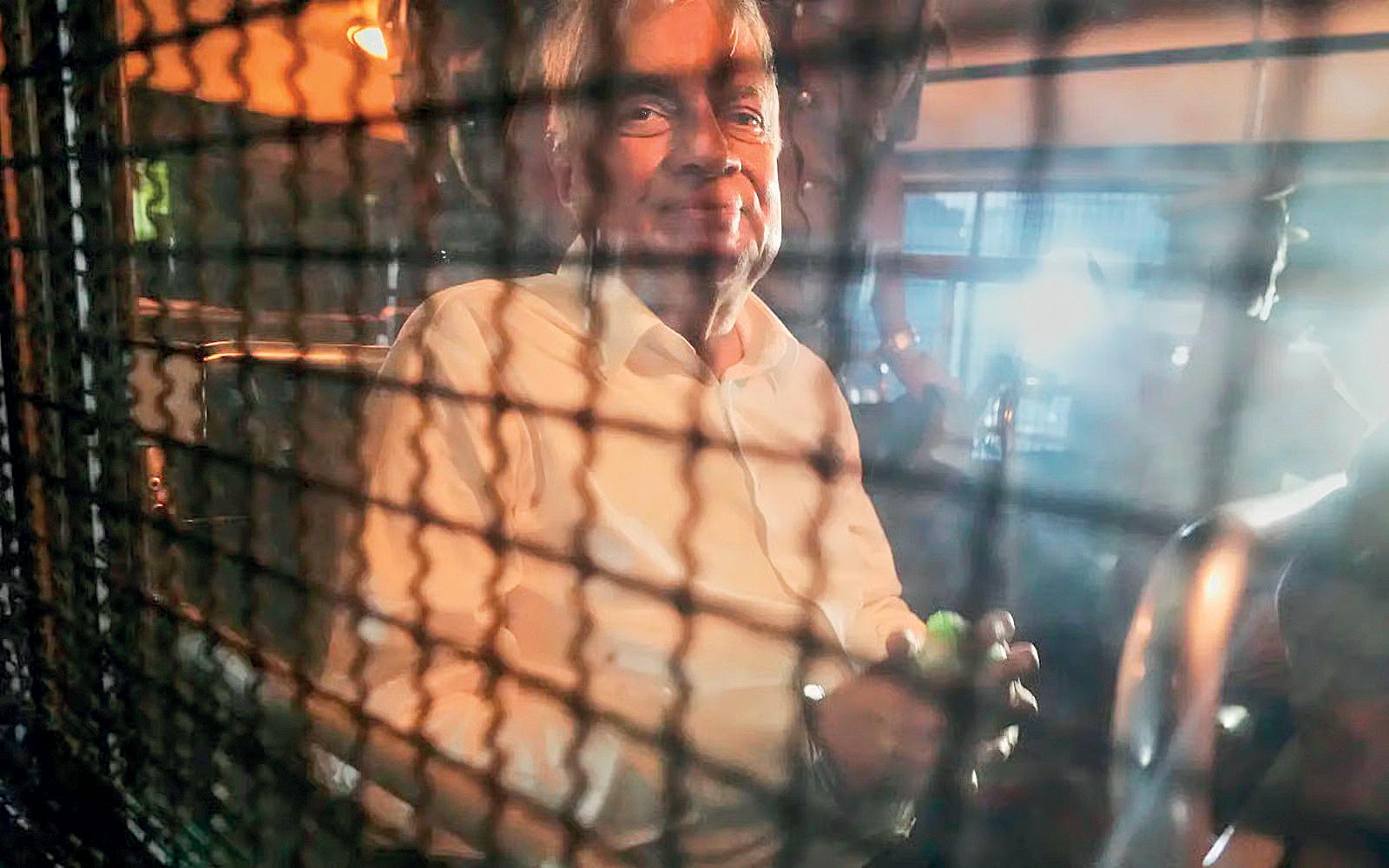
On August 22, 2025, at the Colombo Fort magistrate’s court, a Sri Lankan citizen named Ranil Wickremesinghe(RW) arraigned before the presiding judge, the Honourable Ms Nilupuli Lankapura, was committed to remand custody, pending investigations in to charges of alleged misuse of public funds for a private purpose, whilst holding a public office of the highest sensitivity, responsibility, prominence and importance. When the alleged offence was committed, the alleged fraudster had been the President of the Republic of Sri Lanka; not elected by the people’s will, but levered in to the position by the convergence of several unlikely circumstances.
What was Wickremesinghe’s alleged crime?
Whilst returning from an official visit to Cuba and the United States of America, detouring to England on September 22 and 23, 2023, to attend the conferment of an honorary award to his wife, Maithree, from the University of Wolverhampton, UK, with all connected personal costs incurred during that period – LKRs 16.9 mn (approximately USD 56,000/ British Pounds Sterling 42,000)- being accounted for as government expenses.
The law invoked in the learned magistrate’s order was that embedded in the “Offences Against Public Property” Act no 12 of 1982 – subsequently amended in 1999 – enacted by the very parliament of which the alleged fraudster was a cabinet minister. It is an Act with zero tolerance for wrongdoers, giving minimal flexibility for the arguments of lawyers representing accused clients.
So far everything is as it should have been. The law was taking its course, as it had, under similar circumstances, in the case of public servants Lalith Weeratunge and Anusha Pelpita in 2018, and more recently in the case of serving member of parliament Chamara Sampath – released on bail pending further inquiry – whilst ex-cabinet minister Mahindananda Aluthgamage and a few others have already been convicted and are serving sentences of varying severity.
The offences committed by those convicted, and those alleged to have been committed by the many politicians and public servants currently under investigation, are very similar to that which is alleged to have been committed by Wickremesinghe; misuse of public funds.
Whilst the sentencing of the above mentioned individuals did evoke sympathetic responses from colleagues and proponents, the detention order on RW has been elevated, by a segment of the parliamentary opposition and politicians, mostly both out-of-power and out-of-office, to an event of national significance. It is being seen as an “assault on democracy” and a sinister dictatorial measure implemented by the present National People’s Power government, perhaps even being a precursor to one-party rule.
The arrest and detention of Ranil Wickremesinghe, elite politician and former Prime Minister and President, appears to have catalyzed the unification of a hitherto fragmented opposition; in fact, those who are purporting to stand shoulder to shoulder behind RW are the very leaders who were unable to unite when the nation was faced with its most severe crises in recent times, such as the good Friday massacres of 2019 and the financial meltdown following Gotabaya Rajapaksa’s ouster in 2022.
Equally surprising, or shocking, is that instead of echoing the sentiments most members of the general public, who would be rejoicing the breaching of the barrier of elite impunity, that failed politicians should see this event as an attack on democracy. Whilst the majority see this event as a demonstration of the impartiality of the legal process, and a further step forward in the present government’s mission of institutional reform, disempowered politicians are calculatedly positing it as a strategy in the sidelining of key opponents and the weaponization of the law for political ends.
The question then begs itself; why should a government with a massive parliamentary majority, assured of an operational life of another four years, seek to neutralize a man who has already been politically neutered by the unequivocal rejection of the electorate, despite the role he played in revitalizing a broken economy? It requires a wild stretch of imagination to conceive RW, or the party he pretends to lead, as a threat to the ruling regime as at present, or in a future election.
Speaking of attacks on democracy, it is not surprising that the political personalities now supporting RW, should have so quickly forgotten the latter’s personal attacks on democracy, such as his refusal, when president, to hold local body elections and his personally ordered assault on the “Aragalaya” encampment.
The internal contradictions inherent in RW’s former critics and detractors in supporting him now only exposes their lack of credibility and clear political opportunism. For many – too numerous to name – relegated to the political wilderness by the electoral success of the NPP, it is again an opportunity for being presented to the public eye. Their very reactions signify the shock of seeing an elite member of the political class that has been hitherto shielded from accountability, now being held responsible for his transgressions.
Coupled with shock is the apprehension that the tumbril of justice may reach them as well. If a former president and a six-times prime minister can be arrested and incarcerated, then there is no longer impunity in privilege, power and position.
Mahinda Rajapaksa and Maithripala Sirisena, former adversaries, have now realigned as possible victims of transformative justice. Sirisena, who, when president, once removed Wickremesinghe from prime-ministership in the most undemocratic manner, now rants about the erosion of democracy. Mahinda Rajapaksa has dismissed RW’s alleged crime as a “minor matter”; unsurprising, from a man who stands accused of criminality of gigantic proportions.
Sajith Premadasa has opted for a separate, calibrated response, without personally joining the broad opposition front of sympathy for RW, perhaps in cognizance of the general voter sentiment of silent solidarity with the decision of the court, or the general public’s clear lack of interest in RW’s fate.
The lack of public sympathy for RW was demonstrated clearly by the small number of people- perhaps less than a thousand- gathered around the court premises on the day of the bail hearing. It is quite likely that the gathering comprised hastily summoned supporters of a largely defunct and fragmented UNP, without any active support from either the Rajapkasa “Pohottuwa” or the Samagi Jana Balavegaya (SJB).
By denouncing RW’s arrest as authoritarian and vengeful, the opposition, completely ignoring that there is a serious financial misdemeanour at play, are attempting to position themselves, not as defenders of a corrupt old order, but as protectors and custodians of democracy, although they have benefited mightily from that very order. Despite all the “holier than thou” posturing demonstrated to the public in the past few days, the voter is unlikely to be deceived.
The irony of cohorts of disempowered politicians, themselves standing accused of a variety of financial improprieties whilst in power, now defending an accused colleague in the guise of protecting democracy, is not about principle but about optics and self-preservation. When the guilty feel threatened differences are set aside for mutual protection.
It is also a fragmented and discredited opposition struggling desperately for relevance and even a vestige of political traction. Their crusade, a’ la’ RW, is also another aspect of a sustained opposition campaign, conducted through press, compliant electronic media and social media, to discredit every corrective initiative the government has launched since it came in to power.
There was also the ugliness witnessed outside the Fort Magistrate’s court on August 26, whilst RW’s bail application was being heard in court, perceived by most right-thinking people as public pressure and orchestrated intimidation against the honourable court.
This was in addition to the circulation of video footage of the previous hearing, being circulated through social media. Taken individually or together, both acts point to clear contempt of court, in which even some lawyers may have been complicit. In the above context RW’s release on bail, although ostensibly under “exceptional circumstances”, has been subject to much speculation.
This writer is unapologetically supportive of President Anura Kumara Dissanayake’s (AKD) reformist platform, which has also been placed on trial by a visibly nervous opposition. AKD is clearly aware of the size, shape and nature of every problem facing the country and is, without doubt, the only leader that this country has had in the last few decades, with that kind of grasp of realities.
Of all our problems the biggest is public corruption and the case under discussion is only a minute feature of it, in terms of size, though it looms large in nature, in view of the individual involved. RW, despite his lofty antecedents, is also just another citizen Perera or Silva, subject to the same body of laws and also entitled to its protection, when appropriate.
Transparency is a cornerstone of good governance, but the corrective strategies that the present regime has launched will not deliver the intended results, unless due processes are permitted to flow without disruption and those who breach the rules are legally punished. The law will finally judge whether RW is innocent or guilty but, in the meantime, it is also apposite for the government to be mindful of the case of “Ceasar’s wife”.
The regime has been accused by the opposition of turning a blind eye to its own alleged misdemeanours, as in regard to the unpoliced release of 323 containers from the port, and the allegations made against a few of the ruling party members of parliament. It must be remembered that the government, particularly when it claims such moral high ground, cannot maintain legitimacy unless it turns the light on itself when called for. It is therefore incumbent on the regime to impartially investigate the relevant issues and provide clarification to both parliament and the public.
By Anura Gunasekera ✍️



A prominent feature of the first year of the NPP government is that it has not engaged in the institutional reforms which was expected of it. This observation comes in the context of the extraordinary mandate with which the government was elected and the high expectations that accompanied its rise to power. When in opposition and in its election manifesto, the JVP and NPP took a prominent role in advocating good governance systems for the country. They insisted on constitutional reform that included the abolition of the executive presidency and the concentration of power it epitomises, the strengthening of independent institutions that overlook key state institutions such as the judiciary, public service and police, and the reform or repeal of repressive laws such as the PTA and the Online Safety Act.
The transformation of a political party that averaged between three to five percent of the popular vote into one that currently forms the government with a two thirds majority in parliament is a testament to the faith that the general population placed in the JVP/ NPP combine. This faith was the outcome of more than three decades of disciplined conduct in the aftermath of the bitter experience of the 1988 to 1990 period of JVP insurrection. The manner in which the handful of JVP parliamentarians engaged in debate with well researched critiques of government policy and actions, and their service in times of disaster such as the tsunami of 2004 won them the trust of the people. This faith was bolstered by the Aragalaya movement which galvanized the citizens against the ruling elites of the past.
In this context, the long delay to repeal the Prevention of Terrorism Act which has earned notoriety for its abuse especially against ethnic and religious minorities, has been a disappointment to those who value human rights. So has been the delay in appointing an Auditor General, so important in ensuring accountability for the money expended by the state. The PTA has a long history of being used without restraint against those deemed to be anti-state which, ironically enough, included the JVP in the period 1988 to 1990. The draft Protection of the State from Terrorism Act (PSTA), published in December 2025, is the latest attempt to repeal and replace the PTA. Unfortunately, the PSTA largely replicates the structure, logic and dangers of previous failed counter terrorism bills, including the Counter Terrorism Act of 2018 and the Anti Terrorism Act proposed in 2023.
Misguided Assumption
Despite its stated commitment to rule of law and fundamental rights, the draft PTSA reproduces many of the core defects of the PTA. In a preliminary statement, the Centre for Policy Alternatives has observed among other things that “if there is a Detention Order made against the person, then in combination, the period of remand and detention can extend up to two years. This means that a person can languish in detention for up to two years without being charged with a crime. Such a long period again raises questions of the power of the State to target individuals, exacerbated by Sri Lanka’s history of long periods of remand and detention, which has contributed to abuse and violence.” Human Rights lawyer Ermiza Tegal has warned against the broad definition of terrorism under the proposed law: “The definition empowers state officials to term acts of dissent and civil disobedience as ‘terrorism’ and will lawfully permit disproportionate and excessive responses.” The legitimate and peaceful protests against abuse of power by the authorities cannot be classified as acts of terror.
The willingness to retain such powers reflects the surmise that the government feels that keeping in place the structures that come from the past is to their benefit, as they can utilise those powers in a crisis. Due to the strict discipline that exists within the JVP/NPP at this time there may be an assumption that those the party appoints will not abuse their trust. However, the country’s experience with draconian laws designed for exceptional circumstances demonstrates that they tend to become tools of routine governance. On the plus side, the government has given two months for public comment which will become meaningful if the inputs from civil society actors are taken into consideration.
Worldwide experience has repeatedly demonstrated that integrity at the level of individual leaders, while necessary, is not sufficient to guarantee good governance over time. This is where the absence of institutional reform becomes significant. The aftermath of Cyclone Ditwah in particular has necessitated massive procurements of emergency relief which have to be disbursed at maximum speed. There are also significant amounts of foreign aid flowing into the country to help it deal with the relief and recovery phase. There are protocols in place that need to be followed and monitored so that a fiasco like the disappearance of tsunami aid in 2004 does not recur. To the government’s credit there are no such allegations at the present time. But precautions need to be in place, and those precautions depend less on trust in individuals than on the strength and independence of oversight institutions.
Inappropriate Appointments
It is in this context that the government’s efforts to appoint its own preferred nominees to the Auditor General’s Department has also come as a disappointment to civil society groups. The unsuitability of the latest presidential nominee has given rise to the surmise that this nomination was a time buying exercise to make an acting appointment. For the fourth time, the Constitutional Council refused to accept the president’s nominee. The term of the three independent civil society members of the Constitutional Council ends in January which would give the government the opportunity to appoint three new members of its choice and get its way in the future.
The failure to appoint a permanent Auditor General has created an institutional vacuum at a critical moment. The Auditor General acts as a watchdog, ensuring effective service delivery promoting integrity in public administration and providing an independent review of the performance and accountability. Transparency International has observed “The sequence of events following the retirement of the previous Auditor General points to a broader political inertia and a governance failure. Despite the clear constitutional importance of the role, the appointment process has remained protracted and opaque, raising serious questions about political will and commitment to accountability.”
It would appear that the government leadership takes the position they have been given the mandate to govern the country which requires implementation by those they have confidence in. This may explain their approach to the appointment (or non-appointment) at this time of the Auditor General. Yet this approach carries risks. Institutions are designed to function beyond the lifespan of any one government and to protect the public interest even when those in power are tempted to act otherwise. The challenge and opportunity for the NPP government is to safeguard independent institutions and enact just laws, so that the promise of system change endures beyond personalities and political cycles.
by Jehan Perera

 A new batch arrived at our Faculty again. Students representing almost all districts of the country remind me once again of the wonderful opportunity we have for promoting social and ethnic cohesion at our universities. Sadly, however, many students do not interact with each other during the first few semesters, not only because they do not speak each other’s language(s), but also because of the fear and distrust that still prevails among communities in our society.
General education reform presents an opportunity to explore ways to promote social and ethnic cohesion. A school curriculum could foster shared values, empathy, and critical thinking, through social studies and civics education, implement inclusive language policies, and raise critical awareness about our collective histories. Yet, the government’s new policy document, Transforming General Education in Sri Lanka 2025, leaves us little to look forward to in this regard.
The policy document points to several “salient” features within it, including: 1) a school credit system to quantify learning; 2) module-based formative and summative assessments to replace end-of-term tests; 3) skills assessment in Grade 9 consisting of a ‘literacy and numeracy test’ and a ‘career interest test’; 4) a comprehensive GPA-based reporting system spanning the various phases of education; 5) blended learning that combines online with classroom teaching; 6) learning units to guide students to select their preferred career pathways; 7) technology modules; 8) innovation labs; and 9) Early Childhood Education (ECE). Notably, social and ethnic cohesion does not appear in this list. Here, I explore how the proposed curriculum reforms align (or do not align) with the NPP’s pledge to inculcate “[s]afety, mutual understanding, trust and rights of all ethnicities and religious groups” (p.127), in their 2024 Election Manifesto.
Language/ethnicity in the present curriculum
The civil war ended over 15 years ago, but our general education system has done little to bring ethnic communities together. In fact, most students still cannot speak in the “second national language” (SNL) and textbooks continue to reinforce negative stereotyping of ethnic minorities, while leaving out crucial elements of our post-independence history.
Although SNL has been a compulsory subject since the 1990s, the hours dedicated to SNL are few, curricula poorly developed, and trained teachers few (Perera, 2025). Perhaps due to unconscious bias and for ideological reasons, SNL is not valued by parents and school communities more broadly. Most students, who enter our Faculty, only have basic reading/writing skills in SNL, apart from the few Muslim and Tamil students who schooled outside the North and the East; they pick up SNL by virtue of their environment, not the school curriculum.
Regardless of ethnic background, most undergraduates seem to be ignorant about crucial aspects of our country’s history of ethnic conflict. The Grade 11 history textbook, which contains the only chapter on the post-independence period, does not mention the civil war or the events that led up to it. While the textbook valourises ‘Sinhala Only’ as an anti-colonial policy (p.11), the material covering the period thereafter fails to mention the anti-Tamil riots, rise of rebel groups, escalation of civil war, and JVP insurrections. The words “Tamil” and “Muslim” appear most frequently in the chapter, ‘National Renaissance,’ which cursorily mentions “Sinhalese-Muslim riots” vis-à-vis the Temperance Movement (p.57). The disenfranchisement of the Malaiyaha Tamils and their history are completely left out.
Given the horrifying experiences of war and exclusion experienced by many of our peoples since independence, and because most students still learn in mono-ethnic schools having little interaction with the ‘Other’, it is not surprising that our undergraduates find it difficult to mix across language and ethnic communities. This environment also creates fertile ground for polarizing discourses that further divide and segregate students once they enter university.
More of the same?
How does Transforming General Education seek to address these problems? The introduction begins on a positive note: “The proposed reforms will create citizens with a critical consciousness who will respect and appreciate the diversity they see around them, along the lines of ethnicity, religion, gender, disability, and other areas of difference” (p.1). Although National Education Goal no. 8 somewhat problematically aims to “Develop a patriotic Sri Lankan citizen fostering national cohesion, national integrity, and national unity while respecting cultural diversity (p. 2), the curriculum reforms aim to embed values of “equity, inclusivity, and social justice” (p. 9) through education. Such buzzwords appear through the introduction, but are not reflected in the reforms.
Learning SNL is promoted under Language and Literacy (Learning Area no. 1) as “a critical means of reconciliation and co-existence”, but the number of hours assigned to SNL are minimal. For instance, at primary level (Grades 1 to 5), only 0.3 to 1 hour is allocated to SNL per week. Meanwhile, at junior secondary level (Grades 6 to 9), out of 35 credits (30 credits across 15 essential subjects that include SNL, history and civics; 3 credits of further learning modules; and 2 credits of transversal skills modules (p. 13, pp.18-19), SNL receives 1 credit (10 hours) per term. Like other essential subjects, SNL is to be assessed through formative and summative assessments within modules. As details of the Grade 9 skills assessment are not provided in the document, it is unclear whether SNL assessments will be included in the ‘Literacy and numeracy test’. At senior secondary level – phase 1 (Grades 10-11 – O/L equivalent), SNL is listed as an elective.
Refreshingly, the policy document does acknowledge the detrimental effects of funding cuts in the humanities and social sciences, and highlights their importance for creating knowledge that could help to “eradicate socioeconomic divisions and inequalities” (p.5-6). It goes on to point to the salience of the Humanities and Social Sciences Education under Learning Area no. 6 (p.12):
“Humanities and Social Sciences education is vital for students to develop as well as critique various forms of identities so that they have an awareness of their role in their immediate communities and nation. Such awareness will allow them to contribute towards the strengthening of democracy and intercommunal dialogue, which is necessary for peace and reconciliation. Furthermore, a strong grounding in the Humanities and Social Sciences will lead to equity and social justice concerning caste, disability, gender, and other features of social stratification.”
Sadly, the seemingly progressive philosophy guiding has not moulded the new curriculum. Subjects that could potentially address social/ethnic cohesion, such as environmental studies, history and civics, are not listed as learning areas at the primary level. History is allocated 20 hours (2 credits) across four years at junior secondary level (Grades 6 to 9), while only 10 hours (1 credit) are allocated to civics. Meanwhile, at the O/L, students will learn 5 compulsory subjects (Mother Tongue, English, Mathematics, Science, and Religion and Value Education), and 2 electives—SNL, history and civics are bunched together with the likes of entrepreneurship here. Unlike the compulsory subjects, which are allocated 140 hours (14 credits or 70 hours each) across two years, those who opt for history or civics as electives would only have 20 hours (2 credits) of learning in each. A further 14 credits per term are for further learning modules, which will allow students to explore their interests before committing to a A/L stream or career path.
With the distribution of credits across a large number of subjects, and the few credits available for SNL, history and civics, social/ethnic cohesion will likely remain on the back burner. It appears to be neglected at primary level, is dealt sparingly at junior secondary level, and relegated to electives in senior years. This means that students will be able to progress through their entire school years, like we did, with very basic competencies in SNL and little understanding of history.
Going forward
Whether the students who experience this curriculum will be able to “resist and respond to hegemonic, divisive forces that pose a threat to social harmony and multicultural coexistence” (p.9) as anticipated in the policy, is questionable. Education policymakers and others must call for more attention to social and ethnic cohesion in the curriculum. However, changes to the curriculum would only be meaningful if accompanied by constitutional reform, abolition of policies, such as the Prevention of Terrorism Act (and its proxies), and other political changes.
For now, our school system remains divided by ethnicity and religion. Research from conflict-ridden societies suggests that lack of intercultural exposure in mono-ethnic schools leads to ignorance, prejudice, and polarized positions on politics and national identity. While such problems must be addressed in broader education reform efforts that also safeguard minority identities, the new curriculum revision presents an opportune moment to move this agenda forward.
(Ramya Kumar is attached to the Department of Community and Family Medicine, Faculty of Medicine, University of Jaffna).
Kuppi is a politics and pedagogy happening on the margins of the lecture hall that parodies, subverts, and simultaneously reaffirms social hierarchies.
by Ramya Kumar

Certain songs become ever-present every December, and with Christmas just two days away, I thought of highlighting the Top 10 Most Popular Festive Songs.
The famous festive songs usually feature timeless classics like ‘White Christmas,’ ‘Silent Night,’ and ‘Jingle Bells,’ alongside modern staples like Mariah Carey’s ‘All I Want for Christmas Is You,’ Wham’s ‘Last Christmas,’ and Brenda Lee’s ‘Rockin’ Around the Christmas Tree.’
The following renowned Christmas songs are celebrated for their lasting impact and festive spirit:
* ‘White Christmas’ — Bing Crosby
The most famous holiday song ever recorded, with estimated worldwide sales exceeding 50 million copies. It remains the best-selling single of all time.
* ‘All I Want for Christmas Is You’ — Mariah Carey
A modern anthem that dominates global charts every December. As of late 2025, it holds an 18x Platinum certification in the US and is often ranked as the No. 1 popular holiday track.

Mariah Carey: ‘All I Want for Christmas Is You’
* ‘Silent Night’ — Traditional
Widely considered the quintessential Christmas carol, it is valued for its peaceful melody and has been recorded by hundreds of artistes, most famously by Bing Crosby.
* ‘Jingle Bells’ — Traditional
One of the most universally recognised and widely sung songs globally, making it a staple for children and festive gatherings.
* ‘Rockin’ Around the Christmas Tree’ — Brenda Lee
Recorded when Lee was just 13, this rock ‘n’ roll favourite has seen a massive resurgence in the 2020s, often rivaling Mariah Carey for the top spot on the Billboard Hot 100.
* ‘Last Christmas’ — Wham!
A bittersweet ’80s pop classic that has spent decades in the top 10 during the holiday season. It recently achieved 7x Platinum status in the UK.
* ‘Jingle Bell Rock’ — Bobby Helms
A festive rockabilly standard released in 1957 that remains a staple of holiday radio and playlists.
* ‘The Christmas Song (Chestnuts Roasting on an Open Fire)’— Nat King Cole
Known for its smooth, warm vocals, this track is frequently cited as the ultimate Christmas jazz standard.

Wham! ‘Last Christmas’
* ‘It’s the Most Wonderful Time of the Year’ — Andy Williams
Released in 1963, this high-energy big band track is famous for capturing the “hectic merriment” of the season.
* ‘Rudolph the Red-Nosed Reindeer’ — Gene Autry
A beloved narrative song that has sold approximately 25 million copies worldwide, cementing the character’s place in Christmas folklore.
Other perennial favourites often in the mix:
* ‘Feliz Navidad’ – José Feliciano
* ‘A Holly Jolly Christmas’ – Burl Ives
* ‘Let It Snow! Let It Snow! Let It Snow!’ – Frank Sinatra
Let me also add that this Thursday’s ‘SceneAround’ feature (25th December) will be a Christmas edition, highlighting special Christmas and New Year messages put together by well-known personalities for readers of The Island.

Implementation of the loan scheme, “Sustainable Agriculture Program”

Cabinet nod to implement ‘Suraksha’ Student Insurance Programme in the year 2025 / 26
Establishment of Consultancy Boards for strengthening and promoting local production industries.

Match fees more than doubled for women’s domestic cricketers in India

National progress can be achieved only when everyone fulfills the responsibilities entrusted to them with steadfast determination, unity of purpose and resilience in the face of any challenge – President

Indonesia’s Gede Priandana becomes first to pick five wickets in an over in T20Is

‘Dates have the highest sugar content to fight Coronavirus’

Sunday Island 27 December – Headlines

#SundayIsland 17th December – Headlines

Sunday Island – 28th March

Sunday Island Headlines – 21 March

Sunday Island – 21st February – Headlines
-

 Midweek Review6 days ago
How massive Akuregoda defence complex was built with proceeds from sale of Galle Face land to Shangri-La
-
 News5 days ago
Pope fires broadside: ‘The Holy See won’t be a silent bystander to the grave disparities, injustices, and fundamental human rights violations’
-

 News5 days ago
Pakistan hands over 200 tonnes of humanitarian aid to Lanka
-

 Business4 days ago
Unlocking Sri Lanka’s hidden wealth: A $2 billion mineral opportunity awaits
-

 News12 hours ago
Members of Lankan Community in Washington D.C. donates to ‘Rebuilding Sri Lanka’ Flood Relief Fund
-

 News6 days ago
Burnt elephant dies after delayed rescue; activists demand arrests
-

 Editorial6 days ago
Colombo Port facing strategic neglect
-

 News4 days ago
Army engineers set up new Nayaru emergency bridge