
Opinion
English as used in scientific report writing

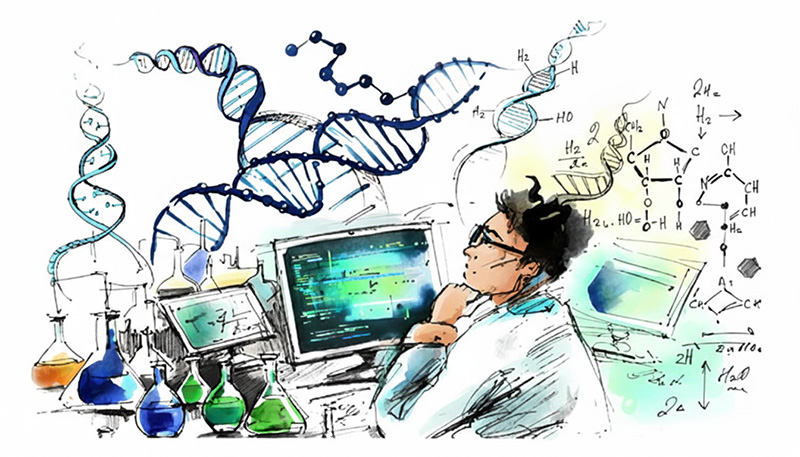
The scientific community in the English-speaking world publishes its research findings using technical and scientific English (naturally!). It has its own particular vocabulary. Many words are exclusive for a particular technology as they are specialised technical terms. Also, the inclusion in research papers of mathematical and statistical terms and calculations is important where they support the overall findings.
There is a whole array of specialist publications, journals, papers and letters serving the scientific community world-wide. These publications are by subscription only but can easily be found in university libraries upon request.
Academics quote the number of their research papers published with pride. They are the status symbols of personal achievement par excellence! And most importantly, these are used to help justify the continuation of funding for the upcoming academic year.
Such writings are carefully crafted works of precision and clarity. Not a word is out of place. All words used are nuanced to fit exactly the meaning of what the authors of the paper wish to convey. No word is superfluous (= extra, not needed); all is well manicured to convey the message accurately to a knowledgeable, receptive reader. As a result, people from all around the world are using the Internet to access these research findings thus establishing the English language as a major form of information dissemination.
Reporting is best when it is measurable and can be quantified. Figures mean a lot in the scientific world. Sizes, quantities, ranges of acceptance, figures of probability, etc., all are used to lend authority to the research findings.
Before a paper can be accepted for publication it must be submitted to a panel for peer review. This is where several experts in the subject or speciality form a panel to assess the work and approve or reject it. Careers depend on well-presented reports.
Preparation Before Starting Research
There is a standard procedure for a researcher to follow before any practical work is done. It is necessary to evaluate the current status of work in this subject. This requires reading all the relevant, available literature, books, papers, etc., on this subject. This is done for the student to get ‘up to speed’ and in tune with the preceding research work in this field. During this process new avenues for research and investigation may open up for investigation.
Much research is done incorporating the ‘design of experiments’ statistical approach. Research these days rely heavily on statistics to prove an argument and the researcher has to be familiar and conversant with these statistical techniques of inquiry and evaluation to add weight to his or her findings.
We are all much richer due to the investigations done in the English-speaking world by the investigative scientific community using English as a tool of communication. In scientific research, the best progress in innovation, it seems, is when students can all collaborate. Then the best ideas develop and come out.
Sri Lankans should not exclude themselves from this process of knowledge creation and dissemination. Sri Lanka needs to enter this scientific world and issue its own publications in good English. Sri Lanka needs experts who have mastered this form of scientific communication and who can participate in the progress of science!
The most wonderful opportunities open up from time to time for graduates of the STEM subjects (science, technology, engineering and mathematics) mainly in companies using modern technology. The reputation of Sri Lanka depends on having a horse in this race – quite apart from the need to provide suitable careers for its own population. People have ambitions and need to be able rise up intellectually and get ahead. Therefore, students in the STEM subjects need to be able to read, analyse and compare several different research papers, i.e., students need to have critical thinking skills – in English. Often, these skills have to be communicated. Students need to be able to write to this high standard of English.
Students need to be able to put their thoughts on paper in a logical, meaningful way, their thoughts backed up by facts and figures according to the principles of the academic, research world. But natural speakers of English have difficulties in mastering this type of English and doing analyses and critical thinking – therefore, it must be multiple times more difficult for Sri Lankans to master this specialised form if English. Therefore, special attention needs to be paid to overcoming this disadvantage.
In addition, the researcher needs to have knowledge of the “design of experiments,” and be familiar with everyday statistics, e.g., the bell curve, ranges of probability, etc.
How can this high-quality English (and basic stats) possibly be taught in Sri Lanka when most campuses focus on the simple passing of grammar exams?
Sri Lanka needs teachers with knowledge of this advanced, specialist form of English supported with statistical “design of experiments” knowledge. Secondly, this knowledge has to be organised and systematized and imparted over a sufficient time period to students with ability and maturity. Over to you NIE, Maharagama!
by Priyantha Hettige


Walking through Pettah market in Colombo, I have noticed something both obvious and troubling. Shop after shop sells bags, shoes, electronics, even sarees, and yet all shops are owned and run by men. Even businesses catering exclusively to women, like jewelry stores and bridal boutiques, have men behind the counter. This is not just my observation but it’s a reality where most Sri Lankans have observed as normal. What makes this observation more important is when we examine the demographics where women population constitute approximately 52% of Sri Lanka’s population, but their representation as business owners remains significantly low. According to the Global Entrepreneurship Monitor 2023 report, Sri Lanka’s Total Early Stage Entrepreneurial Activity rate for women is just 8.2%, compared to 14.7% for men.
Despite of being the majority, women are clearly underrepresented in the entrepreneurial aspect. This mismatch between population size and economic participation create a question that why aren’t more women starting ventures? The answer is not about capability or intelligence. Rather, it’s deeply in social and cultural barriers that have been shaping women’s mindsets for generations. From childhood, many Sri Lankan girls are raised to believe that their primary role is as homemakers.
In families, schools, and even universities, the message has been same or slightly different, woman’s success is measured by how well she manages a household, not by her ability to generate income or lead a business. Financial independence is rarely taught as essential for women the way it has been for men. Over time, this messaging gets internalised. Many women grew up without ever being encouraged to think seriously about ownership, leadership, or earning their own money. These cultural influences eventually manifest as psychological barriers as well.
Years of conditioning have led many skilled women to develop what researchers call “imposter syndrome”, a persistent fear of failure and feel that they don’t deserve success kind of feeling. Even when they have the right skills and resources, self-doubt holds them back. They question whether they can run a business independently or not. Whether they will be taken seriously, whether they are making the right choice. This does not mean that women should leave their families or reject traditional roles. But lack of thinking in a confident way and make bold decisions has real consequences. Many talented women either never start a business or limit themselves to small, informal ventures that barely survive. This is not about men versus women. It’s about the economic cost of underutilising 52% of the population. If our country is genuinely serious about sustainable growth. we must build an inclusive entrepreneurial ecosystem through confidence building programs, better finance access to women, and a long term societal mindset shift. Until a young girl walking through Pettah can see herself as a future shop owner rather than just a customer, we will continue to waste our country’s greatest untapped resource.
Harinivasini Hariharasarma
Department of Entrepreneurship
University of Sri Jayewardenepura

Some essential points made to indicate its future in Power Generation
The hard facts are that:
1) Coal supplies cannot last for more than 70- 100 years more at most, with the price rising as demand exceeds supply.
2) Reactor grade Uranium is in short supply, also with the price rising. The cost is comparable to burning platinum as a fuel.
3) 440 standard Uranium reactors around the world are 25-30 years old – coming to the end of their working life and need to be replaced.
4) Climate Change is increasingly making itself felt and forecasts can only be for continuing deterioration due to existing levels of CO2 being continuously added to the atmosphere. It is important to mention the more serious problems associated with the release of methane gases – a more harmful gas than CO2 – arising from several sources.
5) Air pollution (ash, chemicals, etc.) of the atmosphere by coal-fired plants is highly dangerous for human health and should be eliminated for very good health reasons. Pollution created by India travels to Sri Lankans by the NE monsoon causing widespread lung irritations and Chinese pollution travels all around the world and affects everybody.
6) Many (thousands) of new sources of electric power generation need to be built to meet increasing demand. But the waste Plutonium 239 (the Satan Stuff) material has also to be moved around each country by lorry with police escort at each stage, as it is recovered, stored, processed and formed into blocks for long term storage. The problem of security of transport for Plutonium at each stage to prevent theft becomes an impossible nightmare.
The positive strengths to Thorium Power generation are:
1) Thorium is quite abundant on the planet – 100 times more than Uranium 238, therefore supplies will last thousands of years.
2) Cleaning or refining the Thorium is not a difficult process.
3) It is not highly radioactive having a very slow rate of isotope decay. There is little danger from radiation poisoning. It can be safely stored in the open, unaffected by rain. It is not harmful when ingested.
4) The processes involved with power generation are quite different and are a lot less complex.
5) Power units can be quite small, the size of a modern detached house. One of these can be located close to each town, thus eliminating high voltage cross-country transmission lines with their huge power losses (up to 20%).
6) Thorium is ‘fertile’ not fissile: therefore, the energy cycle has to be kick-started by a source of Neutrons, e.g., fissile material, to get it started. It is definitely not as dangerous as Uranium.
7) It is “Fail – Safe”. It has walk-away safety. If the reactor overheats, cooled drain plugs unfreeze and the liquid drains away to storage tanks below. There can be no “Chernobyl/ Fukoshima” type disasters.
8) It is not a pressurized system; it works at atmospheric pressure.
9) As long as reactor temperatures are kept around 600 oC there are little effects of corrosion in the Hastalloy metal tanks, vessels and pipe work. China, it appears, has overcome the corrosion problem at high temperatures.
10) At no stage in the whole chain of operations is there an opportunity for material to be stolen and converted and used as a weapon. The waste products have a half- life of 300 years, not the millions of years for Plutonium.
11) Production of MEDICAL ISOTOPE Bismuth 213 is available to be isolated and used to fight cancer. The nastiest cancers canbe cured with this Bismuth 213 as Targetted Alpha therapy.
12) A hydrogen generation unit can be added.
This information obtained from following YouTube film clips:
1) The Liquid Fluoride Thorium Reactor – what Fusion wanted to be…
2) An unbiased look at Molten Salt Reactors
3) LFTR Chemical Processing by Kirk Sorensen
Thorium! The Way Ahead!
Priyantha Hettige

There are three key issues regarding foreign degrees:
Recognition: Is the awarding university recognized by our UGC?
Authenticity: Is the degree genuine or bogus?
Quality: Is it a standard, credible qualification?
1. The Recognition Issue (UGC Role)
The UGC addresses the first issue. If a foreign university is listed in the Commonwealth Universities Yearbook or the International Handbook of Universities, the UGC issues a letter confirming that the university is recognized. However, it is crucial to understand that a recognized university does not automatically imply that every degree it issues is recognized.
2. The Authenticity Issue (Employer Role)
The second issue rests with the employer. It is the employer’s responsibility to send a copy of the foreign degree to the issuing university to get it authenticated. This is a straightforward verification process.
3. The Quality Assurance Gap
The third issue
—the standard and quality of the degree—has become a matter for no one. The UGC only certifies whether a foreign university is recognized; they do not assess the quality of the degree itself.
This creates a serious loophole. For example:
Does a one-year “top-up” degree meet standard criteria?
Is a degree obtained completely online considered equivalent?
Should we recognize institutions with weak invigilation, allowing students to cheat?
What about curricula that are heavy on “notional hours” but light on functional, practical knowledge?
What if the medium of instruction is English, but the graduates have no functional English proficiency?
Members of the UGC need to seriously rethink this approach. A rubber-stamp certification of a foreign university is insufficient. The current system ignores the need for strict quality assurance. When looking at the origins of some of these foreign institutions (Campuchia, Cambodia, Costa Rica, Sudan..) the intentions behind these “academic” offerings become very clear. Quality assurance is urgently needed. Foreign universities offering substandard degrees can be delisted.
M. A. Kaleel Mohammed
757@gmail.com
( Retired President of a National College of Education)

Prime Minister attends 169th birth anniversary celebration of Lord Robert Baden-Powell

Coal ash surge at N’cholai power plant raises fresh environmental concerns

Akuregoda double murder: Suspected gunman in custody a duly discharged ex-soldier

Those who hid under beds fearing Gotabaya, now talking big: Justice Minister

Demand for accommodating Thimphu principles in promised Constitution: ITAK says it was not party to that move

Tamil politicians tell the UK NPP govt. not fulfilling its promises

‘Dates have the highest sugar content to fight Coronavirus’

Sunday Island 27 December – Headlines

#SundayIsland 17th December – Headlines

Sunday Island – 28th March

Sunday Island Headlines – 21 March

Sunday Island – 21st February – Headlines
-
 Features1 day ago
Why does the state threaten Its people with yet another anti-terror law?
-

 Features1 day ago
Victor Melder turns 90: Railwayman and bibliophile extraordinary
-

 Features1 day ago
Reconciliation, Mood of the Nation and the NPP Government
-
 Features1 day ago
Victor, the Friend of the Foreign Press
-

 Latest News3 days ago
New Zealand meet familiar opponents Pakistan at spin-friendly Premadasa
-

 Latest News3 days ago
Tariffs ruling is major blow to Trump’s second-term agenda
-

 Latest News3 days ago
ECB push back at Pakistan ‘shadow-ban’ reports ahead of Hundred auction
-
 Features1 day ago
Barking up the wrong tree