
Features
Empowering the next generation: A vision for students’ leadership in Sri Lanka

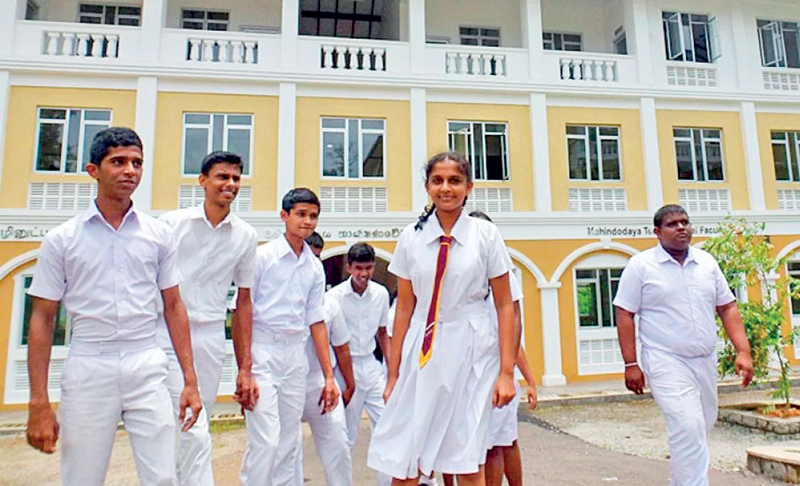
A Catalyst for Regional Transformation and Healing
Introducing a school leadership programme in Sri Lanka is a timely and transformative step toward empowering young learners in a region still recovering from the long-lasting impacts of war. With many students having grown up amid disruptions, limited opportunities, and socio-economic challenges, a structured leadership initiative can serve as a powerful platform to rebuild confidence, develop essential life skills, and inspire hope. By nurturing capable, compassionate, and forward-thinking young leaders, the program has the potential to uplift the entire province and foster a more stable, prosperous future. Furthermore, such an initiative acts as a bridge between the classroom and the real world, proving to students that their past does not dictate their potential. It signals to the community that the educational system is evolving to prioritize the holistic development of the human spirit alongside academic achievement.
A dedicated leadership programme encourages students to take responsibility not only for their own development but also for the welfare of their communities. Through structured activities such as community projects, peer mentoring, and student-led initiatives, young people learn the value of teamwork, service, and civic engagement. In a province striving to rebuild social cohesion after years of division, empowering youth to become active contributors promotes unity, trust, and long-term community strength. The leadership programme equips students with essential skills that are highly valued in higher education and the modern job market.
Critical thinking, problem-solving, decision-making, and effective communication are key competencies that broaden students’ opportunities beyond traditional classroom learning. These skills greatly benefit students in a region undergoing economic recovery, enabling them to pursue further education, secure better employment, and actively contribute to regional development as skilled professionals. Given the Northern Province’s history of conflict, a leadership program can play a vital role in strengthening social harmony and promoting long-term peace. Activities that encourage cooperation, respect for diversity, and peaceful conflict resolution help students overcome inherited fears and prejudices. As these young leaders embrace inclusiveness and empathy, they become instrumental in creating a peaceful social environment—one that prevents the re-emergence of conflict and supports future generations in living with dignity and mutual respect.
Rebuilding psychological resilience and self-identity
One of the most significant benefits of introducing a leadership programme in Sri Lankan schools is the opportunity to rebuild students’ confidence and emotional stability. Many young people continue to experience the psychological echoes of conflict, displacement, and loss. Leadership training centered on communication, self-awareness, and positive identity-building helps students regain a sense of purpose and courage. This emotional resilience is crucial for their academic progress, personal growth, and their ability to make informed choices about their futures. When students learn to regulate their emotions and identify their unique strengths, they move from a mindset of survival to a mindset of thriving. This internal shift is the foundation of “Self-Leadership,” which is the precursor to leading others effectively in a post-conflict society. Furthermore, as students master the art of self-reflection, they become better equipped to handle interpersonal stressors without reverting to aggression or withdrawal, thereby breaking the cycle of transgenerational trauma. Ultimately, this psychological fortification creates a ripple effect, where emotionally stable students contribute to more peaceful and supportive household and community environments.
Addressing gaps in existing educational frameworks
Existing leadership programmes in Sri Lankan schools provide students with some foundational skills, such as teamwork and basic organizational abilities, through prefect duties and student councils. However, these programmes are often limited in scope and vary widely between urban centers and rural, conflict-affected areas like the Northern Province. Currently, initiatives frequently lack systematic mentorship and fail to develop high-level qualities like strategic thinking and problem-solving under pressure. Expanding these programmes to include continuous mentoring and project-based learning is essential to prepare students for real-world contexts. By standardising leadership curricula, we can ensure that a student in a remote village has the same access to executive-level training as a student in a capital city. This equity in training is vital for closing the regional opportunity gap and fostering a meritocratic leadership culture. Furthermore, moving beyond the “prefect system” allows for a more inclusive model of leadership where every student, regardless of their social standing or academic rank, can cultivate the ability to lead from within their own sphere of influence.
Cultivating Civic Responsibility and Social Cohesion
A dedicated leadership programme encourages students to take responsibility not only for their own development but also for the welfare of their communities. Through structured activities, such as community projects and peer mentoring, young people learn the value of service and civic engagement. In a province striving to rebuild social cohesion after years of division, empowering youth to become active contributors promotes unity, trust, and long-term community strength. As students collaborate on local solutions, they begin to see themselves as “change agents” rather than passive observers. This sense of ownership over their local environment is what ultimately leads to more sustainable and community-driven reconstruction efforts. By engaging in service-learning, students bridge the gap between theoretical ethics and practical compassion, understanding that the true measure of leadership is the positive impact one leaves on the lives of others.
Equipping youth for modern global market
The leadership programme equips students with essential skills that are highly valued in higher education and the modern job market. Critical thinking, decision-making, and effective communication are key competencies that broaden students’ opportunities beyond traditional classroom learning. These skills greatly benefit students in a region undergoing economic recovery, enabling them to pursue further education, secure better employment, and actively contribute to regional development as skilled professionals. In an era of rapid digital transformation, the ability to lead diverse teams and navigate complex challenges is as important as technical proficiency. This programme ensures that Sri Lankan graduates are globally competitive and ready to participate in the international knowledge economy. Moreover, by mastering persuasive communication and negotiation, students become their own advocates for career advancement and for the economic interests of their communities on a global stage.
Promoting peace through inclusivity and empathy
Given the Northern Province’s history of conflict, a leadership programme can play a vital role in strengthening social harmony. Activities that encourage cooperation, respect for diversity, and peaceful conflict resolution help students overcome inherited fears and prejudices. As these young leaders embrace inclusiveness and empathy, they become instrumental in creating a peaceful social environment, one that prevents the re-emergence of conflict and supports future generations in living with dignity. Through dialogue-based workshops, students learn that true leadership is not about power over others, but about the power to bring people together. By practising inclusive leadership, they dismantle barriers of mistrust and build the cultural intelligence necessary for a unified national identity. This empathetic approach ensures that the leaders of tomorrow prioritize the “common good” over narrow sectarian interests, laying a foundation for durable peace.
Building a productive and innovative national workforce
The introduction of a leadership programme holds long-term economic value for Sri Lanka by cultivating a workforce equipped for a knowledge-driven economy. Nurturing disciplined and innovative youth is a crucial investment in reducing regional disparities. Students trained in leadership are more likely to participate in entrepreneurship and contribute to the labor market with higher productivity. This supports the economic revival of conflict-affected regions while boosting national economic growth through a more competitive generation. When young people are taught to think like entrepreneurs and leaders, they create jobs rather than just seeking them. This entrepreneurial spirit is the engine that will drive Sri Lanka’s long-term economic independence and innovation. Additionally, a leadership-oriented workforce is more resilient to market fluctuations, as these individuals possess the adaptive capacity to pivot strategies and find creative solutions in times of financial uncertainty.
Strengthening democratic values and governance
From a political perspective, a structured leadership initiative helps strengthen democratic values and stability. By empowering young people with civic awareness and responsible decision-making, the programme encourages informed participation in democratic processes. In a region historically marked by tension, developing a generation that values dialogue and inclusivity lays the foundation for a cohesive society. These empowered youth become advocates of transparency and accountability, supporting sustained peace and equitable national progress. Education in ethical leadership discourages the culture of patronage and encourages a culture of merit. By training students to demand and provide ethical guidance, the program creates a grassroots movement toward better governance and social justice. Ultimately, this leads to a more politically mature electorate that prioritizes long-term stability and the rule of law over short-term political rhetoric.
A legacy of visionary leadership
Introducing a school leadership programme marks a powerful step toward shaping a resilient and socially responsible generation. By moving beyond traditional rote learning and integrating emotional intelligence and ethical decision-making, these programs empower youth to navigate a globalized world while remaining rooted in local values. Ultimately, this ensures that the next generation of Sri Lankans is not merely prepared to enter the workforce but is equipped to lead with vision, empathy, and a steadfast commitment to progress. As these students grow into compassionate and capable leaders, their influence will radiate far beyond the classroom, creating a ripple effect of positive change that will define Sri Lanka’s legacy for decades to come. By investing in the leadership potential of our youth today, we are securing a future that is not only prosperous and stable but also profoundly just and inclusive for every citizen.
by Dr. S. Gnanaseharan Selliah ✍️
Educational Consultant, Writer, Presenter, Researcher, Parents’ Advocate
United States of America.



The appointment of former minister Eran Wickremaratne to chair the Sri Lanka Cricket Transformation Committee is significant for more than the future of cricket. It signals a possible shift in the culture of governance even as it offers Sri Lankan cricket a fighting possibility to get out of the doldrums of failure. There have been glorious patches for the national cricket team since the epochal 1996 World Cup triumph. But these patches of brightness have been few and far between and virtually non-existent over the past decade. At the centre of this disaster has been the failures of governance within Sri Lanka Cricket which are not unlike the larger failures of governance within the country itself. The appointment of a new reform oriented committee therefore carries significance beyond cricket. It reflects the wider challenge facing the country which is to restore trust in public institutions for better management.
The appointment of Eran Wickremaratne brings a professional administrator with a proven track record into the cricket arena. He has several strengths that many of his immediate predecessors lacked. Before the ascent of the present government leadership to positions of power, Eran Wickremaratne was among the handful of government ministers who did not have allegations of corruption attached to their names. His reputation for financial professionalism and integrity has remained intact over many years in public life. With him in the Cricket Transformation Committee are also respected former cricketers Kumar Sangakkara, Roshan Mahanama and Sidath Wettimuny together with professionals from legal and business backgrounds. They have been tasked with introducing structural reforms and improving transparency and accountability within cricket administration.
A second reason for this appointment to be significant is that this is possibly the first occasion on which the NPP government has reached out to someone associated with the opposition to obtain assistance in an area of national importance. The commitment to bipartisanship has been a constant demand from politically non-partisan civic groups and political analysts. They have voiced the opinion that the government needs to be more inclusive in its choice of appointments to decision making authorities. The NPP government’s practice so far has largely been to limit appointments to those within the ruling party or those considered loyalists even at the cost of proven expertise. The government’s decision in this case therefore marks a potentially important departure.
National Interest
There are areas of public life where national interest should transcend party divisions and cricket, beloved of the people, is one of them. Sri Lanka cannot afford to continue treating every institution as an arena for political competition when institutions themselves are in crisis and public confidence has become fragile. It is therefore unfortunate that when the government has moved positively in the direction of drawing on expertise from outside its own ranks there should be a negative response from sections of the opposition. This is indicative of the absence of a culture of bipartisanship even on issues that concern the national interest. The SJB, of which the newly appointed cricket committee chairman was a member objected on the grounds that politicians should not hold positions in sports administration and asked him to resign from the party. There is a need to recognise the distinction between partisan political control and the temporary use of experienced administrators to carry out reform and institutional restructuring. In other countries those in politics often join academia and civil society on a temporary basis and vice versa.
More disturbing has been the insidious campaign carried out against the new cricket committee and its chairman on the grounds of religious affiliation. This is an unacceptable denial of the reality that Sri Lanka is a plural, multi ethnic and multi religious society. The interim committee reflects this diversity to a reasonable extent. The country’s long history of ethnic conflict should have taught all political actors the dangers of mobilising communal prejudice for short term political gain. Sri Lanka paid a very heavy price for decades of mistrust and division. It would be tragic if even cricket administration became another arena for communal suspicion and hostility. The present government represents an important departure from the sectarian rhetoric that was employed by previous governments. They have repeatedly pledged to protect the equal rights of all citizens and not permit discrimination or extremism in any form.
The recent international peace march in Sri Lanka led by the Venerable Bhikkhu Thich Paññākāra from Vietnam with its message of loving kindness and mindfulness to all resonated strongly with the masses of people as seen by the crowds who thronged the roadsides to obtain blessings and show respect. This message stands in contrast to the sectarian resentment manifested by those who seek to use the cricket appointments as a weapon to attack the government at the present time. The challenges before the Sri Lanka Cricket Transformation Committee parallel the larger challenges before the government in developing the national economy and respecting ethnic and religious diversity. Plugging the leaks and restoring systems will take time and effort. It cannot be done overnight and it cannot succeed without public patience and support.
New Recognition
There is also a need for realism. The appointment of Eran Wickremaratne and the new committee does not guarantee success. Reforming deeply flawed institutions is always difficult. Besides, Sri Lanka is a small country with a relatively small population compared to many other cricket playing nations. It is also a country still recovering from the economic breakdown of 2022 which pushed the majority of people into hardship and severely weakened public institutions. The country continues to face unprecedented challenges including the damage caused by Cyclone Ditwah and the wider global economic uncertainties linked to conflict in the Middle East. Under these difficult circumstances Sri Lanka has fewer resources than many larger countries to devote to both cricket and economic development.
When resources are scarce they cannot be wasted through corruption or incompetence. Drawing upon the strengths of all those who are competent for the tasks at hand regardless of party affiliation or ethnic or religious identity is necessary if improvement is to come sooner rather than later. The burden of rebuilding the country cannot rest only on the government. The crisis facing the country is too deep for any single party or government to solve alone. National recovery requires capable individuals from across society and from different sectors such as business and civil society to work together in areas where the national interest transcends party politics. There is also a responsibility on opposition political parties to support initiatives that are politically neutral and genuinely in the national interest. Not every issue needs to become a partisan battle.
Sri Lanka cricket occupies a special place in the national consciousness. At its best it once united the country and gave Sri Lankans a sense of pride and international recognition. Restoring integrity and professionalism to cricket administration can therefore become part of the larger task of national renewal. The appointment of Eran Wickremaratne and the new committee, while it does not guarantee success, is a sign that the political leadership and people of the country may be beginning to mature in their approach to governance. In recognising the need for competence, integrity and bipartisan cooperation and extending it beyond cricket into other areas of national life, Sri Lanka may find the way towards more stable and successful governance..
by Jehan Perera

Court vacation this year came with an unexpected lesson, not from a courtroom but from the streets of Dhaka — a city that moves, quite literally, on three wheels.
Above the traffic, a modern metro line glides past concrete pillars and crowded rooftops. It is efficient, clean and frequently cited as a symbol of progress in Bangladesh. For a visitor from Sri Lanka, it inevitably brings to mind our own abandoned light rail plans — a project debated, politicised and ultimately set aside.
But Dhaka’s real story is not in the air. It is on the ground.
Beneath the elevated tracks, the streets belong to three-wheelers. Known locally as CNGs, they cluster at junctions, line the edges of markets and pour into narrow roads that larger vehicles avoid. Even with a functioning rail system, these three-wheelers remain the city’s most dependable form of everyday transport.
Within hours of arriving, their importance becomes obvious. The train may take you across the city, but the journey does not end there. The last mile — often the most complicated part — belongs entirely to the three-wheeler. It is the vehicle that gets you home, to a meeting or simply through streets that no bus route properly serves.
There is a rhythm to using them. A destination is mentioned, a price is suggested and a brief negotiation follows. Then the ride begins, edging into traffic that feels permanently compressed. Drivers move with instinct, adjusting routes and squeezing through gaps with a confidence built over years.
It is not polished. But it works.
And that is where the comparison with Sri Lanka becomes less about what we lack and more about what we already have.
Back home, the three-wheeler has long been part of daily life — so familiar that it is often discussed only in terms of its problems. There are frequent complaints about fares, refusals or the absence of meters. More recently, the industry itself has become entangled in politics — from fuel subsidies to regulatory debates, from election-time promises to periodic crackdowns.
In that process, the conversation has shifted. The three-wheeler is often treated as a problem to be managed, rather than a service to be strengthened.
Yet, seen through the experience of Dhaka, Sri Lanka’s system begins to look far more settled — and, in many ways, ahead.
There is a growing structure in place. Meters, while not perfect, are widely recognised. Ride-hailing apps have added transparency and reduced uncertainty for passengers. There are clearer expectations on both sides — driver and commuter alike. Even small details, such as designated parking areas in parts of Colombo or the increasing standard of vehicles, point to an industry slowly moving towards professionalism.
Just as importantly, there is a human element that remains intact.
In Sri Lanka, a three-wheeler ride is rarely just a transaction. Drivers talk. They offer directions, comment on the day’s news, or share local knowledge. The ride becomes part of the social fabric, not just a means of getting from one point to another.
In Dhaka, the scale of the city leaves less room for that. The interaction is quicker, more direct, shaped by urgency. The service is essential, but it is under constant pressure.
What stands out, across both countries, is that the three-wheeler is not a temporary or outdated mode of transport. It is a necessity in dense, fast-growing Asian cities — one that fills gaps no rail or bus system can fully address.
Large infrastructure projects, like light rail, are important. They bring efficiency and long-term capacity. But they cannot replace the flexibility of a three-wheeler. They cannot reach into narrow streets, respond instantly to demand or provide that crucial last-mile connection.
That is why, even in a city that has invested heavily in modern rail, Dhaka still runs on three wheels.
For Sri Lanka, the lesson is not simply about what could have been built, but about what should be better managed and valued.
The three-wheeler industry does not need to be politicised at every turn. It needs steady regulation — clear fare systems, proper licensing, safety standards — alongside encouragement and recognition. It needs to be seen as part of the solution to urban transport, not as a side issue.
Because for thousands of drivers, it is a livelihood. And for millions of passengers, it is the most immediate and reliable form of mobility.
The tuk-tuk may not feature in grand policy speeches or infrastructure blueprints. It does not run on elevated tracks or attract international attention. But on the ground, where daily life unfolds, it continues to do what larger systems often struggle to do — show up, adapt and keep moving.
And after watching Dhaka’s streets — crowded, relentless, yet functioning — that small, three-wheeled vehicle feels less like something to argue over and more like something to get right.
(The writer is an Attorney-at-Law with over a decade of experience specialising in civil law, a former Board Member of the Office of Missing Persons and a former Legal Director of the Central Cultural Fund. He holds an LLM in International Business Law)
by Sampath Perera recently in Dhaka, Bangladesh

 According to reports coming my way, the entertainment scene, in Dubai, is very much opening up, and buzzing again!
After a quieter few months, May is packed with entertainment and the whole scene, they say, is shifting back into full swing.
The Seven Notes band, made up of Sri Lankans, based in Dubai, are back in the spotlight, after a short hiatus, due to the ongoing Middle East problems.
On 18th April they did Legends Night at Mercure Hotel Dubai Barsha Heights; on Thursday, 9th May, they will be at the Sports Bar of the Mercure Hotel for 70s/80s Retro Night; on 6th June, they will be at Al Jadaf Dubai to provide the music for Sandun Perera live in concert … and with more dates to follow.
These events are expected to showcase the band’s evolving sound, tighter stage coordination, and stronger audience engagement.
With each performance, the band aims to refine its identity and build a loyal following within Dubai’s vibrant nightlife and event scene.

Pasindu Umayanga: The group’s new vocalist
What makes Seven Notes standout is their versatility which has made the band a dynamic and promising act.
With a growing performance calendar, new talent integration, and international ambitions, the band is definitely entering a defining phase of its journey.
Dubai’s music industry, I’m told, thrives on diversity, energy, and audience connection, with live bands playing a crucial role in elevating events—from corporate shows to private concerts. Against this backdrop, Seven Notes is positioning itself not just as another band, but as a performance-driven musical unit focused on consistency and growth.
Adding fresh momentum to the group is Pasindu Umayanga who joins Seven Notes as their new vocalist. This move signals a strategic upgrade—not just filling a role, but strengthening the band’s front-line presence.
Looking beyond local stages, Seven Notes is preparing for an international tour, to Korea, in July.

Bassist Niluk Uswaththa: Spokesperson for Seven Notes
According to bassist Niluk Uswaththa, taking a band abroad means: Your sound must hold up against unfamiliar audiences, your performance must translate beyond language, and your discipline must be at a professional level.
“If executed well, this tour could redefine Seven Notes from a local band into an emerging international act,” added Niluk.
He went on to say that Dubai is not an easy market. It’s saturated with highly experienced, multi-genre bands that can adapt instantly to any crowd.
“To stand out consistently you need to have tight rehearsal discipline, unique sound identity (not just covers), strong stage chemistry, audience retention – not just applause.”
No doubt, Seven Notes is entering a critical growth phase—new member, multiple shows, and an international tour on the horizon. The opportunity is real, but so is the pressure.
However, there is talk that Seven Notes will soon be a recognised name in the regional music scene.

Members of Sri Lanka Cricket Transformation Committee Officially Appointed

Three prison guards arrested following the death of an inmate

Showers or thundershowers will occur at most places of the island after 1.00 pm.

CJ urged to inquire into AKD’s remarks on May 25 court verdict

ITAK MPs representing East take their woes to Canadian HC

People demand release of Keppapilavu land

‘Dates have the highest sugar content to fight Coronavirus’

Sunday Island 27 December – Headlines

#SundayIsland 17th December – Headlines

Sunday Island – 28th March

Sunday Island Headlines – 21 March

Sunday Island – 21st February – Headlines
-
 News6 days ago
Treasury chief’s citizenship details sought from Australia
-

 News5 days ago
Rooftop Solar at Crossroads as Sri Lanka Shifts to Distributed Energy Future
-
 News4 days ago
“Three-in-one blood pressure pill can significantly reduce risk of recurrent strokes”
-

 News6 days ago
Central Province one before last in AL results
-

 Sports6 days ago
Well done AKD!
-

 News4 days ago
Alarm raised over plan to share Lanka’s biometric data with blacklisted Indian firm
-

 News1 day ago
USD 3.7 bn H’tota refinery: China won’t launch project without bigger local market share
-
 News2 days ago
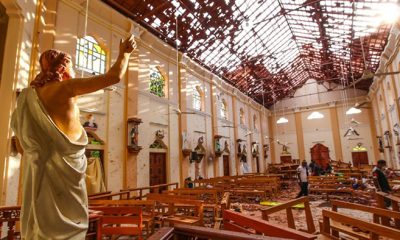
Easter Sunday Case: Ex-SIS Chief concealed intel, former Defence Secy tells court