
Opinion
Educational reforms Sri Lanka demands today for a brighter tomorrow

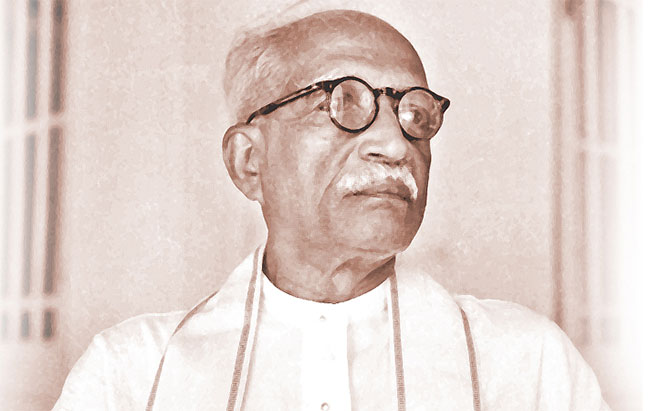
The 32nd Dr. C. W. W. Kannangara Memorial Lecture titled ‘For a country with a future’: Educational reforms Sri Lanka demands today’ delivered by Prof. Athula Sumathipala, Director, Institute for Research and Development, Sri Lanka and Chairman, National Institute of Fundemental Studies, Hanthana on Oct 13 at the National Institute of Education, Maharagama
Continued From Yesterday
Defining the Kannangara legacy of free education to the Sri Lankan nation
It is an unfair comparison to analyse the central approach of the Kannangara educational reforms apart from the context of socio-economic, political conditions, literacy levels and educational opportunities that existed at the time and to consider these reforms under the current context. The primary strategic approach of the reforms was to increase access to education. At that time, in the 1930’s, over half of school-aged children and around three-quarters of school-aged girls did not attend school.
A large proportion of school-aged children being deprived of access to education can be traced back to multiple factors linked to the socio-economic and political situation in that era. Professor Swarna Jayaweera in the second Kannangara Memorial Lecture delivered on 13 October 1989 entitled ‘Expansion of educational opportunity–an unfinished task’, stated that many of the policies presented by Dr. Kannangara were a reaction to colonial education policies that had upset the regional socio-economic, ethnic and religious balance during their rule that extended for over a century. The dual system of education consisting of elite English schools and vernacular schools providing a minimum level education for the masses in either Sinhala or Tamil, the dominance of Christianity within the educational system, favoured status for the South-Western and Northern regions, anomalous economic growth within the country and the focus of education to meet the needs of the colonial economy, were all issues that Lankan policy makers were obliged to deal with in 1931. The aim of establishing 54 Central Colleges (Madhya Maha Vidyalayas) in rural areas throughout the island during 1940-47 was to pave the way for a more equitable distribution of secondary education facilities, which had been limited to urban English schools until then. His aim was ‘to provide free education from childhood to university’.
The executive committee report Dr. Kannangara presented to the State Council of Ceylon gives a clear indication of the core concept of Kannangara reforms. He said “If this esteemed council is able to state that we were able to transform education from something that was considered a birth right of the elite and the wealthy, to a right available at low cost to every child born in this country in the future, if we are able to transform the view on education as a closed book within a sealed box to an open letter that everyone, without regard to their religion, race, caste, can read, then this council can be prouder than Emperor Augustus who claimed that he found Rome a city of bricks and left it a city of marble.”
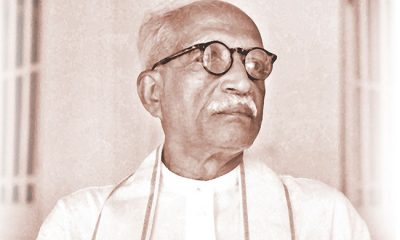
 Dr. Kannangara’s biographer, Mr. K.H.M.Sumathipala, who was a former Secretary of the Department of Education, considers the Kannangara reforms as separable into two distinct eras: the first from 1931 to 1939 and the second from 1939 to 1946. The executive committee had limited powers during the first era and it can be termed a period of minor reforms. The conceptually most important of the reforms during this era is the rural education system, known as the Handessa Scheme, which incorporated practical training and work experience useful to rural societies and economies alongside formal education. This era marks the initial stages of the concept of ‘education for development’ mentioned in Professor Warnasuriya’s lecture. The long-term vision Dr. Kannangara had, clearly displays his concern for the welfare of the rural population of the country.
The years 1939 – 1946 mark the second era, during which the rural school development scheme extended to 250 schools. However, Dr. Kannangara was unable to further expand the scheme as initially planned due to the constraints brought about by drought, a malaria epidemic and the second world war.
The Kannangara reforms themselves are well-documented. In brief, as presented by Dr. Upali Sedere in the 27th Memorial lecture in 2016, they are as follows:
• Free education from kindergarten to university
• Establishing three types of schools – secondary, senior, and vocational schools
• Mother tongue as the medium of instruction at Primary level, bilingual or English medium schools for Junior Secondary level and English schools for Senior Secondary and higher education
• Establishing Central Schools with boarding facilities and scholarships to expand access to higher secondary education
• Introducing religious education
• Facilitating adult education for illiterate adults via Night Schools;
• Institutionalizing regular monthly salaries for teachers;
• Adapting curricula and examinations to suit Sri Lankan conditions
• Establishing an autonomous university
These reforms were approved by the State Council and introduced in October 1944. The increase in the number of schools and the number of teachers as well as the processes introduced to facilitate education led to a significant increase in the number of students completing primary and secondary education – four hundred new schools were constructed during 1944-1948 and 1.2 million students enrolled.
The limited time I have is not at all adequate for an in-depth analysis of the broad vision Dr. Kannangara held. I would like to quote and re-emphasise a few facts stated by Mr. R.S.Medagama in the 25th Memorial Lecture. He states that “The Report of the Special Committee on Education in Ceylon (Sessional Paper XX1V- 1943) contains many ideas on education which the subsequent educational reformers have attempted to accomplish.” Unfortunately, soon after the publication of the report, Dr. Kannangara lost the opportunity to spearhead the implementation of the proposed reforms. Dr. Kannangara also points out the important role education has in promoting unity among different races in the report. In the context of a country divided along multiple lines, it is useful to reiterate some facts he pointed out in the report:
“Our fundamental need is to weld the heterogeneous elements of the population into a nation. The existence of peoples of different racial origins, religions and languages is not peculiar to Ceylon, and history shows that it is by no means impossible to develop a national consciousness even among a population as diverse as ours. There is, indeed, a large common element in our cultures already, and under the stimulation of educational development, the notion of national unity has been growing among us. In planning the future of education in Ceylon we should strive to increase the common element and foster the idea of nationhood.”
“The nationalism that we hope to see established depends for its being on tolerance and understanding. Among a people so varied as ours, any other kind would produce not national unity but national disruption. And the tolerance that we ask our own people to apply to each other we would also wish to see applied to other nations. This tolerance is in fact a characteristic of our citizens. The communities of the island have for many years lived in peace and amity. We are anxious that the teaching in the new educational structure may be inspired by the same tolerance and the same desire for peace among men of all nations” (P10 S.P XX1V, 1943).
Mr. Medagama cited another valuable excerpt from this report: “The most useful citizen is he who can face a new problem and find his own solution. The spark of genius is nothing more than the spark of originality”(p.12 S.P XX1V, 1943).
It is almost unbelievable how a country that initiated a free education system with such a great vision ended up with a toxic culture that is the polar opposite of the original vision. We need to find the root causes of the entrenched problems that we currently face, and find sustainable solutions to these issues.
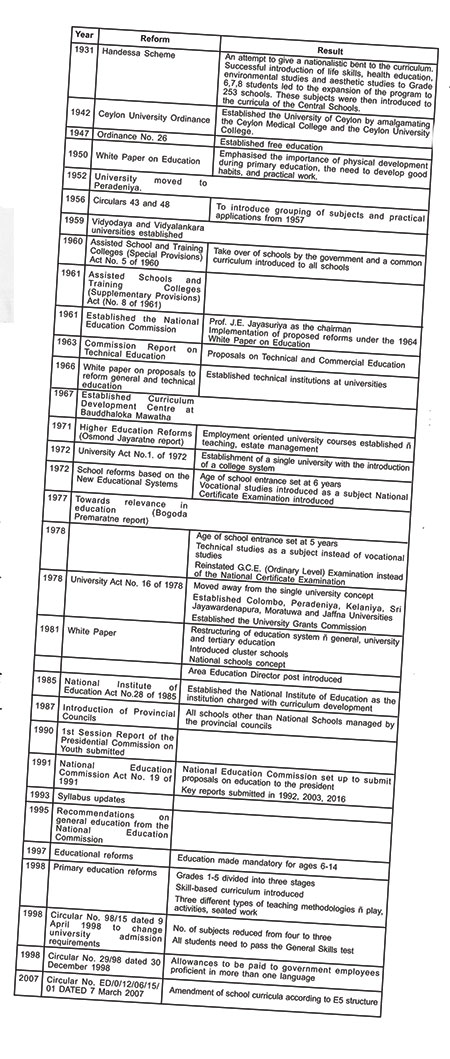
Before I enter into a discussion of these matters I would like to summarise the key reforms undertaken and the landmarks in education since the time of Dr. Kannangara. This summary section is only up to 2007 needs to be updated from 2007 to 2022, but the limited time did not permit the task.
( To be continued)



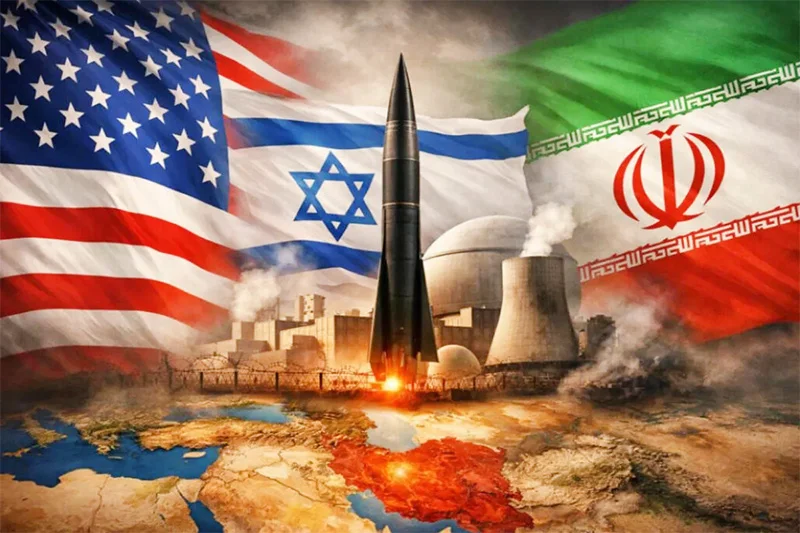
The world’s most theatrical stage
Welcome to the Grand Circus
 If global geopolitics were a TV show, it would be cancelled after the first season for being too unbelievable. Consider the plot: the world’s largest arms exporter lectures others about peace; a government that executed over 500 people in a single year tells its citizens it governs by divine law; and international bodies created to enforce rules seem to apply those rules with remarkable … flexibility. Welcome to the real world of international relations, where the rules are made up and the principles don’t matter.
This analysis examines two of the most consequential actors shaping global instability today: the United States of America, a democracy that can’t quite decide whether it believes in democracy, and the Islamic Republic of Iran, a theocracy that has perfected the art of punishing its own people for simply existing.
Episode I: The United States, ‘Do as I Say, Not as I Do’
The Democracy Export Business
The United States has, for decades, positioned itself as the global guardian of democracy, freedom, and human rights. It is a noble brand. The marketing budget alone, in the form of military expenditure at $886 billion in 2023, is staggering. And yet, the product being sold and the product being delivered have often been … different things.
The CIA-backed coup of 1953, codenamed Operation Ajax, removed Iran’s democratically elected Prime Minister Mohammad Mosaddegh and reinstated the autocratic Shah Mohammad Reza Pahlavi, primarily to protect Anglo-American oil interests.
Nuclear Exceptionalism: The World’s Worst-Kept Secret
The United States currently holds approximately 5,044–5,177 nuclear warheads (depending on the source and year), while Russia being the largest with a stockpile estimated at approximately 5,580 warheads. yet it leads international campaigns demanding that other nations not develop nuclear weapons. This is a bit like the world’s most heavily armed person standing at the door of a gun shop, telling customers they cannot purchase firearms.
Furthermore, Israel is widely believed to possess 80–90 nuclear warheads. The United States has never imposed sanctions on Israel for this. India and Pakistan, both outside the NPT, were rewarded with nuclear cooperation deals after the tested nuclear weapons.
The Saudi Arabia Paradox
Perhaps, no relationship illustrates U.S. foreign policy hypocrisy more vividly than Washington’s alliance with Saudi Arabia. The Kingdom is an absolute monarchy with no elections, no free press, where women were legally barred from driving until 2018, and where the murder of journalist Jamal Khashoggi, carried out, according to U.S. intelligence, on orders from Crown Prince Mohammed bin Salman, resulted in … arms sales continuing and diplomatic ties intact.
The United States sold Saudi Arabia over $37 billion in arms between 2015 and 2020, weapons used in a Yemen war that the United Nations described as one of the world’s worst humanitarian catastrophes. Yet the U.S. simultaneously held press conferences about human rights. The cognitive dissonance is not a bug. It is the feature.
Iraq: The Weapons of Mass Distraction
In 2003, the United States invaded Iraq on the basis of alleged weapons of mass destruction (WMD) that did not exist. The invasion resulted in an estimated 150,000–1,000,000 Iraqi civilian deaths depending on methodology, the displacement of millions, the destabilization of an entire region, and the rise of the Islamic State, none of which appeared in the original brochure. The officials responsible for this foreign policy catastrophe faced no international tribunal. No sanctions were imposed on the United States. Several architects of the war are today respected media commentators.
Meanwhile, the International Criminal Court (ICC), an institution the United States has never ratified, is expected to hold others to account for far lesser offenses. As of 2024, the U.S. has actively sanctioned ICC officials who attempted to investigate American personnel for potential war crimes in Afghanistan.
Episode II: Iran, The People’s Nightmare
Iran’s political system is built on the concept of Velayat-e Faqih, the Guardianship of the Islamic Jurist, a political-theological doctrine holding that a senior Islamic cleric should govern society. In practice, this means that Supreme Leader Ali Khamenei, unelected by the general public, holds veto power over all branches of government, controls the military, the judiciary, state media, and the powerful Islamic Revolutionary Guard Corps (IRGC).
The elected president, whether ‘moderate’ or ‘hardliner’, operates within a system where real power resides with the Supreme Leader and an unelected Guardian Council that vets all candidates and can disqualify anyone it deems insufficiently Islamic. In the 2021 presidential election, the Guardian Council disqualified over 590 candidates out of 592 who applied. The word ‘election’ is being used loosely here.
Women’s Rights: A Systematic Dismantling
Since the 1979 Islamic Revolution, Iranian women have endured one of the most comprehensive rollbacks of rights in modern history. Within weeks of the revolution, mandatory hijab laws were imposed, women were barred from serving as judges, and the minimum marriage age for girls was reduced to 9 years (later revised to 13 in 1982). This was not incidental policy; it was ideological architecture.
Today, Iranian women face legal discrimination across virtually every domain. Under the Iranian Civil Code, a woman’s testimony in court counts as half that of a man’s. Women cannot travel abroad without the written permission of their husband or male guardian. Married women cannot work without spousal consent in many circumstances. The diyeh (blood money) for a woman’s life is legally valued at half that of a man.
In September 2022, 22-year-old Mahsa (Zhina) Amini died in the custody of Iran’s Morality Police, after being arrested for allegedly wearing her hijab improperly. Her death triggered the Woman, Life, Freedom uprising, one of the largest protest movements in Iranian history. The government’s response was to kill over 500 protesters, arrest more than 19,000, and execute at least four people in connection with the protests by early 2023.
The IRGC and State-Sponsored Repression
The Islamic Revolutionary Guard Corps is a military-economic-political entity unlike any other in the region. It controls an estimated 20–40% of Iran’s economy through businesses, construction contracts, and import monopolies. It commands proxy militias across Iraq, Syria, Lebanon, and Yemen. And it suppresses domestic dissent with a ruthlessness that has drawn consistent condemnation from United Nations human rights bodies.
Amnesty International’s 2022-2023 annual report documented the IRGC and security forces using live ammunition, birdshot, and metal pellets against protesters, deliberately targeting eyes, resulting in hundreds being blinded. The UN Special Rapporteur on Iran documented ‘serious, widespread and systematic human rights violations’ constituting potential crimes against humanity.
Episode III: Where the Two Hypocrisies Meet
The relationship between the United States and Iran is, in many ways, a story of two entities who deserve each other in the sense that the behavUior of each government has fed the domestic narrative of the other for decades.
Washington uses Iran as justification for its military presence in the Gulf, its arms sales to autocratic Gulf states, and its general posture as indispensable regional hegemon. Tehran uses American hostility and sanctions as justification for economic failure, political repression, and nuclear advancement. Both governments’ hard-liners need each other to remain in power.
The Iranian people, 85 million of them, majority under 35, highly educated, and overwhelmingly wanting engagement with the world, are trapped between a government that treats them as subjects and an international sanctions regime that punishes them for their government’s choices. The American people, meanwhile, continue paying for a foreign policy architecture that serves arms manufacturers, defense contractors, and geopolitical abstractions more than it serves democratic values or human security.
Some Uncomfortable Truths
The United States is not the villain of every story, nor is Iran irredeemably authoritarian in the hearts of its people. What is consistent, and what this analysis has documented, is that both governments operate by standards they refuse to apply to themselves.
Tehran’s theocratic governance has failed its population economically, politically, and most visibly in its treatment of women and dissidents. The Woman, Life, Freedom movement showed the world what Iranian society wants. The government’s violent response showed the world what the Islamic Republic fears.
The lesson, uncomfortable as it is, is that powerful states, whether wielding aircraft carriers or theology, tend to exempt themselves from the rules they want others to follow. The only antidote is an informed public that refuses to accept these double standards as the natural order of things. Read critically. Follow the money. And remember: when a government tells you it acts in the name of God or democracy.
(The writer, a senior Chartered Accountant and professional banker, is Professor at SLIIT, Malabe. The views and opinions expressed in this article are personal.)
The scale and manner of grant distributions underscore the urgent need to rectify the weaknesses identified by the Auditor General. Remarkably, the accounts for the years 2024 and 2025 are still not published and only the 2023 accounts are available for public scrutiny.
Grants to clubs and associations increased from LKR 1.30 billion in the prior year to LKR 2.46 billion in 2023, representing an escalation of over LKR 1.15 billion year-on-year. These grants were distributed among 36 recipient clubs and associations, with individual allocations ranging from approximately LKR 1.5 million to almost LKR 300 million. Such wide variation and substantial growth warrant clear public disclosure of the allocation framework, the approval processes, and the beneficiary criteria.
While it is understandable that higher profitability enables greater financial support to clubs, the absence of a transparent, rule-based grant policy gives rise to governance concerns, and unless properly explained, leaves room for malicious or unfounded allegations that grant allocations may be used to influence voting behaviour or entrench existing officials. Robust disclosure and effective oversight are therefore essential to safeguard institutional credibility. The precise immediate need for high funding and their monitoring processes need to be divulged.
A case in point is Colombo Cricket Club (CCC), which received LKR 279,531,827 in 2023, making it the highest individual club recipient. As disclosed under the related-party notes to the financial statements, the President of Sri Lanka Cricket is also the President of Colombo Cricket Club, resulting in this transaction being classified as a related-party transaction.
In contrast to several grant recipient entities reporting profits, Sri Lanka Cricket recorded a deficit of approximately Rs. 2 billion in its Statement of Financial Performance for 2023.
It is also noteworthy from the cash flow statement that cash and fund balances declined sharply, from approximately LKR 10.8 billion in the previous year to around LKR 5.6 billion in 2023, representing a significant depletion of liquid resources within a single financial year.
A more meaningful and complete evaluation of these developments—particularly the position of funds available as at 31 December 2024 and 31 December 2025—will only be possible once the financial statements for 2024 and 2025 are released and subjected to public scrutiny.
A cricket enthusiast – Moratuwa
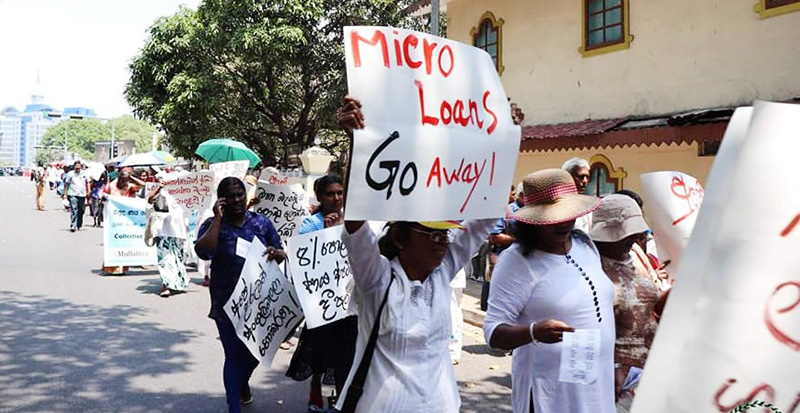
The Microfinance and Credit Regulatory Authority Bill was passed into law by the Parliament of Sri Lanka on 4 March. According to Deputy Minister of Finance and Planning Dr. Anil Jayantha, the main object of the Act is to establish an Authority to “license and supervise the under-regulated microfinance and moneylending sector, aiming to protect borrowers from exploitation and ensure financial stability”.
However, the Yukthi Collective is saddened and disappointed that a government which pledged to take “measures to alleviate the burden of predatory microfinance loans with high interest rates on women” (NPP Manifesto, 2024: Page no. 44), will now add to their unbearable weight.
The new Act, as virtually all legislation enacted by Anura Kumara Dissanayake’s government, is a legacy of the anti-working class Ranil Wickremesinghe regime. It evades the root causes of the microfinance trap, and ignores debt justice for women borrowers.
It fails in understanding the connections between household debt and public debt. The vicious cycle of national debt is sustained by lack of growth in economic activity because of poor access to affordable credit.
It fails to make equal representation of women mandatory in the new Authority. If representatives of women borrowers and their self-run organisations are not present in the regulatory body, how will its members know of their lived experiences and make decisions that value women’s unpaid and paid contributions to sustaining life?
System Change
Millions of indebted households voted for the NPP with hope and expectation of ‘system change’. But instead of honouring its manifesto promise to them, the government has let them down in the law-making process; as well as the focus and substance of the new Act.
It is appalling that NPP parliamentarians, including some of its women members, appear not to have read and understood the bill they enacted into law, nor spoke to the rural credit community providers in their electorates for their views.
Predatory lending exists in the formal and informal sectors. Within this ecosystem, the Act fails to understand, identify, and prohibit predatory lending and recovery practices. It is a cover for the Central Bank’s failure to properly regulate ‘Licensed Finance Companies’ in the interests of citizens.
The biggest offenders are the big finance companies, in which some parliamentarians are deposit-holders. Therefore, some lawmakers benefit from excess profitmaking through exploitative practices, at the expense of poor mostly rural women.
Where law reform should discipline the bullies and thugs in credit delivery, it will instead wipe out, through over-regulation, community-based and managed lenders such as death donation societies, farmer associations, and urban and rural women’s collectives, which have been a lifeline for vulnerable working-class women and a defence from harmful recovery practices.
Structural Adjustment Programmes
The motivation for this new law are the market- and capital- friendly structural reforms insisted by International Financial Institutions; not the concerns and needs of those at the mercy of predatory lenders.
From the Microfinance Act 2016, to the 2023 version of the Ranil Wickremesinghe regime, the Asian Development Bank (ADB) through its loans has been a promoter of these regressive reforms.
The 2026 Act, with some changes suggested by the Supreme Court in 2024 and hardly any of the changes demanded by affected communities, has been moved forward by the NPP government in line with ADB loan conditionalities.
The path of de-regulation for banking, finance, trade, and investment; and over-regulation of poor people’s savings and credit institutions, smacks of the bias to big capital, which the NPP in opposition once criticised.
Reforms needed
The financial and banking reforms we want to see are to make credit from state banks and public funds accessible and affordable to women producers in agriculture and micro and small business operators; with decent wages and social protection for workers; that improve household opportunity for a dignified livelihood and decent lives.
Yukthi is a forum supporting working people’s movements and people’s struggles for democracy and justice in Sri Lanka.
by Yukthi Collective

CEBEU warns of operational disruptions amid uncertainty over CEB restructuring

Remittances up compared to last year before outbreak of war, but the economic picture is not rosy

The Netherlands alleges Russian Embassy interfering in World Press Photo Exhibition

Switzerland appreciates GoSL’s stand on ME situation

Royal start favourites in historic Battle of the Blues

Ex-CID head arrested on bribery charge

‘Dates have the highest sugar content to fight Coronavirus’

Sunday Island 27 December – Headlines

#SundayIsland 17th December – Headlines

Sunday Island – 28th March

Sunday Island Headlines – 21 March

Sunday Island – 21st February – Headlines
-

 News5 days ago
University of Wolverhampton confirms Ranil was officially invited
-

 News6 days ago
Legal experts decry move to demolish STC dining hall
-

 News5 days ago
Female lawyer given 12 years RI for preparing forged deeds for Borella land
-

 News4 days ago
Peradeniya Uni issues alert over leopards in its premises
-

 News2 days ago
Repatriation of Iranian naval personnel Sri Lanka’s call: Washington
-

 Business6 days ago
Cabinet nod for the removal of Cess tax imposed on imported good
-

 News5 days ago
Library crisis hits Pera university
-

 News4 days ago
Wife raises alarm over Sallay’s detention under PTA