
News
Education Reforms: Academics, activists condemn personal attacks on PM


“Reform process must expand and protect the right to free education”
A group of academics, professionals, and social activists yesterday issued a joint statement backing the government’s education reforms and condemning attacks on Prime Minister and Minister of Education Dr. Harini Amarasuriya by sections of the Opposition.
The statement described the attacks as hateful and indecent, warning that such conduct promotes misogyny, undermines women’s political leadership, and restricts space for constructive debate on urgently needed reforms.
Full text of the statement titled ‘Calling on the Government to Preserve the Credibility of Ongoing Education Reforms Amidst Vulgar and Hateful Propaganda’: We, the undersigned, are closely monitoring the educational reforms currently being rolled out by the government with the aim of designing a system of education to suit the future of the country, as well as the public discourse being created within society about those reforms by various parties. The attacks being directed at the Prime Minister and Minister of Education Dr. Harini Amarasuriya by certain opposition groups and individuals are not only hateful, indecent, and a disgrace to the moral values of any civilized society, they also normalise misogynistic attitudes that belittle progressive women’s political leadership and shrink the space needed for constructive engagement and a meaningful discourse on urgently needed education reforms.
It is widely acknowledged that our country requires an education system grounded in forward-looking principles, as articulated in the National People’s Power (NPP) Education Policy, which is now the government policy after the approval of an overwhelming majority of the people. As clearly established in the National People’s Power Education Policy, the new education system should view education not merely as a commodity but as a process for developing more advanced and civilized citizens through a progressive approach grounded in visionary leadership, ethics, integrity, social mobility, community participation, increased inclusion of diverse social groups, and effective communication.
We further emphasize that these reforms should aim at and be implemented in a manner that:
· ensures equal access to education for all segments of society.
· eliminates the severe disparities in the access to edutation among the privileged and underprivileged groups.
· affirms the state’s responsibility to provide education to all
· equips learners with the knowledge, skills, attitudes, practices, and values required to become mature and democratic citizens
· contributes to employment generation that meets changing social needs and enhances productivity.
· embraces cultural diversity and pluralism across all nationalities and communities.
· eliminates discrimination against any social group.
· promotes social, economic, and environmental well-being and quality of life.
· responds effectively to both global and local conditions.
Moreover, this reform process must expand and protect the right to free education for both present and future generations.
There is no doubt that such a far-reaching, transformative, and positive reform initiative is a serious undertaking that demands a high level of responsibility from all institutions within the education system.
However, the conduct of the National Institute of Education (NIE)—one of the key institutions entrusted with this responsibility—has raised serious concerns about the credibility of this agenda for transformation. Allegations related to editorial errors and problematic textbook content warrant careful and serious consideration. However, the delays and lapses in responsibility on the part of the National Institute of Education is deeply problematic. In this context, we urge the government to take the following steps to restore public confidence in this critical reform process:
1. Review the the new textbooks for Grades 1 to 6 as well as future text books to correct tgeir editorial errors and mistakes in content through an independent mechanism, separate from the NIE officials responsible for the current process. This requires maintaining mutual understanding through effective coordination among all institutions and government agencies responsible to lead and implement the transformation of the education system.
2. Restructure the National Institute of Education through a specially appointed committee, commission, or mechanism, following a comprehensive review of its role and performance in overseeing school education content.
3. During this period, conduct a more formal and inclusive dialogue on education reforms with relevant stakeholders including Teachers’ unions, based on the principles of the NPP Education Policy, while ensuring transparency and public accountability.
4. Allocate a substantial portion of the national budget to ensure that public expenditure on education reaches the target of 6% of GDP.
At the same time, the government must intervene decisively and with confidence, in line with how civilised socieites deal with these issues, without yielding to propagations that dehumanize and degrade sexuality and identity. The crude and hateful rhetoric propagated by certain groups run counter to the fundamental objective of educational reform: the development of a progressive and mature citizenry that respects all social identities. We remind the government that this transformative vision for education continues to receive strong support not only from the majority of the academic and professional community, but also from the broader public. This support remains steadfast for an educational system grounded in the principles outlined above—one that refuses to be derailed by the hateful, immoral, and uncultured conduct of a small minority.
Signatories of the statement are: Prof. Emeritus Jayadeva Uyangoda, Prof. Emeritus Jagath Weerasinghe, Prof. Anbahan Ariyadurai, Prof. Uthpala Jayawardena, Prof. Rohan Fernando, Prof. Prince Jayadevan, Dr. S. Arivalzahan, Prof. Nirmal Ranjith Devasiri, Dr. N. Varathan, Sandun Thudugala (Law & Society Trust), Dr. Mariadas Alfred, Dr. Athulasiri Samarakoon, Senior Lecturer Saminathan Wimal, Dr. Dileepa Withrana, Dr. S. Selvaganesh, Vangeesa Sumanasekera (Colombo School of Philosophy), Eng. M. Sooriasegaram, Vidura Munasinghe (Attorney-at-Law), Dr. Amali Wedagedara, Senior Lecturer Janaha Selvaras, Dr. Thyagaraja Waradas, Sanjee Goonathilake (Social Activist), Dr. Visakesa Chandrasekaram, Senior Lecturer Sithumina Rathnamalala, Dr. Vivimarie Vander Poorten, Shreen Saroor (Social Activist), and Hiranyada Devasiri (Researcher)




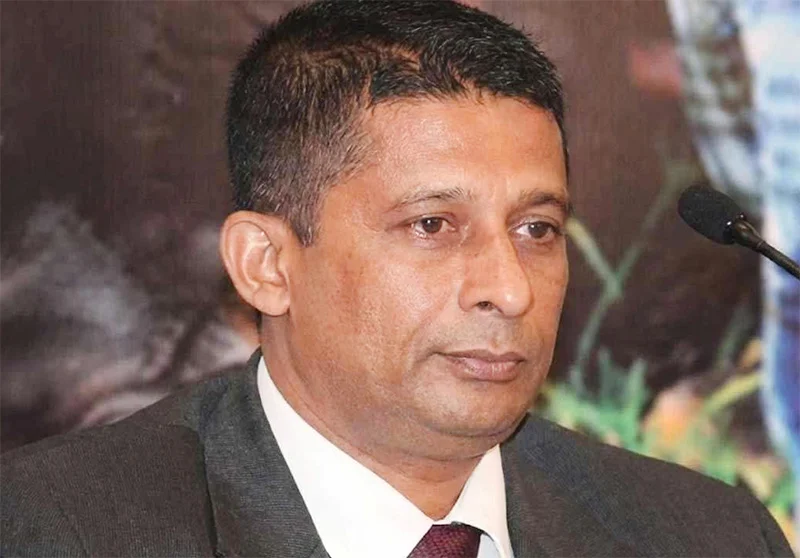
Suresh Sallay, who played a significant role in the Directorate of Military Intelligence (DMI) during the war, has been arrested under the Prevention of Terrorism Act (PTA).
DIG (Legal Division) Jaliya Senaratne yesterday told a hastily called media briefing that Sallay had been arrested in connection with the ongoing investigations into the 2019 Easter Sunday carnage. Senaratne said that as the ex-officer had been apprehended in terms of the PTA, he could be held for 72 hours for questioning.
The Criminal Investigation Department (CID) arrested him at Peliyagoda yesterday morning. At the time of the suicide bombings, Sallay had been at the National Defence College (NDC) of India.
Sallay had been under investigation over declaration made by one Azad Maulana, in an interview with British television network Channel 4, that Sallay met the Easter Sunday bombers, including their leader Zahran Hashim, in February 2018. Responding to Maulana’s allegation, Sallay told the UK network that he had been assigned to the Sri Lankan mission, in Malaysia, during the 2016-2018 period and never left the country in 2018.
According to Sallay, he had been out of Malaysia only once, during the entire 2016-2018 period, and that was in 2017.
Maulana also accused him of meeting Pilleyan who, at that time, was held at Prison.
Pilleyan, too, was arrested in connection with the same investigation.
Following the change of government in November 2019, President Gotabaya Rajapaksa appointed Sallay head of the State Intelligence Services (SIS), a post previously held by Senior DIG Nilantha Jayawardena accused of the worst post-war intelligence failure.
Sallay retired in October 2024 following Anura Kumara Dissanayake’s victory in the presidential election. (SF)
The Communist Party yesterday (25) said that all individuals, regardless of political affiliation or status, responsible for the coal procurement scandal, should be held accountable, if found guilty of wrongdoing. The Opposition has directly pointed fingers at Energy Minister Kumara Jayakody in this regard. The following is the text of the statement issued by the CP:
“The Communist Party of Sri Lanka wishes to add its voice to the growing public outcry in response to the unfolding revelations surrounding the coal procurement scandal. These revelations have, once again, exposed the deep‑rooted corruption embedded within the neoliberal governance framework that has dominated the country’s economic management for decades.
The CPSL condemns, in the strongest terms, the irregularities and manipulations that have allegedly taken place in the awarding of coal supply contracts. These actions represent not mere administrative lapses but a systematic betrayal of the public trust, carried out at the expense of the national economy, and the working people, who ultimately bear the burden of such misconduct.
The Party emphasises the following:
* Corruption, in strategic sectors such as energy, threatens national sovereignty directly, as it compromises the stability of essential services and places the country at the mercy of private profiteers.
* The scandal reflects the failure of successive governments to establish transparent, accountable, and socially responsible procurement systems, instead allowing political patronage networks and corporate interests to dominate public resources, which the National People’s Power government swore to eradicate
* The CPSL calls for a full, independent, and publicly accessible investigation, ensuring that all individuals, regardless of political affiliation or status, are held accountable, if found guilty of wrongdoing.
* The CPSL urges the government to immediately review procurement mechanisms across all state institutions, ensuring that national resources are managed in the interest of the people rather than of private intermediaries.
The Communist Party of Sri Lanka stands firmly with the working class and the broad masses in demanding justice and transparency. The coal procurement scandal must not be allowed to fade into yet another episode of unpunished corruption. It must become a turning point toward building a state apparatus that serves the people, not the profiteers.”
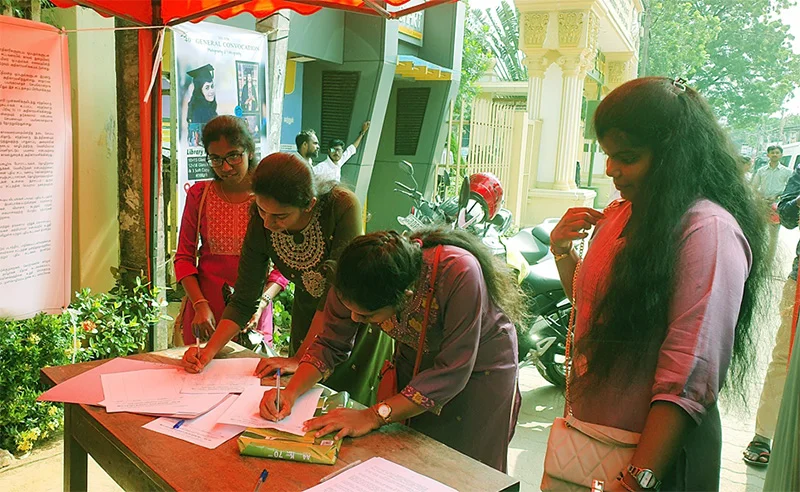
The University of Jaffna has joined a protest campaign in the northern and eastern regions opposing both the Prevention of Terrorism Act (PTA) and the newly proposed counter-terrorism law.
The campaign is being carried out, under the theme “Neither the old nor the new,” reflecting mounting opposition to both the existing PTA and the proposed Protection of the State from Terrorism Bill (PSTB). Organisers have called for the outright repeal of the PTA and the withdrawal of the new legislation.
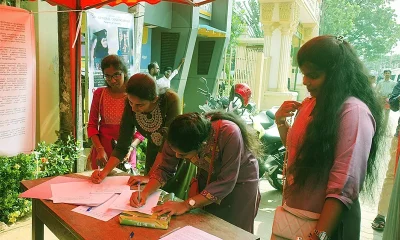
Organisers conducted a four-day signature campaign recently. Jaffna University has been one of the venues for the signature campaign , sources said.
Sources said that the mobilisation at the University has been jointly organised by the University Employees’ Union, the University Teachers’ Association and the University Students’ Union. All three bodies have urged the government to withdraw the proposed law and repeal the PTA, warning that successive counter-terror frameworks risk entrenching extraordinary powers under a different legislative guise rather than delivering meaningful reform.
Across the North and East, similar protests and signature campaigns have taken place in recent days. In Point Pedro, civil organisations conducted a signature campaign on Saturday, asserting that neither the PTA nor any proposed legislation, framed as protecting the state from terrorism, is acceptable.
In Chenkalady, Batticaloa district, a large-scale campaign, held on 20 February, drew civil society activists from across the region. The protest, organised by the Batticaloa District Civil Society Activists’ Association, took place along Market Shop Street and saw participants call for the repeal of the PTA and oppose the proposed new law.
Civil society representatives warned that both the existing PTA and the proposed PSTB pose serious threats to civil liberties and democratic rights. Organisers distributed awareness leaflets outlining concerns that the new law could replicate or even expand the sweeping powers long associated with the PTA.
Opposition to the legislation has grown in recent weeks, with activists, religious leaders and civil society groups warning that the proposed reforms risk further entrenching repression under the pretext of national security.

Fair weather will prevail over most parts of the island

CID arrests former top military intelligence officer under PTA

Corruption in coal procurement: CP demands action against all responsible

Jaffna University leads campaign against PTA and PSTB

Indian Naval Sail Training Ship INS Tarangini here soon

A beloved principal has departed!

‘Dates have the highest sugar content to fight Coronavirus’

Sunday Island 27 December – Headlines

#SundayIsland 17th December – Headlines

Sunday Island – 28th March

Sunday Island Headlines – 21 March

Sunday Island – 21st February – Headlines
-
 Features4 days ago
Why does the state threaten Its people with yet another anti-terror law?
-
 Features4 days ago
Reconciliation, Mood of the Nation and the NPP Government
-

 Features4 days ago
Victor Melder turns 90: Railwayman and bibliophile extraordinary
-

 Features3 days ago
LOVEABLE BUT LETHAL: When four-legged stars remind us of a silent killer
-
 Features4 days ago
Victor, the Friend of the Foreign Press
-
 Latest News5 days ago
New Zealand meet familiar opponents Pakistan at spin-friendly Premadasa
-
 Latest News5 days ago
Tariffs ruling is major blow to Trump’s second-term agenda
-

 Latest News5 days ago
ECB push back at Pakistan ‘shadow-ban’ reports ahead of Hundred auction