
Business
Edtech for marginalised children in Sri Lanka: Insights from MENA and other Asian countries

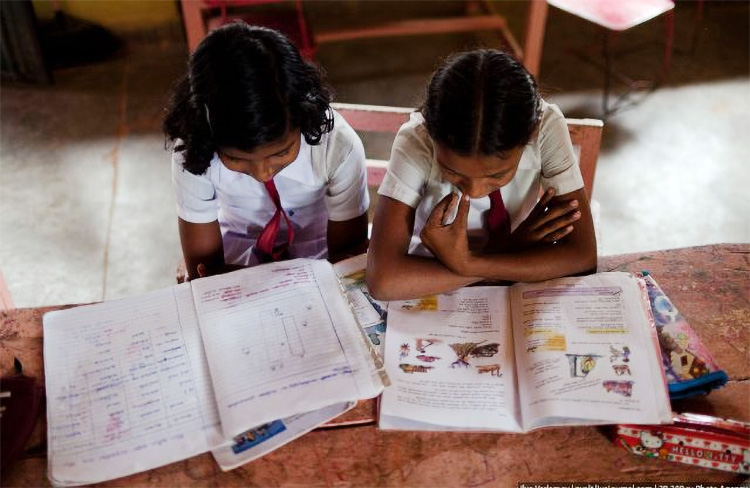
 By Himani Vithanage
Written for International Day of Education on 24 January 2024.
This blog explores how technological resources can help fill gaps in access and reduce inequalities in education in Sri Lanka.
Despite the recent uptake of educational technology (edtech) in Sri Lanka, it does not cater to the needs of diverse groups of vulnerable children in the country.
Evidence from MENA and Asia reveals the importance of targeted edtech initiatives in ensuring inclusiveness in education in Sri Lanka.
The COVID-19 pandemic and the ongoing economic crisis have resulted in over two years of learning loss in Sri Lanka, with its effects being more on vulnerable children due to the gaps in inclusiveness in education.
Access to inclusive and equitable quality education is a fundamental human right. It is crucial for achieving developmental goals like ending poverty and helping people move up in society.
The United Nations marks this year’s International Day of Education under the theme “learning for lasting peace” highlighting the important role played by inclusive and equitable education in the sustenance of peace and development.
However, the path to achieving equitable access to quality education by 2030 seems challenging, with only 1 in 6 countries projected to reach this goal. This underscores the need to reconsider current education systems, specifically across the developing world. In Sri Lanka, despite having achieved near-universal participation in education, there is still a long way to go in achieving equitable education for vulnerable groups such as children with disabilities, out-of-school children, school dropouts, migrant workers’ children, children from minority communities etc.
A recent regional study conducted by IPS highlights examples from the Middle East and North Africa (MENA) and Asia on how technology can be used to bridge these gaps. However, the study reveals that compared to several other lower middle-income countries analysed within South Asia, Southeast Asia and MENA, Sri Lanka is not fully catering to the diverse educational needs of vulnerable children through its use of technology. This blog explores how Sri Lanka could use technology innovatively to improve inclusiveness in education.
‘Edtech’
 Edtech, short for educational technology, is the use of technology in education to facilitate the teaching and learning processes. These encompass hardware, software, infrastructure, and other digital content that are used for educational purposes. Some examples of edtech include E-learning platforms, learning management systems (LMS), virtual classrooms, educational apps, educational games, educational television channels, and education management information systems (EMIS).
The uptake of edtech has grown over time, particularly during and after the COVID-19 pandemic which highlighted the important role played by technology in strengthening the resilience of education systems to crises and emergencies. After the pandemic in particular, with technology becoming more accessible to users, new edtech initiatives have been developed while expanding the coverage of existing ones.
Several edtech initiatives in the MENA region are being deployed to improve access to education for underrepresented and vulnerable groups. For instance, the UNRWA eLearning Platform is a digital learning hub, that provides access to remote learning material and resources specifically for Palestinian refugee students. This platform was developed with the aim to ensure continuity of learning, especially during times of crises such as the COVID-19 pandemic and is an ideal example of the use of edtech in improving the inclusivity of education.
‘Sghartoon’ in Tunisia is a digital teletherapy platform that is designed to help children with learning disabilities such as dyslexia, through educational games. This platform enables therapists to manage the therapeutic path of children through its digital game library, patient management and calendar management tools.
Similarly, Asia boasts several successful initiatives like the ‘Basic Education Equivalency Program (BEEP)’ in Cambodia, an online programme, that targets young Cambodians who have dropped out of lower secondary school and supports them in completing their basic education online without disrupting their work.
In Pakistan, the ‘WonderTree’ programme provides therapeutic exercises for children with special needs through Augmented Reality (AR) based games, catering to the educational needs of children from various spectrums of motor and cognitive difficulties including Autism, Down Syndrome, and Global Development Delay. This is an instance of using edtech as a technology-enabled behavioural intervention that enhances the psychological well-being of students, illustrating the significant contribution that edtech can make to learning beyond conventional classroom settings.
While lack of access to education infrastructure in rural schools in India is an ongoing challenge, ‘OLabs’ (online labs for schools) is an initiative that targets children from underprivileged schools by making lab resources available readily (anytime) and remotely (anywhere) to students with no access to physical labs or where equipment is not available in their schools due to scarcity or cost. This initiative serves as an example of using technology to improve access to education infrastructure in rural schools.
There has also been a recent emergence of offline tech in certain countries, where some edtech programmes have been specifically developed to reduce the digital divide in education. Such edtech programmes do not require internet or electricity. One such example is the ‘Class Saathi’ initiative in South Korea and India which uses Bluetooth clickers to provide students and teachers from underprivileged areas lacking proper ICT infrastructure (internet and electricity) to access online content using offline and wireless technology. Such initiatives are innovative solutions that would enhance accessibility to edtech.
Lessons for Sri Lanka
While Sri Lanka still has much to achieve in terms of inclusiveness and equitability of education, these regional examples demonstrate how edtech can be used to capture the varied groups of vulnerable children including children from various spectrums of learning disabilities, out-of-school children, school dropouts, migrant workers’ children, children from minority communities etc. Therefore, the focus should be directed towards developing targeted edtech initiatives that are specifically designed to address the needs of particular groups of children to ensure the inclusiveness of quality education through edtech. Some progress has been made in this regard, although there is a long way to go.
One important example in Sri Lanka is the ‘Nenasa’ programme which makes educational content available to rural students through its TV programmes, developed to reduce the urban-rural gap in access to educational material. Implementing such targeted initiatives would be a vital step in the progress of Sri Lanka’s education system.
As there is mixed evidence on the role of technology in reducing disparities in education, especially because of the digital divide, promoting the use of offline tech is also a possibility for Sri Lanka as evident from the Class Saathi initiative.
Despite the government’s recent efforts to improve access to technology in facilitating edtech, that solely is insufficient and ineffective in improving inclusiveness in education. Rather, targeted, strategic and innovative measures should be taken to ensure that the implementation of edtech is effective in promoting inclusiveness in education for marginalised and vulnerable groups of children in Sri Lanka. Furthermore, in addition to introducing such targeted edtech initiatives, it should be followed by providing adequate teacher pre-service and in-service training to ensure the effective incorporation of technology in education.
* This blog is based on the IPS study ‘EdTech: Landscape and Challenges in Asia and MENA’. It is funded by IDRC through Southern Voice and the Group for the Analysis of Development (GRADE).
Himani Vithanage is a Research Assistant working on health, education, and labour policy at IPS. She received the IPS’ Saman Kelegama Memorial Research Grant for 2021. Himani holds a BA in Economics with First Class Honours from the University of Colombo. Himani also holds a BSc in Economics and Finance with First Class Honours from the London School of Economics and Political Science (LSE).


The Asian Development Bank (ADB) is actively engaging with Sri Lanka on a potential budget financing package, following recent discussions between ADB President Masato Kanda and President Anura Kumara Dissanayake.
Describing the request as “crucial,” Kanda said the proposal is now under internal consideration, with a broader framework being developed to ensure funds are directed toward priority sectors such as energy security, food security, and overall budgetary support. While no figures or timelines were disclosed, he emphasised the need for a carefully structured and mutually agreed resource allocation strategy
Sri Lanka is among several countries that have approached the ADB for similar assistance, reflecting mounting fiscal pressures across the region.
Speaking at one of the key meetings of the 59th Annual Meeting of the ADB in Samarkand, Kanda outlined a broader institutional shift in response to escalating global economic uncertainties, particularly those stemming from tensions linked to the Iran conflict.
“Asia and the Pacific can’t afford to retreat into isolation,” he said, reiterating a paradigm shift in how the ADB responds with greater speed, flexibility, and coordination.
Reaffirming the bank’s commitment to the region, Kanda stated, “We will step forward as one, while the ADB will be your steadfast anchor,” signaling a more proactive and unified approach to crisis response and economic stabilisation.
As part of this renewed strategy, the ADB has launched a $70 billion initiative aimed at strengthening regional connectivity through integrated power grids and digital infrastructure. The program is expected to play a transformative role in boosting cross-border energy cooperation and technological integration. By 2035, the bank aims to facilitate the integration of approximately 20 gigawatts of renewable energy capacity across national borders, supporting both energy transition goals and regional resilience.
Kanda also detailed a multi-tiered response framework to address immediate and long-term economic disruptions. In the short term, the ADB is leveraging its Trade and Supply Chain Finance Program to provide rapid liquidity support. This is complemented by fast-disbursing budget assistance designed to shield vulnerable populations from economic shocks.
Over the medium term, the bank plans to deploy resilience-building tools to help the regional economies stabilise and adapt to ongoing geopolitical and financial stresses.
The evolving strategy reflects a recognition that traditional development financing models may be insufficient in the face of increasingly complex and interconnected global crises. For countries like Sri Lanka, the outcome of these discussions could prove pivotal in facing current economic challenges while laying the groundwork for sustainable recovery.
As deliberations continue in Samarkand, the focus remains on translating high-level commitments into tangible support mechanisms tailored to the specific needs of ADB”s member countries.
By Sanath Nanayakkare in Samarkand, Uzbekistan
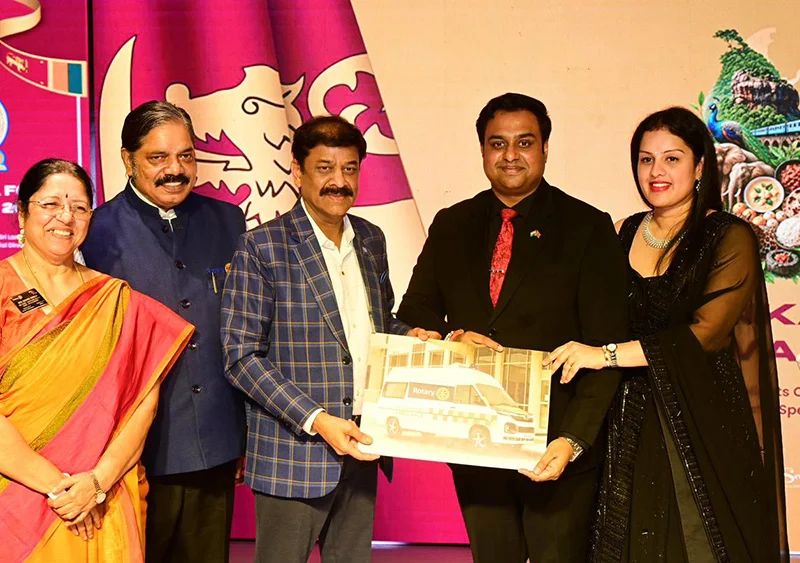
At the initiative of the Deputy High Commissioner of Sri Lanka, Dr. Ganesanathan Geathiswaran, the Deputy High Commission of Sri Lanka in Chennai successfully organized the first-ever “Sri Lanka Food Festival 2026” from 24th to 26th April at Green Meadows Resort, Chennai.
The Festival provided a unique platform to showcase the rich and diverse culinary heritage of Sri Lanka, offering guests an authentic experience of traditional Sri Lankan cuisine.
The event was organized in collaboration with esteemed partners, including the Ministry of Foreign Affairs, Foreign Employment and Tourism of Sri Lanka; Sri Lanka Tourism Promotion Bureau; Cinnamon Grand Hotel, Colombo; Ministry of External Affairs of India; India Tourism, the Government of India, the Tourism Department of the Government of Tamil Nadu, Dwarka Productions Chennai, and Tarlton Tea.
The primary objective of the festival to further strengthen cultural ties between Sri Lanka and South India while promoting tourism, trade, and people-to-people connections through a shared appreciation of culinary heritage was successfully achieved.
The occasion was further honoured by the presence of Suresh Jain, District Governor of Rotary District 3234; Navin Gupta, President of the Rotary Club of Chennai Coastal; and the Chief Guest, Dr. Ishari K. Ganesh, Founder, Chairman and Chancellor of Vels University.
The event was also attended by Mr. Blaze Kannan of Dwarka Productions; Nazoomi Azhar, General Manager of Cinnamon Grand Hotel, Colombo; and Sri Lankan actor Kalana Gunasekara, whose presence added further distinction to the occasion.
The festival witnessed the participation of diplomatic Corps, South Indian actors and actresses, distinguished business leaders, members of travel and tourism associations, members of Rotary Clubs, Round Table members, and members of the media fraternity, making it a prestigious and diverse gathering.
Over 700 guests attended the festival across the three days, reflecting strong interest and engagement from the local community.
In addition, the Rotary Club of Chennai Coastal announced its initiative to donate an ambulance to Sri Lanka and to renovate 30 schools across the country, further strengthening goodwill and support in the healthcare and education sectors between the two regions.

Since its UK debut in January 2025, JAECOO has recorded 28,232 new vehicle registrations within its first year, validated by the SMMT, making it the fastest-growing mainstream automotive brand Britain has seen in over a decade. Its flagship model, the JAECOO J7 PHEV, ranked among the most popular retail cars in the UK within its first year and emerged as the best-selling new car in Britain in March 2026.
These results have been further reinforced by a series of prestigious industry accolades:
Carwow Brand of the Year 2026
 Leasing.com Overall Car of the Year
Recognised by Google as the most searched Chinese automotive brand in the UK in its Year in Search 2025
Supporting this growth is JAECOO’s parent company, Chery Group, ranked 233rd in the Fortune Global 500 (2025) and China’s No. 1 passenger vehicle exporter for 23 consecutive years.
This global momentum is beginning to translate into local demand, with growing interest in the JAECOO J7 PHEV across Sri Lanka. Designed to combine premium styling with advanced technology and everyday practicality, the model is well suited to both urban driving and more challenging terrain. It offers a combined range of up to 1,200 km, fast-charging capability (30% to 80% in 20 minutes), and acceleration from 0–100 km/h in under 8.5 seconds. Safety and reliability are reinforced through advanced driver-assistance features, a five-star Euro NCAP rating, and a seven-year warranty offered by Hayleys Mobility.

INS Sindhukesari arrives in Colombo

Minister of Health of the Russian Federation attends the Sri Lanka–Russia Medical Forum

Members of Sri Lanka Cricket Transformation Committee Officially Appointed

Three prison guards arrested following the death of an inmate

Showers or thundershowers will occur at most places of the island after 1.00 pm.

CJ urged to inquire into AKD’s remarks on May 25 court verdict

‘Dates have the highest sugar content to fight Coronavirus’

Sunday Island 27 December – Headlines

#SundayIsland 17th December – Headlines

Sunday Island – 28th March

Sunday Island Headlines – 21 March

Sunday Island – 21st February – Headlines
-

 News7 days ago
Treasury chief’s citizenship details sought from Australia
-

 News6 days ago
Rooftop Solar at Crossroads as Sri Lanka Shifts to Distributed Energy Future
-

 News5 days ago
“Three-in-one blood pressure pill can significantly reduce risk of recurrent strokes”
-

 News7 days ago
Central Province one before last in AL results
-

 Sports7 days ago
Well done AKD!
-

 News2 days ago
USD 3.7 bn H’tota refinery: China won’t launch project without bigger local market share
-

 News5 days ago
Alarm raised over plan to share Lanka’s biometric data with blacklisted Indian firm
-
 News15 hours ago
CJ urged to inquire into AKD’s remarks on May 25 court verdict