
News
Economy improving, VAT can be reduced – RW


President Ranil Wickremesinghe said in Parliamenty yesterday he was aware that Value Added Tax (VAT) was a burden on the public. He said it would be possible to reduce VAT with the passage of time.
Delivering the government policy statement at the commencement of the new session of Parliament, the President said: “The prior scarcity of paper for book printing is now replaced by discussions about VAT. Indeed, VAT poses a burden for many, and we are not oblivious to this fact. We are systematically addressing this issue. In 2022, there were 437,547 registered tax payers, a number that surged to 1,000,029 by the end of 2023—an impressive 130 percent increase. As the tax network expands, the burden on individuals and organizations will diminish. Continuing our economic reforms, we aim to alleviate the tax burden as the economy stabilizes. There is also room for a potential revision of the VAT percentage.
The President’s statement: From ancient times to the present day, our world has encountered a myriad of crises, spanning nations and personal lives alike. While some crises could be overcome, others proved insurmountable. Mere condemnation and blame-shifting towards the crisis itself and not moving beyond scrutinizing its root causes are not effective means of resolution. Successful crisis management, whether on a global scale, within nations, or in individual lives, hinges on adeptly handling the situation and navigating through it.
Reflecting on the timeless wisdom of Lord Buddha’s sermon, ‘Attadeepa – Viharati’—be a lamp unto you—we find a profound lesson. Initiating the process of overcoming a crisis must begin within oneself. Throughout history, no crisis has been conquered solely through pointing fingers at others.
It is imperative that we become the guiding light for our own selves, correcting our thoughts and perspectives. Without personal improvement, there can be no collective good for our country, and the crisis remains unsolved. True systemic change can only occur when we, as individuals, undergo transformation, transcending mere pronouncement about altering the system.
In emphasizing this principle, I aim to present several key insights about our past, our present, and the future we aspire to achieve, before this august assembly.
The memory of the state our country found itself in during February 2022 is still vivid in our minds. However, as of February 2023, commendable efforts have led to a considerable improvement in the country’s condition, surpassing the state it was in during the same month the previous year.
Allow me to highlight the key economic indicators from February last year up to now:
Inflation, which stood at a daunting 50.6 per cent last year, has dramatically decreased to a mere 6.4 per cent today.
Food inflation, previously at an alarming 54.4 per cent, has seen a remarkable decline to just 3.3 per cent.
The exchange rate has shown positive movement, with a dollar worth Rs. 362 in the past and now valued at Rs. 314.
Despite a 3.7 per cent budget primary deficit in 2022, we achieved a significant turnaround in 2023, achieving a primary budget surplus. This marks the sixth instance of Sri Lanka achieving such a surplus in the 76 years since independence. In 2022, the balance of payments deficit was 1.9 per cent of GDP, but by the end of 2023, the country achieved a surplus, a milestone not seen since 1977.
The interest rate, which was a high 28 per cent in 2023, has notably dropped to 12 per cent.
The 52 main statutory bodies of the government, facing a loss of Rs. 745 billion by the end of 2022, turned a profit of Rs. 313 billion by September 2023.
It is noteworthy that these institutions are suffering from a huge debt burden. On April 12, 2022, Sri Lanka declared its inability to pay its debts, with foreign exchange reserves hitting zero. The current situation is vastly improved, with foreign exchange reserves standing at $4.4 billion by the end of December 2023.
In a brief span, our strides in tourism have been noteworthy. The tourist arrivals for 2022 was 194,495, a figure that soared to 1,487,303 in 2023, with over 200,000 tourists arriving in January this year.
Throughout 2023, we implemented several positive measures, including lifting the fuel limit imposed by the QR code. Continuous electricity supply is now ensured, no gas shortage, the agriculture sector faces no shortage of fertilizers and there is no shortage of fuel for fisheries community. Import restrictions for all goods excluding vehicles have been eliminated, enabling the seamless importation of essential food and medicine. Furthermore, there are no shortages in the supply network for raw materials crucial to manufacturing industries.
Despite a 7.8 per cent contraction in GDP by the close of 2022, our economic trajectory reversed. Experiencing six consecutive quarters of growth from 2022, the third quarter of 2023 marked a 1.6 per cent expansion.
Our economy, initially plummeted with unprecedented speed, has undergone a remarkable turnaround at rocket speed, resembling a V-shaped recovery igniting hope. It can be recognized as a significant achievement. The recovery of collapsed economies is typically fraught with prolonged challenges and hardships. Nevertheless, unlike other nations, we have managed to rejuvenate our economy swiftly, evading enduring difficulties and pains.
The economic downturn persisted throughout 2022, making notable economic progress in 2023 not a random occurrence. This progress was a deliberate outcome of implementing a nuanced economic policy crafted with meticulous care and foresight.
I consistently communicated the policies, measures, and plans we formulated, openly addressing this Parliament and the public on various occasions. Every step was taken with transparency, providing opportunities for discussion and debate both inside and outside Parliament, leaving nothing concealed.
My decision-making was driven by the country’s growth, not political gain. Even when facing disadvantages, decisions in favour of the country were not shied away from. While certain groups in the parliament opposed these decisions, the majority, regardless of personal political motives, supported them for the benefit of the country. I am confident that, in time, they will be acknowledged and appreciated by the people.
Our journey progressed methodically. In the 2022 interim budget, I highlighted the country’s critical situation at that time, aiming to avert an economic collapse. Through the 2023 budget, several proposals were presented to guide the economy towards stability, showcasing a step-by-step approach to our overarching goals.
The 2024 budget proposals mark the initial stride in essential reforms aimed at propelling economic development. Despite challenges and occasional reluctance, the economic reforms and policies we have instituted have set us on the trajectory towards a stable economy, earning recognition from international financial institutions for our targeted approach.
Having emerged from a dark economic abyss, we now perceive the light at the end of the tunnel. The economy, once in the intensive care unit, has been rescued from its critical condition.
The severe economic crisis of the past subjected many citizens to unimaginable hardships—job losses, income source depletion, missed business opportunities, and disenfranchisement, most acutely felt by the common people. Presently, we are gradually restoring lost opportunities through initiatives like the Urumaya programme, aiming to reinstate people’s rights.
Under the “Urumaya” programme which was initiated day before yesterday, we focus on two fundamental objectives. One is lands and the other is housing.
The British colonial government, through the Waste Lands Act in 1897, deprived people of their land rights, a grievance unaddressed by subsequent post-independence administrations.
We have initiated the process of granting them land rights, which is set to benefit over two million people.
Enlisting two million new landowners into our society marks a historic and a revolutionary stride—an honour to the enduring struggles of farmers striving for self-sufficiency in rice production.
Approximately one-third of our country’s populace faces insufficient income and lacks suitable housing. Our commitment involves taking measures to provide these individuals with both income sources and a legacy of housing.
Complete ownership of more than 50,000 houses will be granted for low income urban residents.
Launching onto a successful economic development path demands special attention to all regions of the country, especially for poor and vulnerable communities. Despite facing a severe economic crisis, we have consistently taken steps for the welfare of our citizens.
This year, Asvasuma is expected to benefit 2.4 million people, aiming to uplift the living standards of those at the lowest socioeconomic levels. The unprecedented financial subsidy accompanying this program stands as a historic milestone in our country. As a means of assistance to low-income individuals, each family will receive 20 kilos of rice during the festive season of this year.
As of August 2022, the President’s Fund was non-functional, leaving over 9,000 pending applications for medical aid. An additional 4,000 applications were received from August to December. We addressed the backlog, disbursing Rs. 915 million to 4,917 patients throughout 2023. Now, payment processing time has been significantly reduced, with payments made within three to five working days. Efforts are underway to increase all medical aid from 50 to 100 percent this year. Alongside these benefits, a scholarship program for school children has been implemented through the President’s Fund.
Pensions have been raised while the government employees are provided with a specialallowance, and steps are being taken to resolve the salary discrepancies for government retirees from 2016 to 2020 in the near future.
As government revenue increases, we will take measures to increase benefits for the people accordingly.
The tangible growth we are experiencing is evident in the current societal discussions. Not long ago, conversations cantered around the challenges posed by power cuts, demanding uninterrupted electricity. Today, the discourse has shifted to electricity bills. Previously, concerns were raised about the exorbitant black market price of petrol, with talk of spending days in fuel queues. Now, the focus is on new oil companies investing in Sri Lanka. Issues related to the scarcity of vegetables have transformed into discussions about prices of carrots.
All these endeavours are undertaken amid a substantial debt burden. Throughout the past, concerted efforts have been made to formulate a strategic plan for repaying this debt. The domestic debt restructuring plan has been successfully executed as the first step, and a policy agreement for restructuring has been reached with foreign creditors as the second step.
Negotiations with private creditors are presently in progress.
Anticipated in the initial six months of this year, the intricate restructuring plan is poised to form the foundational framework for restoring our economy to normalcy. It will serve as a pivotal juncture in alleviating the burden of debt.
Projections from the IMF, World Bank, and Asian Development Bank suggest a potential 2% to 3% economic growth for this year, and our efforts are geared towards elevating this to 5% by 2025.
In 2021, we initiated operations to rescue the country from impending challenges, with 2022 surpassing some aspects of the preceding year. Every facet of 2023 exhibited improvement over 2022, and 2024 is forecasted to be even more promising. While progress continues on this trajectory, we aspire for a more remarkable 2025.
However, contentment with this progress alone is not sufficient. Despite not currently repaying any loans from foreign countries and external commercial bases, the impending restructuring signals a shift towards debt repayment. To fulfil these obligations, both rupees and dollars are essential.
By September 2023 our total debt burden was US $ 91 billion. It will take a considerable period of time to settle this debt. In order to meet our debt, we need to source the funds locally. It is imperative that we generate this income; otherwise, we risk falling into the debt trap once again.
As a result of debt restructuring, we will be able to reduce the annual payment. Nevertheless, even under such a situation we will still have to pay around US$ 03 billion per year. We cannot continue to be paying in this manner. We need to create a balance between our income and expenditure. Our budget deficit is at an acute stage. This year government revenue stood at Rs. 4,127 billion and expenditure was Rs. 6,978 billion. Out of this Rs. 2,651 billion is for debt repayment. This clearly indicates our debt burden.
Since the 1950s, our approach involved extensive borrowing, encompassing all aspects of governance. Leaders and the populace became accustomed to this debt-centric economy, with concessions provided on various fronts, including free rice distribution, subsided electricity bills, educational endeavours, and the proliferation of government jobs. Promises made during elections were diligently fulfilled upon assuming power.
We must break free from the shackles of a debt-driven mentality to secure the future of our country.
The elimination of the debt economy is paramount, and we need to focus on building a robust, independent economy.
Rapidly increasing export income and foreign investment are crucial components of this transformative journey.
Our on-going economic reforms lay the foundation for creating a competitive, digital and green economy.
Central to this process are the eradication of corruption and social modernization.
While corruption is widely acknowledged as a scourge in our nation, it's crucial to recognize that a systematic and formal set of rules is essential to combat it. Shouting about catching thieves is ineffective without a strong legal system and a scientific approach, executed by trained officers.
Merely bringing corrupt individuals to justice is not a comprehensive solution; prevention is equally critical. Strict rules to deter corruption and severe punishments for offenders must work in tandem.
The enactment of the Anti-Corruption Act is a significant step in this direction, and its impartial implementation is evident for all to see.
I would like to draw the attention of this House to key areas of focus in our economic and social modernization efforts.
Tourism is a sector ripe for development, and we are actively working on enhancing both human and physical resources to attract more tourists, with the goal of reaching 5 million visitors annually.
Our country boasts abundant renewable energy sources, presenting a significant opportunity for economic gain.
While agriculture has been a longstanding focus, out-dated methods persist, hindering modernization.
We are launching a program to double and triple of productivity agricultural land in the dry zone over the next three to four seasons. Policy decisions have been made, and the program will commence this month, starting with one divisional secretariat selected from each district.
This initiative aims not only to boost productivity in the dry zone but also to free up wet zone land for other commercial crops.
Hundreds of thousands of acres acquired under the Land Reform Commission in the seventies remain unproductive, leading to a significant waste of resources. Various government agencies, such as Janavasama and State Plantations Corporation, own these lands, with billions of public funds spent on maintaining them.
To address this issue, we have devised an effective plan, leasing these lands to localentrepreneurs for long-term commercial cultivation, including the option for foreign technology and investment. This strategy aims to transform underutilized lands into sources of foreign exchange, contributing to economic development.
The Guest of Honour at our Independence celebrations was the Prime Minister of Thailand who spoke about the agricultural revolution in his country. Inspired by the agricultural revolution in Thailand, where modern technology is effectively utilized, we seek to enhance productivity in agriculture and generate foreign exchange.
Another crucial focus is on attracting foreign investment to accelerate economic growth.
Recognizing the challenges faced by foreign investors in Sri Lanka, we have formulated a comprehensive plan to simplify the investment process, eliminating bureaucratic hurdles and corruption risks.
Efficient processes for permits and facilities in some countries are completed within two or three days, covering aspects such as land, electricity, water facilities, and access roads.
Utilizing computer systems ensures a transparent and legal process.
Building on these international standards, the groundwork for establishing an Economic Commission aligning with current needs is now completed. This commission oversees a comprehensive set of investment laws and programs.
Education and Health are vital focus areas, which needs our attention. Out-dated laws from the 2nd World War era no longer meet the needs of the modern world. To address this, new practices and regulations, aligned with international standards, are being introduced for education and health. The goal is to modernize these sectors, ensuring the protection of vulnerable sections and fostering economic growth. Overcoming the challenges of the twenty-first century is imperative.
Therefore, drawing from international experience, we must introduce new practices and rules in education and health. It is crucial to nurture human resources in a manner aligned with the modern environment. We are actively working on a comprehensive modernization strategy in these sectors to safeguard the interests of the poor and vulnerable while promoting economic growth.
Specifically, immediate implementation of educational reforms is necessary. The future heavily relies on new technological knowledge, requiring us to create a generation proficient in information technology, artificial intelligence, etc. In pursuit of this goal, we are formulating a policy to offer university education to every high school graduate and establishing science and technology universities. Additionally, a practice is being established to provide vocational education to those not passing the ordinary and advanced level examinations.
We are laying the groundwork to nurture a new generation equipped with contemporary knowledge and technology. As an island nation, we must execute a program ensuring the security of our country. All safety networks in the country are undergoing modernization. Intelligence agencies, security equipment, training methods, troops, defence equipment, and strategies are being revamped to effectively address various challenges that may arise.
It is imperative to reassess our foreign relations in light of current needs and geopolitical trends. The restructuring of our foreign relations should prioritize leveraging economic potentials. Therefore, adopting new foreign policies that enhance the country's economic strength and fostering non-aligned policies and friendships with all states are crucial. The directions of our foreign policy is evolving to align with the contemporary era.
Furthermore, efforts are underway to establish a new network of economic relationships that facilitate our products' entry into foreign markets. The goal is to forge free trade agreements with numerous countries. Notably, a recent free trade agreement was signed with Thailand, steps are being taken to enhance the trade agreement with India, and the free trade agreement with Singapore is fully operational. There are also plans to pursue a free trade agreement with China, Indonesia and Bangladesh in the future.
Similarly we will join the Regional Comprehensive Economic Partnership (RCEP). We will connect with the common system of trade variations in the European Union.
Modernizing various fields has yielded positive outcomes, elevating the standard of living for people in the country. The goal is to establish harmony and social justice through the successful implementation of programs that distribute benefits equitably across all sections of the country.
We emphasize the need for a shift in our economic focus, which is currently centred around Colombo and the Western Province. Currently, 46 per cent of the country's economy is concentrated in the Western Province.
This has to change. To address this, we are implementing a strategic plan to broaden economic activities in cities like Jaffna, Trincomalee, Bingiriya, Hambantota, and Kandy. A program has already been initiated to develop Trincomalee as an economic hub in collaboration with India.
Efforts are underway to bolster the economies of all nine provinces, with delegated powers related to sectors like vocational education and agriculture given to provincial councils under the third list of provincial council powers in the constitution. This decentralization aims to accelerate economic growth in each province, fostering healthy economic competition among them.
Additionally, strategic plans are in place to leverage the country's geographical location, including the development of three new ports. The goal is to position the country as a service centre and economic hub in the Indian Ocean.
To catalyse economic growth, the Port City of Colombo has been identified as a special financial zone, facilitating the enactment of necessary laws and ordinances for conducting international financial transactions in the region.
Emphasizing the paramount importance of the country's true resources, its youth, measures are being taken to safeguard this invaluable national resource. Ensuring the safety and well- being of the youth is identified as a crucial priority for the overall protection of the nation.
In recent times, there has been a noticeable emigration of the youth from the country, and this trend persists. It is our collective responsibility to forge a brighter future for our youth, a duty that extends to every individual.
It is crucial to recognize that the resolution to the economic crisis lies not in political but in economic and scientific solutions. Despite this, some political factions continue to advocate out-dated political remedies to gain popularity.
To advance, we must transition to a modern, robust economy. I will present the Economic Transformation Act to Parliament shortly, and relevant institutions have been established.
Progress cannot be achieved solely through political aspirations, un-kept promises, or election-focused slogans. Our commitment is to the on-going nation-building program, ensuring a prosperous future for the youth.
This transformation is a comprehensive and prolonged endeavour, not achievable in a brief period. As I previously mentioned, following this path could lead us to become a developed state by 2048. Quick fixes do not exist for crises, and achieving goals demand persistent effort.
The Bodhisattva’s journey to enlightenment serves as an analogy, emphasizing the dedication required for enduring success, involving millions of years of toil and facing continuous challenges even after attaining enlightenment. Reflecting on this, we need to charter our path in a patient and systematic manner.
In my earlier remarks, I referenced a sermon by the Lord Buddha. Many years after the Lord Buddha’s teachings, Confucius, the philosopher who lived in China around five hundred years before Christ, expressed the following sentiments.
To construct the world, we must first develop the nation. To develop the nation, we must start by building strong families. To establish strong families, we must begin by enhancing our personal lives. And to improve our personal lives, we must first cleanse our hearts.
Therefore, I urge everyone in this assembly to start by cleansing our hearts. To pave the way for future job opportunities and construct a better country for the youth, we must collectively choose the right path. It all begins with mending our hearts.
Our journey can gain momentum only when we unite and confront this challenge collectively. Some individuals, driven by ambitions for titles, prioritize personal gain over the welfare of the country. They manipulate the truth for their own benefit, deceiving both the nation and its people. If we divert from reality and tread the path of illusions, we risk falling into significant peril.
Once again, I urge everyone to unite in the pursuit of our nation building dream. Let us engage in open discussions. If there are alternative methods superior to the ones we are currently employing, please bring them forward. Let us thoroughly examine and discuss them. By coming together and exploring the best systems for our country, we can collectively implement positive change. We are always open to such constructive dialogues.
If you endorse the idea of engaging in these discussions, I am prepared to extend invitations to top officials from international financial institutions, including the International Monetary Fund and the World Bank, to visit Sri Lanka for these deliberations.







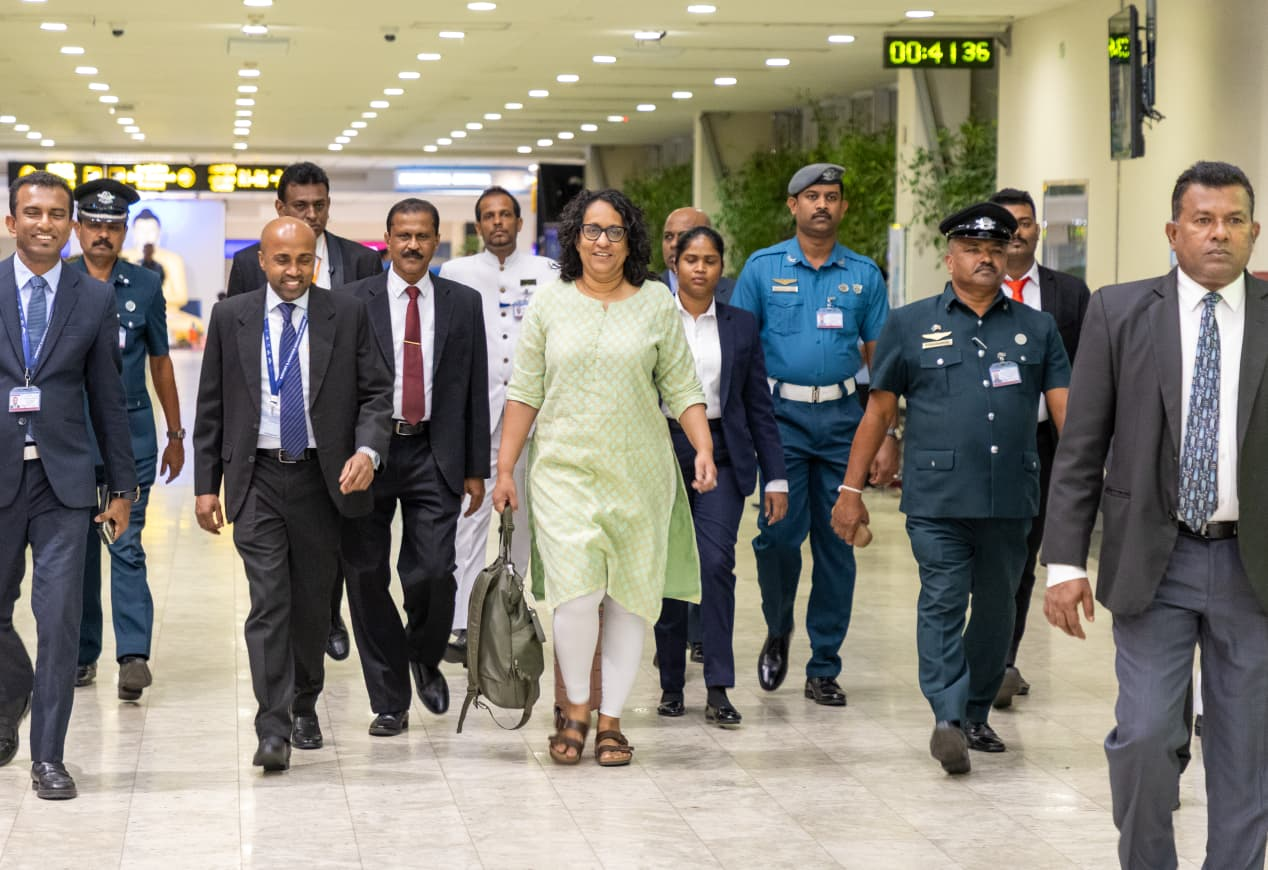
Prime Minister Dr. Harini Amarasuriya departed for Manila, Philippines, at midnight on 8 March on an official visit at the invitation of the Asian Development Bank (ADB), where she will participate in events marking International Women’s Day.
Upon arrival at the Ninoy Aquino International Airport (NAIA) in Manila, the Prime Minister was welcomed by Dr. Chanaka Thalpahewa, Ambassador of Sri Lanka to the Philippines, along with officials of the Government of the Philippines and representatives of the Asian Development Bank.
During the visit, the Prime Minister is scheduled to deliver a keynote address at the International Women’s Day event hosted at the ADB Headquarters in Manila.
On the sidelines of the event, the Prime Minister will also hold bilateral meetings with several Ministers of the Government of the Philippines to further strengthen cooperation and bilateral relations between Sri Lanka and the Philippines in areas of mutual interest.
[Prime Minister’s Media Division]
News
It is the government’s responsibility to ensure women’s rights are realized in everyday Life, and are not confined merely to Laws – PM

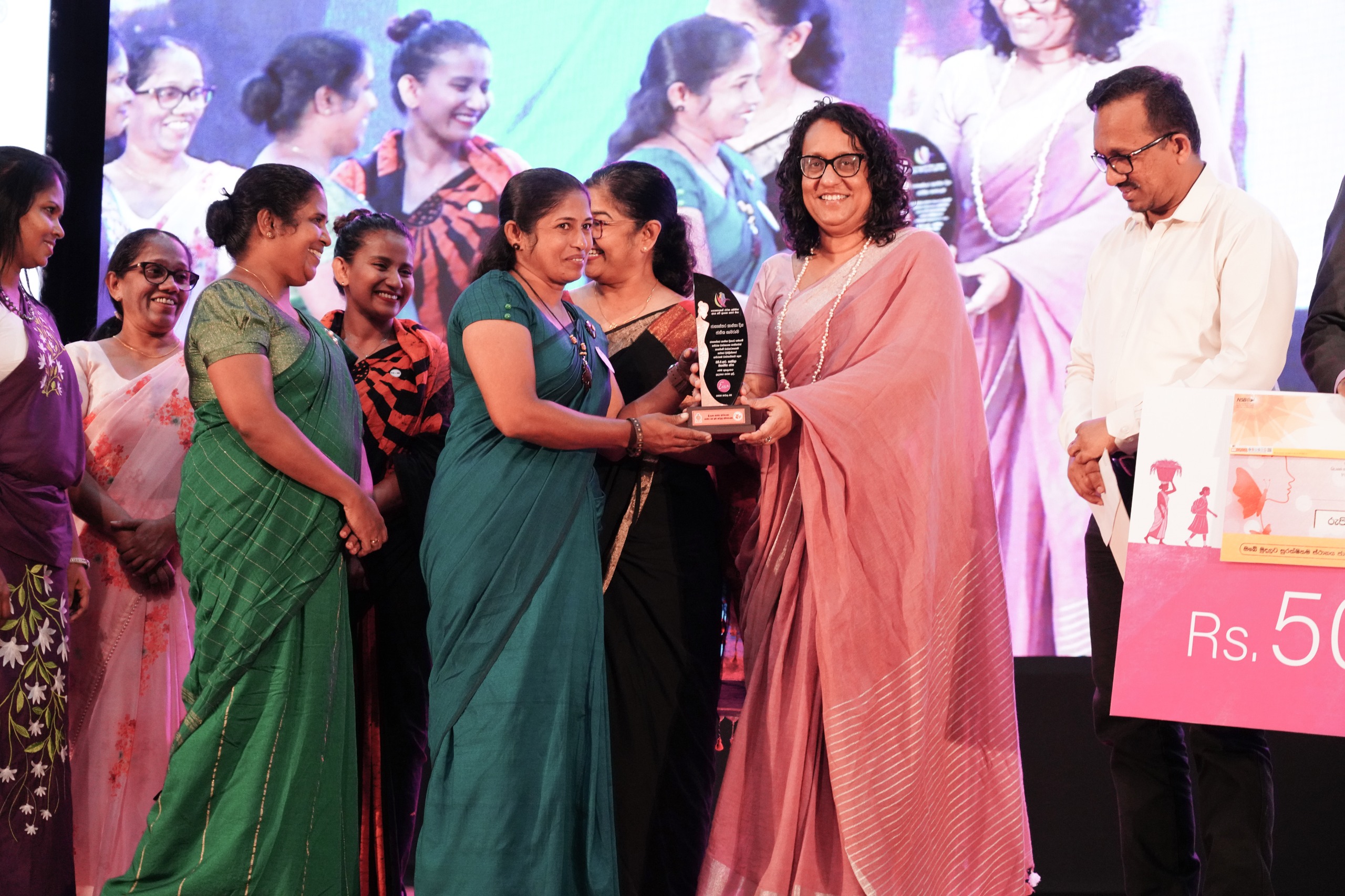
Prime Minister Dr. Harini Amarasuriya stated that it is the responsibility of the government to ensure that the political, economic, and social rights of women are not confined merely to laws or written documents, but are realized as a reality in the daily lives of every woman in the country.
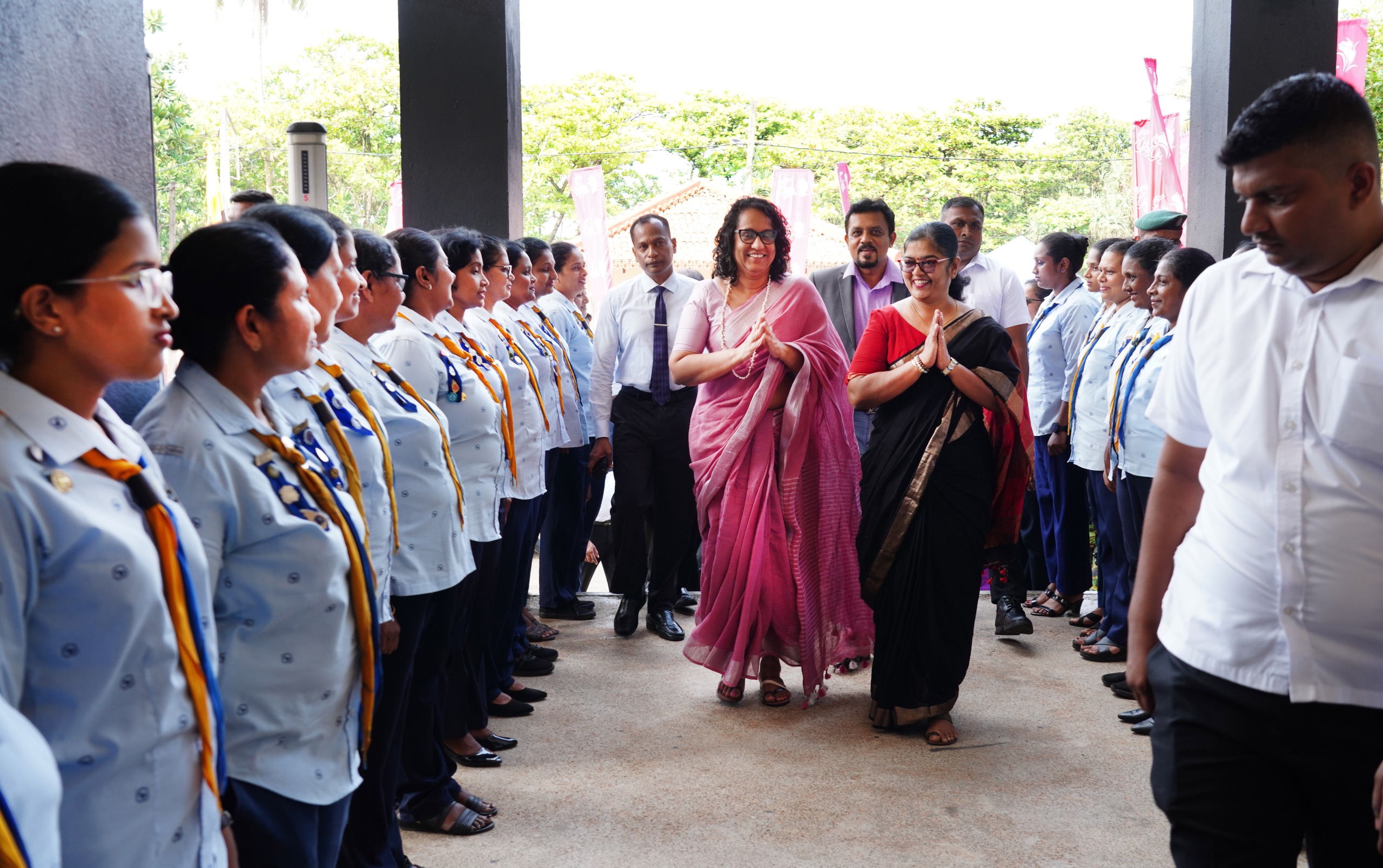
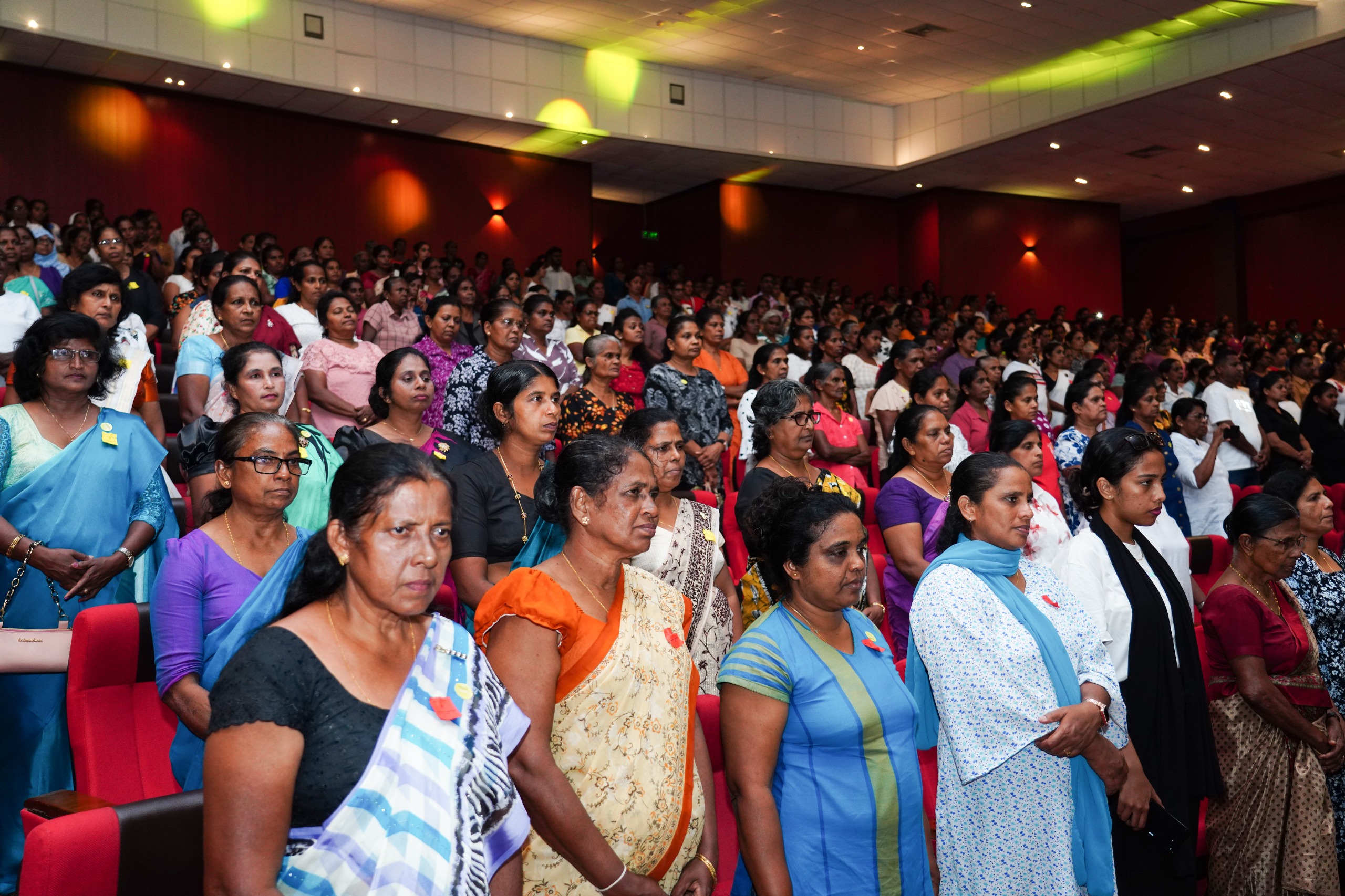
The Prime Minister made these remarks while participating as the Chief Guest at the National Celebration of International Women’s Day 2026, held on March 8 at the Rabindranath Tagore Memorial Auditorium of the University of Ruhuna in Matara under the theme “The Pride of a Prosperous Country – She is the Nation’s Path Forward.”
Addressing the gathering, the Prime Minister further stated:
“The freedoms we enjoy today including the right to education and political rights were won through the struggles carried out by women throughout history. This day is not merely confined to flowers. Our goal is to safeguard those rights and create an environment where every woman in our country can lead her life towards a better future.
The products of women entrepreneurs in this country should not remain confined to their local areas. The government is working to create an environment to ensure that they become active contributors to the national economy.
At the same time, a proposal has recently been presented by the Parliamentary Women’s Caucus to introduce a National Care Policy in order to recognize both the paid and unpaid contributions made by women for their families and for the country’s economy.
The Prime Minister also emphasized that women have a significant responsibility to stand for humanity in the face of the various crises occurring around the world. She called upon the women of the country to unite with compassion and take the lead in raising their voices for peace.
Addressing the event, Minister of Women and Child Affairs Saroja Savithri Paulraj stated that a new era has dawned in which the tears and sweat shed by women working abroad to strengthen the country’s foreign reserves will receive due recognition. She further noted that a comprehensive mechanism involving all ministries will be implemented to support women entrepreneurs, female heads of households, and women who have experienced violence.
At this national event, the Prime Minister also presented appreciation awards to 25 successful women entrepreneurs from across the island.
The occasion was attended by the Minister of Industry and Entrepreneurship Development Sunil Handunneththi, Southern Province Governor Prof. Susiripala Manawadu, Deputy Ministers including Dr. Namal Sudarshana, along with ambassadors, public representatives, and a large number of participants.
[Prime Minister’s Media Division]
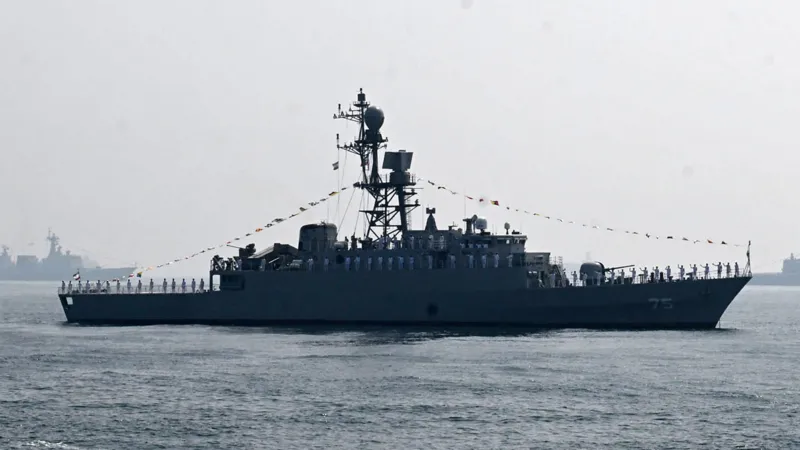
The Iranian warship Iris Dena was given permission by India to dock three days before it was torpedoed by a US submarine, India has said.
Foreign Minister S Jaishankar said Iran had sought permission for three of its ships to dock at Indian ports on 28 February – the day the US and Israel began a war on Iran – and permission was granted by India on 1 March.
The ships’ movements between 1 and 4 March are not clear and nor is why only one of them made it to India.
The sinking of the Iris Dena, with 130 sailors on board, in international waters off Sri Lanka’s southern coast on 4 March marked a dramatic widening of the war – and raised questions about India’s authority in its backyard.
It was the first military strike outside the Middle East since the US and Israel launched their war on Iran. President Donald Trump has said destroying Iran’s navy is one aim of the assault.
The three Iranian ships – Iris Dena, Iris Bushehr and Iris Lavan – had all participated in a military exercise hosted by India between 15 and 25 February in the coastal city of Visakhapatnam.
They left Indian waters on 25 February and were likely to have been in international waters on 28 February – when the US and Israel began attacking Iran.
“The Iranian side had requested permission on 28 February for three ships in the region to dock at our ports. This was accorded on 1 March,” Jaishankar told parliament on Monday. “Iris Lavan actually docked on 4 March in Kochi. The crew is currently in Indian naval facilities. We believe that this was the right thing to do.”

On 4 March, Iris Dena sank after being hit by a torpedo fired from a US submarine, killing at least 87 of its crew members.
According to the Indian Navy, the Iris Dena was operating about 20 nautical miles – roughly 23 miles (37km) – west of Galle in waters that fall under Sri Lanka’s designated search-and-rescue zone on the day it was struck.
The US tracks vessels across the world’s oceans, and a quarter of its submarine fleet of 65-70 is at sea at any given time, according to analysts.
Iran’s Foreign Minister Abbas Araghchi said last week the US had “perpetrated an atrocity at sea, 2,000 miles away from Iran’s shores” and that the warship was “struck in international waters without warning.”
Later, Sri Lanka said it had provided sanctuary for Iris Bushehr on 5 March, a day after it requested for docking following an engine malfunction.
Eventually, India also confirmed that Iris Lavan was docked in its southern city Kochi.
The BBC has written to the Iranian embassy in India and India’s external affairs ministry seeking clarification on the movements of the three Iranian naval vessels after Delhi granted them permission to dock.
US Defence Secretary Pete Hegseth has touted the attack on Iris Dena as an example of America’s military prowess, claiming it was “the first sinking of an enemy ship by a torpedo since World War Two”.
While it is the first time since 1945 that an American submarine has sunk an enemy ship this way, the UK and Pakistan have both sunk vessels using torpedoes since then.
The Iris Dena was one of about 20 Iranian navy vessels destroyed since Israel and the US launched co-ordinated strikes on Iran.
[BBC]

Prime Minister on official visit to Manila, Philippines

It is the government’s responsibility to ensure women’s rights are realized in everyday Life, and are not confined merely to Laws – PM

North Korea cancels Pyongyang Marathon for ‘some reasons’

Canadian officials rescue 23 people who floated away on ice sheet

India offered sanctuary to Iranian ship three days before US sank it

Afghanistan-Sri Lanka white-ball series set to be postponed due to West Asia conflict

‘Dates have the highest sugar content to fight Coronavirus’

Sunday Island 27 December – Headlines

#SundayIsland 17th December – Headlines

Sunday Island – 28th March

Sunday Island Headlines – 21 March

Sunday Island – 21st February – Headlines
-

 News4 days ago
University of Wolverhampton confirms Ranil was officially invited
-

 News5 days ago
Legal experts decry move to demolish STC dining hall
-

 News4 days ago
Female lawyer given 12 years RI for preparing forged deeds for Borella land
-

 News3 days ago
Peradeniya Uni issues alert over leopards in its premises
-

 Business5 days ago
Cabinet nod for the removal of Cess tax imposed on imported good
-
 News4 days ago
Library crisis hits Pera university
-

 News3 days ago
Wife raises alarm over Sallay’s detention under PTA
-
 Business6 days ago
War in Middle East sends shockwaves through Sri Lanka’s export sector