
News
Economy improving, VAT can be reduced – RW


President Ranil Wickremesinghe said in Parliamenty yesterday he was aware that Value Added Tax (VAT) was a burden on the public. He said it would be possible to reduce VAT with the passage of time.
Delivering the government policy statement at the commencement of the new session of Parliament, the President said: “The prior scarcity of paper for book printing is now replaced by discussions about VAT. Indeed, VAT poses a burden for many, and we are not oblivious to this fact. We are systematically addressing this issue. In 2022, there were 437,547 registered tax payers, a number that surged to 1,000,029 by the end of 2023—an impressive 130 percent increase. As the tax network expands, the burden on individuals and organizations will diminish. Continuing our economic reforms, we aim to alleviate the tax burden as the economy stabilizes. There is also room for a potential revision of the VAT percentage.
The President’s statement: From ancient times to the present day, our world has encountered a myriad of crises, spanning nations and personal lives alike. While some crises could be overcome, others proved insurmountable. Mere condemnation and blame-shifting towards the crisis itself and not moving beyond scrutinizing its root causes are not effective means of resolution. Successful crisis management, whether on a global scale, within nations, or in individual lives, hinges on adeptly handling the situation and navigating through it.
Reflecting on the timeless wisdom of Lord Buddha’s sermon, ‘Attadeepa – Viharati’—be a lamp unto you—we find a profound lesson. Initiating the process of overcoming a crisis must begin within oneself. Throughout history, no crisis has been conquered solely through pointing fingers at others.
It is imperative that we become the guiding light for our own selves, correcting our thoughts and perspectives. Without personal improvement, there can be no collective good for our country, and the crisis remains unsolved. True systemic change can only occur when we, as individuals, undergo transformation, transcending mere pronouncement about altering the system.
In emphasizing this principle, I aim to present several key insights about our past, our present, and the future we aspire to achieve, before this august assembly.
The memory of the state our country found itself in during February 2022 is still vivid in our minds. However, as of February 2023, commendable efforts have led to a considerable improvement in the country’s condition, surpassing the state it was in during the same month the previous year.
Allow me to highlight the key economic indicators from February last year up to now:
Inflation, which stood at a daunting 50.6 per cent last year, has dramatically decreased to a mere 6.4 per cent today.
Food inflation, previously at an alarming 54.4 per cent, has seen a remarkable decline to just 3.3 per cent.
The exchange rate has shown positive movement, with a dollar worth Rs. 362 in the past and now valued at Rs. 314.
Despite a 3.7 per cent budget primary deficit in 2022, we achieved a significant turnaround in 2023, achieving a primary budget surplus. This marks the sixth instance of Sri Lanka achieving such a surplus in the 76 years since independence. In 2022, the balance of payments deficit was 1.9 per cent of GDP, but by the end of 2023, the country achieved a surplus, a milestone not seen since 1977.
The interest rate, which was a high 28 per cent in 2023, has notably dropped to 12 per cent.
The 52 main statutory bodies of the government, facing a loss of Rs. 745 billion by the end of 2022, turned a profit of Rs. 313 billion by September 2023.
It is noteworthy that these institutions are suffering from a huge debt burden. On April 12, 2022, Sri Lanka declared its inability to pay its debts, with foreign exchange reserves hitting zero. The current situation is vastly improved, with foreign exchange reserves standing at $4.4 billion by the end of December 2023.
In a brief span, our strides in tourism have been noteworthy. The tourist arrivals for 2022 was 194,495, a figure that soared to 1,487,303 in 2023, with over 200,000 tourists arriving in January this year.
Throughout 2023, we implemented several positive measures, including lifting the fuel limit imposed by the QR code. Continuous electricity supply is now ensured, no gas shortage, the agriculture sector faces no shortage of fertilizers and there is no shortage of fuel for fisheries community. Import restrictions for all goods excluding vehicles have been eliminated, enabling the seamless importation of essential food and medicine. Furthermore, there are no shortages in the supply network for raw materials crucial to manufacturing industries.
Despite a 7.8 per cent contraction in GDP by the close of 2022, our economic trajectory reversed. Experiencing six consecutive quarters of growth from 2022, the third quarter of 2023 marked a 1.6 per cent expansion.
Our economy, initially plummeted with unprecedented speed, has undergone a remarkable turnaround at rocket speed, resembling a V-shaped recovery igniting hope. It can be recognized as a significant achievement. The recovery of collapsed economies is typically fraught with prolonged challenges and hardships. Nevertheless, unlike other nations, we have managed to rejuvenate our economy swiftly, evading enduring difficulties and pains.
The economic downturn persisted throughout 2022, making notable economic progress in 2023 not a random occurrence. This progress was a deliberate outcome of implementing a nuanced economic policy crafted with meticulous care and foresight.
I consistently communicated the policies, measures, and plans we formulated, openly addressing this Parliament and the public on various occasions. Every step was taken with transparency, providing opportunities for discussion and debate both inside and outside Parliament, leaving nothing concealed.
My decision-making was driven by the country’s growth, not political gain. Even when facing disadvantages, decisions in favour of the country were not shied away from. While certain groups in the parliament opposed these decisions, the majority, regardless of personal political motives, supported them for the benefit of the country. I am confident that, in time, they will be acknowledged and appreciated by the people.
Our journey progressed methodically. In the 2022 interim budget, I highlighted the country’s critical situation at that time, aiming to avert an economic collapse. Through the 2023 budget, several proposals were presented to guide the economy towards stability, showcasing a step-by-step approach to our overarching goals.
The 2024 budget proposals mark the initial stride in essential reforms aimed at propelling economic development. Despite challenges and occasional reluctance, the economic reforms and policies we have instituted have set us on the trajectory towards a stable economy, earning recognition from international financial institutions for our targeted approach.
Having emerged from a dark economic abyss, we now perceive the light at the end of the tunnel. The economy, once in the intensive care unit, has been rescued from its critical condition.
The severe economic crisis of the past subjected many citizens to unimaginable hardships—job losses, income source depletion, missed business opportunities, and disenfranchisement, most acutely felt by the common people. Presently, we are gradually restoring lost opportunities through initiatives like the Urumaya programme, aiming to reinstate people’s rights.
Under the “Urumaya” programme which was initiated day before yesterday, we focus on two fundamental objectives. One is lands and the other is housing.
The British colonial government, through the Waste Lands Act in 1897, deprived people of their land rights, a grievance unaddressed by subsequent post-independence administrations.
We have initiated the process of granting them land rights, which is set to benefit over two million people.
Enlisting two million new landowners into our society marks a historic and a revolutionary stride—an honour to the enduring struggles of farmers striving for self-sufficiency in rice production.
Approximately one-third of our country’s populace faces insufficient income and lacks suitable housing. Our commitment involves taking measures to provide these individuals with both income sources and a legacy of housing.
Complete ownership of more than 50,000 houses will be granted for low income urban residents.
Launching onto a successful economic development path demands special attention to all regions of the country, especially for poor and vulnerable communities. Despite facing a severe economic crisis, we have consistently taken steps for the welfare of our citizens.
This year, Asvasuma is expected to benefit 2.4 million people, aiming to uplift the living standards of those at the lowest socioeconomic levels. The unprecedented financial subsidy accompanying this program stands as a historic milestone in our country. As a means of assistance to low-income individuals, each family will receive 20 kilos of rice during the festive season of this year.
As of August 2022, the President’s Fund was non-functional, leaving over 9,000 pending applications for medical aid. An additional 4,000 applications were received from August to December. We addressed the backlog, disbursing Rs. 915 million to 4,917 patients throughout 2023. Now, payment processing time has been significantly reduced, with payments made within three to five working days. Efforts are underway to increase all medical aid from 50 to 100 percent this year. Alongside these benefits, a scholarship program for school children has been implemented through the President’s Fund.
Pensions have been raised while the government employees are provided with a specialallowance, and steps are being taken to resolve the salary discrepancies for government retirees from 2016 to 2020 in the near future.
As government revenue increases, we will take measures to increase benefits for the people accordingly.
The tangible growth we are experiencing is evident in the current societal discussions. Not long ago, conversations cantered around the challenges posed by power cuts, demanding uninterrupted electricity. Today, the discourse has shifted to electricity bills. Previously, concerns were raised about the exorbitant black market price of petrol, with talk of spending days in fuel queues. Now, the focus is on new oil companies investing in Sri Lanka. Issues related to the scarcity of vegetables have transformed into discussions about prices of carrots.
All these endeavours are undertaken amid a substantial debt burden. Throughout the past, concerted efforts have been made to formulate a strategic plan for repaying this debt. The domestic debt restructuring plan has been successfully executed as the first step, and a policy agreement for restructuring has been reached with foreign creditors as the second step.
Negotiations with private creditors are presently in progress.
Anticipated in the initial six months of this year, the intricate restructuring plan is poised to form the foundational framework for restoring our economy to normalcy. It will serve as a pivotal juncture in alleviating the burden of debt.
Projections from the IMF, World Bank, and Asian Development Bank suggest a potential 2% to 3% economic growth for this year, and our efforts are geared towards elevating this to 5% by 2025.
In 2021, we initiated operations to rescue the country from impending challenges, with 2022 surpassing some aspects of the preceding year. Every facet of 2023 exhibited improvement over 2022, and 2024 is forecasted to be even more promising. While progress continues on this trajectory, we aspire for a more remarkable 2025.
However, contentment with this progress alone is not sufficient. Despite not currently repaying any loans from foreign countries and external commercial bases, the impending restructuring signals a shift towards debt repayment. To fulfil these obligations, both rupees and dollars are essential.
By September 2023 our total debt burden was US $ 91 billion. It will take a considerable period of time to settle this debt. In order to meet our debt, we need to source the funds locally. It is imperative that we generate this income; otherwise, we risk falling into the debt trap once again.
As a result of debt restructuring, we will be able to reduce the annual payment. Nevertheless, even under such a situation we will still have to pay around US$ 03 billion per year. We cannot continue to be paying in this manner. We need to create a balance between our income and expenditure. Our budget deficit is at an acute stage. This year government revenue stood at Rs. 4,127 billion and expenditure was Rs. 6,978 billion. Out of this Rs. 2,651 billion is for debt repayment. This clearly indicates our debt burden.
Since the 1950s, our approach involved extensive borrowing, encompassing all aspects of governance. Leaders and the populace became accustomed to this debt-centric economy, with concessions provided on various fronts, including free rice distribution, subsided electricity bills, educational endeavours, and the proliferation of government jobs. Promises made during elections were diligently fulfilled upon assuming power.
We must break free from the shackles of a debt-driven mentality to secure the future of our country.
The elimination of the debt economy is paramount, and we need to focus on building a robust, independent economy.
Rapidly increasing export income and foreign investment are crucial components of this transformative journey.
Our on-going economic reforms lay the foundation for creating a competitive, digital and green economy.
Central to this process are the eradication of corruption and social modernization.
While corruption is widely acknowledged as a scourge in our nation, it's crucial to recognize that a systematic and formal set of rules is essential to combat it. Shouting about catching thieves is ineffective without a strong legal system and a scientific approach, executed by trained officers.
Merely bringing corrupt individuals to justice is not a comprehensive solution; prevention is equally critical. Strict rules to deter corruption and severe punishments for offenders must work in tandem.
The enactment of the Anti-Corruption Act is a significant step in this direction, and its impartial implementation is evident for all to see.
I would like to draw the attention of this House to key areas of focus in our economic and social modernization efforts.
Tourism is a sector ripe for development, and we are actively working on enhancing both human and physical resources to attract more tourists, with the goal of reaching 5 million visitors annually.
Our country boasts abundant renewable energy sources, presenting a significant opportunity for economic gain.
While agriculture has been a longstanding focus, out-dated methods persist, hindering modernization.
We are launching a program to double and triple of productivity agricultural land in the dry zone over the next three to four seasons. Policy decisions have been made, and the program will commence this month, starting with one divisional secretariat selected from each district.
This initiative aims not only to boost productivity in the dry zone but also to free up wet zone land for other commercial crops.
Hundreds of thousands of acres acquired under the Land Reform Commission in the seventies remain unproductive, leading to a significant waste of resources. Various government agencies, such as Janavasama and State Plantations Corporation, own these lands, with billions of public funds spent on maintaining them.
To address this issue, we have devised an effective plan, leasing these lands to localentrepreneurs for long-term commercial cultivation, including the option for foreign technology and investment. This strategy aims to transform underutilized lands into sources of foreign exchange, contributing to economic development.
The Guest of Honour at our Independence celebrations was the Prime Minister of Thailand who spoke about the agricultural revolution in his country. Inspired by the agricultural revolution in Thailand, where modern technology is effectively utilized, we seek to enhance productivity in agriculture and generate foreign exchange.
Another crucial focus is on attracting foreign investment to accelerate economic growth.
Recognizing the challenges faced by foreign investors in Sri Lanka, we have formulated a comprehensive plan to simplify the investment process, eliminating bureaucratic hurdles and corruption risks.
Efficient processes for permits and facilities in some countries are completed within two or three days, covering aspects such as land, electricity, water facilities, and access roads.
Utilizing computer systems ensures a transparent and legal process.
Building on these international standards, the groundwork for establishing an Economic Commission aligning with current needs is now completed. This commission oversees a comprehensive set of investment laws and programs.
Education and Health are vital focus areas, which needs our attention. Out-dated laws from the 2nd World War era no longer meet the needs of the modern world. To address this, new practices and regulations, aligned with international standards, are being introduced for education and health. The goal is to modernize these sectors, ensuring the protection of vulnerable sections and fostering economic growth. Overcoming the challenges of the twenty-first century is imperative.
Therefore, drawing from international experience, we must introduce new practices and rules in education and health. It is crucial to nurture human resources in a manner aligned with the modern environment. We are actively working on a comprehensive modernization strategy in these sectors to safeguard the interests of the poor and vulnerable while promoting economic growth.
Specifically, immediate implementation of educational reforms is necessary. The future heavily relies on new technological knowledge, requiring us to create a generation proficient in information technology, artificial intelligence, etc. In pursuit of this goal, we are formulating a policy to offer university education to every high school graduate and establishing science and technology universities. Additionally, a practice is being established to provide vocational education to those not passing the ordinary and advanced level examinations.
We are laying the groundwork to nurture a new generation equipped with contemporary knowledge and technology. As an island nation, we must execute a program ensuring the security of our country. All safety networks in the country are undergoing modernization. Intelligence agencies, security equipment, training methods, troops, defence equipment, and strategies are being revamped to effectively address various challenges that may arise.
It is imperative to reassess our foreign relations in light of current needs and geopolitical trends. The restructuring of our foreign relations should prioritize leveraging economic potentials. Therefore, adopting new foreign policies that enhance the country's economic strength and fostering non-aligned policies and friendships with all states are crucial. The directions of our foreign policy is evolving to align with the contemporary era.
Furthermore, efforts are underway to establish a new network of economic relationships that facilitate our products' entry into foreign markets. The goal is to forge free trade agreements with numerous countries. Notably, a recent free trade agreement was signed with Thailand, steps are being taken to enhance the trade agreement with India, and the free trade agreement with Singapore is fully operational. There are also plans to pursue a free trade agreement with China, Indonesia and Bangladesh in the future.
Similarly we will join the Regional Comprehensive Economic Partnership (RCEP). We will connect with the common system of trade variations in the European Union.
Modernizing various fields has yielded positive outcomes, elevating the standard of living for people in the country. The goal is to establish harmony and social justice through the successful implementation of programs that distribute benefits equitably across all sections of the country.
We emphasize the need for a shift in our economic focus, which is currently centred around Colombo and the Western Province. Currently, 46 per cent of the country's economy is concentrated in the Western Province.
This has to change. To address this, we are implementing a strategic plan to broaden economic activities in cities like Jaffna, Trincomalee, Bingiriya, Hambantota, and Kandy. A program has already been initiated to develop Trincomalee as an economic hub in collaboration with India.
Efforts are underway to bolster the economies of all nine provinces, with delegated powers related to sectors like vocational education and agriculture given to provincial councils under the third list of provincial council powers in the constitution. This decentralization aims to accelerate economic growth in each province, fostering healthy economic competition among them.
Additionally, strategic plans are in place to leverage the country's geographical location, including the development of three new ports. The goal is to position the country as a service centre and economic hub in the Indian Ocean.
To catalyse economic growth, the Port City of Colombo has been identified as a special financial zone, facilitating the enactment of necessary laws and ordinances for conducting international financial transactions in the region.
Emphasizing the paramount importance of the country's true resources, its youth, measures are being taken to safeguard this invaluable national resource. Ensuring the safety and well- being of the youth is identified as a crucial priority for the overall protection of the nation.
In recent times, there has been a noticeable emigration of the youth from the country, and this trend persists. It is our collective responsibility to forge a brighter future for our youth, a duty that extends to every individual.
It is crucial to recognize that the resolution to the economic crisis lies not in political but in economic and scientific solutions. Despite this, some political factions continue to advocate out-dated political remedies to gain popularity.
To advance, we must transition to a modern, robust economy. I will present the Economic Transformation Act to Parliament shortly, and relevant institutions have been established.
Progress cannot be achieved solely through political aspirations, un-kept promises, or election-focused slogans. Our commitment is to the on-going nation-building program, ensuring a prosperous future for the youth.
This transformation is a comprehensive and prolonged endeavour, not achievable in a brief period. As I previously mentioned, following this path could lead us to become a developed state by 2048. Quick fixes do not exist for crises, and achieving goals demand persistent effort.
The Bodhisattva’s journey to enlightenment serves as an analogy, emphasizing the dedication required for enduring success, involving millions of years of toil and facing continuous challenges even after attaining enlightenment. Reflecting on this, we need to charter our path in a patient and systematic manner.
In my earlier remarks, I referenced a sermon by the Lord Buddha. Many years after the Lord Buddha’s teachings, Confucius, the philosopher who lived in China around five hundred years before Christ, expressed the following sentiments.
To construct the world, we must first develop the nation. To develop the nation, we must start by building strong families. To establish strong families, we must begin by enhancing our personal lives. And to improve our personal lives, we must first cleanse our hearts.
Therefore, I urge everyone in this assembly to start by cleansing our hearts. To pave the way for future job opportunities and construct a better country for the youth, we must collectively choose the right path. It all begins with mending our hearts.
Our journey can gain momentum only when we unite and confront this challenge collectively. Some individuals, driven by ambitions for titles, prioritize personal gain over the welfare of the country. They manipulate the truth for their own benefit, deceiving both the nation and its people. If we divert from reality and tread the path of illusions, we risk falling into significant peril.
Once again, I urge everyone to unite in the pursuit of our nation building dream. Let us engage in open discussions. If there are alternative methods superior to the ones we are currently employing, please bring them forward. Let us thoroughly examine and discuss them. By coming together and exploring the best systems for our country, we can collectively implement positive change. We are always open to such constructive dialogues.
If you endorse the idea of engaging in these discussions, I am prepared to extend invitations to top officials from international financial institutions, including the International Monetary Fund and the World Bank, to visit Sri Lanka for these deliberations.








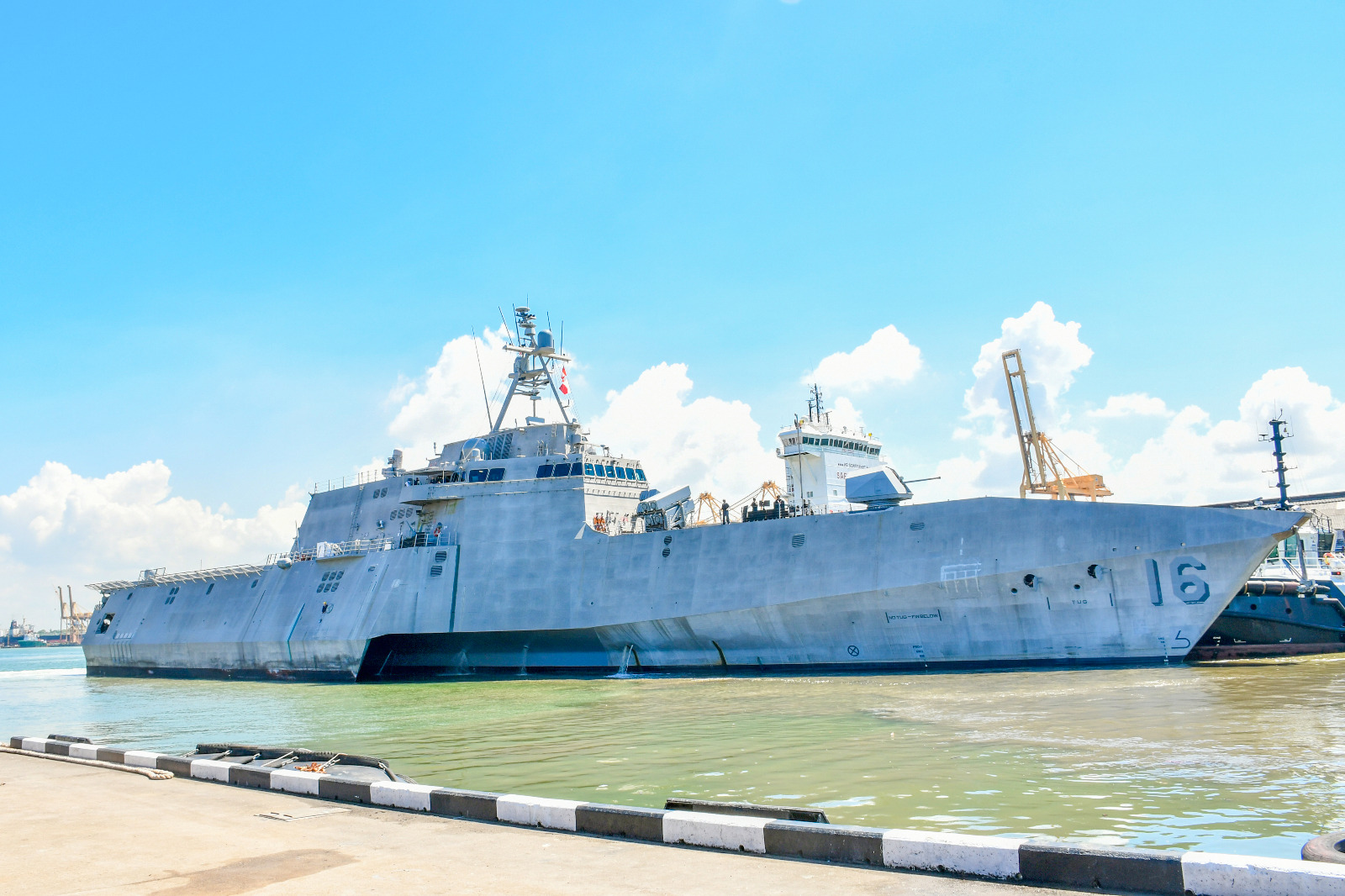
The U.S. Navy ship USS Tulsa (LCS 16) set sail from the port of Colombo today, 09 October 2026.
On her departure, the Sri Lanka Navy extended a traditional naval farewell to the ship.
USS Tulsa, a Littoral Combat Ship, and arrived in the island on 7 October on a replenishment visit and departed the island on completion of intended purposes.
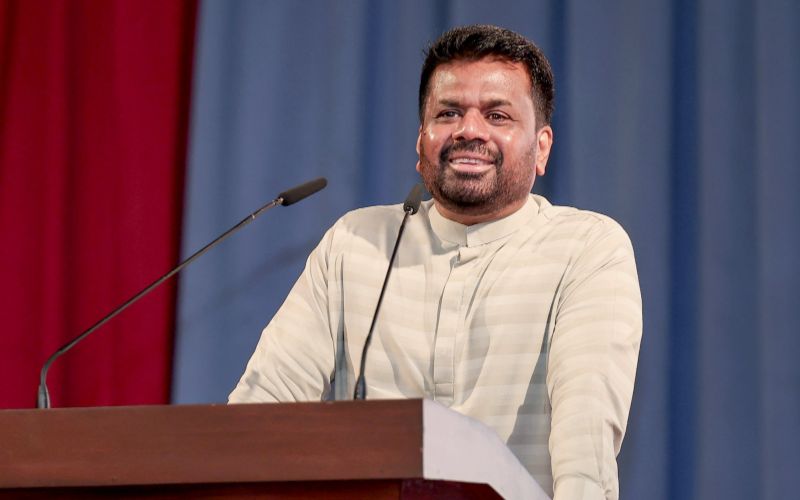
President Anura Kumara Dissanayake stated that the current Government’s economic and social development path is not about bringing rural communities to cities, but about creating economic opportunities and providing facilities within villages. He added that the Government’s objective is to establish a highly developed road network between villages and cities, a good communication system and an efficient and strong public service.
The President made these remarks while attending a ceremony at Temple Trees on Thursday (08) morning to present appointment letters to 1,540 officers who qualified for Grade III of the Grama Niladhari Service.
The President also noted that the current Government is one that greatly respects the public service and expects public servants to be placed on a good salary scale. He added that this was why the Government took steps to increase basic salaries and allowances despite facing extremely challenging circumstances.
Following the promulgation of the new Grama Niladhari Service Minute, appointment letters were presented to 1,540 officers selected for Grade III of the Grama Niladhari Service for the first time. Notably, these recruitments were carried out in accordance with the policy of recruiting qualified individuals to the public service based solely on examination results and merit at interviews.
The current Government has taken steps to re-establish the Grama Niladhari Service under a service structure unique to the position, with a distinct salary structure, while addressing a number of long-standing unresolved issues. As part of this process, steps were also taken to place the officers several salary increments above the salary they were receiving at the time and to adequately increase the allowances provided for various requirements.
The President symbolically presented appointment letters to the 28 candidates who secured first place at district level.
Speaking further, President Anura Kumara Dissanayake said:
“Today, you are entering one of the most important professions in Sri Lanka. If you ask which public official works most closely with the day-to-day lives of the people of our country, it is the Grama Niladhari officer. The relationship between the lives of ordinary people in a village and the State, as well as all services provided by the Government, is centred around the work of Grama Niladhari officers.
You are important to us not merely as officers responsible for a village, but because of the economic and social vision we have developed. Every country in the world is now facing the challenges arising from high population concentrations in cities. This is an issue faced by both developed and developing countries. When economic opportunities and services cannot be provided at the rural level, hundreds of thousands of people have left their villages and moved to cities. The translation of ‘The Grapes of Wrath’ illustrates very well how people living in remote areas, having lost their economic opportunities, faced immense hardships and migrated to cities. This is a challenge faced by many countries around the world today.
However, we are fortunate in this regard. The majority of our population still lives in rural areas. So, what should be our economic and social development path? It should certainly not be about bringing people living in rural areas to cities. It is now evident that this strategy has failed. Therefore, our development path is not about bringing rural communities to cities, but about creating economic opportunities and providing facilities for people within their own villages.
This requires a highly developed road network connecting villages and cities. We also need an effective communication system between villages and cities. To this end, we have discussed with the Ministry of Digital Economy and decided to establish a communication system covering the entire country within the next three years. At the same time, services provided to rural communities must be delivered quickly and conveniently. Therefore, our objective is to enable people to remain in their villages while meeting their economic and social needs.
Grama Niladhari officers will have a significant role to play in this process. In providing these services, the need for officers to visit households, as well as the need for citizens to travel to Grama Niladhari offices and wait for services, should be minimised. However, it is equally important to maintain a balance in the digitalisation process so that human relationships and human emotions are not undermined in any way.
We also plan to divide public service functions into three categories and incorporate them into the digital system: functions that can be completed at Grama Niladhari level, functions that can be completed at the Divisional Secretariat based on certification provided by the Grama Niladhari and functions that can be carried out by other government institutions based on certification from both the Grama Niladhari and the Divisional Secretary. The Ministry of Digital Economy and the Ministry of Public Administration have discussed the development of the digital system required for this purpose. We expect to allocate funds through the forthcoming Budget to commence this as a pilot project in two selected districts next year.
At the same time, we need a strong public service. Every developed country in the world has progressed through a strong public service. However, today, both public servants and citizens who obtain public services are not in a state of satisfaction. There is competition within the public service over positions and offices. The public service has also experienced a degree of decline due to outdated computers, old vehicles and dilapidated buildings. As a Government, we are taking steps to change this situation.
We have identified the need for 1,750 vehicles (cabs) for the public service and are taking steps to provide the necessary vehicles promptly to officials, including Divisional Secretaries. The Ministry of Public Administration will take steps to provide the required number of computers and equipment for digitalisation. Government institution buildings must be renovated, while new buildings must also be provided. Accordingly, we expect to allocate funds through the Budget to complete the third phase of Sethsiripaya and commence the fourth phase. At the same time, we must manage land properly. In this regard, I believe we need to change our preference for large buildings. Therefore, a formal assessment is being carried out to determine the amount of space required for offices and the specified land requirements and the responsibility for providing office facilities has been assigned to the Chief of Presidential Staff.
I acknowledge that the current salary scales in our public service are inadequate. As a result, there are difficulties in recruiting skilled professionals such as engineers, information technology specialists and legal officers into the public service. However, if the salaries of public servants are increased by Rs. 10, it would result in an additional monthly expenditure of Rs. 13 million, while an increase of Rs. 100 would result in an additional expenditure of Rs. 1.3 billion. Therefore, we have identified the need to increase the efficiency of the public service while reducing its size. In doing so, we will by no means abandon the public service. It is our policy that the public service is essential and must be developed. However, we believe that the mechanism through which these services are delivered should be made smaller.
Accordingly, a committee chaired by the Prime Minister has planned to merge government institutions. A decision has been taken to close 33 institutions identified by the Ministry of Finance. We have decided to provide compensation for this purpose. A number of institutions that should be merged have also been identified. The public service should not become a burden on the people. At the same time, we are a Government that recognises the need to provide the people with an efficient public service.
Therefore, in order to manage the public service effectively, it needs to be made smaller. In order to bring in teams with strong skills and capabilities, they must be placed on appropriate salary scales.
From our first Budget, we decided to increase the basic salaries of public servants in three stages. Accordingly, by 2027, we will bear an additional expenditure of Rs. 330 billion solely for salary increases. We should turn our attention to other allowances only thereafter. I believe that everyone should be treated fairly in this regard. We have provided a substantial increase in basic salaries. We have also increased the allowances provided to Grama Niladhari officers. The office allowance has been increased from Rs. 1,000 to Rs. 2,000. The uniform allowance has been increased from Rs. 5,000 to Rs. 15,000. The allowance for purchasing stationery has been increased from Rs. 1,500 to Rs. 3,000.
We will present the next Budget on 12 November. In that Budget, we will consider how to balance the Rs. 330 billion required for the increase in basic salaries in 2027. Only thereafter will we consider how much expenditure can be allocated for allowances.
I acknowledge that the public service should receive fair salaries. However, these salaries are paid from the taxes collected from the people. We are working towards reducing these tax rates. Our objective is to provide relief to the people by reducing Value Added Tax (VAT) rates over the next two to three years. If a child has to pay a tax when purchasing a book to read, we should remove that tax. Expenditure must be managed in line with these objectives. We have provided a substantial increase in basic salaries. We have also increased allowances while listening to the concerns of public servants. Therefore, let us act with an understanding of this situation. We have absolutely no intention of politicising the public service. We have a positive outlook for the future of this country and our public service has a major responsibility in achieving that vision.
As a Government, we can formulate policies and have the Budget approved by Parliament. However, the responsibility for implementing the Government’s policy decisions down to the village level lies with the State Mechanism. This requires a strong public service.
Those receiving appointments today will be the public officials closest to the people. In times of hardship or disaster, as well as at the birth of a child or at the time of a death, the first public official people turn to is the Grama Niladhari officer. Therefore, Grama Niladhari officers establish a significant part of the State’s relationship with the people. You are therefore entering a profession that carries great honour and bears a major responsibility towards the people. I wish you success in your new professional lives, with the confidence that you will be able to rebuild the traditional, caring and respectful relationship that existed between the people of the village and the Grama Niladhari officer”.
Minister of Public Administration, Provincial Councils and Local Government Professor A.H.M.H. Abayarathna
“This is the first group to join the Grama Niladhari Service following the establishment of a formal service minute for the Grama Niladhari Service last year. It is also another group recruited to the public service based solely on qualifications and merit. These two factors make today a historic day. At a time when we are making a major effort to develop our country’s economy, this occasion can also be described as another step towards creating a more positive political culture.
You are aware that this service has a long history dating back to the 4th century BC. You will therefore understand the importance and dignity of the Grama Niladhari Service within the public service. This era has created a special situation for us. Three or four years ago, the citizens of this country began to aspire towards a new system. They stood for a system change. You are receiving these appointments at a time when the people have placed their hopes in that change and when your active contribution is needed to bring about the change they have long desired. You have been entrusted with a tremendous responsibility towards all citizens of this country. What you do and say today will become history in the future. Accordingly, this is also an era in which history is being rewritten.
The people of our country have faced many difficulties. They shed blood and tears during the war. During the economic crisis, they even had to sacrifice their basic needs. You have been given an opportunity to fulfil a tremendous responsibility that goes beyond merely carrying out a duty or providing a service for such a people. We recently witnessed such an opportunity during the Ditwah disaster. While expressing our gratitude to those officers, I would also like to remind you that you should draw inspiration from their example.
If there is to be a system change, we must first change ourselves. We must change individually. If you, who are receiving these appointments today, are able to bring the same happiness to your parents and loved ones on the day you retire as they experience today, you can be satisfied that you have fulfilled a social responsibility that goes beyond merely performing your official duties. I call upon all of you receiving appointments today to dedicate your service towards building a Sri Lankan nation with a strong social foundation, as well as a strong economy.
Deputy Minister of Provincial Councils and Local Government Ruwan Senarath and other Deputy Ministers, Governors and Chief Secretaries of the Provinces, Chief of Staff to the President Prabath Chandrakeerthi, Secretary to the Prime Minister Pradeep Saputhanthri, Secretaries to Ministries, including Secretary to the Ministry of Public Administration, Provincial Councils and Local Government S. Aloka Bandara, District Secretaries and a group of public officials also participated in the occasion.
President’s Media Division (PMD)

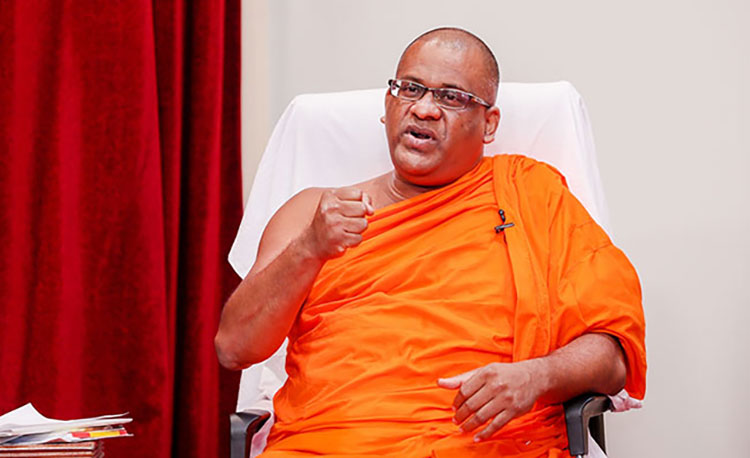
The Mahanayaka Theras of all Nikayas have protested against Bodu Bala Sena (BBS) General Secretary Ven. Galagodaaththe Gnanasara Thera, who is serving a prison sentence for contempt of court, being produced before court in civilian attire.
In a letter to the Commissioner General of Prisons, the Mahanayaka Theras have said they were surprised and concerned by the decision to remove the monk’s robes.
The letter has been signed by Most Ven. Thibbotuwawe Sri Siddhartha Sumangala Thera of the Malwatu Chapter, Most Ven. Warakagoda Sri Gnanarathana Thera of the Asgiri Chapter, Most Ven. Karagoda-Uyangoda Maithri Murthi Thera of the Amarapura Maha Nikaya and Most Ven. Makulawe Sri Wimala Thera of the Ramanna Maha Nikaya.
The Mahanayaka Theras have said they respect the Constitution and the judicial process, but maintained that removing a monk’s robes or ending his status as a member of the Buddhist Order is a matter that should be decided by the Maha Sangha.
They have said the relevant Sangha Council has not determined that Ven. Gnanasara Thera committed a Parajika offence or any other offence warranting his removal from the Buddhist Order.
The Mahanayaka Theras have also referred to Regulation 550 of the Prison Standing Orders, which they say stipulates that convicted prisoners should not be taken to court in prison uniform and should be allowed to wear the type of clothing they normally wore before their conviction. In the case of a Buddhist monk, they have said, this means his monastic robes.
They also referred to the United Nations Standard Minimum Rules for the Treatment of Prisoners, which provide for prisoners taken outside prison to be allowed to wear their own clothing or other unobtrusive clothing.
The Mahanayaka Theras have requested the Commissioner General of Prisons to allow Ven. Gnanasara Thera to wear his robes when appearing in court and to maintain his status as a monk while he remains in prison.
Prisons authorities have said that the clothing decision was made under prison regulations, and the Prisons Department has stated that prisoners serving sentences of more than three years are required to wear prison-issued clothing when produced before court.

Afghanistan fast bowlers hit back after Bangladesh’s strong start

Sri Lanka chose to bat first in Rawalpindi

Sutherland and Litchfield lead Australia to quick and convincing win in ODI series opener

USS Tulsa departs Colombo

Appointments for 1,540 Grama Niladhari Officers

Trump says US will not strike Iran before midterm elections

‘Dates have the highest sugar content to fight Coronavirus’

Sunday Island 27 December – Headlines

#SundayIsland 17th December – Headlines

Sunday Island – 28th March

Sunday Island Headlines – 21 March

Sunday Island – 21st February – Headlines
-

 Features6 days ago
The first woman in the foreign service or Ceylon Overseas Service it was then called
-

 News5 days ago
Geneva takes up Sallay’s case and govt. ignores opportunity to answer accusations
-

 Editorial7 days ago
Fuelling discontent and protest
-
 Foreign News6 days ago
Ten injured after car crashes into rugby supporters in Australia
-

 News6 days ago
Nearly 20 Iranian tankers stranded off Lanka amid US sanctions
-

 Latest News7 days ago
Tharindu Rathnayake, bowlers secure Asian Games Bronze for Sri Lanka
-
 Features4 days ago
Preventing grievances from becoming communal
-

 Features5 days ago
Sri Lanka Cricket Bill: Governance reform is not yet a cricket strategy