
Business
Economic policy choices: From stabilisation to growth


Sri Lanka: State of the Economy 2023
Sri Lanka has faced a turbulent economic journey in recent years, with 2022 witnessing an unprecedented crisis marked by a staggering 8.7% GDP contraction. The economy slowly but steadily pulled back from the abyss over the course of 2023. Notably, the Sri Lankan rupee has stabilised and even appreciated by 12%, inflation has dropped to 1.3%, import restrictions are being eased, and interest rates are on the decline.
These positive developments are a result of the implementation of economic stabilisation measures and groundwork for institutional and regulatory reforms to support future growth. These measures have critics concerned about the intense economic pain that falls on those least able to cope with the fallout. As a country that faces years of weak growth, the Institute of Policy Studies of Sri Lanka’s (IPS’) Sri Lanka: State of the Economy 2023 report, explores the complex policy choices Sri Lanka faces as it navigates the path to economic recovery.
The Rocky Road to Recovery
In 2023, Sri Lanka’s economy is expected to contract further, though at a slower pace compared to the previous year. Differing medium term forecasts from the International Monetary Fund (IMF) and the Central Bank of Sri Lanka (CBSL) point to the complexities of accurately predicting the future of an economy that has suffered a sudden and sharp crisis. In 2023, the IMF predicts a contraction of -3%, while the CBSL holds a more optimistic view at -2%. Both anticipate a return to positive growth in 2024, but uncertainties linger due to social and political opposition to austerity policies, ongoing debt negotiations, and volatile global economic conditions driven by geopolitical tensions.
Following the severe 8.7% GDP contraction in 2022, Sri Lanka embarked on immediate and stringent measures to stabilise its economy. These measures included securing the 17th IMF bailout and implementing substantial increases in value-added taxes (VAT), personal income taxes, energy prices, and a freeze on public sector wages. With shortfalls in anticipated revenue collections, further fiscal tightening measures cannot be ruled out.
Addressing Socioeconomic Challenges
Faced with growth-inhibiting tough austerity measures, concerns persist regarding the potential exacerbation of inequality and poverty. Sri Lanka witnessed a doubling of national poverty rates to 25% and a tripling of urban poverty to 15% in 2022. Escalating inflation has eroded household savings and real wages, prompting many skilled professionals to seek opportunities abroad, potentially resulting in a brain drain and the loss of a generation of young workers.
Sri Lanka’s economic challenges are further compounded by disparities in the education and health sectors, which require substantial resources for meaningful reforms. The delicate task of balancing fiscal constraints with the need for improved social protection programmes looms large.
Paving the Way for
Sustainable Growth
To achieve sustainable economic growth, Sri Lanka must not only stabilise its economy but also address long-standing structural problems. The country’s overemphasis on infrastructure investment with borrowed funds needs to shift towards enhancing global competitiveness in exports. In a world marked by US-China tensions, forging partnerships and aligning industrial and trade policies is vital. Currently, Sri Lanka lags in global value chain (GVC) activity, posing a challenge to economic diversification.
Over-reliance on low-skilled, informal jobs, where more than half of the workforce is engaged in low-skilled jobs, hampers progress towards a competitive and productivity-driven economy. Comprehensive reforms in education, improved access to higher education, and bridging skills gaps in sectors like Science, Technology, Engineering and Mathematics (STEM) are essential to create well-paying jobs and ensure long-term economic resilience. Additionally, addressing corruption, enhancing accountability, and improving public service delivery are vital for building public trust and support for reforms.
Building Consensus
for Transformation
As Sri Lanka grapples with its economic challenges, presidential elections loom on the horizon in 2024. Traditional politics may drive opposition to austerity and reforms in pursuit of votes. However, regardless of the election outcome, the country’s fragile economic situation will likely necessitate continued adherence to fiscal, monetary, and exchange rate policies outlined in the IMF programme. What remains uncertain is the fate of complementary reforms aimed at enhancing economic efficiency and productivity, which might be delayed or abandoned due to political compulsions.
The more contentious reforms may slow down or stall altogether between now and the 2024 elections, to be addressed afterward, depending on electoral outcomes. These possibilities introduce significant uncertainty at a time when economic confidence has already been severely undermined. The solution and best hopes are to build cross-party consensus on areas that do need fixing.
Conclusion
Sri Lanka’s journey from economic turmoil to stability is fraught with challenges, but it also offers opportunities for meaningful reform. While macro-stabilisation measures are laying the foundation, the path to recovery must prioritise quality GDP growth that creates high-quality jobs. Achieving this requires addressing structural issues, strengthening social safety nets, and fostering cross-party consensus. As Sri Lanka navigates its economic challenges, making the right policy choices, coupled with accountable institutions, will be key to transforming its setback into a sustainable success.
These and many other issues are discussed in the IPS’ annual flagship publication Sri Lanka: State of the Economy 2023 under the theme ‘Economic Policy Choices: From Stabilisation to Growth’ which focuses on the policy choices and debates in key areas of reform for a country that is emerging from a deep crisis.
The IPS report will be released on Tuesday, 17th October 2020 and will be available for sale at IPS, No. 100/20, Independence Avenue, Colombo 07, and at leading bookshops island-wide.
Sri Lanka: State of the Economy 2023 Economic Policy Choices: From Stabilisation to Growth

Business
David Pieris Group expands global footprint with investment in Dubai-based Navire Logistics


The David Pieris Group continues to strengthen its international presence with the acquisition of 50% ownership in Navire Logistics Services L.L.C, (www.navirelogistics.com) a reputed logistics company based in Dubai and Oman. This strategic move marks a significant milestone in the Group’s journey towards expanding its operations beyond Sri Lanka and positioning itself in the international markets.
In Sri Lanka, the Group’s logistics arm, D P Logistics (Private) Limited (DPL), has already established itself as a comprehensive logistics solutions provider — covering warehousing, transportation, freight forwarding, project logistics, inland distribution and custom house brokering.
DPL currently ranks among the top ten players in warehousing and 3PL operations and holds one of the largest container fleets amongst the logistics companies in the country. Despite operating in a highly fragmented freight forwarding market, DPL continues to capture a growing share, reinforcing its reputation as one of the very few local companies with expertise across all logistics disciplines.
David Pieris Group also acquired in 2022, Pulsar Shipping Agencies (Pvt.) Limited, the shipping arm of Expolanka Holdings PLC to expand its Logistics & Shipping Cluster into ship agency, husbandry services and marine logistics.
Leveraging this strong domestic foundation, DPL has now extended its capabilities to the international stage through its partnership with Navire Logistics Services L.L.C. The company’s expertise in custom house brokering, freight forwarding, cargo consolidation, warehousing, and transport solutions will be integrated into Navire Logistics’ operations, enhancing service quality and efficiency across the Middle East and South Asia.
The investment also extends to operations in Oman through a fully owned subsidiary, with further expansion plans already underway to establish operations in Saudi Arabia, Thailand, and India — strengthening the Group’s regional logistics network.
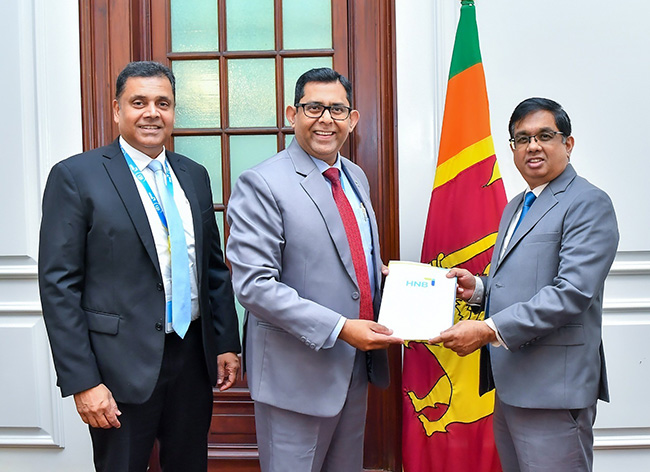
HNB PLC has contributed of Rs. 100 million towards the Rebuild Sri Lanka Fund, reinforcing its commitment to national recovery efforts following the devastation caused by Cyclone Ditwah.
“On behalf of HNB, I wish to convey our solidarity with all our fellow Sri Lankans, especially those severely affected by Cyclone Ditwah. As a home-grown institution, our connection to the communities we serve runs deep. Many of our customers and colleagues have been directly or indirectly affected, and we are committed to standing with them during this difficult time and supporting them as they rebuild.”
“HNB’s contribution to the Rebuild Sri Lanka Fund is a sign of our commitment to this collective mission. We recognize that this is going to be a long and challenging process, but we stand ready and committed to support both the immediate and long-term recovery effort,” HNB Managing Director/ CEO, Damith Pallewatte stated.
Complementing its direct financial support to the Fund, HNB has also launched a nationwide disaster relief initiative as the first phase of a broader, coordinated response from the bank.
As part of the program, the Bank donated over 2,500 essential relief and nutrition packages to support displaced families, with the consignments formally handed over to the Sri Lanka Army to ensure structured, transparent, and equitable distribution across the impacted areas of Kandy, Gampaha, Kaduwela, and Hanwella, while separate packages were provided to affected employees to strengthen their personal recovery.
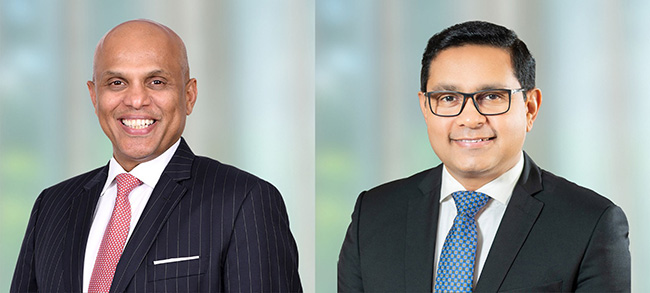
The Commercial Bank of Ceylon has been ranked No 1 in the Business Today Top 40 for 2024–25, reaffirming its position as Sri Lanka’s best-performing bank and one of the country’s top five strongest corporate entities for the 17th consecutive year.
Business Today assigned the Bank an aggregate score of 37.65, placing it at the top of its latest ranking of leading Sri Lankan enterprises.
In its presentation of the rankings, Business Today described Commercial Bank as “a beacon of resilience and renewal after a defining year,” noting that 2024 was shaped by strategic transformation, disciplined execution, and unwavering commitment to long-term sustainable growth. The publication recognised the Bank’s strength across key business lines, its deepened customer focus, and a performance trajectory that reinforced its reputation as Sri Lanka’s most resilient and customer-centric financial institution.
Reflecting on the ranking, Mr Sanath Manatunge, Managing Director/CEO of Commercial Bank said: “Being ranked No 1 in the Business Today Top 40 is a powerful endorsement of the discipline, resilience and purpose with which we steered the Bank through a year of tough conditions and decisive transformation. Our performance in 2024 was defined by navigating turbulence without losing sight of our priorities: strengthening fundamentals, supporting customers, and preparing the institution for long-term growth. This ranking is not merely an award; it is confirmation that our strategy is delivering results and that the Bank is firmly positioned to contribute to national progress with renewed confidence.”
Business Today also highlighted the Bank’s record-breaking financial performance during the year. The magazine quoted Mr Sharhan Muhseen, Chairman of Commercial Bank as saying that the Bank had delivered the highest profits in its history, and attributing this outcome to a disciplined focus on efficiency, digital innovation, and customer-centred transformation. These qualities, the publication stated, enabled the Bank to strengthen its market position and make meaningful contributions to economic recovery.
Among the milestones recognised were an equity capital infusion of Rs. 22.54 billion through a rights issue and the raising of Rs. 20 billion in Tier II capital via a debenture issue.

IMF Executive Board approves US$206 Million in Emergency Financial Support for Sri Lanka

Navy clears major bridge obstructions in Peradeniya and Lewella

Landslide early warnings issued to the districts of Badulla, Kandy, Kurunegala, Matale and Nuwara-Eliya extended till 8AM on Sunday (21)

Trump says US launched large-scale attacks on ISIL in Syria

Showers will occur in the Eastern, Western, Sabaragamuwa, Southern, Uva and Central provinces and in Polonnaruwa district

PM says govt. will introduce a new Constitution to abolish executive presidency

‘Dates have the highest sugar content to fight Coronavirus’

Sunday Island 27 December – Headlines

#SundayIsland 17th December – Headlines

Sunday Island – 28th March

Sunday Island Headlines – 21 March

Sunday Island – 21st February – Headlines
-

 Midweek Review3 days ago
How massive Akuregoda defence complex was built with proceeds from sale of Galle Face land to Shangri-La
-

 Features6 days ago
Why Sri Lanka Still Has No Doppler Radar – and Who Should Be Held Accountable
-

 News2 days ago
Pakistan hands over 200 tonnes of humanitarian aid to Lanka
-

 News2 days ago
Pope fires broadside: ‘The Holy See won’t be a silent bystander to the grave disparities, injustices, and fundamental human rights violations’
-
 Latest News6 days ago
Landslide early warnings in force in the Districts of Badulla, Kandy, Kegalle, Kurunegala, Matale, Nuwara Eliya and Ratnapura
-
 News3 days ago
Burnt elephant dies after delayed rescue; activists demand arrests
-

 Features6 days ago
Srima Dissanayake runs for president and I get sidelined in the UNP
-

 Editorial6 days ago
Disaster relief and shocking allegations