
Business
Economic policy choices: From stabilisation to growth


Sri Lanka: State of the Economy 2023
Sri Lanka has faced a turbulent economic journey in recent years, with 2022 witnessing an unprecedented crisis marked by a staggering 8.7% GDP contraction. The economy slowly but steadily pulled back from the abyss over the course of 2023. Notably, the Sri Lankan rupee has stabilised and even appreciated by 12%, inflation has dropped to 1.3%, import restrictions are being eased, and interest rates are on the decline.
These positive developments are a result of the implementation of economic stabilisation measures and groundwork for institutional and regulatory reforms to support future growth. These measures have critics concerned about the intense economic pain that falls on those least able to cope with the fallout. As a country that faces years of weak growth, the Institute of Policy Studies of Sri Lanka’s (IPS’) Sri Lanka: State of the Economy 2023 report, explores the complex policy choices Sri Lanka faces as it navigates the path to economic recovery.
The Rocky Road to Recovery
In 2023, Sri Lanka’s economy is expected to contract further, though at a slower pace compared to the previous year. Differing medium term forecasts from the International Monetary Fund (IMF) and the Central Bank of Sri Lanka (CBSL) point to the complexities of accurately predicting the future of an economy that has suffered a sudden and sharp crisis. In 2023, the IMF predicts a contraction of -3%, while the CBSL holds a more optimistic view at -2%. Both anticipate a return to positive growth in 2024, but uncertainties linger due to social and political opposition to austerity policies, ongoing debt negotiations, and volatile global economic conditions driven by geopolitical tensions.
Following the severe 8.7% GDP contraction in 2022, Sri Lanka embarked on immediate and stringent measures to stabilise its economy. These measures included securing the 17th IMF bailout and implementing substantial increases in value-added taxes (VAT), personal income taxes, energy prices, and a freeze on public sector wages. With shortfalls in anticipated revenue collections, further fiscal tightening measures cannot be ruled out.
Addressing Socioeconomic Challenges
Faced with growth-inhibiting tough austerity measures, concerns persist regarding the potential exacerbation of inequality and poverty. Sri Lanka witnessed a doubling of national poverty rates to 25% and a tripling of urban poverty to 15% in 2022. Escalating inflation has eroded household savings and real wages, prompting many skilled professionals to seek opportunities abroad, potentially resulting in a brain drain and the loss of a generation of young workers.
Sri Lanka’s economic challenges are further compounded by disparities in the education and health sectors, which require substantial resources for meaningful reforms. The delicate task of balancing fiscal constraints with the need for improved social protection programmes looms large.
Paving the Way for
Sustainable Growth
To achieve sustainable economic growth, Sri Lanka must not only stabilise its economy but also address long-standing structural problems. The country’s overemphasis on infrastructure investment with borrowed funds needs to shift towards enhancing global competitiveness in exports. In a world marked by US-China tensions, forging partnerships and aligning industrial and trade policies is vital. Currently, Sri Lanka lags in global value chain (GVC) activity, posing a challenge to economic diversification.
Over-reliance on low-skilled, informal jobs, where more than half of the workforce is engaged in low-skilled jobs, hampers progress towards a competitive and productivity-driven economy. Comprehensive reforms in education, improved access to higher education, and bridging skills gaps in sectors like Science, Technology, Engineering and Mathematics (STEM) are essential to create well-paying jobs and ensure long-term economic resilience. Additionally, addressing corruption, enhancing accountability, and improving public service delivery are vital for building public trust and support for reforms.
Building Consensus
for Transformation
As Sri Lanka grapples with its economic challenges, presidential elections loom on the horizon in 2024. Traditional politics may drive opposition to austerity and reforms in pursuit of votes. However, regardless of the election outcome, the country’s fragile economic situation will likely necessitate continued adherence to fiscal, monetary, and exchange rate policies outlined in the IMF programme. What remains uncertain is the fate of complementary reforms aimed at enhancing economic efficiency and productivity, which might be delayed or abandoned due to political compulsions.
The more contentious reforms may slow down or stall altogether between now and the 2024 elections, to be addressed afterward, depending on electoral outcomes. These possibilities introduce significant uncertainty at a time when economic confidence has already been severely undermined. The solution and best hopes are to build cross-party consensus on areas that do need fixing.
Conclusion
Sri Lanka’s journey from economic turmoil to stability is fraught with challenges, but it also offers opportunities for meaningful reform. While macro-stabilisation measures are laying the foundation, the path to recovery must prioritise quality GDP growth that creates high-quality jobs. Achieving this requires addressing structural issues, strengthening social safety nets, and fostering cross-party consensus. As Sri Lanka navigates its economic challenges, making the right policy choices, coupled with accountable institutions, will be key to transforming its setback into a sustainable success.
These and many other issues are discussed in the IPS’ annual flagship publication Sri Lanka: State of the Economy 2023 under the theme ‘Economic Policy Choices: From Stabilisation to Growth’ which focuses on the policy choices and debates in key areas of reform for a country that is emerging from a deep crisis.
The IPS report will be released on Tuesday, 17th October 2020 and will be available for sale at IPS, No. 100/20, Independence Avenue, Colombo 07, and at leading bookshops island-wide.
Sri Lanka: State of the Economy 2023 Economic Policy Choices: From Stabilisation to Growth


By Hiran H. Senewiratne
Sri Lanka’s financial literacy rate is approximately 58 percent. Such literacy is absolutely necessary for the inclusion of people in the country’s financial system which in turn is central to overall economic development, Central Bank Governor Dr. Nandalal Weerasinghe said.
‘One needs to have knowledge and skills of a financial nature to figure in financial inclusiveness. While 86 percent of Sri Lanka’s population has access to the country’s financial system, 82 percent of the public has at least a savings account in the country’s banking system, Dr Weerasinghe said.
The Governor made these comments recently at the inauguration of Financial Literacy Month 2026 at the Central Bank’s Centre for Banking Studies, Rajagiriya.
Dr. Weerasinghe added: ‘Suitable, affordable and quality financial instruments are needed to enhance financial literacy in the country.
‘Financial information has to be accurate, risk-free and accountable, thus creating confidentiality in the financial system, which would enable the sector to reach greater heights’.
Meanwhile CBSL sources said: ‘The Literacy Month opened with the two-day ‘FinLit Expo Colombo’. The expo gives the public the opportunity to engage with institutions, better understand financial services, gain practical insights into managing their finances and learn how to protect themselves from financial fraud and scams.
‘The CBSL is leading the program in collaboration with stakeholder institutions. It forms part of the Financial Literacy Roadmap for Sri Lanka, which is implemented under the National Financial Inclusion Strategy (NFIS), the national framework for widening access to and use of formal financial services.
‘The Colombo event will be followed by six regional ‘FinLit Expos’ aimed at direct engagement with local communities. Partner institutions will also run awareness activities. Together, the events are intended to provide financial education to communities and encourage people to apply financial knowledge in everyday life.
‘A public awareness campaign on television, radio, newspapers and social media will extend the program’s reach. The program also includes digital financial literacy activities and the promotion of QR codes and other online payment methods.
‘The public and stakeholder institutions are encouraged to take part in the month’s activities under the theme, “Towards a Financially Literate Sri Lanka”.
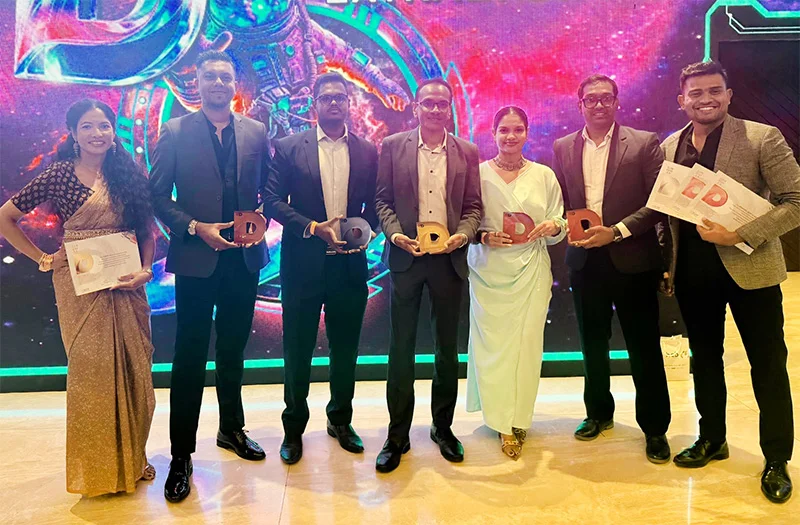
HUTCH Sri Lanka strengthened its position as a leader in digital engagement by securing five accolades at SLIM Digis 2.6, emerging as one of the most recognized brands at this year’s digital excellence awards. The achievement was further highlighted by HUTCH being the only telecom operator to be recognized at the event.
Organized by the Sri Lanka Institute of Marketing (SLIM), SLIM Digis is Sri Lanka’s premier platform celebrating excellence, innovation, and outstanding achievements in the digital marketing industry. The recognition highlights HUTCH’s growing strength in digital-first, agile, and creative marketing, and its ability to respond to everyday moments, engage audiences, and deliver impactful digital campaigns.
The Gold Award for Best Use of Agile and Moment Marketing, a Silver for Best Use of Digital in a Marketing Campaign, and a Bronze for Best Performance Marketing were all awarded for “Keeping Sri Lanka Connected Through Ditwah,” HUTCH’s response to the cyclone that struck Sri Lanka in November 2025, recognised for the speed and relevance with which HUTCH kept customers better connected and informed.
HUTCH Roaming also earned two further Bronze awards for Best Use of Digital in a Marketing Campaign and Best Use of Creative Content. Bringing together AI-led storytelling, the campaign was designed around distinct customer clusters, each characterized by unique travel behaviours, needs, and perceptions, delivering relevant content for different audiences within a single overarching campaign.
“These wins are a strong reflection of how HUTCH approaches marketing today, staying close to the moments that matter to our customers and responding with speed, relevance, and creativity. Being the only telco recognised at SLIM DIGIS 2.6, and across five categories, is proof that agility and thoughtful storytelling can go hand in hand. This recognition reflects the collective efforts with our strategic partners, whose collaboration, expertise, and shared commitment brought great campaigns to life,” said Hamdhy Hassen, Chief Marketing Officer, HUTCH Sri Lanka.
Sri Lanka’s Smart Luxury Business Hotel to Host Delegates and Contestants from Over 40 Countries as the Island Nation Hosts Its First-Ever Global Pageant of This Scale
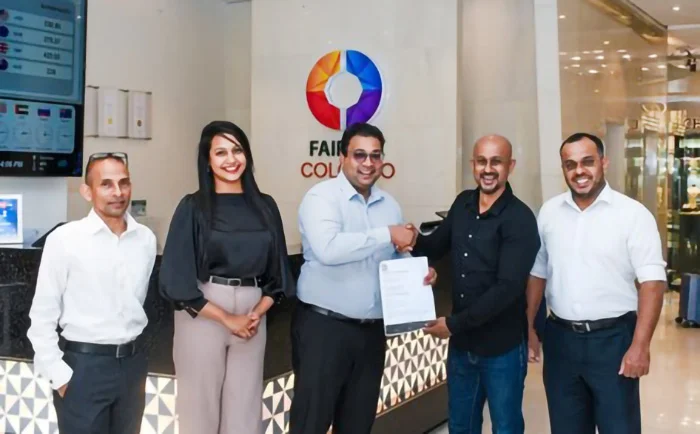
Fairway Colombo, a subsidiary of Fairway Holdings (Pvt) Ltd, has been appointed as the Official Accommodation Partner for Manhunt International 2026, one of the world’s most prestigious male pageants, scheduled to take place in Sri Lanka.
The event marks a historic milestone for Sri Lanka, as the country prepares to host a global pageant of this scale for the very first time. More than 40 contestants representing countries from across the world will arrive in Colombo, bringing together diverse cultures, international media attention, and a global audience — further strengthening Sri Lanka’s position as a premier destination for tourism, culture, and hospitality.
As the official accommodation partner, Fairway Colombo will welcome and host international delegates and contestants throughout their stay in Colombo, delivering the exceptional hospitality experience and personalized service that the hotel is recognized for.
A Landmark Partnership for Sri Lankan Tourism
“We are truly honored to be selected as the Official Accommodation Partner for Manhunt International 2026. This partnership is a proud moment not only for Fairway Colombo but also for Sri Lanka as a whole. Hosting an event of this global stature provides us with an opportunity to showcase our commitment to smart luxury, innovation, and authentic Sri Lankan hospitality to an international audience. We look forward to creating a memorable and seamless experience for all delegates and guests,” said Avinga Wanigasekara, General Manager of Fairway Colombo.
Strategically located in the heart of Colombo’s historic Fort district, Fairway Colombo is recognized as a Smart Luxury Business Hotel, combining modern comfort, advanced technology, and exceptional service. As part of Fairway Holdings (Pvt) Ltd, the property represents the group’s vision of delivering innovative, world-class experiences across the hospitality and leisure sectors.

Heavy showers (100-150) mm likely at some places in the Western, Sabaragamuwa, Central, Uva and Southern provinces showerss above 75 mm are likely in the other areas of the island.

Presidential pardons: Govt. studying Justice Thurairaja’s recommendations – Minister

Mahinda and Shiranthi hospitalised

Monks must be allowed to wear robes when produced in court: Mahanayake Theras

Jt. Opp. seeks presidential pardon for Ven. Gnanasara

Shiranthi’s anticipatory bail application rejected

‘Dates have the highest sugar content to fight Coronavirus’

Sunday Island 27 December – Headlines

#SundayIsland 17th December – Headlines

Sunday Island – 28th March

Sunday Island Headlines – 21 March

Sunday Island – 21st February – Headlines
-

 Features5 days ago
The Sri Lankan who made Scottish history
-

 Sports5 days ago
Nissanka absence opens door for Sri Lanka’s young guns
-

 News6 days ago
Gnansara Thera to be assigned to prison printing section: Officials
-

 News4 days ago
NDB fraud Rs 60mn more than reported
-

 News4 days ago
Removing monk’s robes matter for Sangha to decide: Mahanayake Theras
-

 Features5 days ago
Future of Sri Lanka’s state university system: Should it be shut down and reopened?
-
 News6 days ago
OIC of FCID summoned before Maligakanda Magistrate
-
 News5 days ago
Shiranthi R remanded until 13 Oct.