
Business
Eco Spindles marks Global Recycling Day; boosts plastic recycling efforts in Sri Lanka

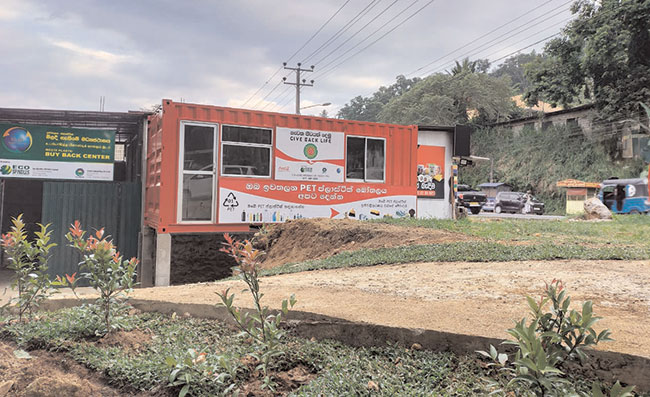
Currently boasts 17 Collection Centers including 3 MRFs, 7 more to be established
Commemorating Global Recycling Day 2022, Sri Lanka’s leader in plastic bottle recycling, Eco Spindles (Pvt.) Ltd, a fully owned subsidiary of BPPL Holdings PLC, announced its plans to accelerate the expansion of its Material Recycling Facilities (MRFs) around the country.
Eco Spindles, together with its project partner Coca-Cola Beverages Sri Lanka, introduced its MRFs to collect multiple forms of recyclable waste such as aluminium, glass, paper and other forms of plastic waste, to help develop and strengthen regional waste collection networks and process the collected polyethylene terephthalate (PET) bottles.
The objective is to increase the collection and recycling rates in the regions where the facilities are commissioned. The company aims to establish one MRF per district by the end of 2024 and will ensure that recyclable waste is collected through partnerships with schools, local authorities, waste collectors, volunteers and coastal communities.
Over the last year, the company has made significant efforts to boost and strengthen the plastic recycling sector in Sri Lanka by recycling 62 million PET bottles between 2021 and 2022. Since its inception, Eco Spindles has recycled 452 million PET bottles.
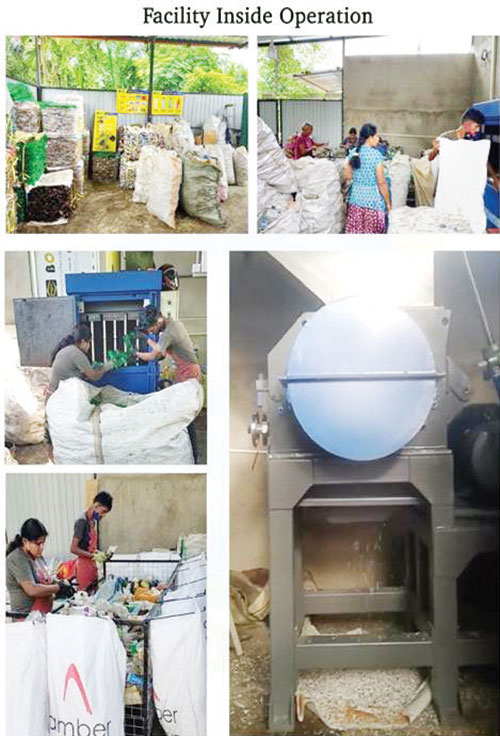
Commenting on the strategy, Eco Spindles Recycling CEO Manoj Udawatte stated that “MRFs will send their vehicles to collect this recyclable waste and pay the collectors. The collected recyclable waste is then taken to the facility, where PET plastic, for example, is segregated, baled, and crushed. It is after this process that Eco Spindles receives this PET from the facilities, and we turn this into value-added products such as recycled polyester yarn and monofilaments used in brushes and brooms, to name a few.” In addition, the other forms of collected waste are sold to other manufacturers, including glass bottles, aluminium extrusion and paper producers.
“When we initially commissioned our MRFs, there were around 70 collection points, and now there are about 220. By the end of this year, we will strategically establish 400 collection points which entail a network of bins and bags to drop off consumer plastic and other recyclable waste around each MRF,” he added.
So far, there are three MRFs in Ratnapura, Negombo and Panadura, with another currently in development in Matara. The company plans to add another six MRFs around the country, including in Galle, Anuradhapura, Kandy, Kurunegala, Gampaha and Trincomalee, in 2022/23.
Additionally, the company raises awareness on proper plastic waste disposal methods through its ‘Waste 2 Value’ app. There are 447 bins placed around the Western Province to dispose of recyclable waste, which can be located through the app. The company aims to increase this figure to 700 in the Western Province alone. In other areas such as Anuradhapura, Galle and Matara, there are over 100 bins. The company aims to increase this figure to 300. There would then be over a total of 1,000 drop off bins in set locations by the end of 2022.
“Despite the challenging state of our economy, I am proud to say that we have moved forward and ensured that our operations and expansion plans are successful, and we aspire to drive further our sustainable practices towards a strengthened circular economy and greener society,” commented BPPL Holdings PLC Managing Director and Chief Executive Officer – Dr. Anush Amarasinghe. “With the pandemic and loss of jobs, we have and will continue to provide opportunities for lower-income communities to earn wages through recyclable waste collection. We ensure that our collectors are incentivised and rewarded for their efforts.”
Eco Spindles is also renowned for its efforts to influence and educate school children on identifying recyclable waste and disposing of it responsibly. For example, its MRF partner in Ratnapura, Ceylon Emerald Way, has targeted more than 100 schools to educate school children on proper waste plastic disposal in the Ratnapura District alone and also is in the process of providing waste plastic disposal bags and bins.
Eco Spindles has been credited for its relentless efforts to encourage and maintain sustainability, their primary business objective. Eco Spindles was the only company from Asia to have won a global IFS Change for Good Sustainability Award in the ‘Most Innovative Solution for Sustainability category in 2021 and was also ranked among the top 10 at Recycling Heroes of 2021 at the International Recycling Heroes Awards organised by the Global Recycling Foundation for Global Recycling Day in 2021. The company was also the 1st runner-up for the Best Corporate Citizen Sustainability Award 2021, awarded by the Ceylon Chamber of Commerce.


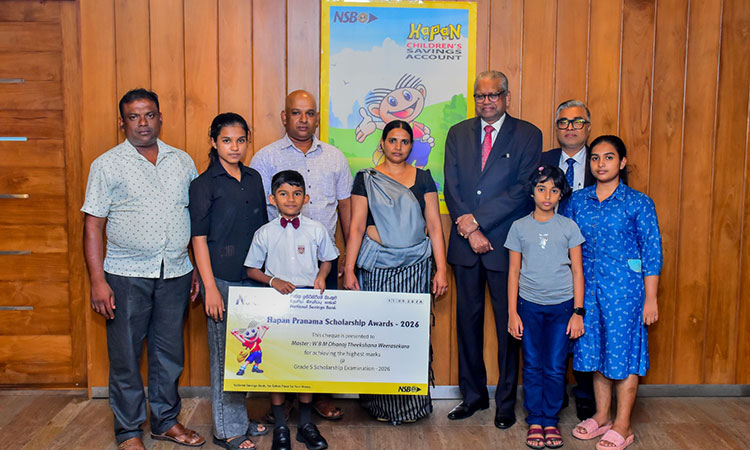
The student, who obtained the highest marks in the Sinhala medium, at the Grade 5 Scholarship Examination – 2026, was felicitated by the National Savings Bank (NSB), recently, at the NSB Head Office, under the Hapan Pranama Scholarship Program -2026, organized by the Bank.
The Chairman of the Bank, Dr. Harsha Cabral PC, the Actg. General Manager/CEO, Rohana Bandara Weerakoon and the Corporate Management were present at the occasion.
Danoj Theekshana Weerasekara, a student of Ahatuwewa Model Primary School in Kurunegala District, has won the first place in Sinhala Medium at Grade 5 Scholarship Examination this year, with 193 marks. His remarkable achievement reflects not only his personal talents, but also the commitment of his family members, guidance of his teachers and support of the entire school community, who came together to make his triumph a reality.
The National Savings Bank, while complimenting his achievement, wishes him good luck, strength and courage for his future academic endeavors.
Being always committed towards realizing the educational goals of the children of the country, NSB organizes a seminar series, well in advance of the Examination, every year, to support them in preparation for the exam. The Bank has been able to hold more than 100 seminars islandwide this year as well.
Through these seminars, it is expected to provide the students with knowledge, guidance and mental strength, required to be successful at the Examination and the Bank has joined hands with them at an important juncture of their lives, assuring support and strength to face the exam with confidence. (NSB)

The Colombo Stock Exchange (CSE) has received the ‘Great Place to Work’ Certification’ for the 5th consecutive year in a row. Since 2022 the bourse has been continually awarded the certification in recognition of its commitment to providing a welcome, inclusive and safe environment.
“At CSE, our people remain our greatest strength.” remarked Rajeeva Bandaranaike, CEO of the CSE “Receiving the Great Place to Work Certification for the fifth consecutive year is a meaningful recognition of our commitment to creating a workplace culture founded on trust, respect, and collaboration. It is an achievement shared by every member of the CSE team and reflects the passion, commitment, and teamwork that continue to drive our success.”
The certification was awarded by Great Place to Work®, a global organization that grants this recognition across more than 180 countries and regions and represents over 20 million employees and 22,000 companies worldwide. The certification was based on the results of an anonymous, company-wide survey that evaluated workplace culture across five key dimensions: credibility, respect, fairness, pride, and camaraderie.
The certification reaffirms CSE’s commitment to its foundational values of Professionalism, Integrity, Care, Teamwork, Passion and Agility. By championing equity and inclusion, the CSE has built a welcoming, discrimination-free culture where every individual can thrive. A cornerstone of this success is CSE’s leadership in workplace diversity as an equal opportunity employer and signatory to the UN Women’s Empowerment Principles, alongside its close collaboration with the UN Global Compact and Respectful Workplaces initiatives. Additionally, the exchange fosters dynamic young talent, with early-career professionals accounting for 57% of its workforce.

SEBSA and Addovation announced a strategic partnership that brings together senior IFS specialists from both organisations to drive long-term IFS customer success across the globe. The strategic partnership forms one of the largest consortiums of its kind in the industry.
This strategic partnership builds on an existing track record of successful project deliveries together, which has already demonstrated the operational compatibility between the two organisations. Addovation brings a strong presence and deep market understanding across the Nordic region, while SEBSA brings established global IFS expertise.
“Scale alone is not enough. What matters is having experienced specialists who understand complex customer environments and can deliver consistently,” says Muthuraja Nanayakkara, CEO of SEBSA. “Both SEBSA and Addovation bring decades of IFS expertise in our own right, and together, we combine that experience with a strong European business understanding and the capacity to support customers across markets.”
“AI is changing the conversation around ERP. Companies are asking not only how they modernize their systems, but how they build a foundation that allows them to continuously adopt new technology and turn it into business value,” says Mikael Johansson, Interim CEO of Addovation.

NSB felicitates the performance and commitment of Grade 5 students

CSE receives ‘Great Place to Work’ for five consecutive years

SEBSA and Addovation form strategic partnership to support IFS customers across the globe

Rise in US Federal reserves triggers ripple effects in stock markets

Chasing the next $3Bn: What it will take for Sri Lanka’s apparel sector to get there

Sonal Dinusha named ICC Men’s Player of the Month for August 2026

‘Dates have the highest sugar content to fight Coronavirus’

Sunday Island 27 December – Headlines

#SundayIsland 17th December – Headlines

Sunday Island – 28th March

Sunday Island Headlines – 21 March

Sunday Island – 21st February – Headlines
-

 Sports7 days ago
DDS set to lose Test captaincy
-

 News7 days ago
Sri Lanka faces new grid challenge as rooftop solar surges: former CEB GM
-

 Latest News7 days ago
Shafali, Deepti power India into sixth T20 Asia Cup final
-

 Latest News6 days ago
Sri Lanka thwart Fatima Sana challenge to secure Asia Cup final spot
-

 News5 days ago
Gnanasara Thero absconding after SC ruling
-

 News6 days ago
Ammunition cache found in old Kandy bungalow
-

 Editorial7 days ago
A flight of fancy
-

 News6 days ago
Green Climate Fund (GCF) Regional Dialogue for East and South Asia will be held from 14 to 17 September 2026 at Cinnamon Life at City of Dreams Hotel, Colombo