
Life style
Durian prevent cancer and improve digestion

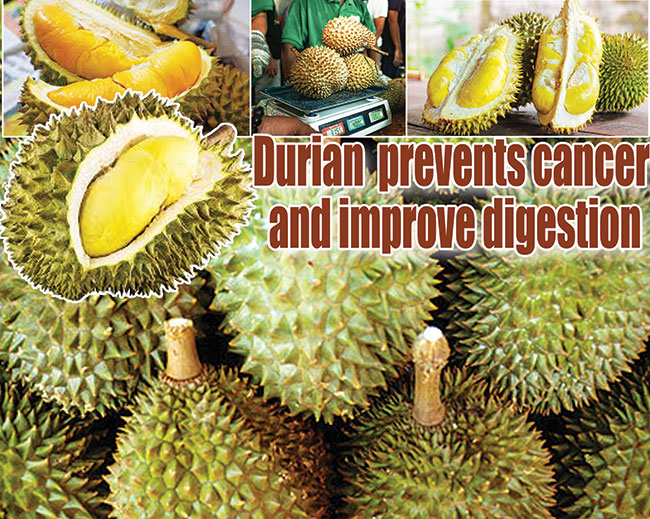
Durian is the fruit of several tree species belonging to the genus Durio. There are about 30 recognised Durio species, however, at least nine of which produce edible fruits. Durio zibethinus is the only species available in the international market: other species are sold in their local regions. Durio zibethinus or locally known as durian is belongs to the family of Bombacaceae, or by others in a broadly defined Malvaceae or by others in a smaller family of just seven genera Durionaceae. Durian is native to Southeast Asia. It is found wild or semi-wild in South Tenasserim, lower Burma and around villages in peninsular Malaysia. In addition, wild durian widely planted in Borneo and Sumatra. Borneo is the centre for diversity of Durio species. Durian is commonly cultivated along roads or in commercial orchards in Thailand, Laos, Vietnam, Malaysia, Brunei, Indonesia and Philippines. Apart from durian, this species also well-known with other common names such as Civet-Cat Fruit Tree, Civet fruit, Kampung Durian as called in English, Dian, Durian Puteh and Jatu called in Borneo, Liu Lian as called in Chinese, Dereyan called by Indonesian and etc .
Durian thrives in a hot, humid and wet climate
Durian grows best in a well-drained and fertile soil rich in organic matters that have a pH range from 5-6.5. Durian is intolerant of water logging which will cause destructive fungal root and trunk rot diseases. Furthermore, durian cannot withstand more than 0.02 % of salinity in the soil.
The durian tree can reach up to 27-40 m in height in tropical forests. Durian tree usually erect with short, straight, rough, peeling trunk to 1.2 m in diameter and have an umbrella-shaped canopy of rough branches and thin branchlets coated with coppery or gray scales when young. The evergreen, alternate leaves are oblong, elliptic or rounded at the base, abruptly pointed at the apex; leathery, dark-green and glossy above, silvery or pale-yellow, and densely covered with gray or reddish-brown, hairy scales on the underside. The fruits are ovoid or ovoid-oblong to nearly round and up to 8 kg in weight. The yellow or yellowish-green rind is thick, tough, semi-woody, and densely set with stout, sharply pointed spines, 3- to 7-sided at the base. Inside there are 5 compartments containing the creamy-white, yellowish, pinkish or orange-coloured flesh and 1 to 7 chestnut-like seeds .
Durian as a source of foods
Generally, durian is consumed fresh as fruit or food products such as candy, ice cream and durian puffs after certain cooking procedures. Traditionally, durian flesh is added into dishes such as “sayur” which is the Indonesian soup made from fresh water fish as an ingredient . Moreover, durian-based sauce is used to cook “Ikan brengkes“, a tradition dish in Sumatran islands, Indonesia. Overripe durian pulps are processed to become durian paste in Thailand while unripe durian may be cooked as a vegetable Beside the flesh, durian seeds are also valuable as they can be eaten after boiling or roasting and made into durian flour and chips (Agus, 2014). Furthermore, the young leaves and shoots of durian plant can be cooked as green vegetables.
Health benefits
Durian is widely celebrated for its long list of health benefits, which include the ability to boost immune system, prevent cancer and inhibit free radical activity, improve digestion, strengthen bones, improve signs of anaemia, prevent premature aging, lower blood pressure, and protect against cardiovascular diseases. Some of the more minor benefits of durian are to reduce inflammation of the joints, help thyroid health, reduce headaches, and lower symptoms of depression, anxiety, and stress. Most of the health benefits come from durian’s impressive vitamin and mineral content. Durian contains vitamins such as vitamin-C, folic acid, thiamin, riboflavin, niacin, B6 and vitamin A. Important minerals such as potassium, iron, calcium, magnesium, sodium, zinc, phosphorus are also found in durian. It also contains nutrients such as phytonutrients, water, protein and beneficial dietary fibre.
Relieves anaemia and promotes healthy pregnancy
Anaemia is a medical condition that reduces the level of haemoglobin on blood. Deficiency in haemoglobin can lead to fatigue, headache, insomnia and etc. In pregnant woman, anaemia can lead to abnormality and fatality of the foetus. Durian contains high amount of folate or folic acid which is essential in the production of haemoglobin. Besides that, low content of iron in durian aids in haemoglobin production alleviating condition of anaemia (Kevat, 2013). Furthermore, presence of folate in durian is important for pregnant woman as it promote regular tissue growth as well as protects the brain and spine in developing baby (Health benefits of durians, 2015).
Helps to maintain healthy bones
Durian contains a number of trace metals including calcium and potassium. Even calcium is present in low level in durian, but amount of potassium present in durian fulfils about 9 % of our body’s daily requirement. Potassium is required for the development of healthy bones. Even though the most abundant mineral of our bone is calcium, but potassium is crucial to regulate the distribution and deposition of the calcium in bones so that it is not dissolved or released into the blood excessively (Kevat, 2013).
Helps to alleviate depression and improves sleep
Durian contains amino acids known as tryptophan – a natural sleep inducing compounds. Tryptophan is required to increase the level of serotonin and melatonin. These two neuro-chemicals are required to manage our emotions. Serotonin is essential to relieve stress, sleeplessness, anxiousness, appetite as well as depression. In addition, these types of hormones help to manage sleeping function and could be utilized in the epilepsy cure (Kevat, 2013).
Fight cancer
Durian has a wealth of vitamins, nutrients, and organic chemicals that function as antioxidants. In the battle against cancer, free radicals are vitally important, because during cell metabolism, there are by-products created, called free radicals. These free radicals can destroy the DNA of regular cells and convert them into cancer cells, which can then metastasize or form fatal, tumorous growths. All of the antioxidants which reduce oxidative stress on the organs of the body are bonuses to the immune system, and durian is packed with them, including vitamin-C, vitamin-B complex, and vitamin E, as well as phytonutrients that battle cancerous cells (Health benefits of Durian, 2015).
Aids in digestion
Durian contains high levels of dietary fibre, which are important for the normal function of the digestive system. Fibre causes bowel movement to increase in bulk, which makes it easier for them to move through the intestinal tract. Fibre also stimulates peristaltic motion and the secretion of digestive and gastric juices, further easing the entire process. By reducing conditions like constipation and blockage in the intestines, conditions like bloating, excess flatulence, heartburn, cramps, and indigestion as well as colorectal cancer can be minimized. Much of the fibre in durian is insoluble fibre, which also lowers the frequency of diarrhea for people with loose stool. Fibre also helps to reduce the amount of cholesterol in the blood by scraping LDL cholesterol out of the body and quickly removing it before it can do any damage to the cardiovascular system (Health benefits of Durian, 2015).
1. Anti-aging
Durian has a wide variety of antioxidant properties stemming from its vitamin and organic chemical makeup that actively reduce the amount of free radicals in the body. Eating an excessive amount of durian can seriously boost your body’s ability to eliminate those free radicals, thereby reducing the chances of premature aging and delaying the appearance of symptoms such as wrinkles, age spots, macular degeneration, hair loss, tooth loosening, arthritis, cancer, and heart disease (Health benefits of Durian, 2015). In addition, the high water content of Durian is an added advantage along with its antioxidant content. Water keeps the skin hydrated, reduces dryness and alleviates the appearance of fine lines. It also nourishes skin for clear and smooth skin .
Increase and encourage fertility
Estrogen is a hormone which helps in conceiving. Most of the women who suffer from fertility usually have a low estrogen level in their body which is increased with pills, injections and supplements. Studies have shown that durian contains a high level of this hormone and can act as an herbal medicine (Kevat, 2013). Besides that, durian can produce intensified sexual libido and stamina, and also reduce the chances of infertility in men and women, and increase sperm motility .
Used as traditional medicine
According to traditional use, durian may have antibacterial, anti-inflammatory, and vasoconstrictor properties. Traditionally, durian leaves and roots are in Malaysia used to treat fever. The juice of fresh leaves is used as an ingredient in a lotion for fevers, and the juice from the bark is used as an antimalarial in Sumatra.
Other Uses
On the other hand, durian can be used for purposes other than foods and medicines. Durian husks which are usually thrown as wastes after the durian pulps are consumed can be dried to be used as fuel or fertilizers for tree (Utilization of durian, n.d.). It can also be used as an ingredient for making handmade paper like artistic paper with certain pattern (Agus, 2014). Due to the strong smell, durian husks can be used as the natural mosquitoes repellent. Dr. S. Kathiresan from AIMST University discovered that durian peel can be used as a mean to recover the oil spill at coastal areas (Lim, 2011). In this case, the durian peel powder is chemically modified and acts as the efficient oil absorbent to remove the oil from the water, solving the problem of oil spills which have caused adverse effects to living sea organisms and human economic activities.
REVIEW ON DURIAN CONSUMPTION
Durians are abundant in Asia during their season as Malaysia, Indonesia and Thailand are the world’s main durian producers. In this case, numerous surveys and reviews have been done on the nutritional values and health benefits of durian. Undeniably, durian has offered unlimited benefits to human health such as relieving anemia, alleviating depression and enhancing fertility (Health benefits of durian, 2015; Kevat, 2013). The Swiss Society of Food Science and Technology also discovered that the levels of antioxidants content in durian are higher as compared with other Asian fruits like mango, lychee and mangosteen of similar ripeness (Durians-‘Heaty’ or healthy, n.d.). However, overconsumption of durian can bring adverse effects to consumer especially pregnant women, diabetic patients as well as obese people. As mentioned by Dr. Patrick Chia, a fetal medicine specialist in Malaysia, it is safe for woman to consume durian during pregnancy but pregnant woman with gestational diabetes must avoid eating durian due to the high sugar content . Besides, consumption of durian during last trimester of pregnancy may result in overweight fetus with greater risk of childhood obesity as durian is high-glycaemic food . Apart from that, durian contains high amount of fat and triple amount of calories as compared to other fruits where obese people should avoid (Durians-‘Heaty’ or healthy, n.d.). From traditional Chinese medicine (TCM) perspective by Mr. Chew Hong Gian, a TCM physician at Raffles Chinese Medicine, durian is said to possess “warming” property whereby overindulgence in durians can induce sore throat, phlegmy cough and constipation of Raffles Medical reported that one’s body temperature may be increased slightly from eating durians but that does not lead to fever, coughs or respiratory infections.


by Ifham Nizam
Sri Lanka risks losing a critical opportunity to sustain economic growth as its population ages, fertility declines and skilled workers migrate overseas, with low female labour-force participation further limiting the country’s ability to respond to a shrinking workforce. The United Nations Population Fund (UNFPA) Sri Lanka says the challenge calls for a fundamental rethink of the country’s economic and social policies, including how women’s unpaid care responsibilities, young people’s family aspirations and the financial security of older citizens are addressed.
With women accounting for 70.6 percent of Sri Lanka’s economically inactive population in 2024, the country cannot afford to leave such a substantial pool of potential workers outside productive employment while demographic pressures intensify. Only 28.9 percent of women participated in the labour force that year, compared with 67.4 percent of men.
In responses to questions from the Sunday Island, UNFPA emphasised that Sri Lanka’s changing population structure should not be treated as a crisis in itself. Rather, it reflects decades of progress in healthcare, education, life expectancy and access to voluntary family planning. The real test is whether the country can adapt its economic model, labour market, social protection systems and care infrastructure to these new realities.
The implications extend well beyond employment and economic growth. Rising demand for healthcare and long-term care, inadequate retirement protection, outward migration and the growing difficulty young people face in starting families are interconnected challenges that require a coordinated policy response.
Sri Lanka is still benefiting from a demographic bonus, with its working-age population larger than the dependent population of children and older people. But this window of opportunity will not remain open indefinitely. UNFPA argues that the country must use it to strengthen productivity, widen women’s access to decent employment and prepare institutions for a society in which people live longer and family structures continue to change.
The challenge of an ageing population
Sri Lanka’s demographic transition is gathering pace. Around 18 percent of the population is now aged 60 or above, while the country’s fertility rate has fallen to approximately 1.3 children per woman. Together, these trends point towards a future in which the proportion of older people rises while the relative size of the working-age population gradually declines.
The transition is not unique to Sri Lanka. Countries across the world are experiencing longer life expectancy and smaller families. However, the speed of change and the country’s economic circumstances make preparation particularly important.
An ageing population can place increasing pressure on public expenditure, healthcare services, pension arrangements and families caring for older relatives. At the same time, a smaller workforce could make it more difficult to sustain economic growth unless productivity improves and more people are able to participate in productive employment.
UNFPA’s position is that population ageing should not be approached simply as a problem of numbers. The central issue is whether institutions are equipped to support people throughout longer lives while ensuring that the economy can generate sufficient income and public revenue.
Sri Lanka’s demographic bonus provides an opportunity to prepare. A relatively large working-age population can contribute to growth, savings and investment, but only if people have access to productive work and the skills required by a changing economy.
The challenge is to convert that opportunity into lasting economic gains before the age structure changes further.
An analysis using National Transfer Accounts data from 2016 estimated that demographic change alone could require an additional Rs. 76 billion in public consumption expenditure by 2037. The same analysis indicated that higher labour productivity could increase aggregate labour income by Rs. 872 billion by 2037 compared with a scenario in which demographic change was considered without those productivity gains.
These estimates illustrate the importance of productivity in responding to demographic pressures. They also suggest that Sri Lanka’s policy response should go beyond simply encouraging people to have more children. Investment in skills, technology, healthcare, education and decent employment can help the country make better use of its available workforce.

Women and the untapped workforce
One of Sri Lanka’s most immediate opportunities lies in increasing women’s participation in paid employment.
In 2024, female labour-force participation stood at 28.9 percent, compared with 67.4 percent for men. Women represented 70.6 percent of the economically inactive population, and 50.6 percent of economically inactive women identified household responsibilities, including childcare and elder care, as a reason for not participating in the labour force.
These figures point to a major economic challenge that is closely connected to social policy. Many women who could contribute to the economy remain outside paid employment because the demands of caring for children, older relatives and other family members are difficult to reconcile with formal work.
Increasing female labour-force participation is, therefore, not merely a question of equality. It is also an economic necessity as the population ages and the working-age population comes under pressure.
UNFPA’s approach highlights the need to recognise unpaid care work and reduce the barriers that prevent women from entering or remaining in employment. Affordable childcare, accessible elder-care services, flexible working arrangements and workplaces that accommodate family responsibilities could help more women pursue paid work.
Employers also have a role to play by improving workplace conditions, strengthening protection against discrimination and making it easier for women to return to employment after childbirth or periods spent caring for family members.
The issue is especially significant for young women. Unemployment among women, aged 15–24, has been recorded at 30.6 percent, indicating that many young women face substantial obstacles even before family responsibilities become a factor.
Better access to education, vocational training, digital skills and employment opportunities could help address this problem. However, training alone will not be sufficient if workplaces remain difficult to access or if women continue to carry a disproportionate share of unpaid care responsibilities.
Sri Lanka must also reconsider the way it measures economic contribution. Unpaid household work is essential to the functioning of society, yet it is often overlooked in conventional measures of economic activity. Recognising its value would help policymakers design more realistic employment, social protection and care policies.
The objective should not be to force women into paid work, but to ensure that those who want to work have a genuine opportunity to do so without being constrained by inadequate services or unequal family responsibilities.
Migration and the future of economic growth
Outward migration presents another challenge to Sri Lanka’s demographic and economic outlook.
The departure of skilled and working-age people can reduce the domestic labour supply, weaken particular professional sectors and place additional pressure on those who remain. The consequences can be especially serious when trained professionals leave sectors already facing shortages.
Migration, however, is not inherently negative. Sri Lankans working overseas contribute through remittances, international networks, new skills and experience. Migration can also provide individuals and families with opportunities that may not be available at home.

The policy challenge is to ensure that migration takes place through safe and fair channels while making Sri Lanka a country in which people have compelling reasons to build their futures.
That requires more than discouraging people from leaving. Decent employment, competitive career prospects, reliable public services, opportunities for professional advancement and confidence in the economy all influence decisions about whether to remain in the country.
For young people, the ability to find stable employment and plan for the future can be as important as the availability of jobs themselves. Uncertainty over income, housing costs and family responsibilities can make long-term decisions increasingly difficult.
Sri Lanka must, therefore, connect its migration policies with broader strategies for economic development, skills retention and employment creation. At the same time, it should maintain links with its overseas workforce and create opportunities for returning migrants to contribute their experience and expertise.
A sustainable response would recognise migration as part of a wider global labour market while addressing the domestic conditions that encourage skilled workers to seek opportunities elsewhere.
Why young people hesitate to start families
Falling fertility is often discussed as though it were simply a matter of changing personal preferences. In reality, decisions about whether to have children are shaped by economic circumstances, relationships, housing, employment security and access to childcare.

UN repcaption: UNFPA Country Representative Phuntsho Wangyel
Many young adults may want to start families but feel unable to do so. High living costs, uncertain employment, the expense of raising children and difficulties balancing work with family life can all influence reproductive decisions.
UNFPA’s Demographic Futures Survey, which reached 108,926 internet-connected young adults, aged 18–19, across 73 countries and territories, including Sri Lanka, found a general desire for two children. Such findings underline the importance of distinguishing between the number of children people would like to have and the number they ultimately feel able to raise.
Sri Lanka’s experience must be understood within this broader context. A low fertility rate does not necessarily mean that young people no longer value family life. It may also reflect the practical barriers they encounter when considering parenthood.
UNFPA and the University of Colombo are conducting a study, examining fertility desires, intentions and behaviours in Sri Lanka. The research is expected to contribute to a better understanding of the factors shaping family decisions and the gap that can emerge between aspirations and outcomes.
The findings could help policymakers move beyond assumptions and design measures that respond to the actual concerns of young people.
Policies that support families need to address the conditions in which decisions are made. Affordable childcare, parental leave, secure employment, housing opportunities and a more equitable distribution of care responsibilities can help people reconcile their family aspirations with their economic circumstances.
Such measures can also benefit the wider economy by enabling parents, particularly women, to remain in employment and by reducing the pressure on families to choose between earning an income and caring for children.
The goal should not be to prescribe a particular family size. It should be to create conditions in which people can make decisions about parenthood freely and realistically.
Retirement security and the cost of longer lives
As life expectancy increases, ensuring financial security in old age becomes a more pressing concern.
Only about 30 percent of Sri Lanka’s workforce is covered by a formal pension arrangement. Many workers, therefore, face the prospect of financing a lengthy retirement with limited savings or without a regular pension income.
For some employees, provident fund benefits provide an important source of retirement savings. However, a one-off payment may not be sufficient to meet living expenses, healthcare costs and other needs over a retirement that could last many years.
The situation is particularly challenging for people who have spent much of their working lives in informal employment, where access to structured pension contributions and other employment benefits may be limited.
As the older population grows, the country will need to examine how retirement income can be made more secure without placing unsustainable pressure on public finances.
This includes strengthening social protection, improving access to suitable savings arrangements and considering how workers in informal employment can be better covered. Financial literacy and advice on managing retirement savings could also help people prepare for longer lives.
Healthcare and long-term care must form part of the same discussion. Older people may require continuing medical treatment, rehabilitation, assistance with daily activities or specialised residential care. When formal services are limited, these responsibilities frequently fall on family members, particularly women.
A stronger care system would help older people maintain dignity and independence while reducing the burden on families. It could also create employment opportunities in healthcare, community support and professional care services.
Ageing should not be treated only as a fiscal burden. Older people possess knowledge, experience and skills that can continue to benefit society. Policies that support healthy ageing, lifelong learning and opportunities for older people to remain economically or socially active can help make longer lives a source of strength.
Reproductive choice must remain central
Debates about low fertility can sometimes lead to calls for governments to encourage or pressure people to have more children. UNFPA’s approach places individual rights and reproductive choice at the centre of the discussion.
Demographic policy, the organisation argues, should not undermine people’s freedom to decide whether and when to have children or how many children to have. Efforts to address fertility decline must, therefore, avoid coercive measures and instead focus on removing the barriers that prevent people from realising their reproductive intentions.
This distinction is important for Sri Lanka. A policy that concentrates exclusively on increasing birth rates may overlook the economic and social reasons people delay or forgo parenthood. It may also fail to address the needs of those who choose to remain child-free or who cannot have children.
A rights-based approach recognises that individuals and couples should have access to accurate information, appropriate healthcare and voluntary family-planning services. It also recognises that decisions about parenthood are personal and cannot be reduced to targets set by the state.
At the same time, governments have a legitimate role in creating an environment in which families can thrive. Affordable childcare, parental support, decent work, healthcare access and social protection can help people make choices without being driven by financial insecurity or inadequate services.
The challenge is to support people rather than dictate their decisions.
Preparing for a different demographic future
Sri Lanka’s demographic transition requires a coordinated response across economic planning, labour policy, healthcare, education, migration and social protection.
Increasing productivity will be essential, but productivity gains must be accompanied by measures that enable more people to participate in the economy. Women need fair access to decent employment, young people need realistic opportunities to build secure lives, and older citizens need protection that reflects the prospect of longer retirements.
The country must also recognise that demographic change affects regions and communities differently. Rural areas, urban centres and sectors facing labour shortages may have distinct needs. Reliable population data and research into family intentions, migration patterns and labour-market participation will, therefore, be important in shaping effective policies.
The findings of the UNFPA–University of Colombo study could help inform this process by identifying the factors that influence reproductive decisions in Sri Lanka. Such evidence should be considered alongside labour-market data, pension coverage, healthcare requirements and the changing distribution of unpaid care work.
Equally important is the need to bring demographic considerations into long-term development planning. Policies should not be designed in isolation, with employment measures separated from childcare, retirement arrangements disconnected from healthcare, or migration strategies divorced from the availability of decent jobs.
Sri Lanka’s demographic transition is neither an automatic economic disaster nor a challenge that can be solved by increasing births alone. It is a structural change that calls for institutions to adapt.
The country still has an opportunity to benefit from its working-age population, improve productivity and build stronger systems of care and social protection. But that opportunity depends on decisions taken now.
The central question is not simply how many people Sri Lanka will have in the future. It is whether the country can create an economy and society in which people of all ages can contribute, families can make their own choices, women have equal opportunities and older citizens can live with dignity and financial security.

By Zanita Careem
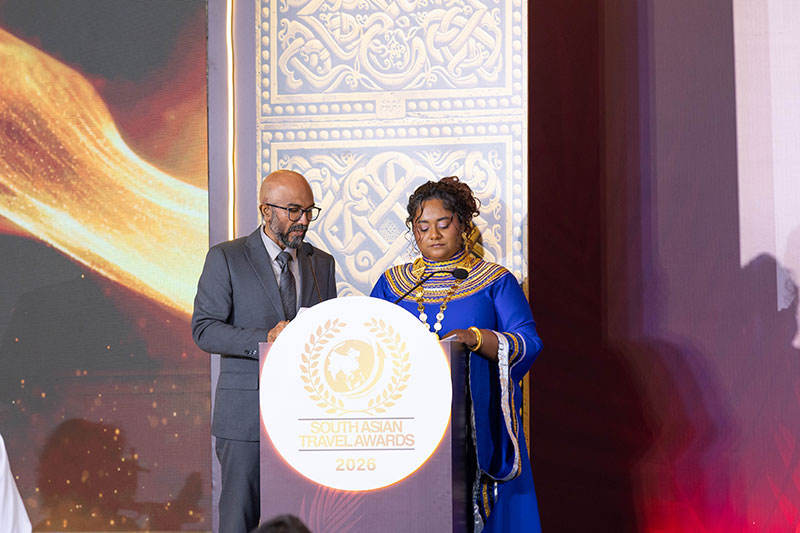
A glamorous celebration of South Asean hospitality took place with Sri Lanka taking centre age. at the vibrant capital of the Maldives, Male. It became the centre of attention for South Asia’s Tourism and Hospitality fraternity as industry leaders, hoteliers, travel professionals and other invited guests gathered for the 10th editiom of the South Asian Travel Awards (SATA). Hosted at the stylish ambience of Barcelo Nasandhura Male, the glittering gala brought together the region’s leading tourist destination for an evening of celebration, recognition and camaraderie, with the Maldives providing a fitting backdrop for this prestigious gathering.
Amid the elegance and exitement of the occasion, Sri Lanka emerged as one of the evening’s standout performers, collecting an impressive array of awards that reflected the island’s strength in hospitality, travel luxury wellness and personalised guest experiences. The accoladesss were a proud endorcement of talent, dedication and service excellence that continue to distinguish Sri Lanka’s tourism industry across the South Asian region.
Adding vibrancy and energy
The key highlight was the address by the SATA President, Ismail Hameed, who stressed the importance of strengthening regional co-operation, maintaining hospitality standards and preparing the industry for a rapidly evolving tourism environment. His speech underscored the need for South Asian destination to work together to embrace innovation and build a more competitive and sustainable tourism sector. Artificial Intelligence and the future of hospitality took centre stage at (SATA) where panel discussions brought together industry professionals to examine how technology is transforming the travel and tourism landscape. Moderated by Dinuksha Chandrasena, Editor in Chief and publisher of Travel Talk Asia and Managing Director of Double Dee publication, who explored the growing role of artificial intelligence in enhancing guest experiences, streamlining hotel operations and helping the industry respond to the changing expectation of modern travellers.
-
- Dinuksha in the spotlight: Recognition from the President of SAFTA
-
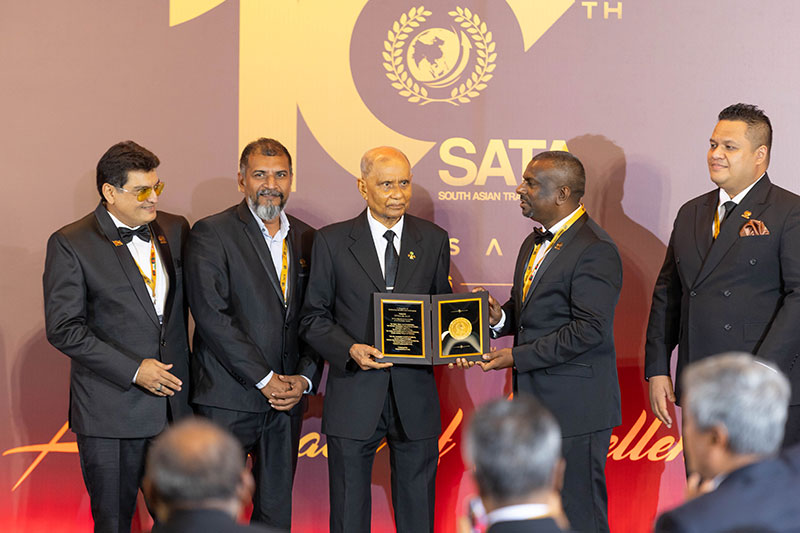
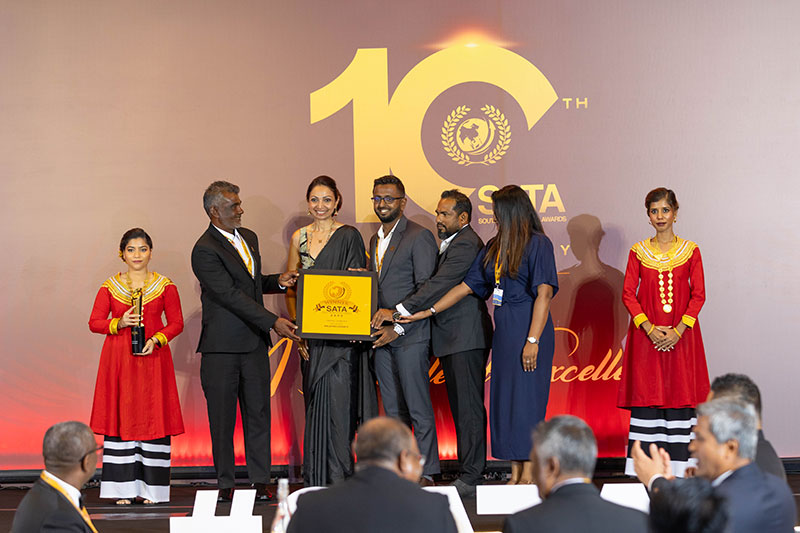
- Sri Lanka SATA members with President of SATA Ismail Hameed and the iconic award winner Mohamed Salih (centre)
-
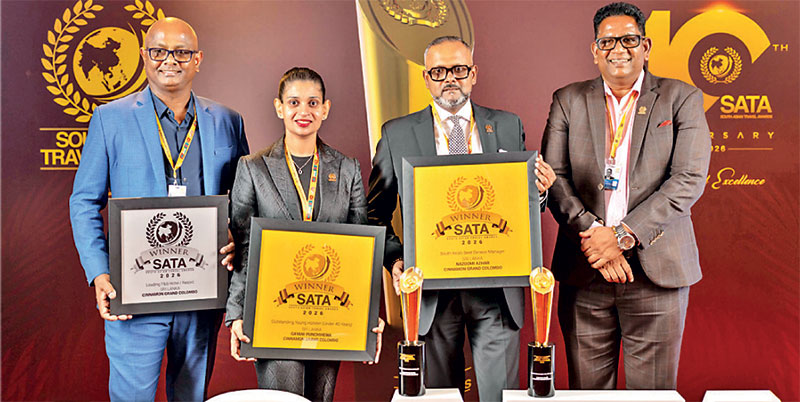
- Grand triumph for Cinnamon Grand: The hotel brings pride to Sri Lanka, with the General Manager receiving a prestigious accolade – Best General Manager
The conservation also raised an important question how hotels embrace technological innovation without losing the personal touch that remains at the heart of genuine hospitality,
The discussions reflected a wider transformation taking place across the hospitalality industry, where digital solutions are becoming increasingly important in everything, from personalised guest services to efficient management.
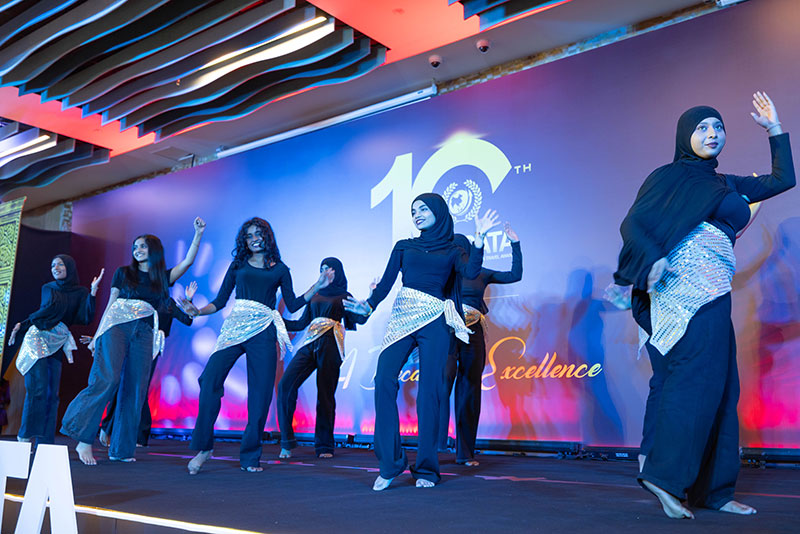
Cultural extravaganza: Colour,rhythm and tradition
Cinnamon Grand Colombo made a notable impact at the South Asian Travel Awards 2016 held in the Maldives with its achievements reflecting the strength of Sri Lanka’s hospitality industry. The hotel struck gold for Best General Manager Nazoomi Azhar, while young achiever Gayani Punchihewa won gold in the Best Young Hotelier category. Cinnamon Grand also achieved Silver for Best Food and Beverage Hotel in South Asia.
The 10th South Asian Travel Awards celebrated not only the regions finest in travel and hospitalitybut also the spirit of partnership that continues to strengthen South Asian Tourism. A special highlight was the presentation of the prestigious Face of South Asia award to Mohamed Salih, Chairman of Damas Company, in recognition of his contribution to the tourism industry. A total of 52 gold and 98 silver awards were presented across various categories recognising achievements in the hospitality industry, with Bhutan, Bangladesh, India, Nepal, Sri Lanka and the Maldives in the scene.
Sri Lanka also made a strong impression at the South Asian Travel Awards held in Male.
The iconic Galle Face Hotel has been ranked No 1 in the Best Heritage Hotel category. It is the first time the iconic Galle Face Hotel has claimed the top honour, making it a significant milestone in a history that go back to 1864. Cinnamon Lakeside won the award as a leading meeting and conference hotel.
Other award winners included Kingsbury Hotel, Amaya hotels Kandy, leading Hill Resort/hotel, Anantara Peace Haven, leading luxury resort – Amaya Lake Dambulla, New Burgh Ella, Royal Beach, Beruwela, Marine Bay Hotel, Marine Drive, South Asia’s best new hotel, Auygiri Aurveda, Wellness and Spa Resort.
Most romantic resort The Fortress Resort and spa. Fox resorts silver winner, leading hospitality development company, Sri Lankan Airlines leading international airline, Aitken Spence Travels – leading travel Agent.
Amari Hotel won an award for Sri Lanka’s leading business hotel.
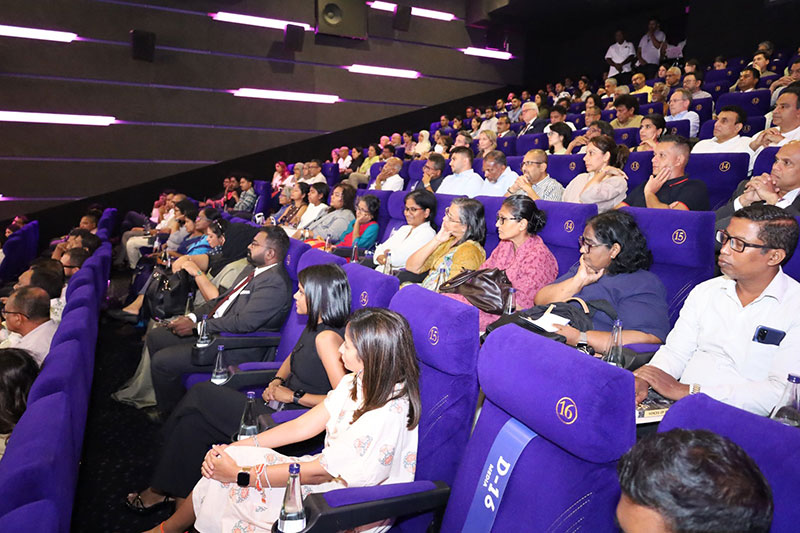
Teardrop Nation, a four-part documentary series examining Sri Lanka’s post-independence political and conflict history, was formally launched at Scope Cinemas Multiplex at Colombo City Centre recently, with Leader of the House and Minister Bimal Rathnayake attending as Chief Guest. Developed over six years by Project 72, with Sarah Kabir as Project Director, the series brings together historical accounts, expert perspectives and lived experiences to explore the events and decisions that have shaped Sri Lanka since independence.

Sarah Kabir, Project Director of Teardrop Nation, addresses the audience at the premiere in Colombo.
Created for a broad public audience, with a particular focus on younger generations, Teardrop Nation seeks to make Sri Lanka’s recent history more accessible and encourage greater engagement with the factors that contributed to discrimination, violence and conflict. The project was conceived not simply as a record of the past, but as an educational resource that can help audiences better understand how earlier choices and events continue to inform the country today.
Speaking at the launch, Sarah Kabir, Project Director of Teardrop Nation, said her decade of work on reconciliation had shaped the project. “Understanding our past is essential to building positive and lasting peace in Sri Lanka. We created Teardrop Nation to make this history more accessible, especially to younger people, and to encourage them to engage with it thoughtfully and critically. After six years of research and production, we hope the series creates space for informed conversation and a shared understanding of the experiences and decisions that shaped our country,” she said.
The series unfolds chronologically across four episodes: Foundations of Conflict (1930s–1970s), The Trigger (1970s–1980s), Battle for Peace (1980s–late 1990s) and War in Paradise (1990s–2009). Together, the episodes examine political and social developments across different periods and explore tensions linked to ethnicity, religion, class and caste.

Import and Export (Control) Regulations No. 08 of 2026
Draft Bill of the Public Private Partnership Enterprises Act to be gazzetted
Amendment of the Ayurvedha Act No. 31 of 1961

Cabinet nod to amend the Sri Lanka Development Administration Institute Act No. 9 of 1982
Establishment of the National Higher Performance Centre
State patronage for the cremation ceremony of the late deputy prelate (Anu Nayaka Thero) of the Sri Laka Ramangya Maha Nikaya, Gatambe Rajopawanramadhipatha, Siri Chandawimala Wanshalankara, Chandrakeerthi Sri Amarawansha, Sadhdharmawageeshwara, Shasanashobhanna Most Venerable Keppetiyagoda Siriwimalabhidhana Thero

‘Dates have the highest sugar content to fight Coronavirus’

Sunday Island 27 December – Headlines

#SundayIsland 17th December – Headlines

Sunday Island – 28th March

Sunday Island Headlines – 21 March

Sunday Island – 21st February – Headlines
-

 Features3 days ago
Kotahena:A Small Enclave, An Extraordinary Legacy
-

 News7 days ago
Sri Lanka, India caught in US-Iran ship crisis
-

 News4 days ago
Asgiri Mahanayake calls for immediate release of Gnanasara Thera
-

 Latest News7 days ago
Missiles intercepted near Riyadh after Saudi coalition hits Yemen fuel depot
-

 News3 days ago
Record 1,600 students take Russian Classical Ballet examination in Sri Lanka
-

 News6 days ago
AC President recuses himself from hearing prison attire case pertaining to Gnanasara Thera
-

 Latest News7 days ago
Heavy showers above 100 mm are likely at some places in the Western, Sabaragamuwa, Southern, Central, and North-western provinces and in Anuradhapura district.
-

 News5 days ago
Naval officer testifies Yoshitha received Rs. 5.15 mn in salaries during SLN service