
News
Domestic debt restructuring: Harsha insists money belonging to EPF members must be safeguarded


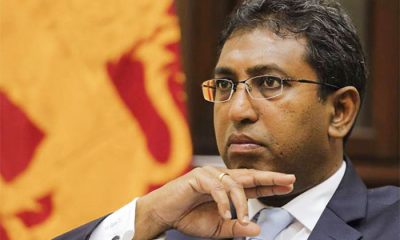
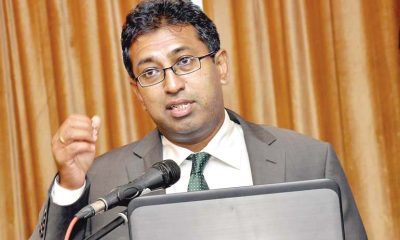
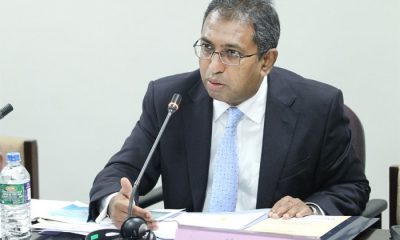
Opposition MP Dr. Harsha de Silva has highlighted the critical considerations surrounding Domestic Debt Optimisation and its impact on the members of the Employees Provident Fund (EPF). Speaking on behalf of the Opposition, recently, de Silva emphasised the need to prioritize the interests of EPF pension fund members in any decision-making process.
“Our foremost concern should be securing the retirement benefits of the hardworking people of Sri Lanka,” de Silva stated. “The EPF, as a pension fund, plays a crucial role in ensuring a financially secure future for its members upon retirement. We cannot allow the government’s pursuit of cheap money to jeopardize the interests of EPF pensioners.”
Referring to the EPF Act, de Silva underscored the obligation for a parliamentary resolution to ensure the EPF receives sufficient funds from the Treasury to meet minimum payment requirements if it is unable to do so. He further emphasized the importance of gradually settling any resulting loans over time. “We must protect the EPF pension fund from being subjugated to the government’s needs at the expense of pensioners. The negative 47 percent real return to EPF in 2022 has severely eroded the value of the fund, and we cannot disregard this significant loss,” de Silva added.
Discussing the risks associated with domestic debt optimization, de Silva highlighted the concept of opportunity cost. “Subjecting the EPF pension fund to this optimization may result in a loss of potential reinvestment opportunities,” he explained. “For instance, if the EPF currently holds bonds maturing within the next one or two years, they have the potential to be reinvested at higher rates, ensuring better returns for pensioners. However, if these bonds’ maturity dates are extended beyond 2027 at lower rates that will have a high opportunity cost to EPF members.”
Clarifying the EPF pension fund’s overall financial position, de Silva reassured the public that the EPF is not facing immediate trouble. “The EPF pension fund maintains a positive cash flow, with contributions consistently exceeding pension payouts by approximately 30 billion rupees in recent years,” he stated. “This ensures the EPF’s ability to meet its pension obligations. However, we must acknowledge that returns on investments may decrease.”
Concluding his remarks, de Silva firmly stated that “Considering the negative real interest rate the EPF pension fund has already experienced, it is unjust to overburden it further with large opportunity costs due to domestic debt optimization. We must prioritize the interests of EPF members and strike a balance between preserving reasonable returns to the members while providing debt relief to the government. The long-term financial security of Sri Lanka’s workforce cannot be jeopardized.”







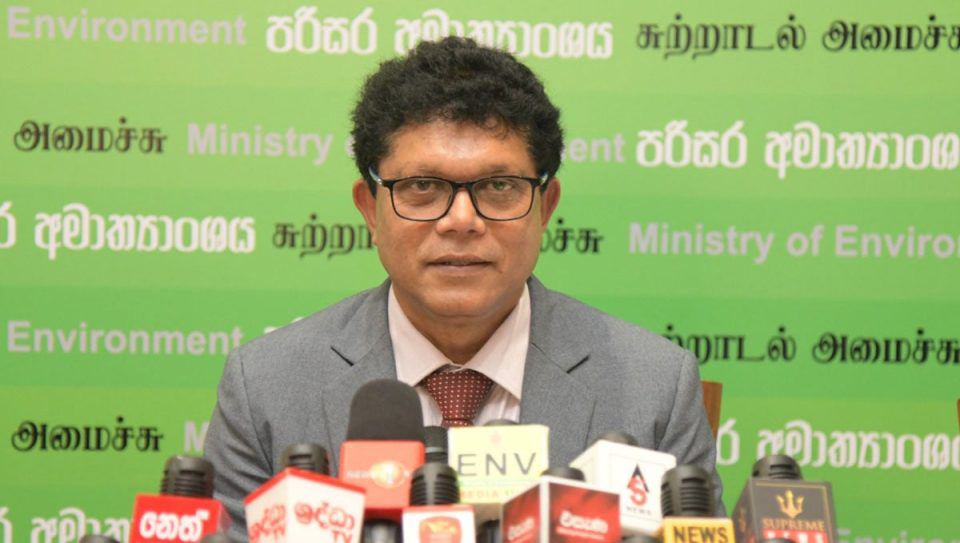
Environment Minister Dammika Patabedi said yesterday he had ordered an inquiry into the withdrawal of China-based Amber Adventures (Private) Ltd., from the Ambuluwawa Cable Car Project.Addressing the media, the Minister said the Environment Ministry had no direct agreement with the company, as the project was under the purview of the Board of Investment (BOI).
He said construction activities within the Ambuluwawa Environmental Zone had been suspended following complaints from environmental organisations in the aftermath of Cyclone Ditwah. All constructions in high-risk areas, he said, had been halted pending clearance by the National Building Research Organisation (NBRO).
According to the Minister, complaints had been received that construction at Ambuluwawa was continuing without NBRO clearance.
In response, the Ministry instructed the Central Environmental Authority (CEA) to conduct an investigation and thereafter construction activities were suspended pending a technical assessment by experts.
The Ministry of Environment subsequently ordered the immediate suspension of all construction activities within the Ambuluwawa Environmental Zone until the assessment was completed, he said, adding that work could resume if expert evaluations cleared the project.
Following the suspension, Amber Adventures (Private) Ltd,, described as the country’s first cable car venture, formally withdrew from the project, citing what it termed “regulatory obstruction and arbitrary state action.”
The company, a major Chinese investor in the project, proposed as Sri Lanka’s first cable car initiative with both Chinese and American investment, officially informed the BOI of its decision on Wednesday (14). In a letter to the BOI, the company said it had obtained all required permits and approvals in line with BOI procedures but faced repeated disruptions that resulted in significant financial losses.
Company Director Yuan Yuping warned that legal action would be pursued at the International Court of Arbitration to recover losses incurred due to the suspension of the project, citing continuous interruptions and government decisions as the cause.
Meanwhile, the Ambuluwawa Trust Board said the withdrawal of investors from the project was a major loss to the country, noting that it was regrettable that decisions had been taken without proper investigation, based on allegations by parties lacking a clear understanding of the facts.
It warned that halting a large-scale project of that nature would result in the loss of direct and indirect employment opportunities, as well as income sources for communities in the surrounding areas.
By Chaminda Silva and SK Samaranayake ✍️

Balangoda Kassapa Thero, held in Trincomalee remand prison over alleged violations of the Coastal Conservation Act, reportedly refused meals yesterday (15).
Prison authorities, however, said it could not be confirmed whether the monk’s action amounted to a hunger strike. Prison Media Spokesperson A. C. Gajanayake added that an official statement on the matter would be issued today (16).
The monk and eight others were remanded until 19 Jan by the Trincomalee Magistrate’s Court over allegations of unauthorised construction of a shelter to place a Buddha statue at the Sri Sambuddha Jayanthi Bodhiraj Viharaya. Prison sources said Thero had also declined food brought from outside.
The case follows reports to the court by the Trincomalee Harbour Police that unauthorised constructions had been carried out, despite instructions from the Court of Appeal to resolve the dispute peacefully.
by Chaminda Silva ✍️

The Food and Agriculture Organization of the United Nations (FAO) Headquarters in Rome issued an appeal calling for international assistance of USD 16.5 million to support the early recovery of livelihoods and food security for farming, livestock-keeping and fishing communities affected by Cyclone Ditwah in Sri Lanka, FAO said yesterday.
Cyclone Ditwah represents one of the most severe climate shocks the country has faced in decades, affecting all 25 districts and disrupting the lives and livelihoods of more than 2.2 million people. Over 1.1 million people are now in urgent need of food security, agricultural and nutrition assistance, at a time when vulnerabilities were already heightened by prolonged economic pressures.
The cyclone struck at the onset of the critical Maha 2025/26 cultivation season, causing widespread damage to agriculture, livestock and fisheries. Floods inundated more than 129 000 hectares of agricultural land, affecting over 227 000 farming households. Standing water, debris, siltation and damaged irrigation systems are delaying replanting, while shortages of seeds, fertilizers and access to machinery threaten to result in irreversible production losses if immediate support is not provided.
Livestock and fisheries losses have further compounded the crisis. More than 37 000 cattle and buffaloes, nearly 16 000 goats and sheep, and 475 000 poultry have been lost, while damage to fisheries and aquaculture is estimated at USD 66–69 million, undermining both food availability and household incomes.
“This appeal focuses on early recovery interventions that are urgently needed to stabilize livelihoods and safeguard food production.,” said Vimlendra Sharan, FAO Representative for Sri Lanka and the Maldives. “While the overall requirements for the agrifood sector to fully rebound are substantially higher, immediate early recovery support is critical to prevent long-term losses, deeper food insecurity and increased reliance on food assistance.”
Issued by FAO Headquarters in Rome, the appeal targets 256 000 households (approximately 1.03 million people) across the Central, Eastern, North Central, North Western, Northern, Uva and Western Provinces. The USD 16.5 million requirement reflects priority early recovery actions, designed to rapidly restore productive capacity and protect livelihoods.
FAO’s planned interventions include:
Restoring crop production by providing seeds, fertilizers and essential agricultural inputs to smallholder farmers;
Safeguarding livestock assets through emergency animal health services, vaccines, veterinary kits and poultry restocking;
Supporting fisheries and aquaculture livelihoods through the repair or replacement of damaged boats and fishing gear; and
Providing cash-based assistance, including cash-for-work, to meet immediate needs, support livelihood restoration and enable debris clearance where markets are functioning.
FAO is working closely with the Government of Sri Lanka, particularly the Ministry of Agriculture, Livestock, Land and Irrigation and the Ministry of Fisheries, Aquatic and Ocean Resources. FAO also co-leads the Food Security and Livelihoods Sector alongside the World Food Programme and coordinates its response with the Sri Lanka Humanitarian Priorities Plan – Cyclone Ditwah.
To date, USD 400 000 has been received, leaving a 97.6 percent funding gap. Without urgent donor support, hundreds of thousands of households risk missing an entire cultivation season, with lasting consequences for food security, nutrition and rural resilience.

U-19 World Cup: Francis, Bell, Andrew help West Indies thump Tanzania

U-19 World Cup: Henil, Kundu secure India’s first win

Deol, Tryon power Warriorz to first win of season

Fair weather will prevail in most parts of the island.

Probe into Chinese exit from Cable Car Project

Buddha statue issue: monk refuses meals in remand prison

‘Dates have the highest sugar content to fight Coronavirus’

Sunday Island 27 December – Headlines

#SundayIsland 17th December – Headlines

Sunday Island – 28th March

Sunday Island Headlines – 21 March

Sunday Island – 21st February – Headlines
-

 Business1 day ago
Koaloo.Fi and Stredge forge strategic partnership to offer businesses sustainable supply chain solutions
-

 Business5 days ago
Dialog and UnionPay International Join Forces to Elevate Sri Lanka’s Digital Payment Landscape
-

 News5 days ago
Sajith: Ashoka Chakra replaces Dharmachakra in Buddhism textbook
-

 Features5 days ago
The Paradox of Trump Power: Contested Authoritarian at Home, Uncontested Bully Abroad
-

 Features5 days ago
Subject:Whatever happened to (my) three million dollars?
-

 Business1 day ago
SLT MOBITEL and Fintelex empower farmers with the launch of Yaya Agro App
-

 Business1 day ago
Hayleys Mobility unveils Premium Delivery Centre
-

 News5 days ago
Level I landslide early warnings issued to the Districts of Badulla, Kandy, Matale and Nuwara-Eliya extended