
Opinion
Dispelling Misconceptions: Visionary Future of an NPP-led Sri Lanka

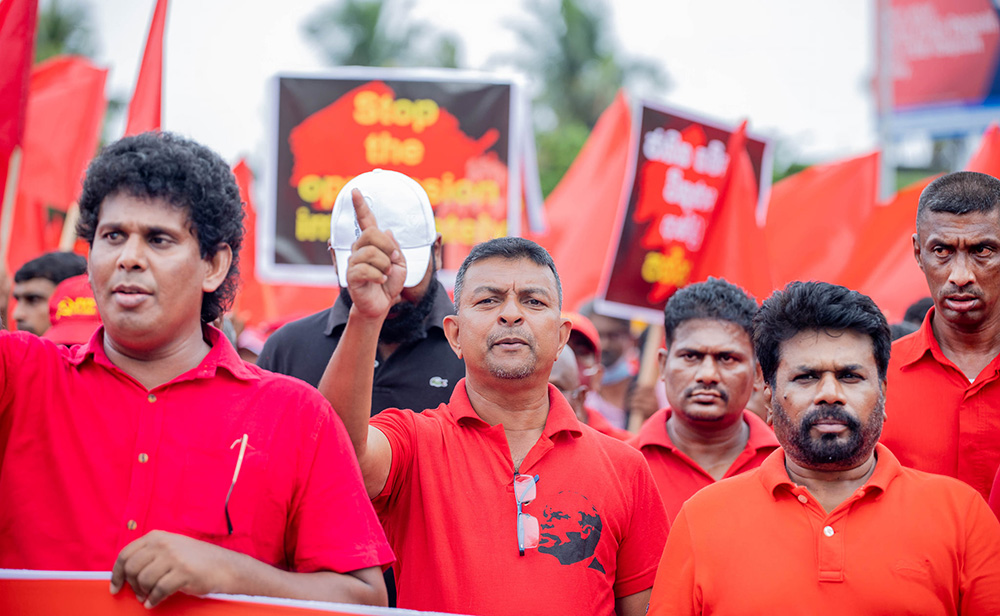
by Shantha Jayarathne, PhD
In recent discussions, concerns have emerged about the National People’s Power (NPP) in Sri Lanka, with some fearing a return to outdated communist traditions if the party ascends to power. These apprehensions, often fueled by political agendas, particularly target those with limited political literacy. This article aims to dispel these misconceptions and shed light on the NPP’s forward-looking vision for a progressive and prosperous Sri Lanka.
Coalition of Visionaries
Contrary to the narrative peddled by certain factions, it’s essential to recognise that the NPP represents a diverse coalition of 22 parties and civil society organisations, with the Janatha Vimukthi Peramuna (JVP) as its main partner. Importantly, both the NPP and JVP members boast of a commendable track record, free from accusations of corruption, nepotism, or cronyism. Nominations are filed for any election from the NPP under the “Compass” symbol, and contestants with high repute and integrity will be drawn from all 22 constituent parties in the broad coalition.
A Clear Development Roadmap
The NPP has consistently articulated a comprehensive roadmap for the development of Sri Lanka. Emphasising the importance of a thriving Agriculture, Industry, and Service sectors, the party is committed to eliminating barriers hindering investments. Corruption, favouritism, and covert dealings of officials and people with vested interests will be totally eliminated under an NPP government. Furthermore, the NPP pledges to introduce efficient systems, ensuring minimal delays and promoting a business-friendly environment that attracts both local and foreign investors.
Government’s Primary Obligations
Addressing fears of property takeover, the NPP asserts that its government will not engage in business activities but will focus on essential public utility services, education, health, social security, and defence to ensure the well-being and security of the nation. NPP will not only encourage local investments but also it will take all possible measures to attract foreign direct investments. State-Owned Enterprises (SOEs) facing financial challenges will undergo restructuring with utmost transparency, fostering efficiency and accountability.
Business Friendly Environment
The NPP is dedicated to creating a level playing field for businesses by implementing regulations inspired by the most developed economies. Consistent antitrust laws, investment protection laws, and laws that are inconsistent and complex will be amended or new laws will be enacted to ensure fair competition and safeguard business interests. By fostering an environment that encourages innovation and competition, the NPP aims to boost economic growth and prosperity. NPP plans to streamline the systems and process to facilitate investments within the shortest possible timeframe whereby it aims to take Sri Lanka in the Ease of Doing Business Index from 99th position today to a position within the first 50. The Cooperative system will be strengthened in an NPP government and they will be regulated to deliver an effective and efficient service to the periphery.
Transparent Tax Policy
Simplifying Sri Lanka’s tax policy is a priority for the NPP, aiming to create a transparent and tax-friendly environment. NPP will ensure a stable and consistent progressive tax policy in the country, and all regressive taxes will be eliminated. Citizens will be provided with clear information at the end of the Tax Year on how their tax contributions are utilised for public services, promoting accountability and citizen engagement. This transparency is crucial for building trust between the government and its citizens.
Learning from Developed Countries
Taking lessons from successful models of governance in developed countries, an NPP government will strive to implement best practices in public administration. Emphasising the importance of accountable institutions, streamlined bureaucracy, and effective public service delivery, the party is committed to ensuring transparency and efficiency in governance. There will be a minimum number of cabinet ministries for key areas, and their roles and functions will be clearly defined while making the officials accountable to their respective assigned functions. Zero tolerance for corruption and the law of the land will be applied to everyone alike.
Economic Adjustments and IMF Negotiations
Acknowledging the need for economic stability, the NPP plans to initiate negotiations with the International Monetary Fund (IMF). This strategic move aims to strike a balance between economic adjustments and safeguarding the livelihoods of the people in the country. The NPP is dedicated to ensuring that any economic reforms are implemented with a people-centric approach, minimising adverse effects on the general population and the industry.
Nonaligned Foreign Policy
The NPP upholds a nonaligned foreign policy, reflecting a commitment to Sri Lanka’s sovereignty and independence. While fostering international relations, the party is resolute in not allowing foreign nations to utilise Sri Lanka’s soil for military purposes. This stance ensures that the country remains neutral and independent in its dealings with other nations, safeguarding national interests and security.
Repositioning Sri Lanka in the World Order
A central tenet of the NPP’s vision is the repositioning of Sri Lanka in the global context. The party is dedicated to identifying and leveraging the country’s potentials, addressing weaknesses, seizing opportunities, and managing threats, both internal and external. This strategic approach aims to elevate Sri Lanka’s standing on the world stage, fostering positive engagement with the international community.
Quality of Life Improvement
A key focus of the NPP government is enhancing the quality of life for all citizens. The party recognises the importance of social welfare, healthcare, education, and infrastructure development in elevating living standards. By prioritising these aspects, the NPP aims to create a society where every citizen can enjoy a higher quality of life, emphasising the well-being and prosperity of the people.
Addressing False Propaganda
Amidst the misconceptions surrounding the NPP, it is crucial to address the motivations behind certain groups disseminating false propaganda. The fearmongering tactics employed by those with vested interests seek to perpetuate a status quo that has allowed for ill-gotten wealth and alleged illegal transactions. These groups, resistant to change, attempt to sway public opinion by sowing seeds of doubt about the NPP’s commitment to a fair and just governance model.
However, when one closely examines the NPP’s dedication to transparency, efficient governance, and inclusive development, it becomes evident that these accusations are nothing more than a desperate attempt to cling to the shadows of a fading era. The party’s emphasis on tackling corruption, restructuring inefficient State-Owned Enterprises, and simplifying the tax policy directly challenges the interests of those who have thrived in an environment of opacity and undue influence.
As citizens, it is paramount to discern the true intentions behind such narratives and recognize the NPP as a force poised to break free from the shackles of corruption and vested interests. By supporting the NPP’s vision, Sri Lankans have the opportunity to usher in a new era – one marked by ethical governance, economic prosperity, and a society that prioritises the well-being of its people over the interests of a privileged few.
In conclusion, the NPP stands not only as a political entity but as a beacon of hope, calling on the people to embrace change, reject false narratives, and collectively forge a path towards a brighter and more equitable future.
(The Writer, a UK resident, is a former Senior Consultant at the Sri Lanka Institute of Development Administration (SLIDA). He is a member of the NPP-Policy Development Team, and he can be reached through email: shantha323@gmail.com)



by Viran Maddumage
Assistant Lecturer & PhD (Reading) Department of Human Geography and Migration,
Macquarie University Australia
&
Sanduni Rathnayake
Lecturer (Probationary) Faculty of Law,
General Sir John Kotelawala Defence University
When a boat carrying desperate people reaches the shores of an island, the first question should be a humanitarian one: how can these people be kept safe? But sooner or later, another question becomes unavoidable: what does the law say?
For Sri Lanka, that question is becoming increasingly important.
In December 2024, the Sri Lankan Navy rescued more than 100 people believed to be Rohingya refugees from a fishing vessel found adrift off the country’s northern coast. Among them were women and children. They were brought ashore and provided with food, water and medical assistance. The incident was not entirely unprecedented; Sri Lanka had encountered a similar arrival of Rohingya people by sea in 2022.
These incidents expose an uncomfortable gap in Sri Lanka’s legal architecture. Sri Lanka is capable of rescuing people in distress. It can provide immediate humanitarian assistance. But once those people reach our shores and seek protection, where exactly does the law take them?
Sri Lanka has not ratified the 1951 Convention relating to the Status of Refugees or its 1967 Protocol. The Convention and Protocol constitute the central international instruments defining refugee status and establishing international standards for refugee protection. More importantly, Sri Lanka does not currently have a comprehensive domestic legal framework establishing a national procedure for determining refugee status. UNHCR has consequently played an important role in registering and assessing asylum claims in Sri Lanka.
This arrangement may function when refugee movements are limited. But it is not a substitute for law.
Problem of a legal vacuum
An asylum-seeker is not simply an undocumented migrant. An asylum-seeker is a person asking another state for protection because returning home may expose them to persecution or serious harm. A refugee is a person whose circumstances meet the applicable criteria for international protection.
The distinction matters because ordinary immigration law is principally concerned with controlling entry, residence and departure. Sri Lanka’s Immigration and Emigration framework, for example, is designed to regulate the entry and departure of persons and to provide for the removal of certain non-citizens. Refugee law asks a different question: what happens when the ordinary assumption that a person can simply be returned to their country of nationality is no longer safe?
That question cannot be answered adequately through immigration enforcement alone.
At present, Sri Lanka lacks a dedicated statutory process that clearly answers basic questions. Who may apply for asylum? Who determines whether an individual qualifies for protection? What procedural rights does the applicant have? What evidence must be considered? Is there a right to appeal? What happens while an application is pending? When may detention be used? What happens when the applicant is a child? And, most importantly, what safeguards exist against returning a person to a place where they face persecution or other serious harm?
Leaving such questions to ad hoc administrative arrangements creates uncertainty not only for refugees and asylum-seekers, but also for the State itself.
Why international law alone not enough
One might respond that Sri Lanka already participates in the international human-rights system and therefore has obligations relevant to the treatment of vulnerable non-citizens. That is true. But international commitments and domestic enforceability are not necessarily the same thing.
Sri Lanka’s constitutional and legal framework has traditionally reflected a dualist approach to international treaties. The Supreme Court’s decision in Singarasa v Attorney-General is particularly significant in this regard. The judgment recognised that treaty obligations undertaken by the State do not, merely by virtue of international acceptance, automatically become enforceable domestic law; legislative implementation is required for treaties to have internal legal effect.
This principle makes the case for domestic refugee legislation even stronger.
The answer is not to pretend that international law does not matter. Nor is it to suggest that Sri Lanka has no responsibilities towards people seeking protection. Rather, the lesson is that where protection is important enough to be recognised internationally, it should also be translated into clear domestic rules that courts, public officials and affected individuals can actually understand and apply.
A refugee should not have to depend upon uncertainty about the precise relationship between an international obligation, administrative practice and domestic immigration law to know whether they can safely remain in the country while their claim is considered.
Principle of non-refoulement
At the heart of refugee protection is the principle of non-refoulement: the prohibition against sending a person back to a place where they face persecution or other serious threats to their life or freedom.
The principle is one of the foundational concepts of international refugee protection. Its significance extends beyond the formal status of a person as a recognised refugee. International human-rights law also provides important protection against removal in circumstances where return would expose an individual to serious harm.
For Sri Lanka, the question therefore cannot simply be whether the country has ratified the Refugee Convention. The more fundamental question is whether Sri Lankan law provides an effective mechanism for ensuring that a person who may require international protection is identified and assessed before removal.
Without such a mechanism, even a principle as important as non-refoulement risks becoming difficult to operationalise.
The Rohingya arrivals demonstrate why this matters. These were not abstract legal hypotheticals. They were human beings arriving by sea after fleeing circumstances in which their safety could not simply be assumed. The State had to decide what to do with them.
And whenever the State must make such decisions, law matters.
A Sri Lankan solution
The answer should not necessarily be the wholesale transplantation of another country’s refugee legislation. Sri Lanka has legitimate interests in border management, national security, immigration control and public order. A domestic refugee law can recognise those interests while also establishing safeguards for people genuinely in need of protection.
A Sri Lankan Refugee and Asylum Act could establish a clear national asylum procedure. It could define who qualifies as a refugee and who may seek asylum, establish an independent or appropriately insulated refugee-status determination mechanism, and provide applicants with basic procedural guarantees.
There should be an opportunity to present evidence, an obligation to give reasons for decisions and a meaningful avenue of review or appeal.
The legislation should also address detention. Irregular entry should not automatically transform a person seeking protection into a criminal. Where detention is considered necessary, the law should establish clear grounds, safeguards and review mechanisms, with particular protection for children and other vulnerable persons.
The framework should provide temporary documentation to asylum-seekers while their claims are being considered. It should address access to essential healthcare and education, and determine whether and under what conditions recognised refugees may work.
Most importantly, the legislation should expressly incorporate appropriate safeguards against refoulement.
Such legislation would not mean that every person arriving without a visa must be permitted to remain indefinitely. Refugee law has never required that. A functioning asylum system distinguishes between those who require international protection and those who do not. It gives the State a lawful process through which to make that distinction.
That is precisely why having a legal framework can actually strengthen immigration control rather than undermine it.
From humanitarian reaction to legal certainty
Sri Lanka has a long history of displacement. Hundreds of thousands of Sri Lankans themselves experienced displacement during the country’s civil conflict, while many Sri Lankans sought protection abroad. The experience of displacement should make the country particularly conscious of what it means to cross a border because remaining at home is no longer safe.
At the same time, Sri Lanka is not required to choose between compassion and sovereignty.
A properly designed refugee law can protect both.
It can establish who has a right to seek protection, who decides that claim, what evidence is required and what happens when the claim succeeds or fails. It can provide national authorities with procedures rather than uncertainty. It can provide courts with legal standards rather than administrative ambiguity. And it can provide refugees and asylum-seekers with something that is often more valuable than a promise of goodwill: legal certainty.
There is also a broader institutional argument. Reliance upon external humanitarian actors to fill a domestic legal gap may be understandable as an interim measure, but refugee protection should ultimately rest upon a framework for which the State itself is legally accountable.
Sri Lanka therefore faces a choice.
It can continue responding to refugee arrivals when they occur; rescuing boats, providing temporary assistance and finding administrative solutions to individual situations.
Or it can anticipate the next arrival before it happens.
The second approach is the more responsible one.
The sea surrounding Sri Lanka has never been merely a geographical boundary. It has been a route of migration, trade, conflict, escape and refuge. People will continue to cross it for many different reasons. Some will arrive as migrants. Some will arrive irregularly. Some may arrive because they have nowhere safe to return to.
When the next boat reaches our shores, Sri Lanka should not have to improvise its legal response.
A safe harbour needs more than compassion. It needs a legal map.
For Sri Lanka, the time has come to draw one.

The special exhibition displaying original manuscripts relating to the Panadura Debate at Rankoth Vihara is welcome and, as Nishantha Peiris mentions (News, 30 Aug), the debate gained international interest following the publication of a book containing the speeches made in the debate. The credit for this must be given to John Capper, the then editor of the Ceylon Times. He published an account of each day’s proceedings in his paper and the full text of the speeches in a book entitled ‘Full Account of the Buddhist Controversy Held at Pantura in August 1873.
The preface of the book stated: ‘In the belief that an authentic account of the Controversy which took place at Pantura in August last, between a Buddhist Priest and two Ministers of the Protestant religion, will be read with interest by a large number of persons here and in Europe. I have produced the proceedings in the present form. The report has been revised by the respective disputants, so that it may be taken as a correct account of what passed’.
Capper’s book was picked up by J M Peebles who was in India, who then published an extended version in the United States. If an original copy of Capper’s book is available in Sri Lanka, it should be exhibited in the Rankoth exhibition.
Yours faithfully,
Dr R P Fernando,
19 Danetree Close,
Epsom UK
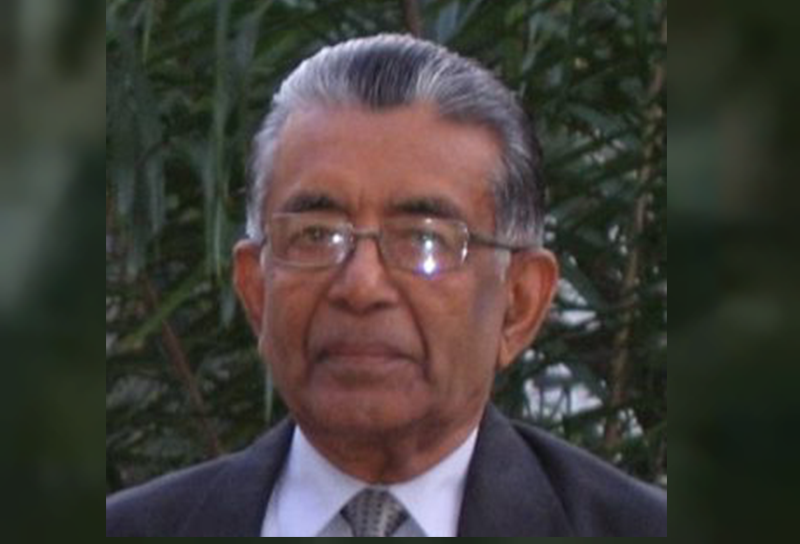
It is with a deep sense of sadness that I record the passing of Dr Upatissa Pethiyagoda, who died on 27 August 2026 at the age of 94. To many, he was a distinguished scientist, accomplished administrator, diplomat and public intellectual. To me, he was much more than that.
Dr Pethiyagoda was a proud product of Trinity College, Kandy. At a time when a first class in Botany was a rarity, he obtained one and subsequently pursued postgraduate studies in London. His scientific career reflected not only his knowledge but, more importantly, an enquiring and restless mind that was never satisfied with simply accepting what was known.
In the 1970s, he headed the Plant Physiology Department of the Tea Research Institute of Sri Lanka. He was part of a formidable team of scientists that included Drs R L de Silva, R L Wickramasinghe, P Sivapalan, Tilak Wettasinghe and W Danthanarayana. They were scientists who contributed enormously to the development of the tea industry in Sri Lanka, and Dr Pethiyagoda stood comfortably among them.
In 1978, he moved to the Coconut Research Institute as its Director. It was there that I had the privilege of working with him. Those years left a lasting impression on me.
Dr Pethiyagoda was, in every sense, a complete scientist. Although his formal specialisation was plant physiology, he was remarkably comfortable discussing almost anything scientific. What distinguished him was his curiosity. He questioned the science behind the ordinary things that most of us simply accepted. I remember his asking questions such as, why is an orange green in Sri Lanka? It was typical of him: an apparently simple observation would lead him to ask what lay behind it.
That curiosity never left him.
After his tenure at the CRI, he undertook an FAO assignment in the Middle East, working on the improvement of date palms. There he was exposed to agriculture under conditions of severe water scarcity. He pursued this further during a visit to Israel, learning about agronomic practices suited to such environments. Later, when he worked with the Mahaweli Authority, he was able to translate that knowledge into practice, introducing high-value horticultural crops to Systems B and C.
What impressed me was not merely that he acquired knowledge, but that he connected knowledge from one context to another and turned it into practical solutions. His enquiring mind and analytical ability enabled him to do this with remarkable effectiveness.
He was equally impressive as a communicator. Dr Pethiyagoda was an eloquent speaker, whether he was talking about science, agriculture, public policy or the everyday affairs of our country. His speeches were often laced with wit, humour and the occasional tongue-in-cheek remark. But beneath the humour was a very serious mind. He was forthright in his opinions and, importantly, he was not afraid to express them, whatever the possible repercussions.
His contributions to the media demonstrated this courage.
Writing about the travel to London by a former President, he observed:
“Where a person enjoys immunity by virtue of his position, this carries a reciprocal obligation to exercise an abundance of exemplary behaviour. In effect, immunity is best exercised, when the need to invoke it, is never allowed to arise.”
[Immunity Does Not Confer Impunity – Colombo Telegraph]
That was quintessential Pethiyagoda—precise, pointed and impossible to misunderstand.
He was equally outspoken about the government’s decision to ban inorganic fertiliser with ‘immediate effect’. He was deeply distressed by what he believed would be the consequences for farmers, particularly the poorer farming community. He would speak about it almost every day, driven not by political considerations but by his conviction that science and evidence had been disregarded.
In one of his writings on the subject, he remarked:
“What the ‘Vipathmaga’ caper taught us was that advice of sundry ‘Experts’ can be disastrous. Professors of Surgery, clergymen and Pediatricians are not the best equipped to advise on fertilisers, as much as a Soil Scientist should not prescribe treatment for a sick child.’ [Some Lessons That Can Be Learned Even From Disasters – Colombo Telegraph]
And in another article, his frustration was summed up in the memorable words:
“Stupidity, like History, has a way of repeating itself.”
[Unscrambling eggs – Colombo Telegraph]
These were not simply provocative statements. They reflected a scientist who believed deeply that public decisions, particularly those affecting agriculture and the livelihoods of farmers, should be based on evidence and sound scientific advice.
Perhaps, what I will remember most about Dr Pethiyagoda is that his curiosity survived almost to the very end of his life.
Very recently, he was still asking questions and pursuing ideas. He was interested in the possible genetic differences between the waraka and wela varieties of jak, because he wondered whether the wela variety might have commercial potential for cellulose extraction. He was disappointed that he could not find relevant scientific literature in Sri Lanka. More than the particular subject, what struck me was that at 94 he was still thinking about a scientific question, looking for evidence and wondering whether an apparently ordinary resource could have an important national application. He lamented the lack of interest among scientists and academics in such questions of national importance. That concern, too, was very much part of who he was.
Dr Pethiyagoda also served as President of the National Academy of Sciences, Sri Lanka. Unfortunately, he was unable to complete his term because he was appointed Ambassador to Italy, with representation at the Food and Agriculture Organization in Rome. Even in that role, he remained very much the scientist. I understand that he made a significant contribution to FAO discussions. As Ambassador, he also had the unenviable task of entertaining Sri Lankan Ministers of Agriculture who attended FAO sessions. I know from my own conversations with him that those informal dinners were not merely social occasions. He would discuss agricultural issues with the Ministers, and I have little doubt that his views—and the force with which he expressed them—sometimes influenced their thinking.
Looking back, what I admired most about Dr Pethiyagoda was not any particular position he held or any particular achievement. It was the way he thought.
He questioned.
He analysed.
He connected ideas.
He challenged conventional wisdom.
And he was willing to say what he believed to be true.
He also demonstrated that science should not remain confined to laboratories, research papers or academic institutions. For him, science was a way of looking at the world and, ultimately, a means of improving the lives of people.
It is perhaps ironic that, only a few months ago, he wrote about “The Cost of Dying”, as distinct from the “Cost of Living”. In that article, he reflected on the manner in which our mortal remains should be disposed of, observing: “I am in two minds regarding the manner in which the mortal remains are disposed of, ‘according to the will of the deceased’. But with the cessation of the breath, ownership or tenancy ceases.” Even in contemplating death, he brought his characteristic questioning mind to the subject. What particularly caught my attention, however, was his explanation of the Buddhist practice of holding dânes (almsgivings) for monks of the local temple in the seventh day and third month following a death. I had never really thought about the significance of this practice before. That, too, was typical of Dr Pethiyagoda: he could take something that we had accepted as ordinary and familiar and make us stop, think and see it differently.
His passing has created a colossal vacuum in Sri Lanka’s scientific community. People of his intellectual breadth, curiosity, courage and independence are rare. We may not always have agreed with everything he said, but we could never doubt that he had thought deeply about it and that he had the courage of his convictions.
For those of us who had the privilege of knowing him, there is sadness in his passing. But there is also gratitude—for having known such an extraordinary mind, for having learnt from him, and for having witnessed at close quarters his unwavering commitment to science and to the development of our country.
I shall remember Dr Pethiyagoda with great affection and immense respect.
Ranjith Mahindapala
Past President, National Academy of Sciences of Sri Lanka.

Sun directly overhead Galle, Angulugaha, Imaduwa, Telijjawila, Yatiyana and Tangalle about 12.08 noon today (07)

Showers above 50 mm are likely at some places in the Uva and Eastern provinces.

Harshitha’s composed knock seals Sri Lanka’s semi-final berth

‘Choka Malli’ slips out of country before travel ban

Dengue death toll rises to 73

Ranil accuses govt. of undermining democracy

‘Dates have the highest sugar content to fight Coronavirus’

Sunday Island 27 December – Headlines

#SundayIsland 17th December – Headlines

Sunday Island – 28th March

Sunday Island Headlines – 21 March

Sunday Island – 21st February – Headlines
-

 News5 days ago
Denied of promotion to SC despite vacancies, justice Gurusinghe retires
-

 Latest News5 days ago
Grade 5 scholarship exam results released
-

 News5 days ago
22A: SC urged to suspend hearing, appoint full bench
-

 Midweek Review6 days ago
The local and global dynamics of Sri Lanka’s 22nd Amendment
-

 News3 days ago
Namal remanded until Sept. 18 over Airbus deal investigation
-

 News5 days ago
Govt. seeks NATO assistance
-

 Latest News2 days ago
Tharanga creates history with Diamond League crown in Brussels
-

 News6 days ago
40 professional organisations and TU oppose proposed 22A