
Connect with us

News

Dismissal of airline worker over sexual harassment :

Published

on

SC overrules Labour Tribunal order and HC ruling

By Shamindra Ferdinando


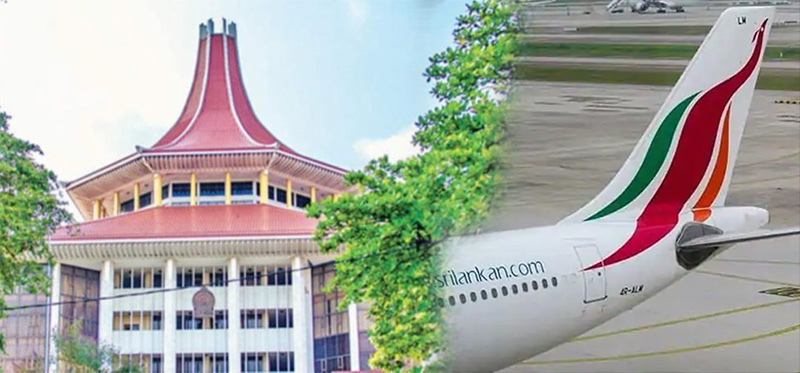
The Supreme Court recently concluded a long-drawn out sexual harassment case in SriLankan Airlines.

A three-judge bench, comprising P. Padman Surasena, Janak de Silva and Mahinda Samyawardhena overturned an order given by Labour Tribunal (LT) on 22 Oct., 2013, and a ruling by the Negombo High Court on 19 Oct., 2016, upholding the dismissal of the employee-Ground/cum flight steward for sexually harassing an air hostess.

The Court accepted that at the time of the incident on 17 March, 2005, on UL 505 Colombo-London flight, the respondent had been intoxicated though company policy was crew couldn’t consume alcohol within 10 hours of a scheduled flight.

The SC found that the President of the LT had erred. So had the High Court in affirming the order of the LT.

Manoli Jinadasa appeared for the air hostess whereas T. I. Sapukotanage represented the flight steward.

The Court was told that the airline had terminated the services of the accused on 07 Sept., 2005, following a disciplinary inquiry. The worker has been dealt with under four separate allegations which were also explained to the LT, Negombo HC and the Supreme Court.

The dismissed employee later moved LT seeking his reinstatement and back wages. Consequent to the action at LT initiated on Nov 28, 2005, LT held that the termination of services of the flight steward was not just and equitable. The LT ordered reinstatement of the worker without back wages subject to one year of probation on the basis that being without work for a period of eight years, is sufficient punishment as there had been other employees who had received lesser punishment for similar misconduct.

Justice Janak de Silva stated that sexual harassment is a criminal offence and such conduct amounts to a serious misconduct at the workplace. Justice de Silva emphasized that sexual harassment could take place against both men and women.

During the proceedings, the Court was told of numerous other sexual harassment cases though disciplinary action hadn’t been taken in the absence of written complaints. One such case was a flying stewardess who hadn’t been assigned for duties for a period of six months and restricted for short flights for a year after she refused to succumb to a member of the airline crew.

The SC has given ruling on Feb 2 against the backdrop of a high profile awareness campaign on sexual harassment in work places and proposed labour law reforms expected to contain a new chapter on the issue at hand and are expected to be implemented this year. In addition, a special sexual harassment Act is being drafted separately under the general law as well. Legal sources pointed out that there would be two Acts, the Employment Act which will contain provisions on sexual harassment at workplaces and another Act under the general law.


Continue Reading
Click to comment

Leave a Reply

Your email address will not be published. Required fields are marked *

News

Educators slam govt. for ‘unprepared’ education reforms

Published

on

Teachers, principals and education professionals have said the government is unprepared to roll out proposed education reforms scheduled to take effect from next week, and warned of nationwide trade union action if the plans are implemented without adequate consultation and preparation.

Addressing a press conference in Colombo, President of the Association of Education Professionals, Ven. Ulapane Sumangala Thera, said Ministry officials had indicated that the reforms would be implemented from Monday, 05 January, but claimed that the vast majority of educators were opposed to the move.

“More than 90 percent of teachers say they have not received proper training on the new syllabus or the proposed reforms,” Ven. Sumangala Thera said. He alleged that the government was attempting to suppress opposition from teachers and principals by declaring school holidays, instead of addressing their concerns.

“If the government continues with these tactics, we will have no option but to resort to trade union action at a national level,” he warned.

Meanwhile, representatives of 16 teachers’ and principals’ unions who visited the Ministry of Education at Isurupaya on Monday to seek clarification on the reforms were turned away by security officials, reportedly on the grounds that prior appointments were required.

Speaking to the media outside the Ministry, Amila Sandaruwan of the Teacher Principals’ Collective said the delegation had attempted to raise their concerns during the Public Day allocated for visitors. “We wanted to know how these reforms are to be implemented and sought to meet the Secretary to the Ministry of Education, but we were barred,” he said.

Sandaruwan accused the Government of proceeding in an “adamant” manner and claimed the reforms were being driven by a handful of non-governmental organisations closely associated with senior ministry officials. “We will not allow this to happen,” he said.

Graded Principals’ Association representative Nimal Mudunkotuwa said widespread confusion prevailed among teachers and school administrators regarding the practical aspects of implementing the reforms. “There is no clarity on school hours—whether schools are to close at 1.30 p.m. as before, or continue until 2.00 p.m. as proposed,” he said.

He added that uncertainty also remained over the number of daily teaching periods, with conflicting statements suggesting either seven or eight periods. “Schools have yet to receive syllabus modules from the Ministry, and many schools lack smart boards and internet connectivity required to implement these reforms,” Mudunkotuwa said.

Ven. Ulapane Sumangala Thera strongly criticised the proposed reforms, describing them as “bastard reforms,” and accused the NPP Government of undermining the education system. He also raised objections to a unit in the proposed Grade Six English syllabus dealing with gay and lesbian relationships, claiming that senior Buddhist prelates, the Catholic Cardinal and other religious leaders had opposed its inclusion.

“The Government refuses to listen even to religious leaders,” he said.

Concerns were also raised at a National Sangha Council meeting held in Colombo on Monday evening at the Colombo Foundation Institute, organised to discuss the objectives of the proposed reforms. Addressing the gathering, Professor Venerable Induragare Dhammaratana Thera said the reforms required extensive discussion, consultation with subject experts and consideration of the experience of senior administrators.

He warned that the proposed changes could trigger the biggest crisis currently facing the country. “Implementing these reforms in this manner will harm future generations and could even destroy the present Government,” he said, likening the process to “forcing a round peg into a square hole.”

Continue Reading

News

Leading the Nation’s Connectivity Recovery Amid Unprecedented Challenges

Published

on

SLT Mobitel teams at work after Cyclone Ditwah

SLT-MOBITEL’s post-Cyclone Ditwah response reinforces its role as the National ICT Solutions Provider

In the aftermath of Cyclone Ditwah, SLT-MOBITEL led one of the most extraordinary national connectivity restoration efforts in recent years, mobilising the full breadth of its operational network, technical expertise, and emergency response systems to safeguard Sri Lanka’s digital lifeline.

The cyclone caused extensive flooding, landslides, and infrastructure damage throughout several districts, disrupting multiple layers of the national network. Yet within days, SLT-MOBITEL mounted one of the fastest and most comprehensive recovery operations in the company’s history, reaffirming the organisation’s role as the country’s telecommunications backbone.

From the earliest hours of the disaster, SLT-MOBITEL activated a coordinated national response, drawing on its regional operational structure, specialised engineering teams, and emergency governance mechanisms. The Sri Lanka Backbone Network (SLBN), the country’s most critical digital artery, signalled excellent resilience, with only a handful of nodes affected and restored within 24 hours. As the National ICT Solutions Provider, SLT-MOBITEL prioritised restoring connectivity for other network operators and users, while simultaneously extending comprehensive support to its own customers, ensuring that mobile services were swiftly re-established across the country.

The rapid restoration of SLT-MOBITEL’s islandwide core network served as a critical catalyst in accelerating the recovery of both fixed and mobile services across nearly all disaster-affected areas. This swift action also enabled other operators affiliated with SLT-MOBITEL to speedily restore their services, reinforcing the continuity of nationwide connectivity. To drive this effort, SLT-MOBITEL established a centralised ‘War Room’, operating under close management oversight, to coordinate telecommunication network restoration and rehabilitation across the country. Initial assessments indicate recovery and network upgrade costs of approximately LKR 5 to 6 billion.

SLT-MOBITEL teams worked around the clock to repair damaged fibre routes, recover flooded cabinets, and restore thousands of access nodes affected by the cyclone. In areas where fibre infrastructure was severely damaged, the company deployed temporary Fixed Wireless Access (FWA) facilities, helping communities, emergency responders, and essential services stay connected. Priority restoration was extended to hospitals, government agencies, and enterprise customers, helping with the continuity of critical national operations during the emergency.

SLT-MOBITEL also launched the 247 National Medical Helpline, a dedicated, round-the-clock support service introduced in collaboration with the University of Colombo. Within the first week of the launch, the medical helpline received a large volume of calls as the initiative provided immediate initial medical guidance to individuals facing injuries, infections, waterborne diseases, and other health complications. The service was powered by SLT-MOBITEL’s national connectivity backbone and a team of medical professionals arranged by the University of Colombo. The helpline became a vital public service, demonstrating the company’s commitment to supporting Sri Lankans in crisis and recovery through resilient infrastructure and accessible, people-centred communication. More importantly, the service was made available to all network providers, guaranteeing no one was excluded from receiving medical assistance islandwide.

SLT-MOBITEL worked closely with the Ministry of Defence, serving as the connectivity solutions provider for national disaster response efforts. With the support of the Sri Lanka Army, field teams were able to swiftly access affected sites, enabling faster repairs, safer operations, and the restoration of services in some of the most challenging terrains. The partnership highlighted the critical role of telecommunications in national security, emergency coordination, and public safety, with the Army’s contributions acknowledged with gratitude.

In addition to network restoration, SLT-MOBITEL extended critical national-level support to various government institutes, sustaining essential public services during the disaster period. As a result of the services provided, SLT-MOBITEL secured uninterrupted operations and dependable connectivity for these vital national institutes.

Within one week of the cyclone, SLT-MOBITEL had successfully restored over 98 percent of the sites impacted by the cyclone, with only a small number of locations in the most severely affected districts, pending access clearance. The company continues to address individual customer connections and any remaining access nodes, despite significant human resource and environmental challenges. Throughout the recovery period, customers demonstrated commendable patience and understanding, which greatly supported the restoration efforts.

The disaster has also highlighted the urgent need for long-term national network resilience. SLT-MOBITEL is advocating for the accelerated undergrounding of high-risk fibre routes, prioritised access to bridge ducts, and fast-tracked power restoration protocols during emergencies. The company is also advancing the migration of copper-based access networks to fibre.

As Sri Lanka’s National ICT Solutions Provider, SLT-MOBITEL is committed to keeping the nation connected in every crisis. The rapid restoration efforts, cross-government support, and dedication to public service reiterates the company’s mission to rise above commercial operations, upholding the role as the country’s trusted digital lifeline.

Continue Reading

News

Dons on warpath over alleged undue interference in university governance

Published

on

Rajarata lecturers already on strike

Lecturers of the Rajarata University withdrew from all academic and administrative duties yesterday (30), launching a strike in protest against what they describe as undue interference in university governance linked to proposed amendments to the University Act.

Chairman of the Rajarata University Teachers’ Association, Professor Nalaka Geekiyanage, said the decision to strike was taken in response to the University Grants Commission (UGC) approving a draft amendment to the University Act and submitting it to Parliament before it was formally passed.

Professor Geekiyanage said that laws had to be implemented only after their enactment, and the application of legal provisions in advance posed a serious threat to the autonomy of universities. “Implementing such measures before they are enacted undermines the independence of the university system,” he said, adding that the move had prompted widespread concern among academics.

He also claimed that academics across all state universities were supporting the strike action in solidarity.

Meanwhile, the Federation of University Teachers’ Unions (FUTA) has warned of intensified industrial action from next week if what it terms continued interference by the UGC in university affairs is not immediately halted.

FUTA Secretary and Senior Lecturer Charudatta Ilangasinghe said that although the proposed legislation had curtailed long-standing political influence in the appointment of Vice Chancellors to some extent, several provisions in the draft amendments posed serious risks to the effective functioning of universities.

He pointed out that granting governing councils unrestricted powers to remove deans and heads of departments at any time could create major administrative instability and undermine academic freedom. According to FUTA, such provisions weaken institutional autonomy and expose universities to external pressure.

Ilangasinghe said discussions previously held with Prime Minister Dr. Harini Amarasuriya had included assurances that these concerns would be addressed through constructive solutions. However, he alleged that no tangible progress had been made to date.

FUTA further claimed that the reform process had stalled due to the intervention of the Chairman of the UGC, resulting in indefinite delays in implementing the assurances given to academics.

“In this context, the federation is prepared to engage in a continuous struggle from next week to safeguard the independence of Sri Lanka’s university system and protect academic freedom,” Ilangasinghe said.

Continue Reading

Trending